May 2025 Newsletter

Sacred Groves Kneeland Update


Honoring the Indigenous History of the Land


Dear supporters of Sacred Groves,


Over the past year we have been developing plans for a conservation green burial and spreading site on a beautiful ridgetop prairie and oak-conifer woodland in the small community of Kneeland. Kneeland sits at 2100+ feet in elevation, 12 miles east of Humboldt Bay, and is roughly equidistant from Eureka and Arcata. 


Our 50-acre site shares a private access road/driveway with our wonderful neighbors at Karuna Animal Rescue & Sanctuary, who recently hosted a compelling history talk with historian Jerry Rohde. We learned that the road we use daily is itself historic, originally built by the Kneeland family. The junction where our access road meets Kneeland Road approximates the historic Pack Trail Junction, where routes from Eureka and Union (now Arcata) once converged.


Rohde explained that this land is part of the traditional territory of the Mawenok, one of seven Northern Humboldt County Indian tribes that he writes about in his about-to-be-published book, Northern Humboldt Indians.


According to Rohde, springtime was when the Mawenok tribe would journey up from their winter homes in the lower valleys of the Badawa't (Mad) River to these mountain prairies and woodlands currently called Kneeland. Here they would hunt elk and deer with bows and arrows and gather foods like tanoak acorns and edible bulbs, including Brodiaea and Blue Camas. 


Sadly, information about the Mawenok is scarce, and there are no known descendants. What is documented primarily comes from field notes taken in 1906 by UC Berkeley anthropologist Pliny Goddard. We know that when John A. Kneeland and his sister Mandana established a homestead here in 1850, the Mawenok resisted this intrusion onto their territory by burning down structures and killing livestock. John and Mandana retreated back to town, and then John returned to the site three years later with his brother G.B. Kneeland to rebuild.


As we continue this journey towards responsibly stewarding this land in perpetuity as a conservation burial site, we find ourselves leaning into what it means to honor the people who lived here from time immemorial. Sincere gratitude to Karuna Rescue and Jerry Rohde for the great opportunity to deepen our knowledge.

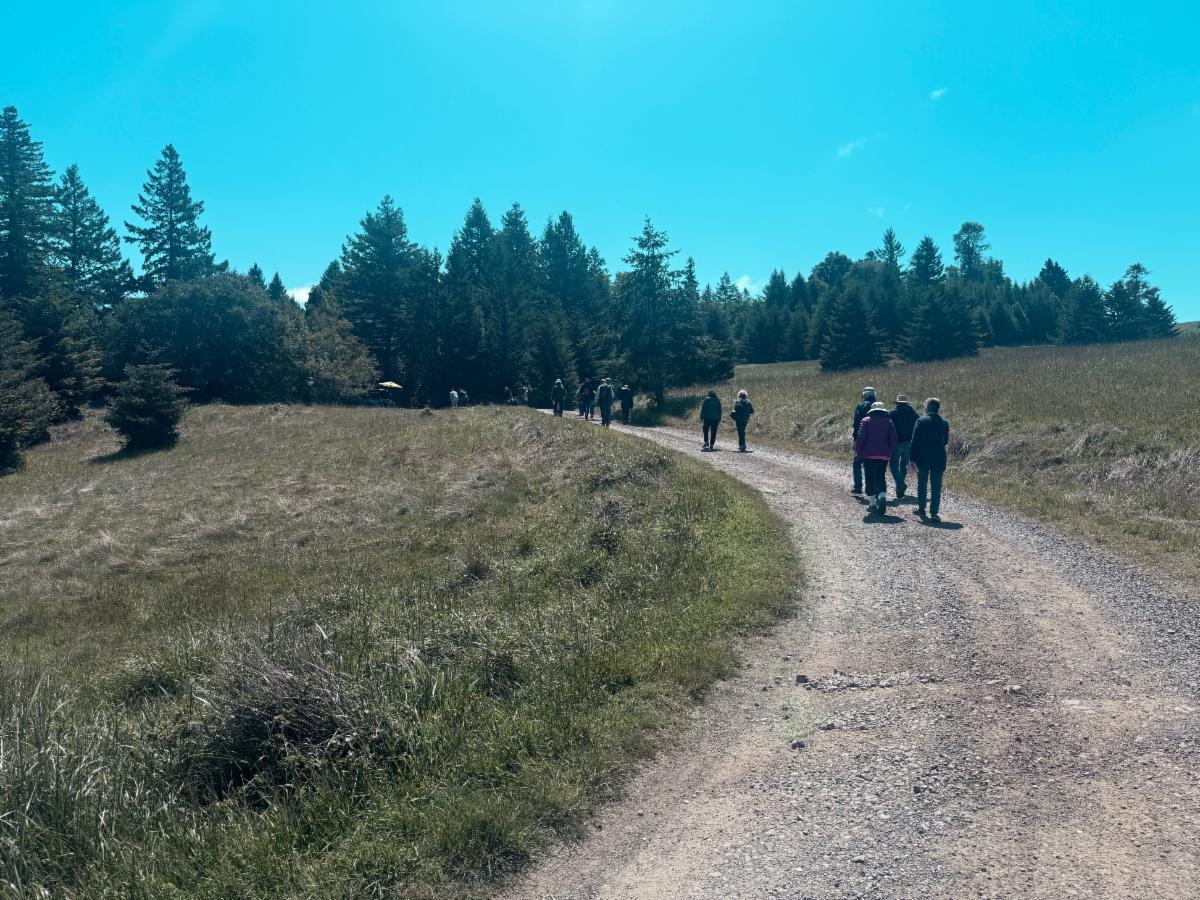
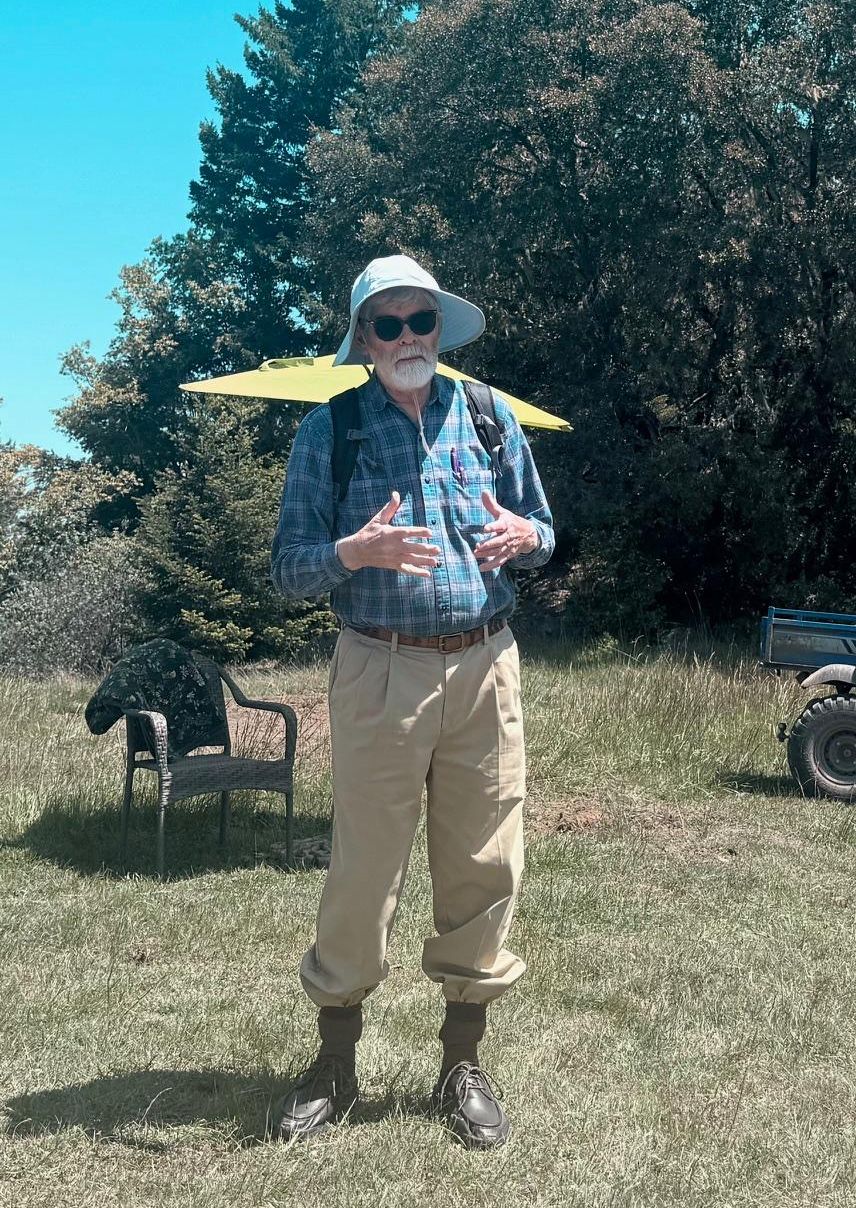
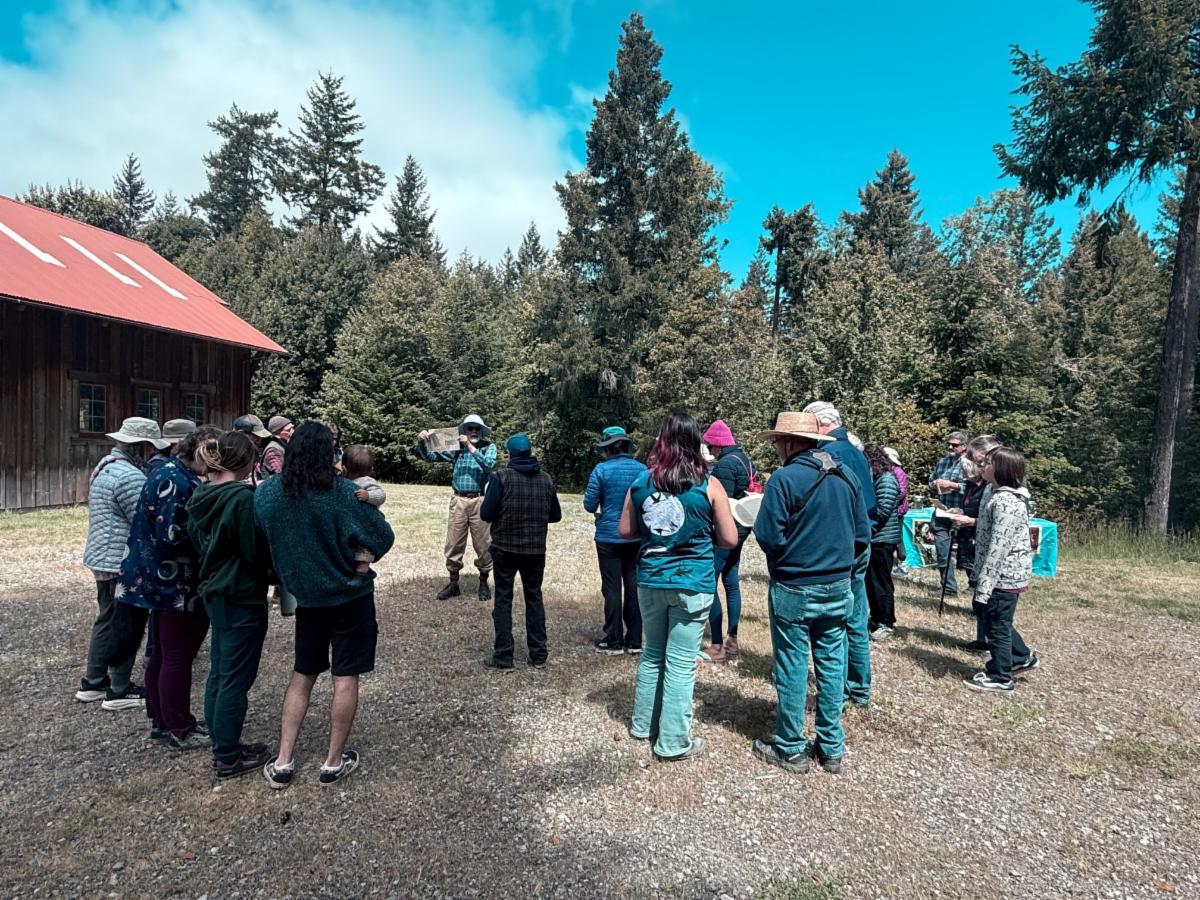
Local historian and author Jerry Rohde presents on the Indigenous and settler history of the Kneeland prairie at a history talk and walk hosted by Karuna Rescue on May 18, 2025.

Making County Permit Progress


Our heartfelt gratitude goes out to Aldaron Laird for his assistance over the past several months with drafting a robust CEQA document for our Sacred Groves Memorial Woodland project. He truly showed his dedication to this project. The submission of this document to the Humboldt County Planning Department on May 20 took us one big step closer to obtaining our conditional use permit.


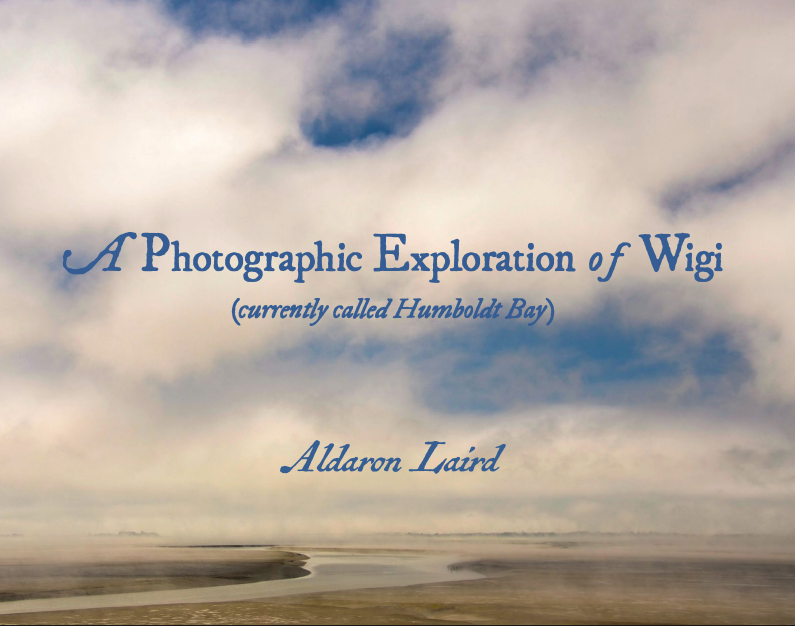
To celebrate Aldaron's contribution to this project, we are giving away a free copy of his beautiful and informative book to someone this month, randomly selected from our mailing list: A Photographic Exploration of Wigi (The traditional indigenous name for Humboldt Bay). For more details, please read the sidebar. Thank you Aldaron!

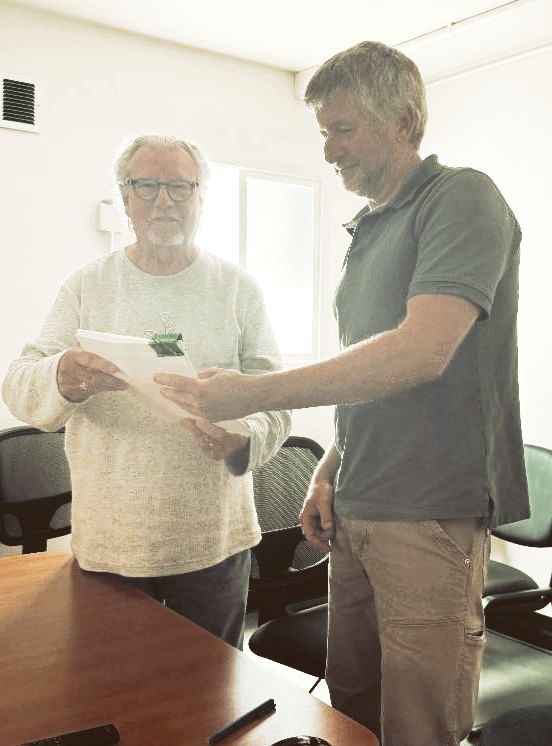
Sacred Groves Advisor Aldaron Laird submits CEQA document for the Sacred Groves Memorial Woodland in Kneeland to Humboldt County planner Andrew Whitney on May 20, 2025.


Human Composting Simplified

As many of you know, our work at Sacred Groves aligns with the growing interest in more natural and ecological end-of-life practices across the United States. 


Human composting—also called natural organic reduction (NOR)—is an end-of-life option that transforms human remains into nutrient-rich soil.


Human composting was legalized in California in September 2022 when AB 351 was signed into law, and is set to take effect on January 1, 2027. This places California among a growing number of states embracing this environmentally friendly practice. Currently, natural organic reduction is legal in thirteen states: Washington (the first state to legalize it in 2019), Arizona, California, Colorado, Delaware, Georgia, Maine, Maryland, Minnisota, New York, Nevada, Oregon, and Vermont. Additional states are considering similar legislation.


The process involves placing the body in a vessel with organic materials like wood chips, alfalfa, and straw. Over approximately 30 days, microbes break down the body into soil that can then be used to nourish trees, gardens, or conservation land—creating a meaningful cycle of return to the earth.

Big thanks to everyone who responded to our survey. We had 60 responses, and from those names we randomly selected David Howell of Arcata as the raffle winner. We will be sending him a copy of After-Death Care Educator Handbook: A Practical Guide for Teaching How to Care for Our Own Dead.


The survey responses were so helpful that we want to keep it going. If you have not yet taken the survey, please use the button below and complete it by June15, and as a thank you we will enter you into a raffle to win a free copy of A Photographic Exploration of Wigi (Currently Called Humboldt Bay)

As a testament to how small and interwoven our Humboldt community is, historian Jerry Rohde wrote the forward to Aldaron's book. Here is an excerpt:


"For decades, Aldaron has walked the shores of the bay, climbed its nearby sand dunes, and kayaked its entire periphery, taking over 25,000 photos that reveal the beauty of Wigi as it might appear in some magical, glimmering dream. From those thousands of photos, Aldaron selected 119 for this book...

"...it soon becomes clear that Aldaron did not work on this book, he lived and breathed its very essence, so that every photo he did select opens like a window, showing us yet another wonderful facet of Wigi, this place of ten thousand smaller places where land and water so subtly, so strikingly meet."


-Jerry Rohde

Sacred Family Groves | 1144 Bayview St | Arcata, CA 95521 US

Facebook
Constant Contact