|
1. Targeting synagogues targets Jews – not politics
When activists surround a synagogue, block entrances or disrupt community events, they are not debating policies – they are confronting Jews in a place meant for safety, prayer and peaceful gathering. Choosing a synagogue as a protest site sends a clear message that Jews in general are the actual target, not Israeli policies. A house of worship is never a legitimate outlet for political anger.
2. Harassing houses of worship normalizes hostility toward all Americans
Targeting synagogues erodes the core First Amendment expectation of freedom of religion shared by every citizen. A gap is exposed when synagogues and community events require heavy armed security. The wave of attacks sets a precedent that any faith group can be confronted in its most sacred spaces. Normalizing harassment against one community threatens the freedom and security of all religious communities.
3. Attacks on religious buildings would never be tolerated against any other community
Breaking into a church service, pounding on a mosque’s doors or screaming slurs at Hindu worshippers would spark immediate national outrage. Yet similar behavior toward synagogues is too often minimized, excused or ignored. Jews rely on armed guards for prayer services – a reality no other faith community in America would accept. Churches, mosques and temples should not require police protection. Worshippers of every community deserve equal protection and equal outrage when they are targeted.
4. Weak responses toward anti-Jewish attacks reveal a dangerous double standard
When leaders respond slowly or vaguely after assaults on Jewish communities, they signal that harassment of Jews is not urgent or serious compared to other groups. Hesitation lowers the bar for what is considered acceptable and creates space for intimidation to fester. It tells activists and violent extremists that targeting Jews carries little social or political cost. Clear, immediate condemnations deter hostility. Equal protection requires equal outrage – anything less creates a dangerous double standard.
5. Activists have escalated from chants to murder
The red line from rhetoric to violence was crossed long before the most recent attacks. Activists have forced their way into synagogues, smashed property, assaulted worshippers – and murdered Jews in a shooting and in a firebombing attack. These assaults showed how quickly hostility toward Jews turns deadly. When intimidation goes unchecked, words become actions – and the risk to Jews grows.
6. Jews now face threats in routine moments of life
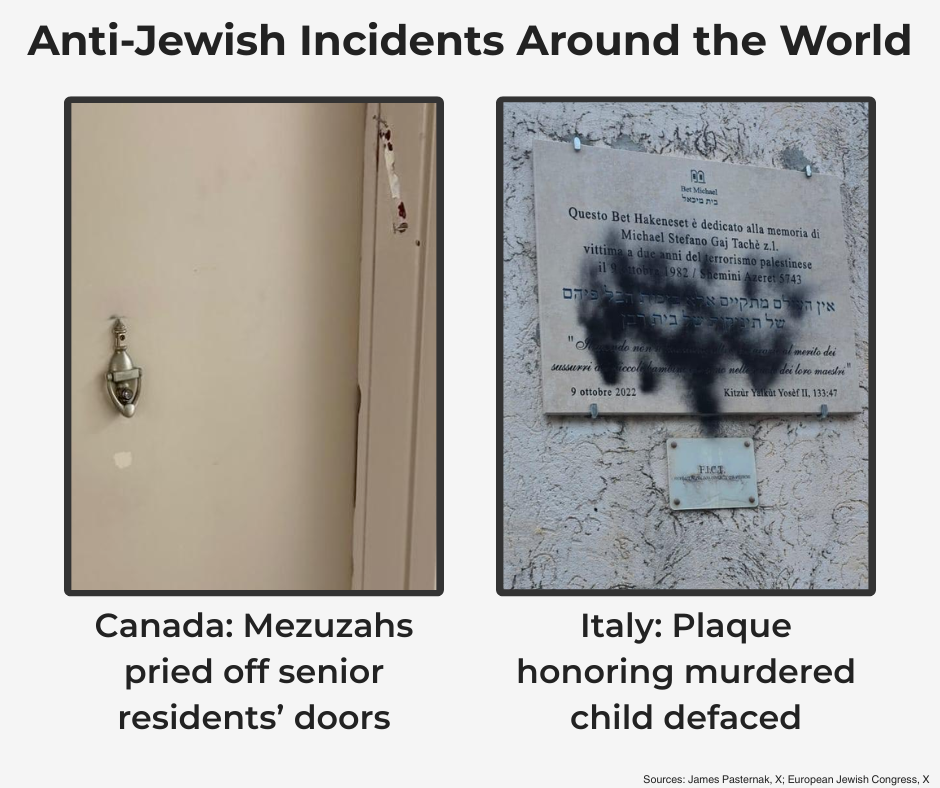
Hostility toward Jews around the world is no longer limited to organized protests or high-profile events. Jews have been harassed while eating at restaurants, denied service by Uber drivers and targeted in their own homes. Even listening to Hebrew music has triggered threats. These incidents show how anti-Jewish hostility now intrudes into everyday life for many Jews.
|