|
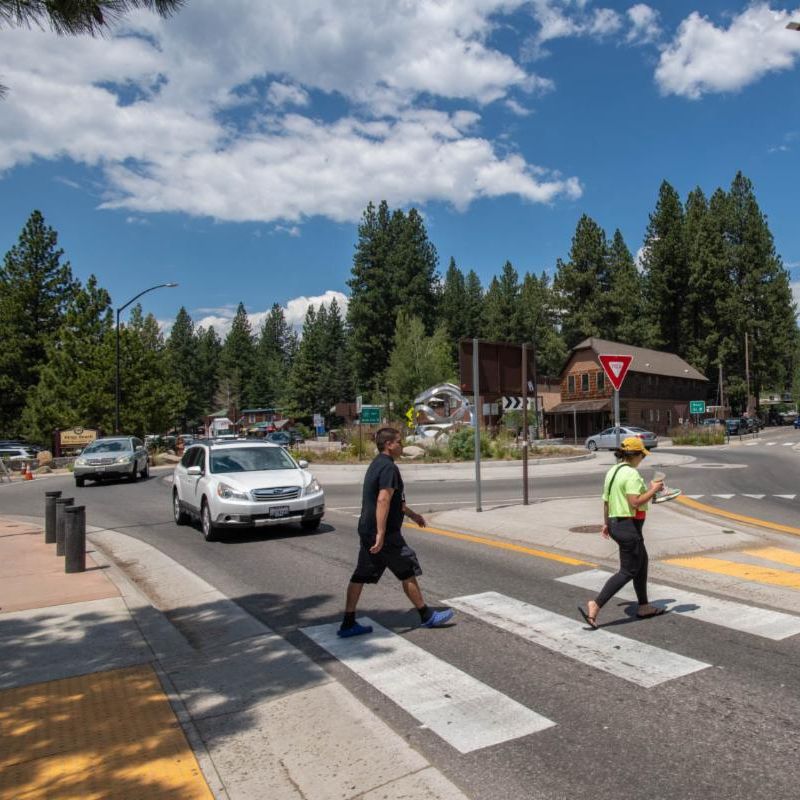
Pictured: Multiple road users travelling near a roundabout on State Route 28 in District 3. | | At Caltrans, our unwavering commitment to “Safety first” guides every aspect of our operations. Through the adoption of the Safe System Approach, we continuously work to improve road safety by examining and refining each component of the transportation system. Our goal is to build and maintain a network where everyone—from pedestrians to crew members conducting routine maintenance—can securely access our state transportation network. As outlined in the latest California Strategic Highway Safety Plan (2025-2029), achieving zero traffic fatalities and serious injuries depends on the collective dedication and collaboration from us all. | | |
With spring bringing increased activity to our roads, we pay tribute to those who have lost their lives while serving on the job during our annual Workers Memorial. From engineers to maintenance crews, our staff are dedicated to keeping Californians traveling safely. I encourage everyone to do their part to ensure our team members return home safely by staying alert and slowing down when driving through work zones.
Lastly, I'd like to share the 2025-2026 Road Safety Action Plan which exemplifies Caltrans’ ongoing commitment to safeguarding lives and ensuring that safety remains the highest priority across California’s transportation network. These initiatives have already led to a significant reduction in accidents, demonstrating their effectiveness in enhancing road safety. Together, we can achieve 30% fewer fatal and serious injury crashes on California roads by 2035.
| | | | |
Nailah Pope-Harden
Deputy Director, Director’s Office of Equity & Tribal Affairs
| |
| | 2026 Caltrans Workers Memorial – This month, we remember those who lost their lives while on the job. We hope that you take the time to attend one of the memorials being held throughout the state, either virtually or in person. Find an event near you here. | | | |
| | CALTAC Call for Applications – Caltrans is accepting applications to form the California Transit Advisory Committee (CALTAC). Applicants can be staff of public transit operators, local governments, regional planning agencies, transit advocacy organizations, community-based organizations, research organizations, etc. Members will provide strategic input and technical guidance to guide implementation of District Transit Plans, the new Director’s Transit Policy, and more. Learn more and apply by April 30, 2026. | | | |
| | April is Distracted Driver Awareness Month – Do you know the truth about distracted driving? Take the Myth vs. Fact quiz from the National Safety Council. Learn more and get free distracted driving resources nsc.org/Justdrive | | | |
| | Customer Service Request Form – Do you have any safety concerns on the State Highway System? From litter clean up to potholes…share the exact location of your concerns and submit a Customer Service Request with our Division of Maintenance. | | | |
| | EAC Subcommittee Meeting in April – The Data Implementation Subcommittee will meet on April 16, the Transportation Planning & Program Guidance Subcommittee will on April 17 , and the Community Engagement Policies & Practices Subcommittee will meet on April 20. All meetings will be virtual via Zoom. Exact meeting information is forthcoming and will be posted ten days prior. | | | |
On the Road with Caltrans:
Department Highlights
| |
How the GenAI Road Safety Insights Tool Can Enhance Safety
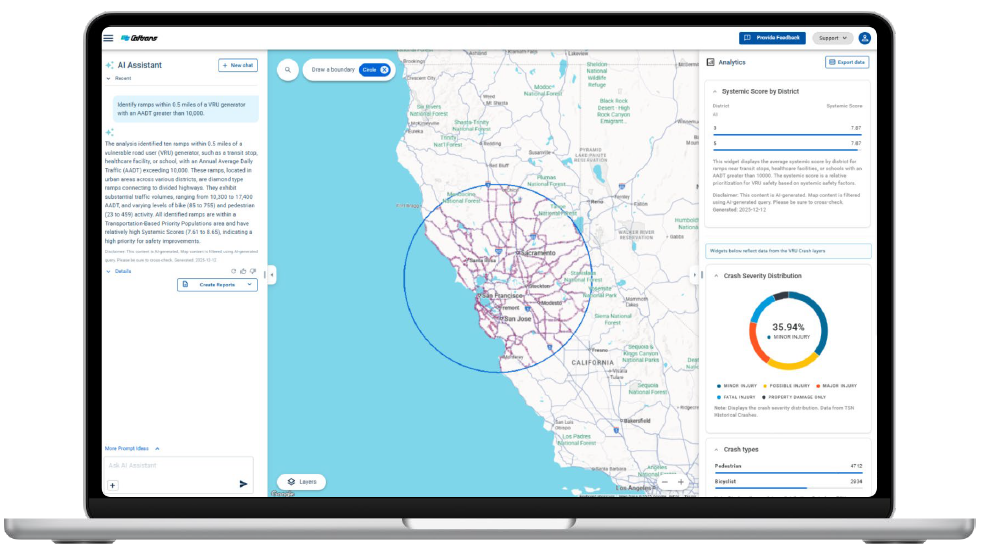
The Division of Safety Programs is rolling out the new GenAI Road Safety Insights (GenAI RSI)tool, which uses Caltrans data to help staff improve safety, especially in communities that are most burdened by the state transportation network.
| | Pictured: An image of the GenAI Road Safety Insight Tool interface. | | |
By integrating the Caltrans Equity Index, the tool helps identify areas that are most impacted and highlights places near schools, hospitals, and transit stops that could benefit from safety upgrades. It gives Caltrans practitioners an easy way to create road safety summaries and analyze data like crashes and traffic volume, so they can find where improvements are needed most. The tool also suggests the best spots to boost safety for people who walk, bike, or use transit in underserved areas, making sure equity is built into every step.
Learn more about how Caltrans is utilizing GenAI to address both safety and mobility challenges on California’s transportation system, register today for the Division of Research, Innovation, and Strategic Investments (DRISI) webinar on April 14, 2026 from 11 a.m. to 12 p.m.
| | People & Community Highlight | | 1st Tribe Earns Prestigious Clean CA Designation | | Pictured: A member of the Santa Ynez band of Chumash Indians tabling at a community event in District 5. | | |
Caltrans recently announced the Santa Ynez Band of Chumash Indians as the first tribe to earn the prestigious Clean California Community Designation, and one of just 45 communities statewide.
The designation program is part of Gov. Gavin Newsom’s $1.2 billion Clean California effort, launched in 2021 by Caltrans to clean up, reclaim and beautify public spaces statewide. The Community Designation recognizes communities that become local leaders in California’s Zero-Litter movement. Clean communities not only foster pride and well-being but also contribute to safer streets by reducing hazards and improving visibility for all road users.
Located outside Santa Barbara, the Chumash Indians earned their designation by meeting 10 criteria for creating a cleaner, healthier community. This included increased local cleanups, litter assessments and education efforts. Following their footsteps, in northern California, the Trinidad Rancheria recently received Clean California funding in partnership with Caltrans to beautify their iconic harbor with green infrastructure.
For more info to help your tribe become a Clean California Community, visit CleanCA.com/Designation or email Designation@CleanCA.com.
| | Tune into what our team is reading and listening to this month! | | |
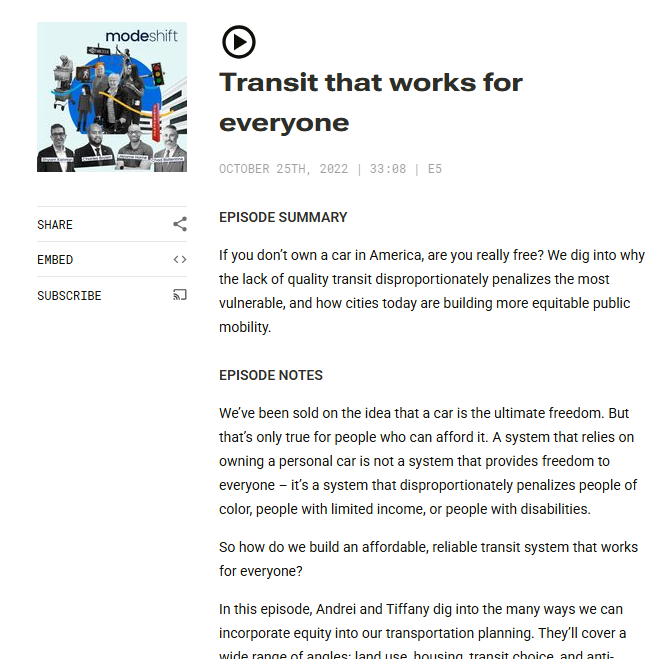
Equity & Engagement Policy Advisor, Tatsuko Go Hollo, listened to a podcast titled “Transit that works for everyone” from Modeshift. She shares, “I found this episode to be a great primer on connecting land use policy, transit access, and housing affordability to mitigate displacement while expanding transit. Much of the episode focused on Austin's Project Connect, a voter-approved transit expansion initiative. The initiative devoted $300 million to anti-displacement and installed an advisory committee made up of people at direct risk of displacement to advise on how funds are spent. As we continue to implement the Climate Action Plan for Transportation Infrastructure (CAPTI), including development of anti-displacement policies, I am hopeful we can look to existing examples of where equity has come first and explicit efforts have been made to guard against physical, social, and cultural displacement.”
| | | | | |