"Every investor has a different time horizon, a different perspective. To me, I’ve always been a long-term investor and so I’m much more interested in building this business brick by brick."
- John Malone
| | We are hosting a few small golf outings in the Greater Boston area this Fall. Please reach out for additional information if you are interested in joining us. | |
 | | NICOLAI TANGEN: "In a talk at the Arendalsuka conference in Arendal, Norway, titled “The Oil Fund Could Disappear, and It’s More Likely Than We Like to Believe,” Tangen discussed the possibility that the world’s largest sovereign wealth fund could run out of money. “Yes, of course it can,” Tangen said, citing extreme events such as nuclear war or biological terrorism. However, he cautioned that other scenarios—those both more likely and less drastic—could wipe out the fund. “There is no country in history that has managed to hold on to a large financial fortune over time,” he said. “Fortunes are always lost in the end.” Tangen noted that the Government Pension Fund Global has weathered financial turmoil in the past, but questioned what would happen if a financial downturn were prolonged. “How do we deal with that?” he said. “In the depression scenario, it could take a decade for the market to recover. A lost decade would be the ultimate test of the fund model.” Tangen warned that this would not only lead to a sharp decline in transfers from the fund, but tax revenues could also decline simultaneously with rising unemployment benefits and social security costs. “How long can we keep a fund for future generations if markets fall and we spend more than we should—for five years, 10 years or even longer?” he said. “The most important thing with a long-term investment fund is not to make bad decisions when markets are falling and turbulent. But that is precisely when it tends to happen, often in a bit of a panic.”" Chief Investment Officer - August 17, 2026
| |
| | | DAVID EINHORN: "Since Chairman Warsh hasn’t explained his policy approach and is leaving everyone guessing about what he might do, we thought we’d share our assessment. Chairman Warsh repeats emphatically that he will not tolerate inflation above 2.0%. To us, this echoes former ECB Chairman Draghi’s pledge to “do whatever it takes.” As it turned out, the markets took Chairman Draghi seriously and did the work such that “whatever it takes” turned out to be very little. Perhaps the hope is that the market will take Chairman Warsh’s words seriously and cause a self-fulfilling reaction, leading inflation to fall to 2% without the need to actually adjust policy. Let’s call this Plan A. There are early signs that it may be working. Since his confirmation on May 13, 1-year inflation swaps have fallen from 3.45% to 1.79% as of now. Of course, if merely insisting that excess inflation won’t be tolerated turns out to be insufficient, Chairman Warsh can always turn to Plan B and change policy later. While the market expects this, we disagree." Greenlight Capital - Augsut 6, 2026
|
| | | Sarah Guo: "My point of view on what is healthy for businesses, America, the ecosystem, individuals, and then there's what's already actually happened. The reality is we have over the last three years increasingly competitive open source models from all fronts. Largely China, but definitely also the US and Europe. Most recently Thinky, Poolside, people are waiting for Reflection, NVIDIA models, Mistral. We will have very powerful and already do have very powerful open-source models from Western countries. The cat is out of the bag, and these are in use everywhere. Even if you have no economic point of view on the labs and you just say, how is the diffusion of capability going to happen in the economy, there are a huge number of instances where it is too expensive, too sensitive, or too slow to use the model from the frontier providers today. And I think that's going to increase as we learn how to do more things with AI because it's actually quite expensive. It's objectively true that if the capabilities are more democratized, you will see them used in more ways. I want to see that happen. I do think that it would be irresponsible not to understand the safety profile of models as they progress, because you draw the line — we have companies that use frontier model capability for defensive cybersecurity and for biology work. If it works for those use cases, it obviously also should work in similar ways for the offensive use cases or the bioweapons, biosecurity use cases. We need to look at that reality and think about what are the other ways in which you control this." Colossus - September 1, 2026
|
| | | Brad Jacobs: "I absolutely do like to meet with the top 15 or so people [at a company I'm buying] at a minimum for an hour and a half, two hours apiece, but as long as possible. And I just want to ask them truthfully, "Would you pay billions of dollars for this company if it was your billions of dollars?" and see how they react to that. And it's amazing what people will say. Sometimes people say, they think about it for a while. They go, "I guess so." That’s not a good answer. That’s not a good answer. [I want] a lot more conviction than that. I want to hear why. Give me detail. I want to hear what—what's working in this company that if you were to buy it, we should continue doing it because it works really, really well. What's going on in the company that you disagree with that you think we could do something in a different way and have a better result? And hear what they say about that, and then see what patterns emerge, what themes emerge from all the different people we speak with separately." Morgan Stanley - August 27, 2026
| |
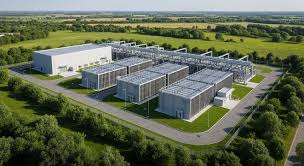
| | | UNLIKELY WINNERS OF THE DATA CENTER BOOM: SOUND CONSULTANTS: "“Acoustics is normally an afterthought, but community concern has forced acoustics into the foreground,” says Murray, now a New York-based principal at Danish architecture, engineering and consulting company Rambøll Group A/S. The amount of work for acousticians today is “unprecedented,” agrees Alfred Maniscalco, principal and director of client management at Trinity Consultants, a global engineering consulting firm that counts JPMorgan Chase & Co., New York City’s Hudson Yards and Bloomberg Businessweek parent company Bloomberg LP among its clients. “Before AI entered the picture, we were receiving four to five requests for proposal a year from data centers. Now we’re getting that many a month.” There are more than 3,000 operational data centers in the US and about 1,500 more in development, with almost $1 trillion in artificial intelligence capital expenditures on the line this year, increasing to $5.2 trillion by 2030. The facilities get a lot of attention for their intensive water and energy usage, but their constant noise emission has nearby residents up in arms too. Facilities house around-the-clock cooling systems, diesel-powered generators and jet-engine-based turbines that can, at close quarters, exceed 90 A-weighted decibels, equivalent to a food blender or passing motorcycle. (While decibels reflect raw sound intensity, A-weighted decibels, or dBA, are meant to more accurately reflect how humans might hear sound.) Industrial machinery can produce at scale both tonal noise, such as an air conditioner or emergency siren sound, and infrasound, lower-frequency sound that some people can feel even if they can’t hear it. Residents who’ve filed lawsuits referencing excessive noise near data centers cite health impacts including cardiac issues, permanent hearing loss and insomnia; lowered property values; and even animal endangerment. (Dogs, who can hear frequencies that are inaudible to humans, may suffer even more from the constant humming.)" Bloomberg Businessweek - August 26, 2026
| |
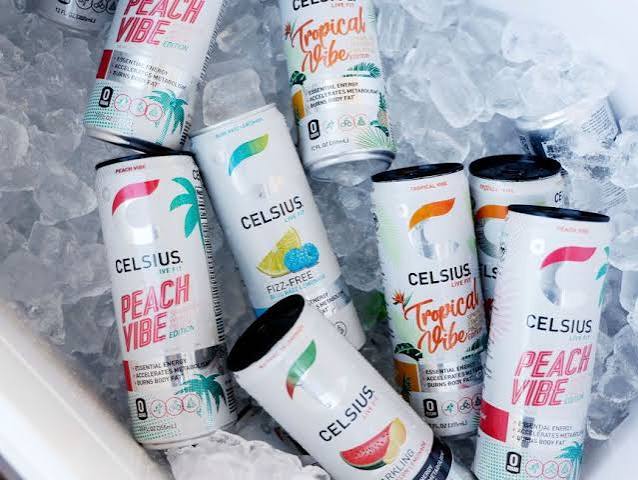
HOW AMERICA GOT HOOKED ON CELSIUS: "The company rebranded Celsius’ cans twice while keeping the same formula, which includes a staggering 200 milligrams of caffeine per can, more than Red Bull or Monster. By the second time, in late 2016, it had abandoned its original pitch as a calorie-burning green tea for dieters, instead recasting itself as a sugar-free, fitness-focused, pre-workout energy drink for the health-conscious, including women, whom the industry had largely ignored. Within six years, Celsius stepped in where Bang Energy, its once much larger competitor, stumbled, namely taking Bang’s spot on PepsiCo trucks when Bang’s relationship with the straight-laced distributor fell apart. “It was just, who had the right opportunity to capitalize on it successfully,” Ken Sadowsky, an industry veteran, investor and adviser known as the Beverage Whisperer, says of the other company’s missteps. “And they did it.”" Bloomberg Businessweek - August 27, 2026
|
| | | JERSEY MIKE’S IS WINNING THE SANDWICH WAR. IT STILL NEEDS TO WIN OVER GEN Z: "But to further rise from these levels over the long term, Jersey Mike’s has to pull off a rare feat in the franchise business: adding thousands of stores without letting the freshness and quality slip. It also has to start winning over Gen Z in an era of fickle wellness trends and viral food crazes. That is a lot to ask of a chain whose most loyal customer is old enough to find Danny DeVito a reason to buy a sandwich. The demographic numbers are stark. Roughly 70% of Jersey Mike’s customers are Gen Xers or Boomers, while Gen Z accounts for just 2%, according to Wall Street analyst reports citing company figures. It is also an unusually affluent crowd for fast casual: More than 60% of patrons earn more than $80,000, and only 14% make under $40,000. Part of the draw is old-school deli theater. Employees bake bread fresh every morning and slice hefty portions of meat and cheese to order before finishing them “Mike’s Way,” with onions, lettuce, tomatoes, red wine vinegar, oil and spices. Sitting at the top of the K is a comfortable place to be. But to keep taking share from a shrinking Subway, Jersey Mike’s has to reach more price-conscious diners." The Wall Street Journal - September 1, 2026
|
| | | TWO FOSSIL FUEL COMPANIES ARE DRIVING THE DATA CENTER BOOM: "While it may not be a household name like Chevron or Exxon, Williams is one of biggest oil and gas infrastructure companies in the US—and it has also created a highly profitable data-center services business. Last year, Williams announced that it would build a power plant and associated pipeline infrastructure in Ohio solely for use by a data center. Building islanded infrastructure like this, also referred to as “behind-the-meter” power, has become an increasingly popular option for tech companies that don’t want to deal with long wait times to connect to the electric grid or impact consumer electricity prices. Williams is now building six behind-the-meter gas plants for data centers across the country, including four projects serving Meta data centers in Ohio. (Meta declined to comment.) In mid-July, Williams announced more than $5 billion in investments for its data center ventures, including money from private equity giant KKR. Williams’ four power plants that have filed permit applications could, according to those applications, emit up to 9.6 million tons of greenhouse gases per year, which is equivalent to the emissions from more than 22 average natural gas plants, according to the Environmental Protection Agency." Wired - August 6, 2026
| | "Thanks for the invite to the Roundtable, it’s definitely the most productive event of the year for us. I appreciate you continuing to curate a great roster of managers." | "I can tell you it’s becoming the one go to for the top allocators I talk to. Thanks for having me again." | "In a world that has become awash with conferences, yours stands out in terms of managers and content." | | |
THIS MESSAGE IS BEING PROVIDED STRICTLY FOR INFORMATIONAL PURPOSES, IS NOT A RESEARCH REPORT AND CONTAINS INSUFFICIENT INFORMATION TO MAKE AN INVESTMENT DECISION. NO INVESTMENT ADVICE IS BEING PROVIDED.
| | | | |