Sasakawa USA Newsletter November Highlights | |
|
Included in this issue of the newsletter:
- Message from Sasakawa USA's Chairman Satohiro Akimoto
November Activities
- Japan US Military Program (JUMP): West Point
- Japan US Military Program (JUMP): Quantico
- Japan US Military Program (JUMP): Air Force Academy
- Policy Briefing: Discussion with Mr. Hideshi Tokuchi
- U.S.-Japan Regional Alliance Series: University of Pennsylvania
- U.S.-Japan Regional Alliance Series: University of Washington
- U.S.-Japan Regional Alliance Series: Tulane University
- Policy Briefing: Discussion with Dr. Miwako Kitamura and Ms. Yumiko Mori
- Japan Self-Defense Forces Day: Ambassador's Reception
External Engagements
- Mr. James Schoff Speaks on 'Trilateral Cooperation and the Korean Peninsula: The U.S., South Korea, and Japan Partnership' at 2024 Global Korea Forum
Publications
- Sasakawa USA Emerging Experts Delegation (SEED): 2024 SEED Publication on DRR and WPS (Ms. Anjana Dayal de Prewitt)
-
Ms. Shanti Shoji Publishes in Wedge on Women, Peace and Security
- US-Japan NEXT Alliance Initiative: Japanese Version of 'Allied on AI Assurance: Technology to Enhance AI Security and Safety'
-
Mr. James Schoff Publishes in The National Interest on 'How Japan Can Strengthen the U.S. Steel Industry'
Upcoming Activities
- U.S.-Japan Research Exchange: Drs. Misaki Kiguchi and Hiromi Yoshida
Announcements
- US-Japan NEXT Alliance Initiative: Summer Internship
| |
Message from Sasakawa USA's Chairman Satohiro Akimoto | |
|
I was in Japan during the last week of November. The political ambiance in Tokyo was quite different from my previous trip to Tokyo in September. The Liberal Democratic Party (LDP) lawmakers were clearly disappointed at, and even discouraged by, the results of the parliamentary election on October 27. The LDP, led by Prime Minister Shigeru Ishiba and its coalition junior partner Komeito, lost their majority in the House of Representatives. The LDP and Komeito jointly secured only 215 seats (LDP 191 seats, Komeito 24 seats) in the 465-seat chamber. In the meantime, the opposition parties and independents secured 250 seats. The Constitutional Democratic Party (CDP), the largest opposition party, increased its seat count to 148 seats from 98 before the election.
The devastating loss of majority in the Lower House by the LDP and Komeito was the first time in 15 years since they lost their grip of the Lower House on July 21, 2009. That time, the Democratic Party of Japan (DPJ), led by Yukio Hatoyama, recorded a stunning victory by increasing its seats by 193 to 308 to capture a majority in the House of Representatives. In contrast, the LDP lost 181 seats to 119 seats and Komeito lost 10 seats to 21 seats. This was the first time that the LDP lost the leading party position since the party was established in 1955. Back then, the DPJ formed three cabinets led by Prime Minister Hatoyama, Prime Minister Naoto Kan, and Prime Minister Yoshihiko Noda for 3 years and 3 months from September 2009 to December 2012.
The Democratic Party of Japan-led administrations are generally regarded as failures or ineffective at best due to a lack of knowledge and experience in running the country, resulting in many broken promises. Many of these were not realistic to begin with, such as solving issues related to “seiji to kane” (politics and money), and the DPJ also experienced irregularity in the financial records of its top leaders, a convoluted response to the Great East Japan Earthquake and Tsunami, confusion in budget screening called Jigyo Shiwake, and divided leadership at the top.
The shocking defeat of the LDP and Komeito this time is reminiscent of that disastrous defeat of the LDP 15 years ago. While Prime Minister Ishiba remains the political leader of the nation, his leadership has been seriously challenged by the opposition parties. In fact, he had to concede critically important positions in the standing and special committees in the House of Representatives, such as chair of its Budget Committee to Rep. Jun Azumi, a leader of the CDP. It is the first time since 1994 that an opposition lawmaker is chairing this powerful committee, which discusses and prioritizes a wide variety of important topics of national significance.
Prime Minister Ishiba has had a rocky start to his prime ministership. The opposition parties, which have been vitalized by the election results, have been putting pressure on him. The conservatives, which have been a big support base of the LDP, have started to question his leadership quality and attack him over his lackluster debut at the G20 summit in Brazil. Yomiuri and Sankei, two conservative papers, strongly questioned the legitimacy of Ishiba’s political leadership following the spectacular defeat in the House of Representative election.
However, there is a ray of hope for Prime Minister Ishiba. The Japanese general public seems to be willing to give him a chance. In many leading polls, despite the fact that Prime Minister Ishiba failed to reach his goal of securing a majority in the Lower House together with Komeito, only about one third of the respondents expressed the opinion that he should resign. In fact, two thirds of the respondents think that the defeat in the House of Representatives election was due to the party’s scandals over slush funds and an inability to revitalize the economy. In other words, Prime Minister Ishiba, who has been an outsider within the party, is not directly responsible for the defeat, and he may have a pathway to popularity if he can address the voters’ demands effectively.
Prime Minister Ishiba may be on borrowed time, but nevertheless, he seems to be given some time to win back voter confidence for the LDP. It is a political irony that Prime Minister Ishiba, who has been an “opposition” within the LDP, is now tasked to save the LDP.
| |
Japan US Military Program (JUMP): West Point | |
|
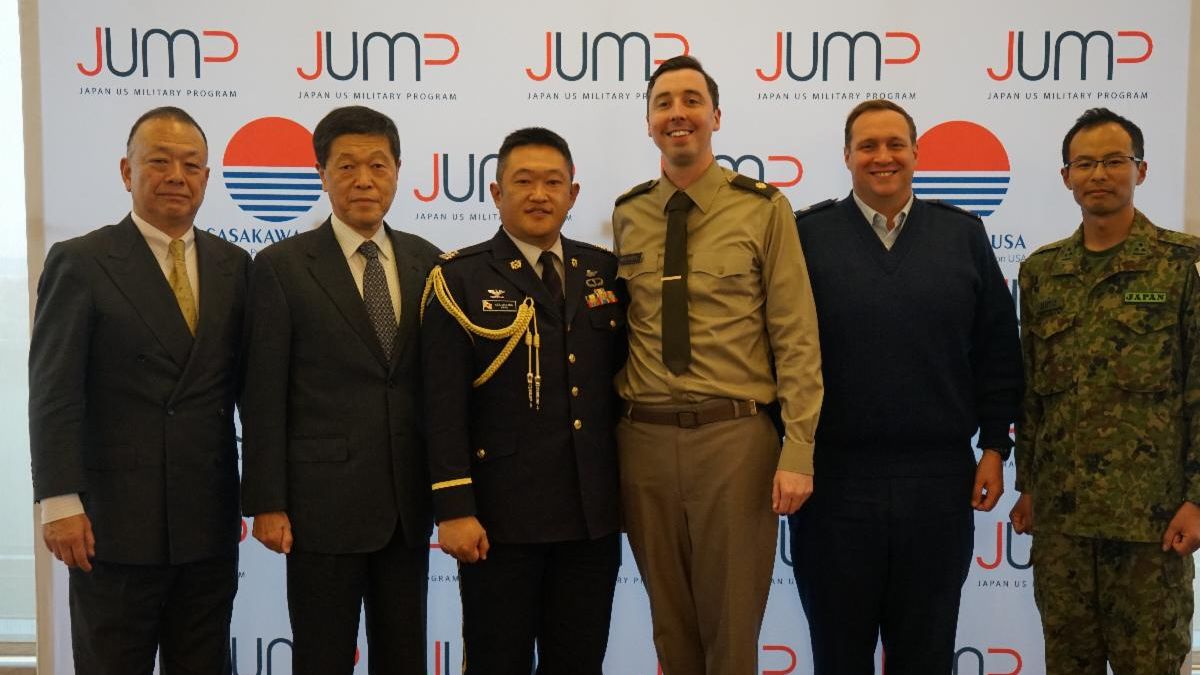
On November 20, Sasakawa USA brought the Japan US Military Program (JUMP) to the United States Military Academy at West Point, New York. The panel discussion on "Key Strategic Challenges Facing the U.S.-Japan Alliance" featured remarks by Mr. Hideshi Tokuchi, president of the Research Institute for Peace and Security and formerly Japan's first vice-minister of defense for international affairs; Colonel Satoshi Masaka (JGSDF), military attaché at the Embassy of Japan; and Major Peter Mitchell (USA), course director of defense and strategic studies at West Point. The event attracted nearly 70 West Point cadets and faculty members and fostered a wide-ranging dialogue about the nature of the U.S.-Japan alliance, how both countries view the security challenges in the Indo-Pacific, and how both the U.S. and Japan can navigate their political transitions.
JUMP is made possible by financial support from the Embassy of Japan.
Photo (left to right): Dr. Satohiro Akimoto, Mr. Hideshi Tokuchi, Colonel Satoshi Masaka (JGSDF), Major Peter Mitchell (USA), Lieutenant Colonel Rob Payne (USAF), and Captain Yuki Muto (JGSDF)
| |
Japan US Military Program (JUMP): Quantico | |
|
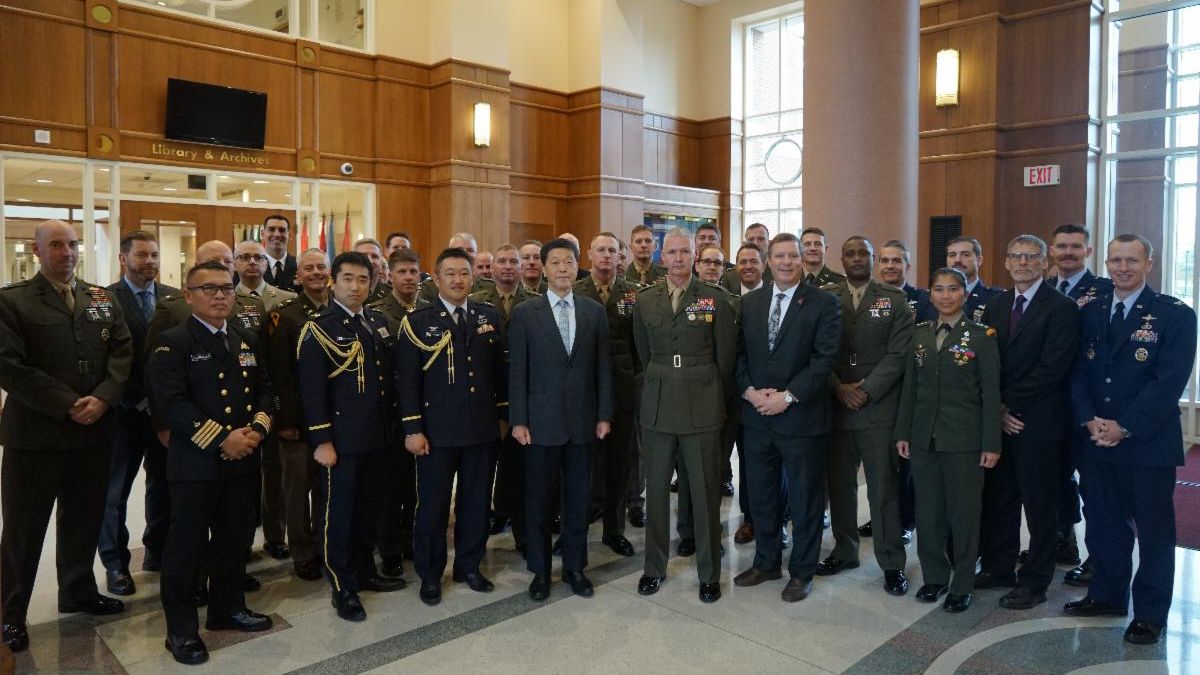
On November 19, Sasakawa USA’s Japan US Military Program (JUMP) hosted a panel event on "Transitioning to an Operational Alliance: Bilateral Implications of Upgrading U.S. Forces Japan to a Warfighting Command" in partnership with the Marine Corps War College in Quantico, Virginia. The panel featured remarks by Brigadier General Matthew Tracy (USMC), president of Marine Corps University; Mr. Hideshi Tokuchi, president of the Research Institute for Peace and Security; Mr. James Schoff, senior director at Sasakawa USA; and Colonel Satoshi Masaka (JGSDF), military attaché at the Embassy of Japan. The audience included approximately 50 Marine Corps officers and featured discussions of command and control relationships between the U.S. and Japan, as well as ongoing policy changes in both countries to enable closer cooperation through the establishment of the Japan Joint Operational Command (JJOC) and reforms within U.S. Forces Japan.
JUMP is made possible by financial support from the Embassy of Japan.
Photo: Colonel Satoshi Masaka, Mr. Hideshi Tokuchi, Brigadier General Matthew Tracy (USMC), Mr. James Schoff, and students at the Marine Corps War College
| |
Japan US Military Program (JUMP): Air Force Academy | |
|
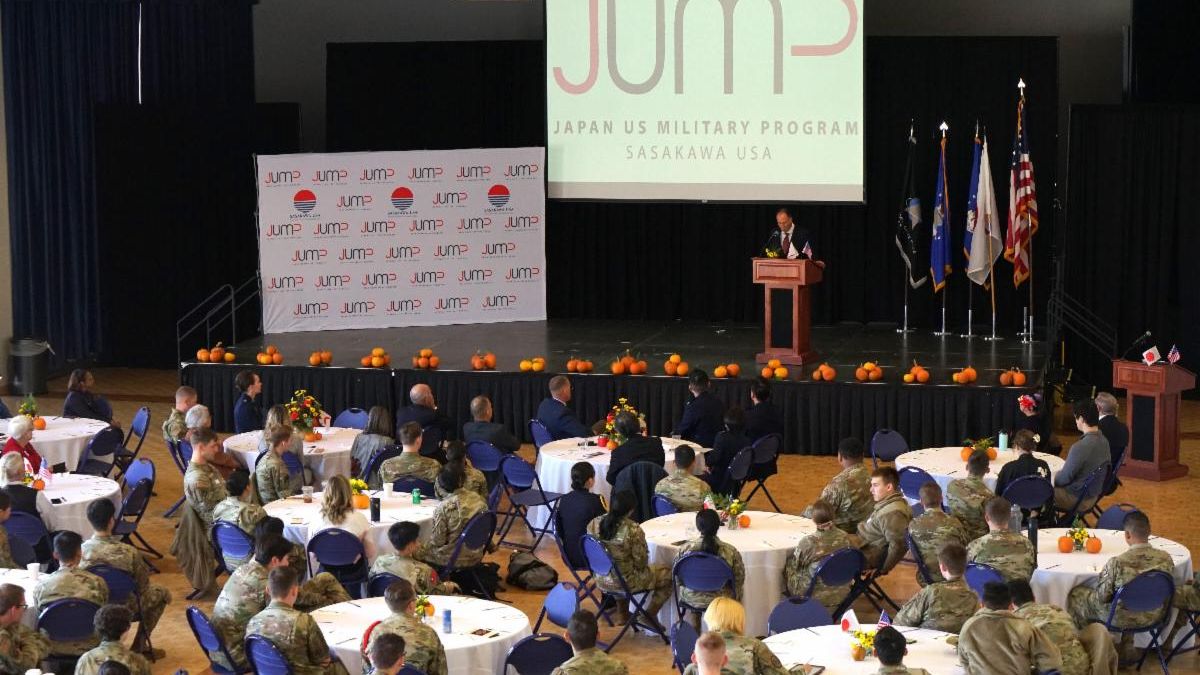
On November 2, Sasakawa USA’s Japan US Military Program (JUMP) hosted an event on "The Importance of the U.S.-Japan Alliance as a Global Partnership" at the U.S. Air Force Academy, in partnership with the Japan-America Society of Southern Colorado (JASSC). Over 130 people attended the event, primarily consisting of U.S. Air Force cadets, along with faculty members, veterans, and community participants. The event featured keynote remarks by Lieutenant General Leonard Kosinski (Ret.), former director of logistics at the Joint Staff and former deputy commander of the Fifth Air Force at Yokota Air Base in Japan; and Colonel Yuka Nakazato (JASDF), air and space attaché at the Embassy of Japan. Both speakers shared their perspectives on the recent evolution of the U.S.-Japan alliance in light of the increasingly severe threat environment in the Indo-Pacific region. Additionally, they emphasized the implications of global events, especially considering the Russian invasion of Ukraine, on national security strategies for both the U.S. and Japan.
JUMP is made possible by financial support from the Embassy of Japan.
Photo: Lieutenant General Leonard Kosinski (USAF, Ret.) delivers keynote remarks at the JUMP event at the U.S. Air Force Academy.
| |
Policy Briefing: Discussion with Mr. Hideshi Tokuchi | |
|
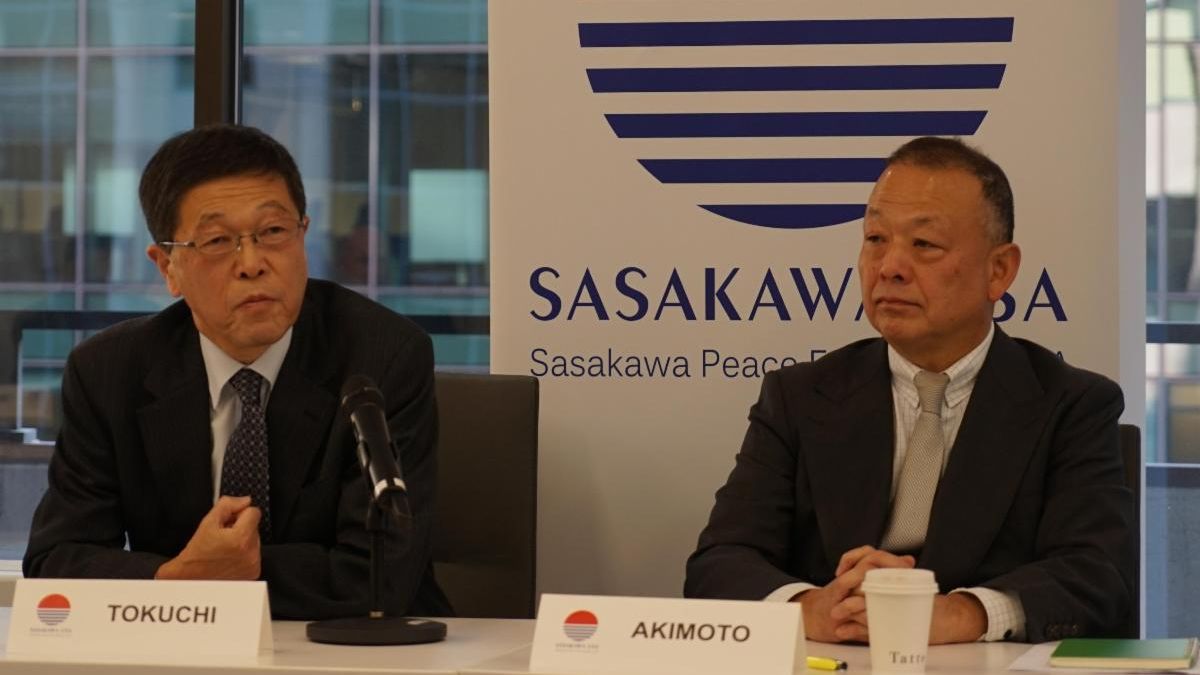
On November 18, Sasakawa USA hosted Mr. Hideshi Tokuchi, president of the Research Institute of Peace and Security and distinguished fellow (non-resident) at Sasakawa USA, for a Policy Briefing on “The U.S.-Japan Alliance Under New Leadership in Tokyo and Washington.” Mr. Tokuchi shared his views on the security context facing the alliance, with a particular emphasis on how Russia, North Korea, and China are disrupting global and regional order. In addition, he outlined the challenges that new administrations in both Japan and the United States will need to navigate in order to maintain and strengthen the alliance relationship in the coming years. Mr. Tokuchi’s insights reflect a critical moment for the U.S.-Japan alliance as it adapts to an evolving geopolitical environment while striving to maintain its foundational principles of mutual defense and cooperation.
Photo (left to right): Mr. Hideshi Tokuchi and Dr. Satohiro Akimoto
| |
|
U.S.-Japan Regional Alliance Series:
University of Pennsylvania
| |
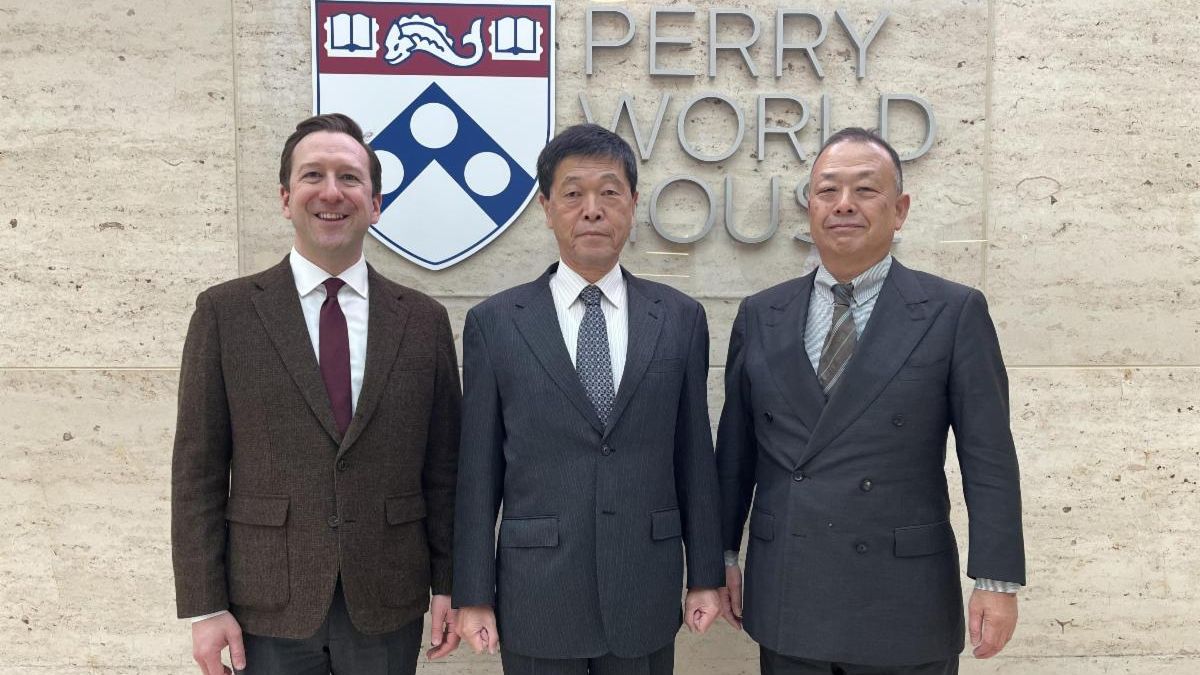
On November 21, Sasakawa USA hosted a U.S.-Japan Regional Alliance Series event at the University of Pennsylvania in partnership with the Perry World House. This event featured Mr. Hideshi Tokuchi, president of the Research Institute of Peace and Security and distinguished fellow (non-resident) at Sasakawa USA, as the keynote speaker for two separate sessions with University of Pennsylvania faculty and students. In each session, Mr. Tokuchi outlined ongoing security challenges, both in the context of global security and the regional scope of the Indo-Pacific. He also detailed the primary issues facing the U.S.-Japan alliance in this uncertain security landscape, particularly with an eye towards how new leadership in Tokyo and Washington will need to jointly navigate these challenges. Following Mr. Tokuchi’s presentation at each session, Dr. Daniel Smith, associate professor of political science at the University of Pennsylvania, moderated an engaging discussion.
Photo (left to right): Dr. Daniel Smith, Mr. Hideshi Tokuchi, and Dr. Satohiro Akimoto
| |
U.S.-Japan Regional Alliance Series:
University of Washington
| |
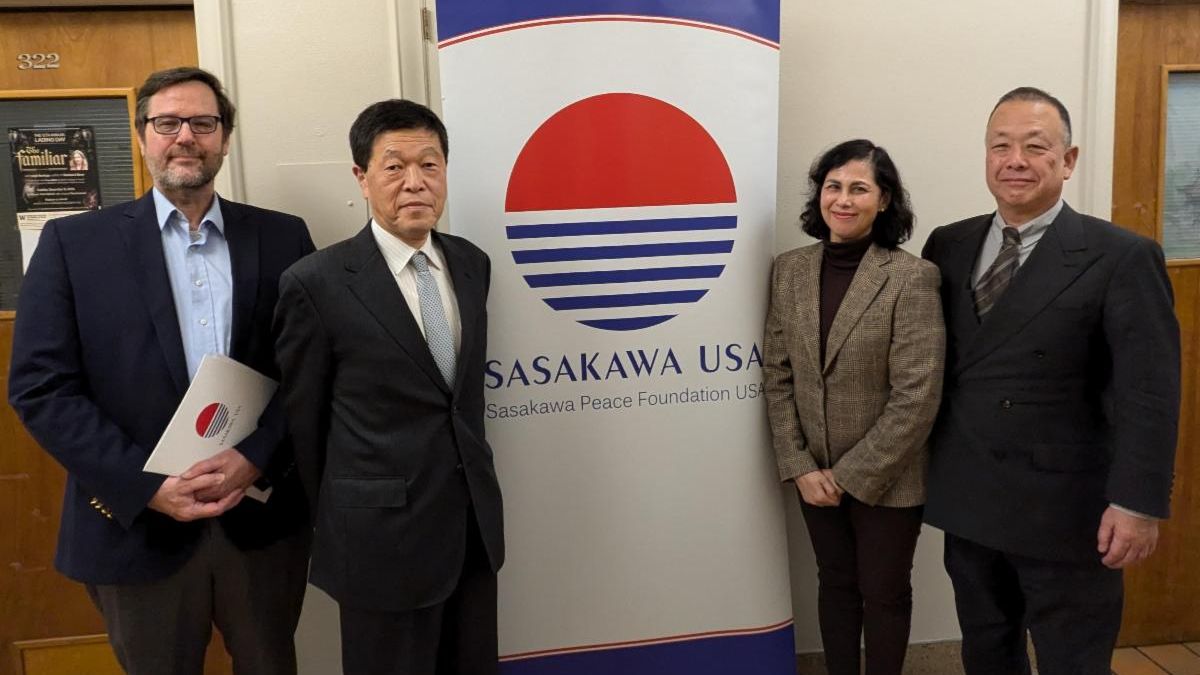
On November 22, Sasakawa USA hosted a U.S.-Japan Regional Alliance Series event at the University of Washington in partnership with the Japan Studies Program at the Henry M. Jackson School of International Studies. The event began with a reception with graduate students who engaged and shared their questions on the U.S.-Japan relationship with Mr. Hideshi Tokuchi, president of the Research Institute of Peace and Security and distinguished fellow (non-resident) at Sasakawa USA, and Dr. Satohiro Akimoto, chairman and president of Sasakawa USA. Mr. Tokuchi delivered his keynote address focusing on current global and regional security issues, as well as the future of the U.S.-Japan alliance amid new leadership transitions in both Tokyo and Washington. Following Mr. Tokuchi’s remarks, Dr. Robert Pekkanen, professor at the Henry M. Jackson School of International Studies, moderated a fruitful discussion between Mr. Tokuchi and the attendees.
Photo (left to right): Dr. Robert Pekkanen, Mr. Hideshi Tokuchi, Dr. Saadia Pekkanen, and Dr. Satohiro Akimoto
| |
|
U.S.-Japan Regional Alliance Series:
Tulane University
| |
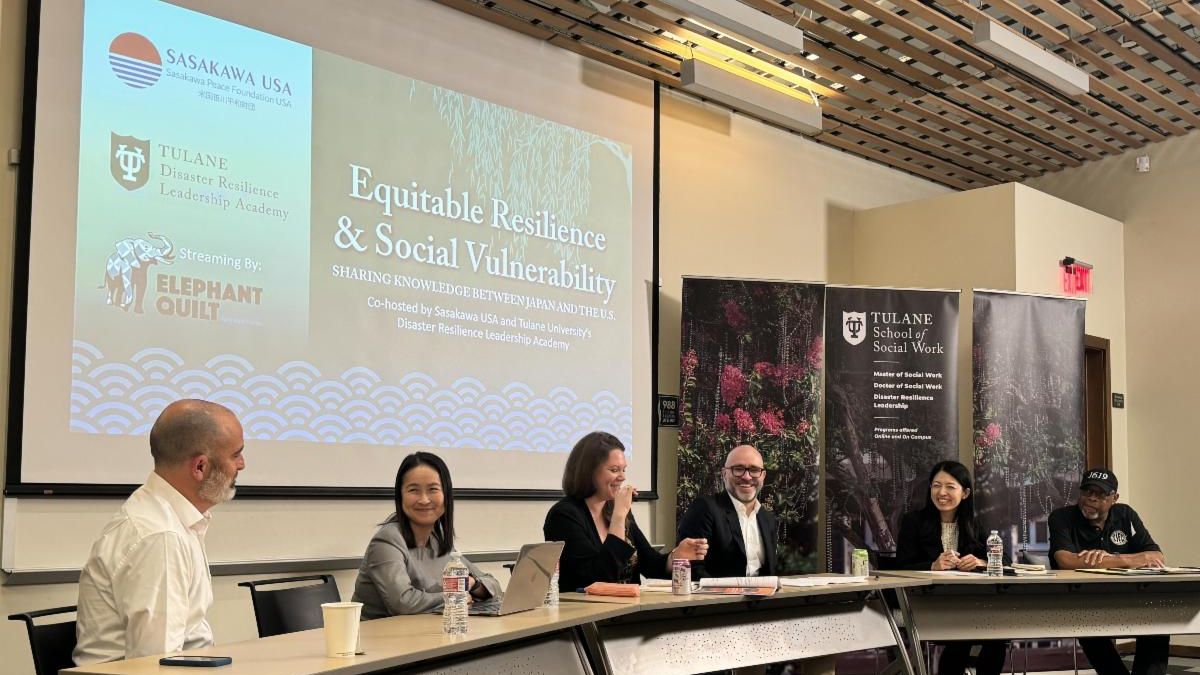
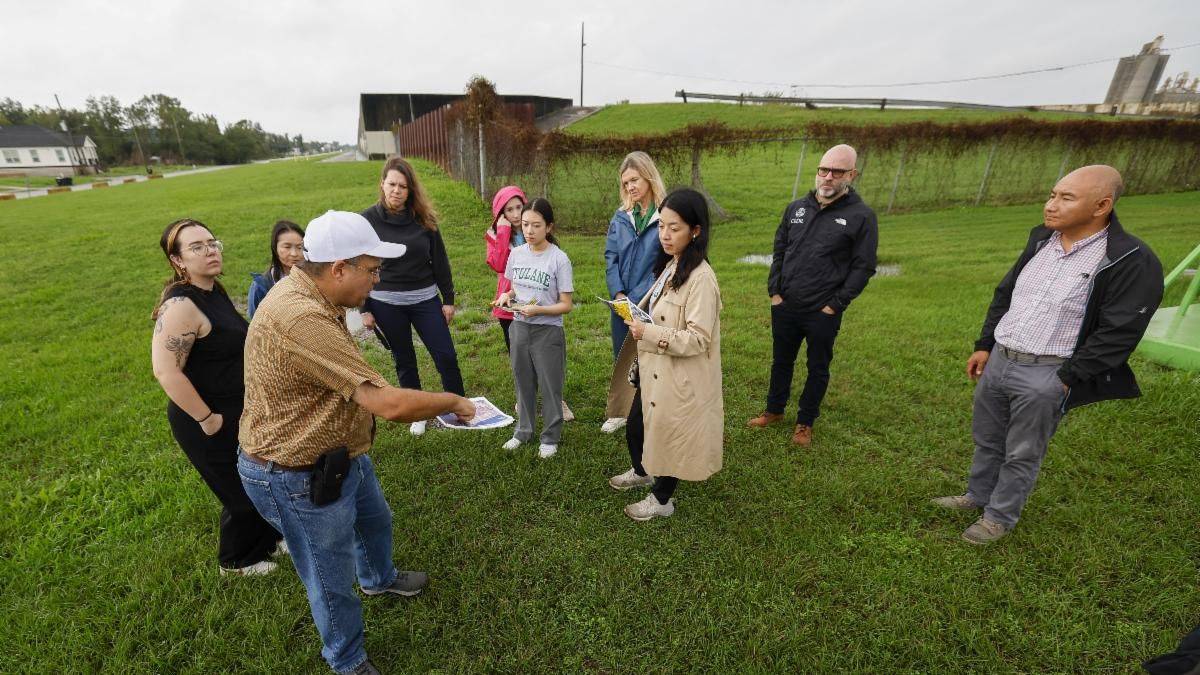
On November 12, Sasakawa USA held the U.S.-Japan Regional Alliance Series event, “Equitable Resilience and Social Vulnerability: Sharing Knowledge Between Japan and the U.S.,” in partnership with Tulane University’s Disaster Resilience Leadership Academy (DRLA). The symposium brought together academic experts and civil society leaders from both New Orleans and Japan to share insights gained on strengthening community resilience in the aftermath of Hurricane Katrina, the Great East Japan Earthquake, and the Noto Peninsula Earthquake. The first panel focused on the concept of equitable resilience, featuring Mr. Tim Davidson, DRLA fellow and adjunct instructor; Mr. Arthur Johnson, CEO of the Lower 9th Ward Center for Sustainable Engagement and Development; and Dr. Miwako Kitamura, a researcher (specially appointed) at the International Research Institute of Disaster Science (IRIDeS). Dr. Regardt Ferreira, professor and director of the DRLA, moderated the discussion.
The second panel on community-based approaches to resilience included remarks from Dr. Alessandra Jerolleman, DRLA senior fellow; Ms. Candice Sorapuru and Dr. Nyoki Cosey-Brown, co-founders of the Innovative Approaches Counseling Center; Ms. Sarah Parks, executive director of Grace at the Green Light; and Ms. Yumiko Mori, founder and chairwoman of Comachiplus. The panel was moderated by Mr. Corey Eide, DRLA senior fellow and adjunct instructor.
The third panel explored aid ecosystems in both countries, with comments from Mr. Eide; Ms. Alyssa Quaranta, senior program associate for Environmental Programs; and Ms. Isabel Barrios, senior program officer for the Greater New Orleans Foundation; and Mr. James Gannon, CEO of Peace Winds America. Mr. David Leiva, DRLA senior fellow and adjunct instructor, moderated the discussion. A fireside chat on the key takeaways from the three sessions concluded the symposium, featuring select panelists, as well as Dr. Ferreira and Ms. Shanti Shoji, director of programs at Sasakawa USA. This event fostered valuable exchanges between U.S. and Japanese experts on building resilient communities capable of effectively responding to disasters.
The program concluded with a field study day in New Orleans for speakers to gain a deeper understanding of the city’s experiences with disaster response following the devastation brought about by Hurricane Katrina in 2005. Professor Richard Campanella, geographer and associate dean for research at the Tulane School of Architecture, provided a comprehensive tour of the city and its deeply intertwined history with natural disasters. Speakers reflected upon the unique factors of disasters in New Orleans and gleaned lessons to bring back to their own communities in both the U.S. and Japan.
Top photo (left to right): Mr. Corey Eide, Dr. Miwako Kitamura, Ms. Shanti Shoji, Dr. Regardt Ferreira, Ms. Yumiko Mori, and Mr. Arthur Johnson
Bottom photo: Speakers participate in a field study of New Orleans with Professor Richard Campanella in an area where the levee was breached in the lower ninth ward during Hurricane Katrina.
| |
|
Policy Briefing: Discussion with
Dr. Miwako Kitamura and Ms. Yumiko Mori
| |
|
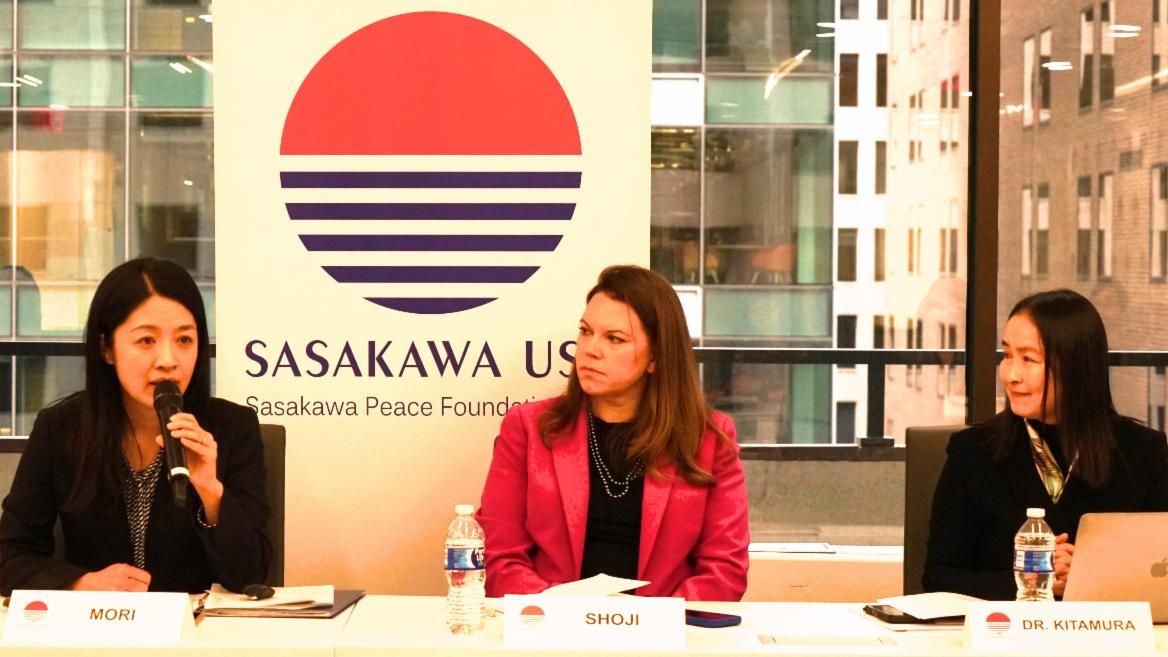
On November 14, Sasakawa USA hosted a Policy Briefing event, “Community Foundations: Fostering Resilience in Japan’s Disaster Response,” featuring Dr. Miwako Kitamura, a researcher (specially appointed) at the International Research Institute of Disaster Science (IRIDeS), and Ms. Yumiko Mori, the founder and chairwoman of Comachiplus. Ms. Shanti Shoji, director of programs at Sasakawa USA, moderated the event. Dr. Kitamura and Ms. Mori shared insights from their work to foster equitable communities that lead to increased resiliency in response to Japan’s frequent natural disasters, particularly for those most socially vulnerable. The discussion highlighted the unique needs of groups such as the elderly, women, children, and those with disabilities when preparing for and responding to disasters, as well as ways to intentionally and meaningfully include their voices to create a strong foundation of trust and resilience within communities.
Photo (left to right): Ms. Yumiko Mori, Ms. Shanti Shoji, and Dr. Miwako Kitamura
| |
Japan Self-Defense Forces Day: Ambassador's Reception | |
|
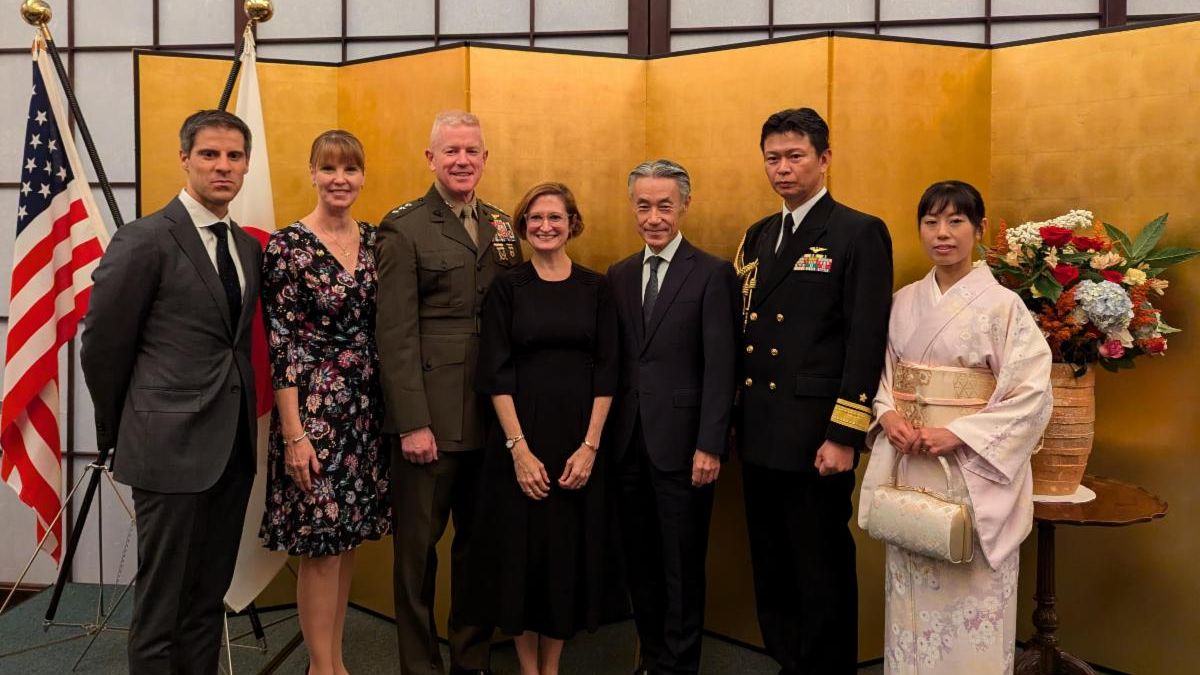
On November 1, Sasakawa USA participated in a reception to mark the 70th anniversary of the Japan Self-Defense Forces (JSDF) at the ambassador of Japan’s residence in Washington, DC. At this special event, Sasakawa USA showcased the Japan US Military Program (JUMP) to the guests, which included American servicemembers, JSDF members, and counterparts from various embassies in Washington, DC. The reception featured remarks from Ambassador Shigeo Yamada and Lieutenant General Paul J. Rock (USMC), as well as a toast by Rear Admiral Takaaki Hayamizu (JMSDF), defense and naval attaché at the Embassy of Japan. During the reception, Sasakawa USA connected with numerous American servicemembers and veterans who have previously served in Japan, as well as some that will be stationed there soon.
Photo: Lieutenant General Paul Rock (USMC) (third from left), Ambassador Shigeo Yamada (third from right), and Rear Admiral Takaaki Hayamizu (JMSDF) (second from right)
| |
Mr. James Schoff Speaks on ‘Trilateral Cooperation and the Korean Peninsula: The U.S., South Korea, and Japan Partnership’ at 2024 Global Korea Forum in Washington | |
|
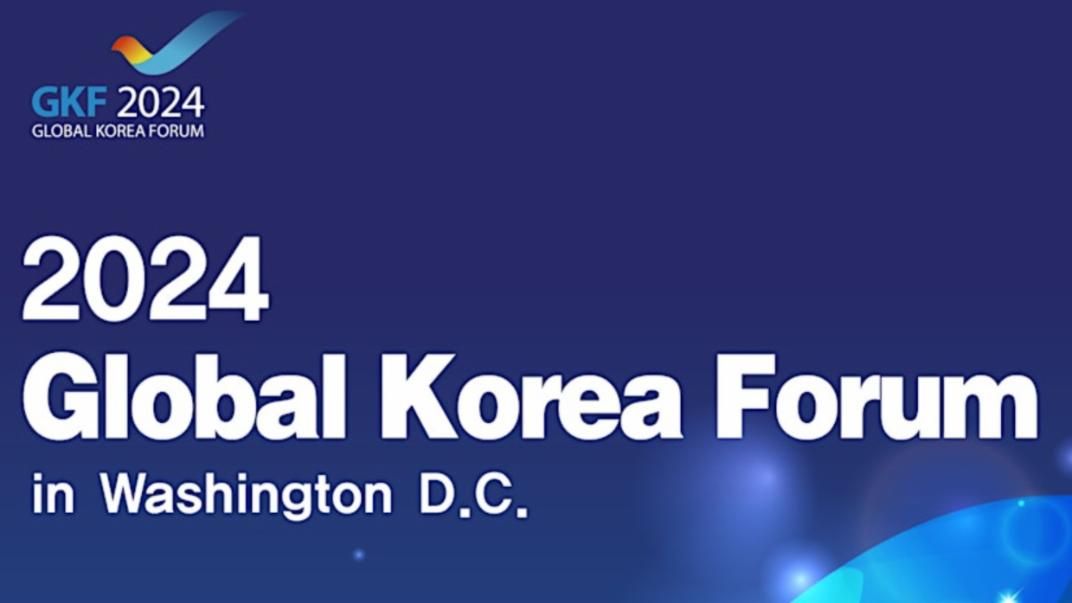
US-Japan NEXT Alliance Initiative Senior Director James Schoff delivered remarks at George Washington University’s Institute for Korean Studies (GWIKS) as part of the 2024 Global Korea Forum in Washington, DC, on November 20. This year’s forum, themed “Trilateral Cooperation and the Korean Peninsula: The U.S., South Korea, and Japan Partnership,” was co-organized with Yonsei University’s Political Research Institute and Keio University’s Institute of East Asian Studies. Mr. Schoff’s presentation addressed U.S. leadership prospects for trilateral cooperation under a new administration.
The Global Korea Forum serves as a leading Track 1.5 multilateral dialogue funded by the South Korean Ministry of Unification. As a collaboration with universities around the world, this forum brings together a diverse group of stakeholders, including former and current policymakers, representatives from international organizations and civil society, and distinguished scholars to address critical issues affecting the Korean Peninsula. This year’s iteration featured multiple sessions that explored topics such as the benefits of trilateral cooperation, the Korean peninsula vis-à-vis the regional/global order, deterrence strategies concerning North Korea, and promoting North Korean citizens’ access to information.
| |
|
Sasakawa USA Emerging Experts Delegation (SEED):
2024 SEED Publication on DRR and WPS
(Ms. Anjana Dayal de Prewitt)
|
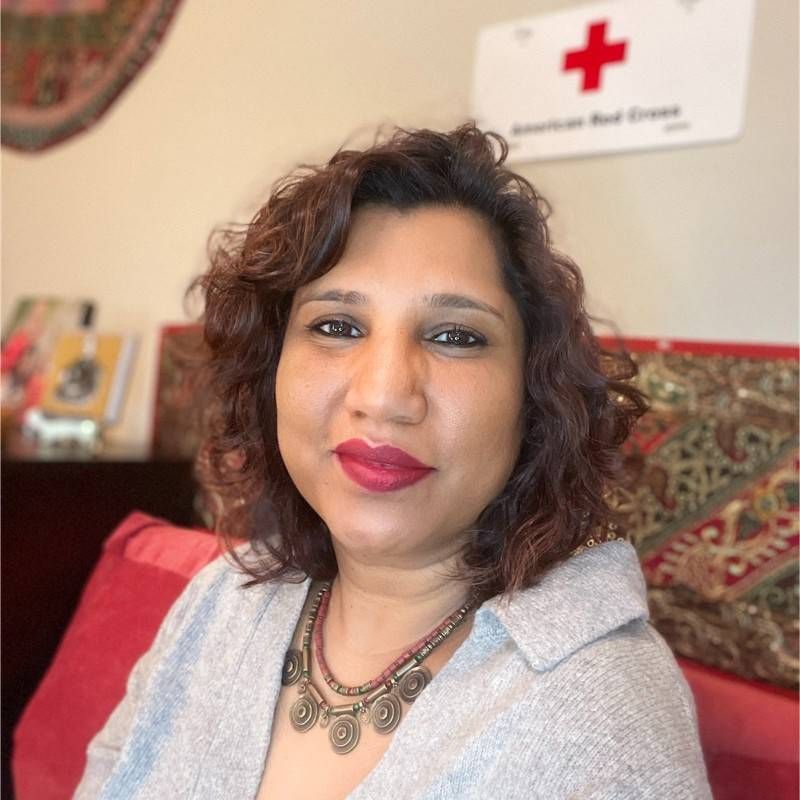
 | | Ms. Anjana Dayal de Prewitt, director for diversity, equity and inclusion (DEI) at the American Red Cross, has published the paper, “Women, Mental Health, and Disaster Risk Reduction: A Narrative Report,” as part of her participation in the 2024 Sasakawa USA Emerging Experts Delegation (SEED) on strengthening disaster risk reduction (DRR) through Women, Peace and Security (WPS). Ms. Dayal de Prewitt’s paper focuses on the intersection between disasters, gender, and mental health, offering insights into the challenges and successes that Japan has seen following the Great East Japan Earthquake in 2011 and the Noto Peninsula Earthquake in 2024. Ms. Dayal de Prewitt also outlines recommendations and lessons that can be applied for both Japan and the United States to better enhance the role of women in disaster management and provide more inclusive support to socially vulnerable groups in communities. Ms. Dayal de Prewitt’s paper is available on the Sasakawa USA website here. Additional pieces from the other SEED delegates will be published on a rolling basis over the coming weeks.
Photo: Ms. Anjana Dayal de Prewitt
| |
|
Ms. Shanti Shoji Publishes in Wedge
on Women, Peace and Security
| |
|
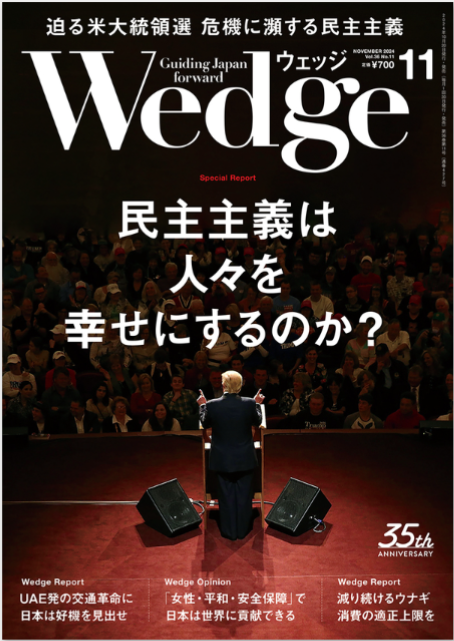
Wedge, a Japanese monthly journal, has published an opinion piece written by Sasakawa USA Director of Programs Shanti Shoji in its November 2024 issue, titled “Women, Peace and Security Provides Opportunity for Global Leadership Role.” In her article, Ms. Shoji wrote about Japan’s potential as a global leader of disaster resilience due to its extensive experience with preparedness and response efforts, as well as its integration of Women, Peace and Security (WPS) principles within the country’s disaster risk reduction apparatus. With the increase of extreme weather events and natural disasters around the world, Ms. Shoji emphasizes the role that Japan can play in the sharing of lessons learned and fostering a more resilient and equitable future globally.
Read “Women, Peace and Security Provides Japan Opportunity for Global Leadership Role” in English here.
| |
|
US-Japan NEXT Alliance Initiative:
Japanese Version of 'Allied on AI Assurance:
Technology to Enhance AI Security & Safety'
| |
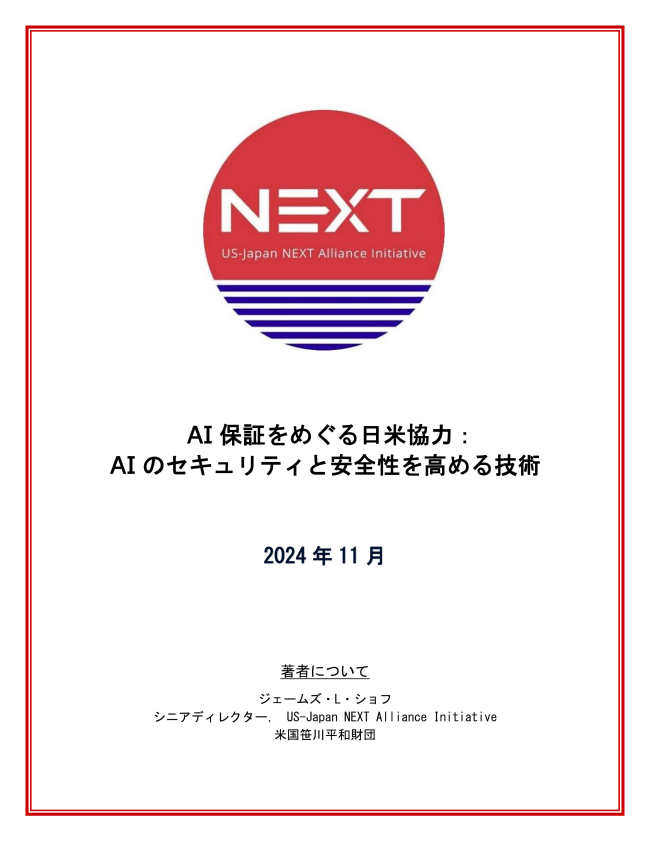
| | | The US-Japan NEXT Alliance Initiative (NEXT) has published a Japanese language version of its first report for a new project on “Allied on AI Assurance: Technology to Enhance AI Security and Safety.” This report explores the current state of AI assurance efforts to protect national security in both the United States and Japan, identifies key players and initiatives, and examines potential areas of bilateral collaboration in support of broader multilateral actions to enhance AI safety and security. The report is based on a study trip to Japan organized by Senior Director James Schoff, who led a delegation of six senior level U.S. AI security experts from the Department of Energy’s National Laboratories and the Department of Homeland Security. The delegation spent three days in Japan engaging in meetings and roundtable discussions with Japanese counterparts from government, academia, and the private sector. A key aspect of the study trip included a site visit to Japan’s AI Safety Institute. In addition, together with the University of Tokyo, Research Center for Advanced Science and Technology (RCAST)/Economic Security Research Program (ESRP), Sasakawa USA co-hosted a public event which attracted approximately 125 attendees made up of students, researchers, private sector representatives, and embassy officials from various countries.
| |
Mr. James Schoff Publishes in The National Interest on 'How Japan Can Strengthen the U.S. Steel Industry' | |
|
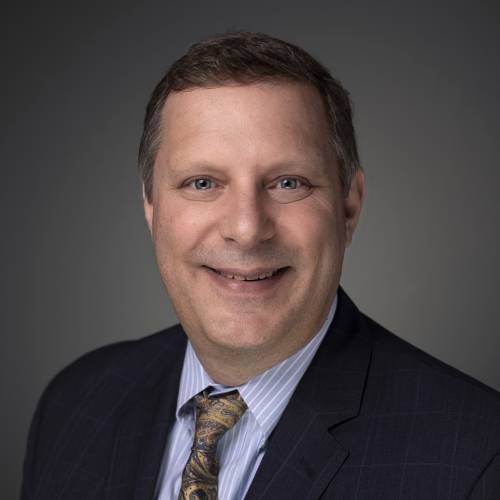
On November 1, US-Japan NEXT Alliance Initiative Senior Director James Schoff published an article with The National Interest on “How Japan Can Strengthen the U.S. Steel Industry.” Mr. Schoff wrote about the potential benefits for both the U.S. steel industry and economy from Nippon Steel’s proposed acquisition of U.S. Steel, currently under review by the U.S. government. He urges readers to consider the advantages to multiple U.S. stakeholders including workers, customers, suppliers, and shareholders, referencing the positive experience of Japan’s investment in the U.S. auto industry in the 1990s and early 2000s. The primary risk, Mr. Schoff argues, would come from rejecting the deal and depriving a key American industry of an effective way to stay competitive against large Chinese steel firms.
Photo: Mr. James Schoff
| |
|
U.S.-Japan Research Exchange:
Drs. Misaki Kiguchi and Hiromi Yoshida
| |
|
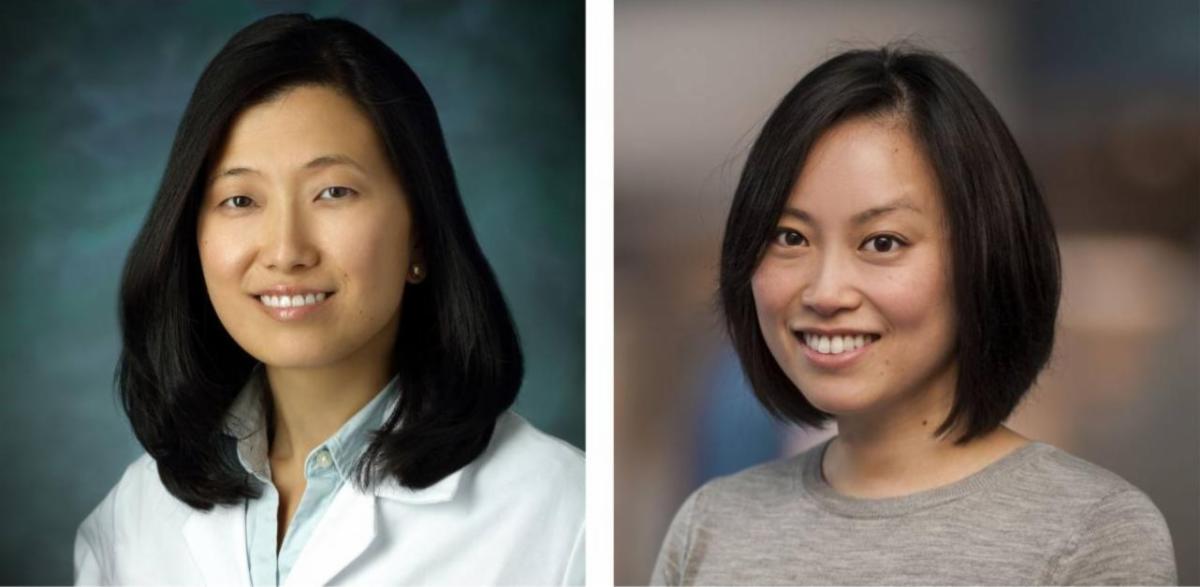
On January 6, Dr. Misaki Kiguchi, board-certified vascular surgeon and chief of vascular surgery at MedStar Georgetown University Hospital, and Dr. Hiromi Yoshida, pediatric emergency medicine (PEM) physician and clinical associate professor at the University of Washington, will embark on a weeklong U.S.-Japan Research Exchange study trip to Japan.
Drs. Kiguchi and Yoshida’s joint research trip will focus on women in medicine, the universal and unique challenges that the U.S. and Japan face in promoting women’s advancement in the medical profession, as well as opportunities for both countries to better support meaningful participation and sustainable careers for women in medical fields. Drs. Kiguchi and Yoshida will produce written reports upon their return based upon their research findings.
Photos (left to right): Drs. Misaki Kiguchi and Hiromi Yoshida
| |
US-Japan NEXT Alliance Initiative: Summer Internship | |
The US-Japan NEXT Alliance Initiative (NEXT) is offering its third annual summer internship opportunity for 2025, providing an undergraduate student with a unique professional experience focused on international relations and the U.S.-Japan alliance. This is a 10-week paid summer internship opportunity based in Washington, DC, with the potential for relocation support if necessary. This summer internship is for students around the country who are pursuing a major in international relations or East Asian studies who want to gain hands-on experience in Washington working on contemporary alliance issues related to Indo-Pacific foreign policy, alliance security cooperation, as well as economic security and technology policy issues.
The 2024 internship was another great success, with Mr. Matthew Willis of UT Austin as the selected intern. His experience report is available for interested applicants here.
Interested students should prepare their applications before the February 14, 2025, deadline. A finalist will be chosen in March 2025. For any questions or additional information about this internship opportunity, please contact Associate Program Officer Erim Gulum (egulum@spfusa.org).
| |
|
Sasakawa Peace Foundation USA
1819 L Street, NW, Suite 300
Washington, DC 20036
+1.202.296.6694
| | | | |