Sasakawa USA Newsletter February Highlights | | |
Included in this issue of the newsletter:
- Message from Sasakawa USA's Chairman Satohiro Akimoto
February Activities
- Japan US Military Program (JUMP): 2025 Annual Dinner
- Policy Briefing: National Security Strategy Study Group with GEN Ryoichi Oriki (JGSDF, Ret.), LTG Koichi Isobe (JGSDF, Ret.), and Lt Gen Junichi Araki (JASDF, Ret.)
- Washington Kenkyu Group: Discussion with GEN Ryoichi Oriki (JGSDF, Ret.), LTG Koichi Isobe (JGSDF, Ret.), and Lt Gen Junichi Araki (JASDF, Ret.)
- Rising Indo-Pacific Security Experts (RISE): Event with Lt Gen Junichi Araki (JASDF, Ret.)
- US-Japan NEXT Alliance Initiative: NEXT Alliance Conference on 'Updating Alliance Strategies to Sustain Nuclear Deterrence'
- US-Japan NEXT Alliance Initiative: Nuclear Deterrence Public Event
- Congressional Program on U.S.-Japan Relations and the Indo-Pacific: Winter 2025 Sessions
- Congressional Study Group on Japan: Chiefs of Staff Study Trip to Japan
- United States Japan Exchange & Teaching Programme Alumni Association: JETAANC Career Development Event
External Engagements
- Ms. Shanti Shoji Participates in WPS Focal Points Network in Tokyo
Publications
- Sasakawa USA Emerging Experts Delegation (SEED): 2024 SEED Publication on DRR and WPS (Ms. Michelle Ellis)
- US-Japan NEXT Alliance Initiative: U.S.-Japan C3 Modernization Update and Next Steps
Upcoming Activities
- US-Japan NEXT Alliance Initiative: Roundtable on 'Mapping the Future of U.S.-Japan Cybersecurity'
- Japan US Military Program (JUMP): Sakura Matsuri Japanese Street Festival
Announcements
- Hon. Miki Yamada Joins Sasakawa USA as a Distinguished Senior Fellow (Non-Resident)
Featured Staff
| | Message from Sasakawa USA's Chairman Satohiro Akimoto | | |
European leaders may be undergoing fundamental shifts in how they view the United States' future leadership role in the West and its impact on their strategic calculations regarding their relationship with Washington. The world witnessed an extraordinary blowup between President Donald Trump and Ukraine’s President Volodymyr Zelenskyy at the White House, with President Trump chastising President Zelenskyy, declaring he was not in a position to have a strong hand in negotiations as he had “no cards.” The following week, speaking to reporters at the White House, President Trump said he finds it “more difficult to deal with Ukraine” and “easier to work with Russia.” He went on to say that Putin “wants to end the war.”
European leaders seem to have taken quite seriously the unraveling events in recent weeks, particularly in regard to their defense efforts. They are preparing to make significant increases in defense spending. In the U.K., Prime Minister Keir Starmer pledged to increase defense spending to 2.5% of gross domestic product by 2027 from around 2.3% today. He is even considering some social welfare reforms as a way to help provide funding for the defense boost.
In Germany, newly elected Chancellor Friedrich Merz also plans to usher in a significant increase in defense spending. He is trying to circumvent the constitutional “debt brake” by exempting any defense spending above 1% of gross domestic product from Germany’s restrictive balanced budget amendment. Chancellor Merz might have to work with the Social Democratic Party (SPD) in the form of debt-financed outlays on public works. However, certain infrastructure components of public works projects can address the modernization of deteriorating roads, bridges, railroads, ports, and airports—issues that have significantly impacted the North Atlantic Treaty Organization's preparedness and capabilities.
In Brussels, European Commission President Ursula von der Leyen also announced a dramatic new defense spending increase, up to 800 billion Euros, across all 27 countries in the European Union. It is remarkable to point out that she plans to achieve increased defense spending by exempting national defense spending from the EU’s self-imposed limits on governments’ deficits and debt. She is also trying to come up with concrete measures to provide funding for the defense increase by utilizing some funds for public-works allocated to member governments.
European leaders collectively have demonstrated definitive support to President Zelenskyy and a rules-based order for the international community at a security summit in London following the disastrous meeting between President Trump and President Zelenskyy in Washington. Prime Minister Starmer assured President Zelenskyy the U.K.’s unwavering support to the security of Ukraine by saying “we stand with you, with Ukraine, for as long as it may take.” The European leaders seem to have made up their minds that while they must work with the U.S. for its superior military and economic power, they must bear some of the leadership of the West, even if it means some domestic political pain.
Japanese political leaders and policy makers have linked Russian aggression against Ukraine to potential Chinese aggression in its neighborhood, saying “Ukraine today could be East Asia tomorrow.” European leaders appear to be taking security matters more seriously and are carefully evaluating their relationship with President Trump to safeguard the fundamental values and principles of the 'rules-based global order' that has traditionally united democratic nations
Prime Minister Shigeru Ishiba made it clear that “we have no intention of taking sides, but I think it is most important that the G7 remains united” following the Trump-Zelenskyy debacle. The question for Prime Minister Ishiba, under the new and evolving geopolitical situation where North Koreans are fighting alongside the Russians in Ukraine, is what role Japan can play to keep the G7 united and help prevent the Ukraine of today from becoming the East Asia of tomorrow.
| | Japan US Military Program (JUMP): 2025 Annual Dinner | | |
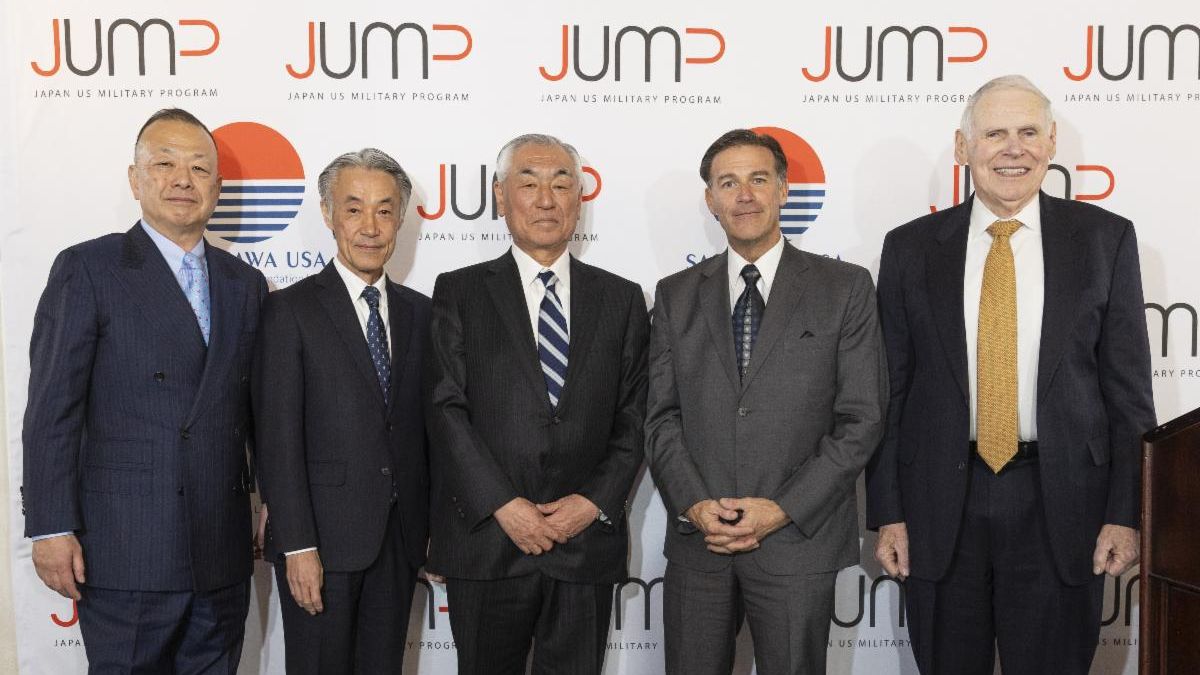
On February 28, Sasakawa USA and the Embassy of Japan hosted the 2025 JUMP Annual Dinner in Washington, DC. The theme of this year's event was "Upgrading the Alliance: Reviewing Japan's National Security Strategy" with featured keynote remarks by GEN Ryoichi Oriki (JGSDF, Ret.), 3rd chief of staff of the Joint Staff in the Japan Self-Defense Forces, who is leading Japan's National Security Strategy Study Group. Nearly 100 guests attended, including high-ranking officers from both the United States and Japan. ADM John C. Aquilino (USN, Ret.), former commander of U.S. Indo-Pacific Command, shared a toast celebrating the increasing closeness of the U.S.-Japan alliance. Amb. Shigeo Yamada, Japan’s ambassador to the United States, delivered his greetings; while RADM Takaaki Hayamizu (JMSDF), defense and naval attaché at the Embassy of Japan, made an introduction to General Oriki’s keynote remarks. The evening concluded with Sasakawa USA presenting GEN Oriki with the "Horizon Award for Leadership in the U.S.-Japan Alliance" in honor of his longstanding contributions to advancing the U.S.-Japan alliance.
JUMP is made possible by financial support from the Embassy of Japan.
Photo (left to right): Dr. Satohiro Akimoto, Amb. Shigeo Yamada, GEN Ryoichi Oriki (JGSDF, Ret.), ADM John C. Aquilino (USN, Ret.), and ADM William J. Fallon (USN, Ret.)
| | Policy Briefing: National Security Strategy Study Group with GEN Ryoichi Oriki (JGSDF, Ret.), LTG Koichi Isobe (JGSDF, Ret.), and Lt Gen Junichi Araki (JASDF, Ret.) | | |
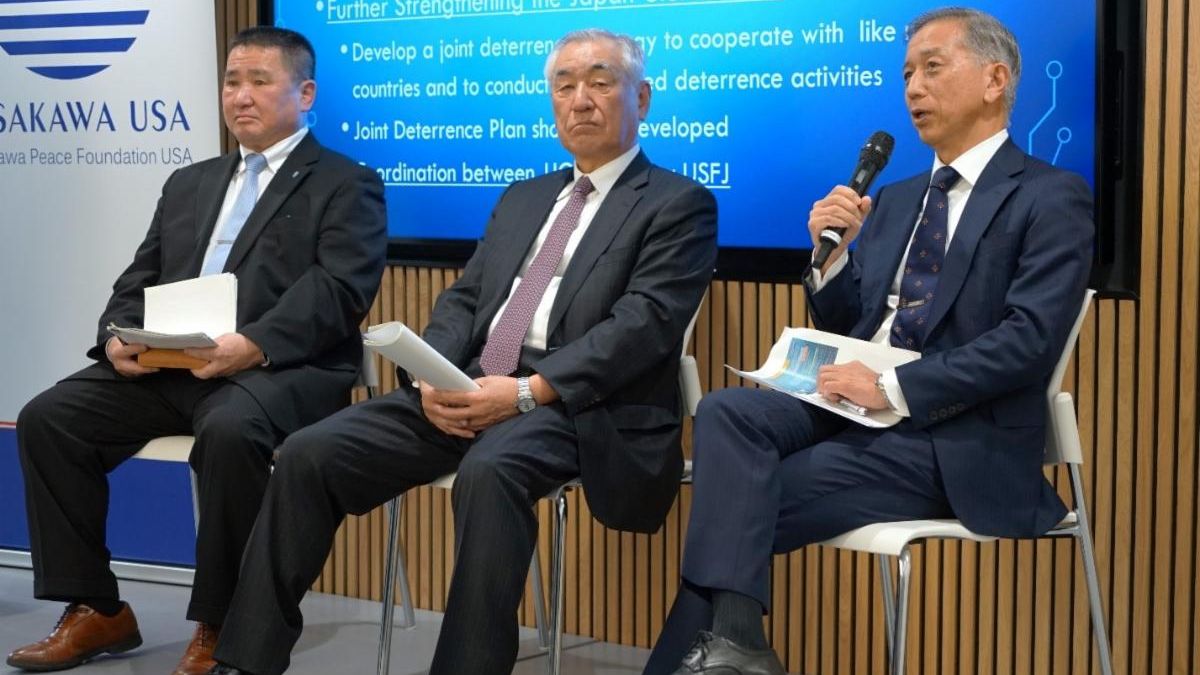
On February 27, Sasakawa USA hosted a Policy Briefing event on “Enhancing Japan’s National Security Strategy for a New Era.” The discussion featured three distinguished retired generals from Japan’s Self-Defense Forces: GEN Ryoichi Oriki (JGSDF, Ret.), 3rd chief of staff of the Joint Staff in the Japan Self-Defense Forces; LTG Koichi Isobe (JGSDF, Ret.), former commanding general of the East Army; and Lt Gen Junichi Araki (JASDF, Ret.), former commander of the Air Training Command. Dr. Satohiro Akimoto, president and chairman of Sasakawa USA, moderated the event.
As members of the National Security Strategy Study Group in Japan, the generals reviewed Japan’s National Security Strategy and gave recommendations for its future development. The event provided valuable insights into Japan's strategic defense priorities and future directions in light of the rapidly changing security environment in the Indo-Pacific region.
Photo (left to right): Lt Gen Junichi Araki (JASDF, Ret.), GEN Ryoichi Oriki (JGSDF, Ret.), and LTG Koichi Isobe (JGSDF, Ret.)
| | |
Washington Kenkyu Group: Discussion with
GEN Ryoichi Oriki (JGSDF, Ret.), LTG Koichi Isobe (JGSDF, Ret.), and Lt Gen Junichi Araki (JASDF, Ret.)
| | |
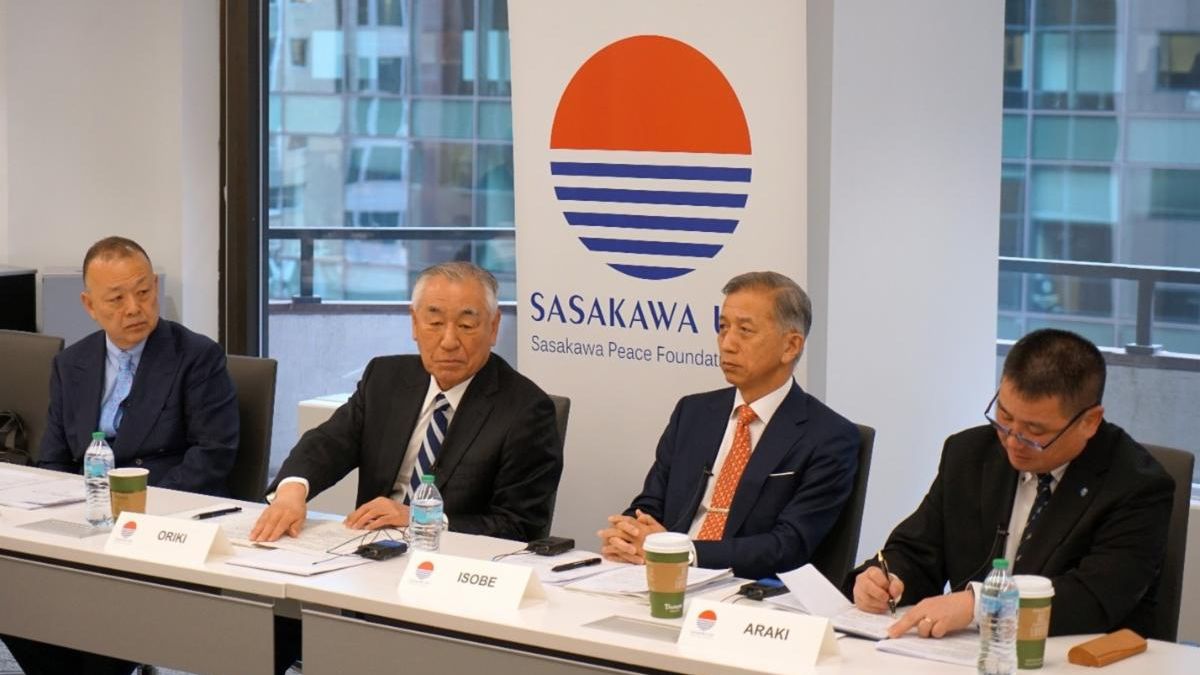
On February 28, Sasakawa USA hosted a Washington Kenkyu Group event featuring the same distinguished panel of retired Japan Self-Defense Forces generals: GEN Ryoichi Oriki (JGSDF, Ret.), 3rd chief of staff of the Joint Staff in the Japan Self-Defense Forces; LTG Koichi Isobe (JGSDF, Ret.), former commanding general of the East Army; and Lt Gen Junichi Araki (JASDF, Ret.), former commander of the Air Training Command. This event took a more interactive approach, focusing on in-depth analysis and collaborative discussion of Japan’s National Security Strategy Study Group's latest report. As members of Japan's National Security Strategy Study Group, the generals reviewed the country's National Security Strategy and provided recommendations for its future direction. Following the generals’ presentation, the event transitioned into a roundtable format, allowing for detailed exploration of Japan’s security challenges and potential policy responses.
Photo (left to right): Dr. Satohiro Akimoto, GEN Ryoichi Oriki (JGSDF, Ret.), LTG Koichi Isobe (JGSDF, Ret.), and Lt Gen Junichi Araki (JASDF, Ret.)
| | |
Rising Indo-Pacific Security Experts (RISE):
Event with Lt Gen Junichi Araki (JASDF, Ret.)
| | |
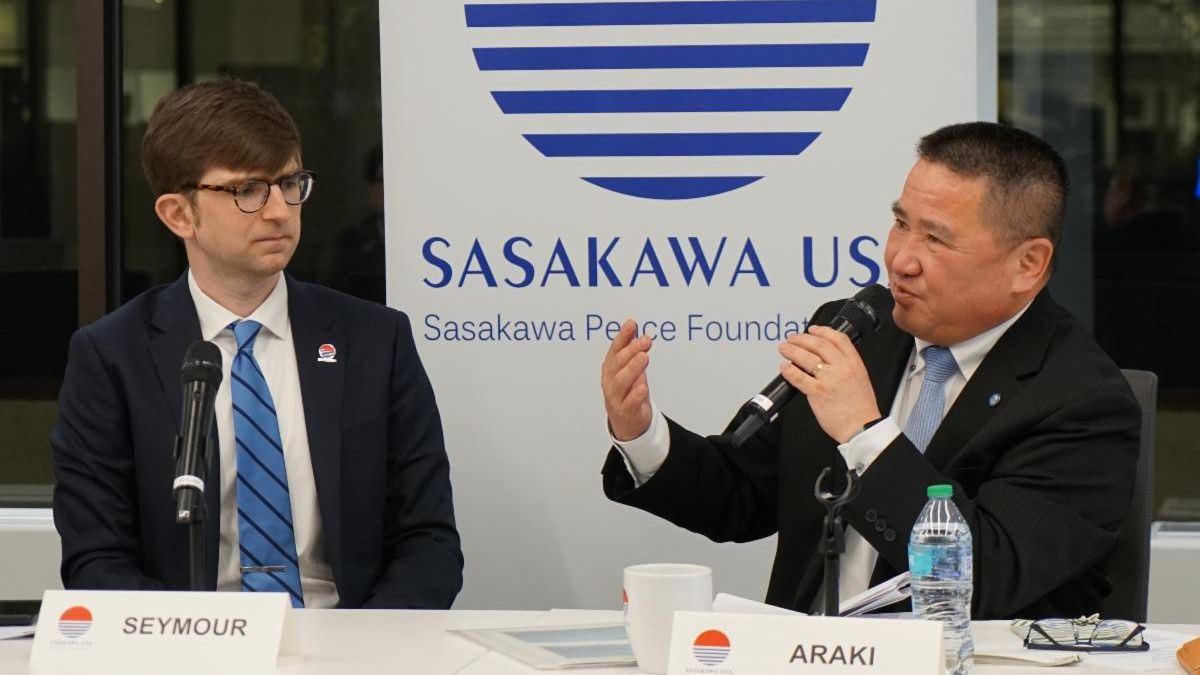
Sasakawa USA hosted a Rising Indo-Pacific Security Experts (RISE) event on February 26, featuring Lt Gen Junichi Araki (JASDF, Ret.), former commander of the Air Training Command. The event, titled “Japan’s National Security Strategy: Review & Recommendations,” was moderated by Mr. John Seymour, senior program officer at Sasakawa USA.
Lt Gen Araki, a member of the National Security Strategy Study Group, discussed the group’s third report that reviewed Japan’s 2022 National Security Strategy (NSS). In his remarks, Lt Gen Araki assessed the impact of the 2022 NSS and provided proposals to further enhance Japan’s defense capabilities.
Photo (left to right): Mr. John Seymour and Lt Gen Junichi Araki (JASDF, Ret.)
| | |
US-Japan NEXT Alliance Initiative:
NEXT Alliance Conference on 'Updating Alliance Strategies to Sustain Nuclear Deterrence'
| | |
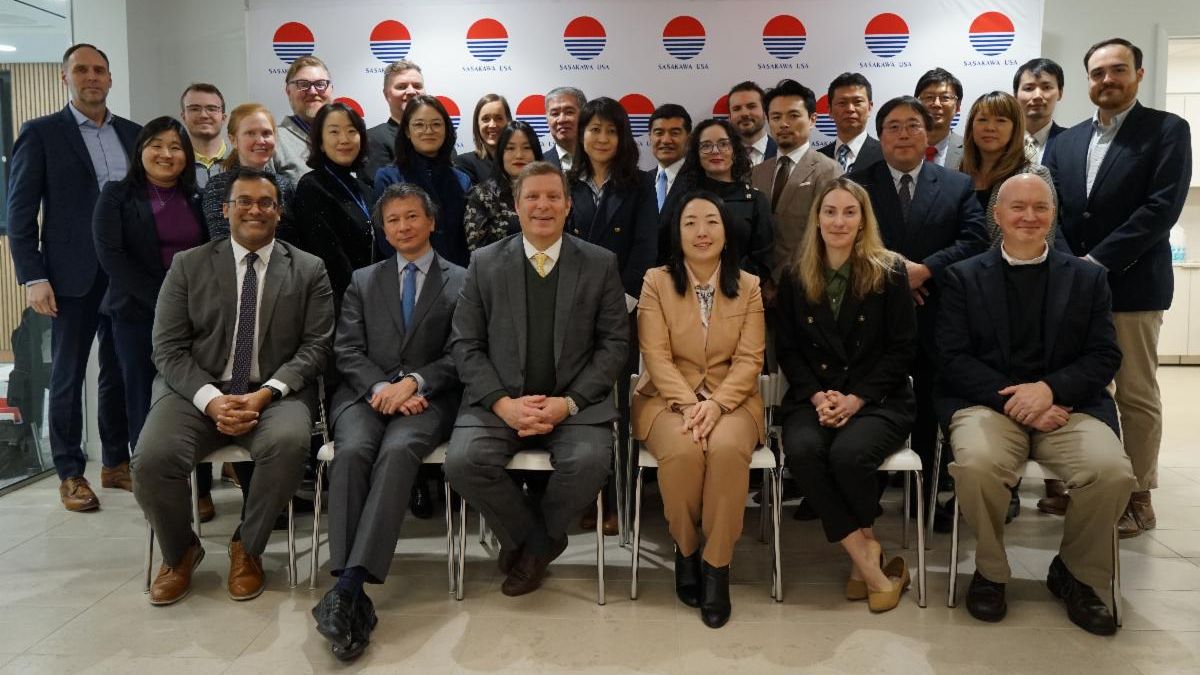
The US-Japan NEXT Alliance Initiative held its fifth NEXT Alliance Conference (NAC), taking place in Washington, DC, from February 19–21. The NAC is convened annually by Sasakawa USA on an emerging priority issue area for the U.S.-Japan alliance. The Winter 2025 conference brought together 35 American, Japanese, and Korean specialists from government, academia, think tanks, and the private sector. This year’s conference focused on “Updating Alliance Strategies to Sustain Nuclear Deterrence” where participants considered key drivers of change regarding nuclear threats and nuclear deterrence that the allies need to respond to bilaterally and with the Republic of Korea (ROK). The goal of the conference was to provide background information and ideas that could be useful to the ongoing official bilateral and trilateral discussions on these issues. The conference commenced with government briefings on the topic by former Biden administration officials and representatives from Japan’s Ministry of Defense. This was followed by an intensive day-long workshop to assess nuclear threats, understand evolving variables, consider ways that deterrence could fail, and propose options for stronger integrated deterrence involving the three nations.
Photo: NEXT Alliance Conference (NAC) attendees at Sasakawa USA
| | |
US-Japan NEXT Alliance Initiative:
Nuclear Deterrence Public Event
| | |
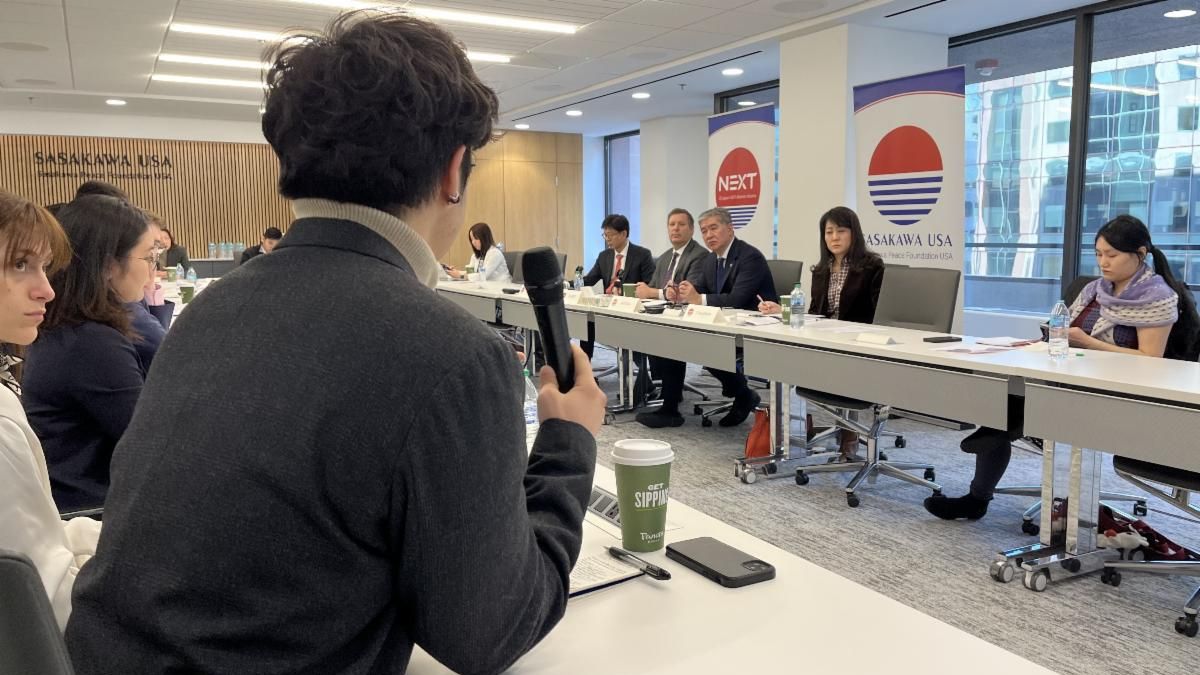
The US-Japan NEXT Alliance Initiative held a public event on February 21, following its fifth NEXT Alliance Conference (NAC) in Washington, DC, from February 19–21. Select NAC participants from the U.S., Japan, and Republic of Korea shared their insights regarding the increasingly complex and dangerous nuclear threats confronting the United States and its allies in Northeast Asia. Experts discussed the evolving nuclear environment, characterized by growing multipolarity, integration with cyber and outer space domains, and geopolitical tensions between democratic and authoritarian states. Sasakawa USA’s NAC public event aimed to share the key points and perspectives from the two-day workshop with a broader audience. Sasakawa USA’s Senior Director James Schoff moderated an expert panel featuring Dr. Nobumasa Akiyama (JIIA), Professor Mayumi Fukushima (Bates College), and Professor Jaechun Kim (Sogang University), before opening it up to a Q&A session, allowing attendees to engage with the experts on these critical issues shaping the future of Northeast Asian security.
Photo: Public event attendees engaging the panel following the fifth NEXT Alliance Conference (NAC) in Washington, DC.
| | Congressional Program on U.S.-Japan Relations and the Indo-Pacific: Winter 2025 Sessions | | |
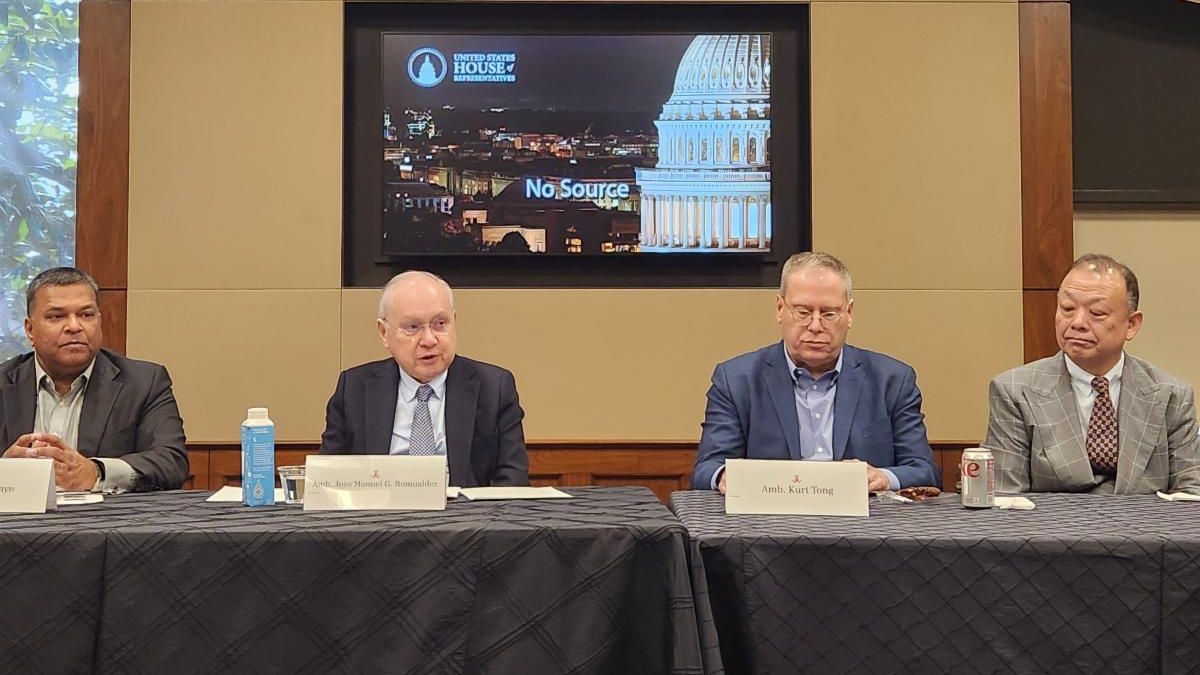
The Winter 2025 Congressional Program on U.S.-Japan Relations and the Indo-Pacific, a program in partnership with the East-West Center Washington, concluded in February. The eight-session program provided Congressional staff with interactive discussions featuring prominent experts from government agencies, think tanks, universities, and other policy institutions. The focus was on the importance of the U.S.-Japan relationship and its impact on the Indo-Pacific region.
Congressional staffers who completed the program received certificates in recognition of their commitment to furthering their knowledge on issues pertaining to the U.S.-Japan Alliance and its regional influence. They are now equipped to inform their fellow staffers and Representatives on key Indo-Pacific issues, potentially fostering bipartisan cooperation in policymaking and further strengthening of the U.S.-Japan alliance for the benefit of a free and open international community.
Session topics included: “Japanese Domestic Politics: Implications for Japan’s International Engagement;” “The US-Japan Alliance as the Cornerstone of Indo-Pacific Peace, Security, and Stability;” “US-Japan-ROK Cooperation;” “The United States, Japan, and Southeast Asia;” “The Taiwan Contingency;” “The United States, Japan, and the Pacific Islands;” “Economic Security;” and “Strategic Competition and Alliances in Future National Security Architecture in East Asia.”
Photo (left to right): Dr. Satu Limaye, Amb. Jose Manuel G. Romualdez, Amb. Kurt Tong, and Dr. Satohiro Akimoto
| | |
Congressional Study Group on Japan:
Chiefs of Staff Study Trip to Japan
| | |
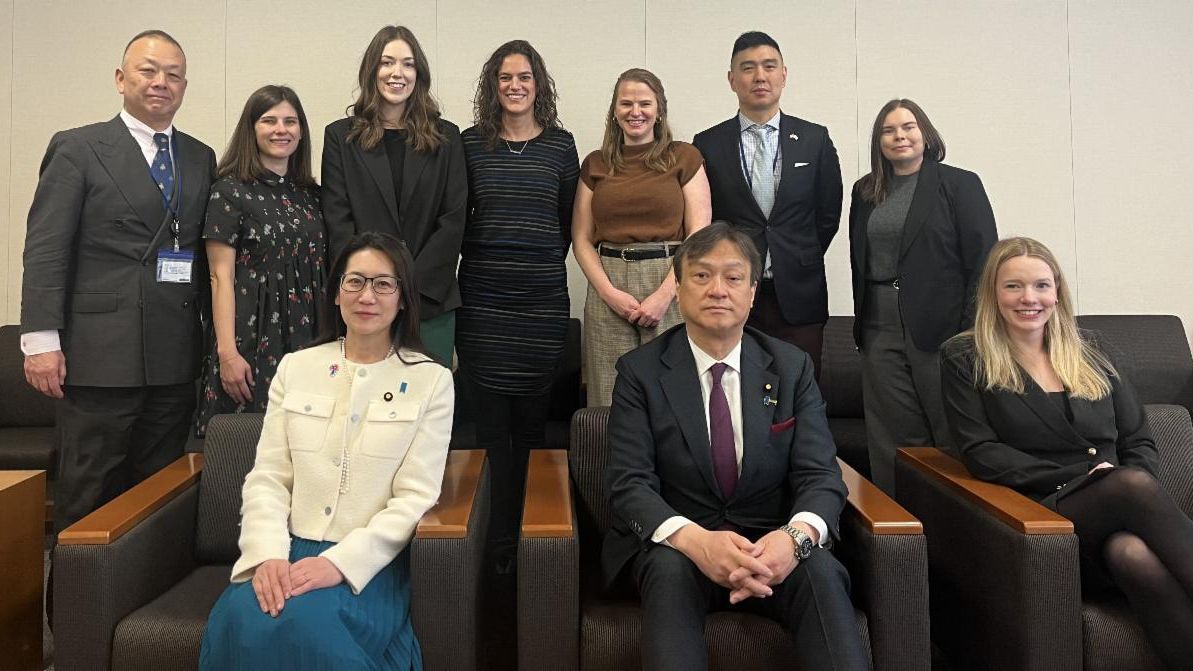
From February 15–22, a bipartisan delegation of six Congressional chiefs of staff traveled to Tokyo and Sapporo, Japan as part of the Congressional Study Group on Japan, a program of FMC, which is supported by Sasakawa USA. The delegation met with Diet members, government officials, Embassy representatives, journalists, business leaders, and experts in Tokyo. In Sapporo, the chiefs of staff explored the emerging semiconductor industry and the prefecture’s significance to the U.S.-Japan alliance. This trip provided an opportunity for the delegation members to deepen their understanding of the issues relevant to the bilateral relationship and gain a nuanced understanding of the political, economic, historical, and cultural context in Japan.
Photo (front row, left to right): Hon. Rui Matsukawa (LDP, Osaka), Hon. Iwao Horii (LDP, Nara), and Ms. Sally Fox, (back row, left to right): Dr. Satohiro Akimoto, Ms. Hillary Parkinson, Ms. Kate Durkin, Ms. Jaryn Emhof, Ms. Amy Soenksen, Mr. Andrew Noh, and Ms. Lorraine Harbison
| | United States Japan Exchange & Teaching Programme Alumni Association: JETAANC Career Development Event | |
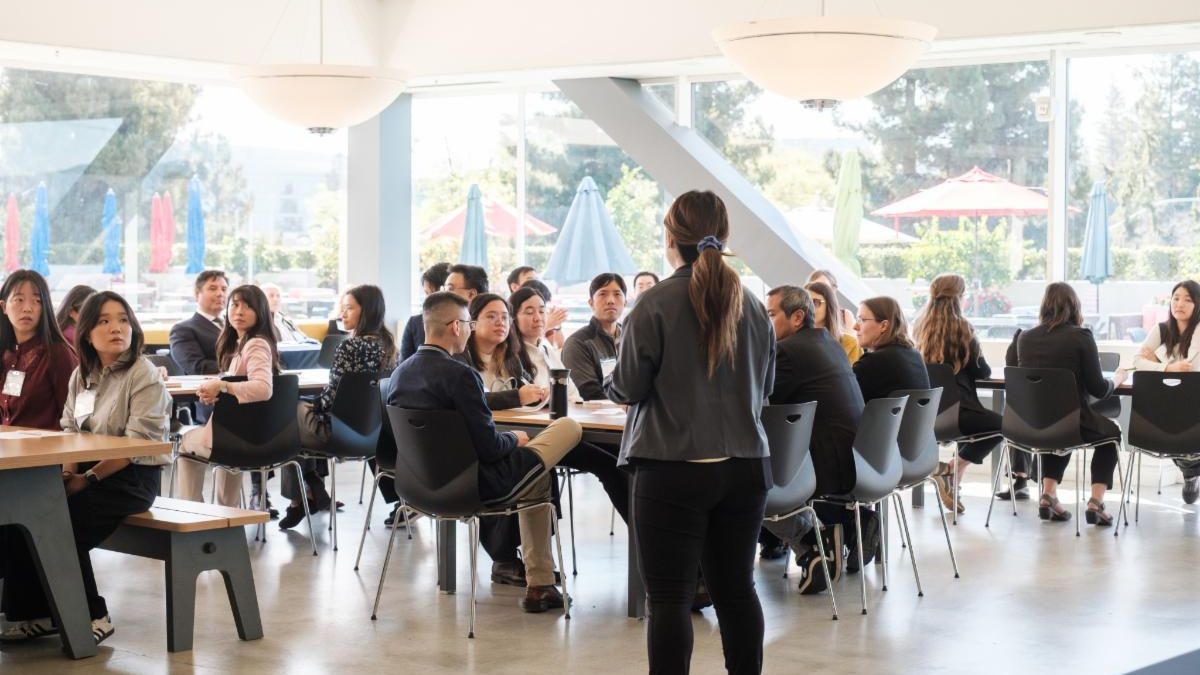
On February 22, Sasakawa USA sponsored and participated in the “Career Cartography: Navigating Your Post-JET Career Workshop, Panel, & Networking” event at the Plug and Play Tech Center in Sunnyvale, CA. This event was co-hosted by JETAANC (JET Program Alumni Association of Northern California and Nevada) and the Consulate General of Japan in San Francisco, as well as sponsored by US Japan Exchange and Teaching Programme Alumni Association (USJETAA) and Sasakawa USA.
Sasakawa USA and USJETAA have partnered since 2016 to fund and support local JETAA chapters across the U.S., conducting events and projects that encourage JET alumni’s continued engagement in U.S.-Japan relations. The event in Sunnyvale, CA, had 65 attendees and was an interactive day of activities and discussions on how to best leverage your JET experience and network to your career.
The workshops featured speakers Ms. Kristy Ishii, a career transition and mindset coach (Gunma JET Alumna, 2016–2018), and Ms. Cerell Rivera, an enterprise transformation leader (Hokkaido JET Alumna, 1998–2001). Panelists included Ms. Joyce Arellano-Bravo, Japanese language teacher (Chiba JET Alumna, 2003–2006), Ms. Kirstie McCarter, senior director at Instacart (Chiba JET Alumna, 1999–2001), and Ms. Shanti Shoji, director of programs at Sasakawa USA (Kagawa JET Alumna, 2002–2004).
The Japan Exchange and Teaching (JET) Program is a teaching exchange program managed by the government of Japan, that works with 80 countries to place post-college graduates in schools, boards of education, and government offices throughout Japan. The JET alumni network supports participants both before and after their time in Japan. The largest number of JETs come from the United States, of which there are over 40,000 alumni.
Photo: Workshop attendees at the “Career Cartography: Navigating Your Post-JET Career Workshop, Panel, & Networking” event in Sunnyvale, CA. (Photo courtesy of Ryan Okada, JETAANC)
| | |
Ms. Shanti Shoji Participates in
WPS Focal Points Network in Tokyo
| | |
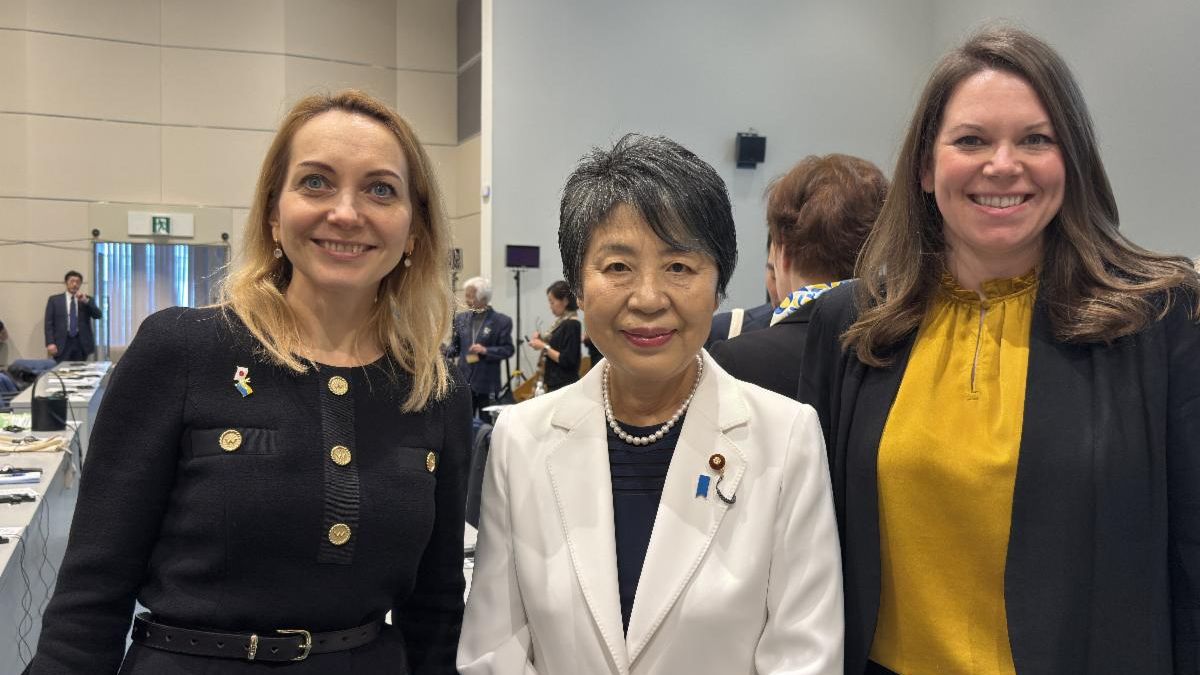
From February 4–6, Sasakawa USA Director of Programs Shanti Shoji participated in the Seventh Capital-Level Meeting of the Women, Peace and Security Focal Points Network (WPS-FPN). Convened annually, this year’s WPS-FPN was held in Tokyo, with the co-chairs being Japan and Norway. As 2025 marks the 25th anniversary of the Women, Peace and Security agenda, this was a special year for Japan’s Ministry of Foreign Affairs to host the WPS-FPN. The theme for this year was “Deepening WPS Commitments for Action: Innovating and adapting to deliver on peace and security,” with discussions centering around the development and implementation of national and regional action plans, the role of women in peace mediation and peacebuilding, and the expansion of the WPS Agenda into areas such as disaster risk reduction. In particular, Japan’s work to integrate the WPS framework into its disaster response activities was highlighted as an example of a successful elaboration of the WPS Agenda beyond the traditional areas of conflict and crisis. In attendance were officials from over 60 nations and regional alliances such as ASEAN, NATO, and the EU, in addition to WPS leaders from civil society organizations around the globe. The convening included keynote remarks by Hon. Yoko Kamikawa, founder and chair of the WPS Parliamentarian’s Network Japan and Amb. Melanne Verveer, executive director of the Georgetown Institute for Women, Peace and Security and Sasakawa USA Advisory Committee member.
Photo (left to right): Hon. Olena Khomenko, member of the Parliament of Ukraine; Hon. Yoko Kamikawa, member of the House of Representatives, Japan; Ms. Shanti Shoji, director of programs at Sasakawa USA
| | Sasakawa USA Emerging Experts Delegation (SEED): 2024 SEED Publication on DRR and WPS (Ms. Michelle Ellis) | |
| |  | Ms. Michelle Ellis, supervisory emergency manager at the Federal Emergency Management Agency (FEMA), U.S. Department of Homeland Security, has recently published a paper titled “Strengthening Disaster Resilience: U.S.-Japan Cooperation and the Role of Women in Disaster Risk Reduction.” This publication stems from her participation in the 2024 Sasakawa USA Emerging Experts Delegation (SEED), which focused on the integration of Women, Peace and Security (WPS) within disaster risk reduction (DRR). Ms. Ellis’ publication draws insights from the delegation’s one-week research trip to Japan in July 2024 and provides a comparative analysis of approaches to DRR in the U.S. and Japan. She highlights the benefits and drawbacks of each country’s strategies and offers recommendations for how both nations can benefit from each other’s approaches to enhance their respective DRR apparatuses. Ms. Ellis’ paper is available on Sasakawa USA’s website here. Readers can look forward to upcoming publications from other SEED delegates in the coming weeks.
Photo: Ms. Michelle Ellis
| | US-Japan NEXT Alliance Initiative: U.S.-Japan C3 Modernization Update and Next Steps | | |
The US-Japan NEXT Alliance Initiative published its final paper, culminating a nearly two-year project focused on the modernization of U.S.-Japan defense-related command, control, and coordination (C3) relationships. This comprehensive work is the result of six roundtable dialogues on the topic, two multi-day conferences in the U.S. and Japan, and a series of event summaries and follow-up papers by its participants. A mark of success for the project was when C3 modernization topped the agenda for the April 2024 leaders’ summit between President Joe Biden and Prime Minister Fumio Kishida, as well as the subsequent 2+2 meeting. As both countries launch new administrations and begin to implement reforms to their command structures in Japan, this paper outlines the final recommendations of our project with additional historical context about how alliance C3 has evolved, from the Occupation through the Korean War, Cold War, and beyond.
| | US-Japan NEXT Alliance Initiative: Roundtable on 'Mapping the Future of U.S.-Japan Cybersecurity' | | |
The US-Japan NEXT Alliance Initiative will convene its fifth hybrid bilateral dialogue on “Mapping the Future of U.S.-Japan Cybersecurity Cooperation” on March 10. Ms. Mihoko Matsubara, chief cybersecurity strategist at NTT Corporation and Sasakawa USA non-resident scholar, will present on Japan’s cybersecurity efforts including proposed legislation on active cyber defense and a new national cybersecurity center, along with her analysis of Ukrainian critical infrastructure protection efforts. Her colleague Mr. Dave Beabout, CISO at NTT Security Holdings, will analyze the current cyber threat landscape facing Japan and the United States, and recommend areas for allied operational collaboration. This dialogue is particularly relevant as new administrations in Washington and Tokyo consider the near-term direction of Japan-U.S. cybersecurity collaboration.
| | |
Japan US Military Program (JUMP):
Sakura Matsuri Japanese Street Festival
| |
Join Sasakawa USA at the Sakura Matsuri Japanese Street Festival in Washington, DC, on April 12–13, as we present the Japan US Military Program (JUMP). At the festival, Sasakawa USA will highlight JUMP's initiatives that honor U.S. military personnel and veterans for their contributions to the U.S.-Japan alliance. There will also be a meet-and-greet with U.S.-Japan alliance leaders. During this celebration of Japanese culture, Sasakawa USA will share its mission of building a stronger U.S.-Japan alliance for the benefit of both countries and a free and open international community. The Sakura Matsuri Japanese Street Festival is a public event organized by the Japan-America Society of Washington, DC, and is the largest celebration of Japanese culture in the United States.
JUMP is made possible by financial support from the Embassy of Japan.
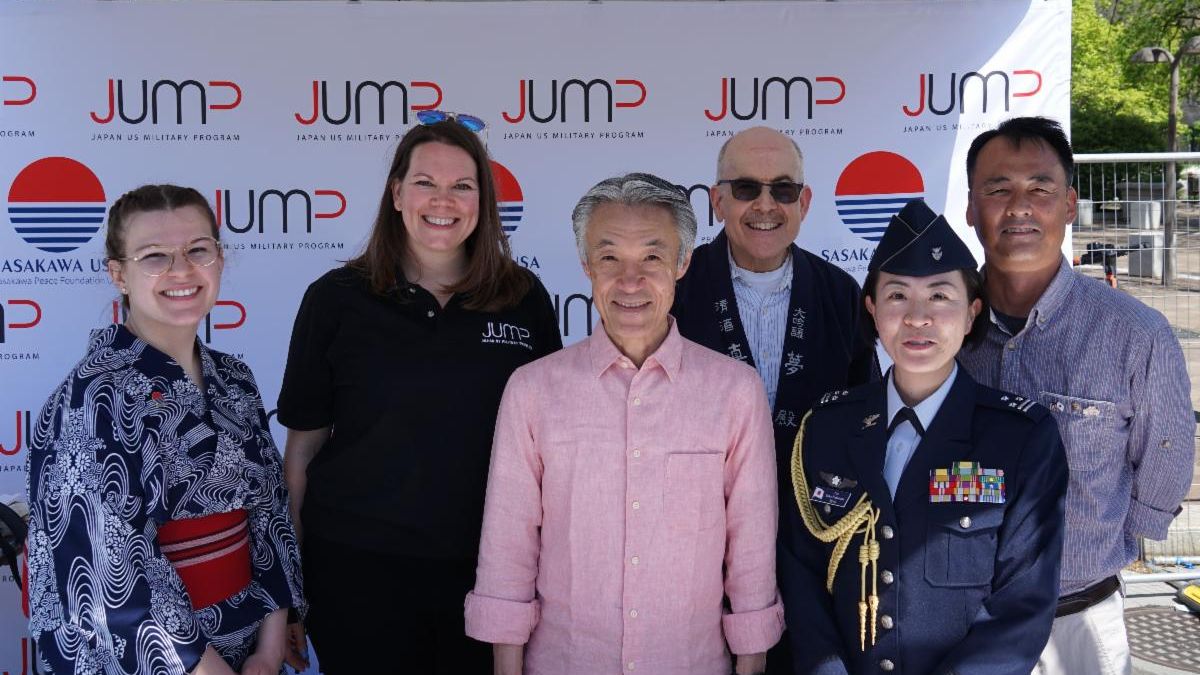
Photo: Amb. Shigeo Yamada and officers from the Japan Self-Defense Forces joined Sasakawa USA staff at the JUMP booth in 2024 for the Sakura Matsuri Japanese Street Festival.
| | |
Hon. Miki Yamada Joins Sasakawa USA
as a Distinguished Senior Fellow (Non-Resident)
| | |
Sasakawa USA is pleased to announce that Hon. Miki Yamada has joined our team as a distinguished senior fellow (non-resident).
Hon. Yamada was a member of the House of Representatives, Japan, as well as Liberal Democratic Party of Japan (LDP) Tokyo Daiichi Election District branch chief until October 2024. She joined the Ministry of International Trade and Industry (MITI) in 1996 before receiving her MBA from Columbia University in 2002 and going on to work in the Office of the Deputy Chief Cabinet Secretary. In 2005, Hon. Yamada joined the Boston Consulting Group, where she worked on domestic and international projects, including healthcare-related projects. Hon. Yamada then joined Hermes Japon in 2007, where she was involved in sales planning. Hon. Yamada was elected for the first time to the House of Representatives from Tokyo’s 1st District (Chiyoda, Minato, and Shinjuku Wards) in the 46th election in 2012. Since then, she was elected for four consecutive terms. Additionally, Hon. Yamada has served as parliamentary vice-minister for Foreign Affairs and vice-minister for the Environment among other posts.
Sasakawa USA most recently engaged with Hon. Yamada in her previous capacity as the chief secretary of the Women, Peace and Security (WPS) Parliamentarians’ Network Japan during the Sasakawa USA Emerging Experts Delegation (SEED) program on Strengthening Disaster Risk Reduction through Women, Peace and Security; and at a Sasakawa USA Women’s Advancement Network (SWAN) roundtable on insights from the Parliamentarians’ Network and the progress that has been made in Japan to advance the implementation of WPS. Hon. Yamada also traveled to Washington, DC, as a member of Sasakawa USA’s U.S.-Japan Integrated Security Dialogue (ISD) delegation. Sasakawa USA is delighted to work with Hon. Yamada on economic security and Women, Peace and Security.
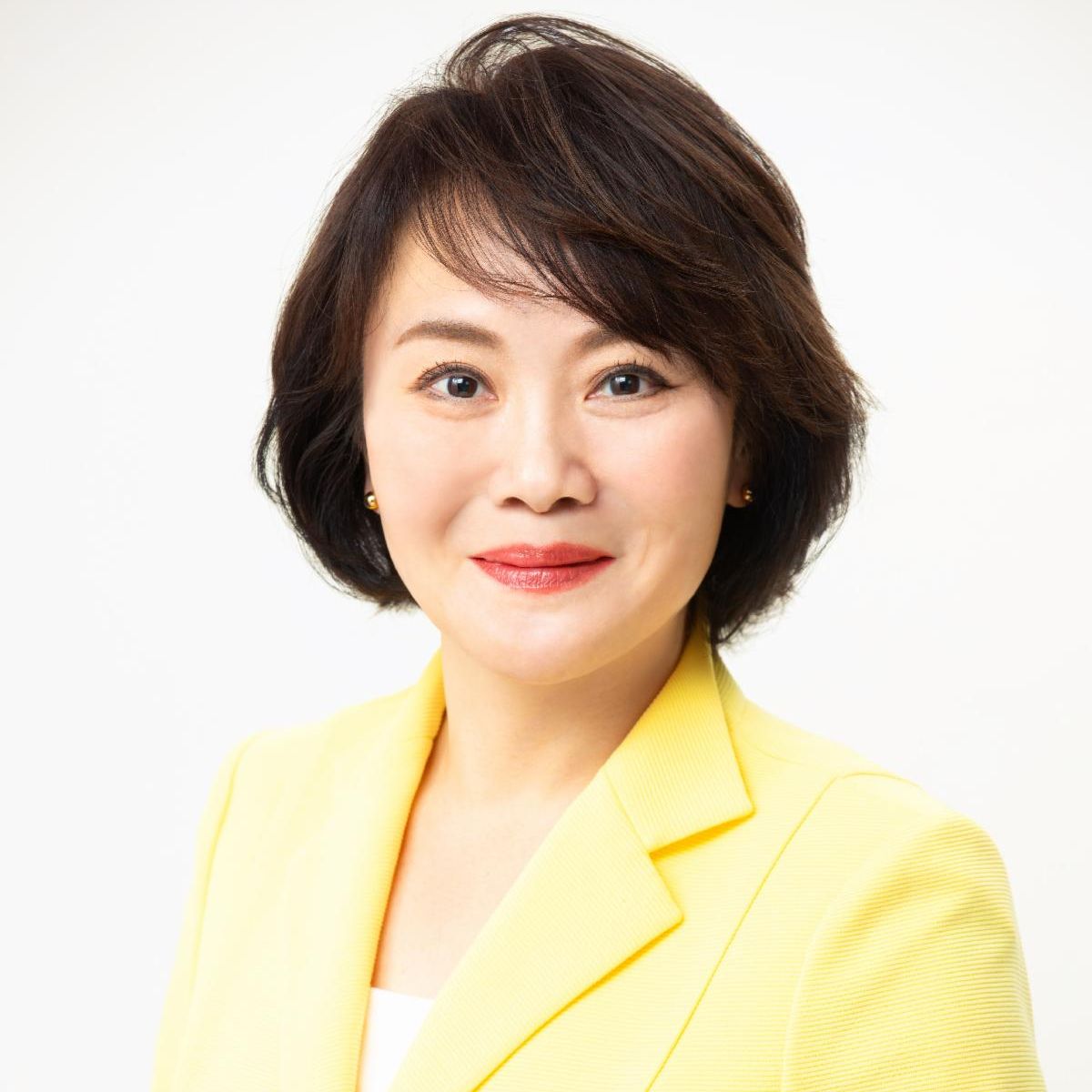
Photo: Hon. Miki Yamada
| | |
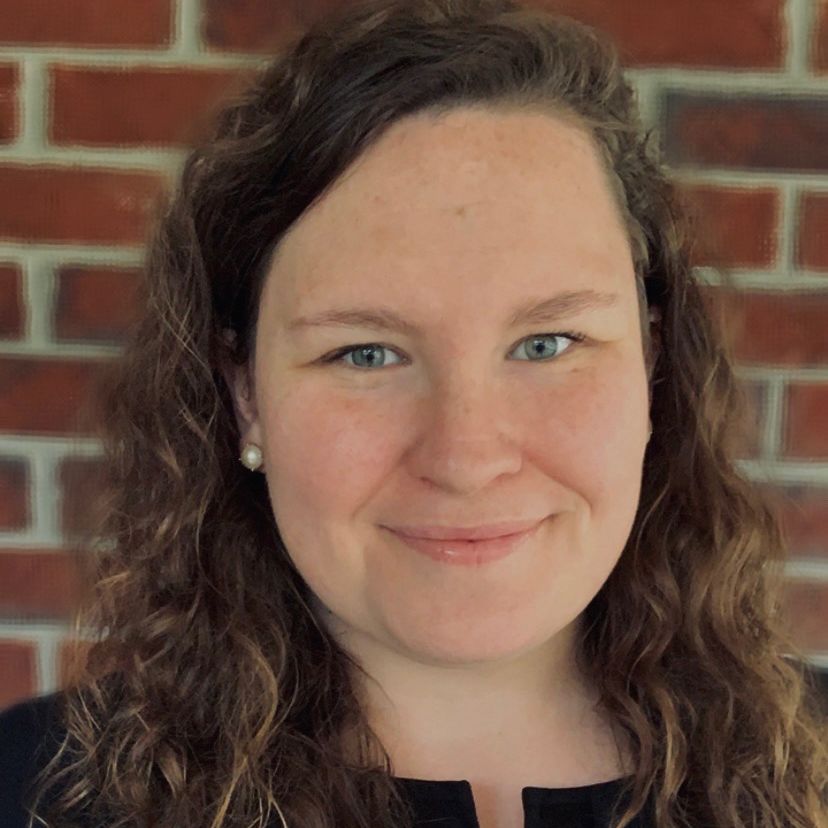
Hello! My name is Margaret Giddings, and I have been an administrative manager at Sasakawa USA since April 2024. This position has been my first in the field of U.S.-Japan relations, offering me the opportunity to learn so much about U.S.-Japan diplomatic relations and Japanese cultural products and practices. Learning from my colleagues about everything from the U.S.-Japan military alliance to the snacks carried in Japanese 7-Eleven franchises has been one of my favorite parts of working at Sasakawa USA!
I have long been interested in international relations and cultural exploration. I graduated from Northeastern University with a degree in international affairs and social enterprise, where my studies focused on cultural anthropology, Arabic, and social enterprise development. In addition to Arabic, I have studied Mandarin Chinese, Italian, and Spanish. Over the last ten months, I have added a few Japanese phrases to my language learning, as well! My interest in languages and cultures also led me to obtaining my TEFL certification and teaching English in Berlin, as well as virtually to students around the world. Through these experiences, I have been able to explore and understand the importance of cultural exchange, and I am honored to be a small part of that process at Sasakawa USA.
I am excited to continue to support the mission of Sasakawa USA to strengthen ties between the U.S. and Japan, while expanding my knowledge of Japanese culture and the grant management process from my colleagues as we proceed through our fiscal year cycle. I am also looking forward to Sasakawa USA’s participation in the Sakura Matsuri Japanese Street Festival. Growing up near DC, the celebrations around the blooming cherry blossoms have a special place in my heart, and I am very excited to be a part of the celebrations this year!
Photo: Ms. Margaret Giddings
| | |
Sasakawa Peace Foundation USA
1819 L Street, NW, Suite 300
Washington, DC 20036
+1.202.296.6694
| | | | |