|
Global commitments to gender equality are hampered by glaring gaps in gender measures, data innovation and analysis, and a lack of inclusion in data spaces. The lack of investment impedes understanding and alignment around the most critical levers for change. Spanning themes of adolescence, women’s economic inclusion, gender based violence, and health, this session will draw on global work and examples to explore new frameworks of empowerment, agency, and norms; open access, locally validated measures of gender empowerment, and; innovations in the analysis and use of gender data. The session will bring together leading implementation and policy researchers from several countries and attempt to create a conversation across funders, policy makers, civil society groups, researchers and data scientists. Though grappling with issues of measures, data, and analytics - the session will be inherently practical and action oriented. Please join us as we attempt to explore how better locally created measures, closing gender data gaps, and innovating with analysis can spur better policy and programming
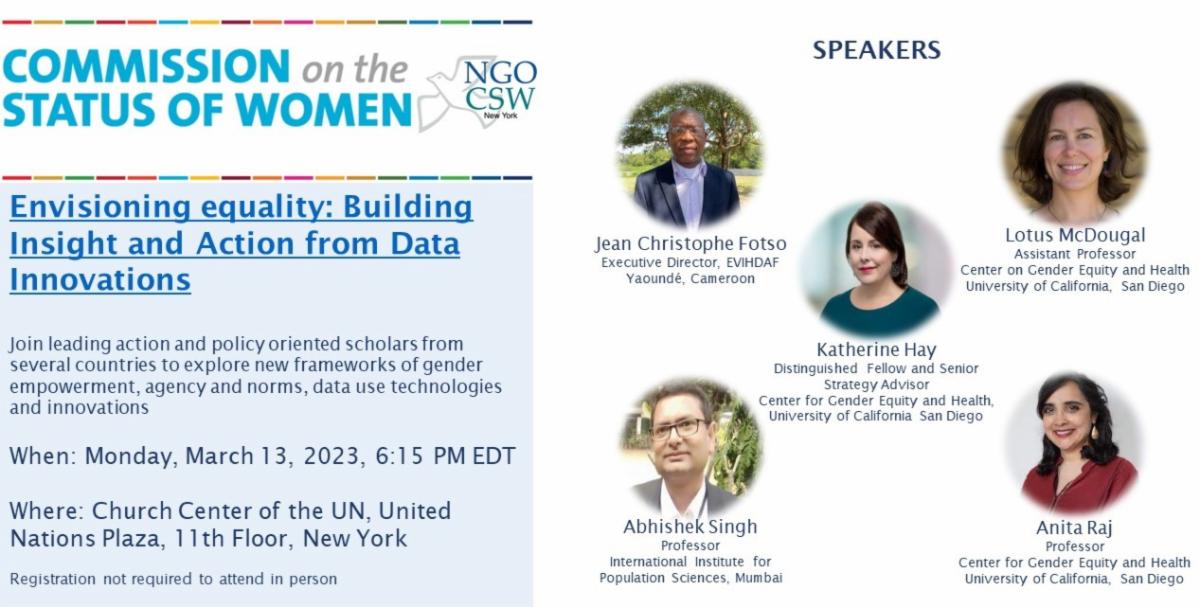
Katherine Hay will introduce the event and discuss ‘Why Measurement Matters.’ She will set the stage on the need for better data, analytics, and use of data to achieve gender equity. Anita Raj will then discuss global work led by UCSD in building a new empowerment framework and why that work is needed to reshape thinking, policy, and funding around development interventions. Lotus McDougal and JC Fotso will discuss global work on building new understandings of agency and explore how agency shapes development outcomes in health and other areas. They will draw upon a new multi-country effort in Asia and Africa that is exploring the ways that agency shapes development outcomes within a range of different interventions. Finally, Abhishek Singh will discuss how new measures are enabling new analysis. Using data from India's National Family Health Survey, he will describe work to try to quantify patriarchy, using data from India’s National Family Health Survey and how they are using new measures and new ways of thinking about gendered social positioning to try to inform thinking and policies around vulnerability and empowerment.
|