UC Master Food Preserver logo

Save the Season

June 2026

Welcome to the twentieth edition of the statewide UC Master Food Preserver monthly newsletter. Our mission is to extend culturally appropriate, research-based practices for preserving food in the home.


Each month, you’ll receive recipes, how-tos, and inspiration straight to your inbox. Thank you for subscribing and feel free to reply with any food preservation questions. 

headshot of Debra, Master Food Preserver  - a woman in a red hat

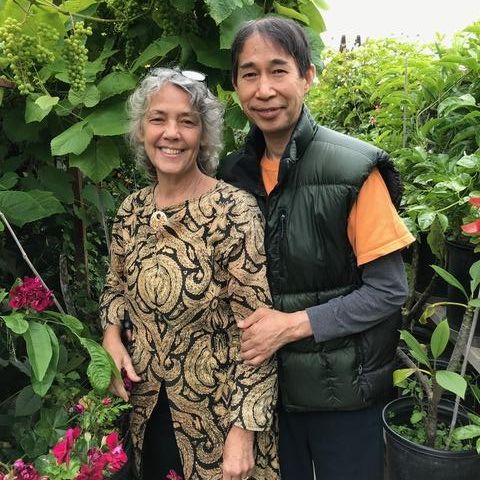
Marlene Suzuki and husband (used with permission)

Spotlight: Marlene Suzuki, Los Angeles County,

Class of 2025 Master Food Preserver Volunteer 


My name is Marlene Suzuki. I became a Master Food Preserver in 2025. I grew up in Pennsylvania and watched my grandma can jars of tomatoes and other vegetables from her garden. We always went to grandma’s house to get something tasty from her pantry.


Read more about Marlene's journey to becoming an MFP

Monthly Food Preservation Trivia

(Scroll to the bottom of the email for the answer!)


Which of the following types of salt is (are) recommended for use in pickling recipes?

A) Pure granulated salt

B) Kosher salt

C) Iodized salt

D) Flake salt

E) Sea salt

raw asparagus stuffed into a jar with flat end down

Not a Bushel: Small-Batch Canning for the Rest of Us 

By Paige Weisskirch

UC Master Food Preserver

Online Delivery Program Volunteer


You don't need a bushel of anything to preserve food well. Sometimes it's a few jars of jam. Sometimes it's one quart of sauerkraut or a bag of frozen herbs you would have otherwise thrown away. This article explains what is flexible and what is not.


Visit the full article to learn tips and tricks for effective small-batch canning

Guacamole, Bruschetta and More!

By Monica Gross

UC Master Food Preserver

Online Delivery Program Volunteer


My love affair with avocados began when I was a teen and tasted guacamole on a salty tortilla chip for the first time. Since then, I eat avocados just about daily when I can get my hands on a ripe one! 


Read more about ripening avocados (plus two recipes)

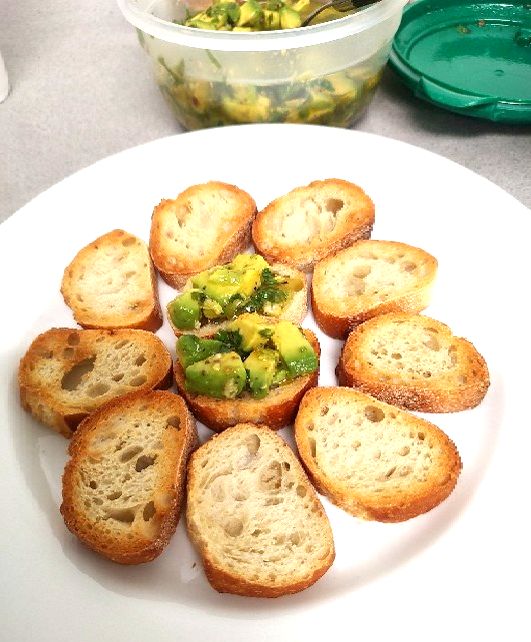
Avocado bruschetta on toasted baguette slices (M. Gross, used with permission)

Monthly Food Preservation Q & A

Question to the Editor:

I froze my tomato harvest and finally have the time to get them processed. Can I still use them to make crushed tomatoes or will I need to turn them into sauce or juice instead?


Answer from a Master Food Preserver:


Tomatoes are high in water, so when they freeze, the resulting ice crystals rupture the cells of the tomato flesh, making the tomatoes soft and mushy once they’ve thawed. As a result, they pack into jars differently than fresh tomatoes and heat will transfer through the jars differently than fresh tomatoes.


The best choice for canning previously frozen tomatoes is to make a well-cooked product such as stewed or crushed tomatoes. Alternatively, you could use them for tomato juice, sauce, or ketchup. We don’t recommend that you try to can them whole or quartered, which could lead to under-processing.


Read this article from the Master Food Preservers of El Dorado County for more information.

Upcoming Online Events

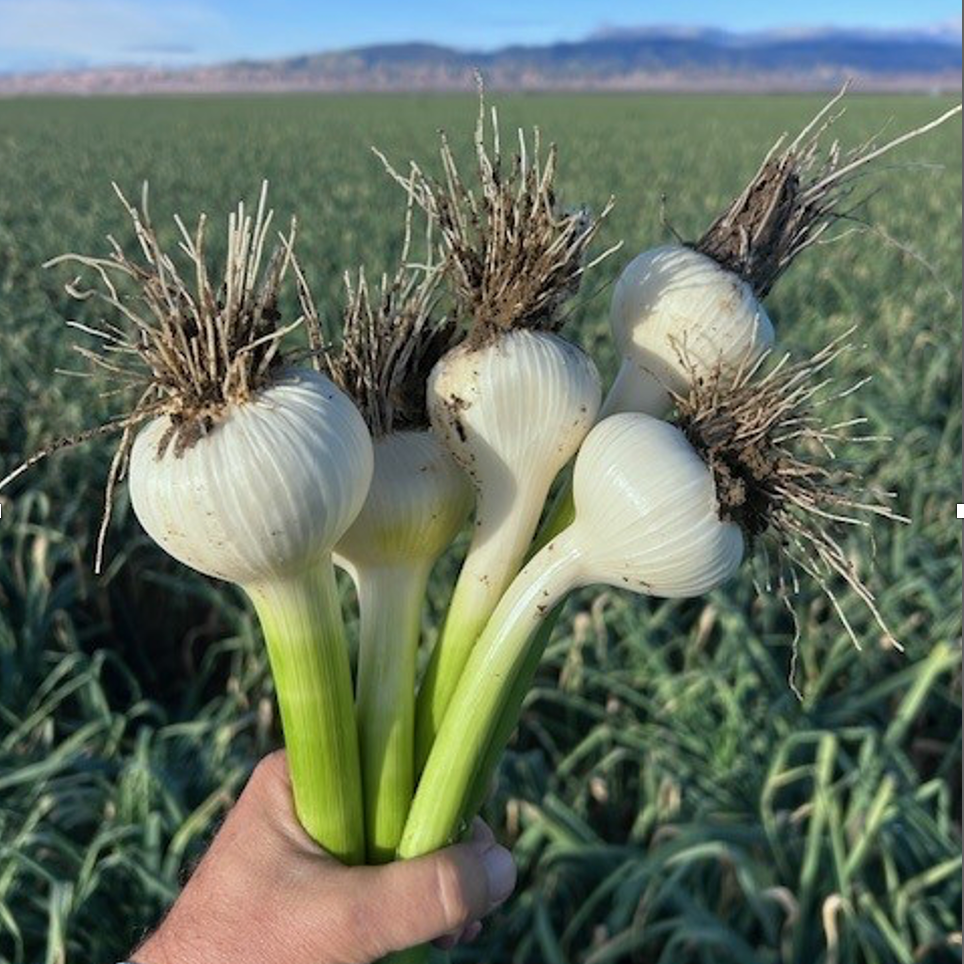
Garlic Preservation Basics


In this one-hour class, participants will learn safe techniques for curing, dehydrating, and pickling garlic to help extend storage life and maintain flavor and quality.


Spanish audio available


June 16, 7:00 pm PT

decorative logo


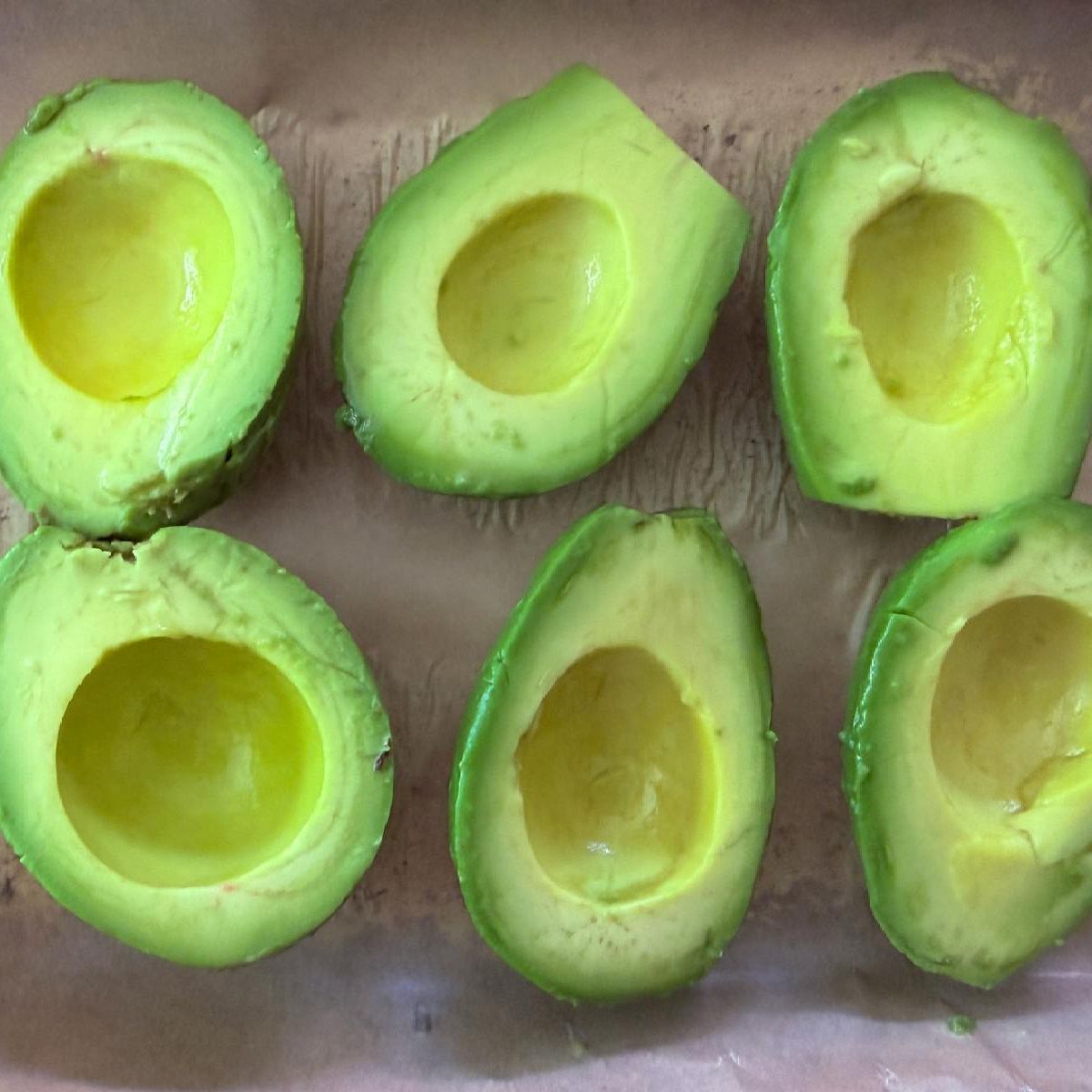
Preserving Avocados to Enjoy All Year


In this one-hour class, UC Master Food Preservers will share practical, research-based methods for selecting, storing, freezing, and preserving avocados for later use.


Spanish audio available


June 23, 7:00 pm PT

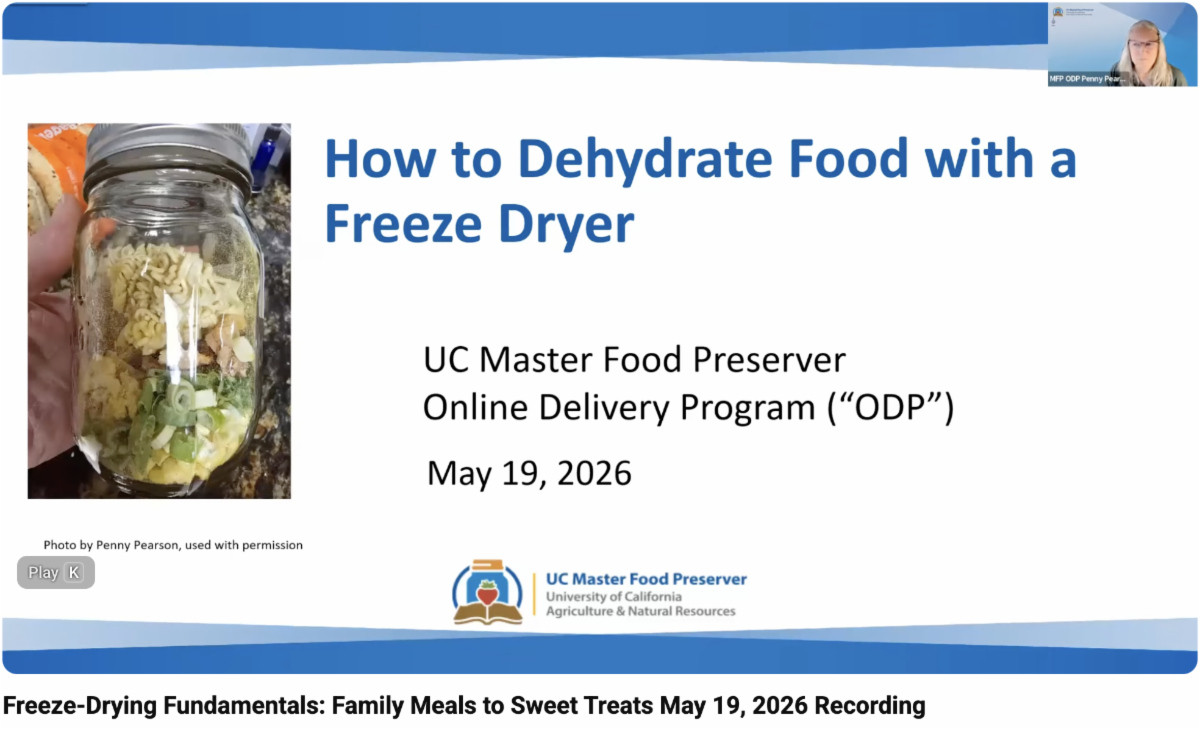
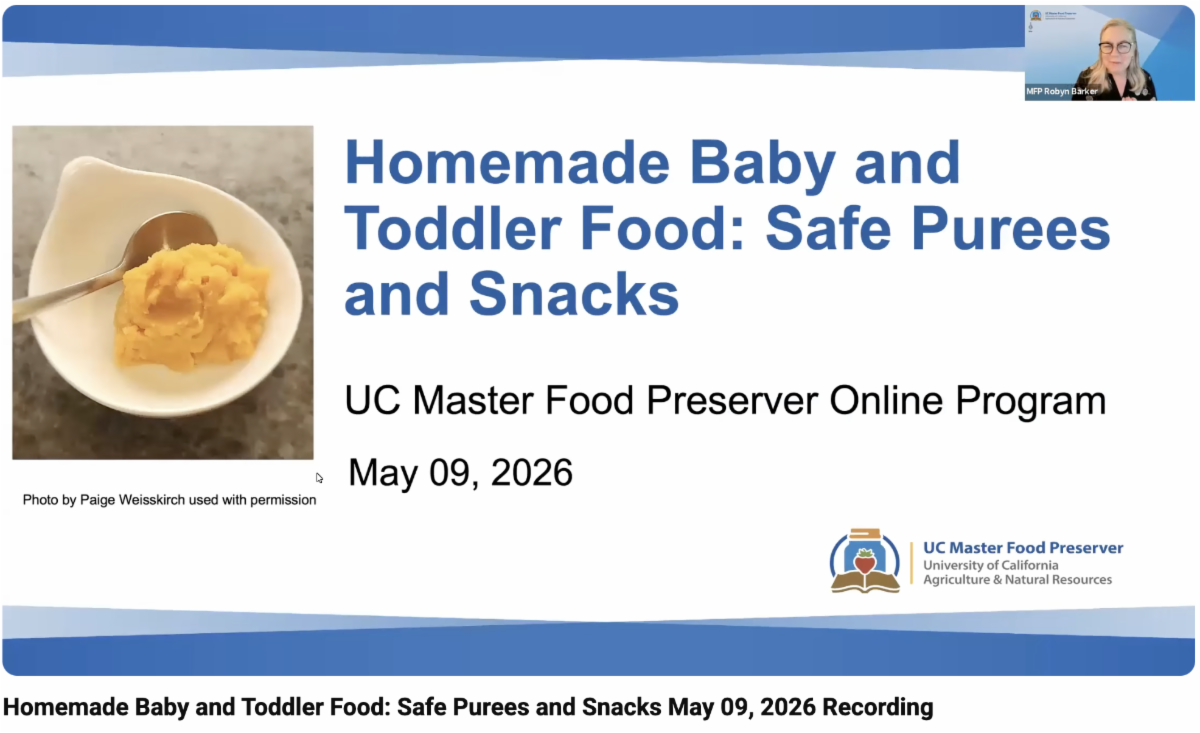
Freeze-drying and Homemade Baby Food Classes Now On Demand


Click the thumbnails below for two recent recordings. Visit our Recorded Events page for even more.

If you have any questions, suggestions, or comments regarding Save the Season, please email UC Master Food Preserver Program Coordinator Travis Robert Alexander at tralexan@ucanr.edu

Was this email forwarded to you from a friend? Click below to subscribe to the UC Master Food Preserver newsletter so you don't miss out on next month's edition!

Feel free to pass along Save the Season to a friend using the button below!

Monthly Food Preservation Trivia Answer


Which of the following types of salt is (are) recommended for use in pickling recipes?


A) Pure granulated salt and B) Kosher salt


Iodized salt contains anti-caking agents that can make the brine cloudy. Flake salt and sea salt have inconsistent densities, so they are not recommended to be used unless you can replace the salt in your recipes on a weight-for-weight basis (NOT just a volume basis). Sea salt also contains impurities that often result in a cloudy brine.

Did you get the trivia correct? (Click on the Thumbs up for Yes and Thumbs down for No)
Thumbs up            Thumbs down

The University of California working in cooperation with County Government and the United States Department of Agriculture.

Should you need assistance or require special accommodations for any of our educational programs, or for receiving the content of this newsletter, please contact the hosting program.

It is the policy of the University of California (UC) and the UC Division of Agriculture & Natural Resources not to engage in discrimination against or harassment of any person in any of its programs or activities (Complete nondiscrimination policy statement can be found at https://ucanr.edu/sites/anrstaff/files/390107.pdf). Inquiries regarding ANR's nondiscrimination policies may be directed to UCANR, Affirmative Action Compliance & Title IX Officer, University of California, Agriculture and Natural Resources, 2801 Second Street, Davis, CA 95618, (530) 750-1397.

X Share This Email
LinkedIn Share This Email
Facebook  Instagram  Web  YouTube