Save the Season

September 2025

Welcome to the eleventh edition of UC Master Food Preserver Program’s monthly newsletter. Our mission is to extend culturally appropriate, research-based practices for preserving food in the home.


Each month, you’ll receive recipes, how-tos, and inspiration straight to your inbox. Thank you for subscribing and feel free to reply with any food preservation questions. 


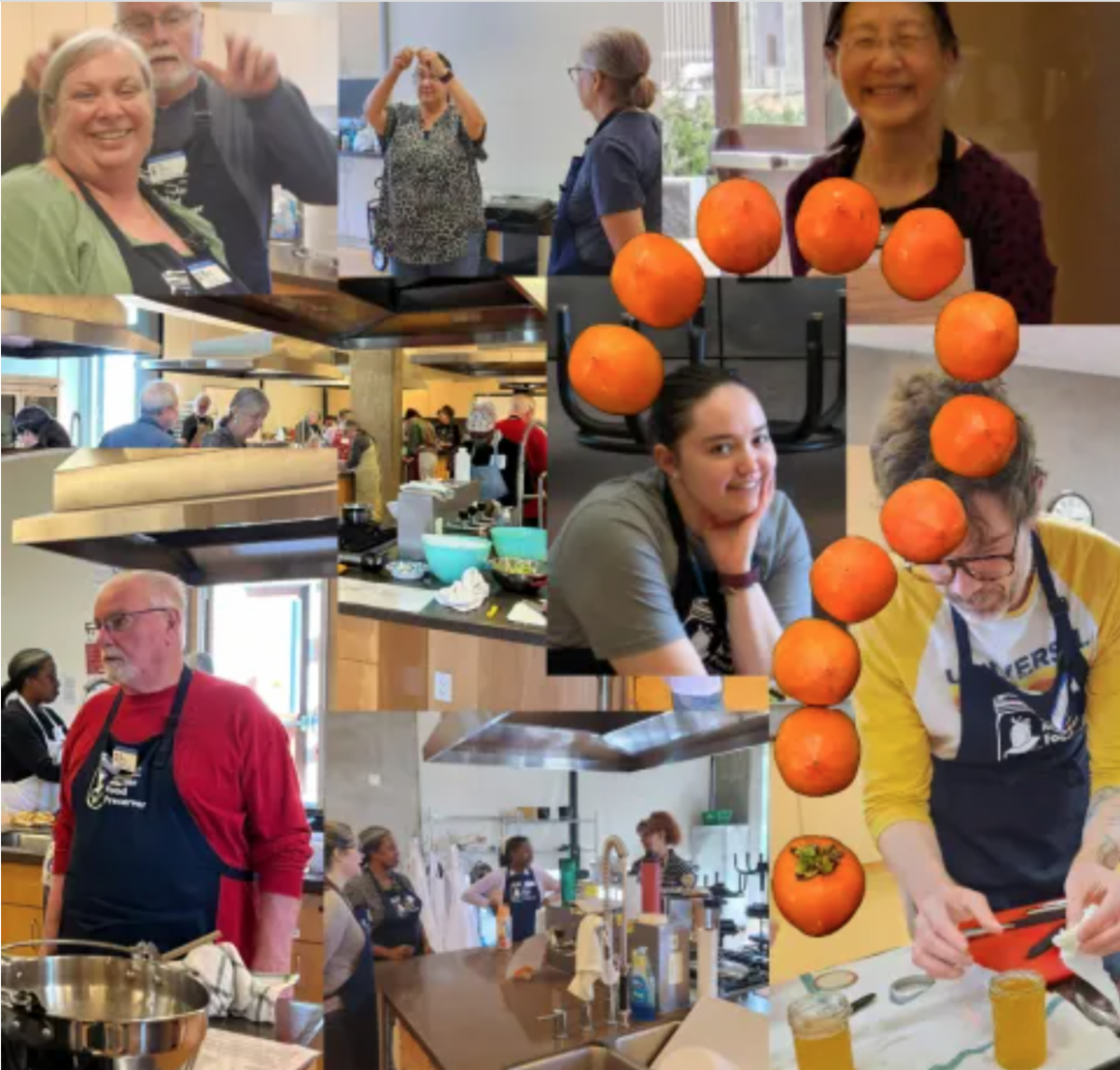
Spotlighted: Jadrian Johnson, Class of 2025 MFP Volunteer 


"There is a unique alchemy in food preservation, a practice that feels just as much a form of time travel as it does domestic science. Within a simple jar, we can seal not just the fleeting sweetness of a summer peach, but the echoes of the hands that harvested it, the stories shared over a bubbling pot, and the enduring spirit of a family."


Read More

What's the Buzz: Infants and Honey

By Kirsten Hansen, UC Master Food Preserver Online Program Volunteer


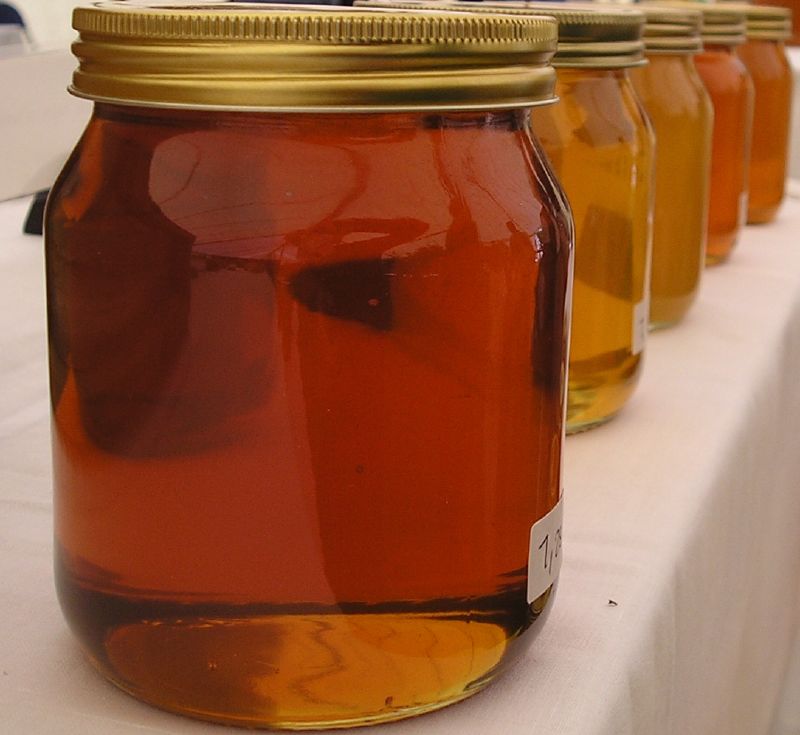
I recently gave birth to my first child, which means that I have entered the world of what infants should and should not eat. One very common recommendation is that infants under a year old should not eat honey, due to the risk of infant botulism. However, I was curious about what this meant: no spoonfuls of honey, of course, but what about baked goods with honey, or preserves that use honey as an alternative sweetener? I decided to do more research. 


Read More

A Delicious BBQ Sauce From Tomato Powder

By Monica Gross, UC Master Food Preserver Online Program Volunteer


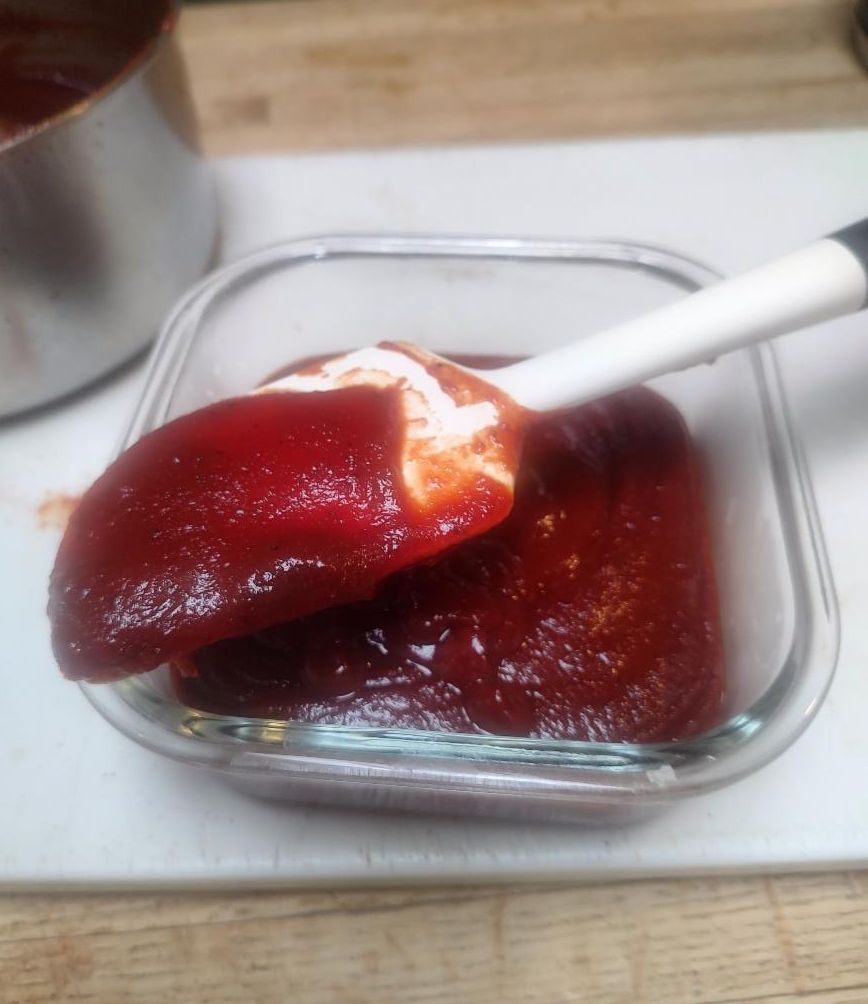
Using tomato powder to make a delicious barbecue sauce delighted all of my senses! This article explains how to transform simple ingredients into a tasty sauce.


Read More

Question to the Editor:


"Help! I have a few jalapeño plants that have been producing way more peppers than I can eat while they are fresh. What is the best way to preserve them?"

Answer from a Master Food Preserver:


One of the easiest ways to safely preserve jalapeños is to freeze them. Simply wash, remove the stem and seeds, and dice to your desired size. Spread the pieces in a single layer on a cookie sheet and place in your freezer for 4 to 6 hours to quick freeze. Once frozen, store in plastic food storage bags or other freezer-safe containers. You do not need to blanch peppers before freezing. They will last for 8 to 12 months and you can throw them directly into recipes when you're ready to cook with them (no thawing). Enjoy!


Have a Question? Submit yours here

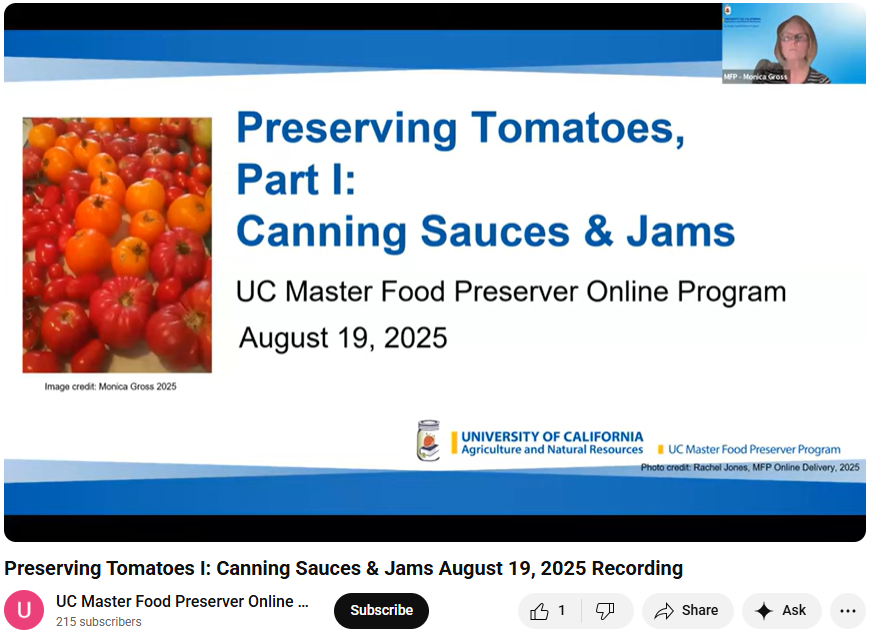
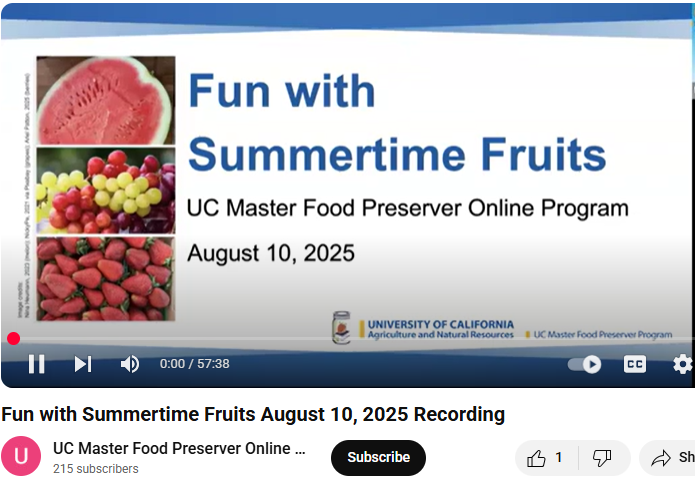
Previous Courses for Tomato and Fruit Preserving Now On Demand


Click below to access the recordings of a few featured classes, via the statewide Past Online Events page.

Was this email forwarded to you from a friend? Click below to subscribe to the UC Master Food Preserver newsletter so you don't miss out on next month's edition!

Feel free to pass along Save the Season to a friend using the button below!

Upcoming Online Events (Register via: https://mfp.ucanr.edu/Upcoming Events/)

Preserving Tomatoes II: Dehydration, Freezing, and Pickling 


September 2, 7:00PM PDT

Ask a MFP - Live Q&A


September 3, 7:00PM PDT

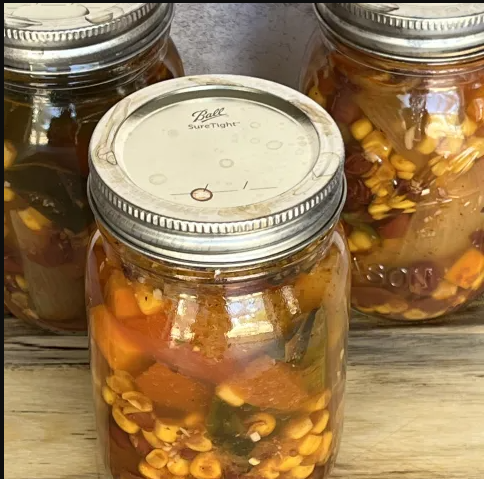
Meals in Jars: Homemade Fast Food


September 27, 1:00PM PDT

X Share This Email
LinkedIn Share This Email
Facebook  Instagram