| |  | Saxophonist/composer Dennis Mitcheltree’s new recording, his eighth as a leader, Seeing Red, is boiling over with strong emotions, expressed by strong players whose playing is fueled by the breadth of their life experience. In our current sociopolitical world, we see red everywhere: the angry faces on our social feed, on matters of political opinion, alerts of danger, tribal headgear, and those who believe they are the only true color of blooded Americans. Red is perceived as the color of destruction, which can be a precursor to transformation, just ask Shiva. However, existence within a limited color range is not the full experience, it’s myopic and constraining, and ultimately unnatural and unfulfilling. Conversely, “music is not monochromatic. It is capable of utilizing all the colors of the visible and invisible spectrum, with infinite sonic colors representing collaboration, cooperation, understanding and empathy, all available on our prodigious musical palette, giving us the potential to illuminate how we are bound together as one,” explained Mitcheltree.
Ancient cultures believe the universe to have been created through sound vibration - that sound is the expression of ultimate reality. This notion is backed up in modern physics through the notion of string theory, postulating that matter, at its quantum level, is produced by interacting oscillations in higher-dimensional spacetime. “Personal experience at the sonic level confirms to me it’s capacity to affect the physical, the cognitive, the communicative, the social and the spiritual realms of existence. When you hear this music, please think on this … it is related to the sound of our universe being constructed,” said Mitcheltree.
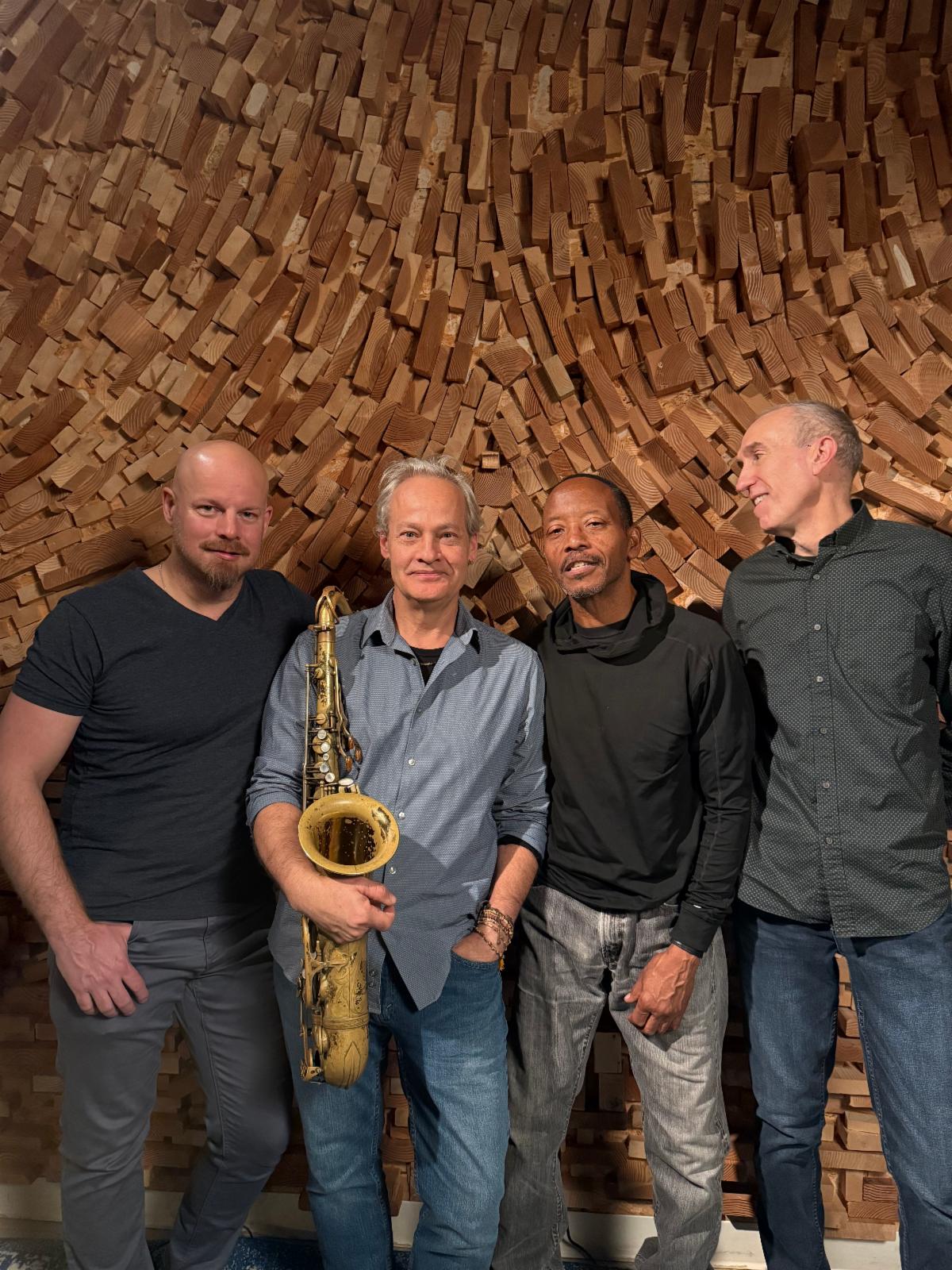
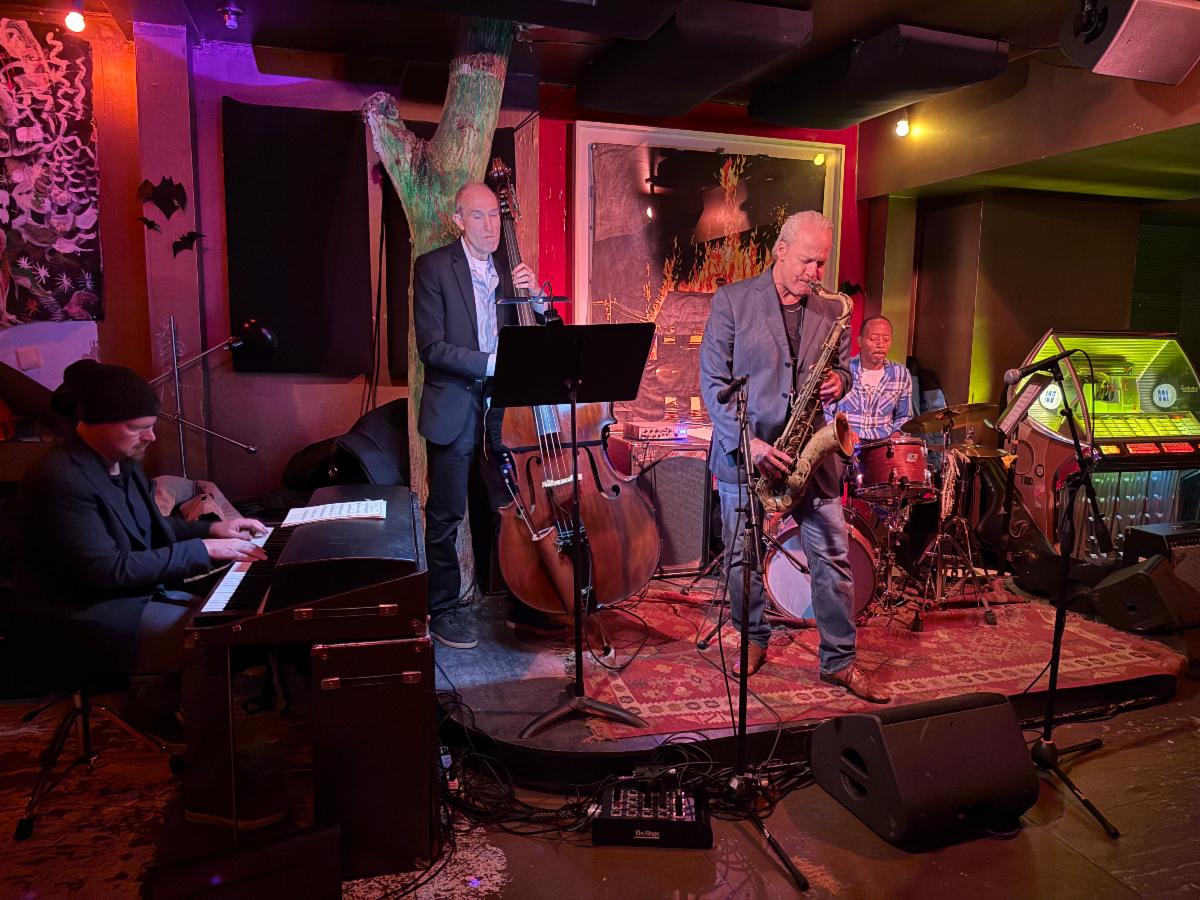
Dennis Mitcheltree’s Quartet, featuring pianist Johannes Wallmann, bassist Jesse Crawford and drummer Bill McClellan, have been playing music together for several decades, and, “have become personally simpatico and musically empathetic. We’ve toured the world and working together is never a struggle as we trust each other on a deep and instinctual level. The Golden Rule is followed when we play music - treating each other as we wish to be treated: with respect, freedom, and joy,” explains Mitcheltree. He continues, “in collaboration each musician brings their individuality to the music and allowing them to do so makes the music better. When I embrace my bandmate’s contributions I find that the music can go places I hadn’t imagined. We have our own individual lives and projects, but when we perform together a unique entity is formed. What we create together is more powerful and beautiful than any single contribution. We think the results are wonderful, and hope you do as well!”
Regarding the fearless leader on Seeing Red, Mitcheltree’s tenor playing is chock-a-block with ideals, convictions and passions – you’re hearing an artist who “speaks” directly, eloquently and purposefully. Not to mention, with great melodicism and harmonic sophistication. Nancy Lee said of Mitcheltree in JazzTimes Magazine, "the saxophonist is aggressively adventurous and most expressive...Mitcheltree evokes hearty tones from his instrument as he masterfully interweaves unexpected lines to create fascinating sound tapestries at any tempo". Michael G. Nastos called Mitcheltree’s tenor, “soulful, swinging and street smart” (AllMusicGuide), and the esteemed Martin Johnson called Mitcheltree "one of the area's best young tenor players...His album ‘Brooklyn’ is one of the better records of the last two years" (Newsday). The saxophonist/composer regularly receives high praise of this nature from veteran jazz critics, fans and colleagues.
|