|
Take a moment and reflect on this questions:
Have you ever had a great teacher? Think about that person as you read my story.
I have had several great teachers. Mrs. Jacobson helped me embrace a belief in myself as a reader when I was in second grade. Another was Mr. Hogan, my high school freshman composition teacher, whose gift was his affirmation that I was a strong writer.
Another of my great teachers was Dr. Robert Cox, who was my professor for a poetry course in my first year at university. The course was at 8 AM on Mondays and Wednesdays—a brutally challenging time for a bunch of teenagers—but Dr. Cox kept us engaged by reading poetry to us and then explaining what the poems meant.
As Dr. Cox stood before us one Monday morning in late autumn, he read from our poetry anthology.
so much depends
upon
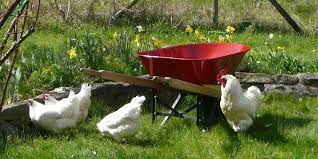
a red wheel
barrow
glazed with rain
water
beside the white
chickens.
After he concluded, we waited for his customary elucidation, but on this singular occasion, his response to the poem was solely a Cheshire Cat-like grin. And then he moved on.
I thought,
What just happened? What does this poem mean exactly?
All I knew was that William Carlos Williams had penned The Red Wheelbarrow around 1923. That day, though, something fundamentally shifted for me. I did not need someone else to tell me what something meant. I could consider its meaning on my own. Dr Cox had challenged me to uncover the meaning of things—even deceptively simple things—in an exploration of my own making.
I became a teacher because of great teachers. Mrs. Jacobsen. Mr. Hogan. Dr. Cox. The throughline began with one great teacher and continued with several other great teachers whose impact was so profound that it led to my life’s work as an educator.
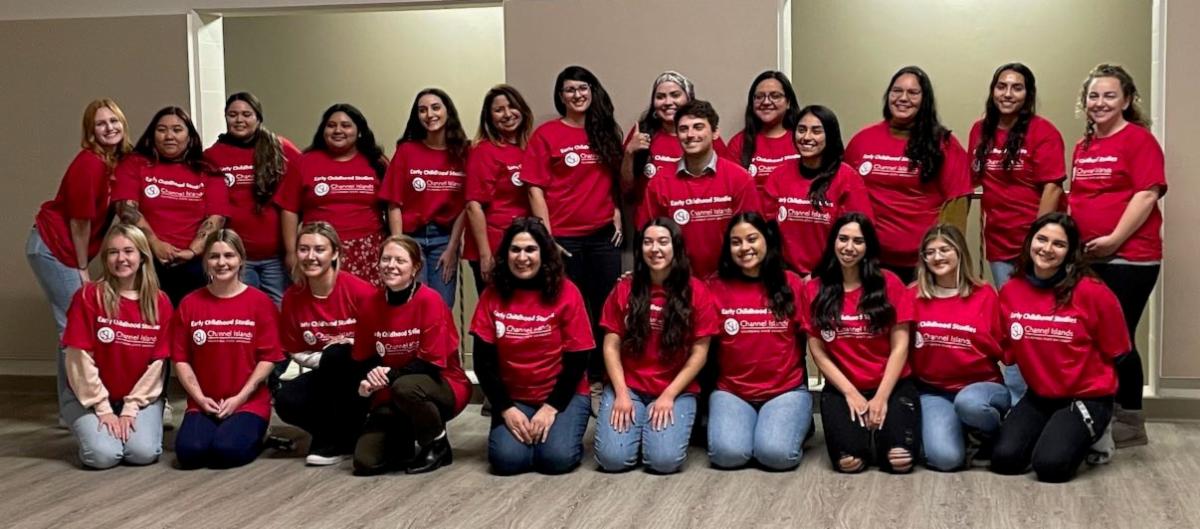
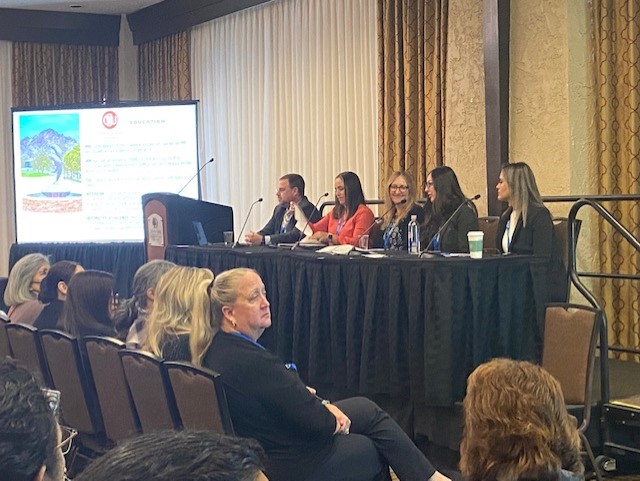
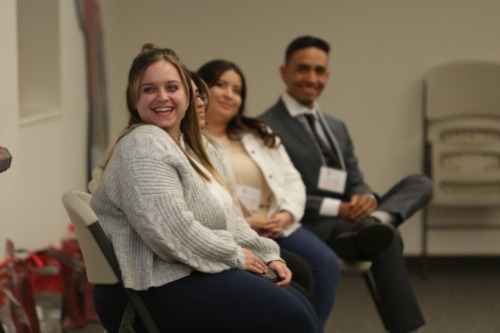
This past week, I was privileged to attend two events celebrating teachers that our School of Education hosted. The first was for our Early Childhood Studies educators who are completing their baccalaureate degrees this month. While they will join us for Commencement in May, our professors and supervisors recognized their accomplishments with a warm welcome to our profession. The second event, A Celebration of Teaching, honored CI undergraduate students whose professors had nominated them as outstanding prospective teachers. In addressing each group, I talked about the courage to teach. One group has chosen the profession. Another is considering it.
In his book, The Courage to Teach, Parker Palmer concludes with this challenge:
The darkness around us is deep. But our great calling, opportunity, and power as educators is to shed light in dark places. In a world that needs new professionals—true professionals—in every institution, let us resist the temptation to respond with a fearful “no” or an elusive “maybe” and allow our lives to speak a clear and heart-felt “yes.”
So much depends upon a red wheelbarrow. Will you be or continue to be that red wheelbarrow? Do you have the courage to teach, and, if you are already a teacher, the courage to keep teaching despite the obstacles? Is that great teacher who affected you still whispering in your ear?
As I conclude my sixth month as Dean of our School of Education at CSU Channel Islands, I share again what I wrote in my early weeks:
In each circumstance in which we find ourselves, we can seek to engender a beloved community—a culture of interdependence, respect, support, and trust.
You are a part of our beloved community, and I am overflowing with gratitude for your contributions, commitment, and courage.
Looking forward,
Elizabeth
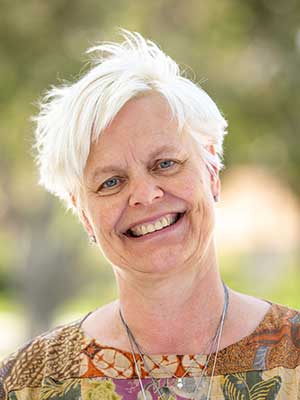
Elizabeth C. Orozco Reilly
|