Issue no. 7 - 13 October 2026 | | PFAS ('Forever Chemicals'): Explained | | |
PFAS, or Perfluoroalkyl and Polyfluoroalkyl Substances, have been a major topic of discussion in the news—both local and national—recently. Whether it's the EPA's proposal to rescind federal drinking water regulations for certain forms of PFAS, the use of PFAS in AI data center cooling systems, or the water contamination from nearby East Hampton battery energy storage system facility, PFAS are an urgent environmental and health issue.
Let’s break down what exactly PFAS is, how it originated, how it affects us and the environment, and where it is found.
12 minute read.
| | |
PFAS Background
PFAS are not a single chemical, but rather a family of over 15,000 man-made synthetic chemicals that have chains of carbon and fluorine bonds. These carbon-fluorine bonds are one of the strongest, which makes it so the PFAS chemicals do not degrade in the environment quickly. In fact, they can persist in the environment for up to several thousand years. Hence, PFAS are also known as 'forever chemicals'.
The most commonly studied PFAS are perfluorooctanoic acid (PFOA) and perfluorooctane sulfonic acid (PFOS). The next most commonly studied are perfluorohexane sulfonic acid (PFHxS), and perfluorononanoic acid (PFNA). Other newer forms of PFAS are now widely used.
PFAS have been around since the mid-1940s, when DuPont invented Teflon for non-stick cookware. Since then, PFAS have been widely used in both the chemical industry and everyday consumer goods. According to a peer-reviewed analysis in the Annals of Global Health, the largest manufacturers of PFAS (DuPont and 3M) knew about the toxicity of PFAS by 1970. However, it took forty years after that for its toxicity to be established in public health literature.
(National Institute of Environmental Health Sciences -"PFAS"; Agency for Toxic Substances and Disease Registry -"PFAS and Your Health"; UNEP -"Per- and Polyfluoroalkyl Substances (PFASs)"; EPA- "Our Current Understanding of the Human Health and Environmental Risks of PFAS"; Annals of Global Health-"The Devil they Knew: Chemical Documents Analysis of Industry Influence on PFAS Science")
| | Life Cycle and Ecological Flow | | |
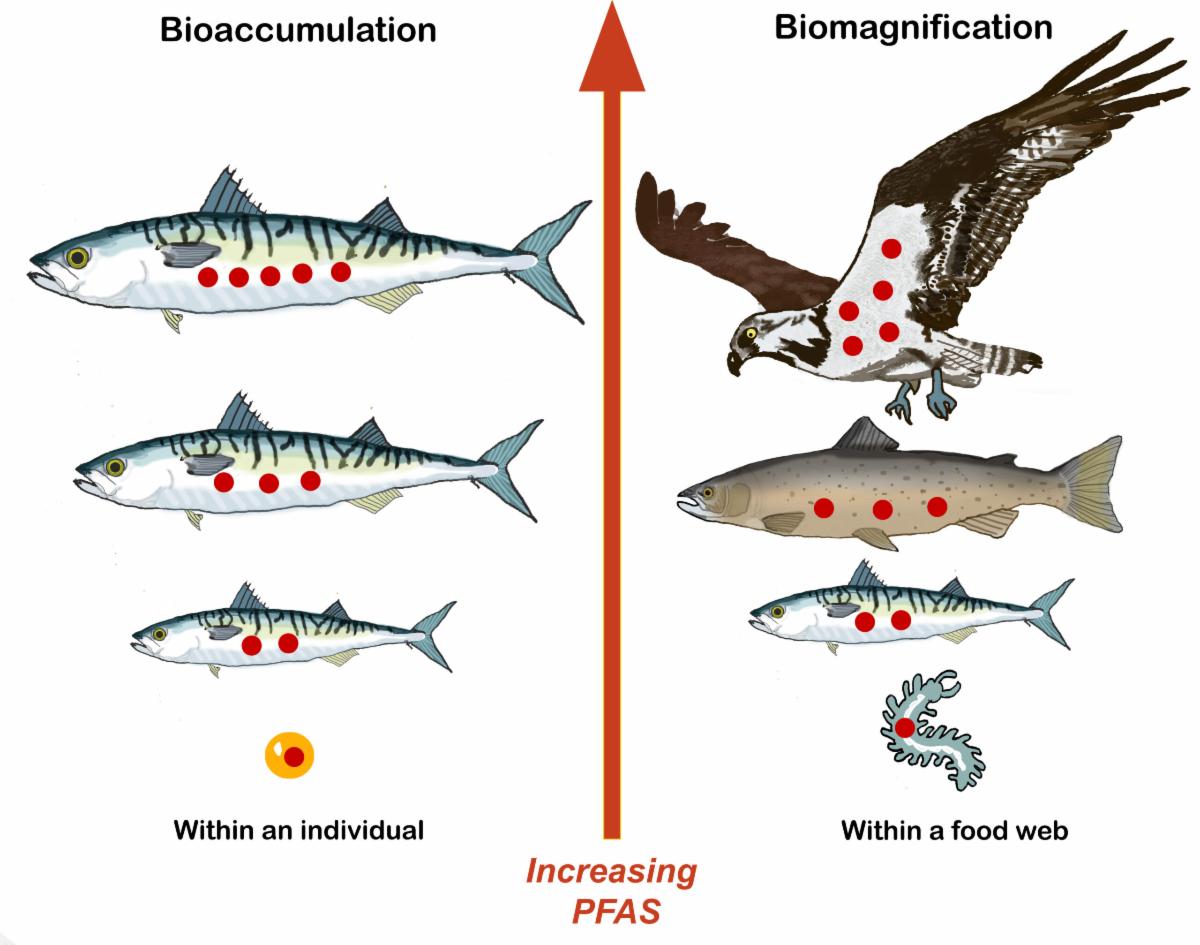
PFAS do not naturally break down in the environment or the body, leading to bioaccumulation over time in organisms and ecosystems.
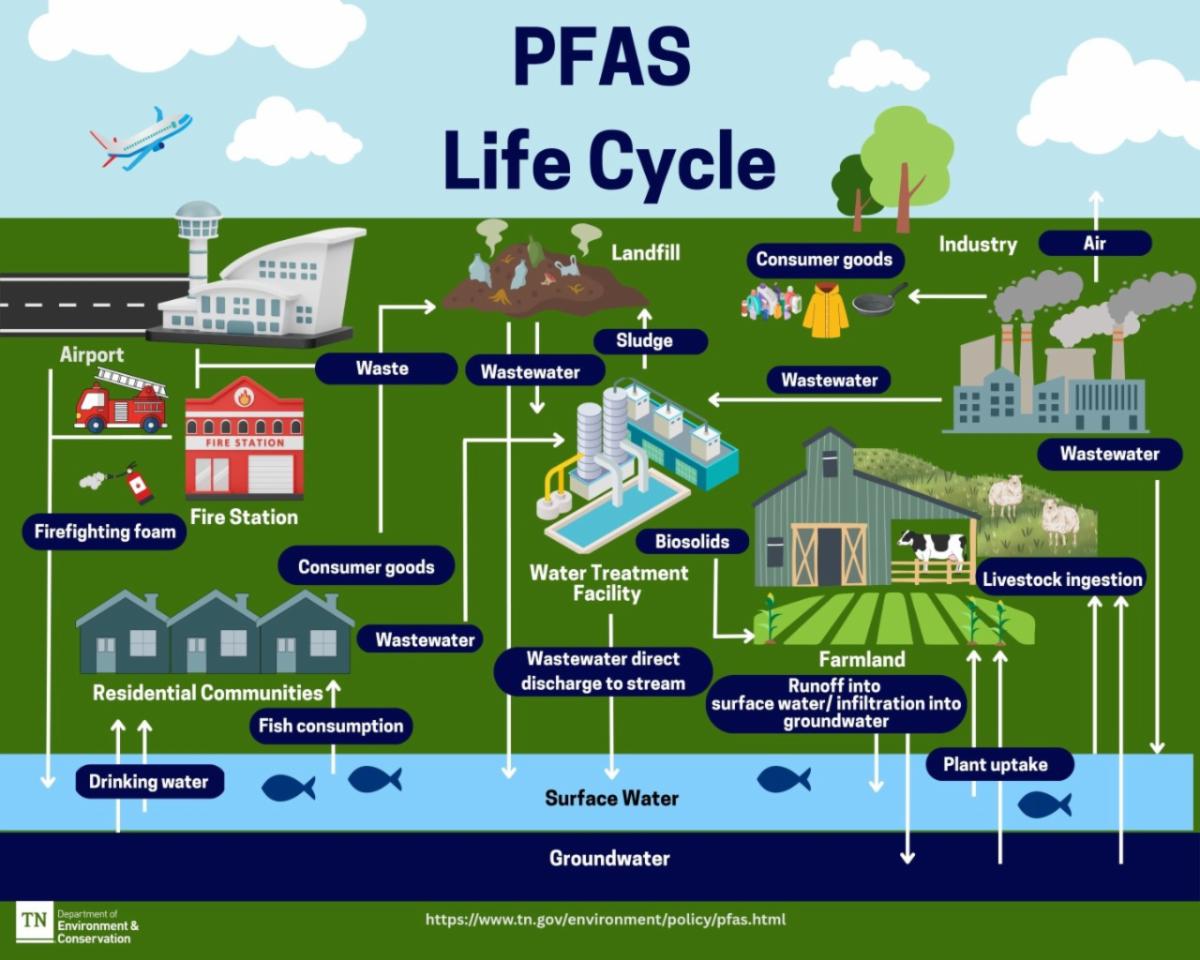
PFAS can flow into the soil, water and air during production or use because they are highly mobile, compared to traditional organic pollutants. Any PFAS contamination compromises environmental flows and turns natural cycles into delivery mechanisms for toxins. Because many PFAS dissolve readily in water, they can move from contaminated soil into groundwater and eventually enter drinking water wells, streams, and other bodies of water.
(Agency for Toxic Substances and Disease Registry -"PFAS and Your Health"; EPA - "Introduction to PFAS in Groundwater"; EPA -"Addressing Challenges of PFAS: Protecting Groundwater and Treating Contaminated Sources"; EPA -"PFAS Explained")
|
- Traditional municipal wastewater treatment plants cannot filter PFAS out, meaning treated effluent has the potential to spread PFAS downstream into pristine aquatic systems.
- When contaminated biosolids (sewage sludge) is applied to farmland as fertilizer, or when plants are exposed to contaminated groundwater, PFAS undergo root uptake. Studies show these chemicals readily migrate into crops like wheat and maize, introducing the toxin at the base level of the terrestrial food web.
- Industrial emissions release short-chain PFAS into the air as vapors or fine particles. Winds transport these long distances—even to remote locations like the Arctic—where they settle via rain and snow into otherwise untouched ecosystems.
(EPA - "Introduction to PFAS in Groundwater"; EPA -"Addressing Challenges of PFAS: Protecting Groundwater and Treating Contaminated Sources"; EPA -"PFAS Explained"); USGS -"PFAS Sampling and Natural Resource Damage Assessment")
| | |
PFAS exposure is extremely widespread; PFAS is in the blood of animals and humans all over the world, and studies have detected PFAS in the blood of 97% of Americans.
As of July 2026, EPA testing data showed that 9,728 sites in all 50 states and four territories have known PFAS contamination. However, many states do not test extensively for PFAS, so numbers could be higher.
(National Institute of Environmental Health Sciences -"PFAS"; Agency for Toxic Substances and Disease Registry -"PFAS and Your Health"; EPA -"The Fifth Unregulated Contaminant Monitoring Rule (UCMR 5) Data Summary")
| | |
1: Drinking Water and Food
- Contaminated municipal water or private well water
- Fish caught from water contaminated by PFAS
- Food contaminated during growing, packaging, and/or processing
(https://www.tn.gov/environment/policy/pfas.html)
| | |
2: Everyday Consumer Goods
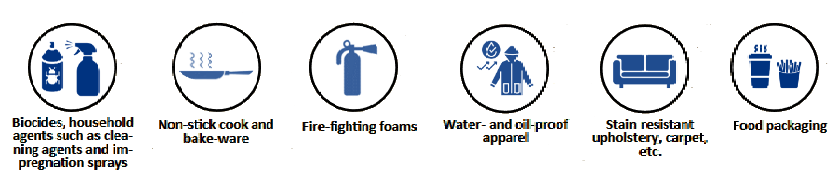
The main pathway for PFAS exposure for most Americans is sitting in your kitchen or closet.
- Teflon and other brands of nonstick cookware
- Stain-resistant furniture and carpets treated with Scotchgard, Stainmaster and other fabric treatments
- Paper and cardboard wrappers for fast food and bakery goods
- Clothing that is labeled stain- or water-repellent, such as Gore-Tex
- Certain personal care products and cosmetics (e.g. shampoo, dental floss, nail polish, and eye makeup)
(UNEP -"Per- and Polyfluoroalkyl Substances (PFASs)"; EPA- "Our Current Understanding of the Human Health and Environmental Risks of PFAS")
| |
3: Industry and Manufacturing
- Industrial manufacturing facilities that produce or use PFAS (e.g. chemical plants, metal plating industry, photo imaging industry, semiconductor fabs, and textile mills) discharge PFAS into waterways and wastewater systems.
- Industrial emissions release short-chain PFAS into the air as vapors or fine particles.
- When sewage sludge contaminated with PFAS is applied to farmland as fertilizer, PFAS can then enter the crop's roots.
(UNEP -"Per- and Polyfluoroalkyl Substances (PFASs)"; EPA- "Our Current Understanding of the Human Health and Environmental Risks of PFAS)
| |
4: Firefighting Foam
For decades, PFAS-containing firefighting foam has been used in training and emergency response events at military bases, civilian airports, shipyards, firefighting training facilities, chemical plants, and refineries. After so many years, the groundwater is contaminated around hundreds of locations.
(EPA- "Our Current Understanding of the Human Health and Environmental Risks of PFAS")
| | |
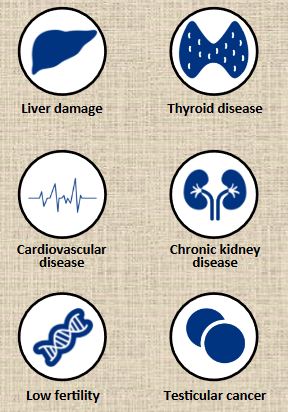
Even low levels of PFAS have been linked to cancer, reproductive harm, immune system damage and other serious health problems.
Exposure to PFAS can lead to increased cholesterol, weaker immune responses to vaccines, and higher risk of kidney, prostate, and testicular cancers. It can cause lower birth weights in infants, cause developmental delays in children, and can cause high blood pressure in pregnancy.
Unlike many environmental toxins that are stored in our body fat, PFAS bind to proteins in the blood and actively accumulate in the liver, kidneys, and blood. They bind to and activate certain receptors in human cells, disrupting normal lipid metabolism and hormone signaling.
Specific Effects:
- PFOA (Perfluorooctanoic acid): Strongly correlated with kidney and testicular cancer. It is also tied to pregnancy-induced hypertension, preeclampsia, and elevated blood cholesterol.
- PFOS (Perfluorooctanesulfonic acid): Broadly linked to suppressed immune systems, particularly reduced antibody responses to vaccines in children, as well as changes in liver enzymes.
- PFNA & PFDA: Highly associated with substantial increases in serum cholesterol levels and lipid dysregulation.
- PFHxS: Implicated in altering thyroid function, disrupting hormone balance, and triggering early-stage liver damage.
UNEP -"Per- and Polyfluoroalkyl Substances (PFASs)"; EPA- "PFAS Explained"; (Agency for Toxic Substances and Disease Registry -"PFAS Health Effects")
| Health Effects on the Environment | |
PFAS similarly affect other organisms like they do humans. PFAS form a strong bond to blood proteins and fat molecules, which are stored in organs like the liver, kidneys, and gills.
High levels of environmental contamination correlate directly with reduced hatching rates in threatened sea turtle species; in seabirds, researchers have correlated high PFAS levels to an overall decline in physical body condition, which directly hinders foraging and long-distance trans-equatorial migrations. In marsh fish, specific long-chain variants cause a severe reduction in abdominal fat. Because wild fish depend on these fat reserves for migration, hibernation, and egg production, this drop severely threatens population survival. On average, PFAS concentrations double with each step up the food chain. Apex predators—such as eagles, alligators, polar bears, and marine mammals—end up with concentrations thousands of times higher than the surrounding water.
(USGS -"Bioaccumulation and transfer of per- and polyfluoroalkyl substances (PFAS) in a stream and riparian food web contaminated by food processing wastewater")
| | |
The Good News
There are now legal limits that the EPA established, called Maximum Contaminant Levels (MCLs), for six PFAS in drinking water. The EPA also finalized health-based, non-enforceable Maximum Contaminant Level Goals for these PFAS. Under the 2004 Stockholm Convention on Persistent Organic Pollutants, the U.S. phased PFOA and PFOS out of production. States like New York, New Jersey, Michigan, Maine, Washington and California have also taken significant action against PFAS. PFAS-Free NY also has the status of current legislation waiting to be passed on PFAS.
And, although we cannot eliminate PFAS from our lives completely, there are ways to reduce our exposure. Guide to Avoiding PFAS
FYI: Suffolk County Water Authority tests and treats its water for PFAS
| | |
Thank you for exploring with us. And thank you to our intern, Julian, for contributing to this research.
Camille Newman
Environmental Project Coordinator
| | |
|
SUPPORT OUR PROGRAMMING
CONSIDER A DONATION TODAY
DO YOU LOVE MONTAUK?
Be part of an organization fighting to protect and restore Montauk’s precious environment!
CCOM is a 501(c)(3) not-for-profit environmental organization. Thanks to our donors, we have been protecting Montauk's unique environment since 1970. Please consider making a 100% tax-deductible donation today.
DONATE TODAY FOR A SUSTAINABLE TOMORROW!
|
| | | | |