September 2022

Science Spotlight: Wildfire and Smoke Research

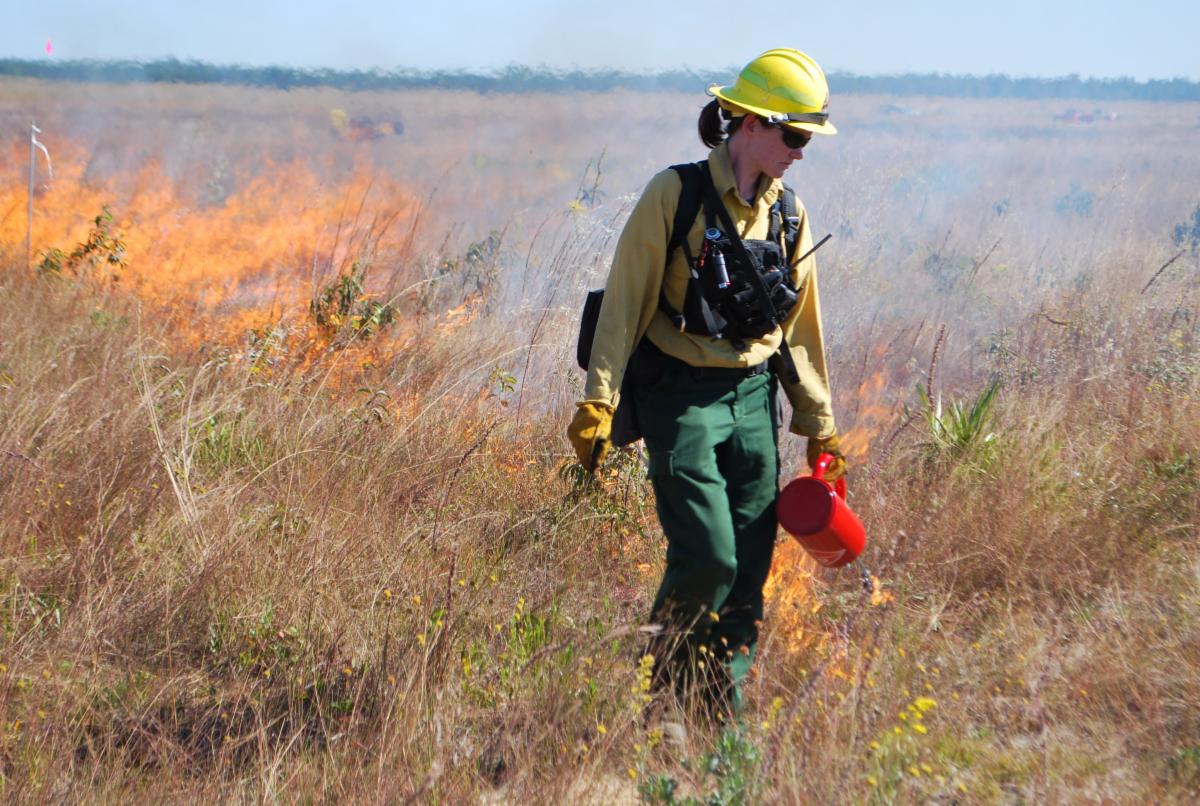
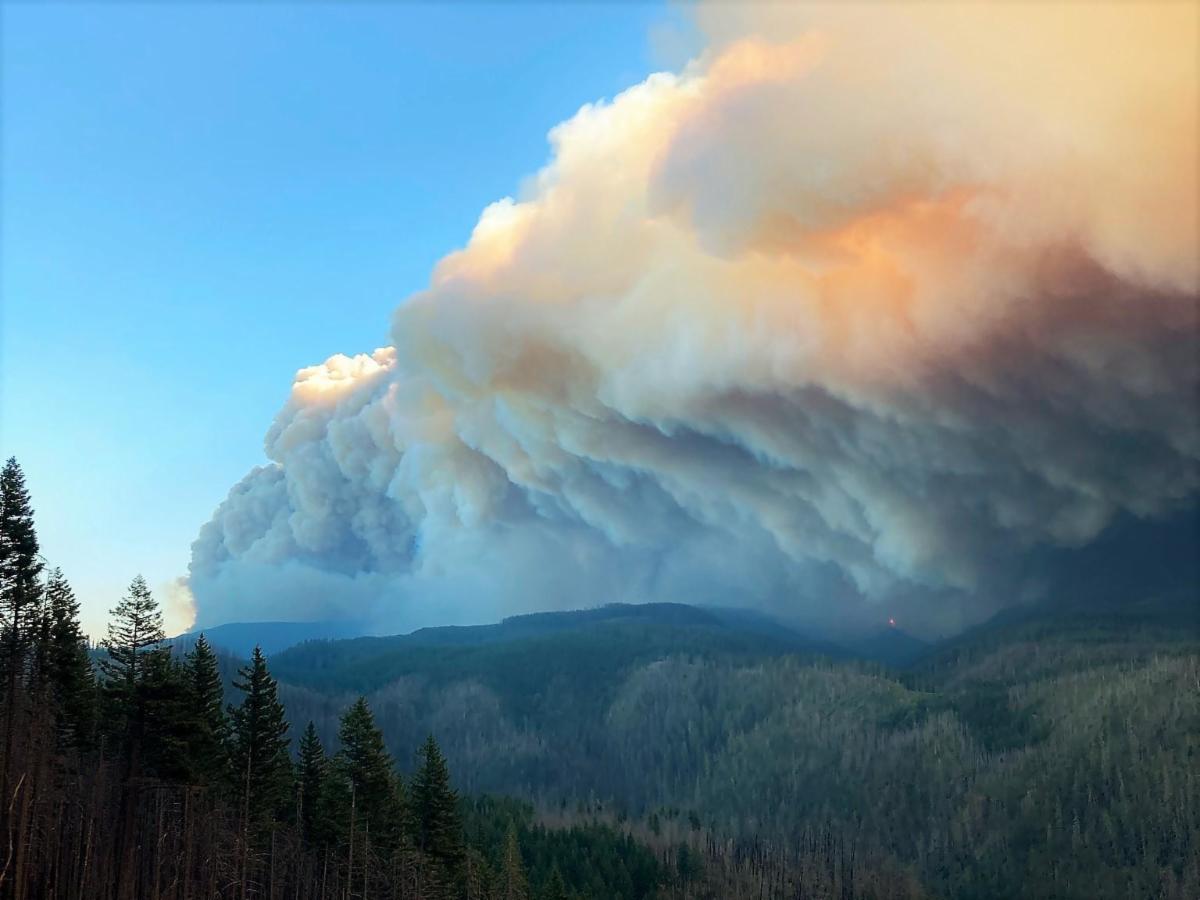
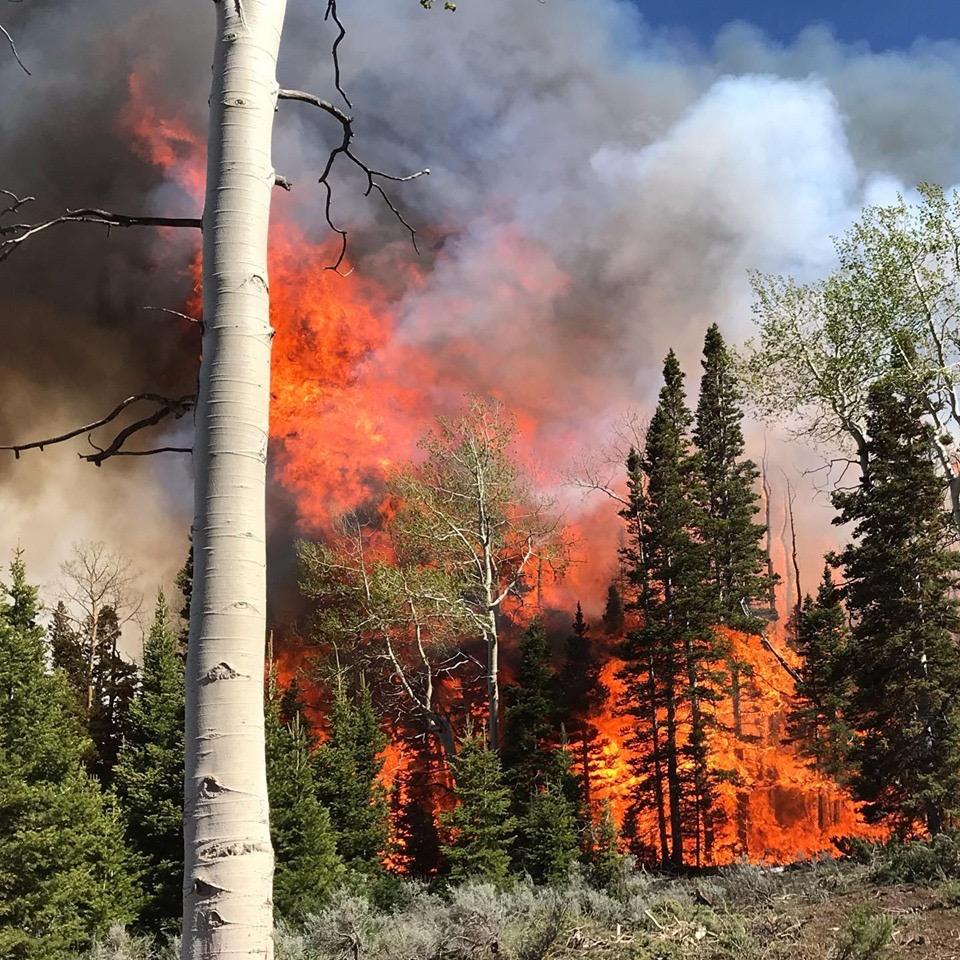
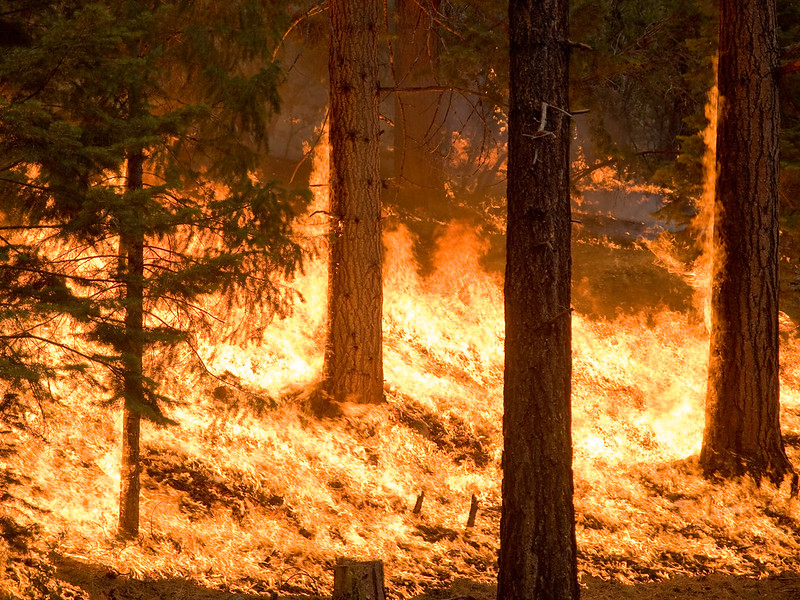
The Pacific Northwest (PNW) Research Station has a long history of providing science information and tools that address the challenges faced by wildland fire managers and responders in the United States. Every year, wildfires negatively affect natural resources and communities; however, in many western landscapes, fire is also a necessary and beneficial ecological process. The cascading effects of more than a century of fire exclusion and fuel buildup, changes in land use, extended drought, warming temperatures, and the spread of invasive species have led to widespread changes in fire regimes across the country. These changes have added further complexity to an already complex issue.


Station scientists work closely with wildland fire and land managers to characterize and mitigate wildfire risks, to enhance the positive effects of fire on landscapes, and to anticipate future changes in wildfire activity. Read on to learn about some of the station's latest wildfire and smoke science projects, findings, and resources.

Featured Ongoing Projects

The West-Side Fire and Climate Adaptation Research Initiative is designed to bring researchers and managers together to address critical knowledge gaps related to climate-fire relationships, fire ecology, risk, and management in western Oregon and Washington.


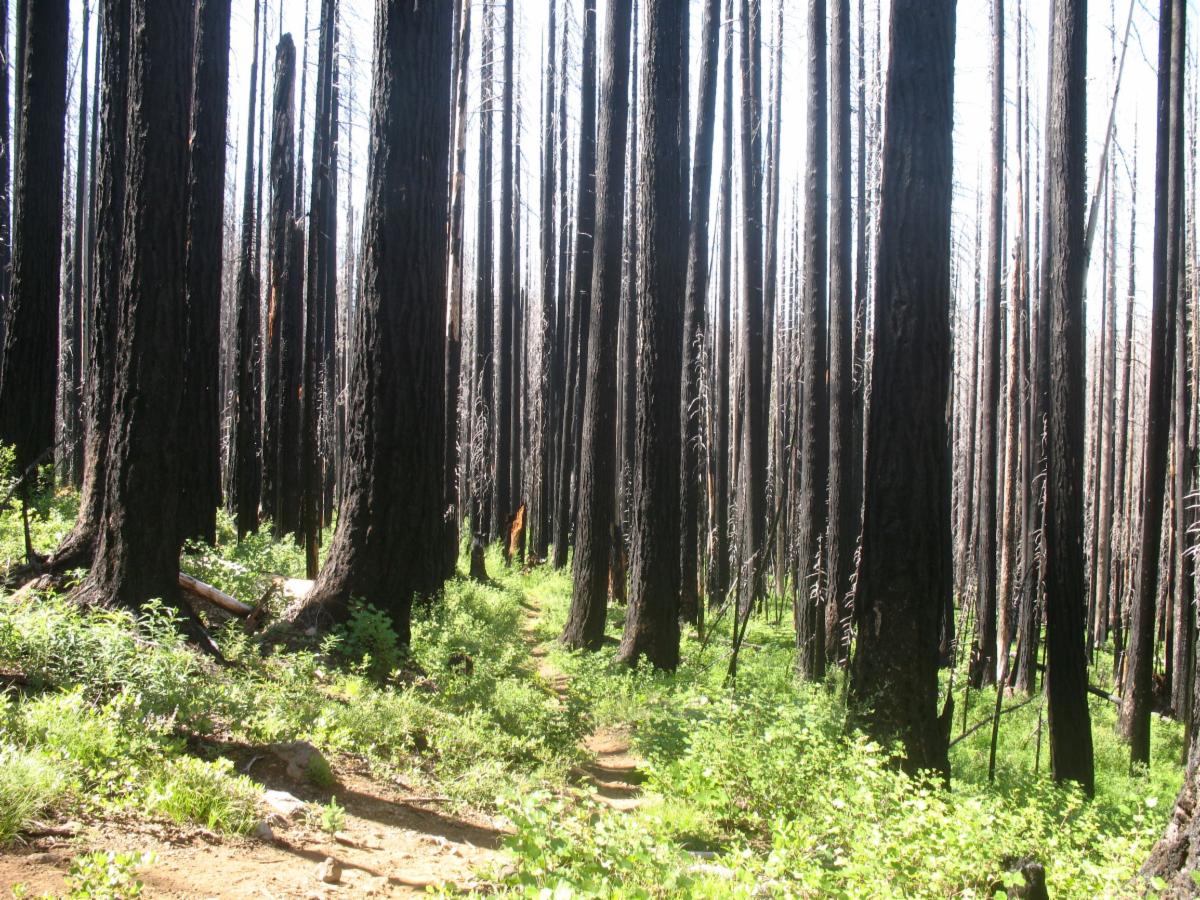
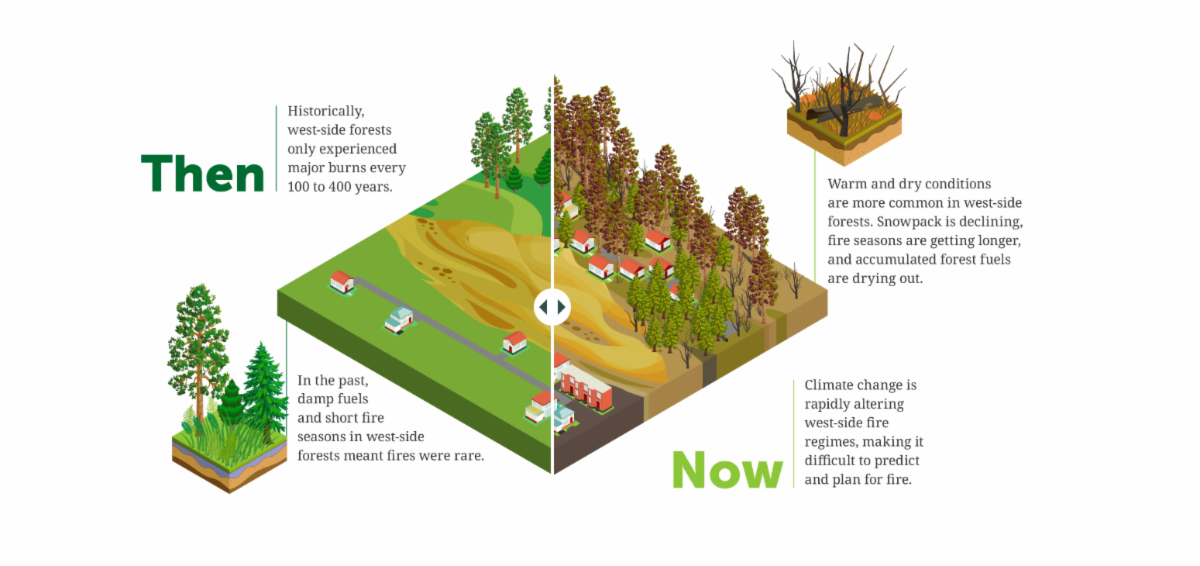
Historically, wildfires have been very uncommon in western Oregon and Washington compared to the interior Pacific Northwest. However, when wildfires do occur west of the Cascades, home to more than 70 percent of the population in these two states, they can be extreme. Climate change is expected to increase the susceptibility of these west-side forests to wildfire.

The Fire and Smoke Model and Evaluation Experiment (FASMEE) is a nationwide, multi-agency effort that is advancing fire and smoke science and modeling capabilities. Its focus is on how fuels, fire behavior, fire energy, and meteorology interact. Outcomes of the large-scale project will help land managers increase the use of managed fire, improve firefighting strategies, enhance smoke forecasts, and better assess carbon stores and fire-climate interactions.

Featured Research

The making of a megafire: why some fires grow fast and furious


The largest wildfires develop because they respond more strongly than other wildfires to one- or two-day, high-wind events and preceding dryness. It is the wildfires' response to weather, not the weather itself, that appears to differentiate the largest fires from other fires.

Hotter, drier night air may be making wildfire containment more difficult

Hot, dry air conditions fuel more intense wildfires, while cool, moist air conditions can make fires easier to manage.


Investigating the ecological tradeoffs of postfire management strategies

Large, stand-replacing wildfires are expected to become increasingly common due to climate change, but there are limited scientific data available to help managers evaluate options for forest management after wildfire.


Testing methods for estimating wildfire effects on aboveground forest woody carbon mass in Washington and Oregon

As wildfires increase in size and frequency throughout the western United States, and interest in carbon accounting grows, accurate and efficient methods for measuring carbon flux are critical. This study provides an applied example of a quasi-experimental approach to quantify the effects of a natural disturbance for which experimental settings are unavailable.

Aligning remotely sensed burn severity data with on-the-ground observations from national inventory plots


As the frequency and size of wildfires increase, accurate assessment of burn severity is essential to understanding fire effects and evaluating those effects on postfire vegetation. Remotely sensed imagery allows for rapid assessment of burn severity, but it needs to be field validated.

Tracking variation in California’s Santa Ana winds to improve fire-risk modeling

The Santa Ana winds are notorious in southern California for their role in spreading large wildfires during the fall and winter seasons. Combined with southern California's complex topography that is marked by mountain passes and canyons, Santa Ana winds create challenges for modeling wind-fire relationships in the region.


Most mechanical fuel treatments immediately enhance resistance to crown fire

Forest managers face the challenge of integrating fuels management with other management objectives across land ownerships.


Climate change likely to alter postfire forest restoration patterns

Wildfires are a regular occurrence for many western forests, but increases in the size and severity of recent wildfires have led to concerns about long-term forest recovery. It can take decades to centuries for forests to fully recover from a severe fire, but most studies focus on short-term regeneration outcomes.

Featured Tool

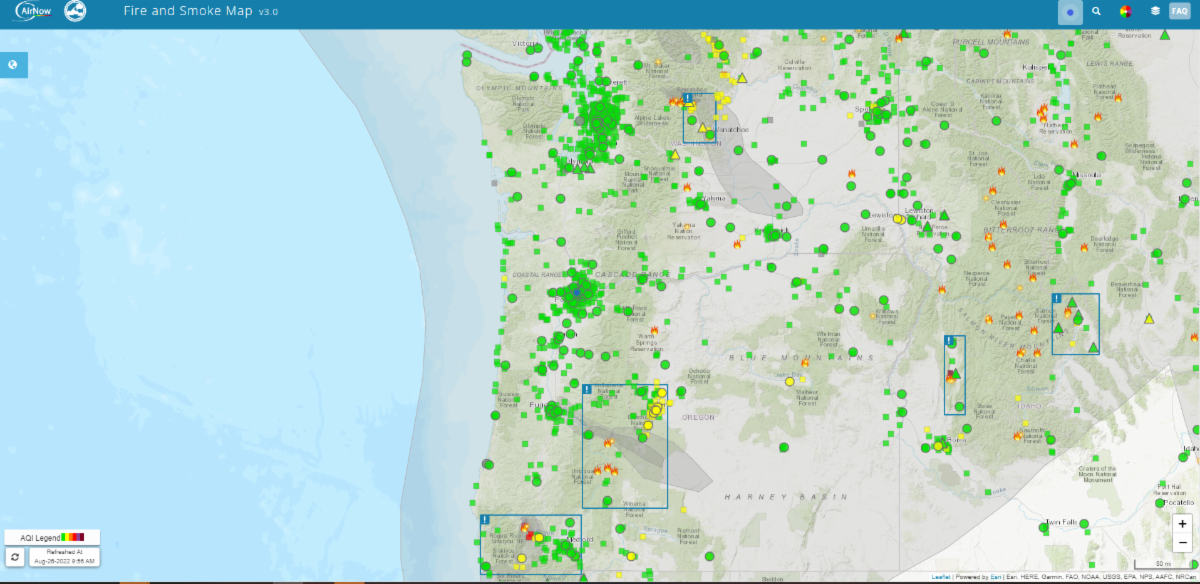
The station’s AirFire Team developed the Fire and Smoke Map featured in the AirNow tool, which is available on the web and as a mobile app and provides localized air quality information. The map shows real-time air quality conditions from fine particulate matter generated by wildfire smoke and other sources. 


Did you know? One of PNW Research Station’s research locations is the Pacific Wildland Fire Sciences Laboratory (PWFSL), based in Seattle, Washington. Fire and smoke research occurs across several of the station’s research laboratories, but the PWFSL is a hub for this research and is home to the Fire and Environmental Research Applications Team and AirFire Team

Recent Science Findings

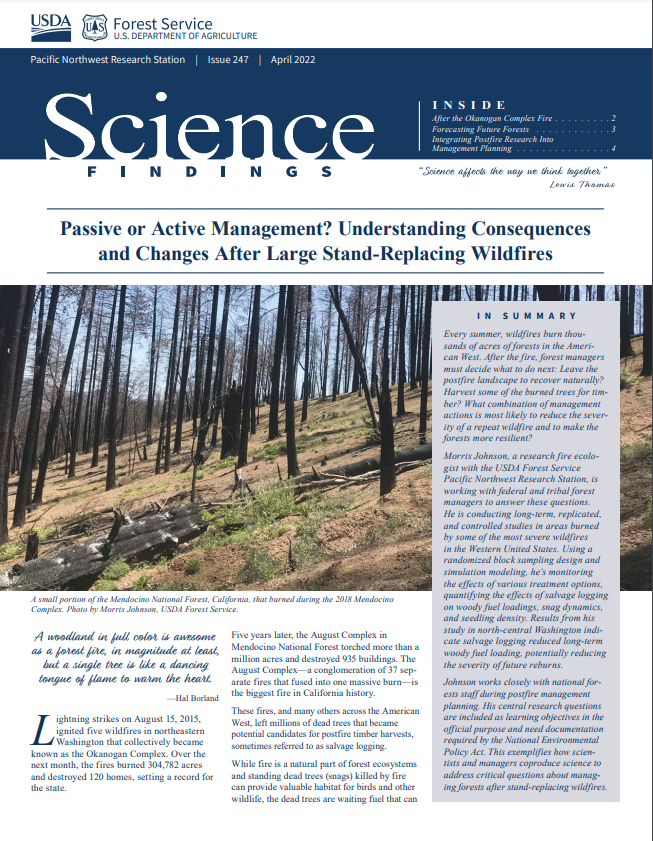
Passive or active management? Understanding consequences and changes after large stand-replacing wildfires


Every summer, wildfires burn thousands of acres of forests in the American West. After the fire, forest managers must decide whether to leave the postfire landscape to recover naturally or harvest some of the burned trees for timber. 

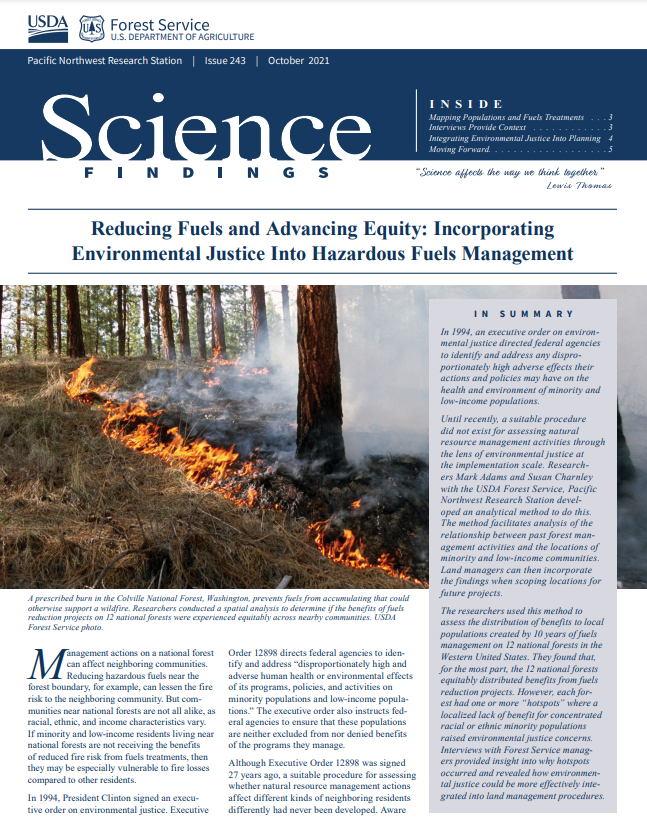
Reducing fuels and advancing equity: Incorporating environmental justice into hazardous fuels management


In 1994, an executive order on environmental justice directed federal agencies to identify and address any disproportionately high adverse effects their actions and policies may have on the health and environment of minority and low-income populations.

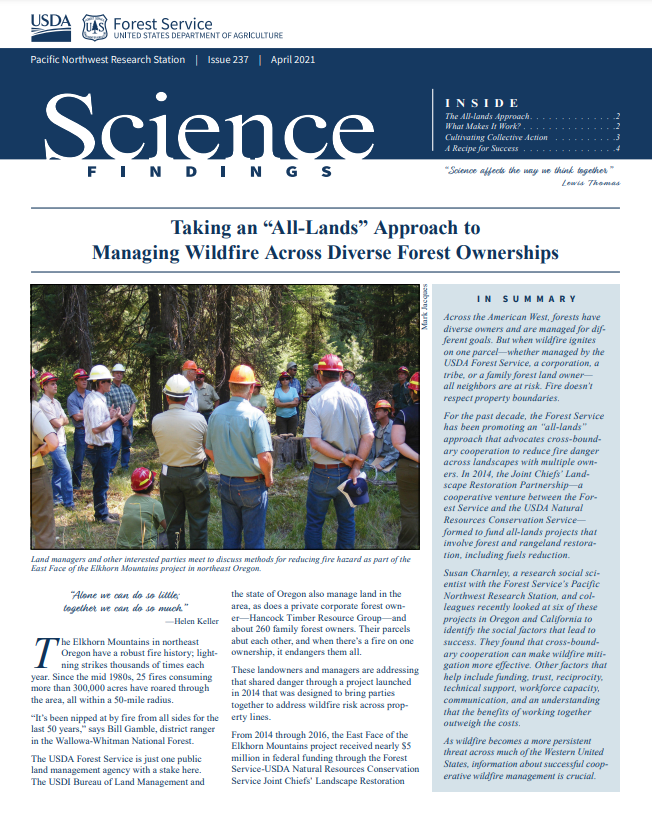
Taking an “all-lands” approach to managing wildfire across diverse forest ownerships


Across the American West, forests have diverse owners and are managed for different goals. But when wildfire ignites on one parcel—whether managed by the USDA Forest Service, a corporation, a tribe, or a family forest land owner—all neighbors are at risk.

Browse the complete Science Findings archive. 

Multimedia

Webinar

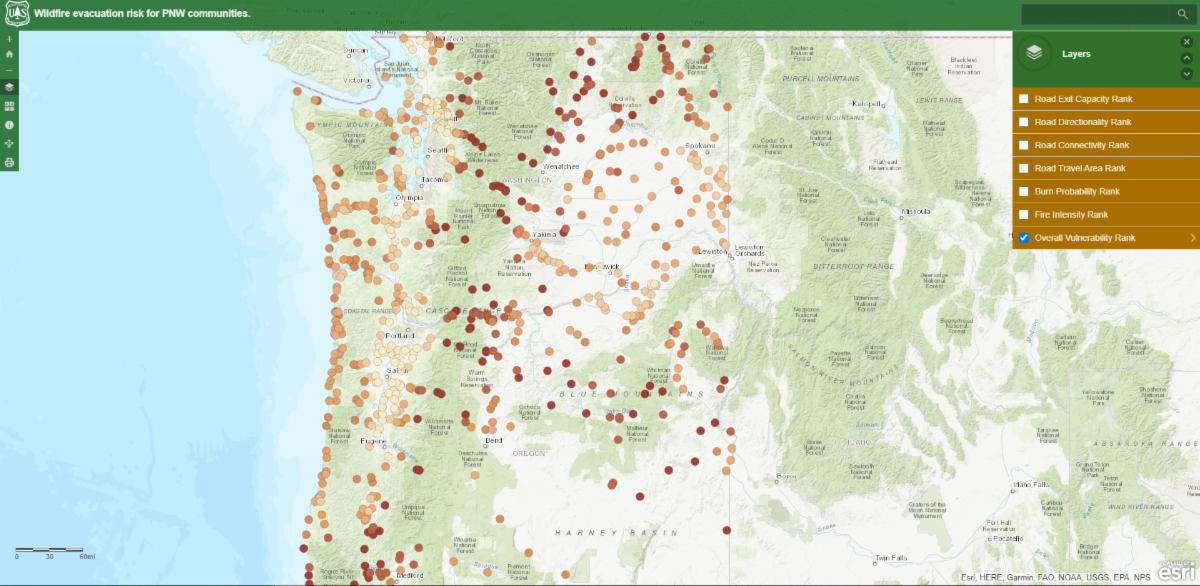
Evaluating rural Pacific Northwest towns for wildfire evacuation vulnerability


Road network and fire hazard metrics were used to evaluate the wildfire evacuation vulnerability of nearly 700 rural towns in Washington and Oregon.

Webinar

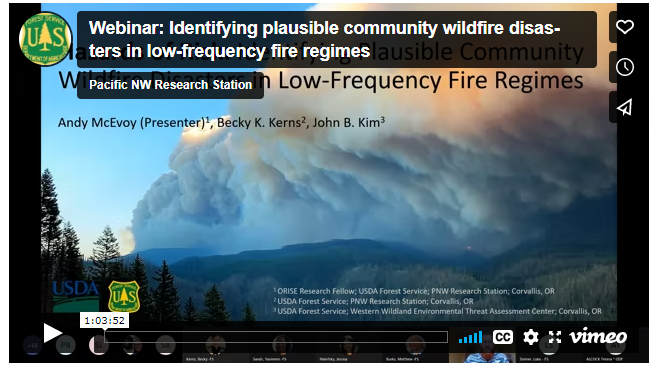
Identifying plausible community wildfire disasters in low-frequency fire regimes


A comparison of simulated wildfires and historical disasters from 1984 to 2020 identified plausible future disasters in communities in western Washington and Oregon.

Webinar

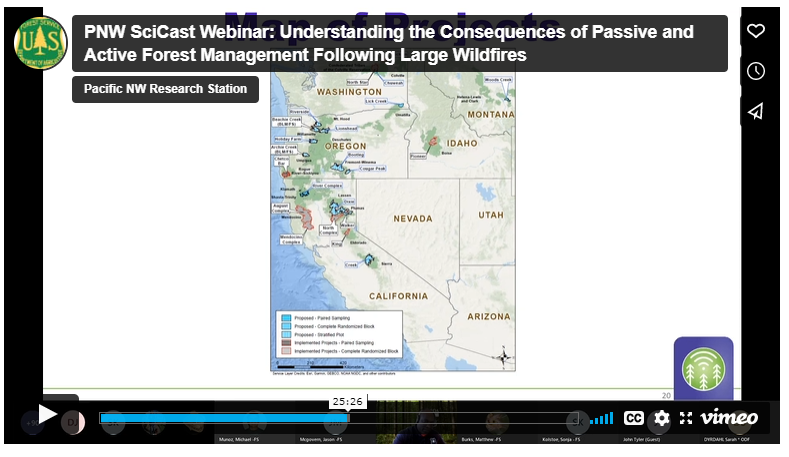
Understanding the consequences of passive and active forest management following large stand-replacing wildfires


Highlights of studies that are exploring what combination of management actions is most likely to reduce the severity of a repeat wildfire and make forests more resilient.

Story Map

A “new normal” for West-side fire in Oregon and Washington


As the climate becomes warmer and drier, forests of western Oregon and Washington are experiencing longer fire seasons, longer burns, and increased wildfire risk. These trends are expected to continue in the future with climate change.  

PNW SciCast is the station's Webinar series, held on the last Thursday of the month. Browse its episodes and other recorded Webinars featuring station scientists. 

Become a digital subscriber to stay current on the latest PNW Research Station science and news. 

Subscribe
About the Pacific Northwest Research Station

The USDA Forest Service, Pacific Northwest Research Station is a leader in the scientific study of natural resources. We generate and communicate impartial knowledge to help people understand and make informed choices about natural resource management and sustainability. Headquartered in Portland, Oregon, the station has laboratories and research centers in Alaska, Washington, and Oregon.

The USDA is an equal opportunity employer.

Visit our website
Facebook  Twitter