|
April Fools!
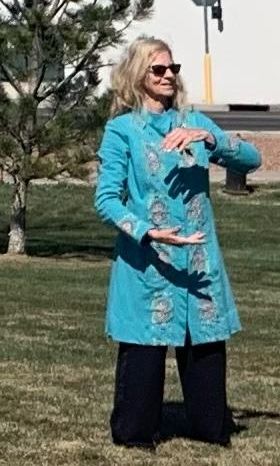
Jennifer took a trip to Japan last month and took this zen photo at one of the Japanese healing gardens.
April Fools. ;)
But seriously, it is a healing garden right here on the Luminis Health Campus. I will say, this tranquil scene was a Godsend during a very difficult time in the history of One. It was a good reminder that Hope Springs eternal and the flowers will keep blooming no matter what is happening in our lives. Those little moments of beauty are what always get us through the darkest of days and we absolutely are looking forward to brighter days ahead for us.
As you read our newsletter this month, either for the first time or a happy return to it time after time, our continued hope is that you enjoy reading it as much as we enjoy creating it for you to learn about the latest in health news and what is happening in our community. Please feel free to share with anyone you think might benefit. Nothing makes us happier than hearing from you all when you read something special!
Yours in Wellness,
Jennifer and Christina
| | What We Are Buying Right Now | |
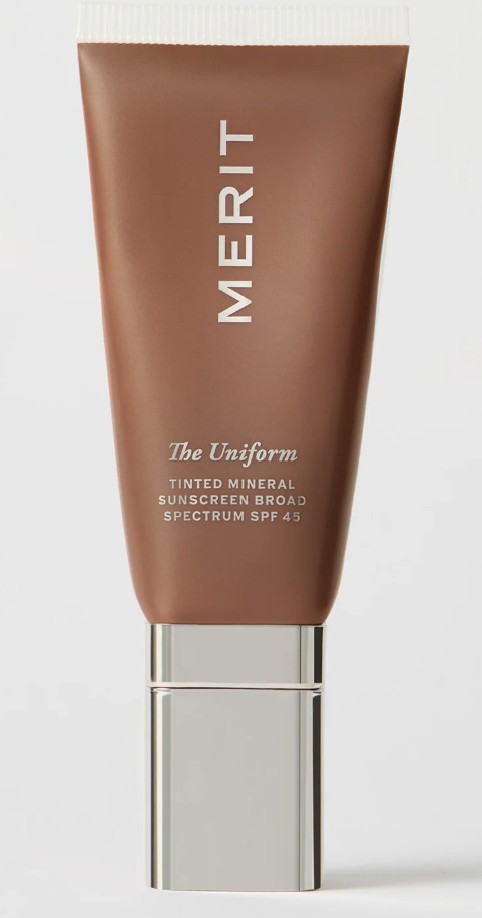
If you are looking for a great better for you Mineral tinted Sunscreen, look no further. Merit has a host of clean products that we love and this is a perfect addition to your no fuss morning routine
Click here to purchase
| | |
There are so many fun facts about the brain! Here are 10 from the San Diego Brain Injury Foundation:
- The typical brain comprises about 2% of the body’s total weight, but uses 20% of its total energy and oxygen intake.
- A piece of brain tissue the size of a grain of sand contains 100,000 neurons and 1 billion synapses, all communicating with each other.
- Babies have big heads to hold rapidly growing brains. A 2-year-old’s brain is 80% of adult size.
- As any parent can attest, teenage brains are not fully formed. It isn’t until about the age of 25 that the human brain reaches full maturity.
- Brain information travels up to an impressive 268 miles per hour. This is faster than Formula 1 race cars which top out at 240 mph.
- Your brain generates about 12-25 watts of electricity. This is enough to power a low-wattage LED light.
- There’s a reason the brain has been called a “random thought generator.” The average brain is believed to generate up to 50,000 thoughts per day.
- Unexpectedly, millennials (aged 18 to 34) are more forgetful than baby boomers. They are more likely to forget what day it is or where they put their keys than their parents!
- Although pain is processed in your brain, your brain has no pain receptors and feels no pain. This explains how brain surgery can be performed while the patient is awake with no pain or discomfort. Headache pain feels like it starts in your brain, but is caused by sensations from nearby skin, joints, sinuses, blood vessels or muscles.
- According to research done at Cambridge University, the order of letters in a word doesn’t matter much to your brain. As long as the first and last letters are in the right spot, your brain can rearrange the letters to form words as fast as you can read. This is why you can easily make sense out of this jumble of letters:
- Aoccdrnig to a rscheearch at Cmabrigde Uinervtisy, it deosn’t mttaer in waht oredr the ltteers in a wrod are, the olny iprmoetnt tihng is taht the frist and lsat ltteer be at the rghit pclae. The rset can be a toatl mses and you can sitll raed it wouthit porbelm. Tihs is bcuseae the huamn mnid deos not raed ervey lteter by istlef, but the wrod as a wlohe.
Come check out Micro Current Neurofeedback at One. PT to help improve your brain function! Patients commonly report a calmer mood, better sleep, improved focus and mental clarity, less irritability, and feeling more like themselves again.
***APRIL SPECIAL: get a free visit for each person you refer who comes in for a visit!
Click here to reserve your Spot with Connie.
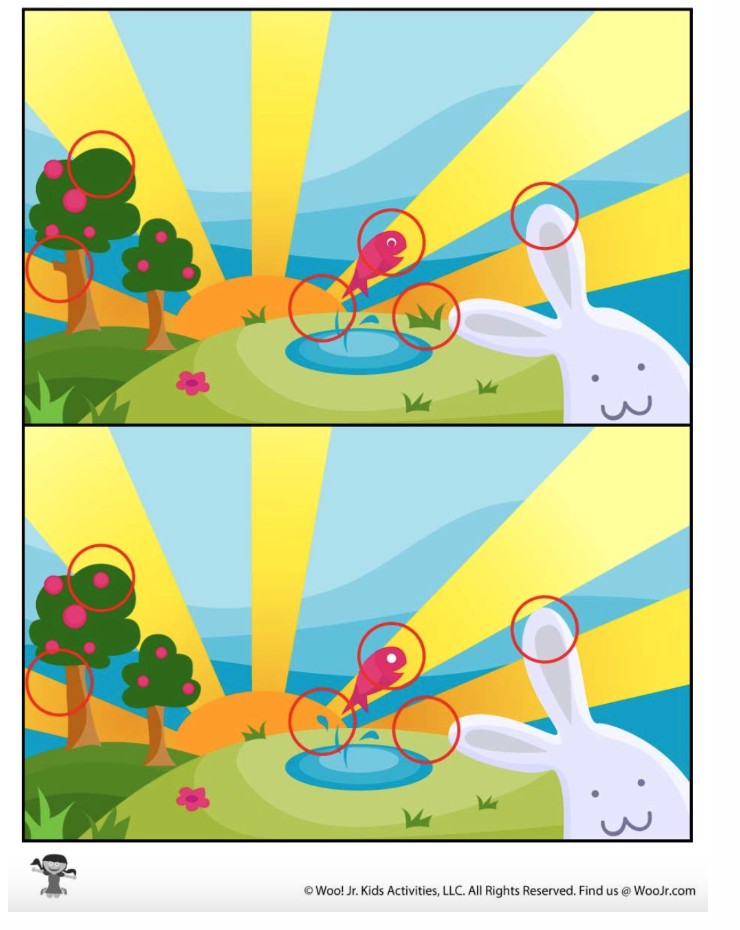
Brain Game of the Month
Brain games are great for improving cognitive functions like memory, attention, processing speed, and problem solving.
Find 6 differences between these 2 pictures
| | World Tai Chi Day April 25th | | |
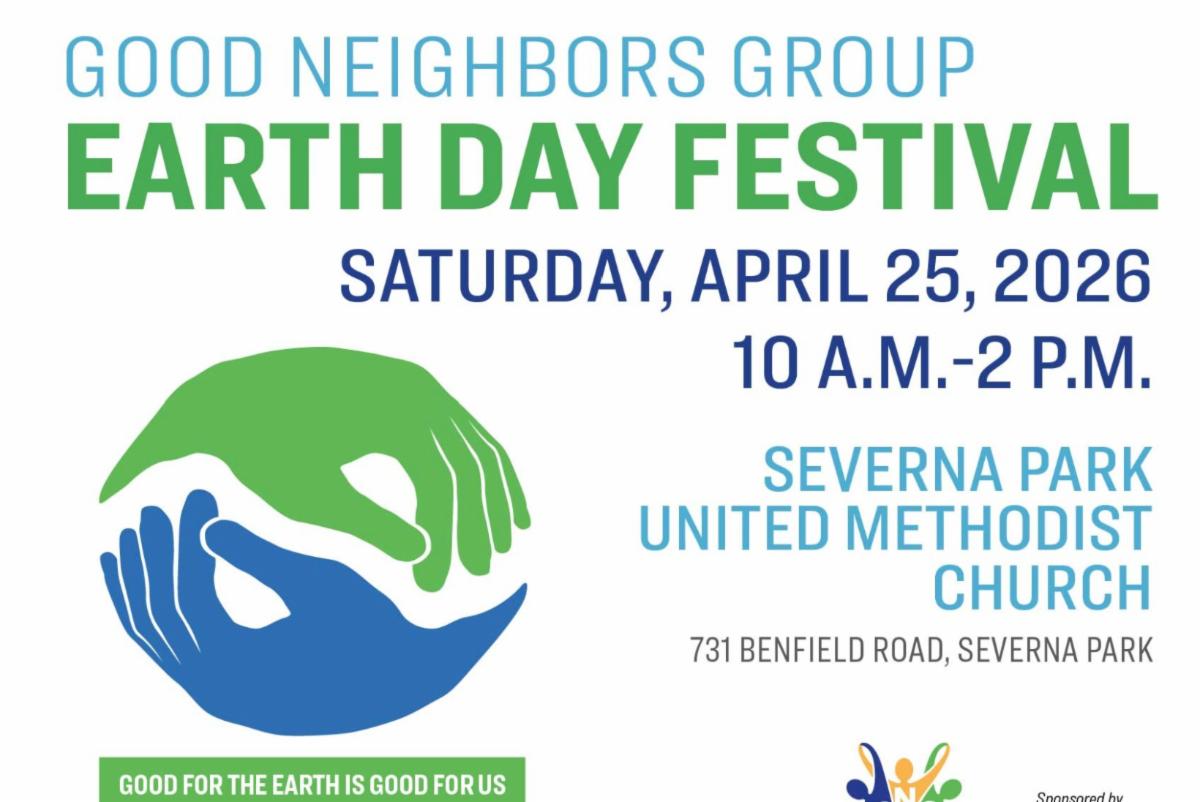
World Tai Chi and Qigong Day is celebrated annually on the last Saturday of April—falling on April 25, 2026—to promote the health benefits of these practices. Starting at 10 a.m. local time, practitioners in over 80 countries create a "global wave of qi" to foster wellness, peace, and health.
Key Details for World Tai Chi Day (April 25, 2026):
-
Purpose: To educate the public on the health benefits (stress reduction, improved balance) and to promote global harmony, notes the World Tai Chi Day website.
-
Event Structure: Participants gather in public spaces for free, mass demonstrations and teaching sessions.
- Time: 10:00 AM in each time zone, creating a continuous "wave" of movement across the globe.
-
Severna Park Community Center (Jing Ying Institute): A free event featuring demonstrations and mini-workshops, located at 623 Baltimore Annapolis Blvd, Severna Park, MD 21146. The event runs from 10:00 am to 11:00 am, with activities held outdoors, or indoors in case of rain.
Click here to reserve your spot with Jan for virtual Tai Chi on Tuesdays
| | |
Very slowly Spring sidles in.
She steps cautiously, as Winter
isn't quite done yet.
Maybe there will be one last finale.
She bides her time, not wanting
to steal the show.
She has lifted the sun slightly,
not that you would notice immediately,
but the extra light is almost tangible.
The blossom remains tight in
the bud, almost ready to pop.
The daffodils have followed the
arrival of the hardy snowdrops,
who had little fear of Winter.
They are getting ready for their
grand show in March.
To my delight the birds are returning
their cheerful chortling in unison.
And my heart is feeling lifted,
Almost, as if, I am ready to be born again.
I'm nearing the end of the tunnel ..
I'm bursting with anticipation
for the glorious entrance of Spring ..
C.E. Coombes
Jo Grundy
| |
5 tips for improving your balance, based on skier Hunter Hess’s workout
Want to have better balance? You can learn a thing or two from one of the best freeskiers in the world.
February 18, 2026
For those not familiar, proprioception and balance are related but distinct bodily systems. Proprioception is your sense of where your limbs and entire self are in space, even without visual cues. It relies on specialized cellular sensors in muscle tissues and elsewhere that send signals to the cerebellum and other portions of the brain. These constantly synthesize and interpret that intel to alert your body to where, for instance, your foot is in relation to the ground as you walk, or where your nose is if you close your eyes and want to touch it.
Balance is a broader, umbrella sense, incorporating proprioception as well as visual cues and input from the vestibular system in our inner ears. It allows us to maintain posture and stability as we move through the world.
5 tips for your own balance routine
Happily, the rest of us don’t need to emulate those precise exercises, Dyer said, or own a Bosu or medicine ball, or even have access to a gym to improve our proprioception and balance.
We can just steal a few principles from Hess’s routine, he said. These include:
1. Spend time on one leg
“This is a core aspect” of balance and proprioceptive training, Dyer said, requiring your brain to note and rapidly adjust your posture to keep you upright. Stand near a wall, chair or spouse to clutch if needed. Raise one leg and hold. You can do one-legged practice during daily activities like brushing your teeth or standard exercises, such as squats. The pistol squat is a classic, if advanced, example: Extend one leg in front of you as you slowly squat down and rise back up.
2. Close your eyes
Having no visual cues challenges proprioception and balance, Dyer said, even while you stand still. Too easy? Stand on one leg with your eyes closed. Aim for at least 10 seconds to start, working up to 30 seconds or more on each leg.
3. Add tiptoes
Balancing up on the balls of your feet is tough. Practice a few times a day, Dyer said, holding the position as long as possible. Then do it with your eyes closed.
4. Shed the shoes
Working out barefoot (or in stocking feet), if possible, allows you to feel the ground, aiding proprioception. It also removes the shoes’ support, which requires your body to work a little harder and build balance.
5. Get unstable
Soft, wobbly surfaces mean constant recalibration of posture. A balance ball is one option, or a thick foam pad, Dyer said, or even a pillow. Practice standing on an uneven surface a few times. Then move to one leg; then one-legged with your eyes closed; then barefoot; then up on tiptoes on one leg, barefoot, with your eyes closed. Work up to at least 30 seconds, and you’re practically ready for the next Olympics.
Click here to read full article.
| |
As an oncologist, I recommend these foods to lower cancer risk
Making a few changes to your diet can lower your chance of developing cancer. Here’s what to eat — and what to avoid.
February 16, 2026
Eat your fruits and vegetables.
On average, Americans consume a little over one cup of fruits and vegetables per 1,000 calories daily. The recently revised Agriculture Department Dietary Guidelines for Americans recommend increasing that to three servings of vegetables and two servings of fruit per day. Personally, I balance the USDA recommendations with what I can practically consume and eat at least two cups (two servings) of both fruits and vegetables each day to lower my cancer (and cardiovascular) risk.
One analysis of studies conducted over decades that included more than 27,000 people looked at whether low consumption of fruits and vegetables was associated with a greater likelihood of developing cancer compared with high consumption. “Low” consumption was defined as less than one serving per week, and “high” as one or more serving.
The investigators found that high cruciferous vegetable consumption (cabbage, cauliflower, broccoli, Brussels sprouts and turnip greens) – cooked and raw – seemed to reduce the risk of at least six types of cancer compared with low consumption, including cancers of the mouth and throat, esophagus, colon and rectum, larynx, endometrium, and ovary. When comparing the highest 20 percent of vegetable eaters, who eat multiple servings per week, with the lowest 20 percent, who may eat less than one serving per week, high intake was associated with a reduced risk of 11 cancers.
High fruit consumption was associated with a reduced risk of seven cancers, including cancers of the mouth, esophagus, stomach, colon and rectum, pancreas, larynx and lymphoma. High intake of citrus fruits in particular was associated with reduced risk of cancers of the digestive tract and larynx, while high consumption of apples and tomatoes appeared to reduce the risk for digestive tract cancers.
Prioritize whole grains.
Whole grains, in which the grain retains the kernel, include sorghum, brown rice, oats and quinoa. Eating 30 grams of whole grains daily (approximately ¼ to ⅓ of a cup) is estimated to lower your risk of colon and rectal cancer
Avoid red meat and processed meats.
There are more than 800 scientific articles that explore the relationship between meat consumption and cancer. The largest body of data links colorectal cancer with consumption of red meat (think: beef, veal, pork, lamb) and processed meat (bacon, sausage, ham, hot dogs). It shows that for every 100 grams of red meat consumed per day (imagine half a cup, or a piece of meat the size of a deck of cards), the risk of colorectal cancer increases by 17 percent. For every 50 grams of processed meat eaten daily, the risk increases by 18 percent.
Red meat consumption is also associated with cancers of the pancreas and prostate, while eating processed meat has also been linked to stomach cancer. Higher consumption of either is associated with greater breast cancer risk. For these reasons, I limit my red meat intake to no more than once or twice per week. Most importantly, I rarely get fast food, and I avoid processed meats.
Ditch the sugary drinks.
Sugar does not directly fuel cancer growth. This is a myth. However, raw and processed sugar, corn sweetener, high-fructose corn syrup and other sugars in beverages and fast food or processed food may increase the risk of weight gain and obesity. Any resulting insulin resistance and chronic inflammation can be indirect risk factors for cancer.
Click here for full article
| | |
FDA is removing the ‘black box’ warning on hormone treatments for women in menopause. Here’s what you need to know
NewsHealth
FDA is removing the ‘black box’ warning on hormone treatments for women in menopause. Here’s what you need to know
By Tribune News Service | Tribune News Service
PUBLISHED: March 2, 2026 at 3:52 PM EST | UPDATED: March 4, 2026 at 9:59 AM EST
Wendy Ruderman
The Philadelphia Inquirer (TNS)
PHILADELPHIA — For years, Cathleen “Cat” Brown, a Philadelphia obstetrician and gynecologist, would listen to patients complaining of hot flashes, brain fog, and painful sex and prescribe estrogen as a safe option for easing their menopausal symptoms.
But when the women read the drug label and pharmacy package insert, they’d recoil at a “black box” warning, Brown said. The bold, black-bordered alert warned women that estrogen may put them at higher risk of breast cancer, cardiovascular disease, stroke, and dementia.
“It was making liars out of doctors,” Brown said. “It frankly scared the crap out of patients, and it really caused distrust between the patients and the providers.”
A “black box” warning is the highest safety alert that the U.S. Food and Drug Administration requires drug manufacturers to include on medications in which clinical data shows the drug can cause death or serious health risks.
But the warning label placed on all estrogen-based treatments since 2003 was based on an outdated and flawed government-funded study, known as the “Women’s Health Initiative.”
Newer scientific research shows that the benefits of hormone replacement therapy, or HRT, far outweigh the risks for most women, experts say, particularly those who are younger than 60 or within 10 years of menopause.
More recent evidence also suggests that estrogen can reduce the risk of breast cancer, cardiovascular disease, Alzheimer’s, bone fractures, and cognitive decline, extending women’s lives by about 10 years.
In November, FDA Commissioner Martin Makary announced that the agency was taking steps to remove the “black box” warning on hormone treatments for women.
“We are going to stop the fear machine steering women away from this life-changing, even life-saving treatment,” Makary said at a news conference.
Why was the 2002 study misleading?
In that study, they were giving HRT to much older women, like in their late 60s, who weren’t great candidates to start it. They were also using different forms of HRT than we’re using now, so a lot of more synthetic hormones. The most popular one back then was Premarin, which came from a pregnant mare’s urine, so horse estrogens.
We were also giving these women higher doses of hormones, and it was causing more medical problems.
What has changed since?
Now we really lean toward giving you bioidentical hormones, like the same compounds that your ovaries were making on their own. It’s much safer. Our body processes it better, and we’re able to use lower doses to have the same effectiveness than those old synthetic hormones that they had to do at higher doses before. We also learned from that study that there’s a magic window — the safest time to initiate hormone replacement therapy is within 10 years of a woman going through menopause.
It’s really been a disservice to women, because all the women who were taken off HRT ended up with bad osteoporosis, weak bones, and more medical problems from the loss of estrogen from their bodies.
They also talked about the fact that we should not have this “black box” warning on estrogen products, especially estrogen vaginal cream, which is so safe that it really could be over the counter. For women in nursing homes, a little bit of vaginal estrogen could have prevented recurrent urinary tract infections. So many women die of urinary sepsis and bacteremia that has come from a UTI. Topical vaginal products also significantly improve sex life for women.
We’re actually starting to call it “hormone therapy,” because we’re not trying to replace your levels back to what you were making on your own in your 20s or 30s. It’s about giving you enough dosage of hormone to give you the health benefits and mitigate bothersome symptoms and help women with that menopausal transition.
When we are aging, within our 40s and into our 50s, we lose estrogen at a dramatic rate. We also have testosterone in our bodies as women and that drops, too. That fluctuation of hormones causes this whole litany of symptoms, like hot flashes, night sweats, brain fog, joint pain, dry skin, brittle hair, hair loss, so many things.
Estrogen is a powerhouse hormone that keeps all the tissues in our body healthy.
Click here for full article
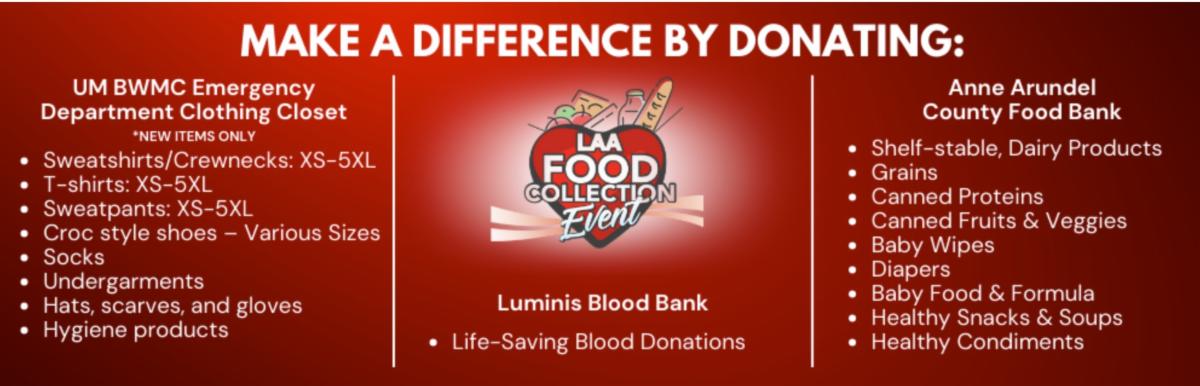
| | LAA- 6th Annual Food (and More) Collection! We’re excited to partner with the Anne Arundel County Food Bank, Luminis Blood Bank, and UM BWMC Clothing Closet as we come together to make a meaningful impact in our community. Your donations will directly support these essential community resources! | | |
Saturday, April 18, 2026
from 10:00 A.M. to 2:00 P.M.
Where:M&T Bank - Annapolis Plaza Parking Lot
170 Jennifer Rd
Annapolis, Maryland 21401
United States
Details
| |
SOFO - Greenscape
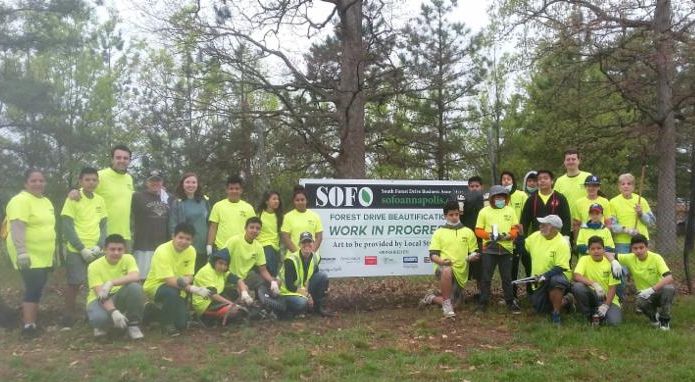
The SOFO spring greenscape is scheduled for Saturday, April 25, at 9 AM.
Cleaning up and planting new plants at the Bay Ridge Triangle and Pirates Alley gardens. It’s a great way to enhance the SOFO corridor while enjoying some time outdoors.
Click here to reserve your space
| | |
Spring 2025 GreenScape will be held Saturday, April 25th!
GreenScape is a city and community partnership investment in beautification, clean-up, and planting in public spaces throughout the City of Annapolis. GreenScape was founded through the efforts of former Mayor Ellen Moyer and the Annapolis Recreation and Parks Advisory Board. Since 1991, hundreds of projects have been initiated and adopted by individuals, community groups, and neighborhood associations.
SOFO will be hosting small groups along Forest drive from 9-noon on Saturday, April 25th. Interested in learning more or helping out? Register to participate online, or learn more.
| |
The Wild & Scenic Film Festival
Since 2019, the Alliance has brought communities together by hosting the Wild & Scenic Film Festival across the Chesapeake Bay watershed. This spring, the Film Festival will provide warmth, inspire action, and raise hope during a time of growth and rebirth.
The Wild & Scenic Film Festival brings together incredible selections of films that inform, inspire, and ignite solutions and possibilities to restore the earth and human communities while creating a positive future for the next generation. Festival-goers can expect to see award-winning films about nature, community activism, adventure, conservation, water, energy and climate change, wildlife, environmental justice, agriculture, Native American, and indigenous cultures.
The Film Festival is a natural extension of the Alliance’s mission to bring together communities, companies, and conservationists to improve the lands and waters of the Chesapeake Bay watershed.
We look forward to coming together again in April 2026 at the 8th Annual Wild & Scenic Film Festival!
Details
| | |
The Annapolis Spring Sailboat Show
The Annapolis Spring Sailboat Show returns to Annapolis every April to showcase new and brokerage boats including catamarans, monohulls, family cruisers, daysailers, and inflatables.
While climbing aboard the great line-up of sailboats is the major draw, there is so much more to see. Guests are invited to meet with boating clubs and charter companies, shop gear and equipment, and ring in the new season with fellow sailors and marine professionals. With live entertainment, seminars, and a festive tasting tent, the fun lasts all day. As the show winds down, guests may visit the wide variety of restaurants, shops and bars just a few steps from the show gates.
April 24-26 2026
City Dock, Annapolis, MD
- Friday, April 24
- 10:00am – 6:00pm
- Saturday, April 25
- 10:00am – 6:00pm
- Sunday, April 26
- 10:00am – 5:00pm
General Admission ~ $20
$20 at Gate (Limited onsite box office available)
Children under 12 are free
Click here for details.
| | |
More Happenings
The Story of Frank Sinatra Comes to Maryland Hall
Dates: April 2, 2026
Price: $19.5
Time: 7:00 PM
USNA Formal Parade
Presented By:
US Naval Academy
Dates: April 10, 2026
Price: Free. ID Required for Access
Time: From: 04:00 PM to 05:20 PM
details
Historic Annapolis presents-Hand and Hearth Women’s Work in the Colonial Home
Presented By:
Historic Annapolis, Inc.
Dates: April 11, 2026
Price: Free: $5 Suggested Donation
Time: From: 11:00 AM to 03:00 PM
details
Naptown Flea
Dates: April 12, 2026
Price: $0
Time: 1:00 PM to 6:00 PM
details
Profs & Pints: Fake News and War of the Worlds
April 14, 2026
Graduate Hotel
Time:5:00 PM to 7:30 PM
details
MLK Parade Annapolis
April 11th 12 pm-2pm
details
The Annapolis Cup - St. John’s vs. USNA Croquet Match
April 18, 2026
Price:Tickets now on sale $86.70. No Ticket Sales at the Door.
Time:10:30 AM to 6:00 PM
details
The 38th Annual Annapolis Opera Vocal Competition
Presented By:
Annapolis Opera
Dates: April 19, 2026
Price: FREE
Time: 3:00 PM to 6:00 PM
| |
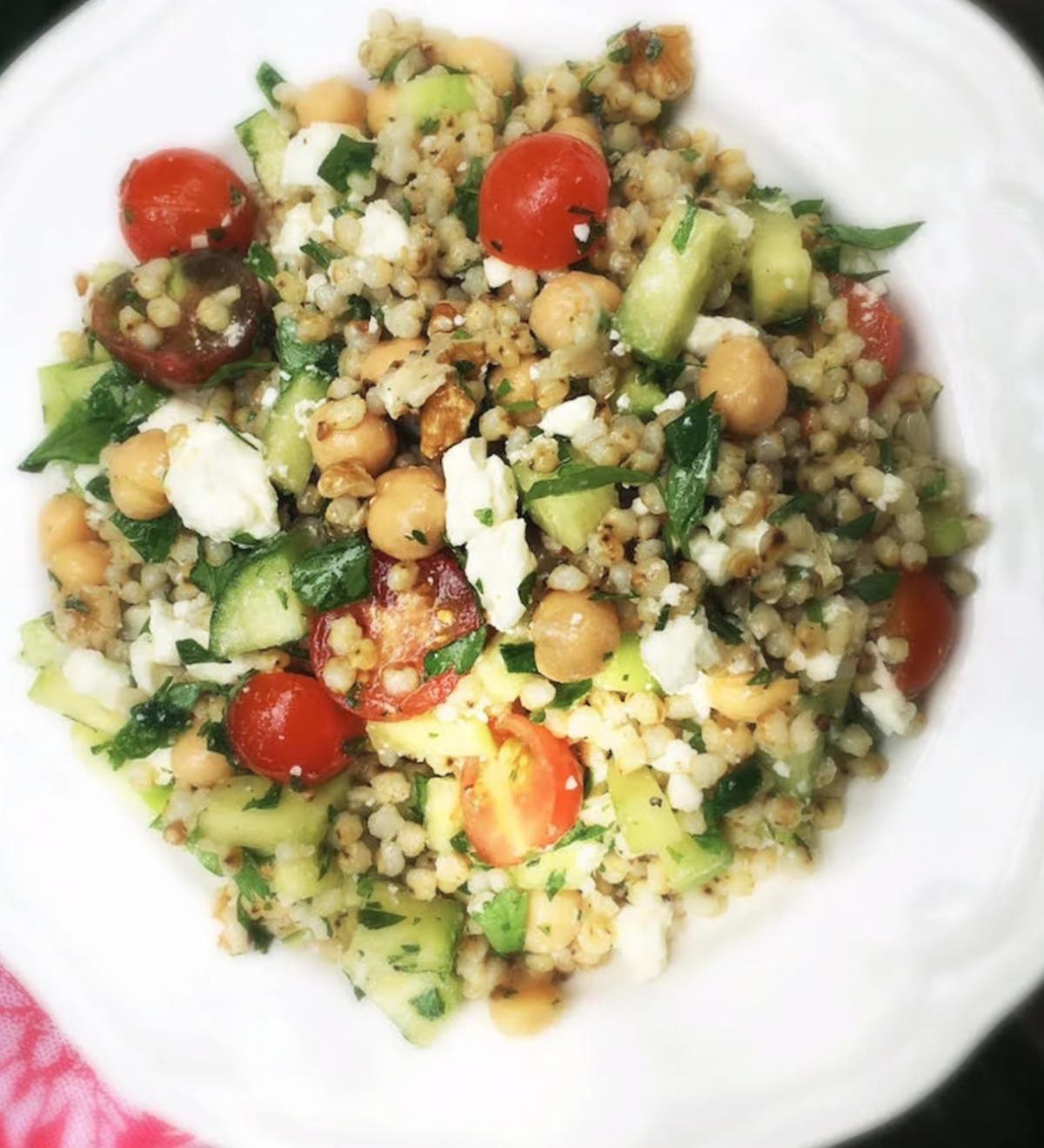
Mediterranean Sorghum Salad
About 6-8 servings
This salad makes a flavorful side dish or stand-alone salad entrée. If serving as an entrée, serve over arugula or other greens. Leftovers pack well in a mason jar for a brown-bag lunch (because everything tastes better in a mason jar, even if you’re not a hipster).
Ingredients
- 1 cup whole-grain sorghum
- 4 cups water
- 1 can chickpeas (garbanzo beans), rinsed and drained
- 1 English cucumber, peeled and chopped
- 3 green onions, chopped
- 1 cup cherry tomatoes, cut in half
- 1 cup chopped fresh Italian parsley (can swap part of this for fresh oregano or basil)
- 1/2 cup crumbled feta cheese
Dressing
- 1/4 cup olive oil
- 3 tablespoons fresh lemon juice
- 1 garlic clove, minced
- oregano to taste
- 1 teaspoon sea salt, or to taste
- Freshly ground pepper to taste
Directions
- Rinse and drain the sorghum. Bring the water to boil in a medium saucepan, then add the sorghum. Cover, reduce heat and simmer for 45 minutes or until tender. Cool sorghum to room temperature, fluffing with a fork occasionally.
- Meanwhile, make the dressing and prep the rest of the ingredients.
- In a large bowl, combine the next four ingredients (chickpeas through green onions). Add the cooked sorghum and gently stir to combine. Drizzle the dressing over the contents and stir again. Add the cherry tomatoes, fresh herbs and feta and gently fold to combine. Adjust salt and pepper to taste, and serve.
Click here for full recipe
| | | | |