eNewsletter

week of December 8, 2024

Even YIMBY founder

recognizes how bad

Turquoise Tower plan is


Suggests up to 8 stories

as model for future projects


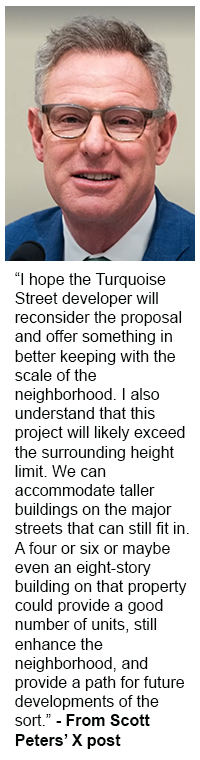
Congressman Scott Peters, who represents Pacific Beach in Washington, has posted on X his opposition to the Turquoise Tower in its current 23-story form. He adds he would be fine with a revised proposal calling for up to 8 stories. Peters wrote:


"I support building more housing in our existing neighborhoods. I’m a founding member of San Diego YIMBY (Yes in My Backyard) Democrats and the bipartisan YIMBY Caucus in Congress.


Part of the solution is to build more housing on underused properties in our existing neighborhoods, including coastal neighborhoods like Pacific Beach.


That’s not what we will get from the Pacific Beach proposal. Other home builders I’ve spoken to worry that it will taint the reputation of all development and be a poster child for those who resist all new housing. ... This project, in its 23-story form, is a mistake."


See full Scott Peters' X post

See Our Parting Thought below

Let elected officials know

how you feel about losing

your right to "direct democracy"


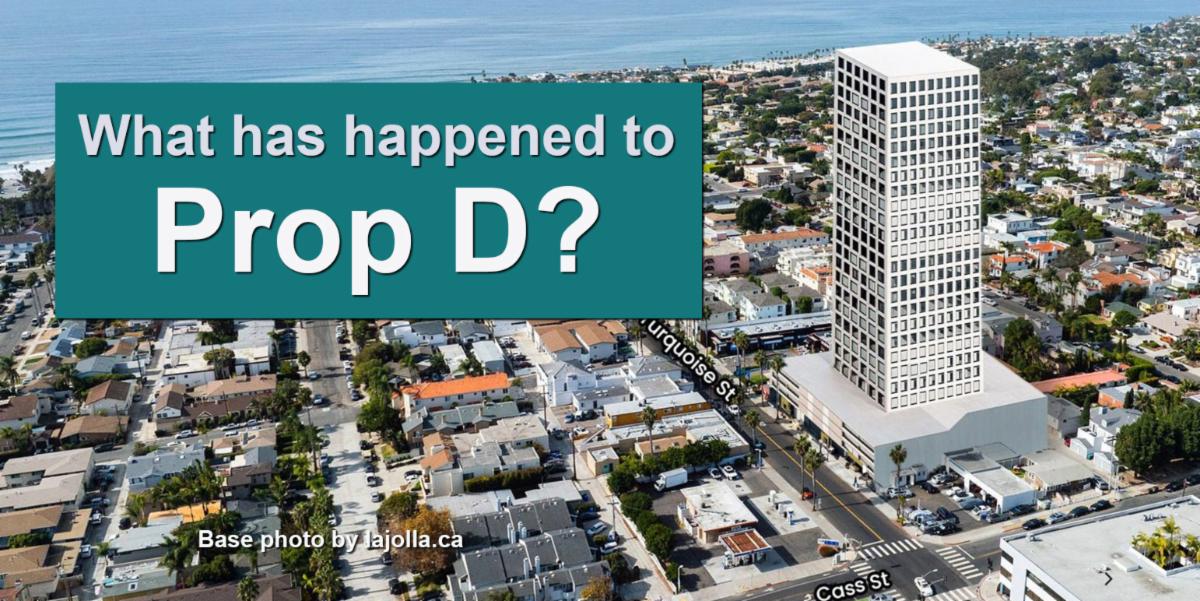
Prop D and other local citizen initiatives dealing with land use decisions have basically been gutted by the state. The state legislature and Governor Gavin Newsom declared a housing crisis exists and passed state laws that they, and the courts, say override local citizen initiatives. Prop D, which established a 30-foot height limit for San Diego's coastal areas in 1972, is one of the local citizen initiatives gutted.


The state also took away the ability of local groups - like the Pacific Beach Planning Group - to have a voice in shaping developments planned in their communities. In fact, under these laws local planning groups aren't even told about projects like the Turquoise Tower until very late in the game. And local groups can't reject them.


That is how Pacific Beach got a 238 foot, 23-story high-rise proposed for a beach community supposedly protected by Prop D's 30-foot height limit.


How do you feel about losing your right to this part of "direct democracy," i.e. the collective right of citizens to pass local initiatives? Please take our survey (the link is below) to let elected officials know your views. Thank you.

Why was Prop D gutted?


In a nutshell, here's what happened:


  • California did not build enough housing for several decades, partly because some communities used local citizen initiatives, like Prop D, to block new housing.
  • Wealthy groups with vested financial interests, including the California Building Industry Association (CBIA), convinced the state legislature and Governor Newsom that a housing emergency existed in California that was so severe it required extreme measures to address it.
  • Younger people, shut out of the California housing market by high prices and high demand, voiced their concerns and formed YIMBY groups (Yes in my backyard).
  • Sacramento over-reacted. It took the extreme position of excluding virtually all local input related to housing by passing density-bonus laws intended to spur housing, particularly affordable housing.
  • Sacramento also said its laws over-rode local citizen initiatives, like Prop D, justifying the action because of the emergency it declared.
  • The 23-story Turquoise Tower became the poster child of the "unintended consequences" resulting from Sacramento's over-reaction.


What can be done?


Neighbors for a Better California (NFABC) formed in November a few weeks after PB Planning Group members were told about the Turquoise Tower development by Councilmember Joe LaCava. One long-term solution for which NFABC is lobbying is to amend state laws so communities acting in good faith to approve more housing are restored the right to have input about projects proposed for their community.


NFABC also is lobbying to restore to citizens their collective right to direct democracy by honoring local initiatives. NFABC is actively talking with state representatives, including Tasha Boerner and Catherine Blakespear, who represent Pacific Beach in Sacramento, about long-term solutions.


Ironically, an example of a community acting in good faith to add more housing opportunities is the same community where the poster child of the flawed remedies advanced by the state is proposed - Pacific Beach. The story immediately follows.

Prop D Survey: Tell us your opinion

PB Planning Group

has a solid record

of supporting housing.

We are RYIMBYs ... for

well-planned projects


While Neighbors for a Better California (NFABC) continues a fierce and highly publicized battle against the 23-story Turquoise Tower, the face of housing in Pacific Beach is changing … even while being obscured by the considerable shadow of the proposed high-rise.


Supported by the Pacific Beach Planning Group (PBPG), and welcomed by NFABC, significant new housing has been built. More is on the way.


“It makes you wonder if we actually are the YIMBYs in Pacific Beach,” said Scott Chipman, a member of both the PBPG and NFABC boards. "Actually, we are RIMBYs (Responsibility in My Backyard).


“Look at the projects we’ve approved," Chipman adds. "We haven’t stood in the way of affordable housing and more housing in general. We’ve made, and continue to make, good-faith efforts to bring affordable housing to Pacific Beach.”


Marcella Bothwell, chair of both the PBPG and NFABC, agrees.


“We need affordable housing in Pacific Beach,” she said. “But the Vela project (aka Turquoise Tower) makes a joke of the commendable intentions of the state’s bonus density laws. It is a hotel/luxury condo project with five very low-income units among its 213 total units. Almost all of those units will be way too expensive for young people who want to buy housing in PB.”


In this housing issue, NFABC’s eNewsletter profiles some of the developments changing the face of housing in PB:

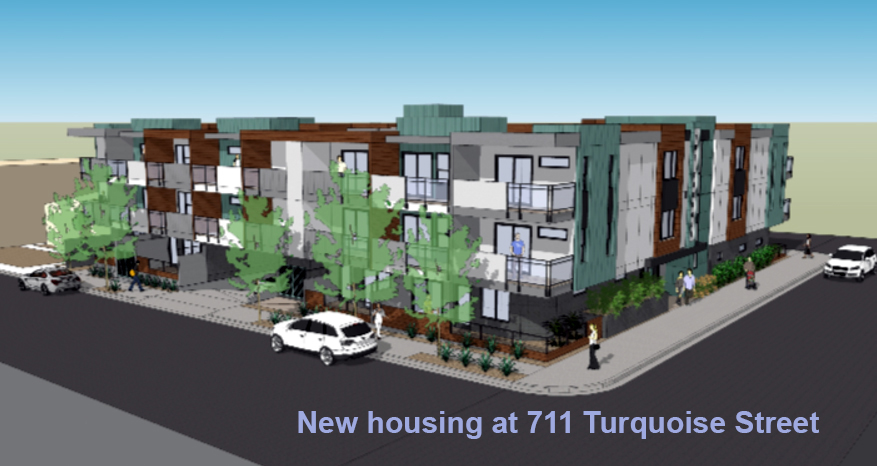
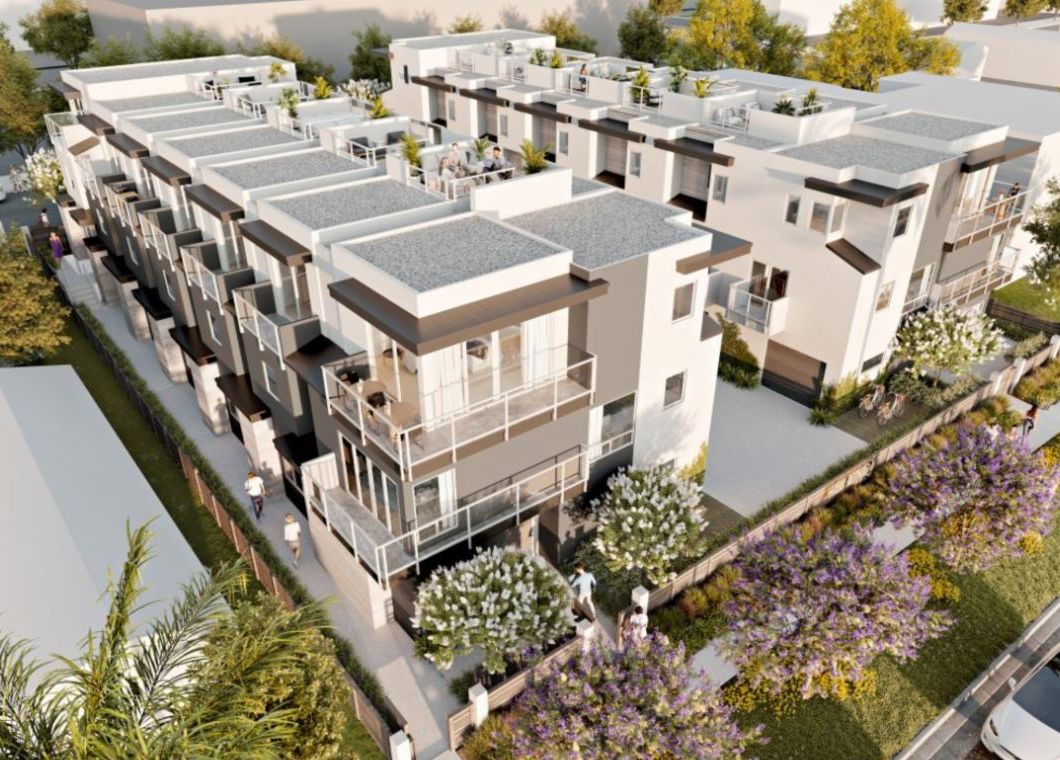
711 Turquoise Street (pictured above)

Just down the street from the proposed Turquoise Tower, this 30-foot-height limit complaint development is located on the site of the former Pernicano’s Restaurant. Plans call for 44 units. Only one is planned to be two bedrooms, with the rest one bedroom or studio units. Four to six of the units will be set aside for low- to moderate-income housing, developer Michael Turk told SD News.

1956 Hornblend Street

The Blend


The Blend’s 14, 2-bed 2-½ bath units are priced from $1.25 million -$1.45 million and are targeted for a niche in need of housing in California’s tough housing market – move-up buyers. Architect Tim Golba told SD News that The Blend “created 14 infill units on a site formerly occupied by a dilapidated cottage that has not been lived in for 30 years.” Golba said the site met the intent and direction of the State and City infill housing program while utilizing the City of San Diego’s Affordable Housing Density Bonus Program to allow 14 units on site.

Rose Creek Village

2662 Garnet Ave.


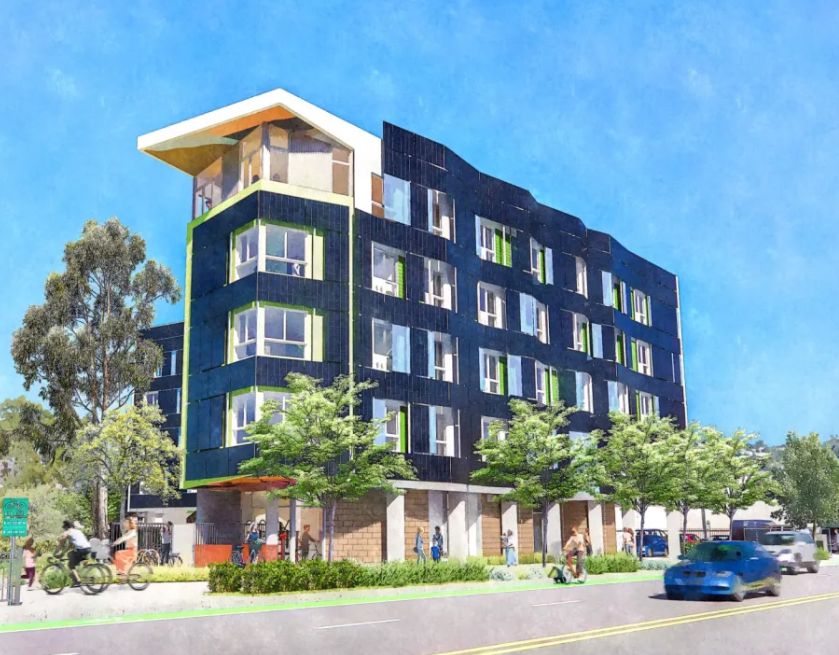
Rose Creek Village is a flashpoint in Pacific Beach. “This is a great project in the sense that it provides almost 100 percent affordable housing, but it is a terrible project at the same time because it breaks the long-held 30-foot-height limit of Prop D,” said Tom Coat, Public Relations chair for NFABC. Opposed by Joe LaCava, it was approved by a 6-2 vote of City Council. Rose Creek Village will offer 59 of its 60 units as deed-restricted housing for very low-income and extremely low-income families.

Several other housing projects also have been added in recent years. They include complexes on Lamont Street, Jewell Street, and two projects by Michael Turk on Turquoise Street (in addition to the Pernicano development). Multiple large housing projects have been built near the transit center on East Mission Bay Drive and more are proposed.

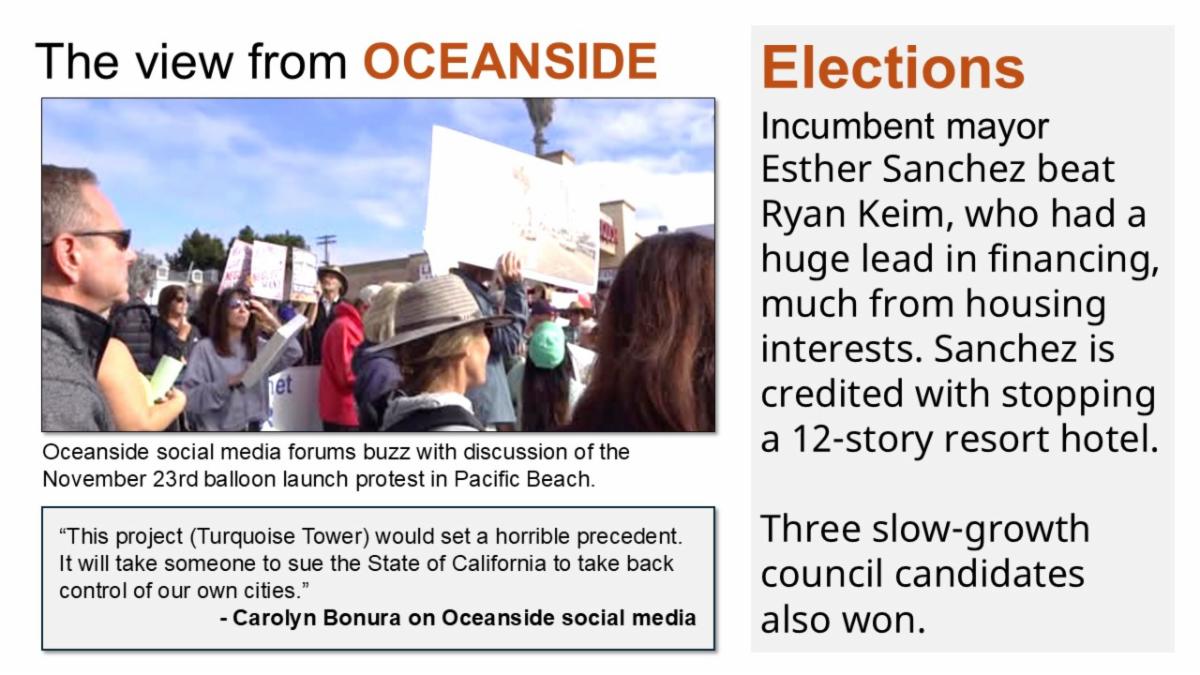
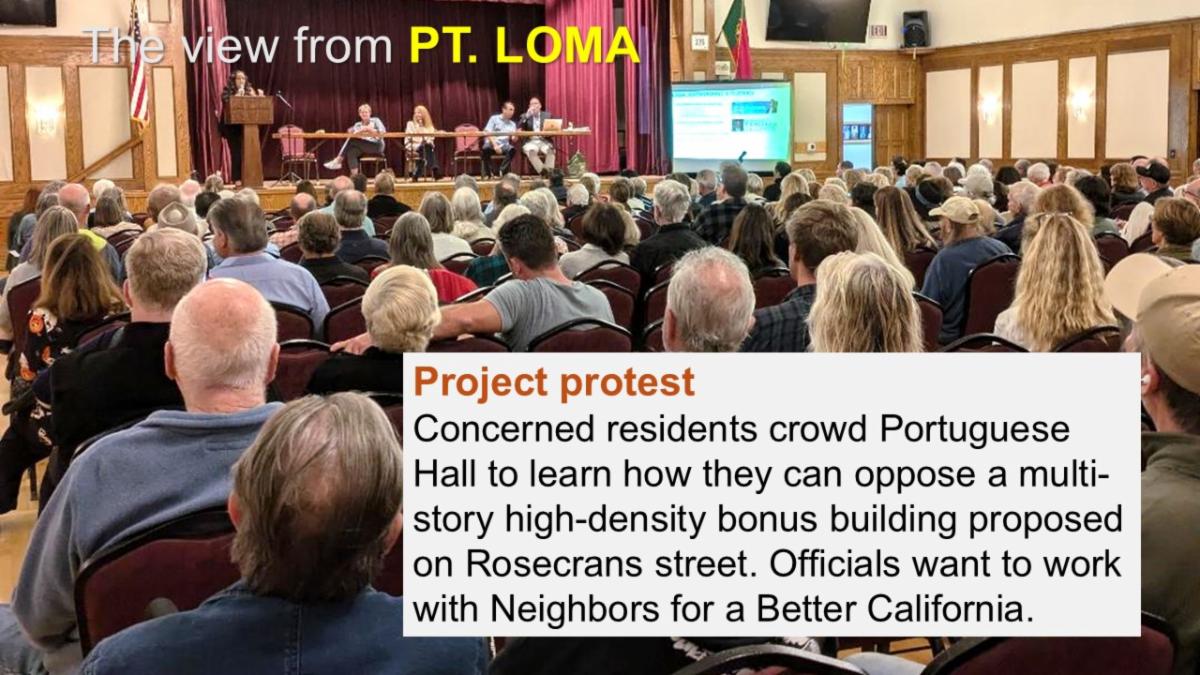
California's housing challenges and the extreme remedies the state has enacted are sparking protests and debates across San Diego County and beyond. Pacific Beach is hardly alone in this fight. Today, a quick look at three cities in San Diego County.

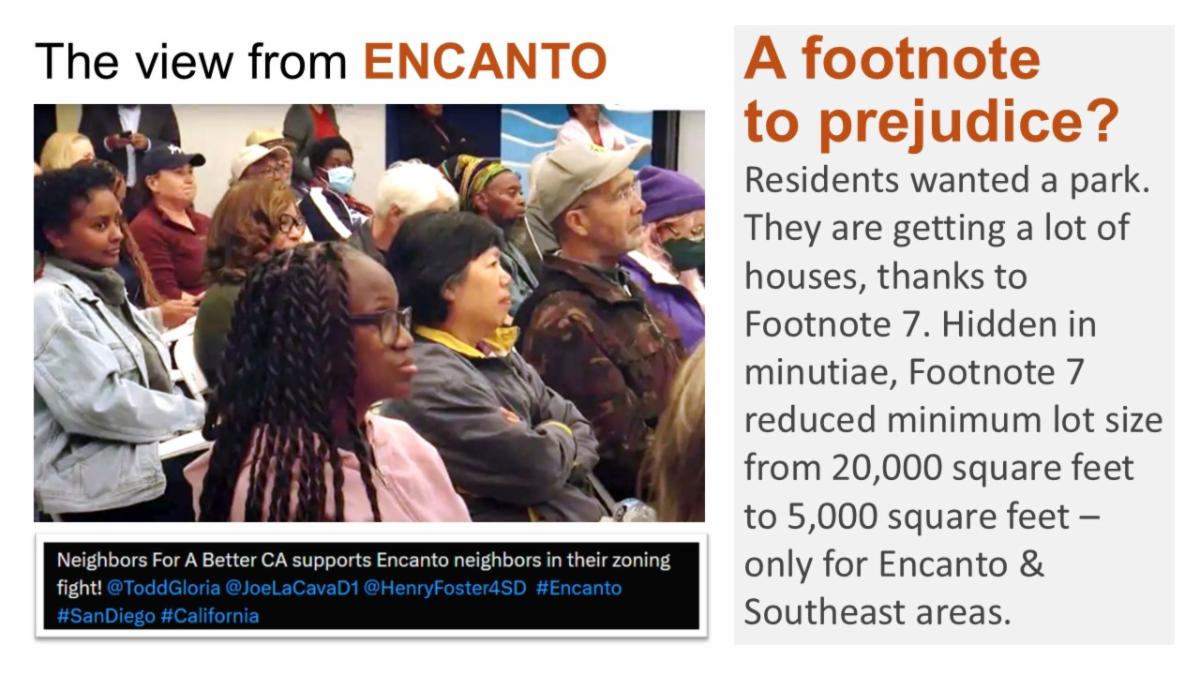
What's happening in Encanto

is disturbing for many reasons


Encanto's high-density bonus housing story is too complicated to tell in a few words. The OB Rag has the best explanation (here's the link to the story). Here are excerpts:


Neighbors upset. They seemed to be finding out about a developer’s plans in their neighborhood — but the City of San Diego wasn’t helping them.


Sound familiar?


It’s a story that’s resounding across San Diego communities these days – and this time it’s in Emerald Hills and the Chollas area. And this time, it involves a low-income community that is mainly African-American and Latino.


Two tall radio towers sit on the highest point of Emerald Hills, a huge empty green lot behind wire fencing.


Neighbors had wanted a park there. But now these neighbors are finding out about a developer’s plans to build more than 120 units on the empty lot. Yet, the zoning map showed that only about 70 houses would be allowed on the parcel.


When the city announced another development in Encanto with twice as many houses as zoning seemed to allow, another neighbor named Rob Campbell found the “magic bullet.”


Campbell said, “They [the city] had discovered some new information,” Campbell said. He began to study the city’s rebuttal — and that’s when he found the magic bullet, listed as “Footnote 7.”


Footnote 7, passed in 2019, reduced minimum lot size from 20,000 square feet to 5,000 square feet – only in the Encanto and Southeast areas. “That was the first time I knew that we were different. But I didn’t know why,” he said.


Near the end of October, the Chollas Valley Community Planning Group had a meeting and 100 neighbors packed the school community room with more outside. Chair Andrea Hetheru presented ... a slide with the table in it, she said:


“We usually skip over them without a second thought. We never expect a footnote to be shocking. And that is the entire point. There is city code in the form of a footnote that is shocking.”


“With this footnote, the city is essentially saying, 20,000 means 20,000 to everyone in the city except you folks in Southeast. For you folks in Southeast, 20,000 means 5,000. A dollar means a quarter, because we said so.”


Neighbors for a Better California

supports Encanto in its zoning fight.

Spotlight

What members are saying


"Many of us are not opposed to affordable housing. I prefer inclusive housing in new development. What I am opposed to is irresponsible high-density development lacking adequate public infrastructure to accommodate, state legislation over-reaching local land use control, reckless planning, and breaking the precedent of the height limit. We all agree we need housing. Supply side resolution of the housing shortage will always fall short / fail in coastal California." - Brian Curry, Neighbors for a Better California board member and former chair of the Pacific Beach Planning Group


As a parent, I have a lot of concerns

"As a parent, I have a lot of concerns about the extra cars in the neighborhood. My kid rides his bike to/from school on Foothill/Beryl (and multiple times a day while not in school). It's already a precarious traffic situation. Safety needs to be of upmost priority with this proposed "project". Furthermore, the Admiral Hartman community will be significantly impacted with the extra car traffic. Families and children are being asked to absorb the safety impacts of hundreds of additional cars going through their neighborhood to reach I-5." - Heather Avalon, La Jolla Alta Mesa


This should get national news

"This should get national news. What these developers, politicians are doing at the sacrifice of safety and their neighborhoods is disgusting. I'm glad this is getting so much attention. Good for the people for staying on top of all of the shady stuff that's going on." – Marie N, P.B. Southwest Central