May 2026


From Research to Action

in a Digital World

Kris Perry, Executive Director

As digital media evolves at an astonishing pace and continues to play a major role in children’s and adolescents’ lives, I’m struck by a simple but powerful idea: in a rapidly changing digital world, the most important question is not just what children are exposed to, but who they are becoming.

Why do babies and young children learn differently from screens than they do from real-world experiences? In episode 31 of Screen Deep, host Kris Perry is joined by Dr. Rachel Barr for a deep dive on why it’s difficult for young children to learn from digital media, which features of high quality media can support learning and development, plus insights on the value of family media plans, video chatting, and the importance of considering children’s environments holistically when studying how they use digital media.

iRaise will host the webinar “Shaping GenAI’s Impact on Child Development: A Scientific Contribution to the G7” on May 21, 2026. Led by everyone.AI and the Paris Peace Forum, in collaboration with Children and Screens, the webinar will mark the release of the new report "GenAI Impacts on Child Development: Emerging Scientific Consensus on Anticipated Benefits and Risks.” The report was led by everyone.AI Chief Scientist Dr. Mathilde Nuegnot-Cerioli and co-authored by Children and Screens Senior Research Coordinator Dr. Daniel Hipp, alongside additional interdisciplinary experts.


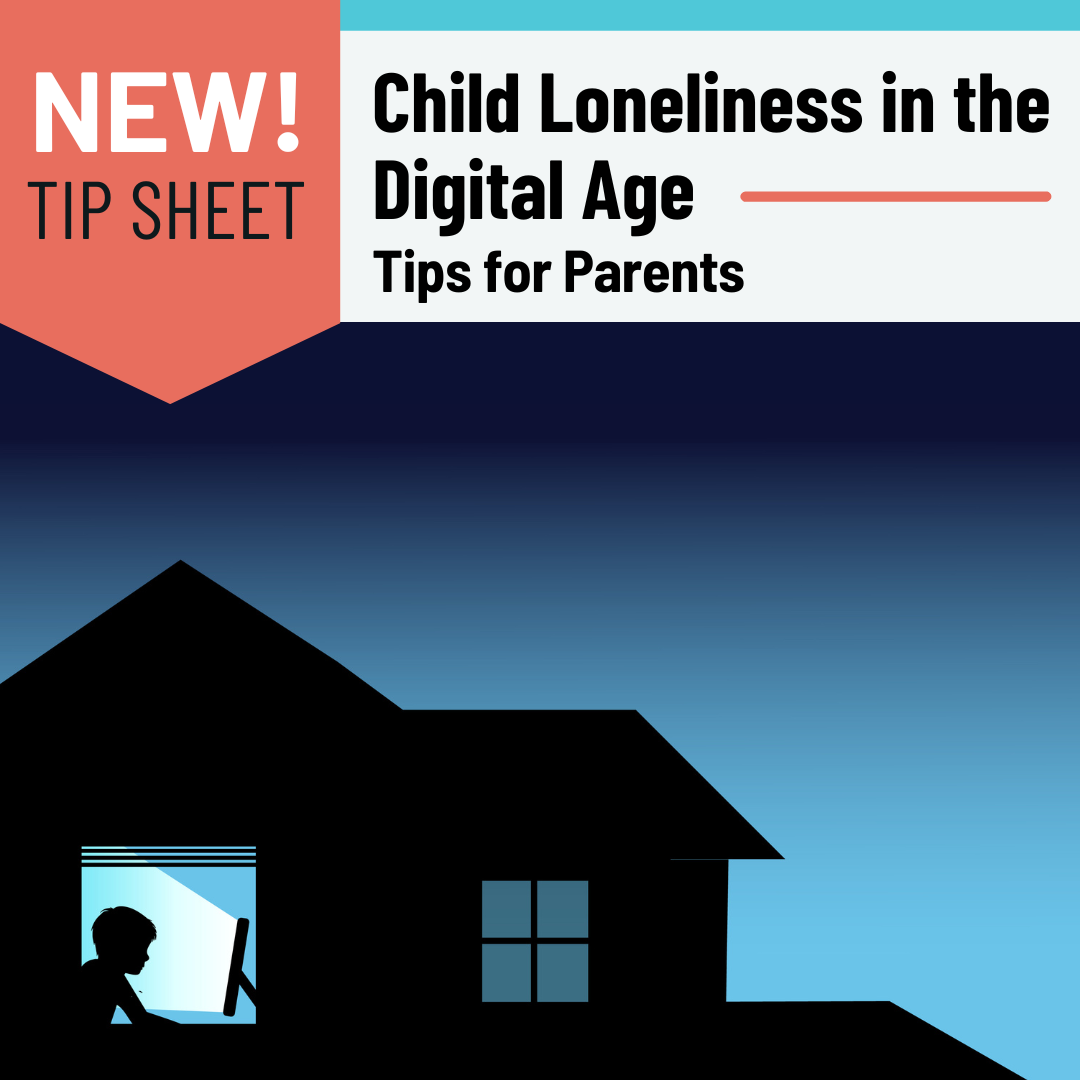
Child Loneliness and Screens

Children today are more connected than ever, yet many are still feeling lonely. Our new tip sheet explores how digital media can both ease and contribute to social disconnection, and offers practical, evidence-based strategies to help parents and caregivers support healthy social connection in children and teens.

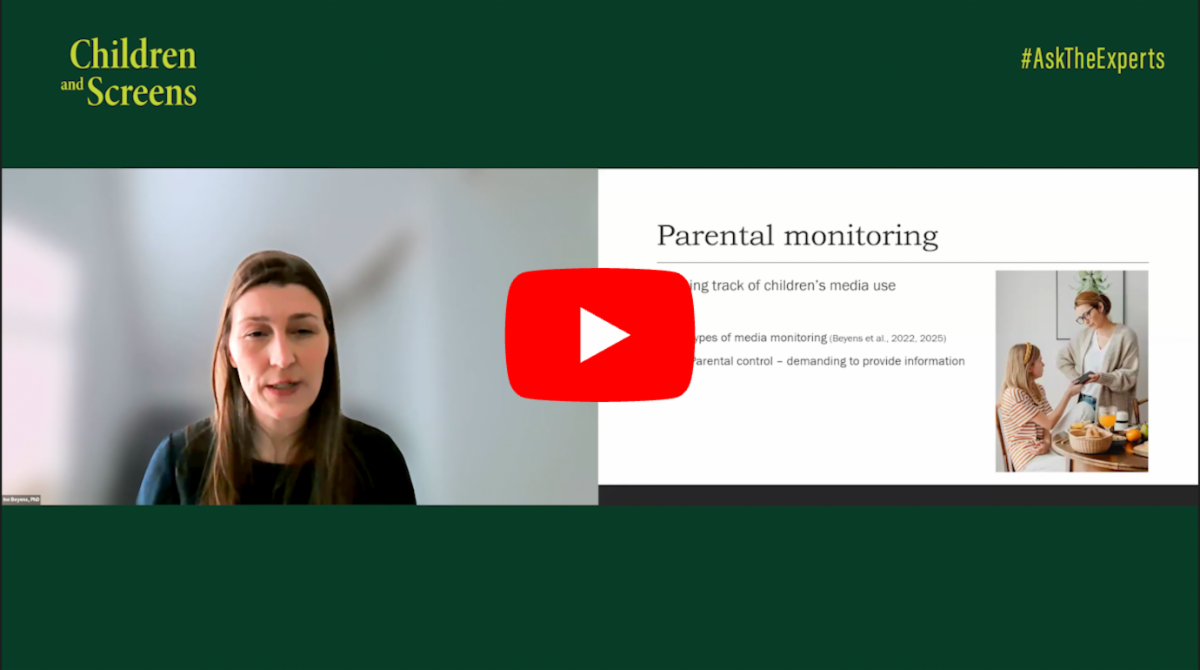
WEBINAR SHORT: Pros and Cons of Monitoring Children's Online Activity

From the #AskTheExperts webinar “The Smart Parent’s Guide to Parental Controls." In this webinar, Ine Beyens, PhD (Assistant Professor, Amsterdam School of Communication Research, University of Amsterdam), explains how parental controls are one part of a broader approach to monitoring children’s media use and outlines the benefits and potential drawbacks of active parental monitoring.

“Maternal technoference and children's social withdrawal: Role of screen exposure and companionship.” Family Relations, April 2026.


“The Cross-Sectional and Longitudinal Associations Between Social Media and Mental Health Among a Large Sample of Adolescents, Inclusive of Transgender/Gender-Diverse Adolescents.” Journal of Adolescence, April 2026.


“Digital engagement profiles and binge eating symptoms in adolescents: A person-centered, longitudinal analysis.” Comprehensive Psychiatry, April 2026.

While key kids safety bills have stalled in Congress, AI regulation is gaining momentum at the federal and state levels. Internationally, proposals to restrict social media use continue to expand along renewed interest in similar measures in the United States.


Meanwhile, ongoing litigation in states like California and New Mexico is reshaping the regulatory landscape as courts consider platform design and potential liability, with additional trials across the country set to take shape this summer.

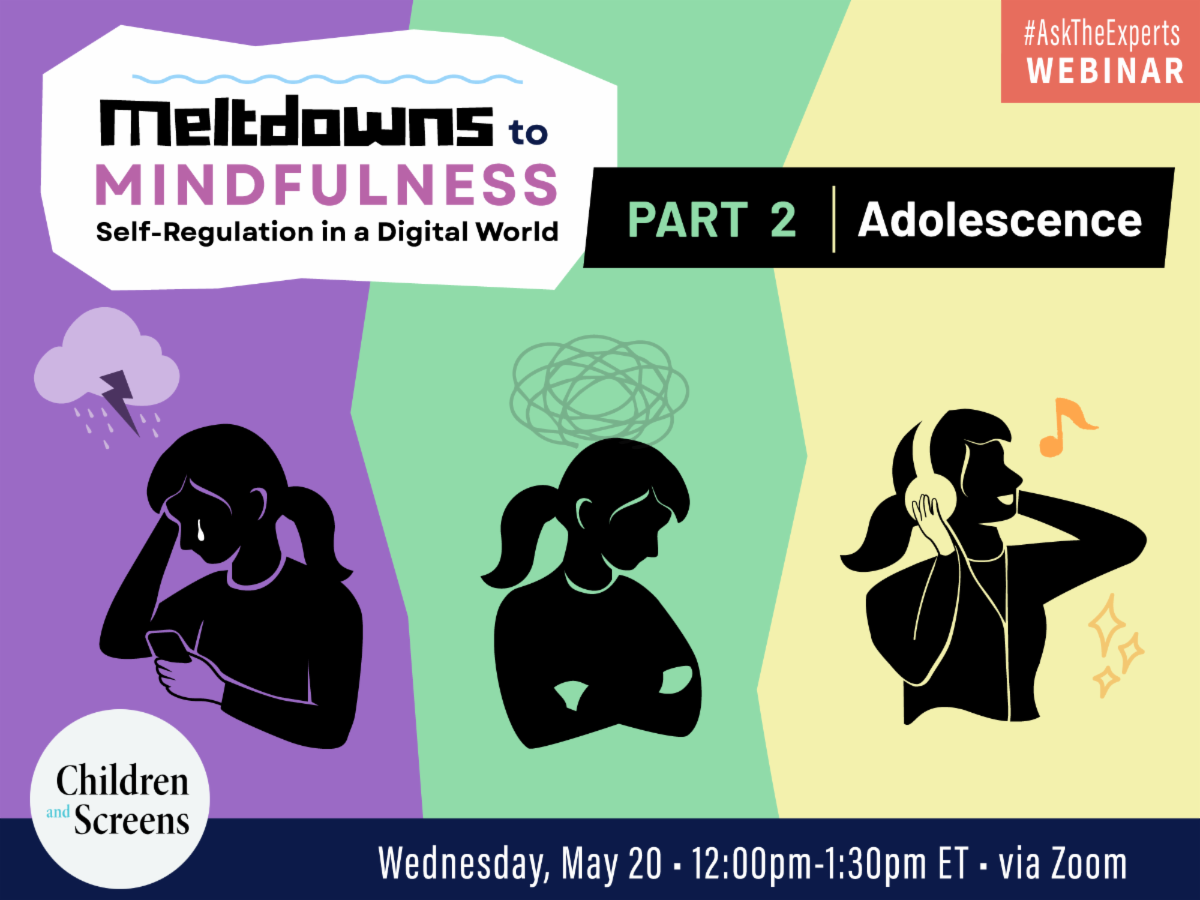
Teens, Screens, and Self-Regulation: What Parents Need to Know

Most adolescents spend hours each day on smartphones and social media, at a time when their ability to manage emotions is still developing. What does this mean for their long-term well-being and how can parents help?  


Join #AskTheExperts on May 20, 12:00pm - 1:30pm ET for Part 2 of our series on digital media and youth self-regulation. Leading psychologists, neuroscientists, and adolescent psychiatrists will share practical, research-based insights on how teens use media to manage emotions, the risks and benefits of that use, and what parents can do to support healthier habits.


Your gift ensures that groundbreaking science doesn’t stay in the lab–it reaches families, educators, and decision-makers who need it most. By donating today, you’ll fuel future convenings, free educational resources, and collaborative research that drives real-word change. Every contribution strengthens our nonpartisan mission to safeguard children’s health and well-being in the digital age. Together, we can turn knowledge into action and build a healthier digital future for kids everywhere.


Email: info@childrenandscreens.org

Facebook  Instagram  X  YouTube  LinkedIn
 
X Share This Email