|
LINK TO SCRIPTURE READINGS
Jesus said to his disciples:
"When the Son of Man comes in glory,
accompanied by all the angels,
he will sit upon his glorious throne,
and all the nations will be assembled before him.
Then, he will separate them one from another, just
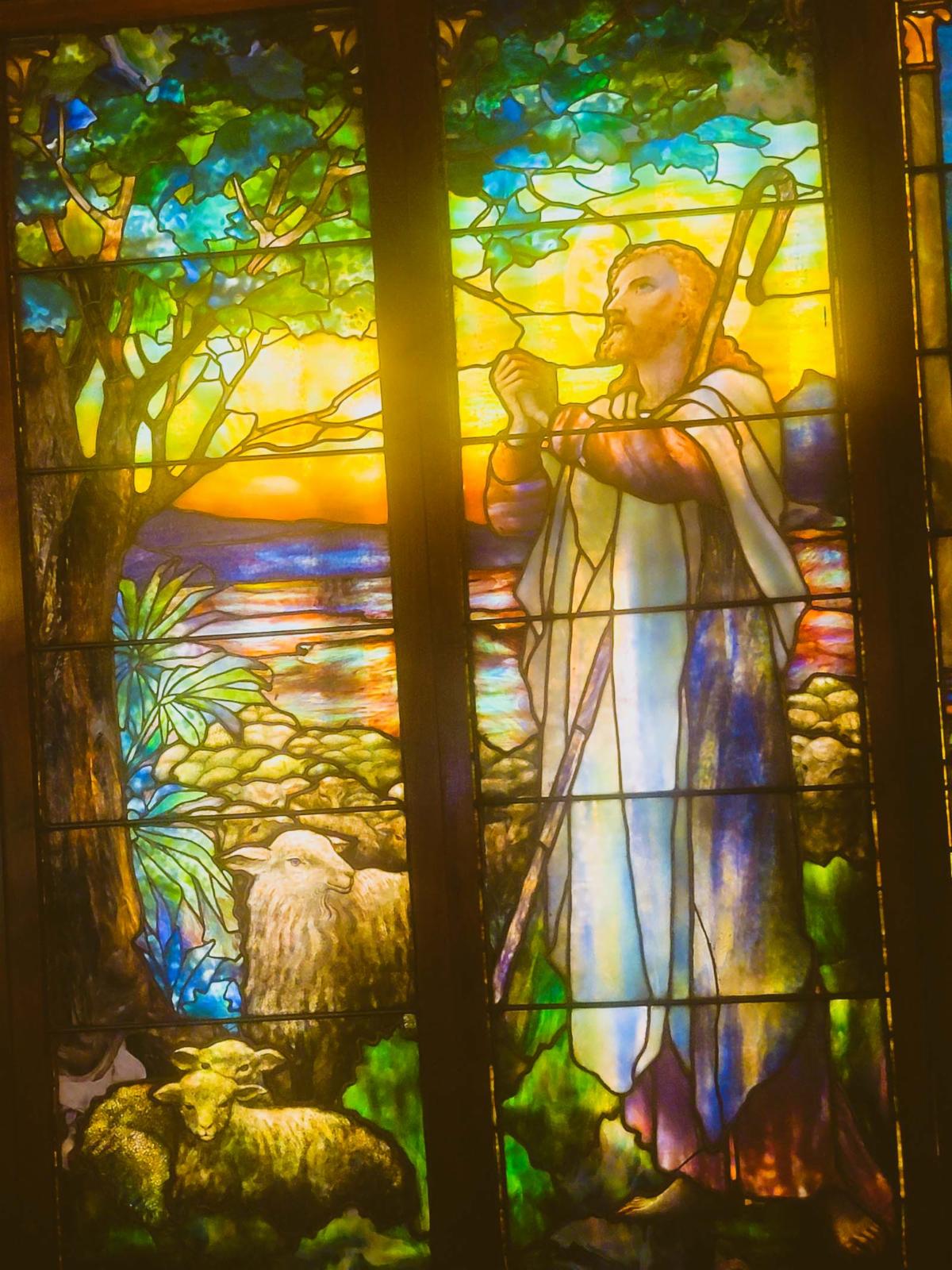
as a shepherd separates sheep from the goats.
He will place the sheep on his right and the goats on his left.
Then the king will say to those on his right,
'Come, you who are blessed by my Father.
Inherit the kingdom prepared for you
from the foundation of the world.
For I was hungry and you gave me food,
I was thirsty, and you gave me drink,
a stranger and you welcomed me,
naked and you clothed me,
sick and you cared for me,
a prisoner and you visited me.'
Matthew 25:31-46
What makes people yearn for a king? Why, in an era when people cherish freedom and balk at rules and regulations, do monarchies still hold popular appeal? The ancient Israelites demanded a king to be like their neighbors; despite Samuel's warnings, they persisted: "No! There must be a king over us!" (1 Sam 8:1-22). Rejecting God as their king, they wanted someone to judge them, lead them, and fight their battles; they were prepared to sacrifice liberty for the sake of imagined security. And they preferred to be a king's puppets, workers, and slaves rather than God's subjects.
The image of a king in this Sunday's readings stands in stark contrast to the kind of king the Israelites desired and to the "pseudo kings" people follow today—whether they be politicians, athletes, media stars, influencers, or other celebrities. People "follow" because it is easier to imitate others and submit blindly without questioning their leader's policies and dictates. Such allegiance removes subjects' need to think, make decisions, or have a conscience. Under an authoritarian leader, subjects find structure, predictability, and familiarity; if they are subservient enough, they may even gain wealth, power, and status. Integrity, compassion, creativity, and innovation are simply not required.
In contrast, Jesus' kingship is based on mercy, compassion, and service to one's neighbor. He is not seeking blind allegiance, but the ability to SEE the suffering of others and respond— to feed the hungry and give drink to the thirsty, to clothe the naked and welcome the stranger, to care for the sick and visit the imprisoned. Even more remarkable is his assertion that these corporal works of mercy touch him directly, that every kindness to the least of our brothers and sisters is a kindness shown to him. To befriend the untouchables of society is to befriend the Christ.
This takes the meaning of Incarnation to a new level. Accustomed as we are to focusing on the birth of the Christ Child, we often fail to see divinity enfleshed in those on society's margins. Our hearts soften at the sight of the Child in the manger; however, we can walk past street people as if they were invisible, blame the poor for their predicament, abandon the elderly and the infirm, despise prisoners, and be indifferent to the fate of migrants. As the Advent season draws near, we would do well to remember that it is not Christmas carols that will earn us a place in God's kingdom, but acts of mercy. Warm, fuzzy feelings around the Christmas tree are meaningless if we have failed to embrace the wounded Christ in our midst; nor will sweet anthems around the crib rise to the heavens if we close our hearts to the cries of the vulnerable.
+++
|