Contemporary Scripture Reflections for Spiritual Seekers

Dr. Elizabeth-Anne Stewart, BCC, PCC

www.elizabeth-annestewart.com; www.MinistryCoachingFoundation.com

SUNDAY BIBLETALK

Thirteenth Sunday in Ordinary Time

June 28th, 2026


"You are a chosen race, a royal priesthood, a holy nation;

announce the praises of him who called you out of darkness into his wonderful light." 1 Peter 2:9

“Let us pray together that nations move toward effective disarmament, particularly nuclear disarmament, and that world leaders choose the path of dialogue and diplomacy instead of violence.” Pope Leo XIV

Excerpt from

A Pocketful of Sundays

Elizabeth-Anne Stewart, 2009


How can this radical teaching on discipleship be translated into a "practical way" for everyday Christians? In the first place, when given the choice between doing what is right and self-preservation, there is no choice for the committed Christian. The failure to speak out and the failure to act can become deadly matters. For example, Christian apathy and even assent during the Holocaust or Shoah are realities which every Christian must acknowledge; so, too, we must hold ourselves accountable when fellow employees, parishioners, family members, citizens, or citizens of other nations are mistreated. Non-action, non-involvement, and "zero culpability" are not the hallmarks of discipleship. Rather, as followers of Jesus, we are called to name evil and to actively resist it, regardless of the personal price we might have to pay.

+++

QUESTIONS FOR REFLECTION

  • What price have YOU paid for Christian discipleship?
  • What is the cup of cold water that YOU have to offer?
  • What do you understand by "costly discipleship"?
  • What does it mean to be a "chosen race, a royal priesthood, a holy nation"?

+++

AUTHOR'S PAGE

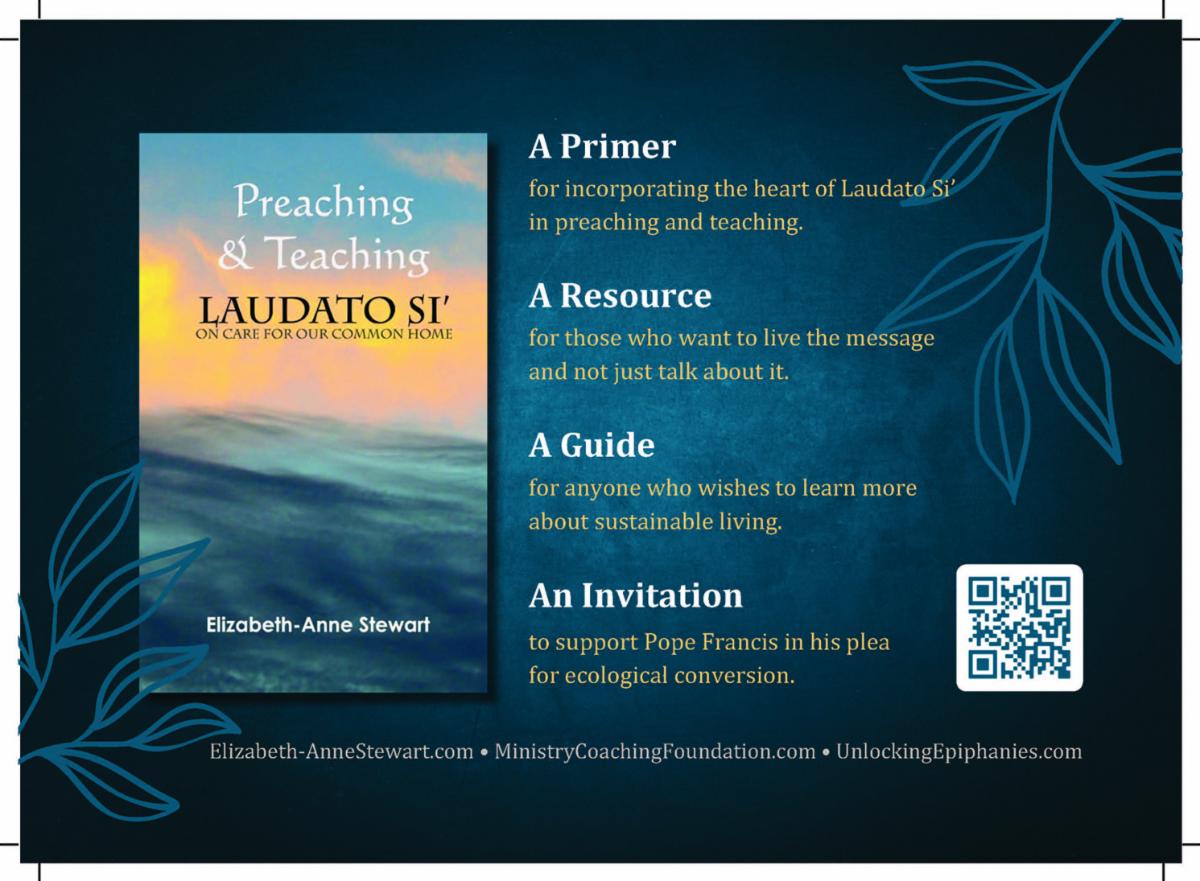
Available on Amazon

A resource for promoting ecological conversion.

+++

UPCOMING WORKSHOPS

"Merton's Fourth & Walnut Epiphany."

International Thomas Merton Society, Indianapolis Chapter

July 16th, 2:00-4:00 p.m. All Saints Episcopal Church, Indianapolis.

+++

Archdiocese of Chicago Liturgy Formation Workshops

St. Elizabeth Seton, Orland Park. Aug 24, 26, 27. 7:00-9:00 p.m.

+++

St. Mary of the Annunciation Women's Retreat

Sienna Center, Racine, WI

October 24-25, 2026 


Greetings, SBT Readers!


"Even a cup of cold water" -- that seems to be the bare minimum of a Christian response if one is to hope for a reward, heavenly or otherwise. As he speaks to his apostles about the paradoxes involved in following him, Jesus concludes his instructions by emphasizing the merits of offering water to the "little ones." By this, he is not referring to children or adults of short stature, but rather to the class of biblical characters known as the anawim -- the poor, the humble, and the afflicted. From the text, it seems that he includes the Twelve in this category, for just two verses before this statement, he says, "Whoever receives you, receives me, and whoever receives me receives the one who sent me" (Matt 10:40).


Even a cup of cold water... "What if it's warm water?" I wonder. "What size does the cup need to be? Should the cup be made of clay, plastic, or styrofoam, be disposable or recyclable, environmentally friendly, or fit only for the trash? And what if this cup of cold water is merely a symbol for something else?"


Even a cup of cold water... What is the bare minimum we can offer someone in need? My practical self kicks in: perhaps this represents a helping hand or a listening ear; perhaps it means offering someone shelter and sustenance just as the "Influencer" of Shunem does for Elisha (2 Kings 4:8-11, 14-16a) or the widow of Zarephath does for Elijah (1 Kings 17:7-16). But perhaps what is more important than giving or doing is simply to recognize the dignity of those in front of us, no matter who they are, to see Christ in them, and to let them know they are not invisible.


A cup of cold water may not save them, but perhaps our smile will...


Many Blessings,

Elizabeth

LINK TO SCRIPTURE READINGS


Jesus said to his apostles:

“Whoever loves father or mother more than me is not worthy of me, and whoever loves son or daughter more than me is not worthy of me; and whoever does not take up their cross and follow me is not worthy of me.

Whoever finds their life will lose it,

and whoever loses their life for my sake will find it.

Whoever receives you receives me, and whoever receives me receives the One who sent me.

Whoever welcomes a prophet because he is a prophet

will receive a prophet’s reward,

and whoever welcomes a righteous person

because he is righteous will receive a righteous person’s reward.

Anyone who gives even a cup of cold water to one of these little ones to drink because the little one is a disciple—will surely not lose his reward.”

Matt 10:37-42


As we reflected on this Sunday's Gospel in our Lectio Divina group, the first comments suggested that Jesus' words should be taken symbolically rather than literally. After all, when would we ever be in a position that involved choosing between Jesus and our loved ones?

"I think it means just putting God first," was one response.

"Or extending hospitality to people who are doing God's work," was another.

"But what if..."


The "what if" preoccupied us for the rest of the evening. Unlikely as this may seem, there are countless theoretical scenarios that illustrate having to choose between what Lutheran theologian Dietrich Bonhoeffer calls "costly discipleship" and the well-being of those closest to us. For example, a whistleblower--the primary provider for his or her family-- exposes fraud at work and gets fired as a result; or protestors engage in non-violent civil disobedience and end up being imprisoned, even killed.


From the theoretical, we quickly transitioned to historical examples: St. Maximilian Kolbe's heroic actions in first opening his monastery as a shelter for Polish and Jewish refugees during WWII and then in volunteering to take the place of a prisoner selected for starvation in Auschwitz; or St. Oscar Romero's commitment to stand with the poor of El Salvador and denounce military violence, despite knowing that he would be targeted by the Death Squads; or in our own time, the Christian physicians confronting the Ebola outbreak in the Congo or risking their lives in war zones from Ukraine to Lebanon...


As the evening progressed, one thing became clear: putting Jesus first can be costly, and it is often the people closest to us who, whether willing or not, must also pay the price for our discipleship.

+++

RESOURCES

If you haven't tried these assessment tools, I invite you to do so. The first Quiz helps you assess your personal strengths and "growing edges" and provides a computer-generated email regarding the Wheel of Life and your scores. The second is for members of a ministry team (e.g., parish staff, a religious community, or a liturgy committee) and will help you assess your team's effectiveness. The more people participate in the team Quiz, the more useful the assessment tool will be in planning for the future. Should you wish to discuss your results with me, I would be happy to offer a complimentary 30-minute conversation.

Spiritual Self-Assessment:

https://assess.coach/eastewart/


Ministry Team Assessment: https://assess.coach/embracingpossibility


This video explains my approach to this ministry, while my website provides further details as well. Sessions can either be in person or on Zoom; I am also available to facilitate in-person or "virtual" retreats for groups and individuals.

Spiritual Direction

Dr. Elizabeth-Anne Stewart | www.elizabeth-annestewart.com | e.a.stewart@sbcglobal.net

C. All Photos by Elizabeth-Anne Stewart, www.artfulphotographer.com