Contemporary Scripture Reflections for Spiritual Seekers

Dr. Elizabeth-Anne Stewart, BCC, PCC

www.elizabeth-annestewart.com; www.MinistryCoachingFoundation.com

SUNDAY BIBLETALK

The Solemnity of Our Lord Jesus Christ, King of the Universe

November 23rd, 2025

"He is the image of the invisible God, the firstborn of all Creation." Col 1:15

Reflection

excerpted from SBT,

November 20th, 2022


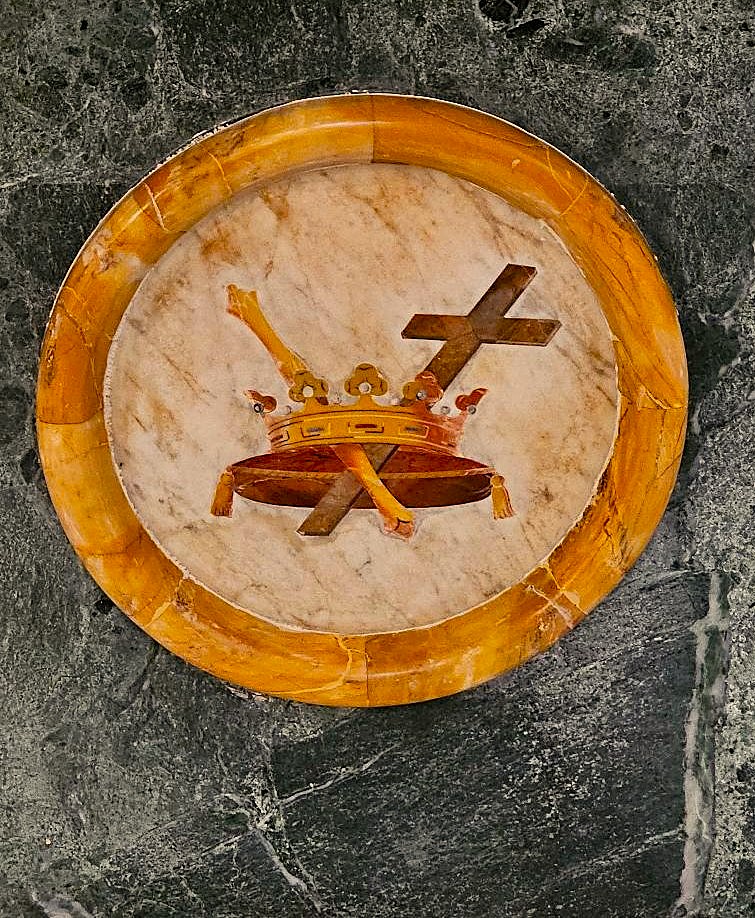
Mocked by the religious and secular powers, Jesus is hailed as "King." This, however, is not a title he claims for himself. He is clear about this when he runs from the crowds that try to crown him (Jn 6:15) and when he tells Pilate, "My kingdom does not belong to this world" (Jn 18:36). His purpose, in fact, is to testify to the Truth (Jn 18:37), not to acquire earthly power, lands, wealth and armies. Even before beginning his public ministry, he rejects the temptation of worldly domination (Matt 4:8-10), emerging from the desert firm in his desire to serve God and not his ego.


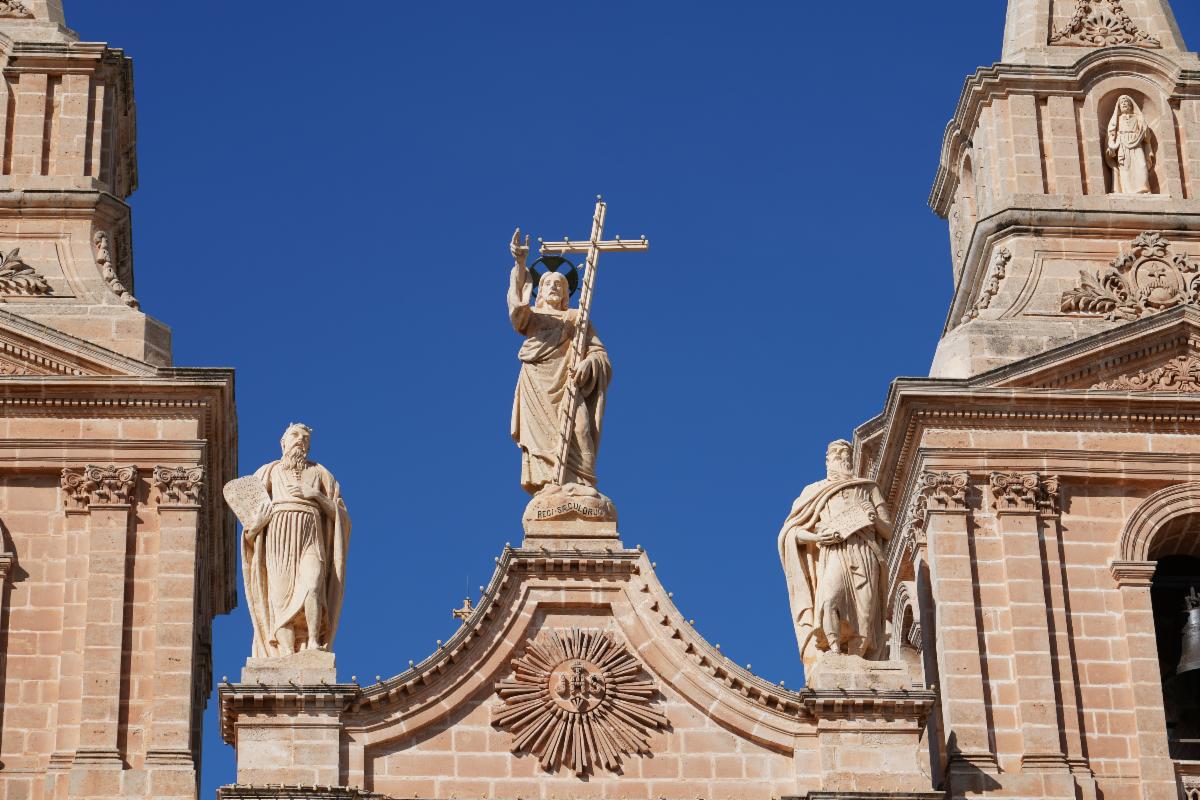
In many ways, then, Jesus is an "un-King," one whose dominion is over the human heart, not over territories. His only weapon is Love while his manifesto --The Beatitudes-- turns upside down notions of worldly ambition and measures of success. Ironically, while the institutional church has built magnificent cathedrals and basilicas in his honor, all Jesus desires is to be enthroned in the hearts of his followers. And while some of his representatives, often vested in magnificent robes, are hailed as "Princes of the Church," the Crucified Jesus stretches out his arms in the glory of wounded nakedness, reaching out to embrace suffering humanity.


Glamor and glitter have nothing to do with Christ the King. Though I love religious art, architecture, and sacred music, I suspect that our amazing ecclesial artistic heritage has little to do with him, either. The arts express how we feel and respond, but they do not capture the essence of who Jesus is and what he

desires from his followers. In fact, caught up in the rapture of an exquisite choral piece, we may feel uplifted and inspired, but these feelings are no substitute for worshipping in Truth any more than is our experience of awe when we gaze up at the vaulted ceiling of a Gothic cathedral. True worship, as Jesus points out to the Samaritan woman, does not depend upon sacred spaces, but on the disposition of the human heart (Jn 4:21-24). The only gift that God desires is the gift of authentic Love.

Available on Amazon

A resource for promoting ecological conversion.

ANNOUNCING COHORT 4

TRANSFORMATIONAL COACHING

A live Zoom course for inner guides and spiritual seekers

Feb 2- June 16, 2026


WAYS OF SACRED LISTENING

A live Zoom course for inner guides and spiritual seekers

Jan 22-March 5th, 2026


AUTHOR'S PAGE

Collective Ink, U.K., 2025

www.Unlocking Epiphanies.com

RESOURCES

Spiritual Self-Assessment :

https://assess.coach/eastewart/


+++

Ministry Team Self-Assessment:

https://assess.coach/embracingpossibility


Greetings, SBT Readers!


Whom do we serve? This is the most important question we can ask ourselves on this Feast of Christ the King. Our immediate response may be, "Christ, of course!" but if we probe deeper, we may well find a disconnect between what we profess and how we live.


There are two extremes that block total allegiance to the Holy One. On the one hand, there are those who deify others —usually authority figures or celebrities —bestowing on them every attention, serving their every whim, following instructions regardless of their legality, and treating them as infallible, sacrificing their own integrity to placate them. Such idolatry leads to subservience, a loss of identity, a selling of the soul. Deep down, such worship creates a hollowness at the core. Instead of investing in ultimate meaning, those who worship "other gods" can never be satisfied. Nothing they do is ever enough. Moreover, they exist at this deity's whim, and if they happen to fall out of favor, then all their service turns to ashes.


At the other end of the spectrum are those who deify themselves. They are the center of the universe, fearing neither God nor any human. Believing themselves to be entitled to the good things of this world, they are devoid of gratitude and have no sense of needing to contribute or "pay back." As far as they are concerned, the world is their playground. Instead of seeing themselves as part of creation, they act as though they are over and above everyone else; they are not only indifferent to the fate of others, but to the fate of the earth. Their craving for attention is insatiable, but the more others cater to them, the stronger their craving becomes. Perhaps this sickness of soul is even more insidious than idolizing others, for it amounts to nothing less than placing oneself on a par with God.


Whom do we serve? Most of us are somewhere in the middle, honoring God most of the time, but sometimes being tempted to follow crowd thinking rather than our consciences, and sometimes being driven by ego needs. Social media, celebrity worship, and politics can pull us toward one extreme, while the false gods of success, popularity, power, prestige, security, and being relevant may pull us in the other direction. Both extremes are spiritual traps.


The Feast of Christ the King reminds us that it is Christ alone who is worthy of our allegiance, not the powers of this world nor the urges of our egos. When we deify others (or groups, or causes), we cease to be disciples of Jesus and instead "belong" to whatever or whomever we bow down to. On the other hand, when we deify ourselves, our hardness of heart makes us impervious to grace. In both cases, the antidote is HUMILITY. Only when we remember who we are and to whom we belong can we identify as Christians who actually follow Christ.


Many Blessings!


Elizabeth


P.S. Written in haste, before heading to the airport to begin the long journey back to the U.S....

LINK TO SCRIPTURE READINGS


He is the image of the invisible God,

the firstborn of all creation.

For in him were created all things in heaven and on earth, the visible and the invisible,

whether thrones or dominions or principalities or powers; all things were created through him and for him.

He is before all things,

and in him all things hold together.

He is the head of the body, the church.

He is the beginning, the firstborn from the dead,

that in all things he himself might be preeminent.

For in him all the fullness was pleased to dwell,

and through him to reconcile all things for him,

making peace by the blood of his cross

through him, whether those on earth or those in heaven.

Col 1:12-20


Kingship is not a concept to which most of us are drawn, and I doubt whether Jesus would have embraced the term, either. We associate kings with those who hold power over others, having inherited their privileges through lines of succession. Propped up by military might, catered to by a host of courtiers, kings, throughout history, often functioned as dictators; before the modern era, at the word of a king, someone perceived as a threat could be sent to the torturers or left to rot in gaol.


Like other Jews of his time, Jesus would have been well aware of the malfeasance of kings. Herod the Great, for example, may have been the mastermind behind extensive building projects, including the reconstruction of the Second Temple in Jerusalem, but he was a cruel despot hated by his own people. Not only did he execute his own wife, Mariamne I, but also his sons Antipater II, Alexander, and Aristobulus IV, along with anyone else he perceived to be a threat. He imposed heavy taxes on his own citizens, controlled the high priesthood with his own appointees, and catered to Rome even where religious matters were concerned. Then, of course, there was Herod Antipas, who imprisoned John the Baptist for criticizing his unlawful marriage to his brother's wife, and then executed him at the request of his step-daughter, Salome.


Unlike these worst of examples of kingship, Jesus' kingship is "not of this world." Though all power resides in him, he invites his followers to share in this power so that they can continue his work on earth, preaching, teaching, guiding, and healing, as he did. Unlike monarchs who keep their subjects "small" to aggrandize themselves, Jesus calls us to rise above feelings of unworthiness to participate in his "royal priesthood" (1 Peter 2:9). In fact, it is in participating in his life that we discover our true identity and experience our deepest fulfilment, not as subservient courtiers but as those mandated to serve God and humanity.


Jesus' kingdom is not defined by national boundaries, but extends to all people everywhere, regardless of their status, their occupation, or even the choices they made in the past

--take, for example, Matthew, the tax collector, Mary Magdalene, from whom Jesus cast out seven demons, and Saul, the persecutor of Christians! Nor is it defined by time and space. As Lord of History, the Risen Christ beckons us to transcend time and to live in the eternal, that time beyond past and future, the moment of "now" which is the only moment in which we can encounter him. As Lord of the Cosmos, Christ the King invites us to experience worlds unseen, to travel to unfathomable depths, and to behold visions too radiant for human eyes to contemplate. The only requirement is that we abandon all lesser gods and worship him alone.

+++


QUESTIONS

FOR REFLECTION

  • What does the Feast of Christ the King mean to you?
  • What lesser gods tempt you to worship them?
  • In what ways do you share in Jesus' royal priesthood?
  • What images of the Risen Christ resonate more with you than the image of Christ the King?

SPIRITUAL DIRECTION &

LIFE COACHING

This video explains my approach to this ministry, while my website provides further details as well. Sessions can either be in person or on Zoom; I am also available to facilitate in-person or "virtual" retreats for groups and individuals.

Spiritual Direction

Dr. Elizabeth-Anne Stewart | www.elizabeth-annestewart.com | e.a.stewart@sbcglobal.net

C. All Photos by Elizabeth-Anne Stewart, www.artfulphotographer.com