|
LINK TO SCRIPTURE READINGS
Great crowds were traveling with Jesus,
and he turned and addressed them,
“If anyone comes to me without hating father and mother, wife and children, brothers and sisters,
and even their own life, that person cannot be my disciple.
Whoever does not carry their own cross and follow me cannot be my disciple.
Which of you wishing to construct a tower
does not first sit down and calculate the cost
to see if you have enough money for its completion?
Otherwise, after laying the foundation
and finding yourself unable to finish the work
the onlookers should laugh at you and say,
‘This person began to build but did not have the resources to finish.’
Luke 14: 25-33
If Jesus were preaching on Substack or on YouTube, it is doubtful that he would receive many "Likes" for his comments on discipleship (Lk 14:25-33). In just a few verses, he presents four distasteful criteria for would-be followers, linking seemingly random thoughts so quickly that it is hard to absorb their shock value. To be his disciples, we must:
- Hate all our relatives and even our own lives.
- Carry our own cross.
- Calculate the cost (analogy of constructing a tower)
- Decide whether we have sufficient resources (analogy of a king marching into battle)
Anyone reading Jesus' social media post -- or listening to his sermon-- has to unravel seemingly disparate ideas. The requirement to hate one's family seems to go against everything Jesus has taught about love. Could these words be AI generated or nothing more than "fake news"? Could someone have accidentally mistranslated what Jesus is actually saying -- or deliberately altered the text? Or is Jesus using hyperbole as a tool for getting his point across? Once we get over our shock and move beyond conspiracy theories, we begin to get the point. "Hate" doesn't literally mean "hate," but rather, idolatry; no matter how much we love another person, related to us or not, that love must never pull us away from our whole-hearted allegiance to the Holy One. Yes, we are to love our neighbor as ourselves, but we are to love God more.
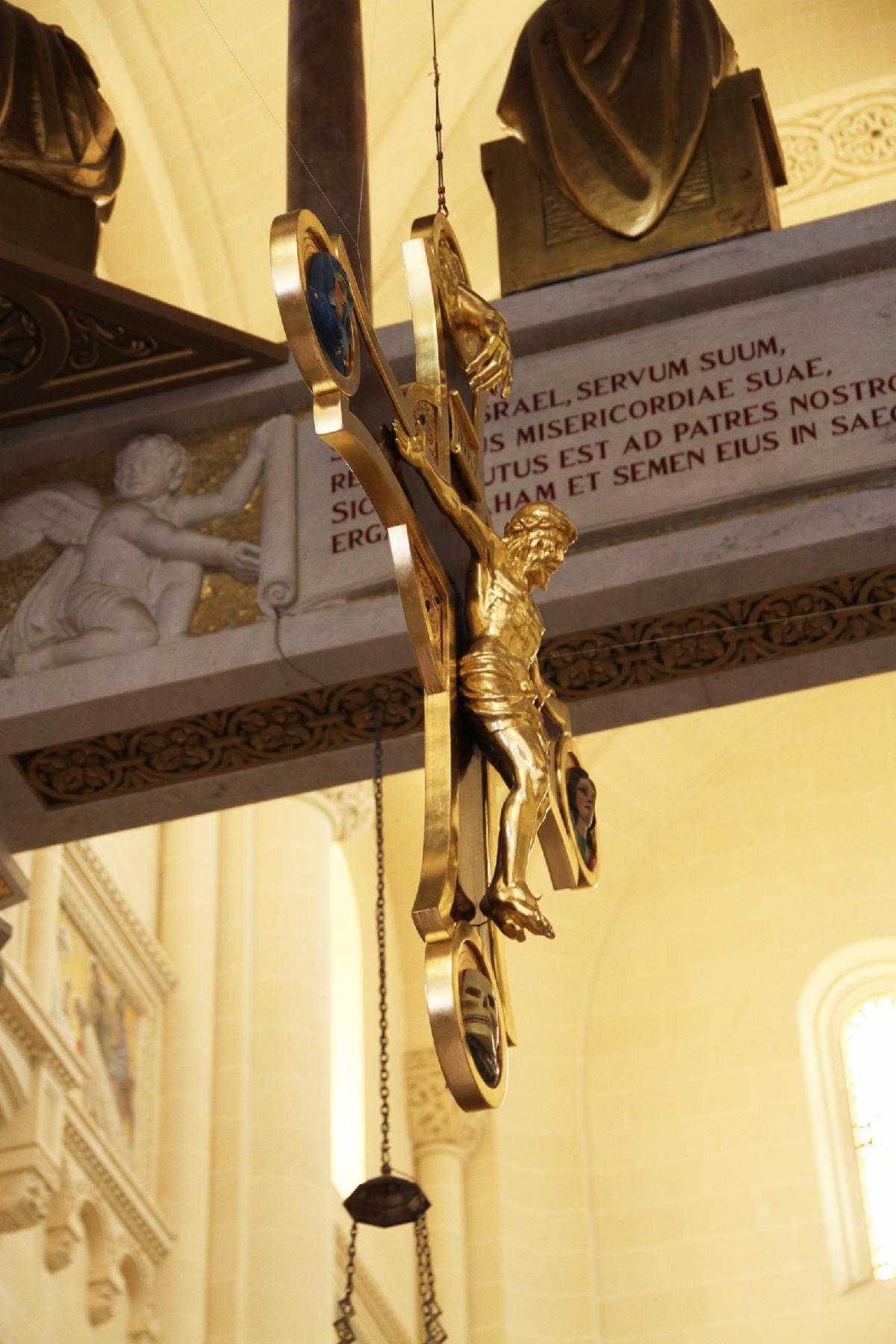
And this brings us to the second requirement. For the Jews of Jesus' time, the cross was a symbol of absolute degradation, carrying the stigma of being abandoned by God. There was no worse fate than being crucified; nevertheless, here is Jesus informing great crowds that they must submit to this horror of horrors. Perhaps the people understand this as a figure of speech, for there is no mention of the crowd dispersing; in fact, Lk 15 begins with tax collectors and public sinners drawing closer to listen to what Jesus has to say. For many contemporary Christians, carrying the cross has come to mean accepting one's lot in life, and embracing the sufferings that come our way. However, in the context of Lk 14:25-33, I believe St. Paul's word in Gal 2:20 are closer to Jesus' meaning: "I have been crucified with Christ; yet I live, no longer I, but Christ lives in me." What Jesus requires is not that we go through life dragging crosses behind us, but that we die to our small, egotistical selves, and to all our wilfulness and attempts to control our lives; only then will we become a new creation, free enough to follow him.
This is where the analogies of the tower and the militaristic king come in. If radical discipleship means radical detachment, then we need to know what we are getting into. Jesus reminds us that before embarking on a building project or taking on a major challenge, it makes sense to assess our resources; so, too, with discipleship. Do we have what it takes to follow him, or are we too attached to material possessions, relationships, projects, causes and goals? Are we committed to the long haul or do we lack the fortitude to trudge on when challenges and complications surface? Are we Christians in name only, or is it He who lives in us and we in Him?
Jesus' final shocker is to inform the vast cowds that half-hearted disciples are like flavorless salt, "fit neither for the soil nor for the manure pile" (Lk 14:34-35). And these words, my friends, require no commentary. 😕
+++
|