|
LINK TO SCRIPTURE READINGS
John the Baptist saw Jesus approaching him and said,
“Behold, the Lamb of God, who takes away the sin of the world. This is the one of whom I said,
‘A man is coming after me who ranks ahead of me
because he existed before me.’
I did not know him, but the reason why I came baptizing with water was so he might be revealed to Israel.”
John testified further, saying,
“I saw the Spirit come down like a dove from heaven
and remain upon him. I did not know him,
but the one who sent me to baptize with water told me,
‘On whomever you see the Spirit come down and remain,
he is the one who will baptize with the Holy Spirit.’
Now I have seen and testify that this is the Son of God.”
John 1:29-34
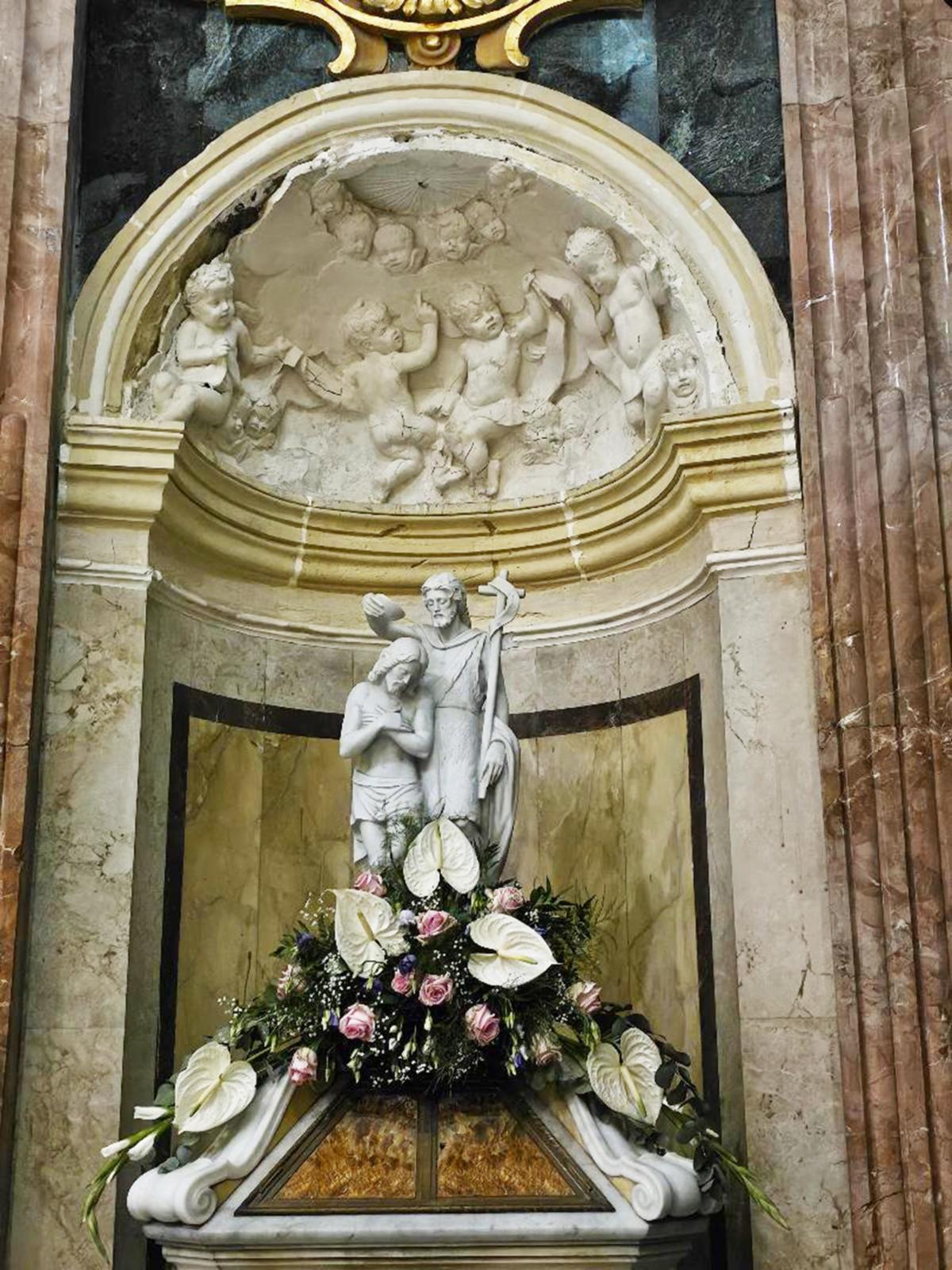
There is no mention of fire in John's account of the Baptism of Jesus; the evangelist's main concern is to present John the Baptist's testimony that Jesus is the Son of God. Today's Gospel, then, is less about the Baptism and more about Jesus' identity. The event, as witnessed by John the Baptist, can therefore be described as a Theophany. Not only does the Baptist describe what he has heard and seen, but he also adds his own theological commentary: that Jesus, the Lamb of God who has come to save the world from its sins, ranks ahead of him because he existed before him; moreover, his own role as baptizer is to prepare the way and reveal the Holy One to Israel.
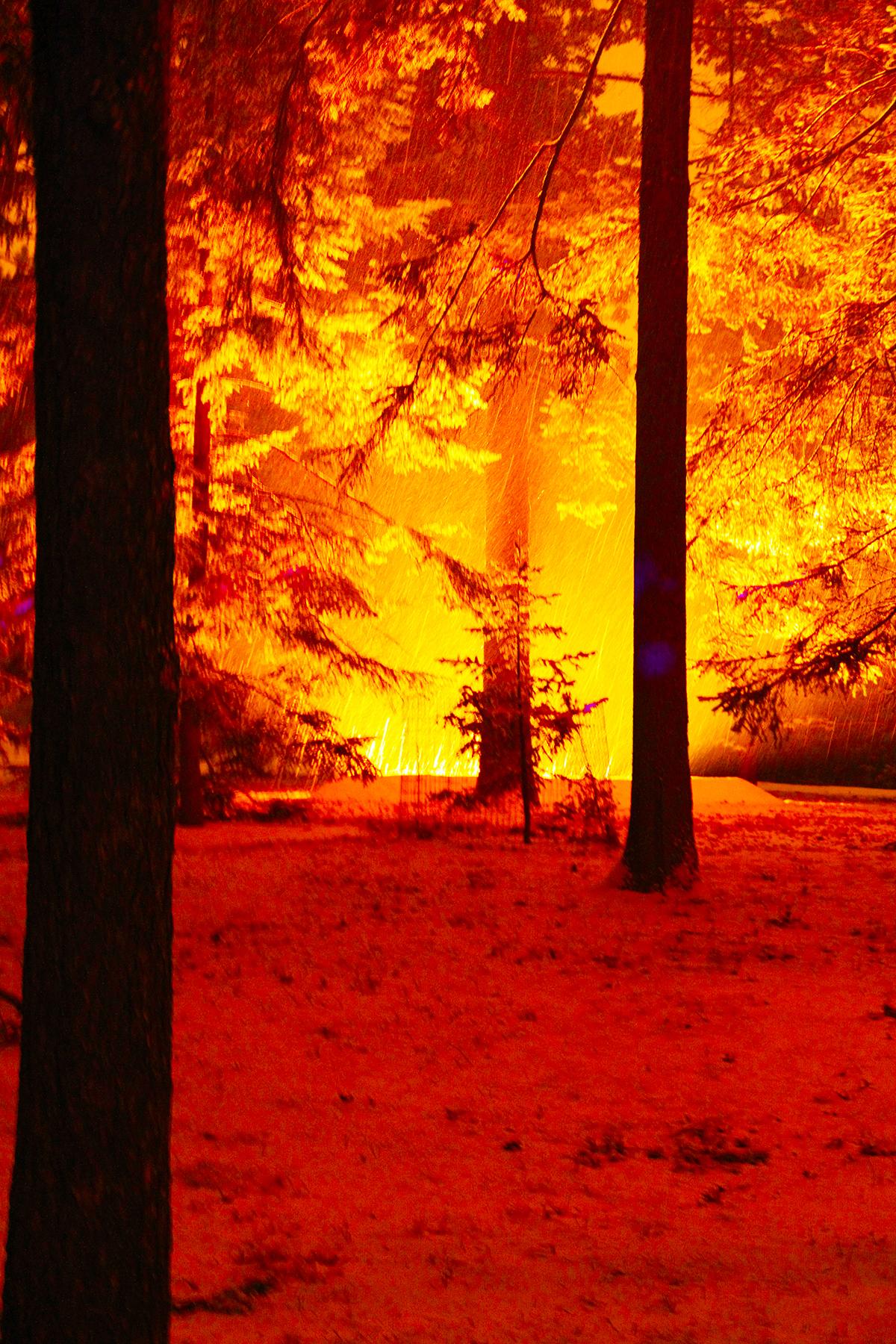
But fire has its place in this narrative, even by omission. In Matthew's account of the Baptism, John the Baptist distinguishes between his baptism of water for repentance and the baptism that Jesus will offer: "He will baptize you with the Holy Spirit and fire" (Matt 2:11). The baptism John offers can be compared to a cleansing ritual, a new beginning, a rejection of sin. Jesus, in contrast, transforms the whole person. Those who submit to his baptism not only have their sins washed away, but are burned with the refining fire of Love. The fire of the Holy Spirit cauterizes the soul, removing the infection of sin and the impulse to sin; it burns away the "false self," all those ego-driven self-definitions that make us imagine we are greater -- or smaller-- than we actually are. In the conflagration of Love, we find our true identity as children of God, co-heirs with Christ. The old self is replaced by a new, braver self, an inspired self, an empowered self. The process of this transformation can be long, arduous, painful, but, ultimately, if we stay on the path, we discover the Christ who lives at our center.
In the C12th Sufi text, The Conference of the Birds, there is a beautiful parable called "The Moths and the Flame." In the section entitled, The Valley of Poverty and Nothingness, a group of moths gather to learn the truth of a candle's light. Some venture near the flame and return to describe all they have seen. Their mentor objects that they know nothing of the flame; then others draw closer to the candle but return without even singeing their wings. They, too, earn their mentor's rebuke. Finally, one of the moths woos the flame in a frenzied trance, and, engulfed in fire, his being glows a fierce translucent red as he dances in ecstasy. It is then that the mentor exclaims, "He knows, he knows the truth we seek/ That hiddden truth of which we cannot speak."
Only by entering the fire can we become the flame; only by submitting to Jesus' fiery baptism, can we enter the transforming life of the Spirit.
|