|
Greetings, Everyone!
The New Year is still young, and yet both here in the U.S. and across the globe, countless people are suffering from war, famine, natural disasters, acts of terrorism... Los Angeles burns; New Orleans reels under the New Year's Eve terror attack; the death count in Gaza is approaching 50,000, and Israelis are still awaiting the return of the hostages. Meanwhile, war continues to ravage Ukraine, bombs fall on villages in Myanmar, migrants drown en route to Europe, Syria is struggling to come to terms with Assad's bloody legacy, and Lebanon is once again trying to rebuild following last year's massive air strikes and damaged infrastructure... Sadly, this is just the "short list" of all that is afflicting the world right now, but even if one is fortunate enough to live in a "safe zone," it is difficult not to experience heartache over the calamities challenging so many.
So how to respond constructively? Without wanting to be simplistic, I will risk offering three suggestions:
-
GRATITUDE: To be grateful for what we have and to remember that many others have less, if nothing at all. Nothing that we own is permanent, but since it is ours today, let us give thanks, recognizing that we are not entitled to anything.
-
COMPASSION: To be aware of what is happening at home and abroad and to keep those who are suffering in our hearts and in our prayers, offering material support if we are able to do so.
-
INTENTIONAL ACTS OF KINDNESS: To reach out to those around us in loving kindness. Though we may not be able to bind the wounds of people suffering in other parts of the world, we can relieve global suffering by seeing and responding to the needs of those we encounter along the Way. In helping one person, we are benefitting humanity.
Blessings!
Elizabeth
PS. Here is the link to my introductory webinar on Encountering the Shadow in Coaching, co-presented with Peter Metzner, courtesy of Coaching.com:
https://lnkd.in/gs9MJJzA
SCRIPTURE REFLECTION
Link to Sunday Readings
The people, filled with expectation,
were asking in their hearts
whether John might be the Christ.
John answered, saying,
“I baptize you with water,
but one mightier than I is coming.
I am not worthy to loosen the thongs of his sandals.
He will baptize you with the Holy Spirit and fire.”
After all the people had been baptized
and Jesus had also been baptized and was praying,
Heaven opened, and the Holy Spirit descended upon him
in bodily form like a dove.
And a voice came from Heaven, saying,
“You are my beloved Son;
with you I am well pleased.”
Luke 3:15-16, 21-22
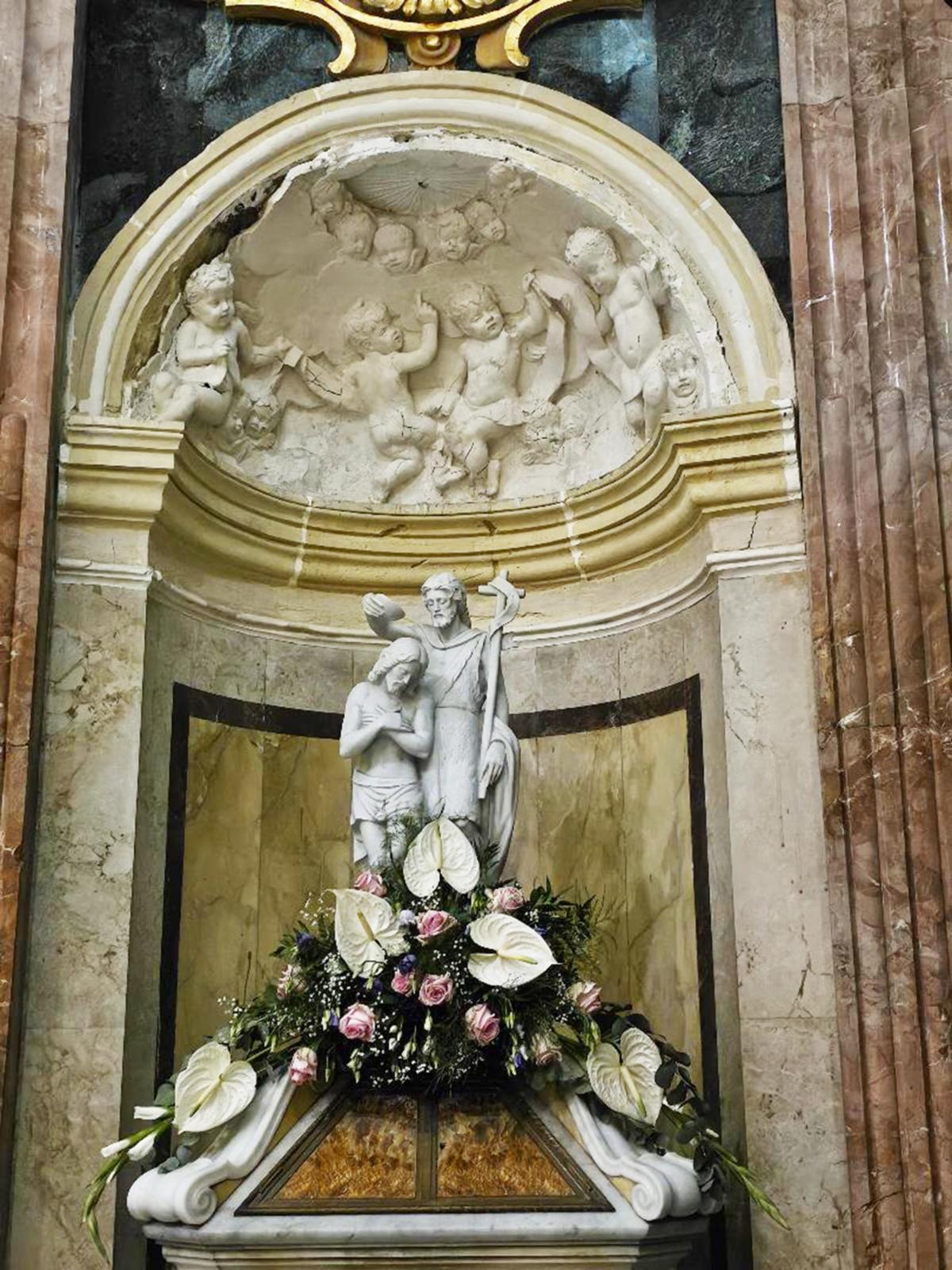
Years ago, I came across an article decrying how the sacraments had been "tamed," both in terms of how they were understood and how they were administered. Instead of immersing the "elect" in water or pouring water over them, for example, some priests had taken to applying the baptismal waters with dampened purificators; this, apparently, was to avoid mess, inconvenience, and discomfort. I no longer have access to the article written in the distant 1980s, nor even remember its author; however, when I think about baptisms today, the word "tamed" resurfaces. For many Christians, especially those baptized as infants, baptism is a past-tense event that determined the religion they would follow; it was as much a rite of initiation into social acceptability as it was into a faith community. Whether by immersion or damp cloth, the waters of baptism sealed one's Christian identity and fulfilled societal expectations, especially for those who still clung to the idea that heaven was closed to the uninitiated. To this day, there are still Christians who believe this-- and, to this day, there are still those who see the sacraments as a series of necessary rites to be scheduled just as one would schedule vaccinations, graduations, getting a driver's license, and other life events.
So what has happened to the Holy Spirit and fire? Just as we have "drained the wine of its pungency/ and robbed the bread of its bite," so we have watered down (excuse the pun) baptism into a social convention. Instead of remembering that this is a transformational event that immerses us in the life, death, and resurrection of Jesus Christ, we tend to forget that transformation is an ongoing process with accompanying responsibilities. Though the baptismal waters may have evaporated, our immersion into Mystery is still calling us to deeper waters yet, not only in terms of our relationship with God but also in how we live out our Christian commitment.
The Christian life is not about "cheap grace" (to use Dietrich Bonhoeffer's phrase) but involves a radical dying to self so that it is indeed Christ who lives in us and the power of the Spirit that animates us. In the early church and in places today where Christianity has been outlawed, this could also translate into literal martyrdom. From the earliest days, to be Christian, by definition, meant to reject all temporal powers and to submit, instead, to God's rule. While Christianity has been hijacked in name by earthly powers, in essence, it is still a counter-cultural spiritual path that involves seeking Truth, living justly, and practicing compassion. To be baptized means to be on fire with Divine Love, serving that Love by re-creating the face of the Earth. It is no mere passport to Heaven, sign of privilege, or guarantee of being "saved"; rather, it demands nothing less than "costly grace."
|