Fans of San Francisco’s beloved women’s basketball team, the Golden State Valkyries, descended on the Embarcadero for their WNBA championship parade earlier this month, dressed in signature purple. Somehow this scene, with the arrow to the heart of the city along a waterfront destined to be flooded by sea level rise, evokes both success and struggle. This month, we take you inside the latest reports preparing us for that sea level rise and an unprecedented El Niño. | |
F I G H T OR F L I G H T ?
| | |
California's Climate Future Comes Into Sharper Focus
Four degrees hotter. Summerlong heat waves. Forty percent less snowpack. Disappearing coastal beaches. Twice as many smoky days. Crop losses that could end California’s status as the nation’s breadbasket. Those are just a few of the alarming projections for the middle of this century included in the Fifth California Climate Change Assessment released last month. None of this comes as a surprise to those who’ve been paying attention. But the good news is that this assessment represents a major step forward in the depth of our understanding about our climate future. New technologies with more precise forecasts can help us target interventions on the most pressing issues. Photo: Romolo Tavini, I-Stock
KEEP READING
| | |
Solano Samples Air And Finds Dirt
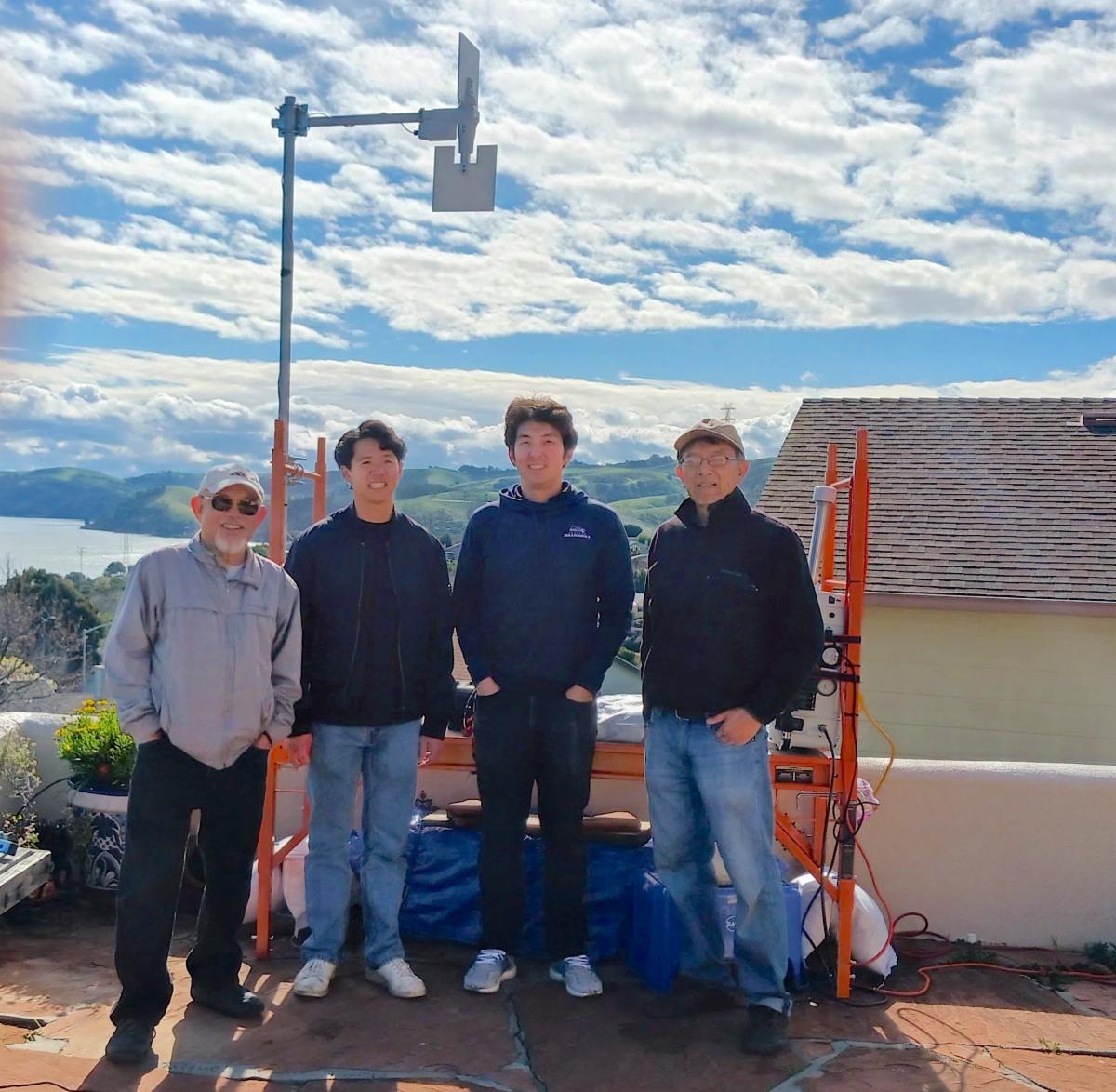
A fine film of dust on the tabletop is something you might expect to find after a week away on vacation. But for residents of one Vallejo neighborhood, it was once an everyday occurrence. They'd wipe the table in the morning, and by evening it would be covered in dust again — until one resident complained, and the right people, like Ken Szutu, paid attention. "Complaining is fine, but how do you move to the next step?" says Szutu, a tech retiree who runs a citizen air quality monitoring network in Vallejo (which installs monitors like the one shown above) and serves on the Bay Area Air District's community advisory council. The answer, he says, is threefold: keep good records, ask for an inspection, and follow up. Photo courtesy Ken Szutu
KEEP READING
| |
Nine-County Citizen’s Guide to Bay Area Storm Prep
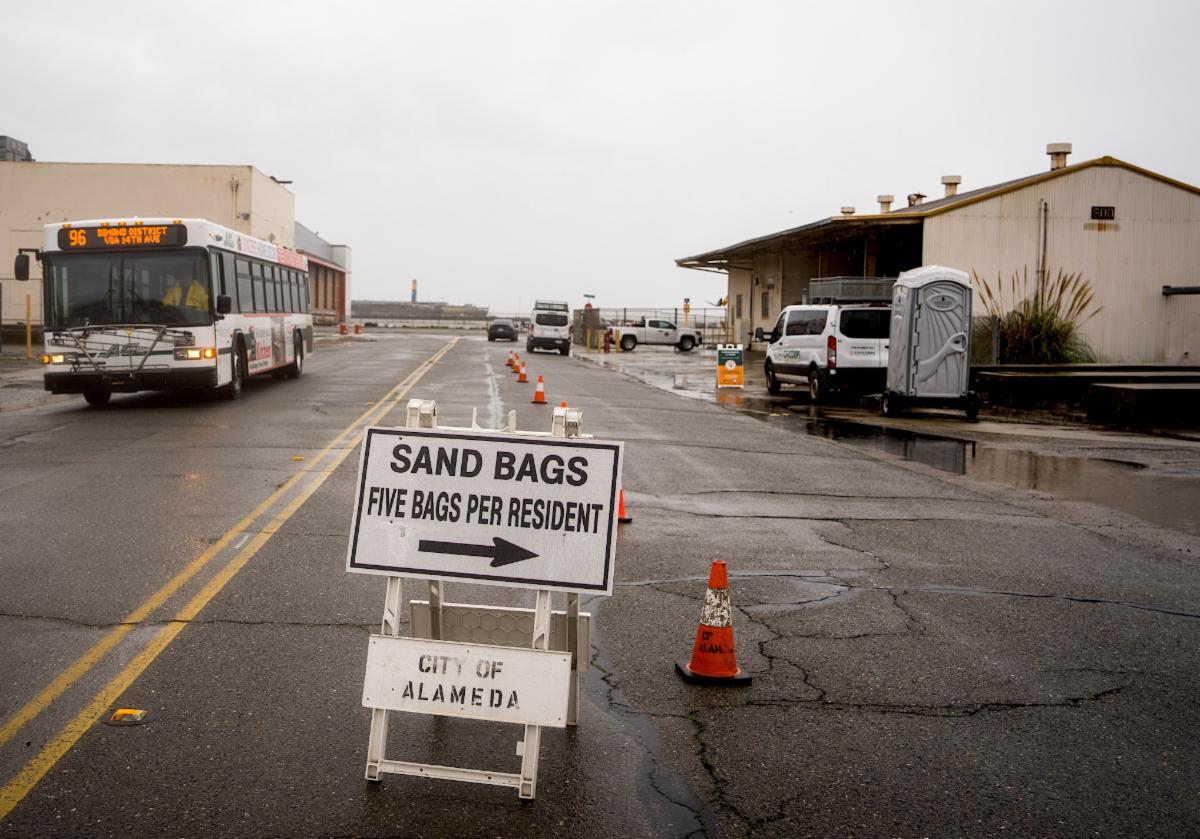
Across the Bay Area, local governments are ramping up flood preparations ahead of predicted record-breaking El Niño storms this winter. San Francisco Mayor Daniel Lurie declared a local emergency on October 23, joining half a dozen other Bay Area counties already on high alert. “The time to prepare for major storms and coastal flooding is before it arrives,” Lurie said during a press conference. But what about your home or business? Here’s a nine-county list of resources that can help you and your family brace for these storms. Photo: Maurice Ramirez
KEEP READING
| | |
Check Your Project Status: It’s All On The New Navigator
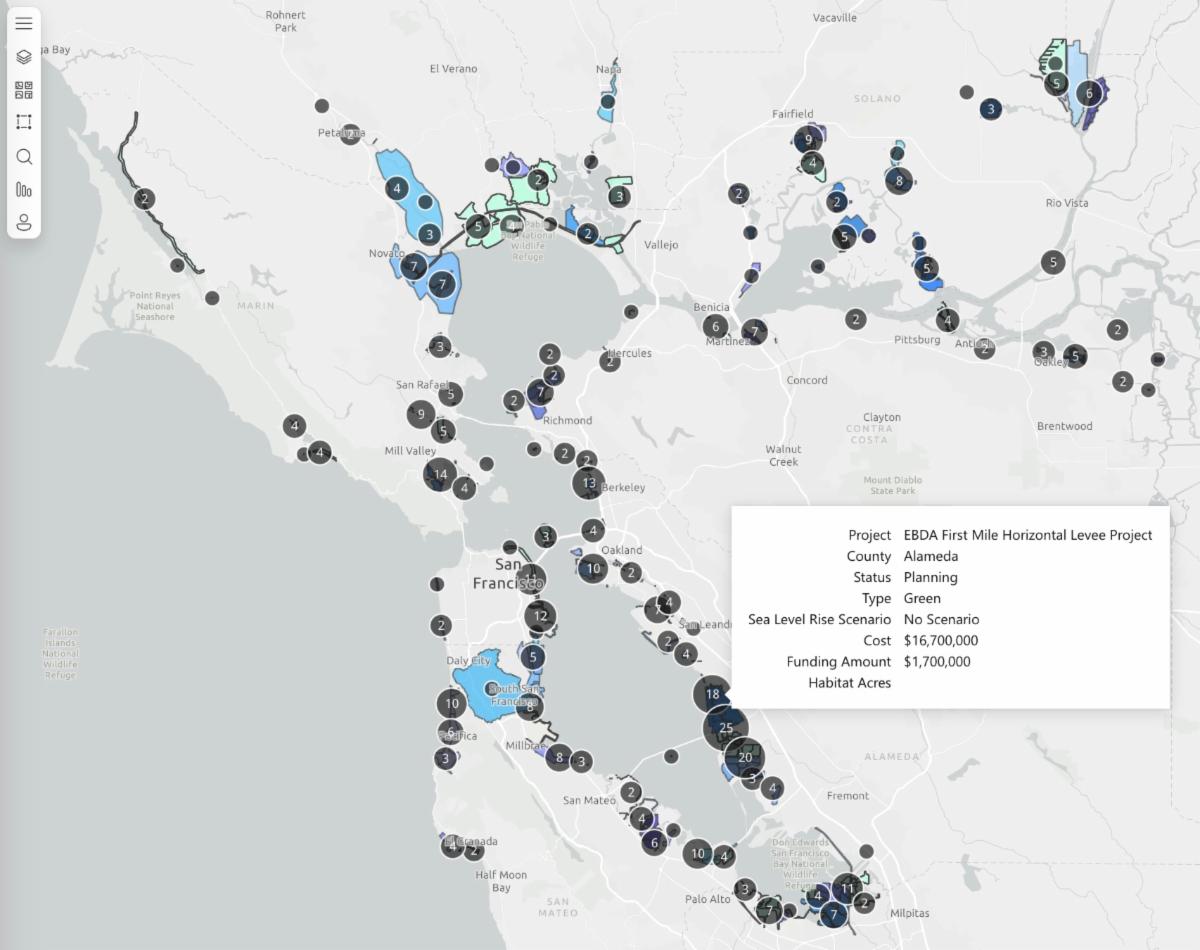
Finding reliable information about sea level rise adaptation projects across the San Francisco Bay just got a lot easier. A new web tool developed by the Bay Conservation and Development Commission helps planners, designers, and funders of more than 700 such projects connect and track progress. It's a first-of-its-kind, one-stop shop where cities, planning agencies, nonprofits, and philanthropists can learn about the status of existing adaptation projects and find new ideas for financing. Map: BCDC
KEEP READING
| | |
A Bulwark for San Francisco’s Skyscrapers?
Elevating historic buildings? Replacing wharves? Building two-foot-tall walls around pier perimeters? These are all suggested actions in a Recommended Plan for preventing future flooding of 7.5 miles of San Francisco’s urban waterfront and Embarcadero published by the Port of San Francisco and the U.S. Army Corps of Engineers in August. The plan lays out 13 specific actions designed to rebuild and bolster the city’s flood defenses and safeguard transit systems and utilities. While a lot of sea level rise planning is in progress around the region, getting down to the specifics of what to do in each location is a new level of detail. What’s also different in this plan is the use of a new, much more comprehensive cost-benefit analysis model. Photo: Joey Kotfica
KEEP READING
| | |
Inside SLR Baseball: My Summit Takeaways
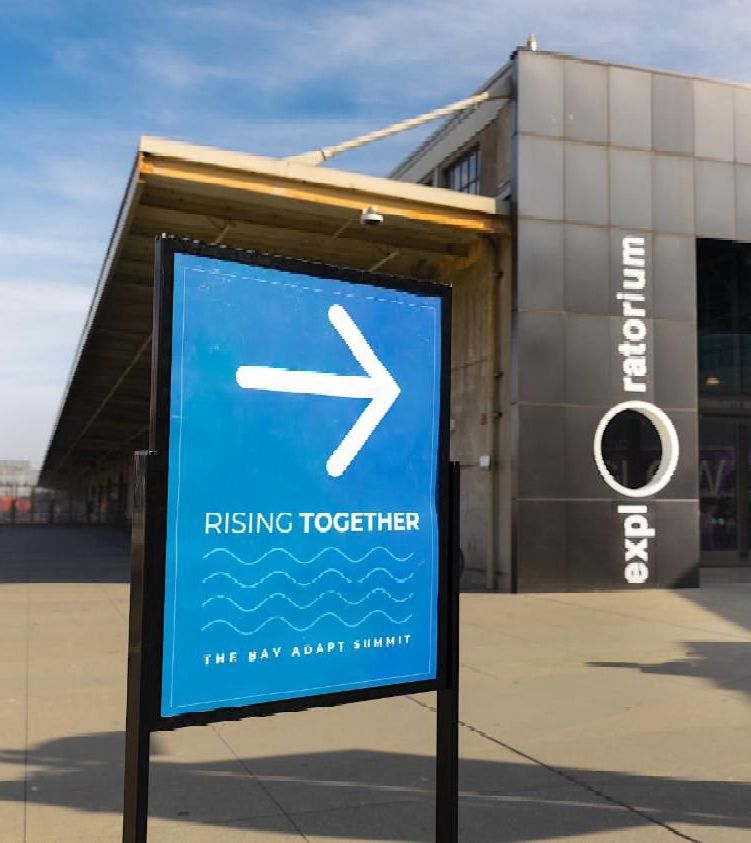
As Mondays go, the day couldn’t have been brighter, both from the sun filtering through prisms in the Exploratorium’s rafters, and from the energy in the room at the third Rising Together summit. The 300 people there ranged from planners and scientists to community activists and regulators. I had attended this summit twice before, and it was awash with both gray hair and young blood. This is what stuck with me. Photo: Nicholas Lea Bruno
KEEP READING
| | | |
Who’s In Charge? What Projects Make the Cut?
What local governance looks like for Bay shoreline resilience to future flooding is a question on just about everyone’s mind right now. It was also the subject of several panels at the November 9 Rising Together summit. One convened a group to work on a case study about the management of a hypothetical major infrastructure project. The first task on the docket was identifying a “project coordinator.” But no one seemed to have the perfect solution for who exactly should take charge. Art: Liana Finck
KEEP READING
| | | |
Will El Niño Winter Bring Climate Chickens Home to Roost?
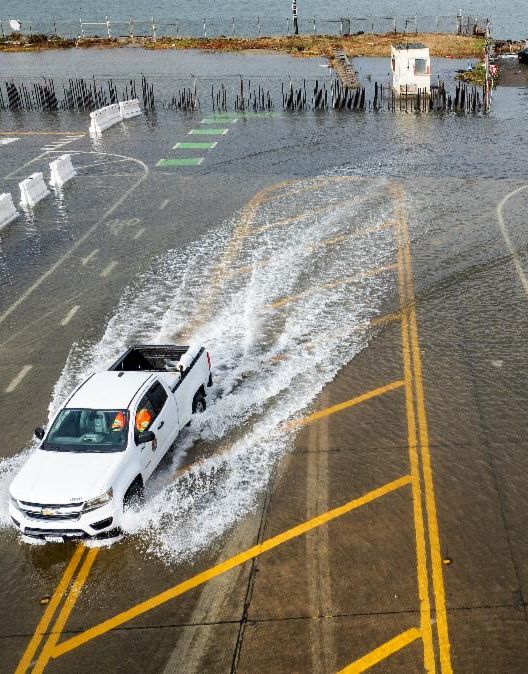
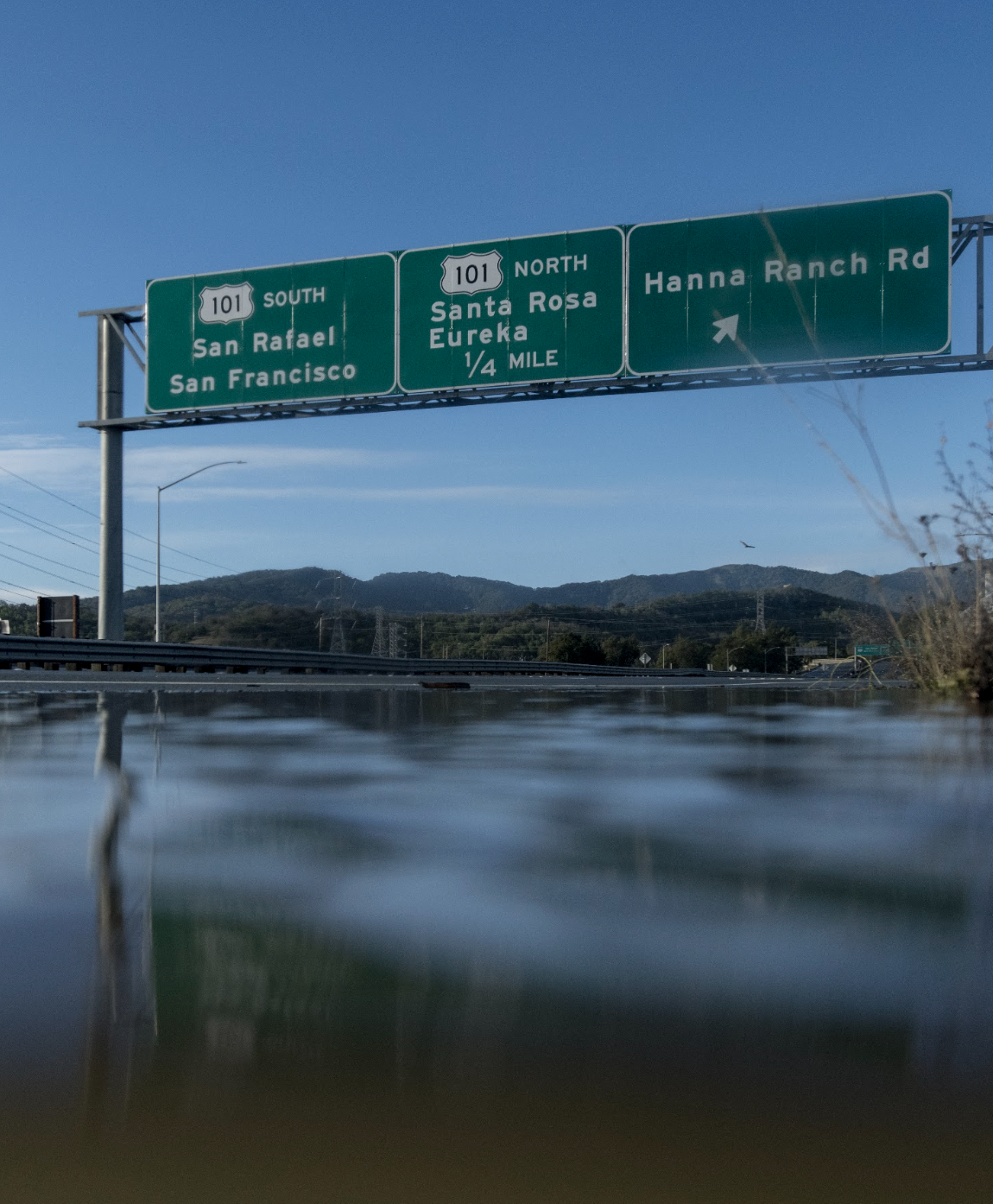
Flooded roads and runways are more likely than usual to ensnare Bay Area holiday travelers this year, according to a new report from the UC Davis Road Ecology Center. The effects of a warming and expanding ocean, Kelvin waves rolling up the West Coast every few weeks, and king tides will stack on top of each other, potentially raising sea levels by more than two feet. Photo: Noah Berger
KEEP READING
| | | |
Is 15 Feet Above Ground Enough For Our Future Coastal Highways?
Facing the inevitability of sea level rise, Caltrans is looking far ahead as it plans upgrades to roadways, bikeways, and walkways built long ago on low-lying coastal lands. With the help of design consulting firm Arup, the agency has developed a statewide risk assessment of infrastructure in need of improvements to manage the effects of climate change. The assessment covers some 13,000 bridges, 275,000 culverts, and 53 tunnels. Photo: Karl Nielsen
KEEP READING
| | | |
A Man Who Wears Many Hats
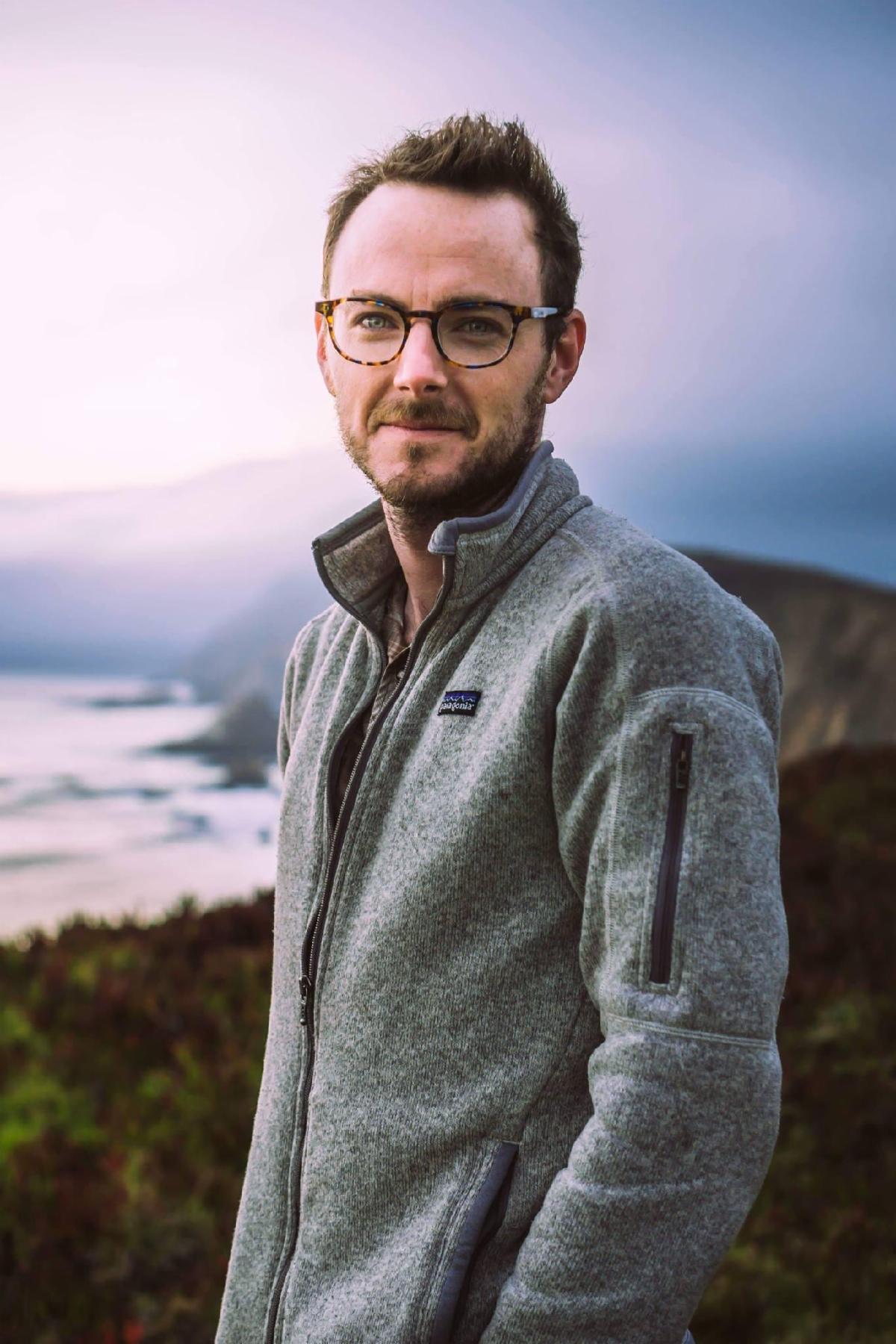
Since lightning strikes incinerated thousands of acres of Santa Cruz and San Mateo counties in 2020, local agencies have been working to create environments where wildfire is an ecological process rather than a catastrophic force. That’s where Timothy Federal comes in. Leading the Forest Health and Fire program at San Mateo County’s RCD, Federal has to balance a complex set of priorities. “There's no one-size-fits-all approach to forest resilience,” he says. Photo courtesy Timothy Federal
KEEP READING
| | | Share our stories, and follow us on your favorite platforms. | | |
KneeDeep Times shares stories from the frontlines of climate change resilience and adaptation action.
All stories are available for republication free of charge. See our guidelines.
Views expressed are independent of all funders and collaborators.
Managing Editor: Ariel Rubissow Okamoto
Assistant Editor: Duncan Agnew
Research & Social Media Editor: Isabella Eclipse
Editor-in-Training Fellow: Meghan Crebbin-Coates
Art Director: Afsoon Razavi
Top Photo: Joey Kotfica
Send us your story ideas and subscribe us to your newsletter lists.
news-team@kneedeeptimes.org
| | | | |