|
Welcome to Week 4 on this Season of Creation
Our Focus this week: Respond
For the past few weeks, we have deliberately avoided giving you a list.
Now we have reached RESPOND.
So perhaps this is finally the week when we tell everyone what to do.
Well, it isn't.
Because there is another question that may be more important:
What happens when we notice something, learn about it,
pray about it...and then return to life exactly as before?
RESPOND
We began this journey with a faucet.
We noticed something most of us use every day without thinking about it. Then we looked at what happens when reliable access to water is disrupted and how quickly an environmental problem becomes a human one.
We considered why the same crisis can affect people very differently. And last week, we stopped to pray—not because prayer magically fixes these problems, but because prayer asks us not only to look at what is happening around us, but also at what may need to change within us.
Now comes response.
And this is where things can get complicated.
The problems are enormous. One person cannot stop a drought, prevent every flood, solve climate change, protect every ecosystem, end poverty, or respond to every injustice.
That is true.
But there is a danger hidden inside that truth:
If we cannot do everything, it becomes very easy to decide that nothing is really ours to do.
NOTICE
Perhaps something has stayed with you during these weeks.
- Maybe you notice water differently.
- Maybe you learned something you didn't know.
- Maybe the connection between creation and poverty, displacement, health, or justice became a little clearer.
- Maybe something made you uncomfortable.
- Maybe you disagreed with something.
- Maybe nothing dramatic happened at all—but you are paying slightly more attention than you were four weeks ago.
Start there.
A response does not have to begin with certainty.
It begins with paying attention to what has actually moved us.
LEARN
There is a reason we did not begin this series with RESPOND.
- Because action without understanding can become another task to complete.
- Action driven mostly by guilt rarely lasts.
- And action prescribed by someone else may have very little to do with what a particular person is actually able -or called- to do.
Something different can happen when response grows out of attention, understanding, and prayer.
Instead of asking: “What am I supposed to do about all of this?”
Maybe the better question is: “What is mine to do?”
Those are very different questions.
The first can leave us overwhelmed by everything we cannot possibly accomplish. The second asks us to discern the part that might actually belong to us.
PRAY
This year's Season of Creation has given us the image of Living Water.
In the prophet Ezekiel, water flows from the Temple. At first, it reaches the ankles. Then the knees. Then the waist. Eventually it becomes a river deep enough to swim in.
And wherever the water flows, there is life.
Perhaps that image offers one final lesson.
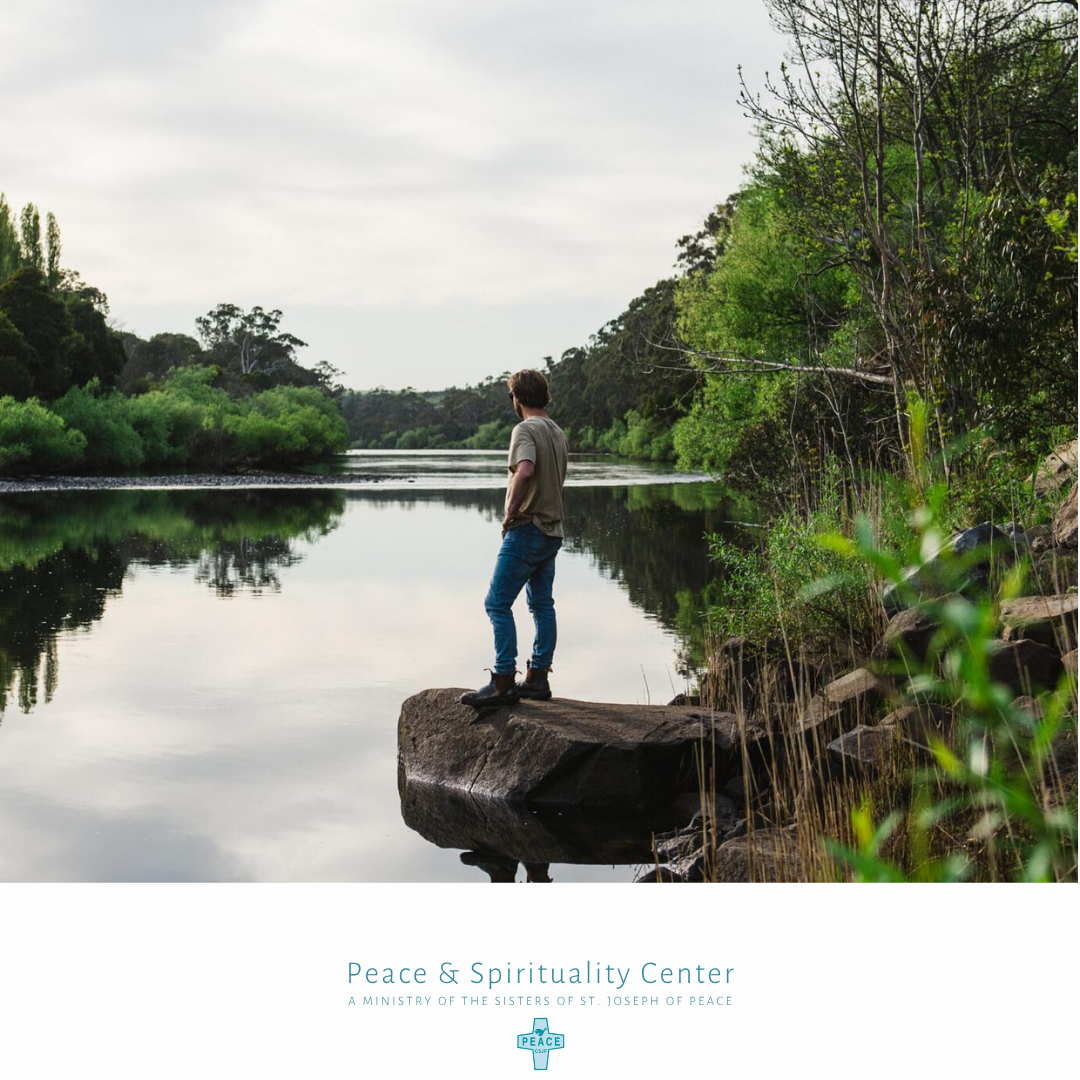
No one is being asked to stand on the shore and solve the entire river.
But perhaps each of us is being invited to go a little deeper than we were willing to go before.
So, the prayer this week is also a question: God, what is mine to do?
And then perhaps the harder part: Be quiet long enough to listen.
RESPOND
The answer will not be the same for everyone.
- For one person, it may mean changing an ordinary habit.
- For another, learning more before forming an opinion.
- For another, giving time or resources to people already doing good work.
- For another, speaking up.
- For another, listening more carefully to people whose experiences are different from their own.
- For another, paying closer attention to what is purchased, wasted, consumed, or taken for granted.
And for someone else, the response may not yet be clear.
There is no single response we can prescribe because there is no single life being lived by everyone reading this. But perhaps we can resist the idea that a response only matters if it is large enough to solve the entire problem.
Small does not necessarily mean insignificant.
One decision. One changed habit. One conversation. One question asked differently. One organization supported. One issue understood more deeply.
None of these will solve everything.
They don't have to.
The point is not to choose something impressive.
The point is to recognize something that is actually ours to do—and then to do it.
So once again, we will not end with a checklist. We will leave you with one question: What is mine to do?
With peace,
The Peace & Spirituality Center
|