|
November/December
Best Wellers’ Pick
| |
RECEIVE 20% OFF WHEN YOU PURCHASE DURING NOVEMBER AND DECEMBER | |
|
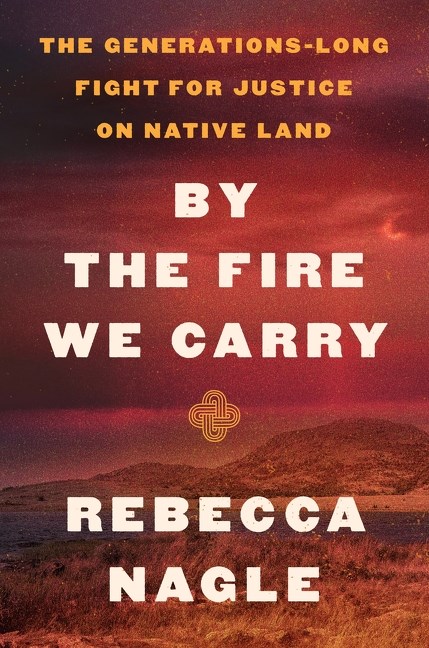
By Rebecca Nagle
Harper
Hardcover $32.00
Best Wellers' Price $25.60
Reviewed by José Knighton
Even as a lifelong aficionado of irony, I find it difficult to relish significant irony when it emerges from tragedy. And the monumental irony at the center of By the Fire We Carry is overshadowed by one of the most blood-soaked tragedies in human experience: the continent encompassing land-grab and mass murder of its indigenous inhabitants by the United States.
A simple homicide conviction in the state of Oklahoma, with administrative complications, eventually floated upward through layers of jurisprudence to land in the lap of the Supreme Court. Oklahoma authorities assumed, and acted as if, all Indian Reservations in the state had long been defunct. They were shocked when the highest court in the nation informed them that the legal jurisdiction in question resided with the relevant Indian Reservation, which had not, in fact, been legislated out of existence by the United States Congress. Their 2020 decision did not just solve one case's quandary, but, essentially, brought the Reservations of the Cherokee, Chickasaw, Choctaw, Muscogee and Seminole Nations back from oblivion.
Concurrent with Nagle's deft disentanglement of this complicated and critical Supreme Court case, she recounts the brutal eviction of the Five Tribes from their homelands by President Andrew Jackson in defiance of a Supreme Court decision. Their forced march across half the continent to the desolate landscape then called "Indian Territory" (eventually becoming the state of Oklahoma), is known historically as the "Trail of Tears" in remembrance of the thousands who died on the way.
In her epilogue, Nagle, a consummate journalist and enrolled Cherokee, offers a blunt summation of this nation's past and present behavior toward its original inhabitants, and waves a red flag at the future's horizon:
"In our self-conception, America is a beacon of democracy for the rest of the world. Even when our founding sins are recognized, we like to believe things have gotten better. The story we tell ourselves is one of progress. In reality, our government committed genocide. It has never reformed itself or changed its laws to prevent such atrocities from happening again."
| |
|
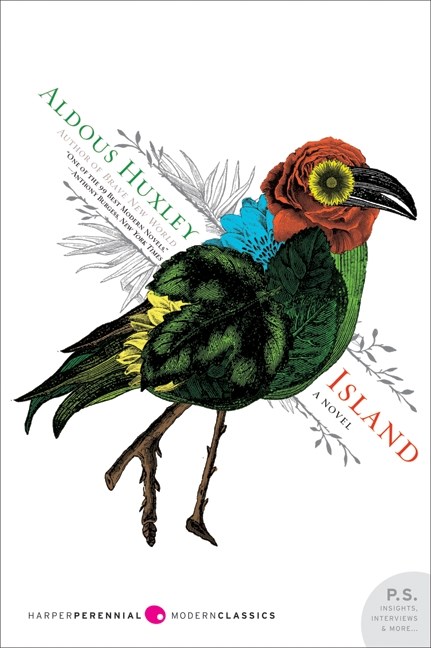
By Aldous Huxley
Harper Perennial Modern Classics
Paperback $18.99
Reviewed by Dylan Parry
Many have heard of the titles, Brave New World, The Doors of Perception, and their author, Aldous Huxley. Many haven’t heard of his 1962 novel, Island.
Told with an obvious bend towards a society vastly different than the one Huxley knew at the time, and even our own today, Island is the story of a fictional nation in the Indian Ocean named Pala, and its place on the world stage. The island nation is almost a time capsule, with few modern amenities, such as Big Pharma, Big Tech, and Big Religion scarcely to be seen anywhere. Yet all of these play a part in Huxley’s often considered, utopian novel.
Following Will Farnaby, a jaded journalist who washes up on the shores of Pala after a shipwreck, only to get mixed up in Pala’s simmering political scene, we meet a varying array of characters with many having some not-so-subtle motives. But this is no dry political thriller. As we learn from Dr. MacPhail, for many Palanese, a life of introspection based off Hinduism and Buddhism– exploring alternative ways of living beyond the simple Nuclear Family of the West, are what take up most of their days. Yoga, meditation, as well as the use of psychedelics for multiple purposes also take up time in their days. Yet, outside of Pala, in neighboring Rendang, Colonel Dipa and his British handler, Lord Aldehyde, are looking to turn backwards Pala into their own little modern development project, primarily Pala’s rich natural resources, or as we say nowadays: oil.
But Island isn’t just another science fiction by one of the genre’s greats, it’s also the book that most expresses Huxley’s own questioning of society’s norms and taboos, as well as our obsession with brute force being the easy answer, instead of something mutually beneficial. In other words, Island is an embodiment of Huxley’s philosophical and political views, and his hope for what he saw humanity being able to move away from, and also towards. And as our own reality continues to see wars break out for resources, or other absurd reasons, perhaps Huxley and his peaceful Palanese are on to something?
While Huxley can be a bit on-the-nose in some of his declarations (one might even say Utopian in outlook), my time with the characters, learning about Pala and Palanese traditions, made it an enjoyable read. So if you or someone you know is looking for something other than the typically recommended Brave New World, I would pick up a copy of Island, and see if Huxley’s little island isn’t worth saving.
| |
|
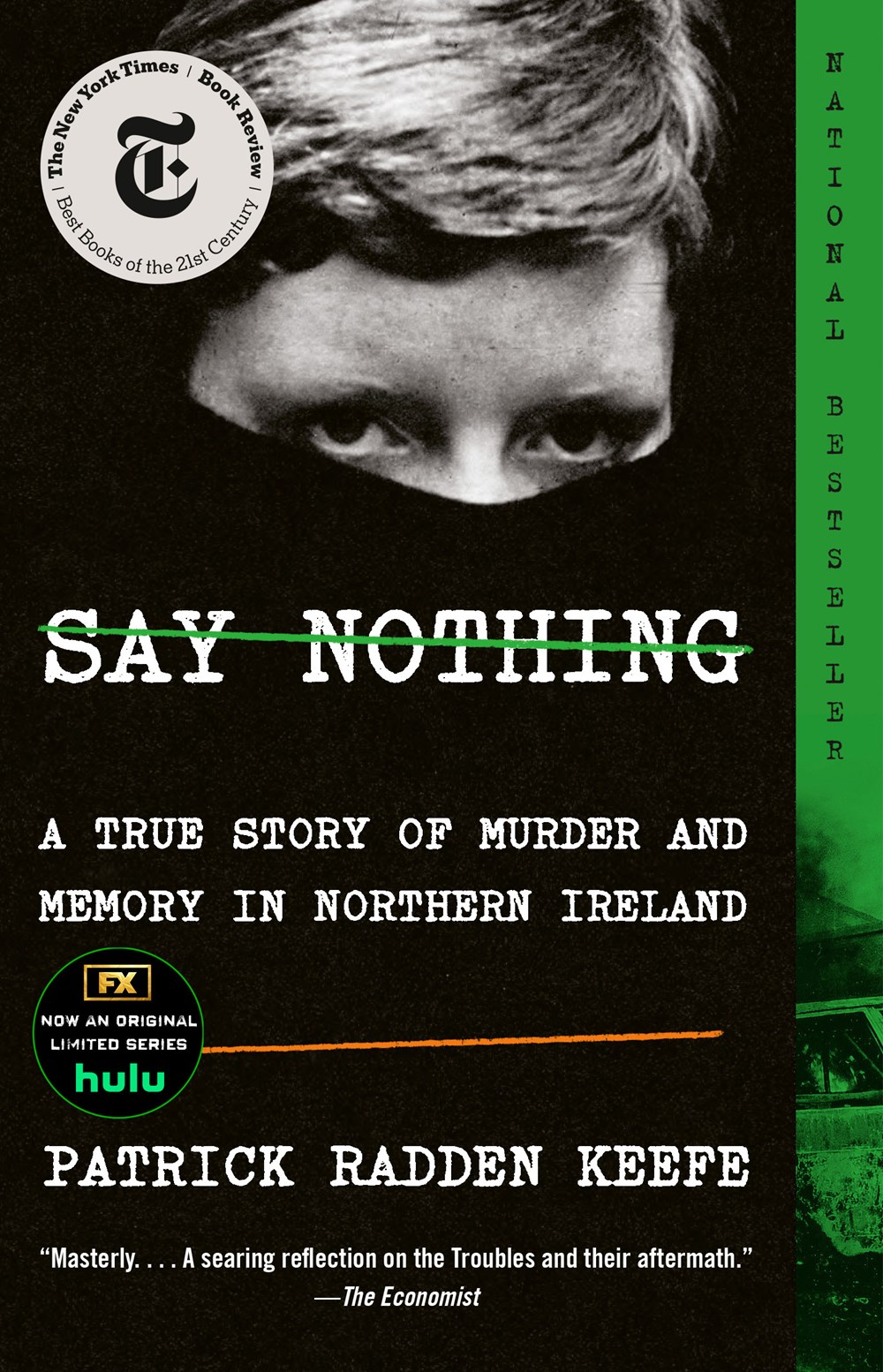
By Patrick Radden Keefe
Vintage
Paperback $20.00
Reviewed by Apollo Frenzel
This is perhaps one of the best works of journalistic nonfiction ever to be written. I picked this up as a recommendation from a former co-worker, Ceci, and was blown away by this story.
While the focal point is the disappearance and murder of Jean McConville, by the Irish Republican Army (IRA), Patrick Radden Keefe expands into the period known as “The Troubles” in Ireland. In this book, you’ll meet people like Gerry Adams, Hugh Feeney, Ivor Bell, and the two “main characters” Marian and Dolours Price. (Who you see on the front cover). This story is full of dread, hardship, and the mystery of who really made Jean McConville disappear?
We also learn about the history during The Troubles. While the IRA was making car bombs, their members in prisons were going on hunger strikes and resisting any way they could. You’ve got to admit, the Irish are stubborn people. Even though the IRA has (supposedly) been dismantled, there is still a strong desire to unite Ireland. Do yourself a favor and pick this up, especially if you have Irish heritage or plan on visiting Ireland at all.
| |
|
By Fred C. Trump
Gallery Books
Hardcover $30.00
Reviewed by Liam Harrison-Stewart
The question I have asked myself as a young person in this country is: "How can we allow a man like this to be President of the United States?" That is a question I believe no one can truly answer. However, what I have now come to understand is how Donald Trump became the man he is.
Donald's nephew, Fred Trump III, named this book after one of America's most famous sitcoms, All in the Family– immediately making a clear statement about the Trumps. Surely anyone can compare Donald Trump and Archie Bunker. But what influenced him to become this way? Fred takes us all the way back to the 19th century, beginning with the first Trump to come to America: Donald's German grandfather, who immigrated from Germany to Seattle, starting a chain of Brothels and Saloons. From the very start they were “a family of business.”
Donald's father is described as a cold man: a man who is not emotionally present towards his wife and children, a man who did not believe in losing, a man who would do whatever it takes to be the winner. (Sound familiar?) Fred Sr. was never willing to put up with anyone getting in his way. When his oldest son, Fred II, rejected the family business because of his love of being a pilot, his father essentially disowned him, leading Fred II down a dark path of alcoholism and ultimately a young death. Fred Sr. then selected Donald to be his successor, teaching him how to be a “perfect businessman” and to never take “no” for an answer. The real estate business is no easy world to work in, but Donald did all he could to make it into an empire. He succeeded, becoming a millionaire in a few short years and eventually hosting his own reality television show.
Much of his family watched his practices with uneasiness, even criticized him. At the same time, they never tried to stop him from some of the drastic decisions he made– even when he announced his campaign for the presidency. As Donald grew older and more wealthy, his narcissism grew stronger. He betrayed his own niece and nephew, cutting them out of their grandfather's will, he intentionally tried to racially divide Trump owned properties, he had someone else take his college placement exam for him, and during his first presidency, he said that people with disabilities should "just die.”
What Fred III shows us is how a family can be easily controlled by one member who craves all the attention, but he also shows us, that every family can love each other in their own way– even the Trumps. This book was impossible to put down. Moving from one family drama to the next was morbidly fascinating, and by the time I finished All in the Family, I saw the Trump family in a new light. They were a family, a family that has its problems like every other, until one man’s greed and cruelty broke them apart.
| |
|
By Becky Chambers
Tordotcom
Hardcover $21.99
Reviewed by Jami Maxwell
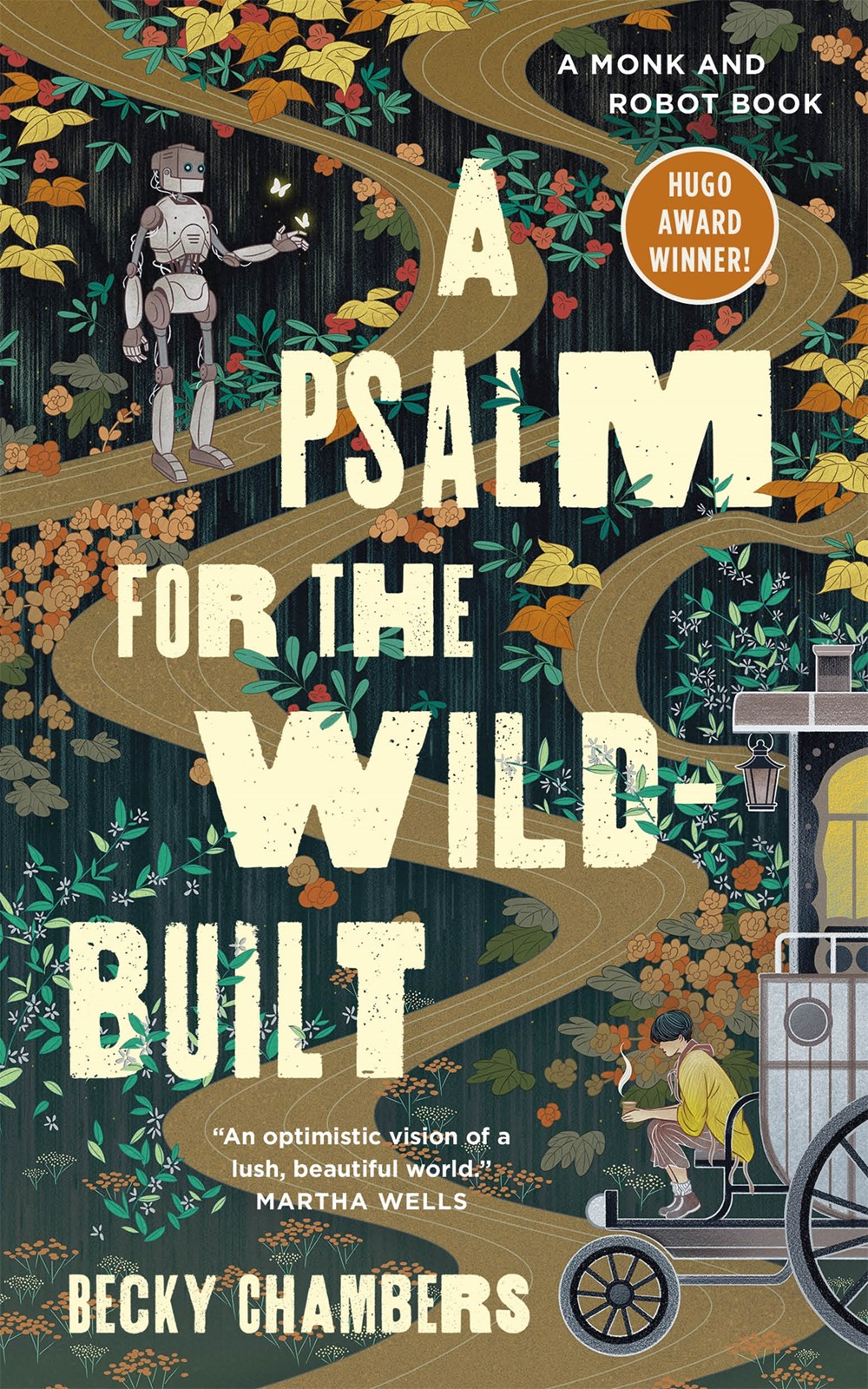
These days the weight of the world is feeling heavier and heavier. There is no shortage of bad news, and it’s hard not to feel overwhelmed with the horrors we face everyday. Maybe it's time to pause. Put down your phone and fill your mind with gentler things. Author Becky Chambers is here to offer you a break, a deep breath, and a warm remedy for your existential dread: A Psalm for the Wild-Built.
Set in an optimistic version of the future, you’ll witness a world where society succeeds. Nature is preserved and flourishing, and not only human lives treasured, but their souls as well. Being immersed in this setting alone provides relief, but the true soul of this book lies in the two protagonists; Mosscap, the sentient recently liberated robot, and Sibling Dex, a workaholic monk. These two crash into each other's lives, and accidentally teach each other self-compassion, while also discovering the brilliance in the mundane-- bringing you along with them on their beautiful climb towards the answers they seek.
This book finds you exactly when you need it. The stress you carry in your heart will melt away as you are embraced by this story. If you feel stuck, frustrated, or hopeless, A Psalm for the Wild-Built reminds you to take your time, and be gentle with yourself. Allow yourself to just be, and relish the beauty of your existence alone, and the absurdity that is life. It is a quick read you could do in one or two sittings, and I hope you will come out of it as I did; in hopeful tears, with a warm hug around your aching heart.
| |
|
By Sung-il Kim
Translated by Anton Hur
Tor Books
Hardcover $27.99
Reviewed by Claire Margetts
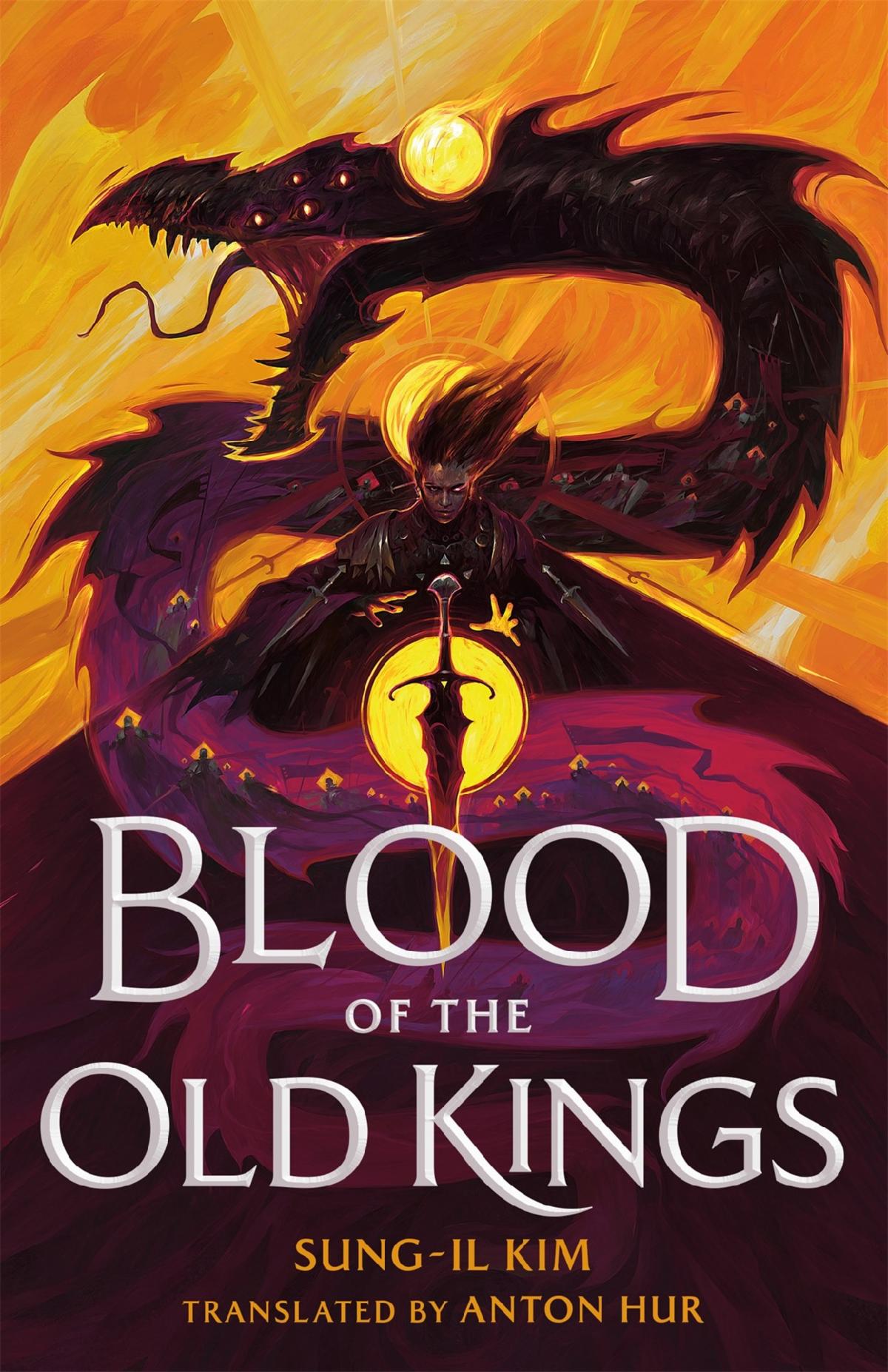
The world is being swept by an unnamed empire bent on total control– but there are some that still hold out against tyranny. Some still fight back. Devastated by the wrongful deaths of her family at the hand of the state, swordmaster Loran seeks a last-ditch ally: an imprisoned dragon. Asking for help in destroying the empire, she promises its freedom in return. The dragon accepts. And with that, this powder keg of a book is lit to blow.
With the spreading empire using necromancy to bleed sorcerers dry of their magic in order to power their terrible war machines, the stakes are higher than ever. In Blood of the Old Kings, Sung-il Kim has crafted a truly vivid world and explores it through the lens of three characters: Loran, the new champion of the revolution; Arienne, a young sorceress slated to be wrung out for the magic she contains, who will stop at nothing to avoid such a terrible fate; and Cain, known in the occupied cities as a man who gets things done. All three are driven to resist the empire, but their reactions are all different: rebellion, desertion, assimilation.
It's hard not to see parallels to the Japanese occupation of Korea within the story. The legacy of colonization is still present in very recent memory and is something many still grapple with. When asked about these themes, the author noted, “I wanted to generalize the cultural memory and use the feelings that I and everybody has over here and imbue that into the main characters. I didn’t write it to represent the colonial experience, but the emotions and their reactions come from it.” Kim illustrates the feeling of life under an occupation with a deft hand, considering the case of each character and how their particular circumstances play into the politics of the world. The empire itself is treated as a constant, or inevitability, with an understanding that its influence is not as simple as good vs. evil. This gray area is beautifully examined, showing the complex push/pull relationship between citizen and governing power.
Above all, Blood of the Old Kings will knock your socks off! It bursts off the page with heart pounding tension and cinematic action. Each character’s story is thrilling, and the way they entwine is nothing less than brilliant. They are certainly flawed but show heroism in unique and clever ways. And through Loren, Arienne, and Cain, we are ultimately asked to consider ourselves: what do you do when power structures feel uncaring and all-consuming? Do you accept it or take matters into your own hands?
| |
|
Click here for our December events newsletter.
And, as always, view our events calendar to see all of our upcoming events.
We host both virtual and in-person events, and we look forward to seeing you soon.
| |
|
Come visit us!
SUNDAY 12-5
MONDAY-THURSDAY 10-8
FRIDAY & SATURDAY 10-9
| |
|
Can’t make it to the store?
Support your local indie from home!
Order by phone or online, then pick up at the store or the curb! We also ship!
| |
|
Give us a call at 801-328-2586.
Shop new books on our website.
Browse our entire inventory of new, used and rare books on Biblio.com.
Listen to audiobooks from Libro.fm.
Read ebooks from Kobo.
| | | | |