|
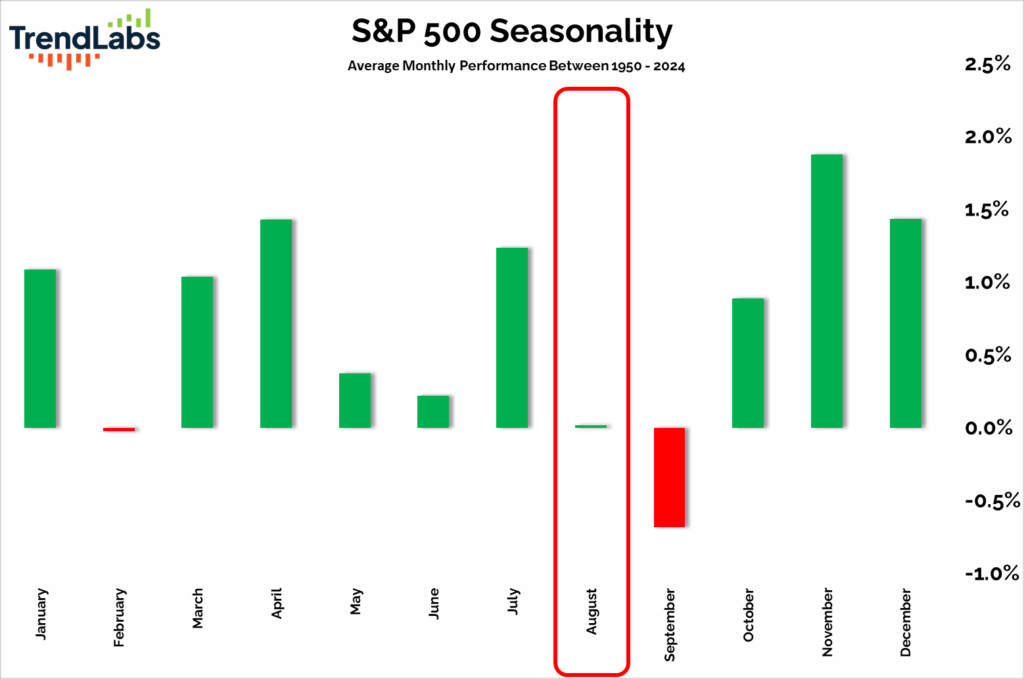
As you can see, the market's seasonally strong period is coming to an end this month and a historically a few weaker months are ahead of us.
Historically, August and September account for the worst two-month period for the stock market throughout the year as it prepares for that historically strong year-end season beginning sometime in October.
We want to make something perfectly clear: Seasonality is not something we generally want to position for ahead of time.
In other words, just because the market is supposed to be strong from a seasonal standpoint doesn't mean we blindly buy stocks. The same is true to the downside. Just because we're entering a seasonally weak period doesn't mean we blindly sell our stocks.
In our experience, the value of seasonality is in looking at the market after the fact and asking, "Did the market ignore these seasonal trends, or did the market acknowledge them and act accordingly?"
When stocks are strong during a seasonally weak period, that's evidence of underlying strength in the market. Conversely, when stocks are weak during a seasonally strong market, that's evidence of underlying structural problems in the market.
Opinions like this are not novel, yet we see most of our peers in this industry investing in asset allocation style models – hoping that things will turn out this time around as they have in the past. History and historical evidence are compelling, but they’re just one arrow in our quiver of portfolio management and daily decision making.
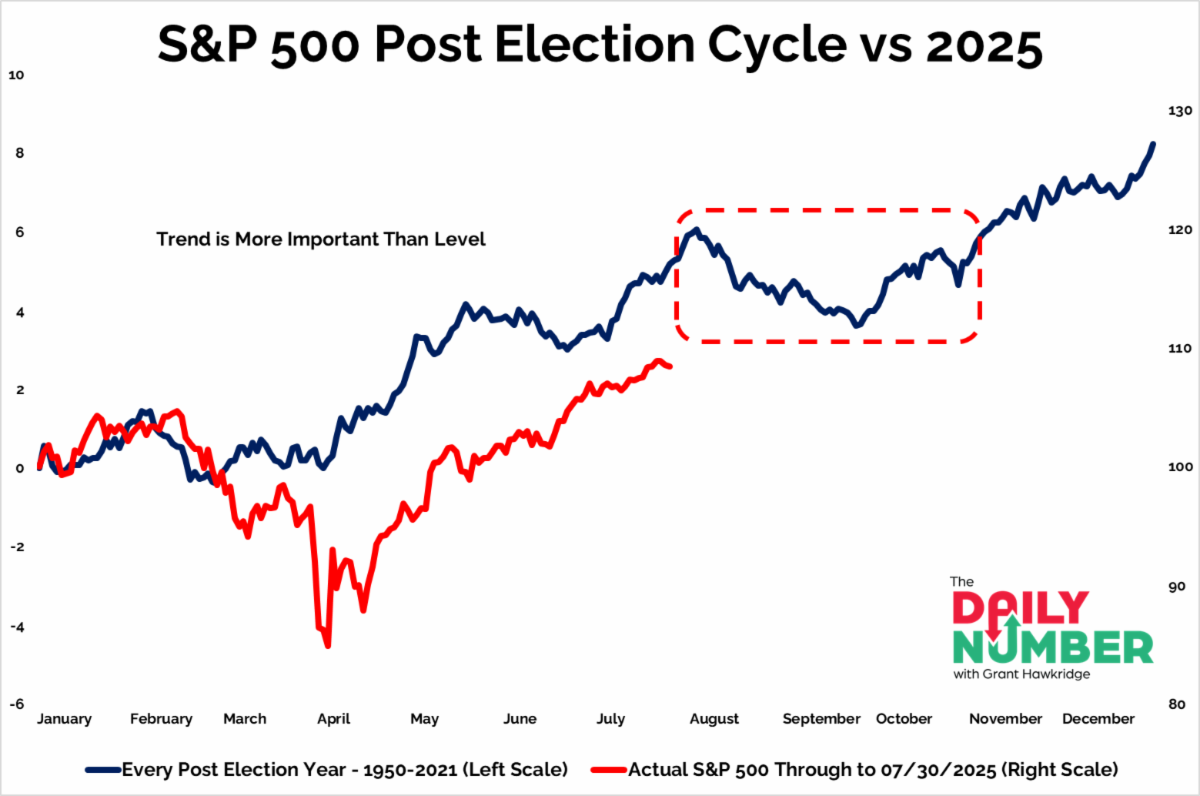
If we couple what we know about seasonality with what we know about a Presidential cycle related to the market, we get further evidence that some turbulence could be on the radar sooner than later.
Historically, during post-presidential election years, the August-to-October period is flat at best, volatile at worst. See the blue line as a historical reference and the red line to this current Presidential cycle.
|