|
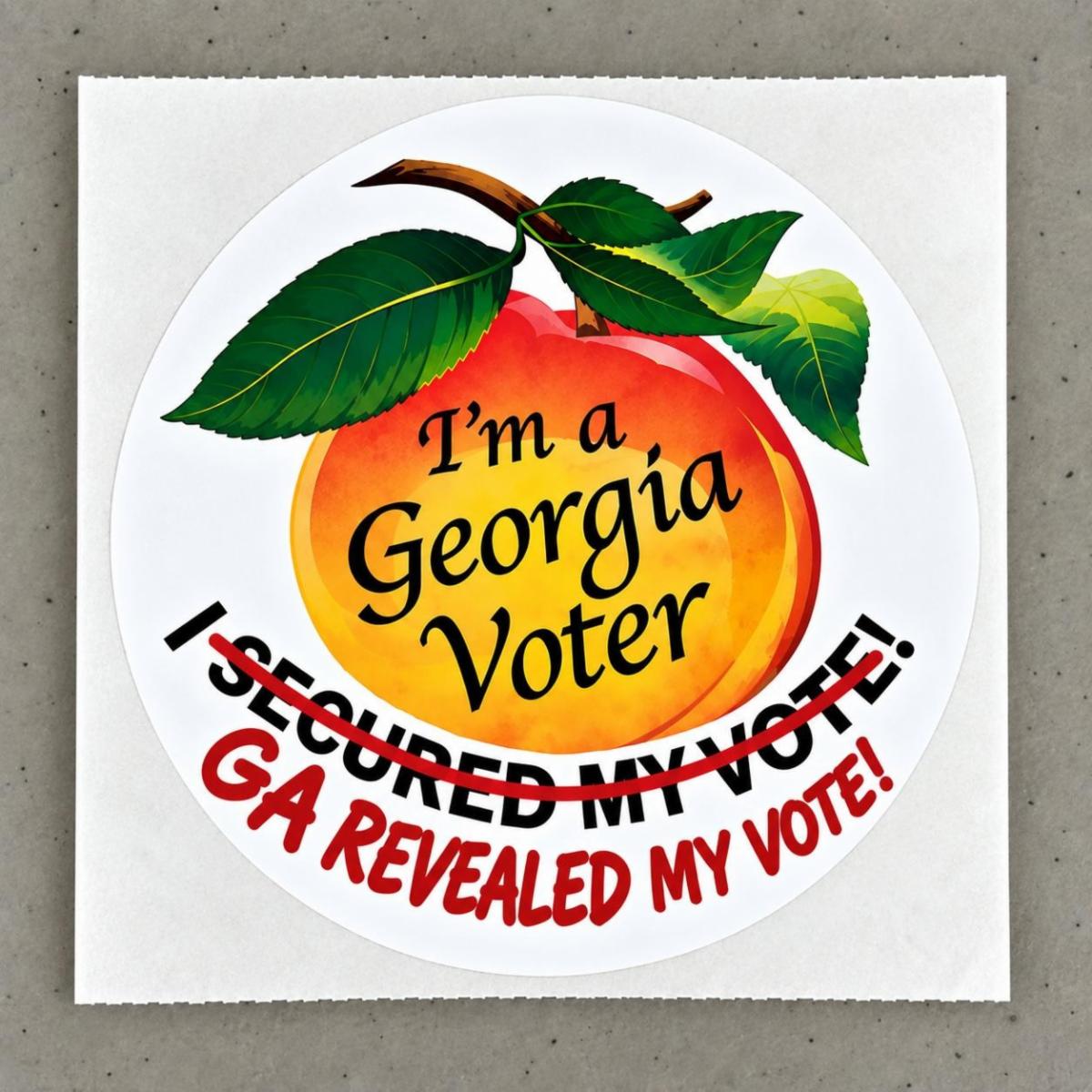
The State Election Board should have stopped this assault on ballot secrecy when it was repeatedly raised beginning in 2022. Instead, four of the five members appear to support Raffensperger’s power grab--continuing the unlawful de-anonymizing of ballots while shutting down transparency. They refuse to even have a meaningful discussion of it, --much less stop it. That is voter suppression.
Voter Suppression Impact
Voters will hesitate to participate in November’s election when government authorities, employers, commanding officers, family members, or insiders can obtain data revealing voters’ private choices.
Some politicians have asked us to remain silent because turnout is “too important” this year, and the truth about traceable ballots might discourage voters. They would rather let voters rely on nonexistent secrecy protections, taking the attendant personal risk, than act now to protect every voter.
What caused the problem?
Georgia uses flawed voting-system software that assigns predictable identifiers to electronic ballot records, revealing the order in which voters’ ballots were scanned. Combined with other election records, that order can be connected to voter information.
This is not abstract. Princeton University AI researcher Max Springer quickly determined the scanning order of 1.5 million Georgia May primary ballots. Once scanning order is determined, there are multiple ways of determining the voter who cast the ballot in many cases, as he relayed to state officials, who promptly declared at the August 19 SEB meeting, that they had no interest or time to meet with such experts.
Delay has narrowed the options
The Secretary’s instructions are backwards. “Non-secret ballots, but secret counting.”
Election officials must stop the system from creating traceable ballot information—not preserve the flaw and hide the resulting records.
Springer and other experts recommended that the software be updated as most other jurisdictions using Dominion have done. And there was still time to do so when Springer reached out to officials. Democracy Suite 5.17 was federally certified in 2023, but state officials stalled on the update, and never seriously considered it. But the inexcusable delays have now made inertia the winner. With the November election now programmed using the old software version, the state is a few weeks too late to safely update and adequately test the updated software. If the “much too busy” SEB or SOS had been willing to act even a month ago, the software update could have been feasibly installed.
The Secretary of State selects and maintains the statewide system, counties conduct elections with it, and the State Election Board has rulemaking and enforcement duties. All are responsible for protecting voters and complying with Georgia law. None is doing so.
So far:
- The Secretary has refused to install the software update.
- The State Election Board refused to hear proposed emergency rules to stop the ballot traceability or hear from experts.
- County election officials continue to knowingly unlawfully deanonymize ballot records, creating traceable records.
- No county election official has publicly demanded measures to protect ballot secrecy before November.
- Alternative ballot scanning methods that should be planned are not under discussion.
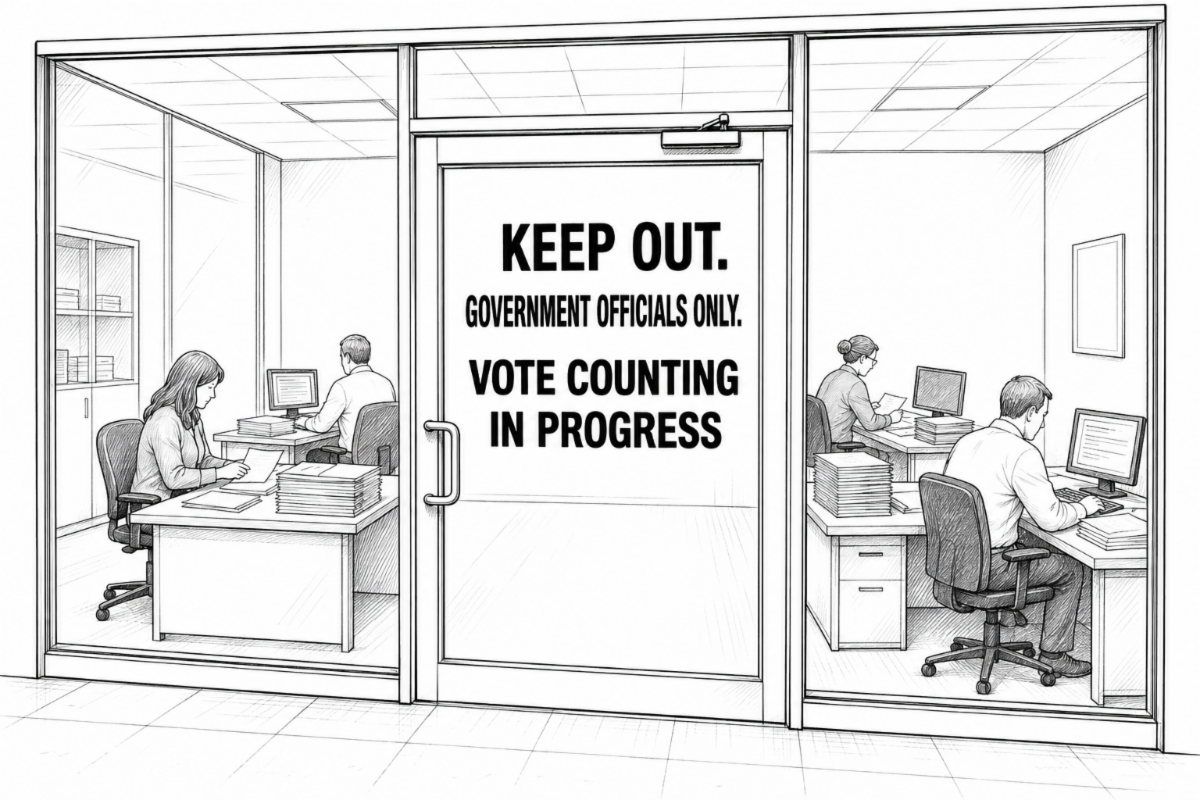
The Secretary is restricting access to records that expose the problem, while the State Election Board allows the unlawful conduct to continue. No lawmaker, political party, or voting-rights group has publicly demanded restoration of the secret ballot. In mid-August, while there was still time to update the software, the two political parties’ State Election Board representatives voted against protective rules and expert input.
Georgia law requires election transparency
In 2021, the General Assembly required counties to release electronic ballot images so the public could oversee ballot counts. Election records must be open for inspection and copying unless a court order or statute specifically exempts them.
The General Assembly—not the Secretary of State—decides which public records are exempt from disclosure.
The Secretary’s record redaction and withholding instructions are not based on statutes or duly adopted State Election Board rules. He cannot create Open Records Act exceptions or override the General Assembly’s decision to make election records public.
Counties should not treat these instructions as authority to violate Georgia’s public-records laws.
Withholding records breaks the public audit trail
The connection between ballot images and cast vote records allows the public, press, parties, candidates, and researchers to examine election results and is appropriate, assuming that ballot records are anonymous.
Redacting identifiers or withholding related records breaks that connection, preventing reviewers from confirming that each electronic record accurately reflects its ballot and damaging the public audit trail.
If the voting system were functioning properly:
- Ballot records would remain anonymous.
- Public records could remain public.
- Ballot images could still be matched with their corresponding cast vote records for public audit reviews.
- The public could examine the election without learning how any individual voted.
Georgia need not choose between ballot secrecy and election transparency. Properly designed voting processes provide both.
Restricting access does not create a lawful election
The instructions do not solve the legal problem because the traceable records will continue to exist and remain available to:
- Election insiders;
- Government officials;
- Selected commercial vendors; and
- Anyone who later gains authorized or unauthorized access to the system.
The government and its vendors will retain unlawful records that the public cannot inspect. And vendors have no accountability for them.
Hiding traceable information from ordinary citizens does not protect ballot secrecy. The information must never be created.
The remedy is to stop recording predictable identifiers—not conceal them afterward.
Immediate Action is Required
Election officials’ refusal to act creates a serious risk for the November 2026 election.
Voters must be able to vote their consciences without fear that their choices can be traced to them. Assurances of “trust us with these sensitive records” are insufficient; officials must commit to actual ballot secrecy.
Failure to act will likely:
- Discourage people from voting;
- Cause voters to avoid races or questions they consider sensitive;
- Undermine confidence in the election;
- Invite emergency litigation before Election Day; and
- Produce post-election challenges alleging that the election failed to satisfy constitutional and statutory ballot-secrecy requirements.
Government action that makes voters afraid to fully exercise their rights is voter suppression.
Georgia needs action—not concealment
There is still time (and a legal requirement) to protect voters’ ballots before November. Georgia officials must immediately document plans to securely shuffle ballots before scanning them with the flawed software.
The Secretary should withdraw his instructions regarding records for future election. Counties should obtain legal advice concerning existing traceable records. And the State Election Board should require secret ballots and transparent future records. Non-binding administrative instructions from the Secretary of State do not create valid public-records exemptions.
The State Election Board must address the complex situation immediately by holding a public meeting, hearing qualified technical and legal experts and county officials, identifying remedies available before November, and issuing lawful rules or orders.
Call to Action
We ask Georgia voters, candidates, parties, legislators, county officials, and the press to demand immediate action from the State Election Board.
The request is simple:
- Fix the ballot-secrecy flaw even with temporary measures.
- Preserve public access to auditable election records.
- Protect the public audit trail.
- Stop creating unlawful information that can make ballots traceable.
- Give every Georgian confidence that the secret ballot remains truly secret.
The answer to unlawful or dangerous government records is to repair the system—not conceal the records.
📝 Write the State Election Board members today. Here’s a sample message you can use for guidance when you personalize your letter.
👉🏼 Sign up here for our newsletters on protecting ballot secrecy.
⚖️ If you appreciate the nonpartisan, independent work of CGG, please consider a donation.
|