|
SORH Short Rows is the quarterly newsletter from the Georgia State Office of Rural Health (SORH) for all matters rural. It provides an update on the progress made to improve rural health in Georgia's hospitals, primary care practices, FQHCs, stakeholders, vendors, health care advocates, and legislators.
Leading the Fight Against Rural Health Disparities
Subscribe at dawn.waldrip@dch.ga.gov
| | Settling In and Getting Out | | |
The staff at the State Office of Rural Health are settling into the new office quite well! We have all taken a few wrong turns, unintentionally ending up in a storage room or wrong office as we’ve adjusted to the larger space and layout. However, we are very appreciative of our beautiful new surroundings and don’t mind the learning curve as we get our bearings on Frontage Road.
The last step of “SORH 2.0” was to hand over the day-to-day management of office operations to the SORH managers. While letting go of daily decision-making and oversight is hard, this last step offers an opportunity for me to attend state and regional conferences, participate in meetings and events, and spend time with our partners, stakeholders, and grantees.
I also plan to visit all of Georgia’s rural hospitals to meet with hospital leadership and learn more about the needs of our individual rural hospitals and communities. I look forward to seeing many of you in the months to come!
Nita Ham, Executive Director
State Office of Rural Health
| | "Georgia Rising" Highlights Rural Health at Macon Film Festival | | |
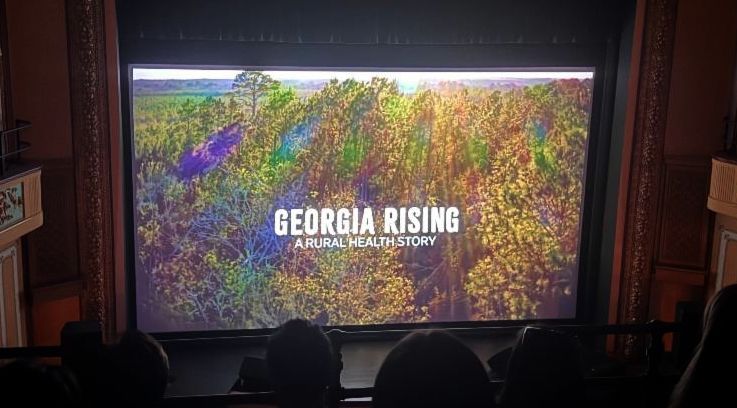
A near-capacity crowd gathered August 19 at Macon’s historic Douglass Theatre for a community screening of "Georgia Rising: A Rural Health Story" during the Macon Film Festival. The documentary shines a light on the challenges facing rural healthcare in Georgia while highlighting the people, partnerships and innovative approaches working to improve access to care.
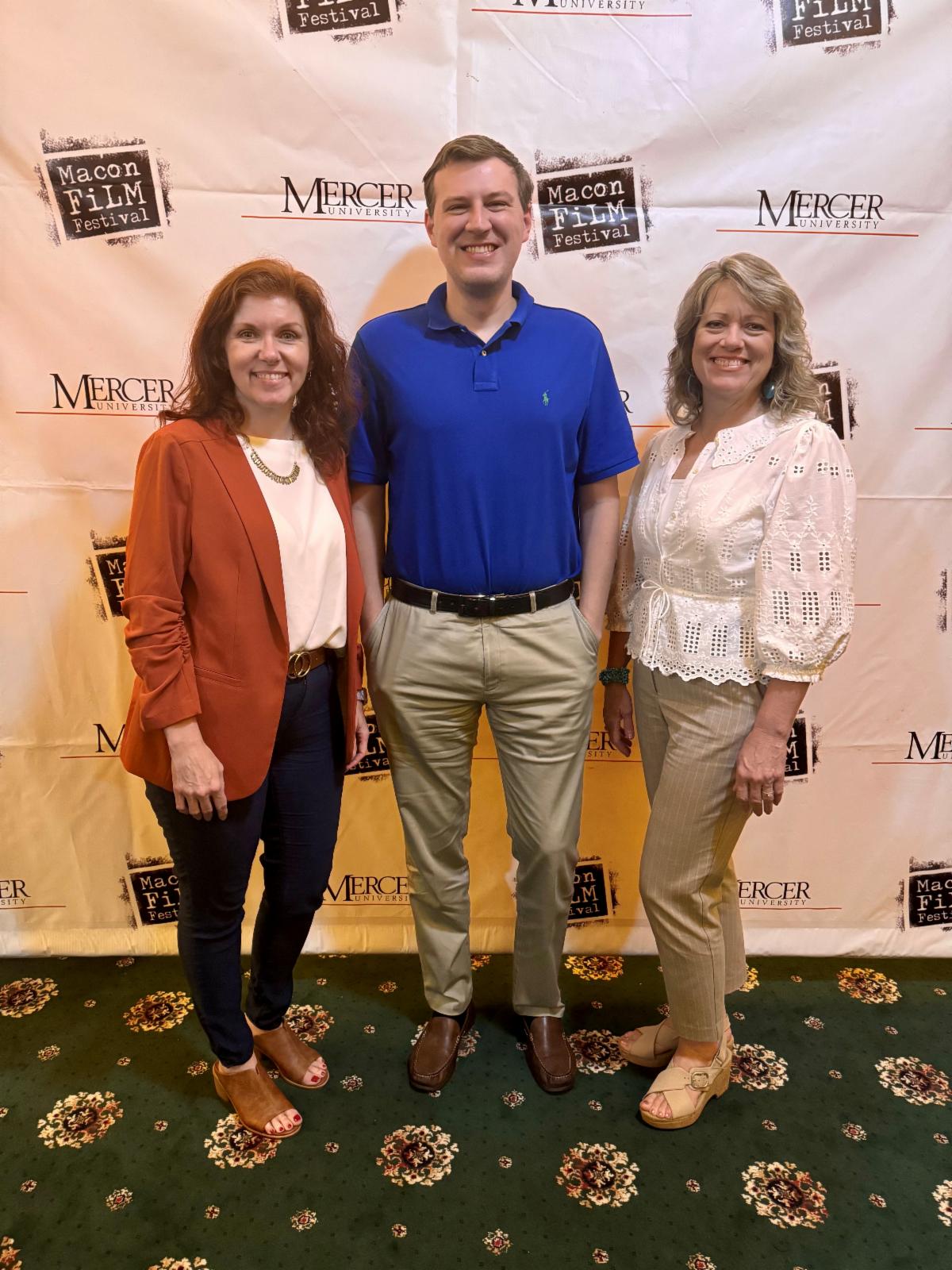
The screening brought together rural health advocates, healthcare providers, medical students, legislators and community members. SORH staff Amanda Sutton, Cole Edwards, and Dawn Waldrip attended the event in support of the documentary and its focus on the people and communities working to strengthen rural healthcare across Georgia.
Produced by Mercer University School of Medicine’s Georgia Rural Health Innovation Center, "Georgia Rising" features rural healthcare leaders and providers who demonstrate the resilience and ingenuity required to serve rural communities. Following the screening, panelists discussed barriers, such as transportation, insurance, income and workforce shortages, as well as the importance of collaboration among healthcare providers, schools, pharmacies and community organizations.
The documentary emphasizes that rural healthcare is about more than statistics and challenges — it is about the people who provide care and the communities they serve.
Georgia Public Broadcasting aired Georgia Rising: A Rural Health Story on Aug. 24. The documentary is available for streaming through PBS.
| | SORH staff Amanda Sutton, Cole Edwards, and Dawn Waldrip attended the August 19 screening of Georgia Rising: A Rural Health Story at the Macon Film Festival | | |
A SHIP Grant Initiative:
R.I.S.E. Bootcamp Trains Rural Hospital Revenue
Cycle Staff in Compliance and Best Practices
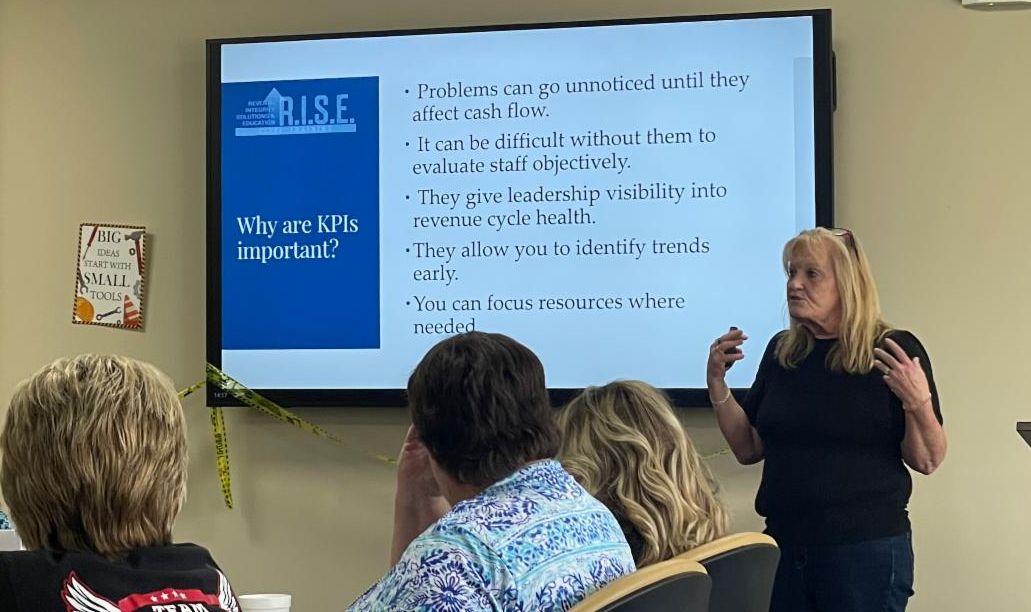
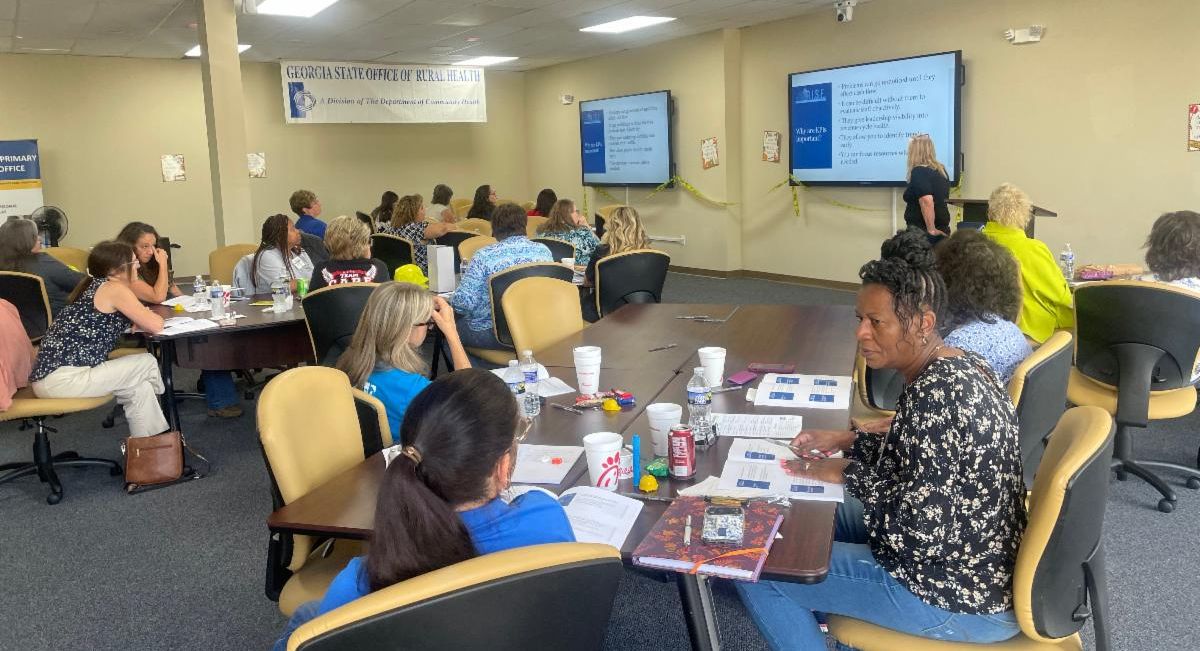
| | Sandy Sage, RN, HomeTown Health's Revenue Cycle Analyst discusses Key Performance Indicators at the RISE Bootcamp on August 21 at the SORH. Thirty rural hospital revenue cycle analysts attended the bootcamp. | | |
On August 21, thirty rural hospital revenue cycle staff gathered at the State Office of Rural Health (SORH) in Cordele for the RISE (Revenue Integrity, Solutions & Education) Bootcamp 2.0, a full day of hands-on training. The event is one of the required program activities SORH is completing this year through HomeTown Health (HTH) as part of the Small Rural Hospital Improvement Program (SHIP) grant.
Led by Sandy Sage, RN, HTH's Revenue Cycle Analyst, the RISE program pairs Key Performance Indicators (KPIs) with process improvement strategies, giving rural hospital staff practical tools to navigate an increasingly complex reimbursement landscape. The August session kicked off programming that will run through May 2027, drawing on the combined expertise of Sage and Rachel Savary of RS Data Analytics & Support Services, with HTH Program Manager, Lauren Adair opening and closing the day.
Throughout the bootcamp, attendees worked through sessions on 2026 updates to the "No Surprises Act" and "Hospital Price Transparency" requirements, how to read and manage payer contracts, and the connection between patient financial experience and revenue cycle performance. A hands-on "Fix the Broken Build" activity let participants apply what they'd learned to real documentation and billing scenarios, while additional sessions covered financial safety violations and revenue loss "hot spots," a deep dive into the KPIs hospitals should be tracking, and best practices for chart documentation. The training was International Accreditors for Continuing Education and Training (IACET)-accredited, offering participants 0.6 CEUs (6 contact hours) upon completion.
By equipping staff with up-to-date regulatory knowledge and practical KPI tools, the RISE Bootcamp helps rural hospitals strengthen financial performance and stay ahead of mounting compliance risk. SORH will continue offering RISE programming throughout the coming year as part of its ongoing SHIP grant activities.
| | |
SORH Representatives Glean Insights on Strengthening Care Delivery
Across Rural Communities at National Primary Care Office Conference
| |
Representatives from the Georgia State Office of Rural Health (SORH) traveled to Maryland in August to participate in a vital national dialogue on community healthcare.
Tiffany Hardin, manager of the Primary Care Office (PCO) and the Georgia Farmworker Health Programs (GFHP), and Lisa Selfe, Primary Care Office supervisor, attended the 2026 Annual PCO Conference, held in Rockville, MD on August 11-12. The conference brought together public health administrators, policymakers, and rural health advocates from across the country to discuss emerging strategies for improving healthcare access in underserved regions.
During the conference, Hardin and Selfe engaged in sessions focused on workforce development, federal shortage designations, and innovative funding models. Their participation ensures that Georgia remains at the forefront of national rural health initiatives, bringing back valuable insights to strengthen care delivery across the state's rural communities.
| |
National 3RNet Conference Equips SORH Staff with Toolsets to
Refine Rural Provider Recruitment, Onboarding, and Retention
| | |
Representing the Georgia State Office of Rural Health (SORH), staff members Tina Register and Olakesta Outlaw-Houser recently attended the 2026 National Rural Recruitment & Retention Network (3RNET) annual conference in Raleigh Durham, NC.
The national three-day event held in August convened rural health workforce leaders, state Primary Care Office (PCO) personnel, and safety-net employers from across the country to address current clinical staffing challenges in underserved communities.
As central figures within the Georgia SORH primary care office, Outlaw-Houser and Register serve as program operations specialists for both PCO and the Georgia Farmworker Health Program (GFHP) - focusing heavily on adapting national workforce models to fit Georgia's evolving community health landscape. Their participation highlights Georgia's continued investment in leveraging web-based recruitment technology and strategic marketing to attract medical and behavioral health professionals to the state's rural municipalities.
"The conversations, connections, and collaboration that take place at this conference are critical for building stable healthcare ecosystems," noted 3RNET leadership during the event. This year’s programming heavily integrated 3RNET’s "Recruiting for Retention" framework, emphasizing modern digital marketing pathways, transparent messaging surrounding clinical "total rewards," and methods to help rural clinics move past traditional, stagnant job board postings to capture mission-driven candidates.
The conference also featured significant local milestones. On Tuesday, August 25, Cary mayor, Harold Weinbrecht, visited the gathering to officially proclaim "3RNET Day," formally recognizing the network's 30-year history of helping safety net facilities fill vital clinical shortages.
For Register and Outlaw-Houser, the training sessions provided actionable toolsets to refine Georgia's candidate pipelines. The insights gained regarding behavioral health discipline matchmaking and digital recruitment ecosystems will directly support Georgia SORH's immediate initiatives to recruit, onboard, and retain high-quality primary care providers across rural networks.
| | |
State Loan Repayment Program Application Period
Remains Open for Georgia Primary Care Providers
| | |
The SORH Primary Care Office was awarded more than $491,000 in annual funding for three years from the Health Resources and Services Administration (HRSA) to support the State Loan Repayment Program (SLRP). This investment will strengthen recruitment and retention efforts at eligible healthcare sites across Georgia. With the required state match, the program will total just under $1 million per year for the next three years.
SLRP funding provides financial support to primary healthcare professionals by repaying all or part of their qualifying educational loans up to $50,000 in exchange for delivering primary care services in federally designated Health Professional Shortage Areas (HPSAs). Eligible practice sites include Federally Qualified Health Centers, Rural Health Clinics, Critical Access Hospitals (affiliated with a qualified outpatient clinic), state mental health facilities, federal and state prisons, and private practices (solo or group) located within a HPSA. Please note that National Health Service Corps site approval does not apply to the State Loan Repayment Program.
The Primary Care Office remains committed to improving primary care service delivery and expanding the healthcare workforce to meet the needs of Georgia’s underserved communities.
For more information about the SLRP program, please visit,
https://dch.georgia.gov/divisionsoffices/state-office-rural-health/primary-care-office-pco-programs.
You may also contact:
Lisa Selfe, Primary Care Office Supervisor, at lisa.selfe1@dch.ga.gov /470-543-2994 or
Tina Register, Program Operations Specialist, at tregister@dch.ga.gov / 229-322-4630.
| | |
Shifting Gears:
GREAT Health Year 1 Execution and the Road to Year 2
| | |
With the Year 1 awards complete, the Georgia Rural Enhancement and Transformation of Health (GREAT Health) initiative is shifting from selection to active project execution across rural Georgia. The Year 1 budget period runs through October 30, 2026, marking a critical bridge to real-world community impact. Partners are actively launching projects across five core initiatives, with a major focus on supporting rural hospitals through AHEAD (Achieving Healthcare Efficiency through Accountable Design) pre-implementation activities to prepare them for future value-based care opportunities. Local communities will soon see these investments take shape in key areas like healthcare access, workforce development, behavioral health, transportation, telehealth, and technology.
Looking forward, the Year 2 budget period is scheduled to run from October 31, 2026, through October 30, 2027. The Centers for Medicare & Medicaid Services (CMS) is expected to determine Georgia's Year 2 funding in October 2026. Because future funding depends on demonstrated progress and continued compliance with CMS requirements, the Department of Community Health (DCH) will diligently track program milestones, fund utilization, and performance measures to support upcoming quarterly and annual reporting.
Moving into Year 2, Georgia will build upon this foundational momentum. The state aims to continuously advance rural health transformation while opening doors for new investments aligned with program priorities and available funding. DCH will continue to monitor progress and share milestone updates and success stories from GREAT Health partners with CMS and key stakeholders.
Essential Program Resources
To help you stay connected and navigate the program, key information has been organized into four centralized resource hubs:
• Funding Opportunities: Review current and past Requests for Grant Applications, Notices of Intent to Award, and official Notices of Award at greathealth.georgia.gov/find-funding-opportunities.
• Program Materials: Access foundational tools like the one-page handout, overview document, and past Value-Based Care webinar recordings at greathealth.georgia.gov/about-program/resources.
• The Five Initiatives: Explore detailed breakdowns of funding, specific activities, timelines, and measurable outcomes for each individual track at greathealth.georgia.gov/program-initiatives.
• Updates and Inquiries: Stay informed by joining the GREAT Health mailing list, or email your specific program questions directly to greathealth@dch.ga.gov.
| |
…you love the magic of Friday night lights!
| |
October brings more than just the harvest season and a welcome drop in temperature—it ushers in the true heart of autumn: football Friday nights. When the work and school week finally winds down, entire communities, multi-generational families, proud alumni, and local supporters pack the stadium stands to reconnect and celebrate a cherished hometown tradition.
The atmosphere is charged with unmatched local energy. You can feel it in the rhythmic cadence of the marching bands, the synchronized cheers from the sidelines, and the roar of the student sections. There is a raw, nostalgic excitement that connects the past to the present the moment the opening kickoff sails through the air, and players burst through homemade paper banners onto the field just like their fathers and grandfathers did before them. Up in the stands, protective mothers keep a watchful eye on the game, loudly offering the referees a bit of constructive advice about their flag on the play while advising the opposing team to stay clear of their “baby” – #62 who is 6’2” tall and weighs in at 250 pounds.
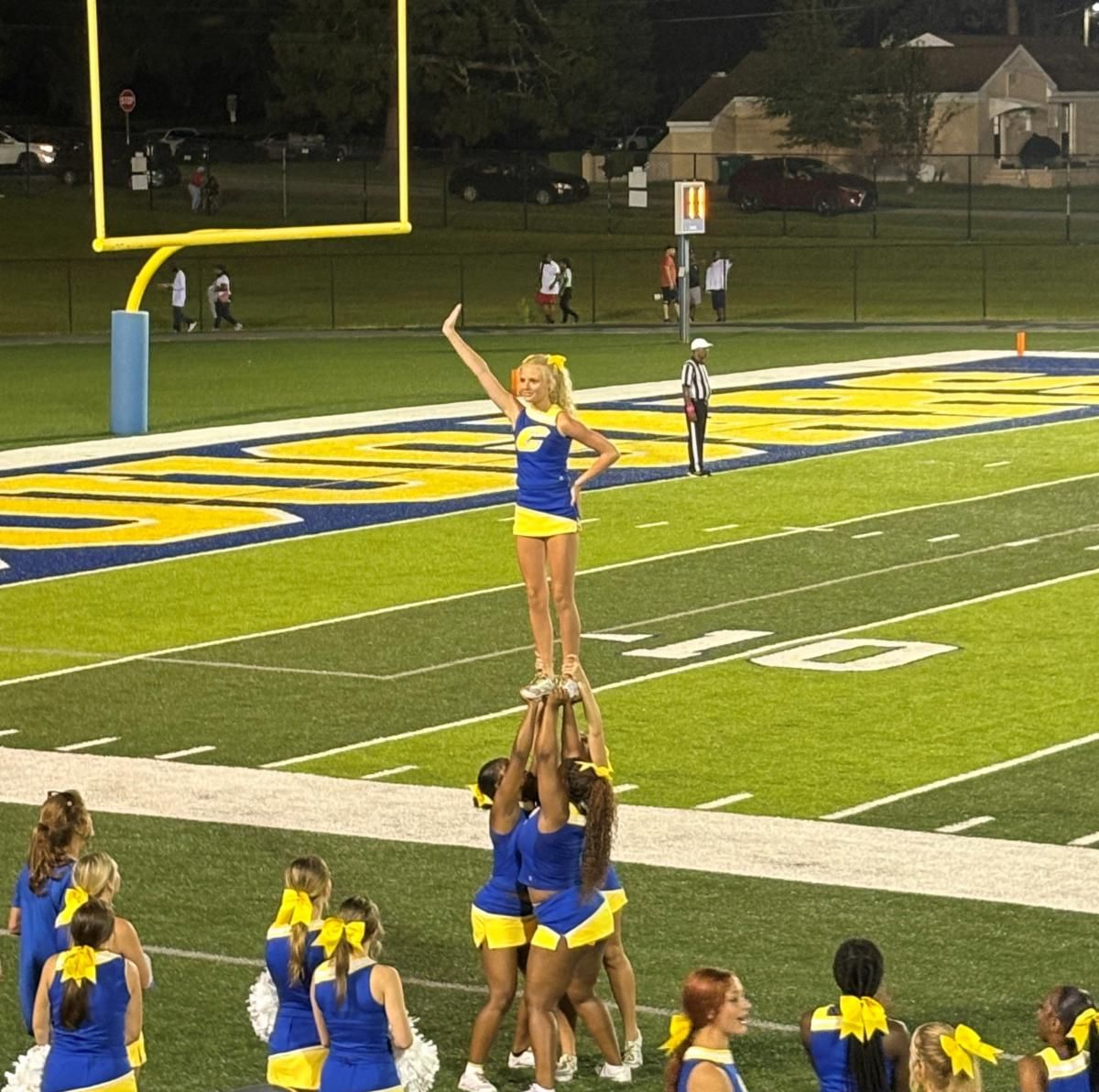
Of course, the action on the field is only part of the experience. The halftime show is a spectacle of its own, where the marching band plays time-honored favorites routinely giving the crowd goosebumps. Nearby, the cheerleaders showcase the results of months of grueling daily practice, executing flawless jumps, backflips, gravity-defying acrobatics, and synchronized cheers in support of their beloved team. Among them is Senior Aubree Arnett of the Crisp County Cougars, who is pictured above, a seasoned flyer who has been soaring atop pyramids since the eighth grade.
When the floodlights take over the autumn sky, there is simply nothing else like the magic of Friday night lights.
Photo: Dawn Waldrip
| |
DCH Mission Statement
The Department of Community Health will provide Georgians with access to affordable, quality health care through effective planning, purchasing and oversight.
We are dedicated to
A Healthy Georgia.
| | | | |