|
Dear Neighbor,
If you did not have a chance to read the public health update I sent out yesterday regarding the Legionnaires' cluster, cyclosporiasis, and measles, you can read that by clicking here.
Also, if you missed my Virtual Town Hall this week on the New York State's new Medical Aid in Dying law that takes effect August 5th, you can view that by clicking here.
Below you will find governmental updates from the past month, recent actions by the Trump Administration impacting New Yorkers, and upcoming events and other useful information affecting our district.
As always, if you have any questions or need assistance, please email or call my office at lkrueger@nysenate.gov or 212-490-9535. If you are not already subscribed to my email list, click here to join.
Liz Krueger
State Senator
| | What's In This Newsletter? | | |
Updates From My Office:
- Governor Issues Executive Order Implementing One-Year Moratorium on New Data Centers
- Senators Request Action from AG James On High-Speed E-Vehicles
- Mobile Constituent Hours at Stavros Niarchos Library
- Interns' Corner Pt. 1: The Risks of Prediction Markets
- Interns' Corner Pt. 2: Waiting for Answers
- Medigap Insurance Plan Premium Rate Increases for 2027
- Update on Trump Administration Impacts
Useful Information:
- Summer EBT Is Available
- Free Meal Programs on the Upper East Side
- Legal Services NYC Survey of LGBTQIA+ New Yorkers
- DOT Public E-Bike Charging Program Feedback Opportunity
Community Updates, Event, and Opportunities:
- GrowNYC Greenmarket 50th Anniversary Celebration
- National Night Out Against Crime
- Free Community Tennis Near the District
- PAL Summer Playstreet at McCaffrey Playground
| | |
Governor Issues Executive Order Implementing
One-Year Moratorium on New Data Centers
| | |
Earlier this month, Governor Kathy Hochul issued an Executive Order implementing a one-year moratorium on the issuance of any permits or other agency actions by the Department of Environmental Conservation for the construction of new large-scale data centers.
I was very pleased to see the governor listening to New Yorkers' concerns and following the Legislature's lead after we passed a broad data center bill at the end of this year's legislative session. I recently joined Senator Kristen Gonzalez in writing an op-ed in the Daily News explaining why this pause is needed.
The governor's executive order is a good first step - now it is critical to ensure real and rigorous protections are put in place to safeguard energy affordability and the health of our air, water, land, and people, which should include signing the bill that was passed by the Legislature with bipartisan support.
| | |
Senators Request Action from AG James
On Illegal High-Speed Micromobility Vehicles
| | |
This month I drafted a letter that was joined by several of my Senate colleagues to Attorney General Letitia James requesting that she issue a consumer alert on high-speed e-scooters and e-bikes that violate New York State law, like the one that was involved in a deadly crash on the Queensboro Bridge in May. After a consumer alert was issued by the California Attorney General earlier this year, Amazon announced it would stop selling certain e-bikes in the state. Fortunately, this week AG James announced that she will be issuing an alert.
Dangerously fast micromobility vehicles pose a threat to all road users. Though there can often be disagreements between bike riders, pedestrians, and drivers, everyone can agree that a scooter cruising 50 mph in a bike lane is unsafe and unacceptable. Unfortunately, it is a growing problem that we need to get our arms around. That's why we asked the Attorney General to act now within existing laws to try to reduce the volume of these vehicles on the road, while I and my colleagues explore what new legislation may be possible and necessary to address this issue.
| | |
Mobile Constituent Hours
at Stavros Niarchos Library
| | |
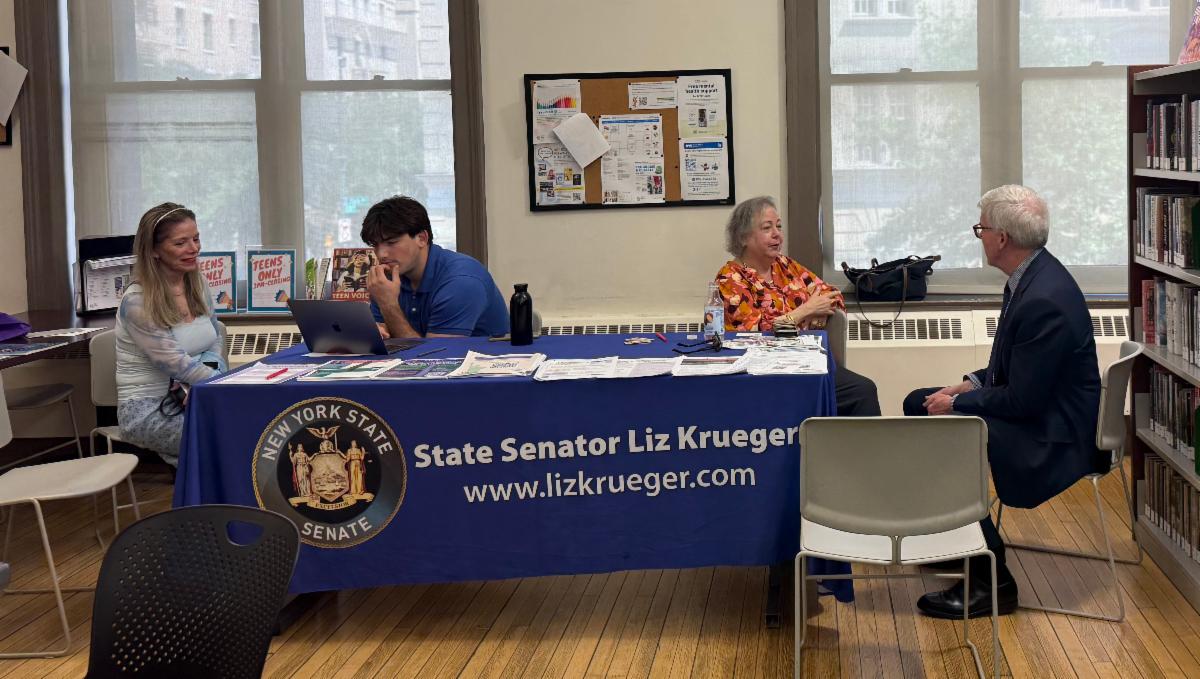
Please join my staff and me for our Mobile Constituent Hours at the Stavros Niarchos Library (455 Fifth Avenue, corner of 5th Ave and 40th St), on Wednesday, August 5th, from 12pm-3pm.
Feel free to stop by with questions, concerns, or just to chat with me and members of my constituent services team. We will provide plenty of informational literature and helpful resources for all ages. I am very much looking forward to seeing you all face-to-face and hearing what is on the top of your minds.
| | |
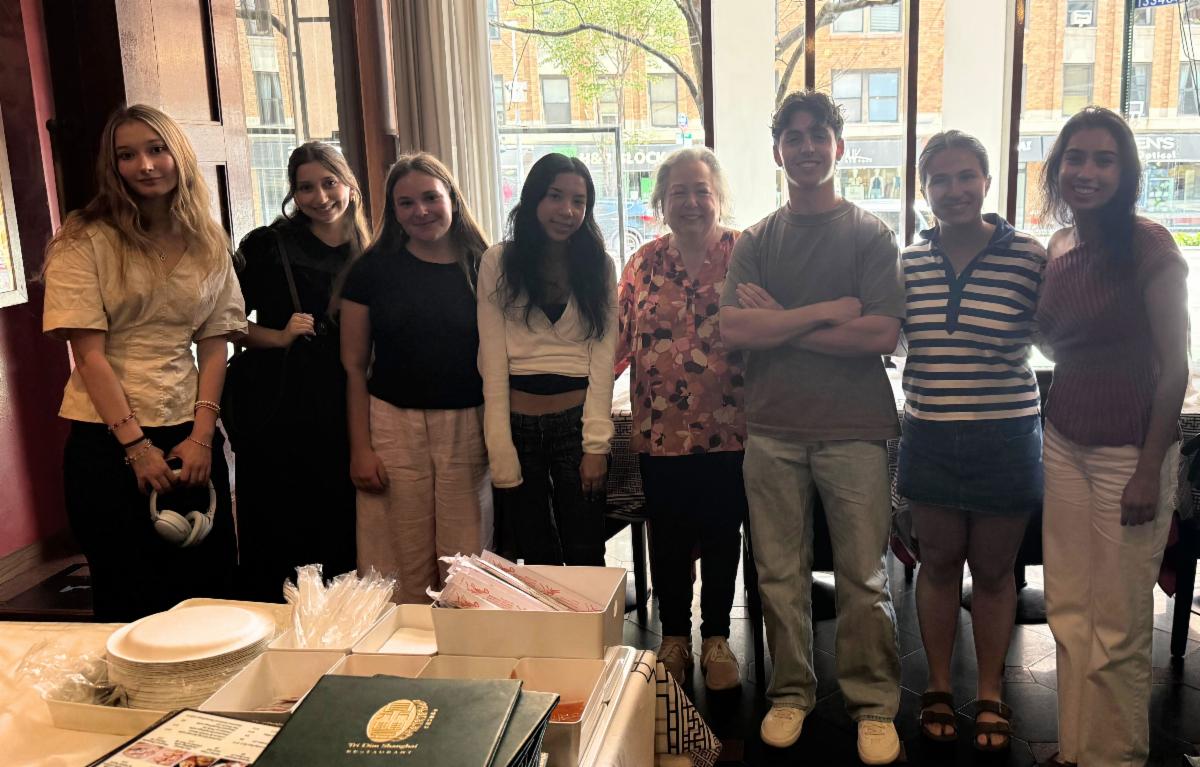
Every year my office is very fortunate to be joined by a group of talented high school and college interns who do invaluable work to help us deliver for constituents. This year, in addition to their numerous other contributions, the college group prepared an update on prediction markets, including their potential negative impacts and the state of legislation addressing these issues; the high school group drafted an article on barriers to access to neuropsychological evaluations in NYC schools. You can find their reports below. Their impressive research has already sparked ideas for potential legislation that my staff and I will explore further in the coming months.
-------------------
| | |
The Risks of Prediction Markets
By Ria Dangayach, Jack Steinfink, Julia Steinmam
What are prediction markets?
You may have seen ads for platforms like Kalshi or Polymarket. These apps let you put money on the outcome of future real-world events, anything from elections to sports games to next weekend's weather. They are called prediction markets, and they have grown enormously over the last few years.
Prediction markets aren’t regulated like gambling. Here’s why that’s a problem.
Licensed sportsbooks in New York are regulated by the state. They must verify that users are 21 or older. They also must offer self-exclusion tools for people trying to quit, face restrictions on how they advertise, and they're required to display problem-gambling resources.
Prediction markets are instead regulated by a federal agency called the Commodity Futures Trading Commission (CFTC) which treats their offerings as financial derivatives, the same category as buying or selling oil or metal on markets. The logic for this classification is that these platforms match buyers and sellers against each other rather than setting odds as a house.
Here's what it means in practice: a New Yorker who is 18 years old cannot legally place a sports bet but can open a prediction market account and put money on a game. The addiction resources, advertising limits, and self-exclusion tools the state requires of licensed operators similarly do not apply.
How prediction markets operate
Platforms require a government-issued ID confirming the user is 18 or older, and Kalshi also asks for a Social Security number. A platform team member compares the documents against a live selfie and approves or rejects the account, usually within 12 to 48 hours. Although there is discussion of workarounds on Reddit and other online forums, the general consensus is that these verification systems are comprehensive.
Deposits above $10,000 in a single transaction trigger source-of-funds documentation, and some platforms request pay stubs or bank statements.
Once the account is open, the rules shift from who you are to what you're trading. Every market must define three things up front: the event being predicted, the exact conditions under which it resolves, and the source used to verify what happened. Nothing pays out until the event concludes and data is verifiable. That verification step is where your money is actually won or lost, and the platforms handle it in very different ways.
Kalshi settles through its CFTC-registered clearinghouse, applying rules filed with federal regulators, with disputes handled through the exchange's own procedures. That is fast and predictable, but it means trusting the company that runs the market to rule correctly on the market it runs.
Polymarket's international platform does the opposite, outsourcing contested outcomes to what the industry calls an oracle: holders of a cryptocurrency token vote on what happened, and that voting power decides the payout. An unchallenged result settles in about two hours; a disputed one can take four to six days.
If a licensed New York sportsbook refuses to pay a winning ticket, you can file a complaint with the State Gaming Commission. On a prediction market, your recourse runs through the platform's own procedure or a token vote, and no New York agency has jurisdiction over either.
The Fiscal Side
New York runs the largest sports betting market in the country and taxes at 51%, the highest rate in the nation. In 2025, that generated roughly $1.3 billion in state tax revenue. Those dollars are earmarked for education, youth programs, and problem gambling services. Prediction markets pay ordinary corporate income tax instead. The money that tax generates is dramatically less than the sportsbook rate, and none of it is dedicated to the aforementioned programs.
The Tax Policy Center estimates that if just 5% of sportsbook activity migrated to prediction markets, New York would lose about $66 million a year.
Risks
Although framed as intellectual platforms drastically different from gambling, in reality, prediction markets pose the same dangers as traditional gambling, and can influence addiction amongst users. Like day trading, prediction markets move quickly, require constant monitoring and offer near-miss outcomes that spike dopamine. They provide the illusion of control, which leads to risk escalation. This is particularly alarming due to the platforms being accessible for anyone 18 and up. Those too young to engage in traditional gambling are able to experiment with these platforms without parental supervision or knowledge.
Prediction market users are disproportionately under the age of 45 and 71% male. Experts report that young men in particular are targets of prediction markets, and are at higher risk of becoming addicted to these sites. With underdeveloped pre-frontal cortexes and high appetites for risks, young men are already being lured towards sports-betting, streamer culture, and other online phenomena geared towards young men. Prediction markets are aligned with this culture, and feed into young men’s interest in sports, money and risk. But, how have prediction markets gained so much popularity amongst young men so quickly? The answer is social media. Polymarket and other prediction sites rely heavily on influencers to promote their platforms. These influencers, the majority of whom are male athletes, youtubers and actors, are most popular amongst young men. Notably, these platforms run marketing campaigns featuring influencers winning fake bets in order to convince viewers that winning is more likely than it actually is.
- Election and misinformation:
When prediction market odds are presented alongside news coverage, they can be mistaken for polling or reporting. They are neither. A market price reflects what people are willing to wager, not a methodologically sound measurement of public opinion. It carries none of the disclosure standards or ethical guardrails that reputable pollsters follow. Platforms have signed placement deals with news outlets, putting betting odds into news segments in the same slots once reserved for polls.
The Brennan Center for Justice warns that this dynamic can be exploited more deliberately: when results diverge from market predictions, that gap can be used to manufacture false claims of a stolen election. Researchers have also documented paid influencer partnerships that push conspiracy theories while linking to open bets, and reporting suggests foreign actors view these markets as a vector for interfering in American elections.
Like other types of markets, prediction markets reward those who get information first. And, because geopolitical events are not purely random, anyone with inside information on a certain world leader or conflict, may bet and win on prediction markets. The U.S. Senate passed a rule banning all senators and their staff from betting on prediction markets.
Because these platforms are not labeled gambling, some users assume they carry less financial risk. The available evidence suggests otherwise. A March 2026 analysis by Citizens JMP Securities, drawing on transaction data from the tracking platform Juice Reel, found the median return for prediction market users was -8% from July 2025 through mid-March 2026, compared with -5% for sportsbook users over the same period. The more revealing finding was the breakdown: only traders with more than $500,000 in activity posted positive returns. Every group below that lost money.
That is a direct consequence of the structure that earns these platforms their "not gambling" classification. Because you are trading against other participants rather than a house, you are often trading against professional market makers. Unlike sportsbooks, which limit or ban consistently winning customers, prediction markets let the sharpest players keep taking the other side of your trade.
Where things stand
The federal government has changed course: Prior CFTC leadership under the Biden administration sought to ban political and sports events contracts as “contrary to the public interest.” However, the classification was never finalized, instead it was withdrawn in February 2026 under new Trump administration leadership.
What the CFTC has proposed instead of the categorical ban is an amendment that (1) shifts prohibition measures to case-by-case analysis of contract offerings, and (2) requires the CFTC to provide a written explanation of its reasoning when blocking a contract and giving platforms the right to appeal the decision before any action is taken.
This new amendment, while seemingly pro-regulation, in practice means that any contract not flagged for individual review (which, under current leadership, has been zero contracts) is implicitly cleared to trade, regardless of whether it would fall into a “prohibited” category.
There is congressional support for legislation in favor of stronger regulation of prediction markets, including S.4160 Prediction Markets Are Gambling Act, which would amend the CEA to explicitly ban the listing or trading of event contracts related to sports and casino-style games.
In the courts: In April 2026, New York Attorney General Letitia James joined a bipartisan coalition of 37 other attorneys general in filing an amicus brief supporting Massachusetts' lawsuit against Kalshi. Kalshi claims a provision of the 2010 Dodd-Frank Act gives the CFTC exclusive authority over these contracts and legalizes sports betting nationwide. The states counter that Dodd-Frank was written to rein in the financial instruments behind the 2008 crash. That provision does not mention gambling so it cannot be used to authorize it.
In other states: Nevada and Minnesota have moved toward outright prohibition. Kentucky and Illinois have tried taxing these platforms into parity with sportsbooks. North Carolina went the other direction and formally ceded the field to federal regulators. The CFTC and the Justice Department have sued several of these states. Many other states have taken action to regulate prediction markets, but nearly all of it is unresolved.
In Albany, several bills would establish protections that federal law does not cover:
- S.9414, ORACLE Act: The most comprehensive: a 21-and-over age floor, mandatory self-exclusion and spending limits, advertising restrictions, transparency in how markets are settled, and bans on markets tied to deaths and catastrophes.
- S.8889, License Requirement Law: This law would require operators to be licensed by the Department of Financial Services.
- S.10092, No Gambling for Kids Act: This law would ban gambling ads where the viewer cannot be confirmed to be an adult. Passed the Senate; awaiting Assembly action.
- S.9825, Restrict Prediction Markets, Mobile Sports Wagering by Public Officers: Restricts the use of prediction markets and/or mobile sports wagering platforms by certain public officers when using information acquired by such persons in the course of their official duties.
Additionally, New York Governor Kathy Hochul issued an executive order in April 2022 condemning covered state employees from leveraging confidential information acquired in the course of their official duties to further their personal financial interests in these markets (insider trading).
Bottom Line
As things stand, New Yorkers have fewer protections when using prediction markets than they have at a sportsbook or casino. When dealing with these under-regulated sites, awareness and knowledge is key to ensuring your mental and financial wellbeing.
Indeed, many state legislatures, including New York’s, are making efforts to fight for the consumer protections that Americans deserve, but they are all facing active challenges from those bodies. Public awareness plays a crucial part in this fight.
If gambling is affecting you or someone you love, New York's HOPEline is free, confidential, and available at all hours: 1-877-846-7369 or text HOPENY (467369).
-------------------
| | |
Pt. 2: Waiting for Answers
When Access to Neuropsychological Evaluations Depends on Income
By Vivian Salum, Chiara Capruso, Lilliana Grinberg, Sara Buchris, and Ben Abayev
| | |
New York is a city that prides itself on moving quickly. Its subways run around the clock, its businesses operate at a relentless pace, and its residents constantly chase the next opportunity. But for families seeking testing accommodations for students with disabilities, New York moves much slower. Behind the city’s reputation for speed lies an education system where obtaining necessary evaluations can be a lengthy and overwhelming process for low to middle income families.
Reflecting on the evaluation and accommodation system, one New York City parent said: “It’s a system that is at best inefficient and rather than meeting a collaborative effort between parents, administrators, and educators, leaves parents frustrated and despairing for their children.”
For students with disabilities, testing accommodations can be life-changing. A recent study from the Institute of Educational Sciences found that students with learning disabilities who received extended-time accommodations performed significantly better than those who did not. Beyond academic performance, students who received extended time also reported feeling less stressed and enjoying their coursework more.
While the benefits of testing accommodations are well documented, accessing them remains a challenge for many families. “I’m one of the lucky ones,” said Leo, an incoming junior at the Bronx High School of Science. “Having a pediatrician since birth, a therapist covered by my insurance, and a strong support system of adults at school made applying for accommodations easier. Most families don’t have one or more of those things, deterring–or even preventing–them from accommodating their child.”
For thousands of New York families, however, Leo’s experience is an exception rather than a rule. A decade ago, New York received 6,000 complaints annually related to special education. In 2025, that number has risen to a staggering 26,000 legal complaints. This increase reflects a labyrinthine system that many families find nearly impossible to navigate.
Before a student can receive testing accommodations, families must first navigate a lengthy referral process that includes neuropsychological and psychoeducational evaluations to determine eligibility. Neuropsychological evaluations examine cognitive and emotional processes, while psychoeducational evaluations assess academic skills and learning needs. Together, these evaluations are often required before students can qualify for testing accommodations.
In New York, families must begin this process by submitting a written referral to their school. While the state is legally required to provide evaluations within 30 days of receiving a referral, disagreements over eligibility can create additional obstacles. If parents disagree with the state’s decision, they may request an independent evaluation funded at public expense. School districts, however, can challenge those requests, turning what should be an educational decision into a lengthy legal battle.
For wealthy families, these barriers can often be overcome. For low-income families, they can become insurmountable. When districts oppose requests for independent evaluations, parents are frequently left without the resources needed to fight back. Private neuropsychological evaluations can cost roughly $7,500—an expense that is simply unrealistic for many households. For comparison, the average monthly rental for a two bedroom New York City apartment is between $4,000-$6,000 in 2026. In other words, obtaining the evaluation a child needs to access educational support can cost more than a month’s rent in one of the nation’s most expensive cities. Access to accommodations should never depend on a family’s ability to pay.
Alex Zimmerman, a reporter at Chalkbeat, spoke at length about the complications of receiving accommodations. Zimmerman said that for years he has received complaints about NYC’s educational system.
Despite these challenges, New York has begun taking steps in the right direction. Under Mayor Mamdani, the city recently expanded its special education programs into preschool for the first time. The initiative aims to ensure that every preschool student who needs special education services has access to a seat. Although New York is legally required to provide these services, a longstanding shortage of preschool placements has disproportionately affected children with disabilities. A $67.5 million investment will expand access by creating 250 new seats across 26 preschools. “Having a child with a disability or a special need should not make families an exception to that rule,” Mayor Mamdani said. The investment represents meaningful progress, but expanding preschool access alone does not solve the barriers facing older students who struggle to obtain evaluations and testing accommodations.
When New York buries testing accommodations behind a veil of bureaucracy, it denies hundreds of children timely access to the services they need. Neuropsychological and psychoeducational evaluations should not require families to prepare for legal disputes. Moreover, a student’s access to educational opportunity should not depend on whether their parents know how to navigate an unnecessarily complex system.
Fortunately, New York does not have to solve this problem alone. Other states have shown that a better approach is possible. Massachusetts, for example, requires districts that want to deny a taxpayer-funded independent evaluation request to file a hearing within five days proving that the original evaluation was sufficient. New York does not have that same five-day deadline, allowing disputes to continue without clear timelines for families. Adopting similar protections would make the process more transparent, more equitable, and more accessible for students across the state.
In the coming years, New York should strive to become a state with more equitable special education practices that ensures access for all. Given how transformative accommodations are for so many students, neuropsychological and psychoeducational evaluations should no longer be concealed under layers of bureaucracy. Access to accommodations should not be reserved for only the highest bidders. Mayor Mamdani’s recent investments in special education point toward a promising future, but meaningful reform cannot stop there. If New York truly prides itself on being a city of opportunity, it must ensure that every student has an equal opportunity to succeed—not just those who can afford to fight it.
| | |
Medigap Insurance Plan
Premium Rate Increases for 2027
| | |
I am providing another reminder that there is still time to submit a public comment about the proposed Medigap premium rate increases for 2027. Many constituents have expressed interest in submitting a comment online, but some experienced technical difficulty completing the web form or had questions. My office is happy to provide assistance with submitting a public comment.
Please Note: these Medigap plan premium rate increases do not apply to you if you are a New York City retiree and are currently enrolled in a City Medicare plan.
If you currently have Original Medicare (Medicare Parts A and B) and a Supplemental plan (also known as a Medigap plan), you should have received notification from your plan provider of the proposed premium rate increase that is being requested for 2027.
Most Medigap plan providers are requesting rate increases between 10% - 30% from the NYS Department of Financial Services (DFS). Please click here to view the rate increases that Medigap plan providers have submitted.
My office has been receiving calls and emails from constituents who are very concerned about their ability to afford these extraordinarily high premium rate increases, especially since this is not the first time that such significant rate increases have been sought.
DFS is responsible for assessing proposed premium rate increases submitted by plan providers, which includes reviewing financial, claims, and other data, as well as public comments submitted by policyholders. This provides an important opportunity for Medigap policyholders to comment on affordability issues and to advocate for lower premium rate increases. While I will be submitting comments as well, it is extremely important for DFS to hear directly from impacted New Yorkers.
If you are concerned about the proposed premium rate increase that your Medigap plan provider is requesting for 2027, I strongly encourage you to submit a public comment to DFS right away. Policy holders have 30 days to submit a comment.
There are two ways that you can submit a public comment to DFS:
-
The quickest way to submit your public comment is online. Please click here to complete the DFS web form. If you do not have access to the internet, please call my office and we will provide assistance with completing the web form.
Please Note: Constituents have informed my office that they were unable to complete the DFS web form using their cell phone, and some constituents had questions about how to complete the web form. The form is much easier to fill out on a computer than a phone. If you would like to submit a public comment, and do not have a computer, or if you have questions, please call my office to receive assistance with submitting the comment.
- You can also submit a public comment by regular mail. Mail your public comment to following address:
New York State Department of Financial Services
One Commerce Plaza
Albany, NY 12257
| | Update on Trump Administration Impacts | | |
Below is a small sample of actions the Trump Administration has taken this past month that have had concrete, negative impacts on New Yorkers. Click on the links for more details:
-
A new report from Public Employees for Environmental Responsibility found that the number of major chemical accidents in the US is up more than 50% since 2021, while the Trump Administration is gutting protections against chemical disasters put in place under President Biden.
-
President Trump has fired or pushed out every member of the Bipartisan Election Assistance Commission, an independent federal body that assists local election officials in various ways, leaving the Commission empty. It's just one of many ways the president is attempting to improperly influence the outcome of the midterm elections.
The following articles discuss the importance of movements having the strength and moral certitude to deal with hard strategic questions and harsh realities, even when there is conflict in order to grow stronger, and highlight how community members in Maine stood strong together in forming an immigrant defense movement that provides a model for other communities:
During the month of July, there were judicial, congressional, and community mobilization wins from which to draw hope and inspiration:
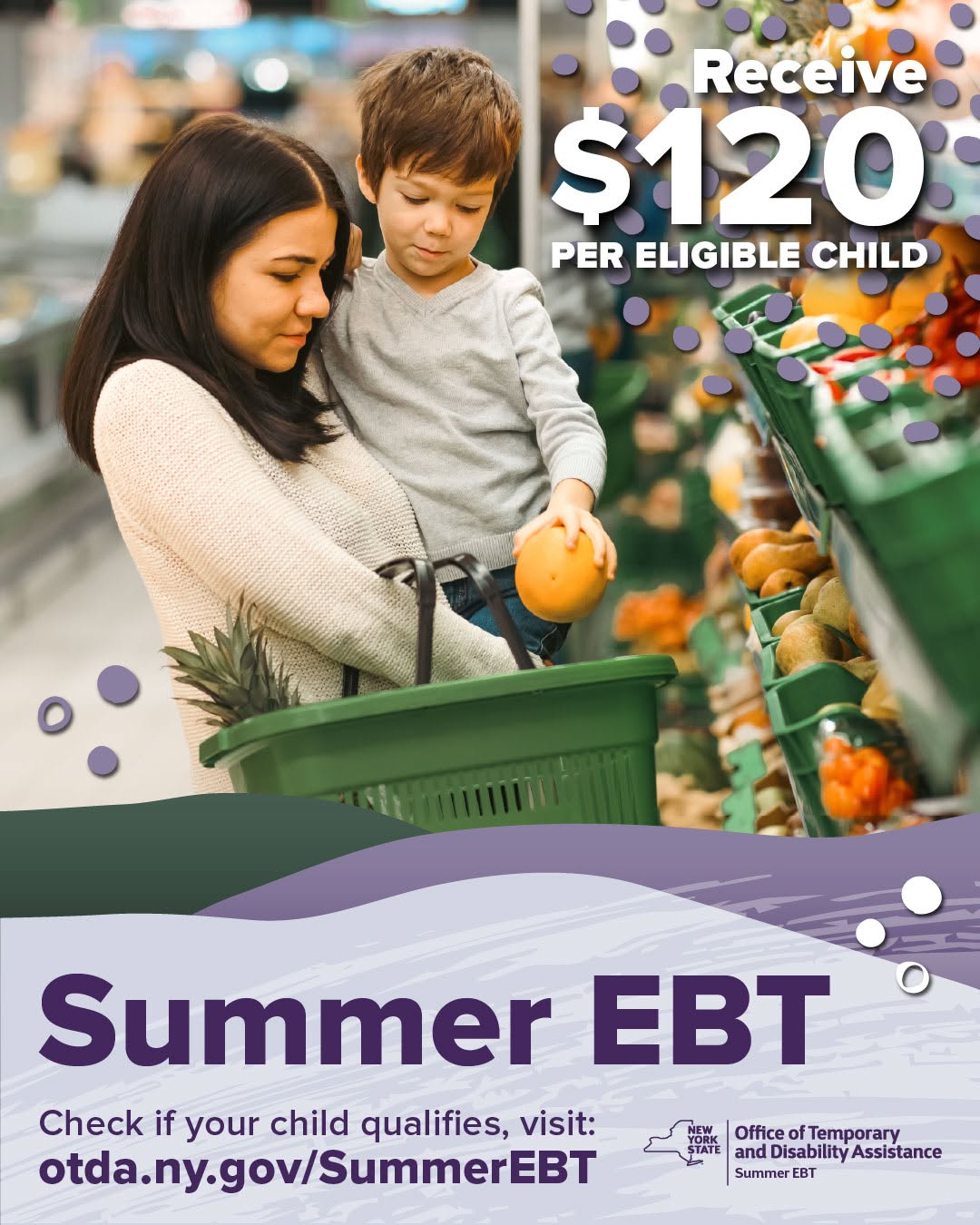
| | If you’re already receiving SNAP and Medicaid in NY, then your school-age children are eligible for Summer EBT, which provides $120 in grocery benefits while school is out. Learn more: otda.ny.gov/summerebt | | Free Meal Programs on the Upper East Side | | |
SUNDAY
Crossroads Community Services — Breakfast To-Go
7:45 – 8:45 am
108 E 51st Street on Park Ave
Temple Emanu-El
12:00 pm
1 East 65th Street, between 5th and Madison Aves.
Brown bag sandwich, snack and beverage to-go
Common Pantry
4:00 – 5:00 pm
8 East 109th Street, south side of street near 5th Ave.
Brown bag meal to-go; arrive early
Christ Church United Methodist
4:30 pm
524 Park Avenue at 60th Street
Bagged hot meal to-go
Crossroads Community Services — Dinner To-Go
5:30 – 6:30 pm
108 E 51st Street on Park Ave
MONDAY
Crossroads Community Services — Breakfast To-Go
7:45 – 8:45 am
108 E 51st Street on Park Ave
Common Pantry
2:30 – 3:30 pm
8 East 109th Street, south side of street near 5th Ave.
Grab & Go hot meal
Crossroads Community Services — Dinner To-Go
5:30 – 6:30 pm
108 E 51st Street on Park Ave
Unitarian Church of All Souls
6:00 – 7:30 pm
South side of East 80th Street, between Lexington & 3rd
Grab & Go hot dinner to-go
TUESDAY
St. James' Church
12:00 pm
North side of 71st Street, between Madison and Park Avenue
Sit-down hot lunch or Grab & Go
Common Pantry
2:30 – 3:30 pm
8 East 109th Street, south side of street near 5th Ave.
Grab & Go hot meal
Urban Outreach Center
5:30 pm
1745 1st Avenue, between 90th and 91st Street
Bagged hot dinner to-go
Crossroads Community Services — Dinner To-Go
5:30 – 6:30 pm
108 E 51st Street on Park Ave
WEDNESDAY
Crossroads Community Services — Breakfast To-Go
7:45 – 8:45 am
108 E 51st Street on Park Ave
Temple Shaaray Tefila
11:30 am – 12:00 pm
250 East 79th Street at 2nd Avenue
Bagged lunch to-go
Common Pantry
2:30 – 3:30 pm
8 East 109th Street, south side of street near 5th Ave.
Grab & Go hot meal
Crossroads Community Services — Dinner To-Go
5:30 – 6:30 pm
108 E 51st Street on Park Ave
The Church of the Epiphany
6:00 – 7:30 pm
351 East 74th Street, between 1st & 2nd Avenues
Sit-down hot dinner or Grab & Go
THURSDAY
New York Common Pantry
8:00 – 9:30 am
8 East 109th Street near 5th Ave
Breakfast service
Crossroads Community Services — Food Pantry Service
9:30 am – 12:45 pm
108 E 51st Street on Park Ave
By appointment — call (212) 378-0234 or email pantry@crossroadsnyc.org
Crossroads Community Services — Dinner To-Go
5:30 – 6:30 pm
108 E 51st Street on Park Ave
Madison Avenue Presbyterian Church
6:00 – 7:00 pm
921 Madison Avenue, between 73rd and 74th Street
Sit-down hot dinner or Grab & Go
FRIDAY
New York Common Pantry
8:00 – 9:30 am
8 East 109th Street near 5th Ave
Breakfast service
Unitarian Church of All Souls
11:30 am – 12:30 pm
South side of East 80th Street, between Lexington and Park
Take-out hot lunch with fruit, water, dessert
St. James' Church
4:00 – 7:00 pm
North side of 71st Street, between Madison & Park Avenue
Sit-down hot dinner or Grab & Go — time subject to change
Crossroads Community Services — Dinner To-Go
5:30 – 6:30 pm
108 E 51st Street on Park Ave
SATURDAY
Manhattan Church of Christ New York
9:00 am – 12:00 pm
48 East 80th Street, between Madison & Park Ave
Sit-down hot lunch or Grab & Go
Crossroads Community Services — Brunch To-Go
10:00 – 11:00 am
108 E 51st Street on Park Ave
All Saints Church
4:00 – 5:00 pm
230 East 60th Street, between 2nd and 3rd Ave
Sandwiches
Holy Trinity Neighborhood Center
5:15 pm
316 East 88th Street
Sit-down hot meals
Crossroads Community Services — Dinner To-Go
5:30 – 6:30 pm
108 E 51st Street on Park Ave
| | |
Legal Services NYC
Survey of LGBTQIA+ New Yorkers
| | |
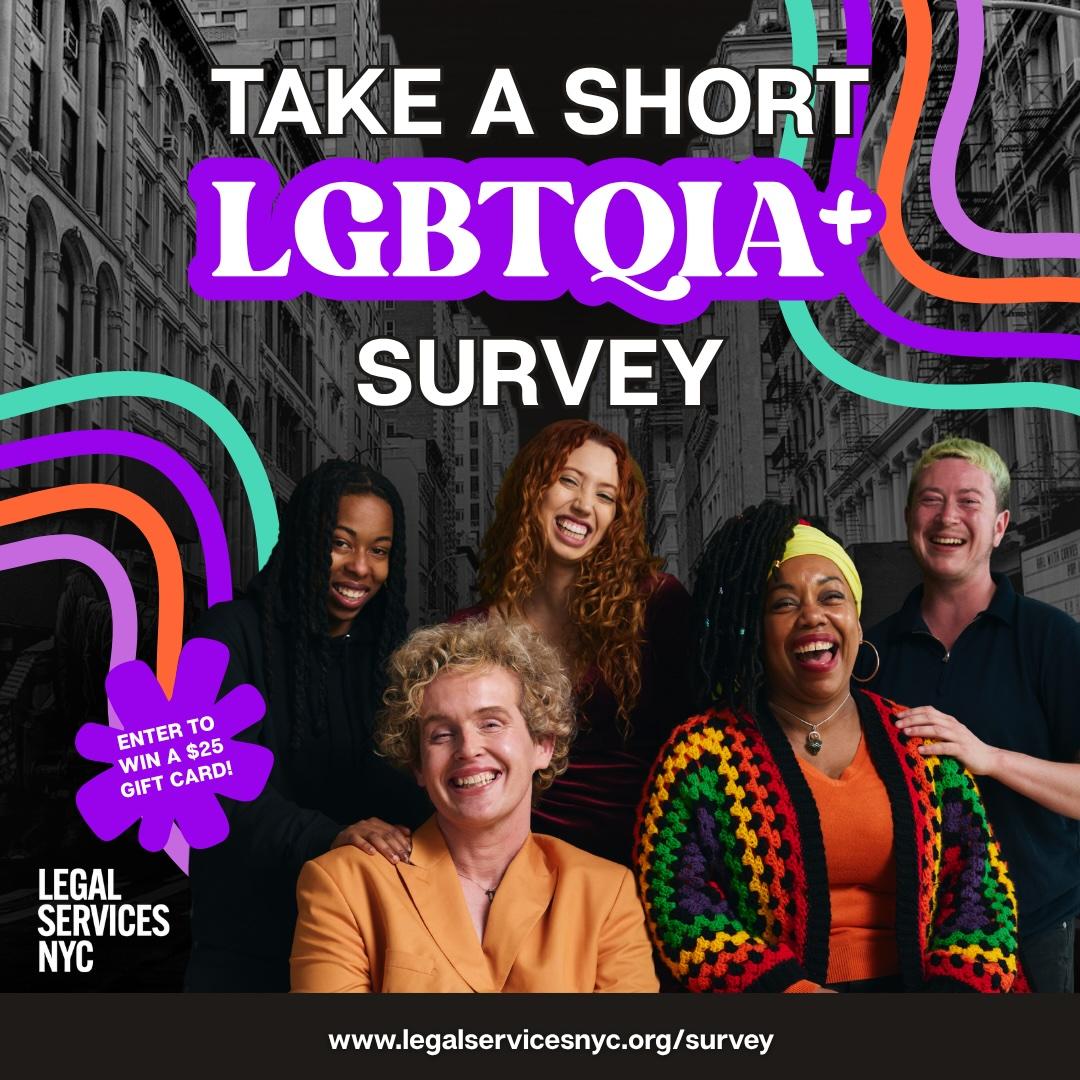
Legal Services NYC, the nation's largest provider of free civil legal services, is conducting an anonymous LGBTQIA+ Community Survey.
The 10-minute, multilingual survey asks questions about barriers to housing, healthcare, public benefits, discrimination, and identity documents. The results will help strengthen legal services and advocacy for LGBTQIA+ New Yorkers, and participants can enter for a chance to win a $25 gift card.
| | |
DOT Public E-Bike Charging Program
Feedback Opportunity
| | |
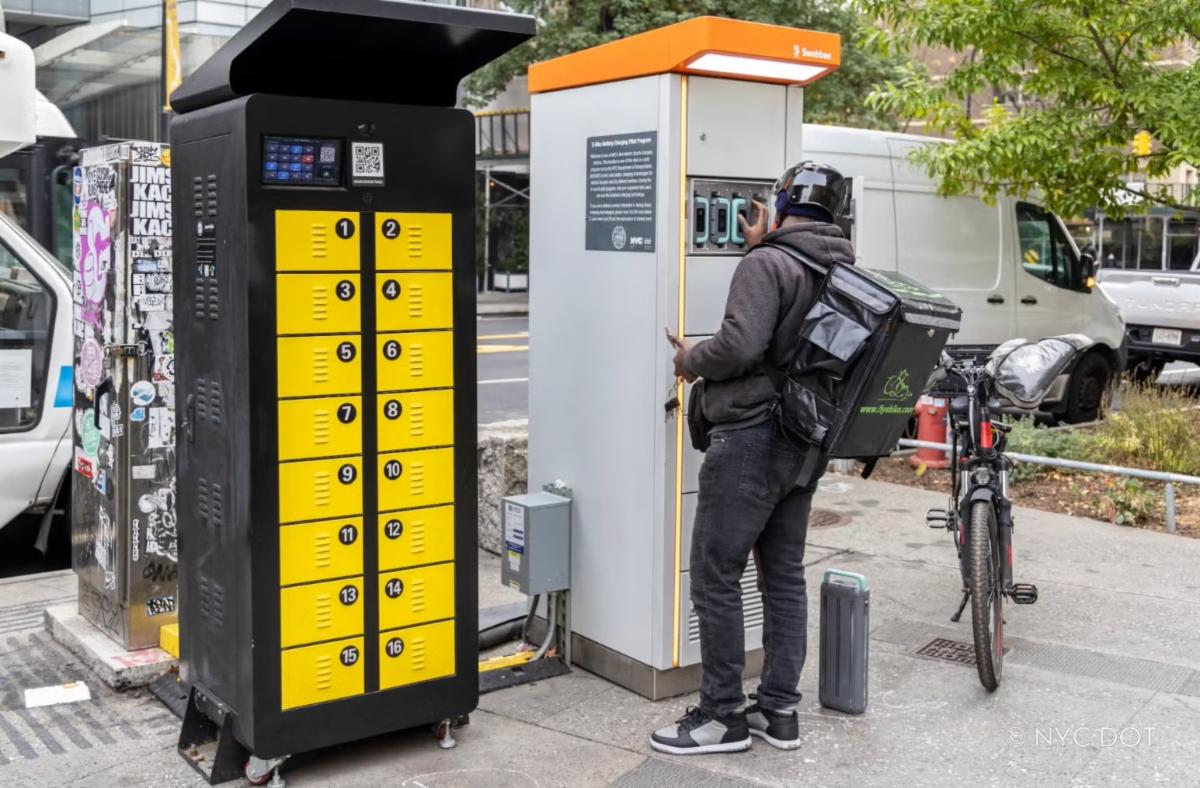
NYC DOT is gathering public input to help shape their Public E-Bike Charging (PEC)
program. This spring they're asking for New Yorkers' feedback on the proposed e-bike battery swapping cabinet locations.
Your input will guide their next steps. They’ll review comments on the proposed sites, refine the list of locations, and develop a prioritized short list to initiate the project’s design phase.
In response to requests from Community Boards, DOT is keeping the Public E-bike Charging Program Feedback Portal open for one more month and it will now close on Monday, August 31st.
| | |
GrowNYC Greenmarket
50th Anniversary Celebration
| | National Night Out Against Crime | | |
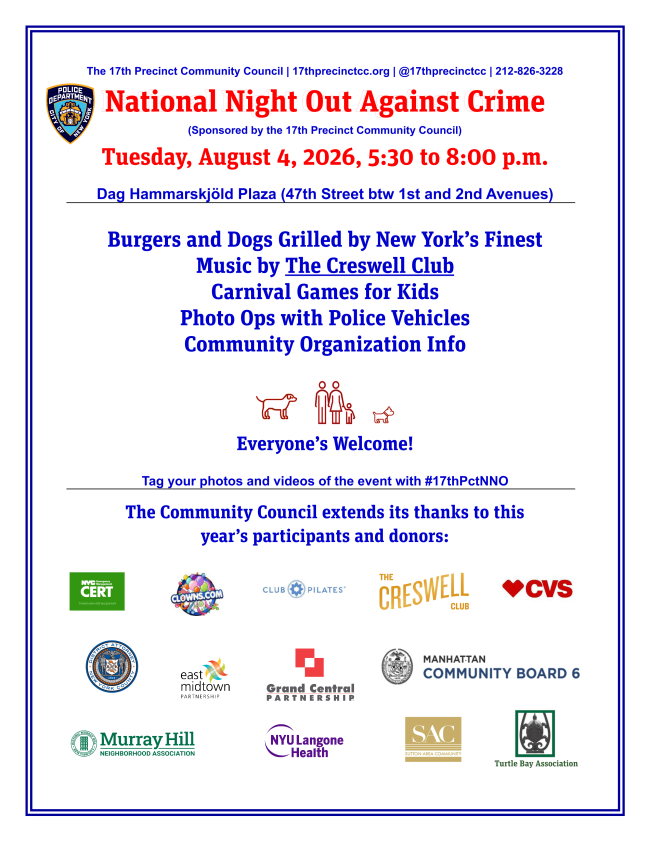
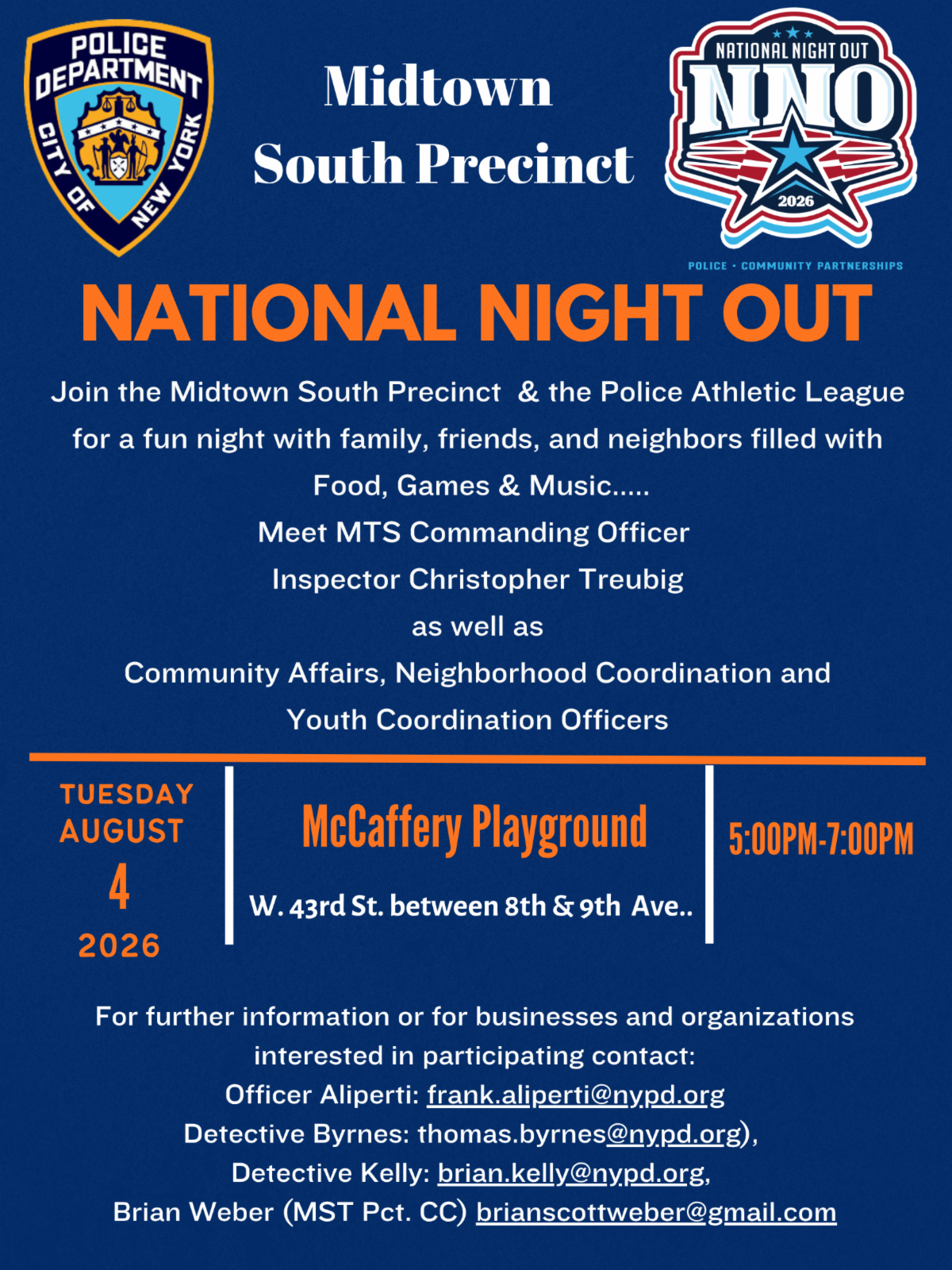
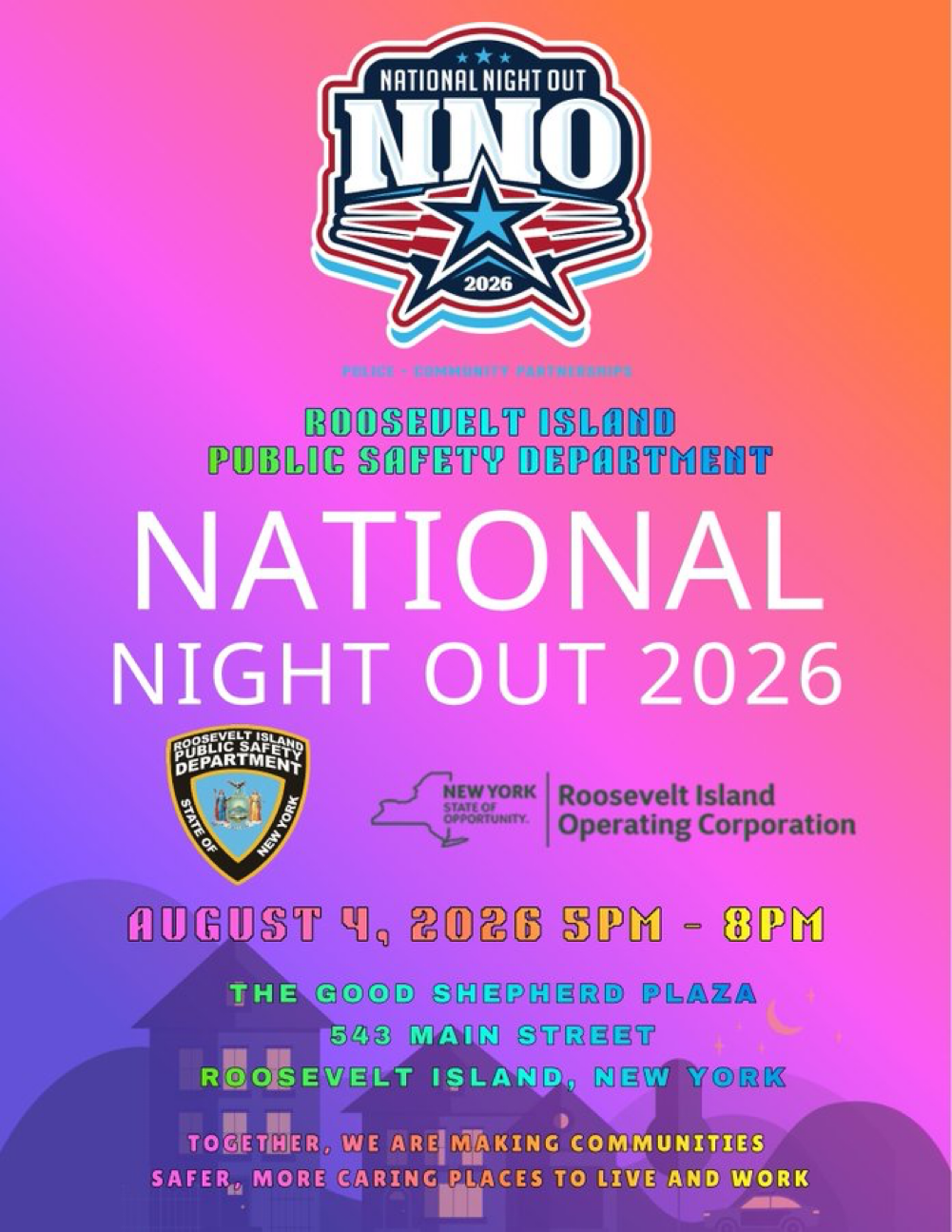
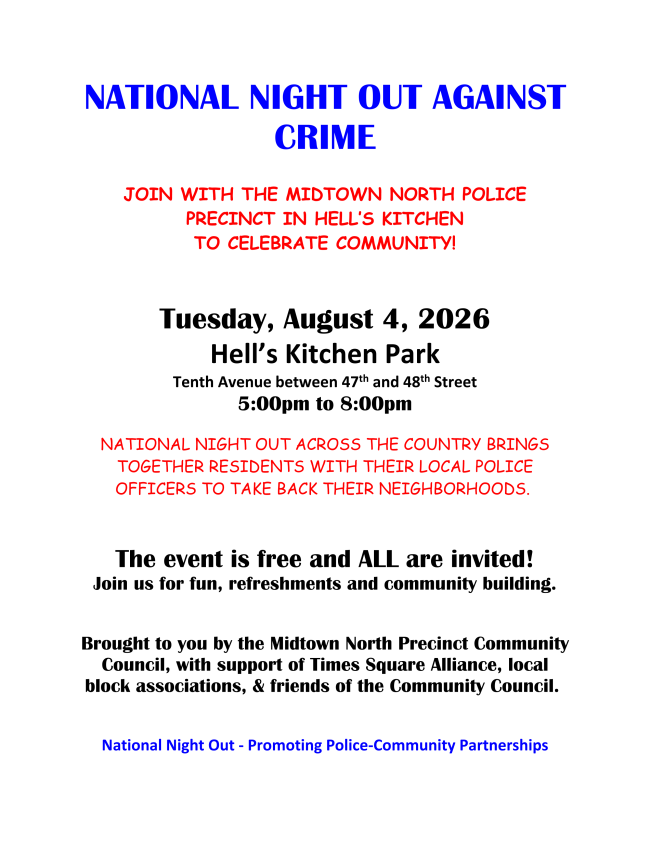
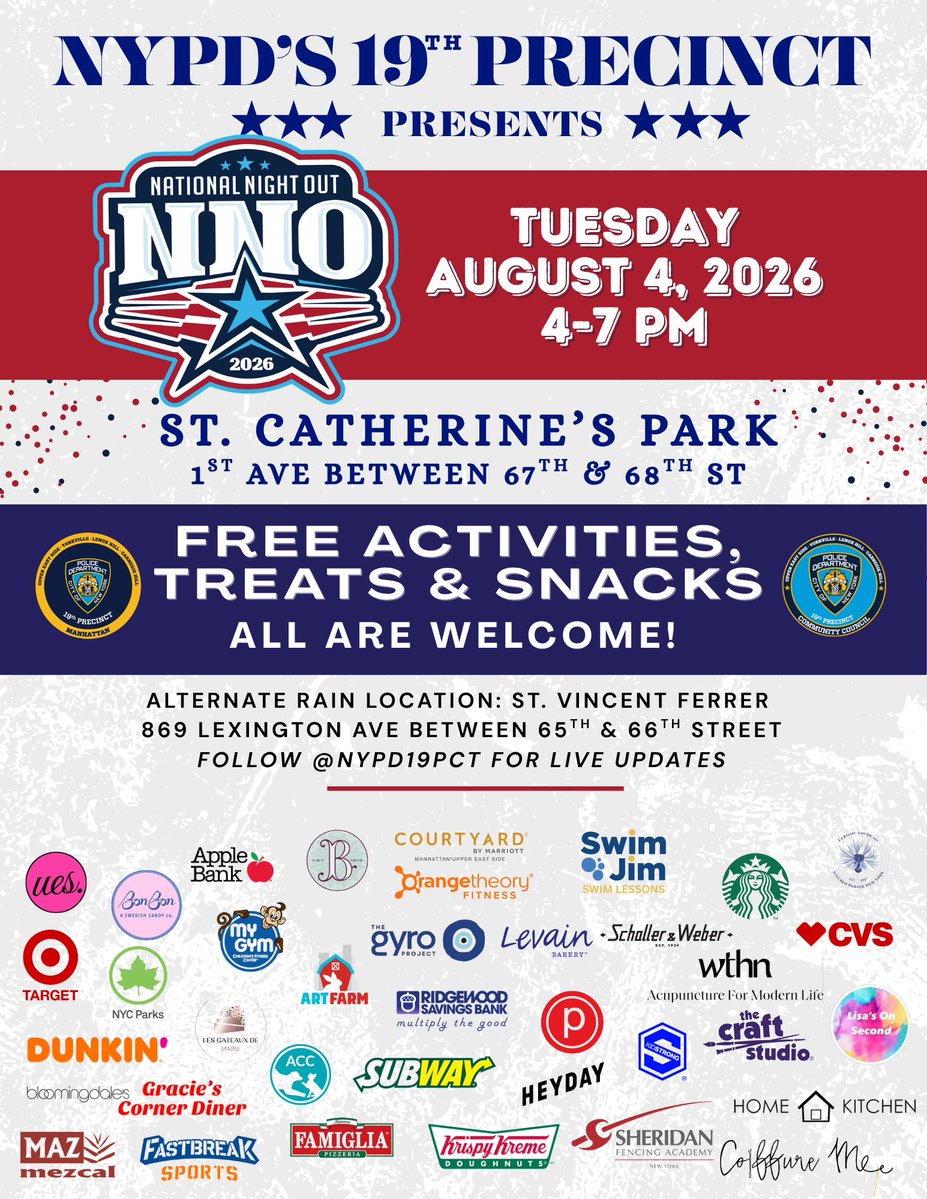
Each year-throughout the United States communities gather together for a National Night Out Against Crime. This year on Tuesday evening, August 4th, the NYPD Precincts of District 28 and the Public Safety Dept. on Roosevelt Island will participate by sharing activities including games and food in neighborhood parks. It’s always a fun evening-enjoyed by all. Here are the happenings in our district:
RIOC Public Safety
- Good Shepherd Plaza, 543 Main Street, Roosevelt Island, 5pm-8pm
13th Precinct
- Peters Field-Augustus St. Gaudens Playground, 328 Second Avenue at 20th Street, 5pm-8pm
17th Precinct
- Dag Hammarskjöld Plaza, East 47th Street between First and Second Avenues), 5:30pm-8pm
19th Precinct
- St. Catherine’s Park, First Avenue between East 67th and 68th Streets, 4pm-7pm
Midtown South Precinct
- McCaffrey Park Playground, West 43rd Street between Eighth and Ninth Avenues, 5pm-7pm
Midtown North Precinct
- Hell's Kitchen Park, Tenth Avenue between West 47th and 48th Streets, 5pm-8pm
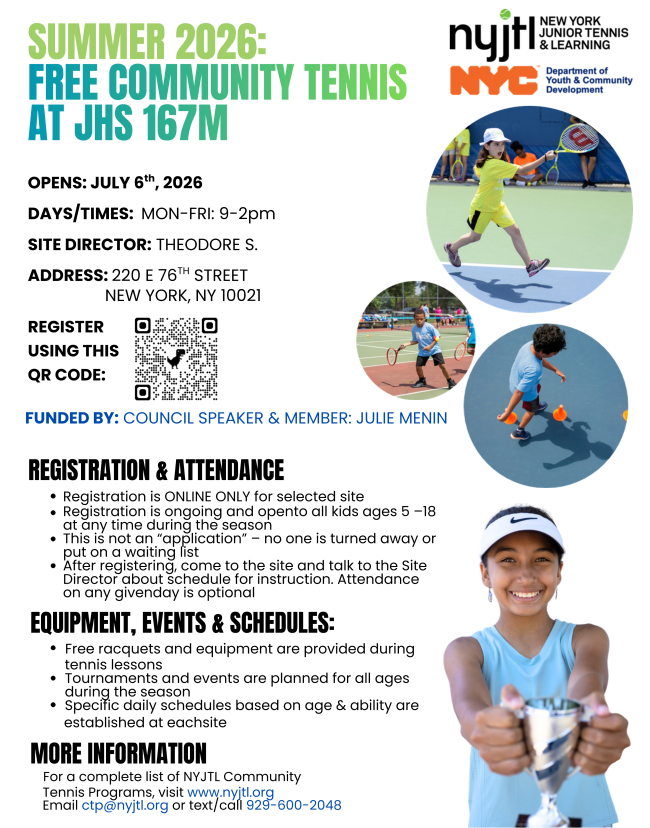
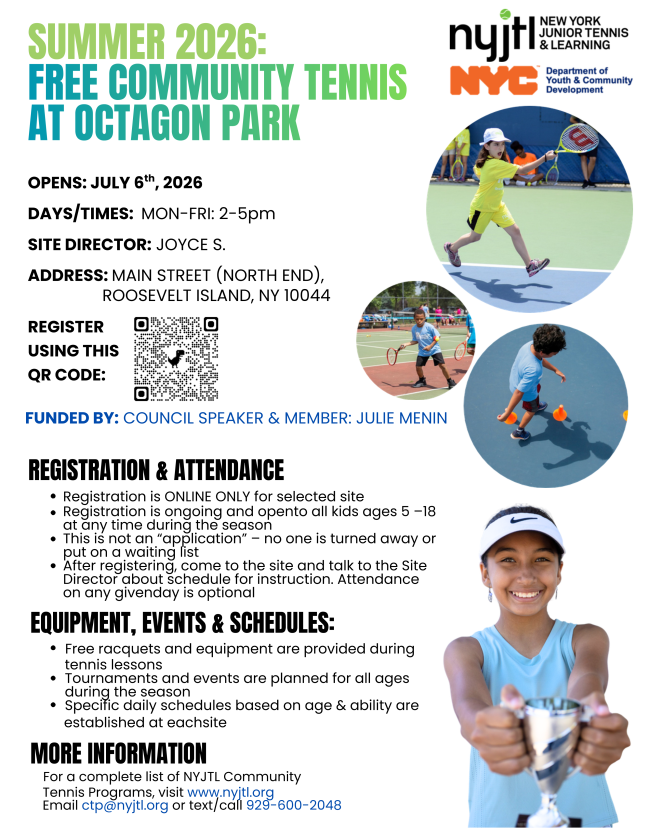
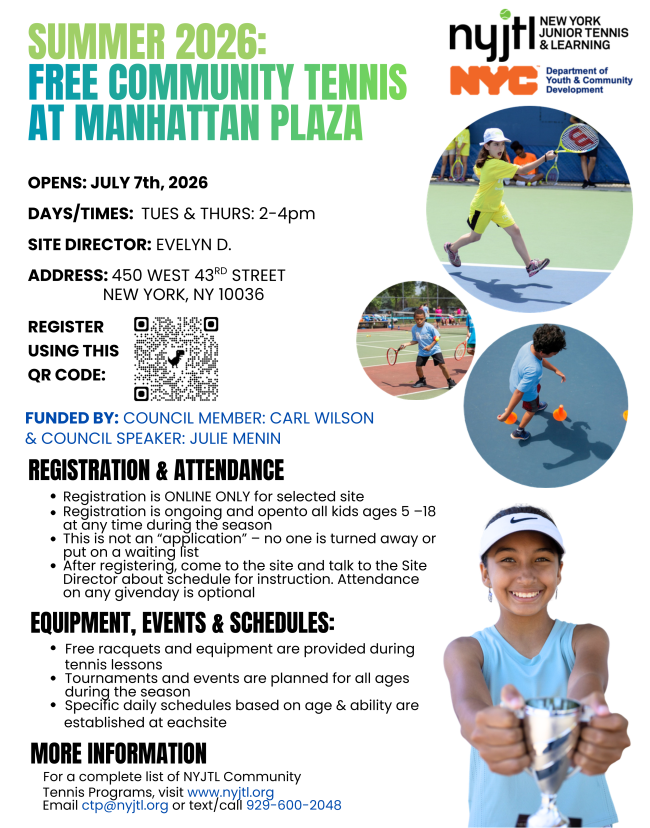
| | Free Community Tennis Near the District | | PAL Summer Playstreet at McCaffrey Playground | | |
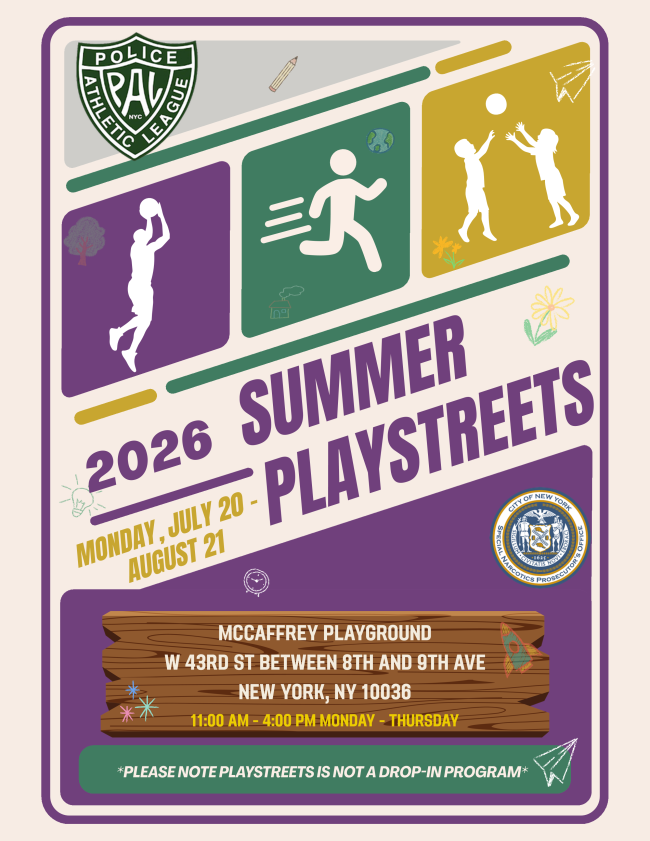
Starting Monday, 7/20, the Police Athletic League’s Summer Playstreet returns to McCaffrey Playground, (W43rd St/ 9th Ave).
The program runs from July 20th thru August 21, Mondays through Thursday, from 11:00 AM to 4:00 PM, and is open to children and teens ages 8-17 accompanied by an adult.
The PAL Summer PlayStreet program provides a safe, supervised environment where children and teens can play, socialize, and participate in sports, recreational activities, and games. The Playstreet is a open to all, no registration is required.
| | |
District Office: 211 East 43rd Street, Suite 2000 | New York, NY 10017 | (212) 490-9535 | Fax: (212) 499-2558
Albany Office: Capitol Building, Room 416 | Albany, NY 12247 | (518) 455-2297 | Fax: (518) 426-6874
Email: liz@lizkrueger.com | On the Web: krueger.nysenate.gov
|
| | | |