October 2024

Neighborhoods United SF

In This Issue

Mayoral Voter Guide

Supporting Sensible Growth

Precedent-Setting Project

Billionaire Blowback on Housing

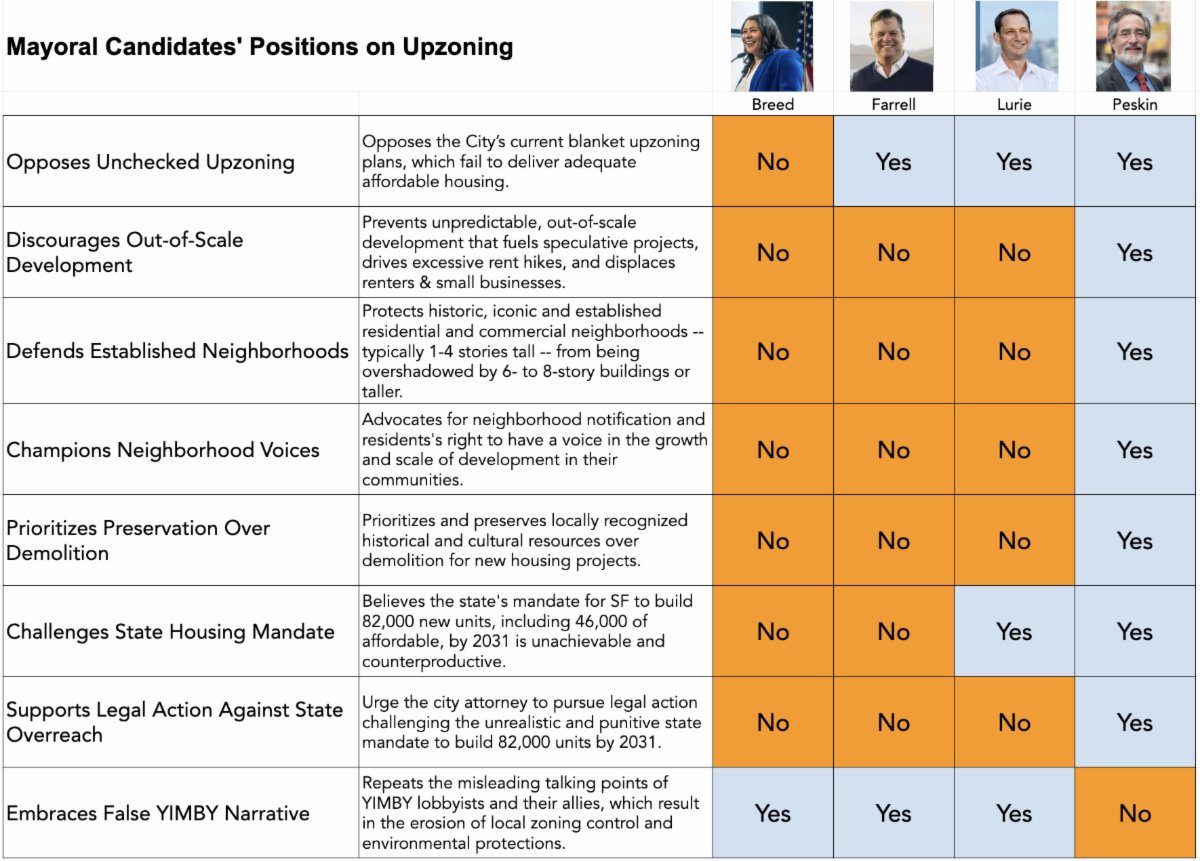
Mayoral Voter Guide:

Positions on Upzoning

View Website: Mayoral Candidates' Responses
 

Supporting Sensible Growth

Over Unnecessary Upzoning

Supervisor Peskin is introducing a resolution this week to create the Sensible Density Working Group, bringing together the Fire Marshal, Department of Building Inspection, and Planning Department. This group will explore how single-stair buildings up to 6-stories can meet safety standards, which could pave the way for more feasible 4- and 6-plex housing conversions by removing the costly two-egress requirement.


This shift would promote smaller, more affordable infill projects that make use of the city’s existing zoning capacity—already sufficient for hundreds of thousands of units—rather than adding capacity through double-density bonuses, waterfront high-rises, and large-scale apartment blocks formed by lot mergers.


This approach stands in sharp contrast to the Mayor's broad upzoning proposal, which would raise height limits across much of the city, resulting primarily in luxury condos that are accessible more to investors than to local residents. A single-stairway policy could promote more affordable housing options while preserving neighborhood character.


Related Article:

Could changing this obscure S.F. building code allow the city to create more housing

Precedent-Setting Project:

A Threat to Every Neighborhood

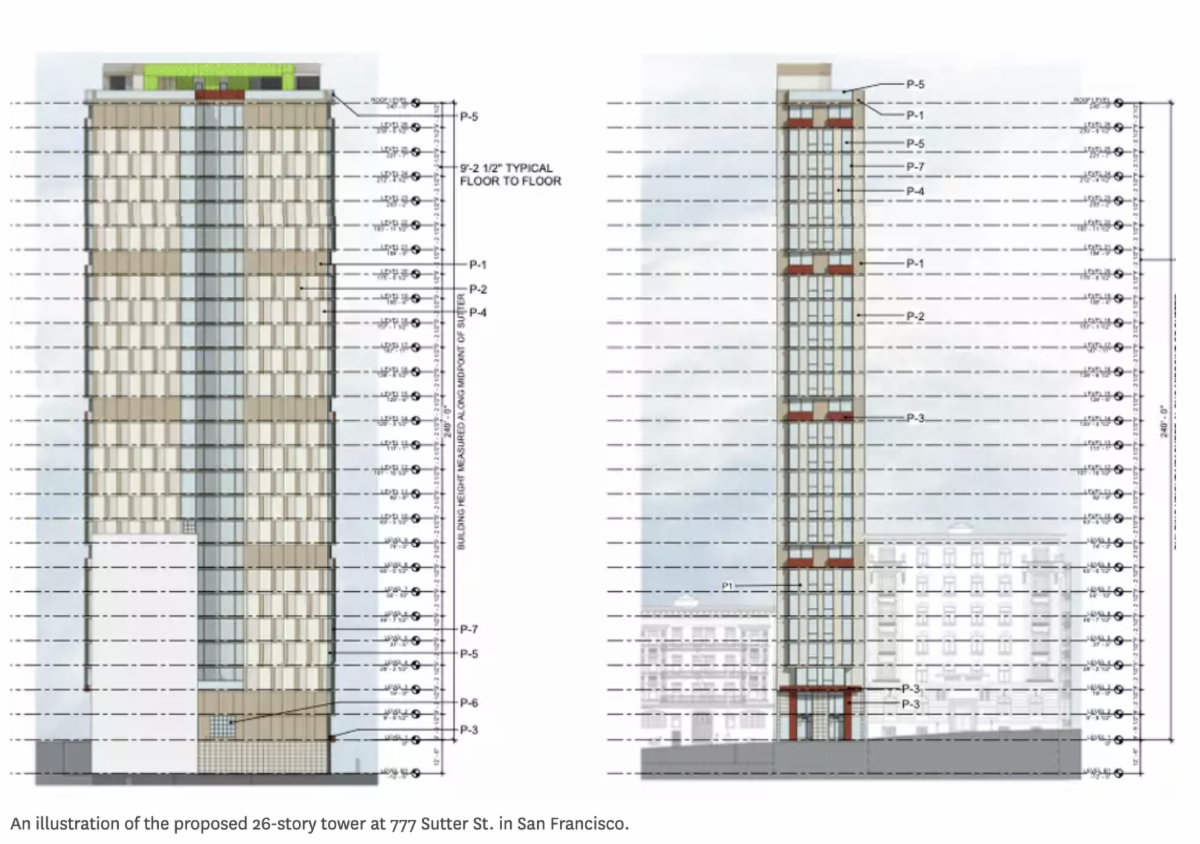
San Francisco, October 24 – Moe Jamil, candidate for District 3 Supervisor, and Lori Brooke, co-founder of Neighborhoods United SF, held a press conference at 777 Sutter Street, the site of a proposed 26-story tower, calling for housing solutions that better align with community needs.


The project, planned for the former Fleur de Lys site, proposes 26 stories on a narrow 35’ x 100’ lot currently zoned for only 8-stories. It takes advantage of recently enabled state law SB 423 (Wiener), which allows large, out-of-scale projects to bypass public input, setting a precedent that could bring similar high-rise projects (pencil towers) to any neighborhood, on any street, across our city. 


Using multiple state and local density bonuses, the project would provide just six (6) affordable units on the lower floors, while upper floors would cater to high-priced occupants, including exclusive 5-bedroom, single-floor units on floors 12-26. This is happening now—even before the Mayor Breed's upzoning plans take effect, which would only amplify these impacts. 


Neighborhoods United SF and Jamil view this project as emblematic of unchecked development that removes resident voices and lacks meaningful affordability.

Billionaire Blowback on Housing

Read Full Report


Conclusion from Report: The concentration of wealth and power – the billionaire blowback – is disrupting the lives of millions of people, especially in terms of access to housing. Billionaire investors are buying up single-family homes, apartment buildings, and mobile home parks in order to squeeze residents into paying greater portions of their incomes in rent. In cities across the country, thousands of unhoused people sleep on streets outside thousands more vacant luxury units. Instead, our tax system and government policy must encourage the gross redistribution of wealth and power. Furthermore, all levels of government can take action to defend local communities from billionaire encroachment and redirect resources to housing solutions.


The housing crisis in the U.S. will not be addressed simply by efforts to expand the supply of housing. Nor will it be solved by giving further government subsidies and land use incentives to for-profit developers to create temporarily affordable housing. Truly fixing the housing crisis will require addressing the pain that low-income residents feel today, by increasing tenant protections to stop rent increases and displacement, and reversing the criminalization of homelessness. Furthermore, all levels of government must create lasting solutions by increasing the percentage of social housing in every community that is permanently and deeply affordable, as well as publicly owned or under democratic community control, to put people before profit. Any future public subsidy directed toward housing should be locked in perpetuity to ensure present and future affordability.


This report points out that we can tamp down the harms to the housing market caused by the billionaire blowback. And in some cases, we can “tax the bad” — in this case real estate speculation — and direct resources toward solutions including the expansion of the social housing sector. The less wealth extracted by billionaires, the greater racial, gender, disability, and economic justice for our communities. The more people who can meet their basic need for affordable housing outside this speculative market, the greater health, well-being and the freedom to thrive for all residents of our communities.

ABOUT NEIGHBORHOODS UNITED SF


Neighborhoods United SF (NUSF) has rapidly mobilized over 

60 neighborhoods across San Francisco to resist extreme state-mandated, 

locally-implemented height and density increases.


NUSF champions community-led planning to protect vulnerable residents 

and small businesses from gentrification while ensuring 

the livability of San Francisco's neighborhoods.