Protecting Prairies & Promoting Native Plants | |
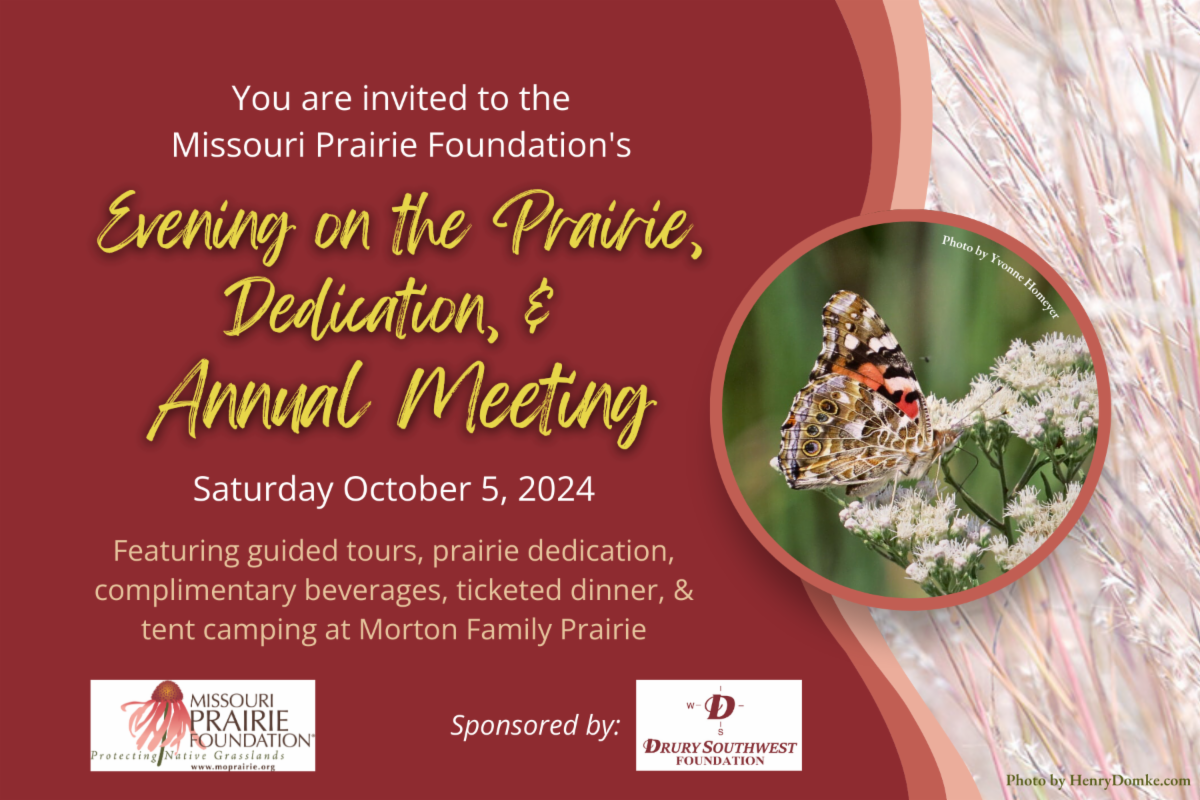
Evening on the Prairie, Dedication of Morton Family Prairie, and Annual Meeting in Benton County | |
|
All are welcome to join us for a fall celebration as we honor Dr. Wayne Morton and dedicate the 380-acre Morton Family Prairie that Dr. Morton donated to MPF in December 2023. As part of this free event (with optional ticketed dinner), guests can partake in guided hikes on the prairie, enjoy complimentary wine, beer, and soft drinks, and sleep under the vast starry sky with overnight tent camping.
MPF members in attendance will participate in a brief Annual Member Meeting to elect directors to fill two expiring three-year terms. See the schedule of events, the slate of director nominees, and register for the event here. Register by Thursday, September 26.
Many thanks to Drury Southwest Foundation for its sponsorship of this event!
|  | |
Here is a summary of news and upcoming MPF events featured in this issue:
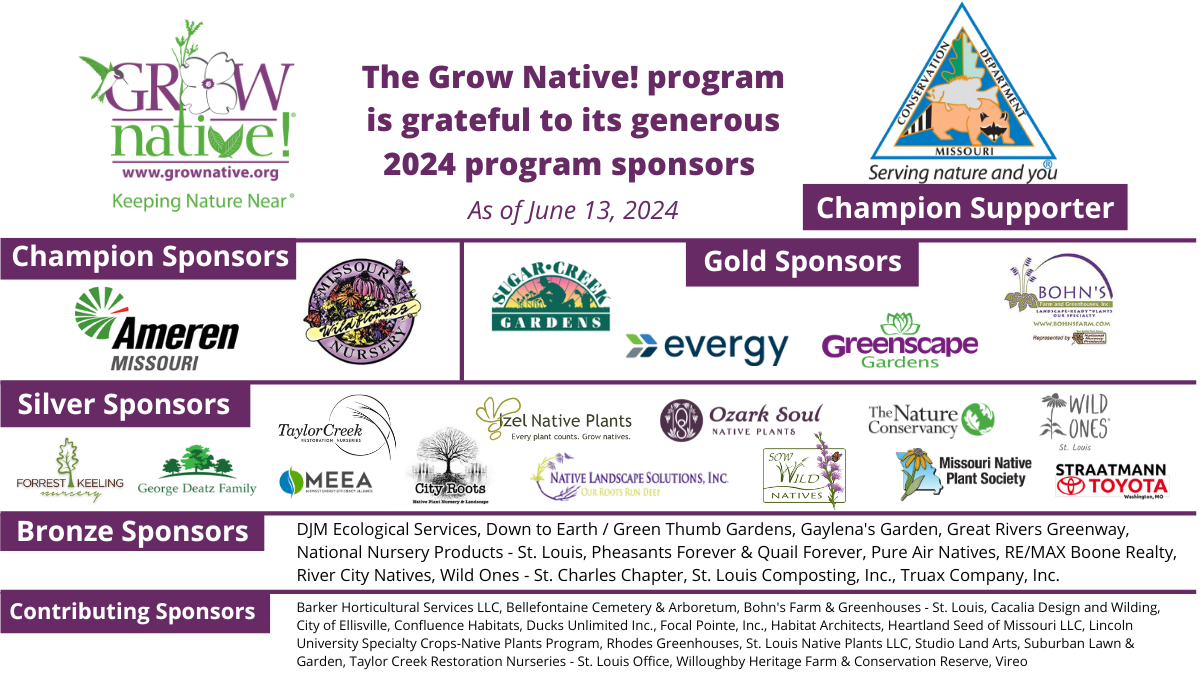
–Thank You to Our 2024 Grow Native! Program Sponsors
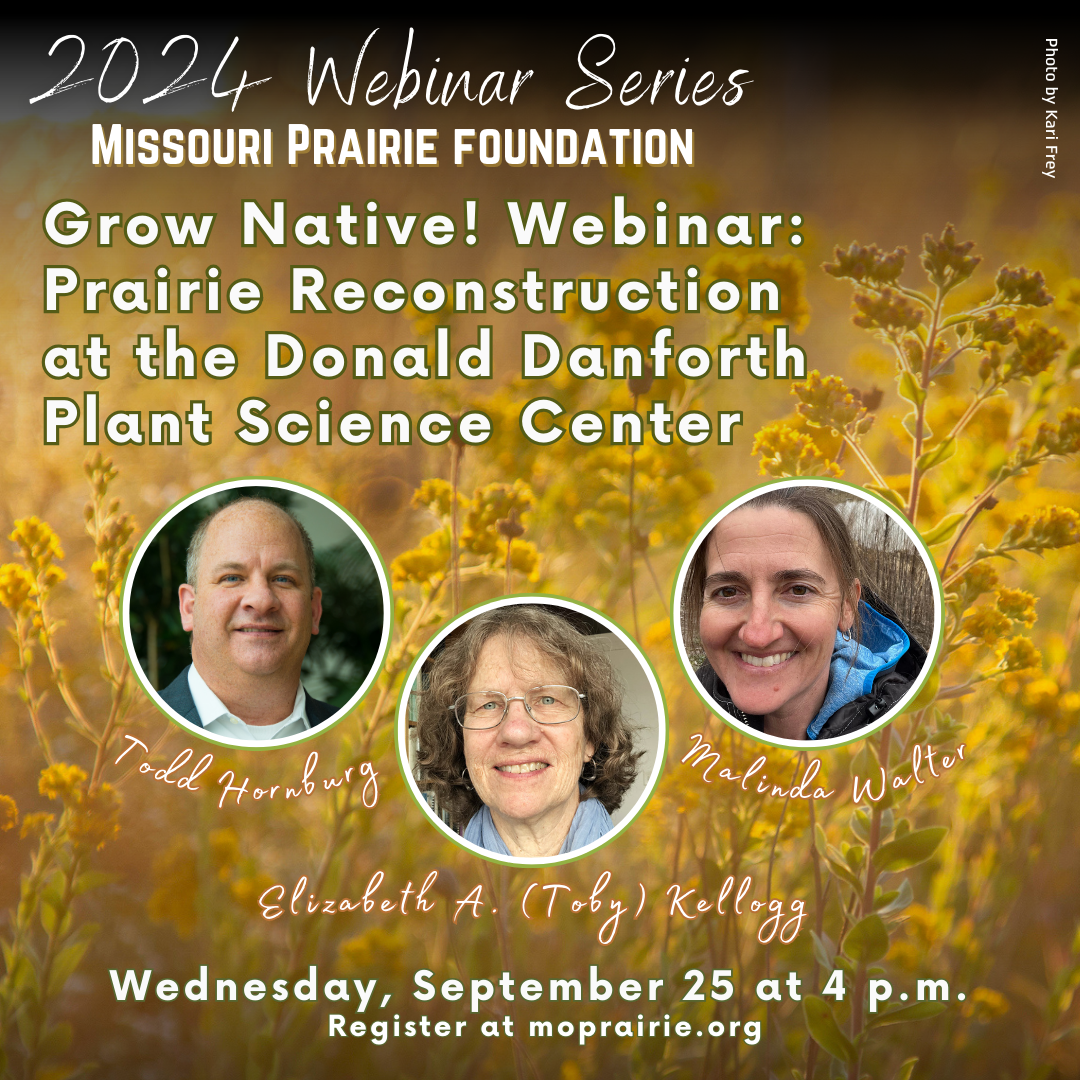
–September 25: Grow Native! Webinar: Prairie Reconstruction at the Donald Danforth Plant Science Center
–September 26 and 29: MPF Native Plant Sales
–September 28: Monarch Tagging Event at MPF’s Snowball Hill Prairie
–September 28: Paint it Prairie Plein Air Event at Snowball Hill Prairie
–October 9: Grow Native! Webinar: Native Ferns in Missouri and their Potential as Specialty Crops
–Prairie Strips: MPF Offers Ecosystem Service Incentive Payments
–October 20: MPF Friends of Cuivre River State Park Grasslands Work Day
–Prairie Postcard: An Odonate Odessey
Stop by the MPF booth at these upcoming events—we'd love to see you:
–Missouri Master Gardener Association (MOMGA) Conference in St. Joseph, MO (September 27-29)
–Prairie Jubilee at Prairie State Park (September 28)
–Get MO Wild Fall Fest at Guy B. Park Conservation Area (September 28)
–Duckfest in St. Paul, Missouri (October 5-6)
–Natural Areas Conference (NAC) in Manhattan, Kansas (October 7-10)
Sincerely,
The MPF Team
Graphic top-right, postcard featuring the painted lady butterfly by Yvonne Homeyer; photo of little bluestem by www.HenryDomke.com
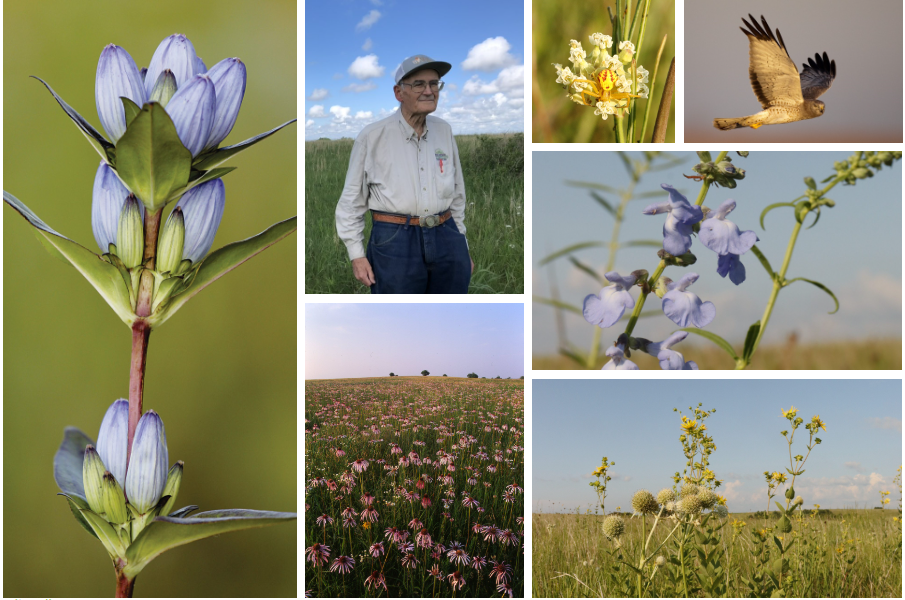
Collage photos, clockwise from left, closed gentian (Gentiana andrewsii) by Mervin Wallace; Dr. Wayne Morton by Carol Davit; crab spider on whorled milkweed (Asclepias verticillata) by Bruce Schuette; Northern harrier by MDC, blue sage (Salvia azurea) by Bruce Schuette; rattlesnake master (Eryngium yuccifolium) and rosinweed (Silphium integrifolium) by Bruce Schuette; pale purple coneflower (Echinacea pallida) by Frank Oberle
| |
Thank You to Our 2024 Grow Native! Program Sponsors
| |
September 25: Grow Native! Webinar: Prairie Reconstruction at the Donald Danforth Plant Science Center | |
|
In 2015, approximately 6 acres of lawn were replaced with a reconstructed prairie at the Danforth Plant Science Center in Creve Coeur, Missouri. This Grow Native! webinar presentation will outline the process of site preparation, planting, and maintenance—from the first plantings to the present—from Danforth Plant Science Center experts. The presentation will include information on current stewardship of the prairie, how it fits into the overall goals and mission of the Center, and the possibilities and limitations of the reconstructed prairie for research purposes. The prairie planting at the Danforth Plant Science Center is a Grow Native! Garden of Excellence.
Presenters Include Todd Hornburg, Danforth Center Vice President of Facilities and Special Services; Elizabeth A. (Toby) Kellogg, Danforth Center Robert E. King Distinguished Investigator; and Malinda Walter, co-owner of Compass Native Landscapes, a Grow Native! professional member that has stewarded the Danforth Center prairie planting since 2023.
The webinar, to be held via Zoom, will include a video presentation and a live question-and-answer session. The webinar will be recorded with a link sent to all registrants, and posted to the MPF YouTube channel.
Wednesday, September 25 at 4:00 p.m. Register here.
Photo of native blooms from Danforth Plant Science Center’s reconstructed prairie by Kari Frey
| |
September 26 and 29: MPF Native Plant Sales | |
|
Autumn is a fabulous time of year to plant a new native garden and to add additional varieties to landscapes already established. MPF has organized the following native plant sales where vendors will sell a wide variety of native wildflowers, sedges, grasses, vines, shrubs, and trees—all suited for fall planting.
Thursday, September 26, 3:30 to 6:30 p.m. Roeslein & Associates, St. Louis, Missouri. Vendors: Gaylena’s Garden, Missouri Wildflowers Nursery, and River City Natives. Find details and pre-order deadlines here.
Sunday, September 29, 1:00 to 4:00 p.m. Missouri Western State University, St. Joseph, Missouri. The event will be held outdoors just east of Fulkerson Center, at Parking Lot F. Vendors: City Roots Native Plant Nursery, Missouri Wildflowers Nursery, and Sow Wild Natives. Find details and pre-order deadlines here.
Find information on vendors and locations from past sales held in 2024 here.
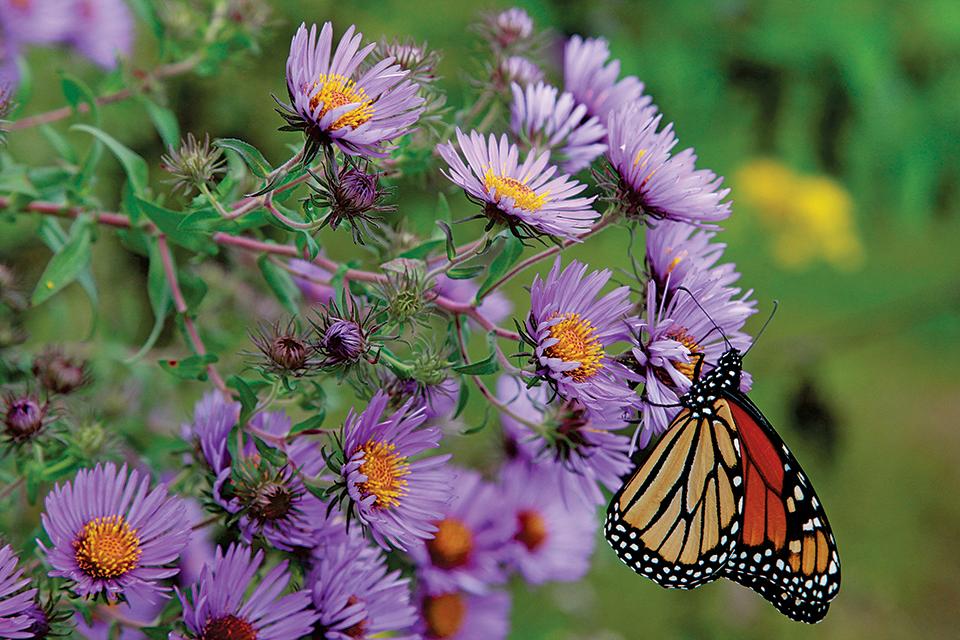
Photo of monarch butterfly on aromatic aster (Symphyotricum oblongifolium) by Mervin Wallace
| |
September 28: Monarch Tagging Event at MPF's Snowball Hill Prairie — Spots Still Available!
| |
|
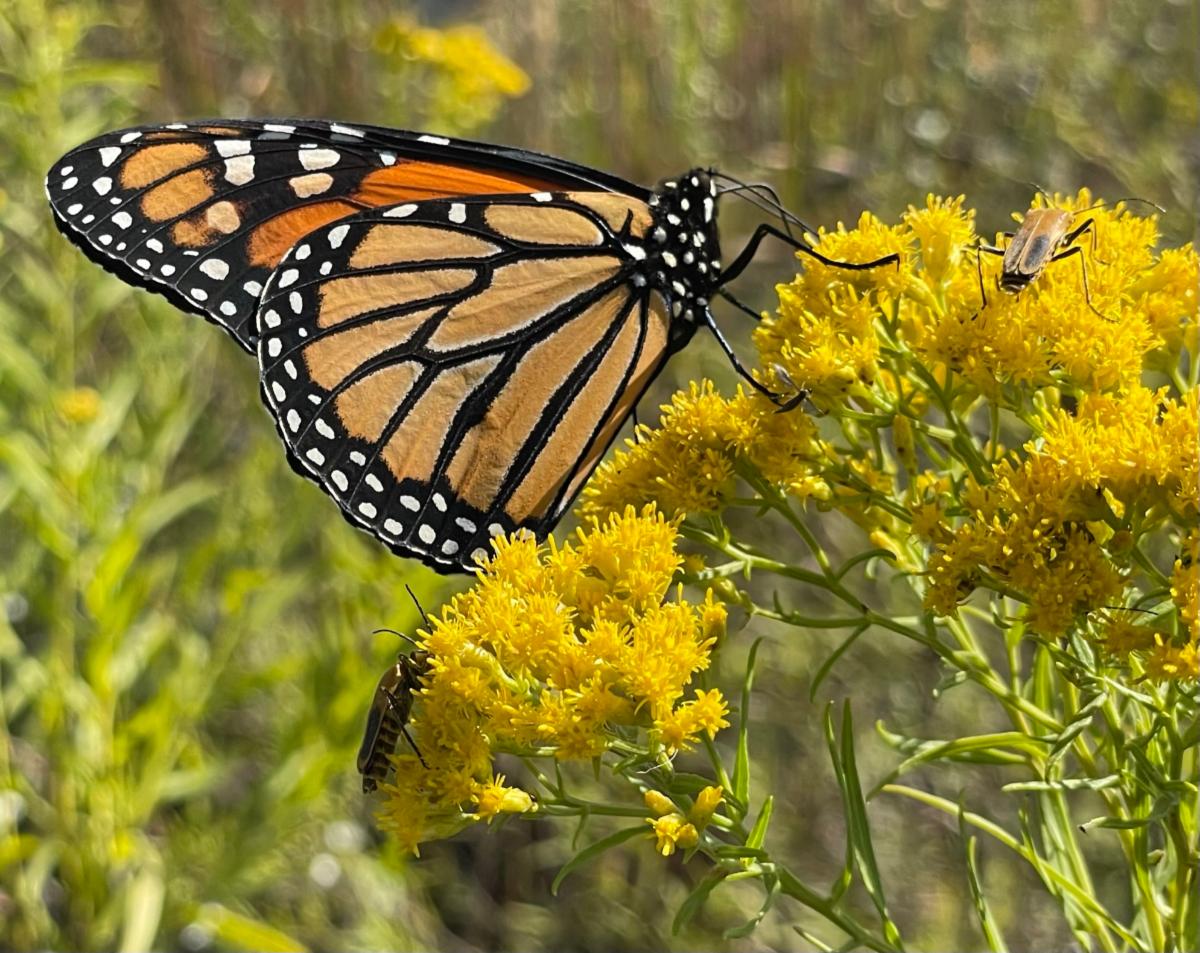
September is prime monarch butterfly migration in Missouri, and MPF is hosting a monarch tagging event at its Snowball Hill Prairie near Harrisonville, Missouri, on Saturday, September 28 from 10:00 a.m. to 12:30 p.m. There is no charge to participants, and no experience is necessary.
MPF Board Member Tracy Lewandowski will lead the tagging activity, which entails affixing a small paper sticker to the butterfly’s wing. When the butterfly is found along its migration route, information from the tag can be entered into a database that scientists use to monitor monarch movements and population trends. Monarch butterfly populations have trended downward in recent decades due to habitat loss, and the more we learn about these iconic butterflies and their epic migration, the better we can all hone strategies to protect them.
All ages are welcome to this event, and participants are encouraged to dress for outdoor adventure with appropriate clothing and sunscreen. To respect the prairie, please plan to depart this event with anything brought in. No restrooms will be available on site. Prairie is accessible by foot from the parking lot at the entrance. Bring a butterfly net if you have one, but Tracy will have some nets that can also be used.
Saturday, September 28, 10:00 a.m. to 12:30 p.m. Register here. Maximum: 25 registrants. This is a free event.
Photo of monarch butterfly on Great Plains goldentop (Euthamia gymnospermoides) at Snowball Hill Prairie by Tracy Lewandowski
| |
September 28: Paint it Prairie – Plein Air Painting Event at Snowball Hill Prairie | |
|
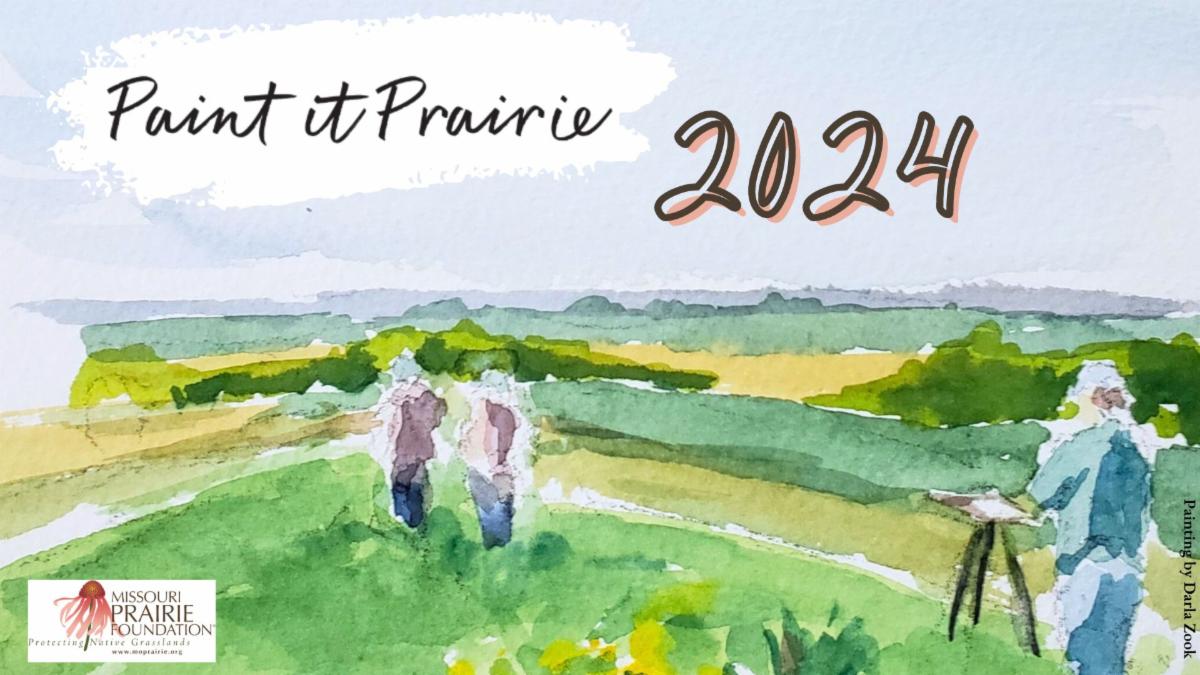
You are invited to spend the day visiting MPF's Snowball Hill Prairie outside of Harrisonville, Missouri, with your camera, brushes, and canvas. Pack up your favorite art medium supplies and camera, along with a non-disposable container of water and snack, and come to enjoy learning about and painting on this incredible, 22-acre original native prairie and the adjoining 52-acre planted prairie.
All ages are welcome to this event. Participants are encouraged to dress for outdoor adventure with appropriate clothing and sunscreen. To respect the prairie, please plan to depart this event with anything brought in. No restrooms will be available on site. Interpretive hikes will be offered at 10:00 a.m. and 2:00 p.m. Visit tables on site for additional information about native prairie, MPF and Grow Native!, and the Harrisonville Fine Art Association.
Saturday, September 28, 10:00 a.m. to 2:00 p.m. Find the flyer on our website here.
* Rain date: October 5, 2024
Prairie is accessible by foot from the parking lot at the entrance. No fees to participate or registration required. If you have questions or concerns, please call Doris Sherrick: 816-716-9159 or Patsy Albers: 816-213-3565
Prairie painting by Darla Zook
| |
October 9: Grow Native! Webinar: Native Ferns in Missouri and their Potential as Specialty Crops | |
|
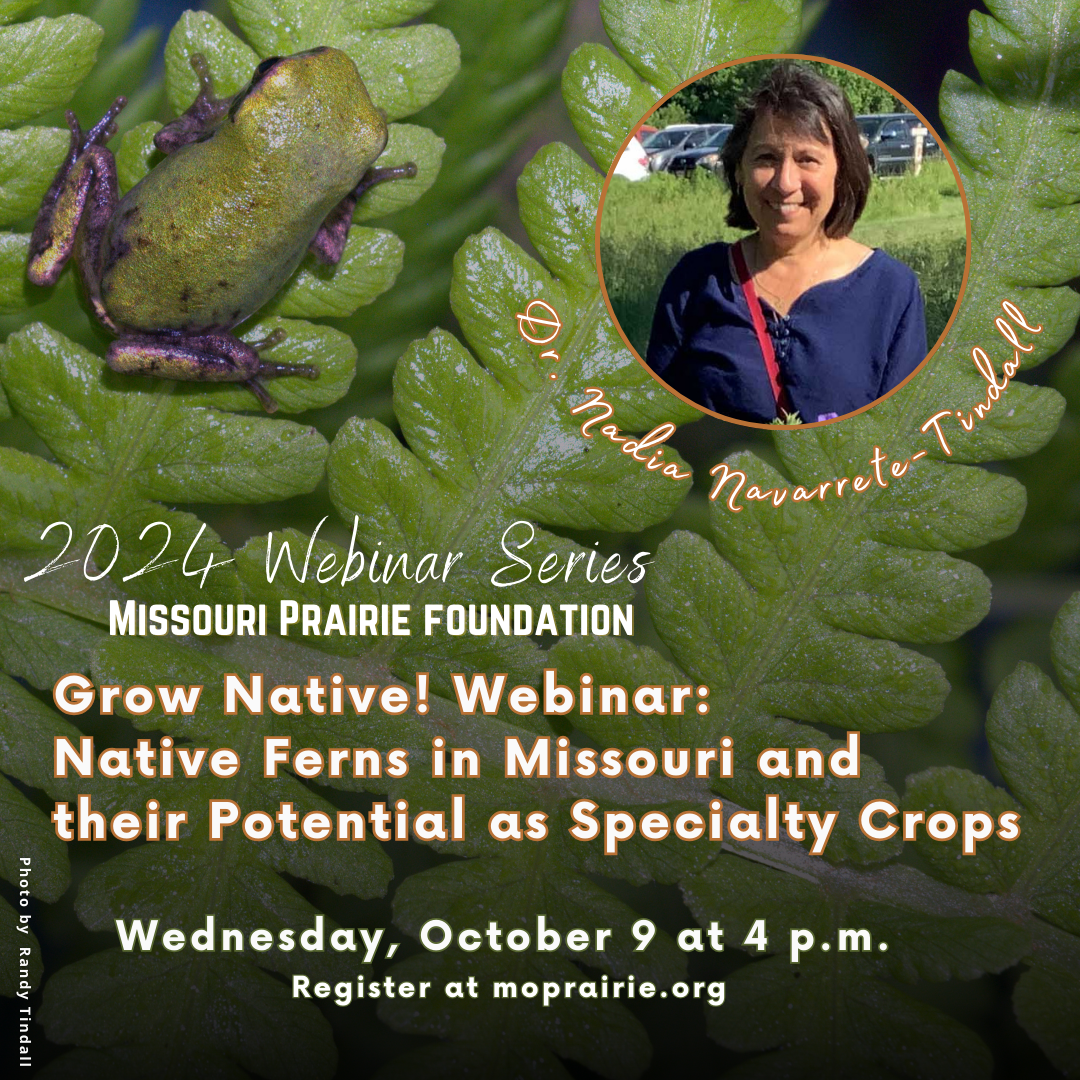
Get more familiar about growing ferns in Missouri with Dr. Nadia Navarrete-Tindall, the owner of Native Plants & More consulting business and the Specialty Crops & Native Plant Specialist for Lincoln University in Jefferson City, Missouri. Fern species and life cycles will be discussed, followed by an introduction to a unique native fern education and outreach project by the Specialty Crops & Native Plants Program at Lincoln University and Grow Native!. This collaboration project aims to promote the growth and adoption of ferns in gardens in Missouri and surrounding states.
The webinar, to be held via Zoom, will include a presentation and a live question and answer session. The recording will be sent to all registrants following the webinar, and posted to our YouTube channel as well. Please register below at the link.
Wednesday, October 9 at 4:00 p.m. Register here.
Photo of ostrich fern (Matteuccia struthiopteris) and a small frog by Randy Tindall
| |
Prairie Strips: MPF Offers Ecosystem Service Incentive Payments | |
|
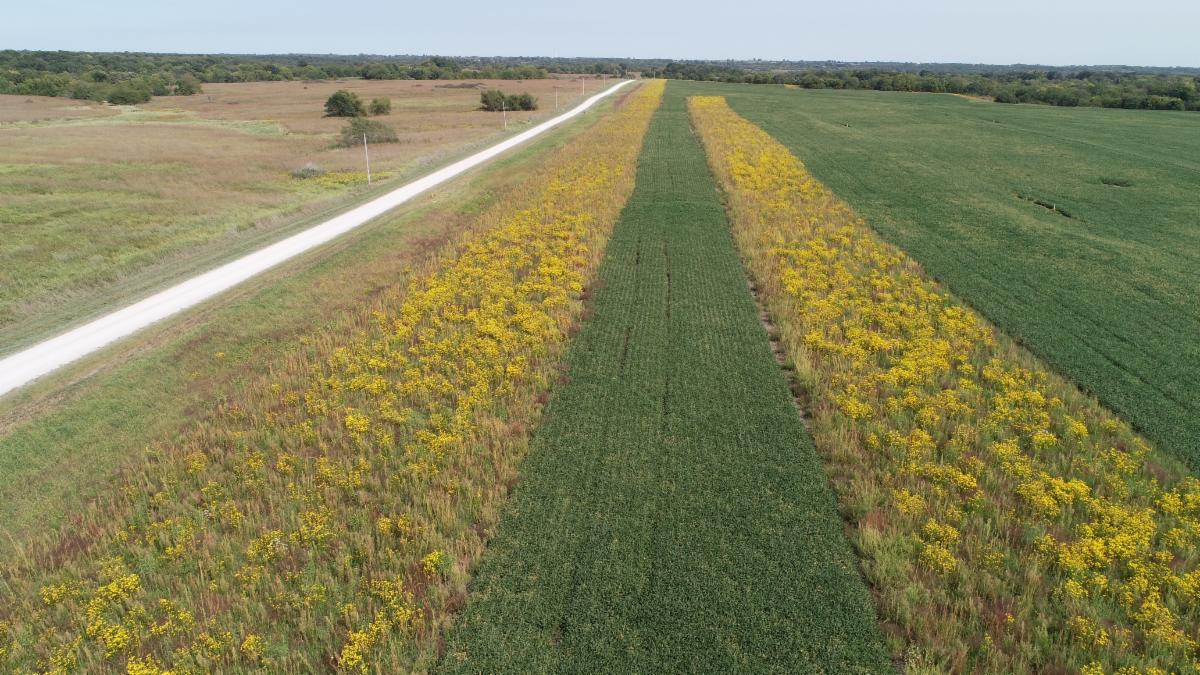
Through a grant from Iowa State University, MPF offers an ecosystem services payment until December 2024 to soybean and corn farmers who enroll in the United States Department of Agriculture's (USDA's) prairie strips (CP-43) practice. The prairie strips agricultural conservation practice is the establishment of linear, perennial plantings of prairie grasses and wildflowers within and/or around corn and soybean fields. Prairie strips reduce soil erosion, improve water quality, store carbon in the ground, and provide pollinator and wildlife habitat.
Prairie strips (CP-43) is a continuous Conservation Reserve Program (CRP) practice under the USDA’s Clean Lakes, Estuaries, and Rivers (CLEAR) initiative. If using CP-43 cost-share to establish prairie strips, they must be in place for a 10- or 15-year contract period. CP-43 provides up to 50% cost-share payments for establishment, 10 to 15 years of annual rental payments, and other financial incentives.
MPF’s grant provides an additional reward to farmers to enroll in CP-43: an ecosystem services payment worth 50% of the seed cost. The Missouri Department of Conservation offers yet another financial incentive: $300 per acre of prairie strips, provided that at least some of the strips are within row crop fields.
If you have cropland and would like to enroll some of it in CP-43, contact your local USDA office and ask to speak to an NRCS (Natural Resources Conservation Service) or FSA (Farm Service Agency) staff member about CP-43. Read more details here about MPF’s prairie strips ecosystem incentive payment or call MPF at 573-356-7828. Read or listen to this Harvest Public Media story on prairie strips, published on September 23, 2024, here.
Photo above of prairie strips at the Doughty family farm in Livingston County, Missouri, by Doug Doughty
| |
October 20: MPF Friends of Cuivre River State Park Grasslands Work Day | |
|
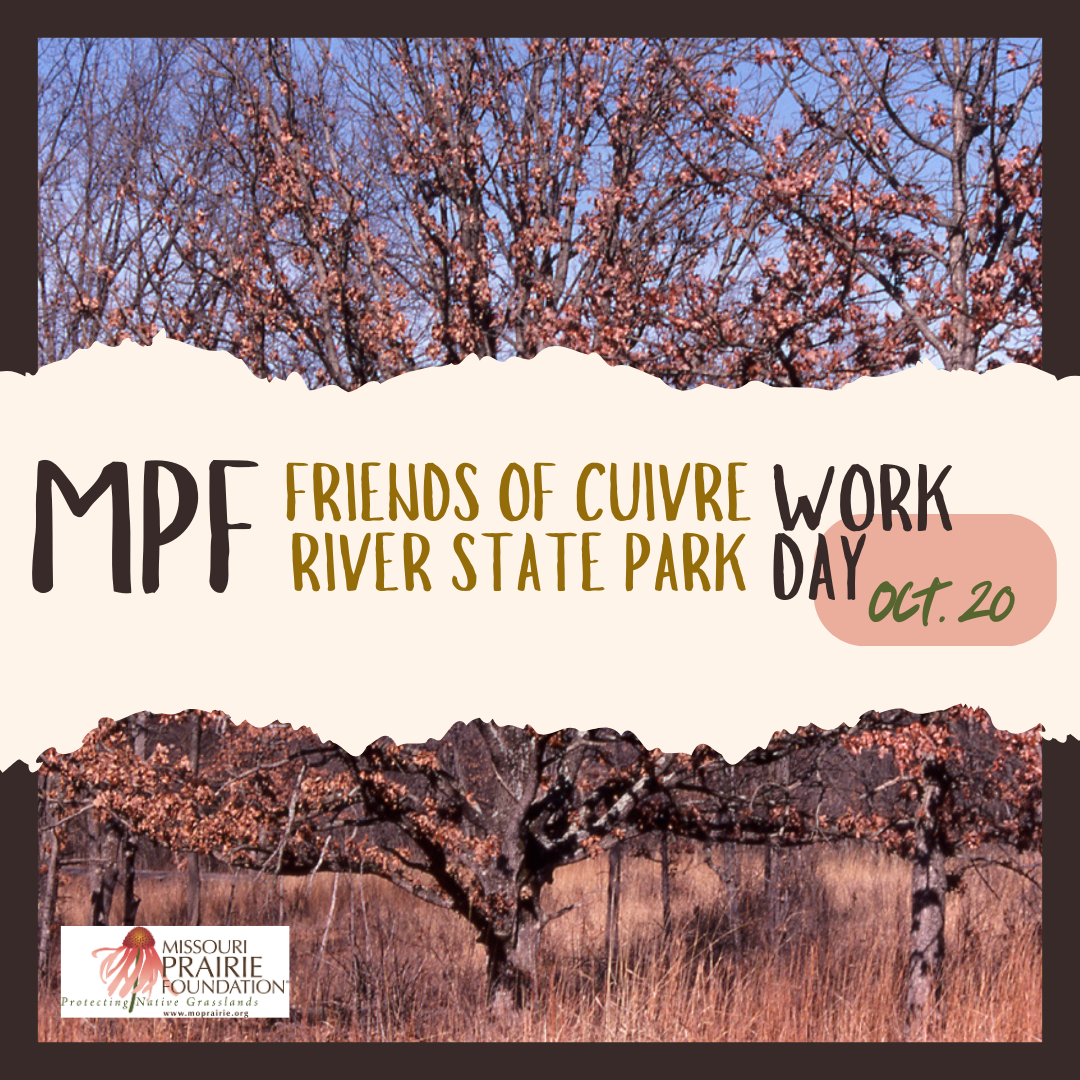
MPF volunteers can help steward the open woodlands at Cuivre River State Park near Troy, Missouri on Sunday, October 20 from 12:00 to 3:00 p.m. Volunteers will be able to collect native grassland seeds, and support brush clearing and/or fireline prep work. All equipment will be provided by the park, but volunteers should bring and wear work gloves. Dress for the weather and bring drinking water.
The workday will be held with a minimum of 5 volunteers and a maximum of 20 by MPF Vice President of Science and Management, Bruce Schuette. Everyone should meet at the park visitor center a little before noon.
Sunday, October 20, 12:00 p.m. to 3:00 p.m.
To register for the workday, please send an email to outreach@moprairie.org or call 636-303-7418.
Photo of post oak (Quercus stellata) in fall by Bruce Schuette
| |
|
Prairie skylines in spring, summer, and fall are often dotted with dragonflies, which are in the taxonomic order Odonata. While they hunt in prairies, dragonflies are not likely to be residents of grasslands their entire lives.
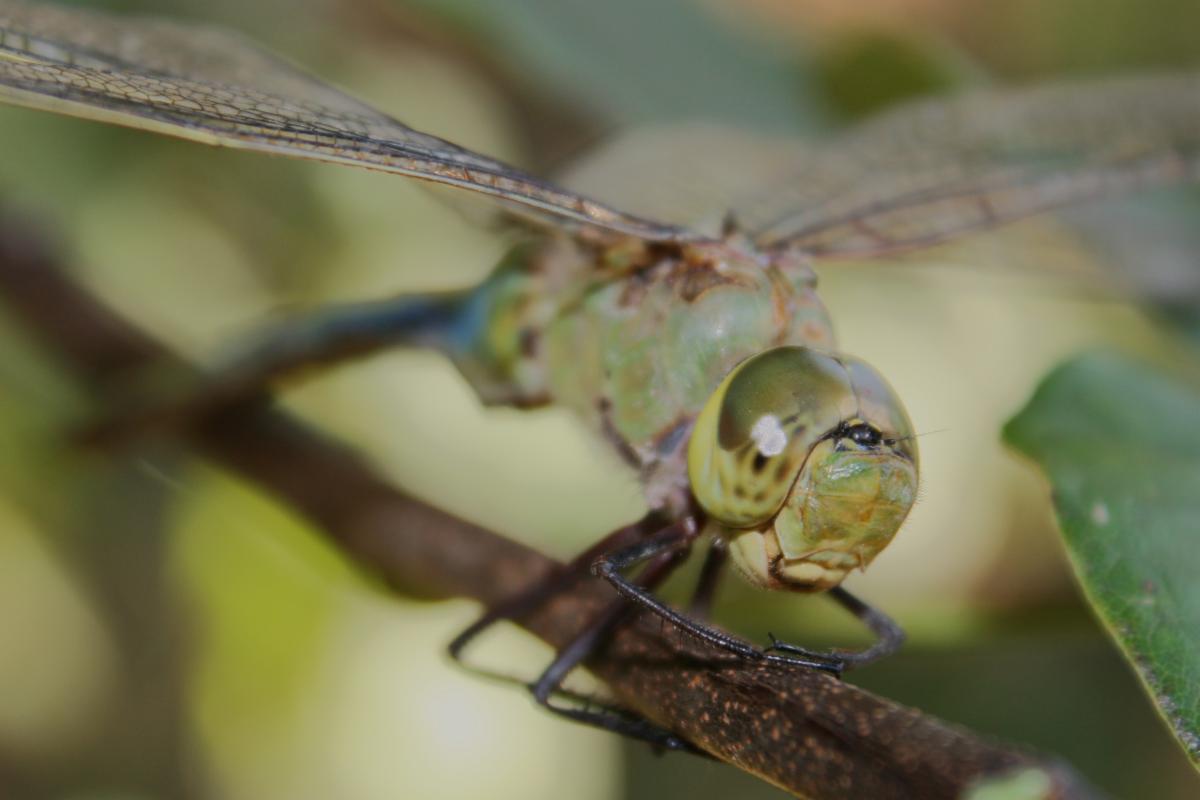
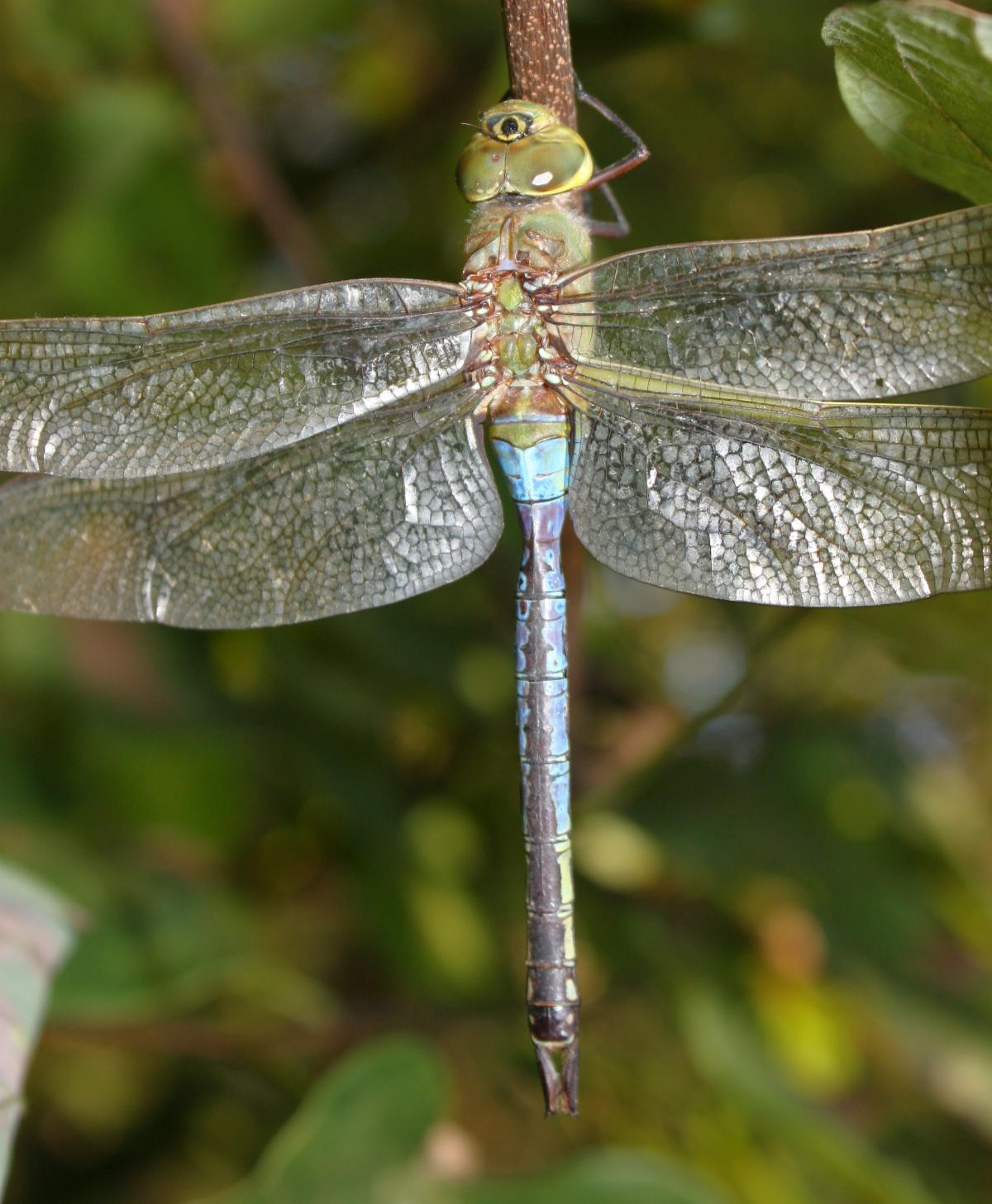
Prior to hunting over land, they are restricted to water, where they spend most of their lives as nymphs. The green darner (Anax junius), a common and eye-catching dragonfly, travels to prairies and other grasslands not only from a neighboring wetland, but potentially from hundreds of miles away.
The green darner can be either a year-round resident or migratory. The migratory green darner spends its winters in a range that includes the southern United States, Central America, and the Caribbean, where it finds warmer lakes and streams in winter months. The first green darners we see in the northern range are likely to be migrants as they follow warming temperatures northward to a broad range in the Midwest and eastern North America. Later in the summer, the darners you see may be the year-round residents that have now emerged from the water and metamorphosed into adults, or are the offspring of the migrants that matured rapidly in the northern range and are living here until they make their journeys south. As temperatures cool, this next migrant generation can be observed flying south, often alongside kettles of broad-winged hawks also heading towards their overwintering ranges, feeding on dragonflies along the way.
To learn more about the Odonates of the prairie, read this interview from the Missouri Prairie Journal with entomologist Richard Day. For more on the migration of the green darner, read this article from Smithsonian magazine. To learn more about the paired migration of dragonflies and hawks, check out this blog post from the Xerces Society and the resources made available by the Migratory Dragonfly Partnership like this field guide to migrating dragonflies.
Photos of green darner (Anax junius) dragonfly by Bruce Schuette
| |
The Missouri Prairie Foundation respectfully acknowledges that the land we work to protect was the homeland of a diversity of Native American nations prior to European-American settlement. The land in our care continues to have cultural significance for the Ni-U-Ko’n-Ska (Osage), Nyut/\achi (Missouria), Asakiwaki and Meskwaki (Sac and Fox), Báxoje (Ioway), Kaw, and other Native American nations. We are mindful that these nations had a significant role in shaping the landscape and that they continue a sacred relationship with the lands we protect. We recognize and appreciate their contributions to the cultural heritage of this region and to the history of North America. We honor them as we protect the ecological integrity of the lands in our care. | | |
|
Newsletter content ownership: Missouri Prairie Foundation.
Missouri Prairie Foundation Statement on Use of Artificial Intelligence (AI)
You are receiving this message because you are a subscriber to this enewsletter, a Missouri Prairie Foundation member, supporter of Missouri's prairies, and/or interested in native plants. If you are not a member, please join us! Member support is vital to our outstanding prairie protection efforts. E-mail us at info@moprairie.org, call us at 1-888-843-6739, or visit us at www.moprairie.org. Please forward this message to other prairie supporters. If you do not wish to receive these periodic messages, please unsubscribe below.
| | | |
|
For State Employees: #8426 | | |
Missouri Prairie Foundation
PO Box 200
Columbia, MO 65205
(888) 843-6739
| |
| | | |