September 26, 2025

Dear Community:


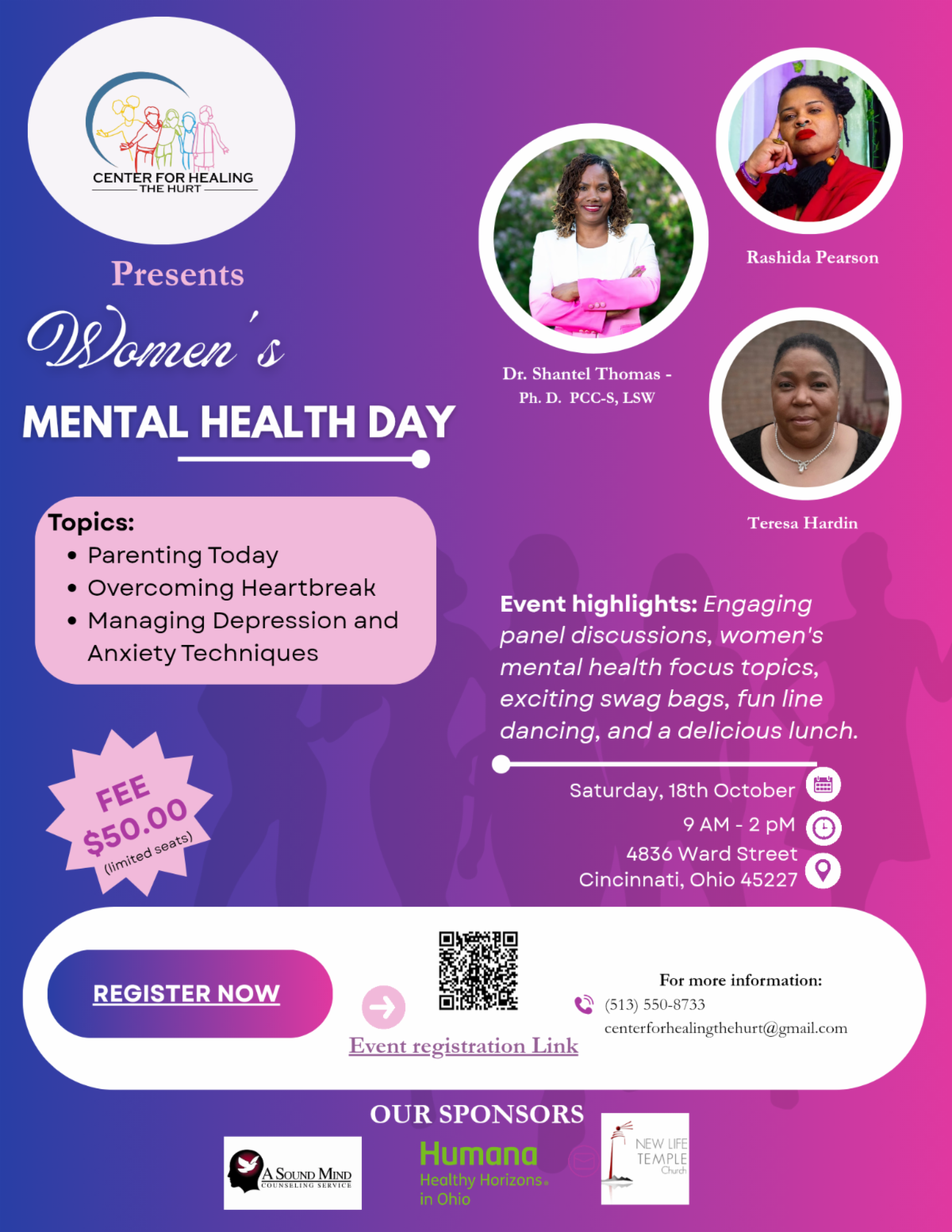
At Closing the Health Gap, our work continues to educate, empower and advocate to build a culture of health for all! I’m excited to invite you to a powerful event tomorrow, Saturday, Sept. 27: Hope, Health, and Happiness with Dr. Shomo (9 a.m.–12 p.m., UC Health Business Center). Dr. Shomo will share ancestral wisdom that has guided her toward a healthier, happier life. It's an experience you won’t want to miss.


This week, I also had the privilege of joining caregivers at our Caring for the Caregiver town hall in Montgomery. The turnout was inspiring, and the dialogue – on balancing self-care while caring for loved ones – was deeply moving. If you missed it, the full panel will air on What’s Happening in Health this Sunday, Sept. 28 at 6 a.m. on Local 12.


Meanwhile, concerning national developments remind us why our advocacy matters. The Trump administration has removed key federal health equity data, threatening our ability to track disparities, while recent statements on Tylenol and pregnancy spread confusion unsupported by science. We remain committed to providing trusted, evidence-based resources to protect community health. And we continue to understand that We Must Save Us. Wishing you all a blessed week ahead.


Renee Mahaffey Harris

President & CEO

LOCAL 12: Caregivers urged to prioritize self-care to better support others

A large crowd gathered at the Caring for the Caregiver town hall at Life Enriching Communities in Montgomery Thursday, seeking resources and advice for caring for loved ones.


Renee Mahaffey Harris, President and CEO of the Center for Closing the Health Gap, shared personal experiences, highlighting the challenges caregivers face in balancing self-care with their responsibilities.


Skip Phelps from Spring Grove Cemetery noted the deep connections caregivers form with their clients, leading to significant grief when a client passes away.


Attorney and CPA Bill Hesch pointed out that caregivers often neglect their own health, which can lead to them not outliving those they care for.


The event featured resources and a special education panel. The full information from the panel will be shared on the "What's Happening in Health" show on Sunday 9/28 at 6 a.m. on Local 12.

Tylenol – Listen to Your Doctor Not Politicians

by Clyde E. Henderson, MD

Cincinnati Medical Association


On Monday, September 22, Mr. Trump took to the White House podium with HHS Secretary Robert F. Kennedy, Jr., and Dr. Mehmet Oz, (Administrator for the Centers for Medicare and Medicaid Services) and declared multiple times that pregnant women should “never” take Tylenol (brand name for acetaminophen). He went on to say, without presenting any evidence, that Tylenol in pregnancy “causes” autism. Unfortunately, his words matter. Immediately, and almost universally, medical practitioners and medical organizations contradicted his recommendations and assertions, based on the extensive available science. These professionals understand the chaos and confusion that is created by Mr. Trump’s “never” absolute, when the more beneficial science-based approach is to consider the truths along with the risk-benefit analysis. I will get into the truths as we know them so that you can make your reasoned decisions.


Tylenol is the brand name for the drug acetaminophen and is available over-the -counter and in prescription medications. It is used for the temporary relief of pain, persistent headaches, and fever. Like all medications it is essential that you follow the package or prescription bottle instructions. Let me reiterate that every medication has potential side effects. These adverse effects can be minimized by taking the recommended dosage. Do not take more than one acetaminophen containing medication at the same time. In pregnancy there may be a need for a pain reliever or fever reducer. If either of these go inadequately treated there are established risks to the mother and the unborn. For instance, untreated fever can lead to miscarriage. Therefore “toughing it out” like Mr. Trump suggested is not an appropriate option. The other over-the-counter options of aspirin or ibuprofen are clearly not recommended in pregnancy because of known detrimental effects on the fetus. The position of the American College of Obstetrics and Gynecology (ACOG) supports the moderate use of acetaminophen in pregnancy based on two decades of research. Even the current FDA confirms “the fact that acetaminophen is the safest over-the-counter alternative in pregnancy among all analgesics and antipyretics; aspirin and ibuprofen have well-documented adverse impacts on the fetus.”


Studies which look for a link between acetaminophen use during pregnancy and autism do not show a causal relationship, although a few suggest a possible association. Even the FDA’s Press Release of September 22,2025 uses phrases like “studies suggest” and “may be associated with an increased risk” while admitting that “a causal relationship has not been established.”


Autism is a “spectrum” of complex developmental conditions. The signs range from uncommon patterns of speech, learning, and/or behavioral maturation to a child being completely non-verbal, and everything in between. The rates of “autism” have been increasing over the last two decades for many varied reasons. Among which is the definition has been broadened to include everything on the aforementioned spectrum. Also, parents, educators, and providers are becoming more aware of the expanded diagnostic criteria and rightfully seeking accommodations to assist these, just like all, developing children. There is no evidence of an increase in the frequency of profound cases, although the frequency of total cases, under the new criteria, has increased from 1 in 150 in the early 2000’s to 1 in 31 children, currently. Autism was recognized as a disease in 1911 and given a specific disorder designation in 1943. Note that acetaminophen came about in 1955. Research has identified several hundred inherited and/or mutated genes that may be involved in this spectrum. Although various medications are available for the treatment of different manifestations on the disease spectrum, there is no known preventative treatment. Leucovorin, which is a derivative of folic acid, has been suggested for prevention but it has not been scientifically studied to the extent that it can be safely recommended.


The patients and families affected by autism and other neurodevelopmental disorders deserve compassion, understanding, public health policies that allow them access to insurance coverage, and the funding for medical research that can find answers to unclear issues. Our current leadership in Washington has implemented policies adverse to all these tenets. It is additionally unhelpful to have exaggeration in the face of currently available facts.


If seeking public information, we should rely on sources which consider the available science, such as the National Medical Association, AMA, ACOG, and the American Academy of Pediatrics. These organizations, as well as many of the physicians in the US Congress, and even Dr. Oz, who the day after Mr. Trump’s pronouncement back-tracked, recommend the “judicious” use of acetaminophen when needed in pregnancy. For your personal health advice, trust your doctor, not the person with the biggest megaphone who has no medical degree and neither concern nor alignment with the preponderance of the science.

Fall Festivals in Forest Park and Mt. Auburn!

Disparity in vaccine access between states roils patients, providers

This weekend, Jennifer O. will pack up her car in Baton Rouge, Louisiana, and drive her daughter more than two hours to a CVS clinic in Ocean Springs, Mississippi, where she’s heard she might be able to secure a pediatric COVID-19 vaccine.


There are things Jennifer would rather be doing with that time — like taking her daughter to a birthday party — but she feels she has no choice. Jennifer hasn’t been able to find a vaccine for her daughter in Baton Rouge, despite the fact that COVID cases are on the rise across Louisiana. This is the first year she’s failed to secure a vaccine locally, even after scouring pharmacy websites and contacting her pediatrician.


Access to the shots has dried up in some states after HHS Secretary Robert F. Kennedy Jr. removed the shot from the Centers for Disease Control and Prevention’s vaccine schedule for healthy children in May, and the Food and Drug Administration further limited COVID booster shots a few months later. The changes occurred over objections from several medical groups, including the American Academy of Family Physicians and the American Academy of Pediatrics, which said the new policies stood in contrast to available evidence.

Disappearing Federal Data: Implications for Addressing Health Disparities

Data are a cornerstone for efforts to improve health and health care, including addressing disparities. Federal data can act as “essential infrastructure,” with policymakers and institutions relying on demographic, geographic, and health outcomes data, among others, to make important decisions around resource allocation. Data are important for identifying health status and needs, including disparities; directing efforts and resources to address needs and disparities as they are identified; assessing the impacts of policy changes; and establishing accountability. Without adequate data, health needs and disparities may remain unseen and unaddressed. Further, lack of reliable and transparent data can erode public trust in government institutions, negatively impact willingness to participate in future federal data collection efforts, and make policy implementation challenging.


The Trump administration has taken actions to eliminate equity-related initiatives and has removed federal data from online sites, deleting sociodemographic variables from datasets, and has delayed the release of some data. This policy watch reviews recent changes in availability and timeliness of federal data based on a review of publicly available federal datasets that are commonly used to measure health and health care as of August 2025. The identified changes, which largely include removal of data or variables relating to race or ethnicity or sexual orientation and gender identity (SOGI), may not be exhaustive as they focus on a subset of federal datasets and since several datasets are being modified on an ongoing basis. Looking ahead, there are likely to be continued declines in the availability and timeliness of federal data. While most changes have affected racial or ethnic or SOGI data to date, other domains could be affected in the future.


Decreased availability of federal data may impede efforts to identify and address health needs and disparities, trend changes in health and health care among different groups over time, and impact how resources are allocated, which could lead to overall declines in the nation’s health and productivity.

FOLLOW US
Facebook      Twitter      Instagram