|
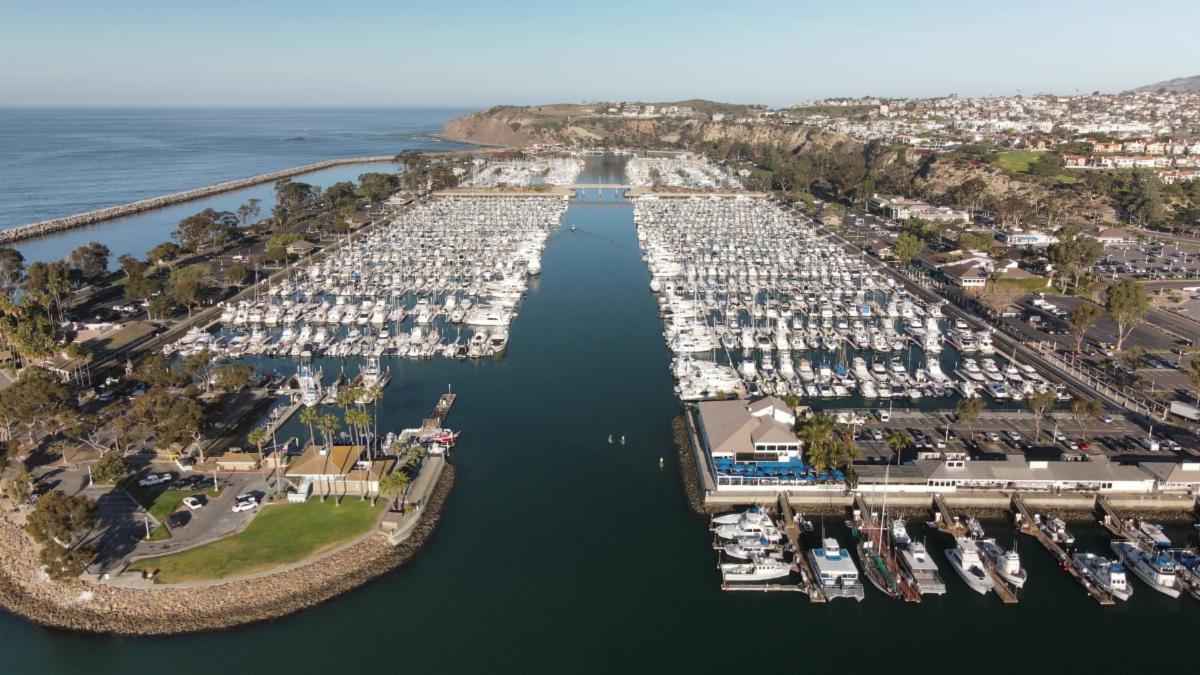
The Dana Point Harbor belongs to the public.
That statement matters.
The State of California, through its grantee, the County of Orange, owns the Harbor in trust for the public, and its tidelands carry obligations that reach beyond ordinary real estate. California’s Public Trust Doctrine protects public uses of navigable waterways, including navigation, fishing, boating, and water recreation. The California Constitution also protects public access to navigable waters.
Yet as the revitalization of Dana Point Harbor moves forward, another vision increasingly competes with that public purpose: the Harbor as a valuable commercial asset.
The question deserves asking:
At what point does a public harbor stop functioning as a public harbor?
Follow the Incentives
Dana Point Harbor Partners entered into a 66-year public-private partnership with the County to revitalize and manage the Harbor. Under that arrangement, private capital funds the redevelopment rather than taxpayer dollars. The private partners (DPHP) operate portions of the Harbor, while the County receives rent under the lease agreements.
Private investors naturally seek a return on their investment. Hotels, restaurants, retail, marina operations, and other revenue-producing uses all contribute to that return.
Nothing inherently improper exists in earning a return on an investment.
But Dana Point Harbor does not occupy ordinary private real estate.
It occupies public coastal land, and that distinction changes the conversation.
A marina designed primarily around the highest revenue it can produce may eventually become something quite different from a marina designed to provide meaningful boating access to a broad cross-section of the public.
A harbor can retain its docks and boats while gradually losing something far more important: its accessibility.
When “Market Rate” Changes the Market
We have already seen this tension in the discussion over marina slip rates.
In 2024, Dana Point Harbor Partners presented a five-year rate plan averaging approximately 9 percent annual increases across slip sizes. County Oversight Committee minutes also record that the marinas DPHP used in describing its market consisted primarily of Orange County facilities, particularly Newport Harbor marinas. The committee challenged whether that represented an appropriate market for a public harbor and called for a broader analysis that considered marinas outside Orange County as well as socioeconomic factors.
That distinction matters.
If Newport Beach becomes the benchmark for Dana Point, the question no longer concerns merely what a slip can command in the marketplace.
The question becomes who that marketplace permits to remain.
Boaters do not fit a single economic stereotype.
They include retired teachers and coaches. Fishermen who spent decades building small businesses. Retired first responders and members of the military. Families who saved for years before buying a boat. Owners who perform much of their own maintenance because doing so makes boating affordable.
Some own boats worth considerably less than the cars parked beside them.
Calling all boaters “wealthy” misses the character of recreational boating and, more importantly, avoids the real issue. Public access means little if pricing eventually restricts practical access to only those with substantial disposable income.
The County Has an Interest Too
The County of Orange entered the public-private partnership in part because private financing allowed the Harbor to undergo extensive redevelopment without the County directly funding those improvements. County materials have described the arrangement as one that saves taxpayer dollars while generating rent and other economic benefits.
Again, the financial logic makes sense.
But financial efficiency cannot provide the only measure of success for a public asset.
A privately financed harbor may still carry public obligations.
A profitable harbor may still carry public obligations.
A beautifully redeveloped harbor may still carry public obligations.
Those obligations do not disappear simply because private capital pays for the improvements.
And What Does “Public” Mean?
Perhaps the most important question concerns the word itself.
Public.
Does public access mean people can drive to Dana Point Harbor, park, eat dinner, shop, take a whale-watching trip, rent a jet ski, or buy a ticket for a fishing excursion?
Certainly, those activities form part of a vibrant harbor.
But does that capture the full meaning of public access?
If so, the public gradually changes from participant to customer.
Come to the Harbor.
Spend money.
Eat.
Shop.
Take a tour.
Then go home.
That vision differs considerably from a harbor where ordinary Californians can participate directly in boating, fishing, and navigation—activities historically protected under the Public Trust Doctrine.
California’s State Lands Commission describes Public Trust lands as lands held for the benefit of the people and recognizes navigation, fishing, boating and water-related recreation among protected uses. It also warns that uses which exclude rather than facilitate public access and use may prove inconsistent with the trust.
That principle deserves attention in Dana Point.
Public Does Not Mean Free
None of this argues that boating must remain inexpensive.
Docks cost money to build and maintain. Harbor infrastructure requires investment. Employees earn salaries. Insurance, utilities, security, dredging, and maintenance carry real costs. A revitalized marina cannot operate on nostalgia.
Nor does the Public Trust Doctrine require every Californian to afford every harbor activity.
But an enormous distance lies between free and accessible and only the affluent.
That space deserves protection.
The issue before Dana Point does not require choosing between redevelopment and deterioration, or between private investment and public ownership.
The more important question asks whether redevelopment can succeed without changing whom the Harbor serves.
What Kind of Harbor Will Remain?
Dana Point Harbor will look different when this revitalization ends. New docks, hotels, restaurants, shops, and public spaces will change its physical appearance.
The deeper transformation may prove less visible.
Who will still keep a boat here?
Who will fish here?
Who will participate rather than merely visit?
Will the retired firefighter, lifelong fisherman, schoolteacher, small-business owner and middle-income family still see a place for themselves on these docks?
Or will Dana Point increasingly resemble a luxury waterfront destination with a marina attached?
Those questions do not oppose progress.
They define the kind of progress the public has a right to examine.
Dana Point Harbor can thrive commercially. It can attract visitors. It can offer excellent restaurants, attractive hotels, and successful businesses. Private partners can earn a reasonable return on their investment.
And through all of that, one principle must remain visible:
This harbor still belongs to the public.
The challenge now lies in making certain those words continue to mean something.
Thank you!
#dpboaters
Orange County Supervisors:
Mailing Address:
400 West Civic Center Drive
Santa Ana, CA 92701
Email Addresses & Phone Numbers:
Doug Chaffee, Chairman
Fourth District Supervisor
Fourth.District@ocgov.com
Phone Number: (714) 834-3440
Katrina Foley, Vice-Chair
Fifth District Supervisor
Katrina.Foley@ocgov.com
Phone Number: (714) 834-3550
Janet Nguyen,
First District Supervisor
Janet.Nguyen@ocgov.com
Phone Number: (714) 834-3110
Vicente Sarmiento,
Second District Supervisor
Vicente.Sarmiento@ocgov.com
Phone Number: (714) 834-3220
Donald Wagner,
Third District Supervisor
Donald.Wagner@ocgov.com
Office Phone Number: (714) 834-3330
|