Program Fund
Please consider contributing to the Iron and Steel Preservation Program Fund. This fund was established to support projects, research, conferences and scholarships related to the repair, rehabilitation, and restoration of metals. The Lansing Community College Foundation is a nonprofit 501(c)(3) corporation.
Donate Here
|
|
Welding Courses
Arc welding courses offered for individuals or groups for either introductory or advanced training at
Lansing Community College, Lansing, Michigan.
Contact Vern Mesler for more information. See course description at the bottom of this Newsletter.
|
|
|
|
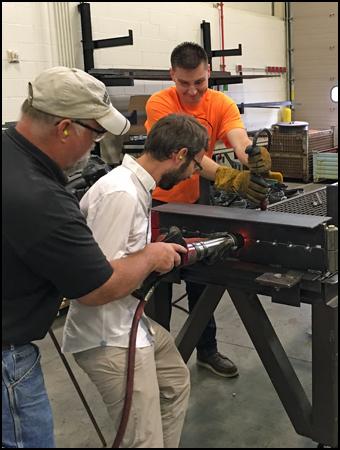
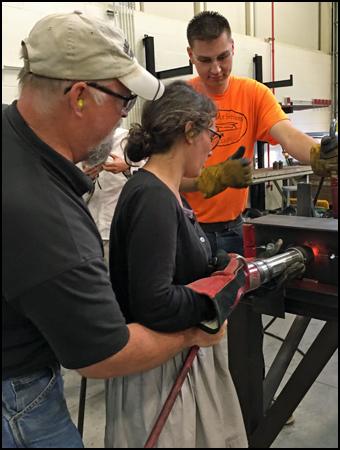
Roger Morrison assists Lucas with the field rivet hammer.
|
|
|
|
|
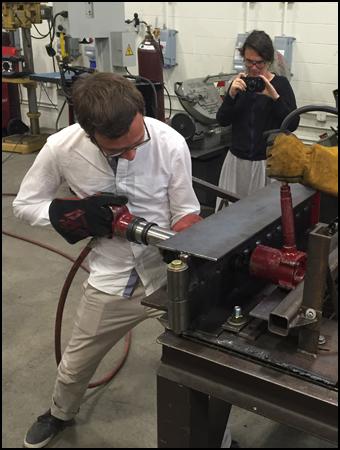
Lucas drives rivets with the #60 field rivet hammer.
|
|
|
|
|
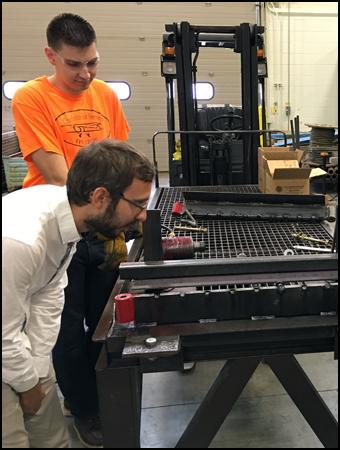
Lucas inspects rivets on the dismantled rivet training fixture
|
|
|
|
|
Roger assists Axelle with the field rivet hammer
|
|
|
|
|
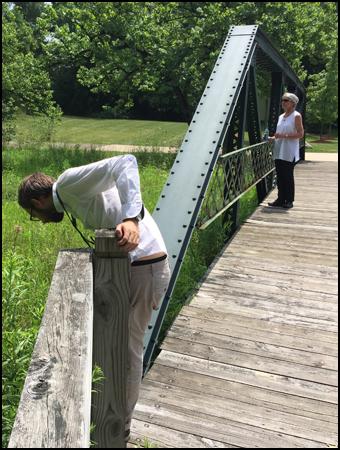
Lucas inspects the 20 Mile Road Bridge
|
|
|
|
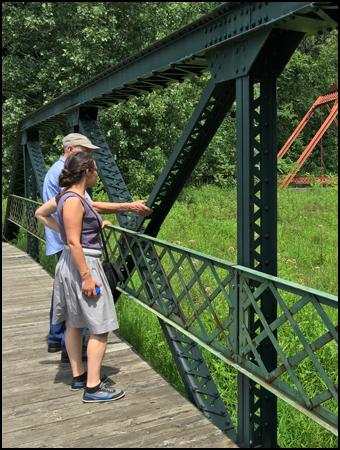
| Axelle and Vern inspect the diagonals, 20 Mile Road Bridge |
|
|
|
|
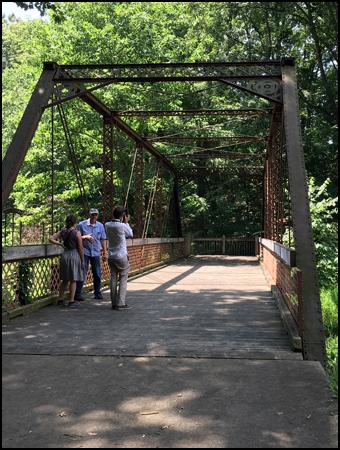
Axelle, Vern and Lucas on the Bauer Road Bridge
|
|
|
|
|
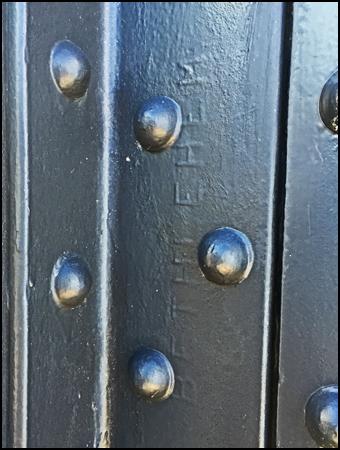
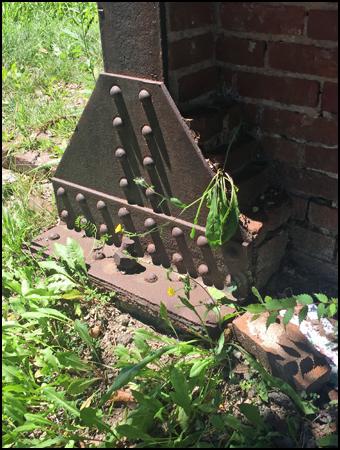
Angle with Bethlehem steel mill mark, Hill to Hill Bridge
|
|
|
|
|
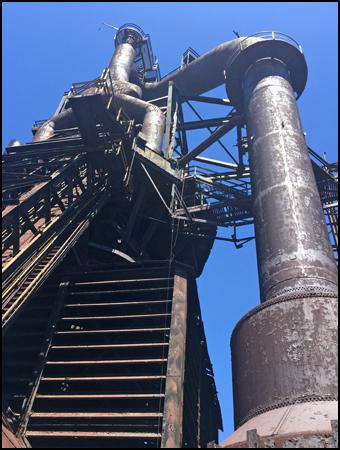
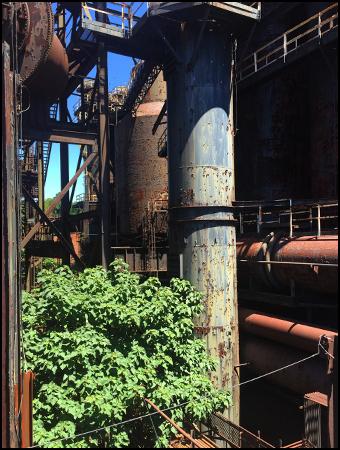
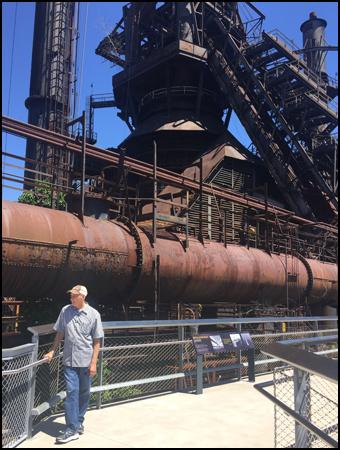
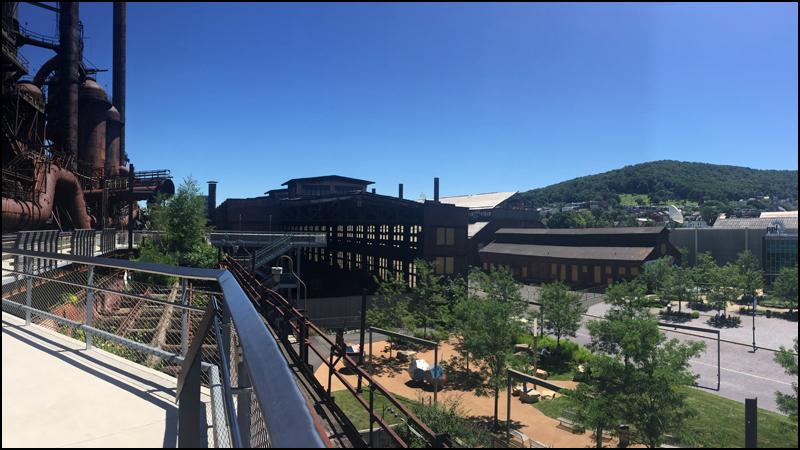
Bethlehem steel mill from Hoover-Mason Trestle
|
|
|
|
|
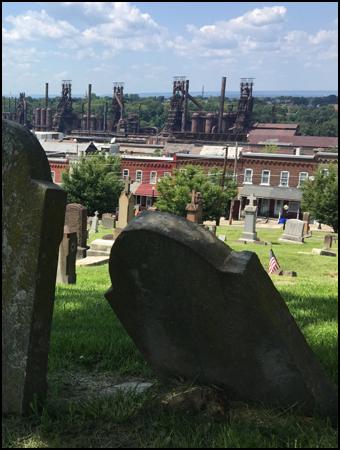
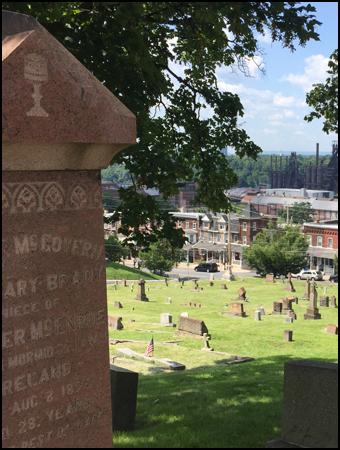
St. Michael's Cemetery overlooks Bethlehem steel mill
|
|
|
|
|
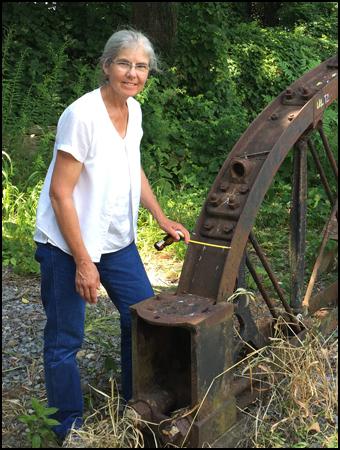
Nan Jackson
Tank Farm Road Bridge
|
|
|
|
|
Vern Mesler
Tank Farm Road Bridge
|
|
|
 |
|
I
hope your summer months have been enjoyable and that list of summer projects created during the cold month of January has at least been started. And for those of you have no cold Januarys, we in the northern part of the country may be visiting you soon.
This year my wife Nan Jackson and I could not have predicted the summer travel adventures that led to visits of historic sites and bridges in the United States and Canada, and the meeting of remarkable and talented people. While the subject of this newsletter will be a French Architect and an 1881 cast and wrought iron bridge, future newsletters will feature the 1835 Park Street Bridge that links Oakland and Alameda, California, and the 1875 Blackfriars Street Bridge in London, Ontario, Canada, both re-visited this summer, as well as the continuation of the restoration histories of the five historic bridges in the Calhoun County Historic Bridge Park.
Vern Mesler
Iron & Steel Preservation Coordinator
Lansing Community College
|
On July 1, I received an introduction email from Lucas Monsaingeon, an architect from the architectural agency
Philippe Prost, France, awardee of the
2016 Richard Morris Hunt Fellowship. Monsaingeon contacted me on the recommendation of Christopher Marston from the National Park Service to arrange a tour of the
Historic Bridge Park and Lansing Community College. Monsaingeon's focus for his fellowship project is on the maintenance, restoration, and conservation choices for historic bridges within the United States, and he has visited many of the iconic bridges in his travels across the country. From my observation, the conservation choices for America's historic bridges involve decisions that are often based, in part, on an economical choice for the replacement of an older bridge because projected traffic patterns using current transportation modes indicate a need for replacement. What isn't taken into consideration is that future modes of transportation (public transportation, redesign of the automobile, and better traffic management) could make the rehabilitation of a functional infrastructure landmark a practical option.
Improving preservation technologies and techniques through education can give those who make the decisions for the rehabilitation of an older bridge confidence in specifying appropriate industrial processes for the repair, rehabilitation and preservation using both current fabrication methods and historic technologies.
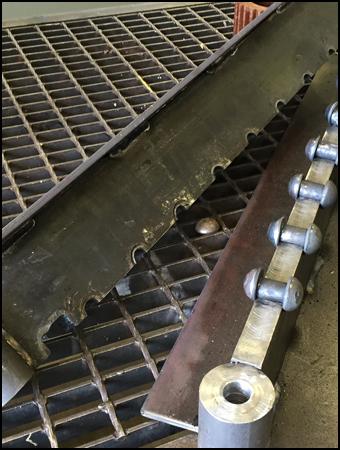
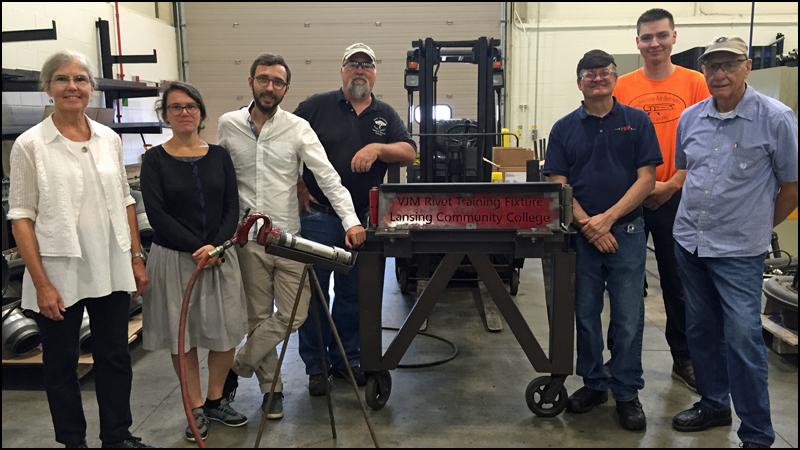
Lansing Community College has run preservation conferences and workshops that introduce these decision-makers to modern industrial tools for preservation and that demonstrate and introduce the preservationist to an older industrial process used today in historic bridge restoration, the field riveting process. During his visit to Michigan, Monsaingeon had an opportunity to see this process first hand, to drive rivets, and to inspect the driven rivets on the newly developed
Rivet Training Fixture at LCC.
|
|
From Left to right: Nan Jackson, LCC; Axelle Thierry (Paris, France), architect, urban planner and landscape architect; Lucas Monsaingeon (Paris, France), architect, 2016 Richard Morris Hunt Prize Fellow and Scholar; Roger Morrison, LCC; Jeff Haynes, LCC; Todd Cotter, LCC; Vern Mesler, LCC
|
|
|
Historic Bridge Park Tour
|
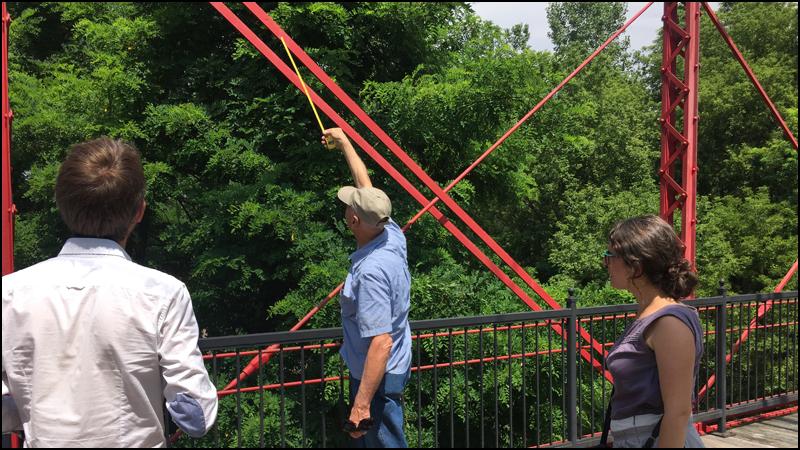
Vern describes Charlotte Highway Bridge forge welded eyebar for Lucas and Axelle
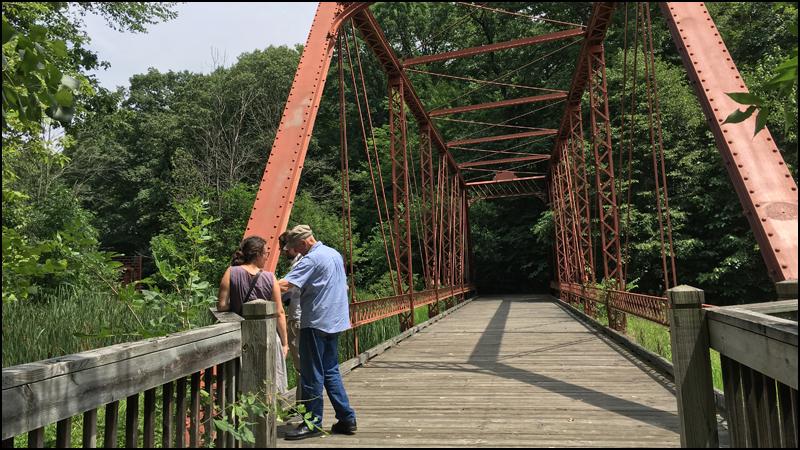
Axelle, Lucas and Vern check out the Bearing End Pads on the Gale Road Bridge.
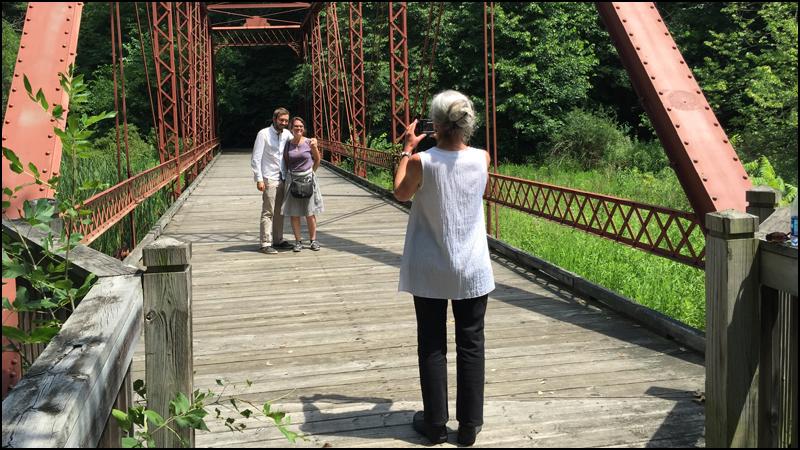
Lucas and his fiancee Axelle pose for a picture on the Gale Road Bridge,
known locally as the "wedding bridge."
|
|
Two 1881 Historic Trusses
|
Lucas and Axelle's next destination was the "City of Bridges," Pittsburgh. With over four hundred bridges at their next stop, Lucas was eager to begin his travel to Pennsylvania after spending the day in Michigan. To help Lucas and Axelle with a better bus connection by way of Toledo, Ohio, we decided that after the Historic Bridge Park tour we would drive them to Toledo. Satisfied that we had had a successful rivet session at LCC and a grand tour through the Historic Bridge Park, Nan and I headed home after saying goodbye to our French visitors. Somewhere between Toledo, Ohio, and Lansing, Michigan, I received an email from William Collins of Simone Collins Landscape Architecture with a call to save two rare 1881 wrought and cast iron trusses originally from Lehigh Valley, Pennsylvania. We immediately started planning our next historic bridge trip.
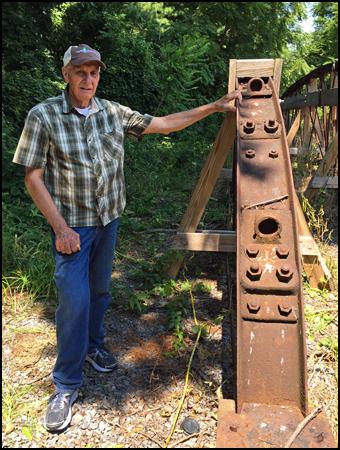
The two historic trusses were from the Tank Farm Road Bridge, where the 58 ft bridge crossed the Reading Railroad tracks in Lehigh County, Pennsylvania. The bridge has a lengthy history of plans for its storage and possible reuse after its removal in 1994. Today the trusses are stored at a City of Bethlehem facility. After a quick read of the truss dimensions and their storage location, I determined these were trusses I could work with, and I wrote back to Collins that I was interested in acquiring them for restoration. Over the years I've seen many historic metal truss bridges destroyed, and I was unable to prevent their destruction. I was just tired of hearing of another craftsmen's record about to be scrapped. Copied on Collins email was Christopher Marston from the National Park Service, and Tony Hanna, Executive Director, Redevelopment Authority of the City of Bethlehem; they replied with pictures and detailed information about the Tank Farm Road Bridge.
|
As I studied the pictures and documentation about the Tank Farm Road Bridge, it became clear to me that I had to see this bridge, and before we arrived home we had a tentative date and travel plan for a visit to the Philadelphia region. The trip began on July 28th with a stop at the
Brandywine River Museum of Art for the retrospective exhibit celebrating the 100th birthday of the painter Andrew Wyeth, then on to Bethlehem where we settled in at the
Historic Bethlehem Hotel recommended by Tony Hanna. Before inspecting the Tank Farm Road Bridge we visited some of the local historic sites Hanna had suggested: the
Hoover-Mason Trestle and the
National Museum of Industrial History.
|
|
|
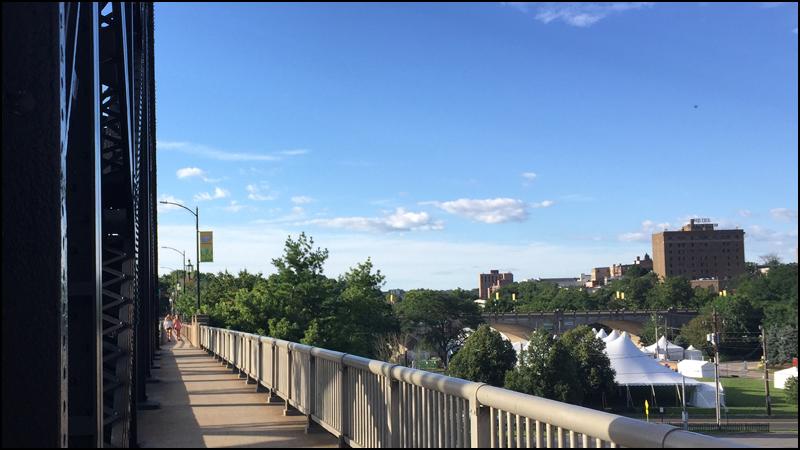
Bethlehem Historic Hotel, right, viewed from the Hill to Hill Bridge.
|
|
I had never traveled to Bethlehem, Pennsylvania, but for those of us who have worked in the steel industry the word itself--Bethlehem--meant steel. Tons of Bethlehem steel, stacks of beams, angles, plate, it would be there forever. But the Bethlehem I visited was the end of forever. We spent a hot summer day walking around remnants of stone and steel structures whose main purpose had been to take raw ore and melt it, hammer it, and roll it into shapes. It took the power of mind and body of men and women to handle the machinery larger than themselves to make steel. As I walked along the Hoover-Mason Trestle I tried to make some connection with these silent and massive steel blast furnaces, to feel the heat, hear the sounds, to know the craftsmen who made the mill work. I stood there surrounded by these silent structures. After a while, I noticed from the trestle a patch of open green space set against a distant hillside. It was a cemetery. We decided to visit it the next day.
|
|
|
From the Hoover-Mason Trestle, St Michael's cemetery can be seen
against the hillside on the right.
|
|
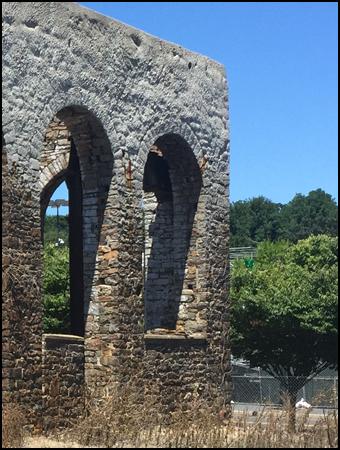
St. Michael's cemetery is surrounded by brick and wood row houses not yet gentrified for the affluent. A high stone wall sets against the hillside along the front entrance and a partial wall along a side street, the main entrance.
We walked among the grave markers, some slanted due to the shifting ground, others toppled and smashed by vandals, a craftsman's name lost, a craftsman's mill silenced.
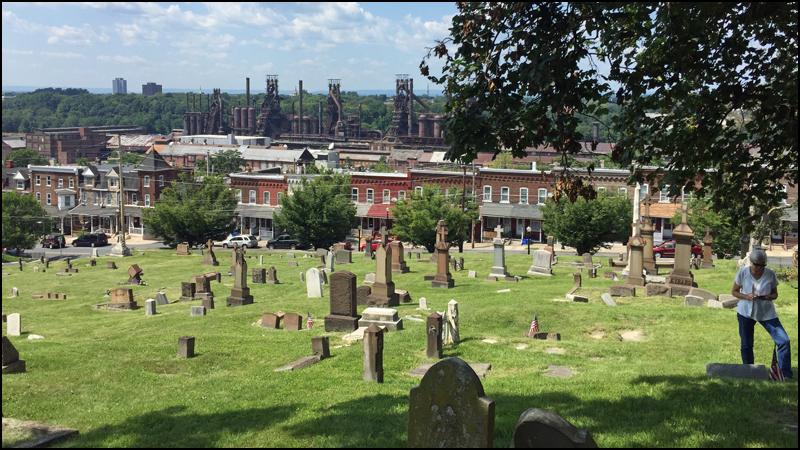
It was sad to see so many grave markers damaged and graffiti laden, but I later discovered a community effort to maintain and restore the cemetery artifacts. Friends of Saint Michael's Cemetery Bethlehem, PA hopes to raise awareness of the historic and cultural value of Saint Michael's Cemetery, generating interest and support for on-going preservation and restoration efforts. I applaud these restoration efforts and look forward to visiting this historic site again.
|
On Monday, July 31, we drove to the Bethlehem Public Works storage site to inspect the Tank Farm Road Bridge trusses. We were warmly welcomed by Chris Sule. Nan and I spent some time measuring and documenting some of the unique features of these Pratt type bowstring trusses. For Nan, professor of mathematics, it's the elliptical curved upper chords that caught her attention, not a common design for bowstring trusses. The lower chords have cast iron connections with a friction fit cruciform vertical post. These historically significant trusses made of wrought iron and cast iron are worth restoring. My initial thought is that the trusses are best restored to be an educational/historic display in a public setting rather than for a pedestrian or vehicle bridge. We will pursue funding for the preservation work using craftsmen educators and students with our first objective the documentation and dismantling of the bridge trusses, then the work of restoration.
|
Arc Welding Courses for Road Maintenance
|
Customized arc welding courses are being offered at Lansing Community College, West Campus, Lansing, Michigan. These courses can be designed for individuals or groups for either introductory or advanced training in the Flux Cored Arc Welding (FCAW), Metal Cored Arc Welding (MCAW), and Shielded Metal Arc Welding (SMAW) processes.
Depending on the client's needs, customized courses can include lectures, demonstrations, and hands-on activities with instructions on the essential variables (voltage, amperage, and other operating parameters) of the arc welding processes.
|
Customized Arc Welding Courses
|
- Safety procedures used in the Flux Cored Arc Welding (FCAW), Metal Cored Arc Welding (MCAW) and Shielded Metal Arc Welding processes.
- Equipment used in the FCAW, MCAW and SMAW processes, including power sources, flow meters, guns and wire feeders. The selection of gases and wire combinations for different metals.
- Electrode and wire AWS classification system for the FCAW, MCAW and SMAW processes.
- Proper set-up procedures for amperage (wire feed speed); effects of voltage and gas flow for FCAW and MCAW processes; effect of amperage for SMAW.
- Weld gauges for measuring fillet welds (in the flat and horizontal positions) and groove welds.
- Weld defects and discontinuities, their causes and repair procedures, and methods for reducing distortion.
|
American Welding Society Certification Tests
|
|
Lansing Community College has on staff American Welding Society certified welding inspectors (CWI) who can conduct Standard AWS certification tests for the FCAW, MCAW, and SMAW processes. The costs for certification testing are available upon inquiry, with arrangements made directly with the CWIs. Contact Vern Mesler.
|
|
Past Iron & Steel Preservation Newsletters
|
|
|