|
A monthly round-up of top stories from the Arkansas Agricultural Experiment Station.
September 30, 2023
| | |
|
|
IN THIS ISSUE:
- Ag econ study shows food security implications of rice milling quality
- Jacquelyn Mosley’s work in cultural competency earns national recognition
- How the Arkansas Agricultural Experiment Station is cultivating new scientists
- Taking a closer look at headwater streams in light of climate change
| |
|
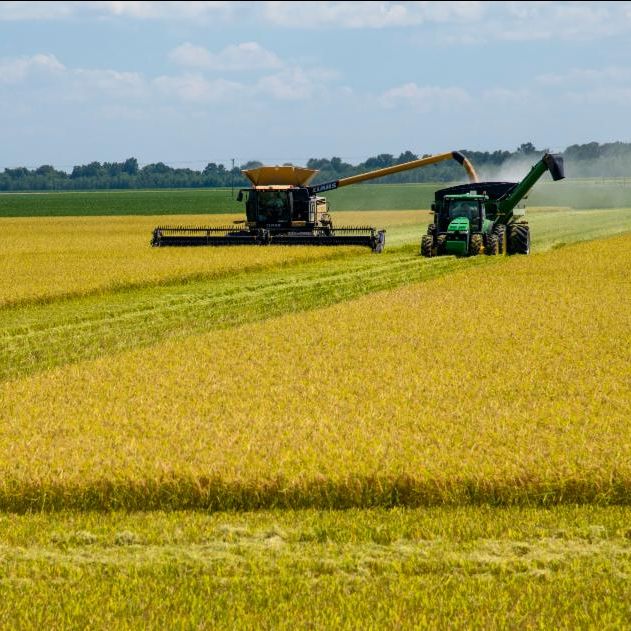
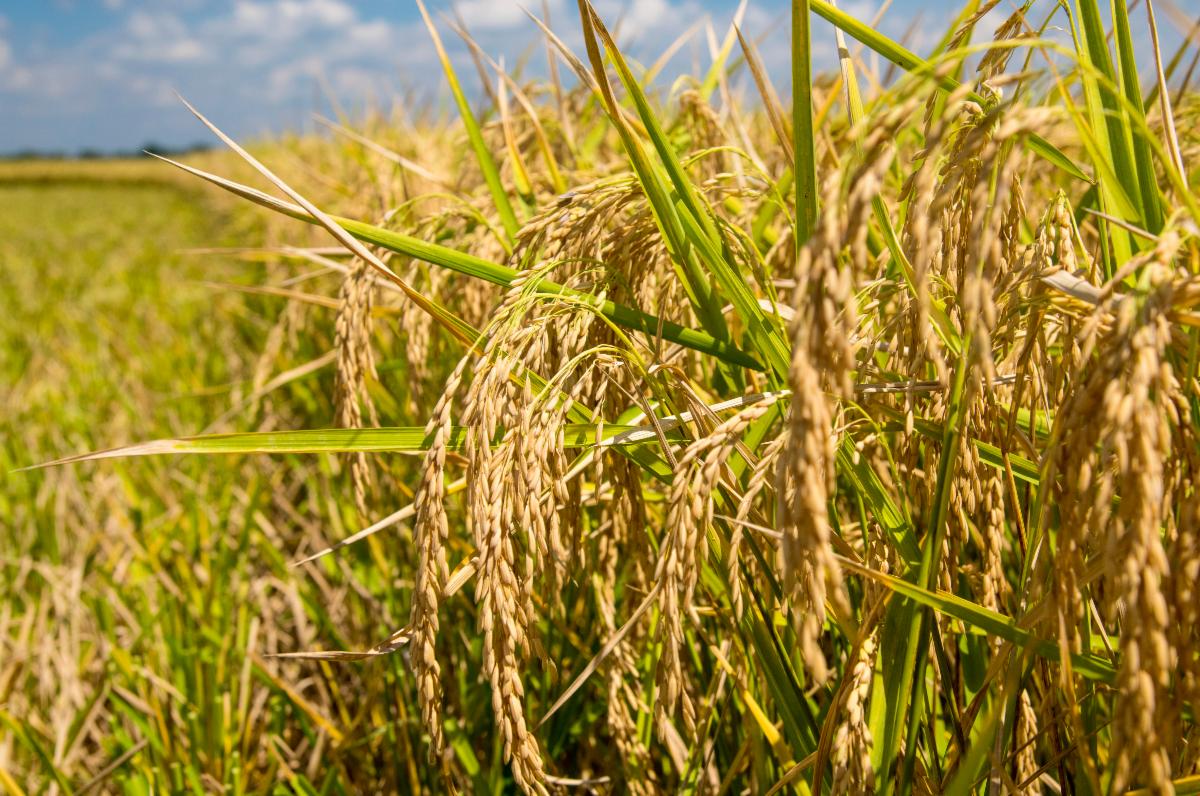
Professor Lanier Nalley and Associate Professor Alvaro Durand-Morat, both in the agricultural economics and agribusiness department, showed that a 1 percent increase in unbroken rice kernels after milling could mean millions more servings of this critical staple grain, increased food security around the globe and improved producer profitability.
In another scenario, they estimate Arkansas could produce up to 3.5 million more servings annually if all rice grown was set to a minimum benchmark milling yield potential based on a popular purebred University of Arkansas System Division of Agriculture variety.
| | |
|
“Improving rice quality by reducing the amount of broken rice will result in more rice reaching consumers rather than being used for other non-food uses,” Nalley said. “If we can improve genetics for quality, we’re getting more and more rice going to humans.” | |
Since the University of Arkansas System Board of Trustees created the Division of Agriculture in 1959, there have been long-standing differences between the Fayetteville campus and the Division of Agriculture. A new agreement between the two entities, praised as a milestone by members of the Board of Trustees, signals a new beginning.
| |
Deacue Fields, left, vice president for Agriculture for the University of Arkansas System, and Charles Robinson, chancellor of the University of Arkansas Fayetteville campus at the University of Arkansas Board of Trustees meeting on Sept. 15, 2023, in Fayetteville. | |
|
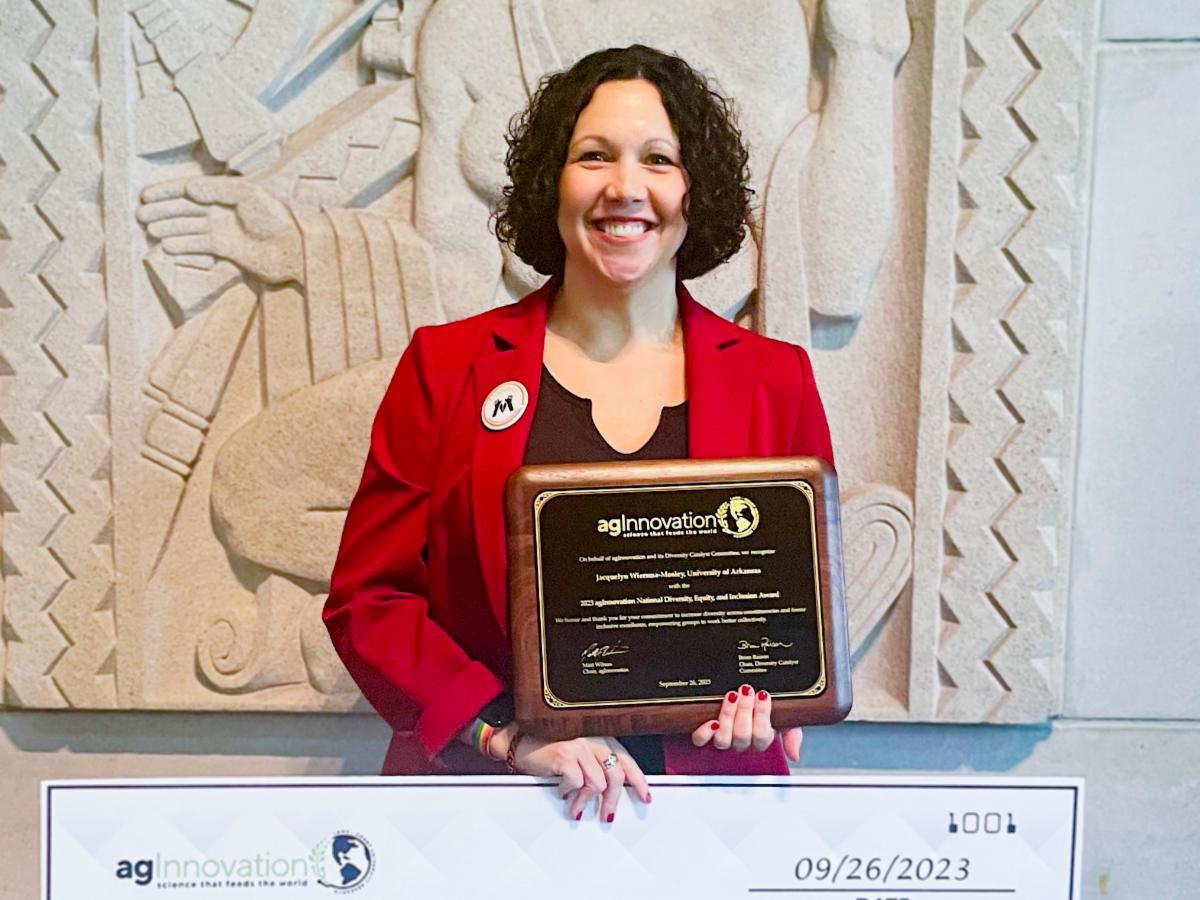
Jacquelyn Mosley, professor of human development and family sciences in the School of Human Environmental Sciences, was presented the 2023 National Experiment Station Section Diversity, Equity, and Inclusion Award on Sept. 26 at agInnovation’s fall meeting in Grand Rapids, Michigan.
“At their core, the land-grant mission and diversity, equity and inclusion are helping all citizens, careers, and communities thrive,” Mosley said. “What makes the field of agriculture so wonderful is how diverse it really is, and my goal is to continue celebrating the diversity in agriculture and creating better relationships with, and for, our communities.”
| |
Jacquelyn Mosley accepted the 2023 National Experiment Station Section Diversity, Equity, and Inclusion on Tuesday during agInnovation’s fall meeting in Grand Rapids, Michigan. | |
|
USDA grant supports study of melatonin use in cows grazing toxic fescue
Brittni Littlejohn, assistant professor of animal science, and her collaborators were awarded a $300,000 grant by the U.S. Department of Agriculture’s National Institute of Food and Agriculture to continue evaluating the use of melatonin in pregnant cows to offset the long-term effects on calves when their mothers graze toxic fescue.
Tall fescue is the most common cool-season forage in the southeastern United States. However, it is often infected with an endophyte fungus that produces ergot alkaloids that are toxic to grazing animals and cause constriction of blood vessels. In a preliminary study for the experiment station, Littlejohn saw decreased uterine artery blood flow in pregnant heifers that consumed toxic fescue seed when compared to endophyte-free fescue seed.
| |
Brittni Littlejohn and her graduate student, Carter Culp, conduct Doppler ultrasonography on the uterine artery of a pregnant cow. | |
|
Arkansas Agricultural Experiment Station undergraduate externship cultivates new scientists
Rupesh Kariyat, associate professor of crop entomology, is cultivating new scientists with his summer externship program for undergraduate students.
The project, supported by a three-year USDA Research and Extension Experiences for Undergraduates grant, brought six students from the University of Texas Rio Grand Valley to the University of Arkansas for 10 weeks this summer to learn how to conduct agricultural research and communicate their findings.
| |
Evelyn Madrigal, left, stands with her adviser Rupesh Kariyat, associate professor of crop entomology for the Arkansas Agricultural Experiment Station. | |
|
Jin-Woo Kim is a professor of biological and agricultural engineering. At the heart of his research is the nanotoolbox, which aims to create building-block technology that guides the self-assembly of nanoparticles into specific shapes for specific purposes. Jin-Woo says that working with undergraduate and graduate students is one of his key motivations. He hopes to see the technology he develops positively shape society.
| |
|
John Rupe says collaboration is vital to scientific research and discovery. One of his favorite parts of working as a professor of entomology and plant pathology is the people he gets to work with, both within the university and out in the field. He also loves seeing students connect with people in the profession and grow their careers.
| |
|
CelluDot LLC, a startup founded by University of Arkansas engineering alumni, will use a nearly $1 million National Science Foundation grant to optimize a nanotechnology product called BioGrip to mitigate herbicide drift. They developed the technology as doctoral students in collaboration with the Arkansas Agricultural Experiment Station.
Division of Agriculture faculty conducting field studies on BioGrip as part of the Phase II research include Nilda Roma-Burgos, weed physiology and molecular biology professor, and Tommy Butts, associate professor and extension weed scientist.
| |
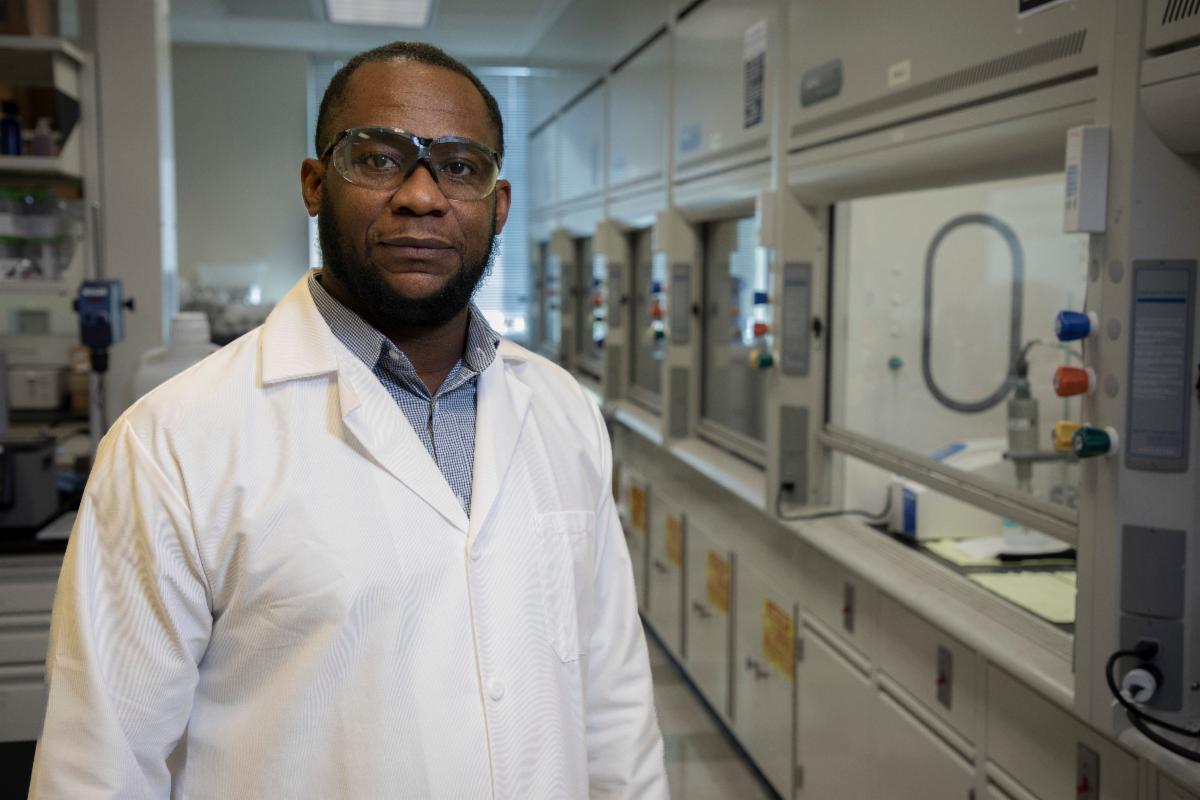
Joseph Batta-Mpouma, Ph.D., CEO of CelluDot, said the Arkansas Agricultural Experiment Station will conduct field trials of CelluDot’s eco-friendly product designed to mitigate herbicide drift. | |
|
Taking a closer look at headwater streams in light of climate change
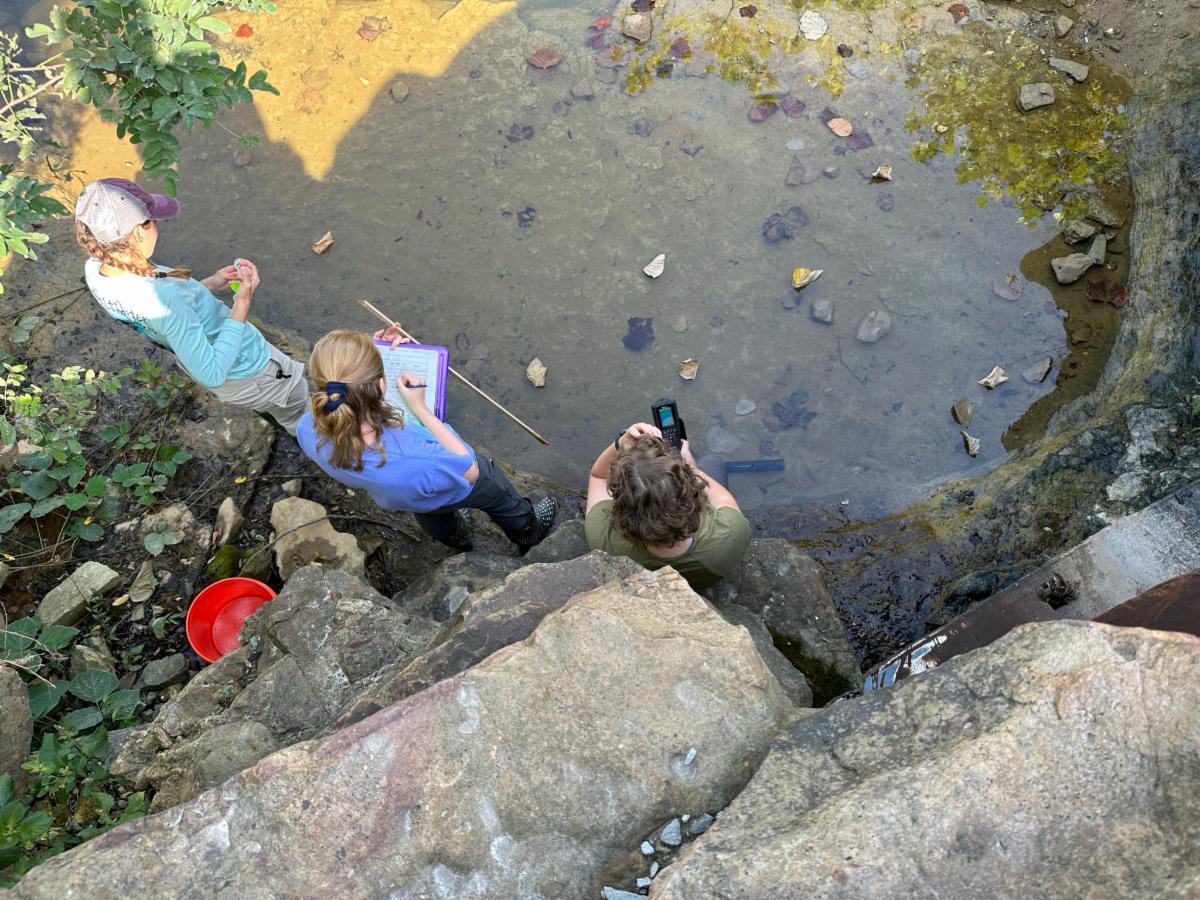
Shannon Speir, assistant professor of water quality, is taking a closer look at headwater streams and how they interact with larger bodies of water as part of a multi-state project supported by a U.S. Department of Energy grant.
Speir’s team on the project includes Kathleen Cutting, a water quality science master’s degree student, and program associate Alana Strauss, both with the crop, soil and environmental sciences department.
| |
Alana Strauss, left, program associate for water quality, stands with University of Arkansas crop, soil and environmental sciences master's students Kathleen Cutting and Caroline Anscombe at Brush Creek | |
Welcome to our new faculty! | |
Enjoy this newsletter? Please share it with others who might like it. | | | | |