Donate Now

The mission of Great Mountain Forest is to be a leader in forest stewardship. We practice sustainable forest management, promote biodiversity and resilience to climate change, support education and research, and welcome all who love the woods.


Great Mountain Forest 

September 2024

In this issue:

  • Charismatic Megafauna: The Moose of GMF
  • "Mystery Forge" by David K. Leff
  • Tour de Forest and Upcoming Programs
  • Moth Night and Other Recent Programs
  • Moose Tracks--Staying Safe During the Fall

Charismatic Megafauna:

The Moose of GMF

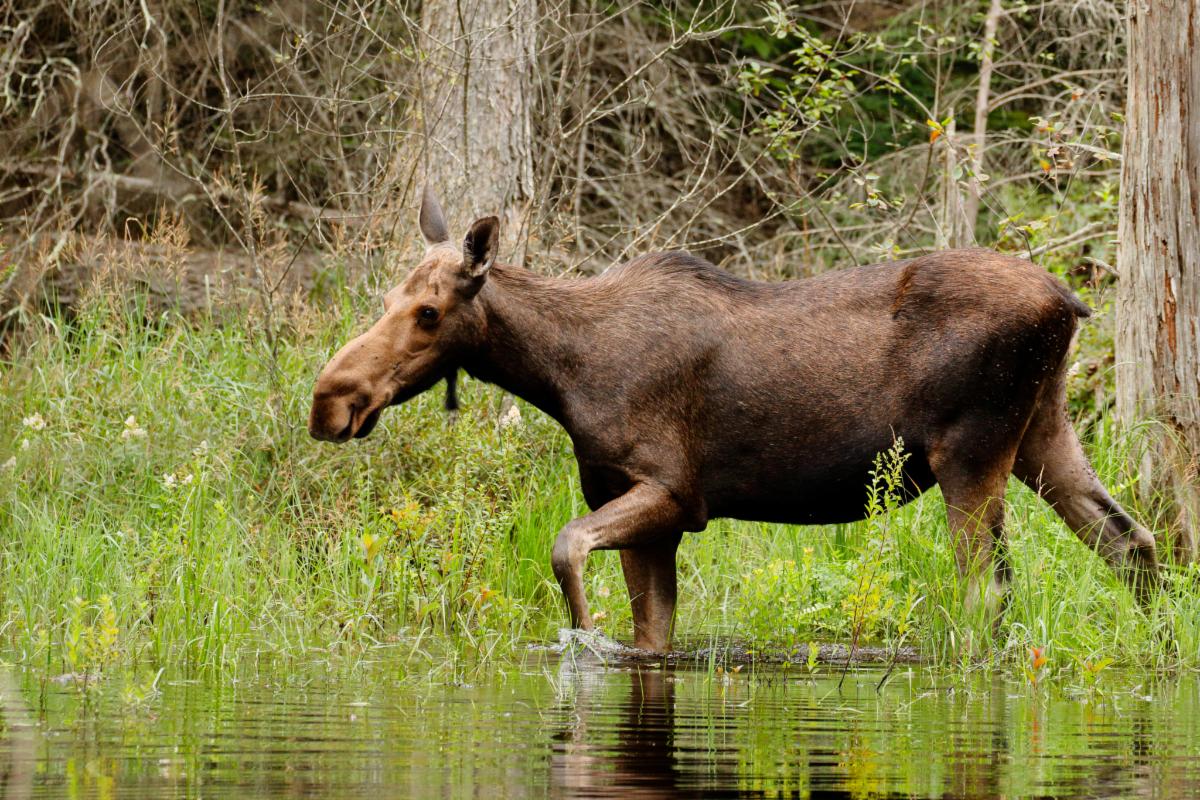
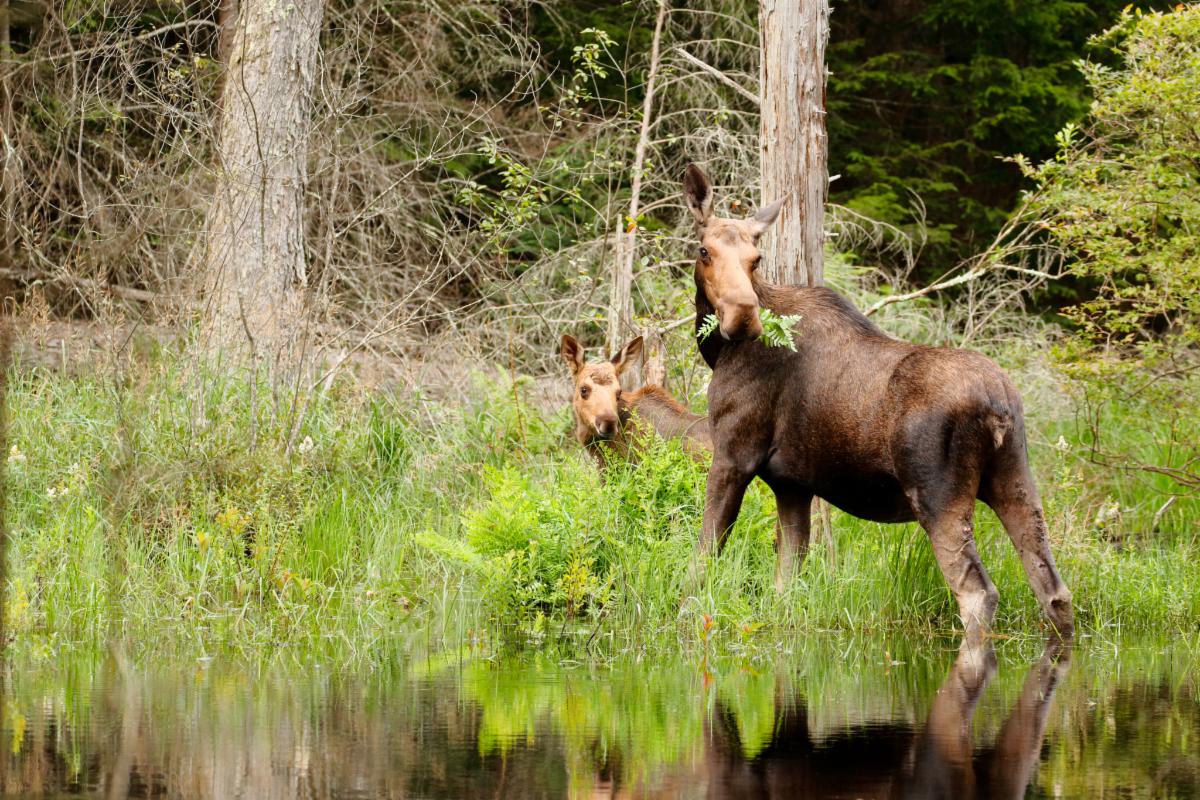
The wildlife darling of Great Mountain Forest is not the cute white-tailed rabbit or the plump black-capped chickadee. It's not even the Bambi-esque fawn taking its first shaky steps on new legs. Instead, it's a barrel-chested, heavy-headed, spindly-legged, bulbous-nosed Alces-alces, a.k.a, the moose.


New Calves on the Block

Yet, it wasn't always that way. According to Forester Emeritus Jody Bronson, a 48-year fixture in these woods, it wasn't until 2002 that moose began making an appearance in the Forest's 6,000-plus acres. These ungainly and lumbering creatures descended on the Forest from the north and snuck up on foresters--literally. Despite their large size, they are surprisingly stealthy and don't crash through the undergrowth, providing little warning of their approach.


A November 2020 GMF intern-driven moose census derived from moose cams stationed in likely moose habitats yielded 21 moose: 11 mature bulls, two adolescent bulls, five cows, and three calves. Today, while the moose are breeding, their numbers in GMF have decreased, with moose moving to other areas. This is due to decreased moose-friendly habitat and a lack of harvested areas currently in GMF.


Bend and Snap

Moose are drawn to areas of GMF where tree harvesting has been done, and younger trees have grown. Moose prefer trees in their pole stage, roughly four to eight inches in diameter. This size trunk allows the moose to walk over the young tree, bending the trunk beneath it.


It feeds on the now horizontal treetop as it keeps walking, enabling it to feed with its heavy head at shoulder height. After its meal, it walks forward and releases the tree, sending the trunk vertically snapping, minus the foliage that once adorned its crown.


Tall Browsing

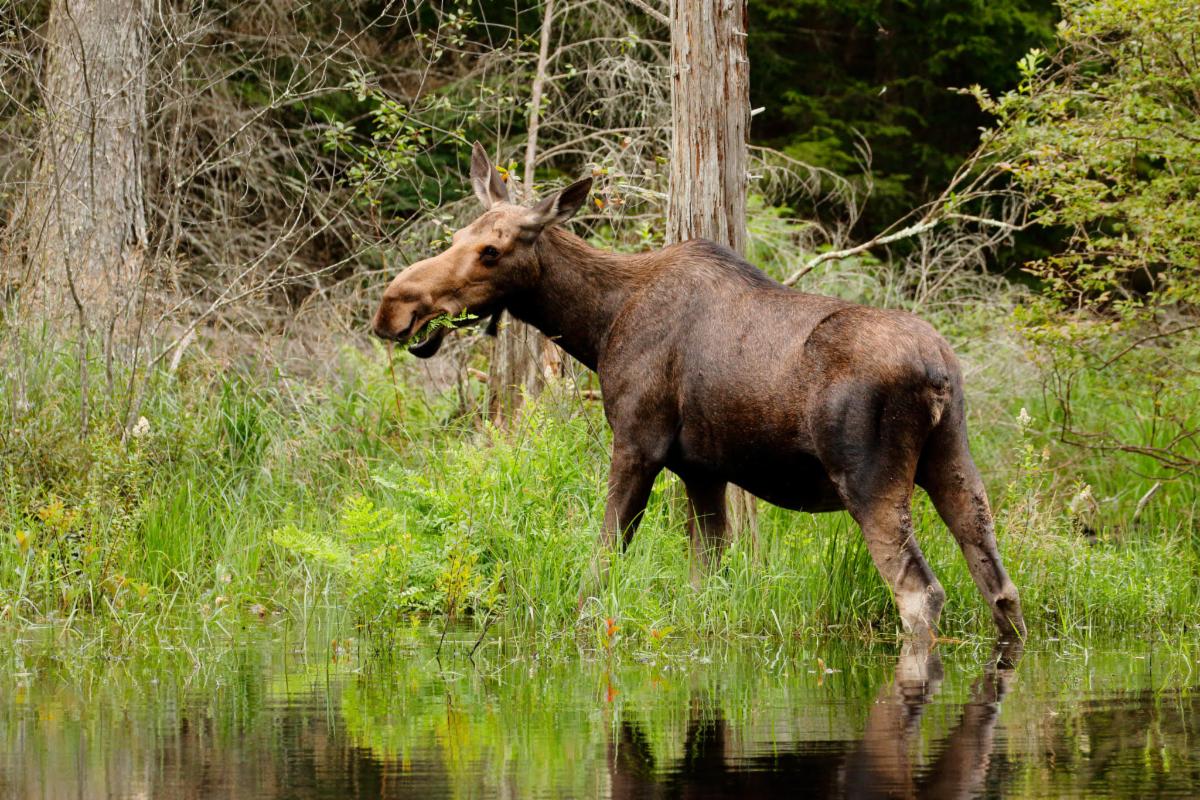
Moose browse for food at head height to avoid lowering their heavy heads to the forest floor. They can consume 40 to 60 pounds of food a day. A deer eats about 12 pounds of food in the same period.


In the winter, moose rely on stripping the bark off trees that use their bark for photosynthesis, such as striped and red maple. They perform this task with their eight lower incisors. Moose do not have upper front teeth; they have a stiff dental pad to protect that area.


In summer, moose stay cool in GMF's deep ravines and hemlock stands. They wade into ponds, feed on aquatic plant life, and avoid biting insects.


Antlers Away

Moose are considered "charismatic megafauna," a larger-than-human animal with broad popular appeal. That's certainly the case at GMF. Forest visitors love to spot moose, and while male bull moose seem alike, their antlers help distinguish them. When breeding is over, these antlers are shed each season around March, when testosterone levels drop.


The antlers don't both fall off at once. One side of the antler rack falls off first, leaving the bull moose with an awkward situation–-a lopsided head. A moose does what it can to shed the remaining antler, such as banging its head on tree trunks.


In early summer, the moose antlers grow back at an alarming pace–-up to a pound a day in weight and an inch a day in length. Antlers are bones, and the velvety coating on them is also an organ. It possesses blood vessels, capillaries, and nerve endings that, along with daylight, promote antler growth. 


In a Rut

This antler growth culminates in the rutting season in the fall. During this time, moose are mating and can get testy. This is the time to give moose A LOT of space, stay on GMF's marked trails, and keep your dog on a lead. To a moose, a dog equals a wolf, putting a moose on offense.


See the end of the newsletter for tips on safe enjoyment of the Forest during rutting season.

Moose photos courtesy of Stephen D. Schumacher. For more GMF moose photos and videos, follow him on Instagram @sds.wildlifeimages. Moose video below from GMF moose cams.

"Mystery Forge" by David K. Leff

No truer friend of the Forest ever wandered these woods than David Leff, a former trustee of the organization who had helped create the conservation easement that established GMF under the Forest Legacy Program. David left behind a manuscript about his explorations of the forest, the first three chapters of which were recently published in Appalachia Journal.

Through the generosity of David’s estate, excerpts of other chapters will appear in GMF newsletters, linked to the full pieces on the website.


"Mystery Forge" recounts an expedition into the woods to locate the remains of a long-forgotten forge and celebrates longstanding relationships forged in the woods.

Mystery Forge


Following a long, low outcrop of mossy ledge dotted with pockets of soft sphagnum, we at last arrived the impoundment that once furnished the forge’s waterpower. A droughty period had left the pond low, with wide, muddy margins which were unavoidable in spots. Our footsteps sank a few inches in the ooze, yielding a squishy sucking sound and prints that would last until the water rose again. A few large rocks punctuated the shore, along with silvered standing deadwood and grassy tussocks. Near the outlet, was a conical pile of sticks—an old beaver lodge. 


Just below a breached beaver dam, we found a small, tree-shaded glade where the pond’s water tumbled over a two-foot-high rock shelf, foaming and singing as it fell into a pool before becoming a stream speeding into the woods. Here was the forge site. It was an inviting spot with its running water and dappled sunlight, a good place to kick back and have lunch. We lay down our packs, found logs or rocks to sit on, and pulled out brown bags and water bottles. The air was spiced with moisture and newly fallen leaves that had a slightly nutty scent, reminding me of jumping into piles as a kid.


The natural dam of ledge appeared to have been augmented once by earth and stone, creating a larger body of water behind it. But like the beaver dam, it had been broken by decades of powerful freshets.


The pool was clear, with a pebbly bottom, and water exited via a natural channel in the ledge. Four fieldstone piers stood along the east bank where likely there had been a building leaning over the stream. A large rectangular stone and other seemingly purposeful arrangements of rock were clearly not the work of the glacier or other natural forces. Chunks of firebrick were strewn in the water, with a few on the bank. Hard to read after perhaps a century-and-a-half of weathering, they were imprinted: “Newton, Albany, New York.”


Read the full chapter of "Mystery Forge" in this link

Upcoming Forest and

Environmental Programs

Forest Yoga Continues


There's no better place to practice your Standing Tree pose than in GMF!


Join GMF's own Vicki Nelson for a refreshing yoga class in the forest. Vicki is a certified yoga teacher and Level 2 Reiki Practitioner. This class blends Vinyasa's fluid movements with Hatha's grounding poses.


Where: East Gate parking area, 201 Windrow Road, Norfolk. Walk to Tamarack Pond


When: Mondays, Sept 30, Oct 7

11:30 a.m. to 12:30 p.m.


Cost: $8-$15 per class

Pay what you can, or pay it forward!


Rain location: GMF Shelter

Golf Drive, Norfolk CT

People's State Forest

100th Anniversary Celebration


Come visit GMF’s booth at the People’s State Forest and learn about our events, research, education offerings, hiking trails, and animals in our forest.


Join FALPS and the State of Connecticut in celebrating what truly is the “Peoples” State Forest. Learn about its founding, watch and participate in various forest-related activities, see oxen pull logs up to a portable sawmill and watch the loggers mill the wood, watch a chain carving contest, join dignitaries in planting a ceremonial tree, and much more.


Sunday, October 6

11:30 a.m. to 4:30 p.m.

Free and open to all.

Friends of American Legion and People's State Forest website

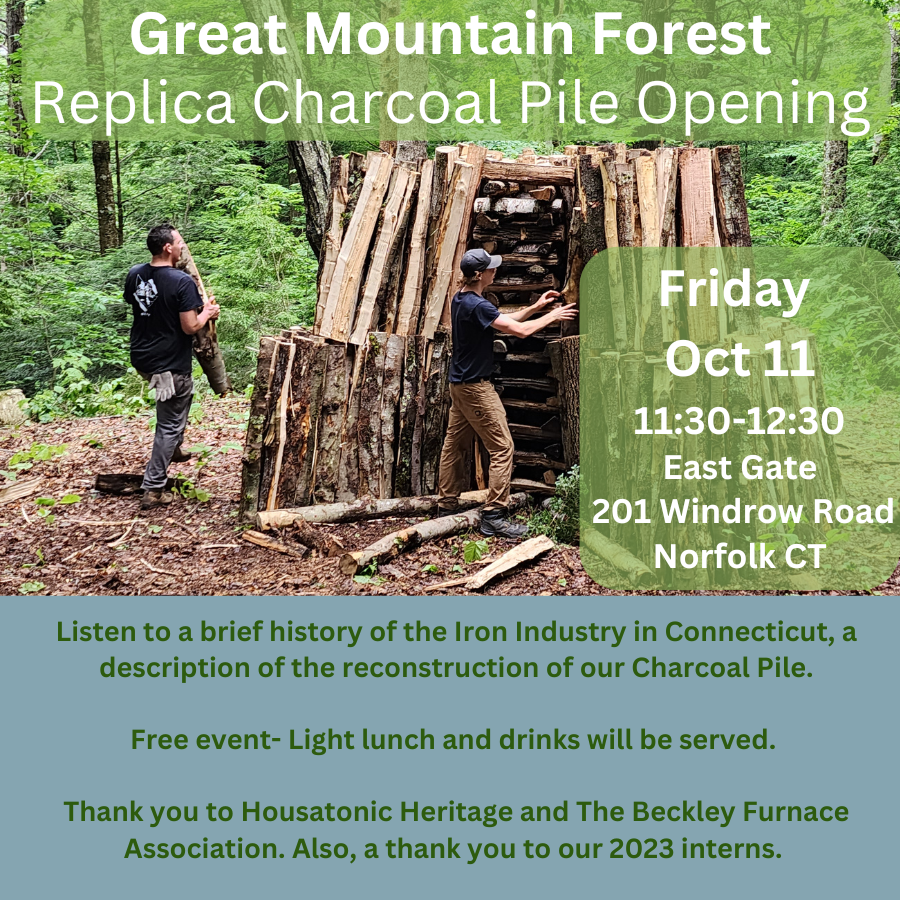
Join us for a grand opening of our Replica Charcoal Mound. In the 1720s, the discovery of iron deposits sparked the birth of the iron industry in northwestern Connecticut. Colliers cut, stacked, and fired carefully constructed piles in forests. A single blast furnace could consume charcoal from 600 acres of forest a year. Vast tracts were intensively and repeatedly cut. GMF has regrown and provides forest products, wildlife habitat, and woodland recreation. This half-sized cut-away replica is on the site of one of the many former hearths that can be seen throughout Great Mountain Forest.

Register here for Charcoal Replica Opening

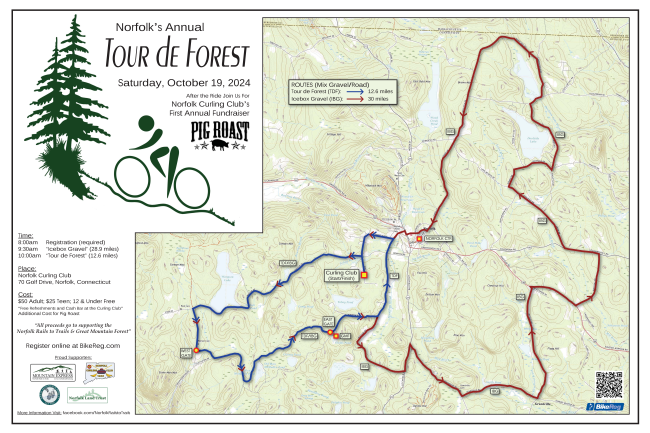
Tour de Forest Returns on Saturday, October 19

The annual Tour de Forest returns! From the saddle of your bike, you can enjoy the autumn splendor of the Forest and serve two worthy causes: Great Mountain Forest and Norfolk Rails to Trails.


All ability levels are welcome. This is not Tour de France--it's Tour de Forest, and the Forest is for all who love the woods! Two courses are available: The Icebox Gravel and the signature Tour de Forest.


Here's what you need to know:

  • Date: Saturday, October 19
  • In-person registration begins at 8 a.m. at the Norfolk Curling Club
  • Registration fees are $50 per adult, $25 per teen, free for young riders
  • Icebox Gravel: 9:30 am start on 30 rugged miles of gravel and paved roads, including sections conserved by the Norfolk Land Trust
  • Signature Tour de Forest: 10 am start for a 13-mile ride on gravel and paved roads in and around Great Mountain Forest.
  • Finish at the Norfolk Curling Club with GMF maple syrup shots and a pig roast offered by the Norfolk Curling Club for an additional fee.
Register for Tour de Forest/Icebox Challenge here
Register for Pig Roast at Norfolk Country Club here 

A Look Back at Recent GMF Events

Woodland Academy Educates Landowners


The GMF Woodland Academy recently concluded its educational program for landowners interested in managing their land. Participants gained a comprehensive understanding of ecological principles, habitat viability for wildlife, and effective land management practices.


The modules were held at the historic Yale Forestry Camp, combining classroom instruction with field observations and discussions. Woodland owners, land trust stewards, educators, and engaged citizens attended the program.

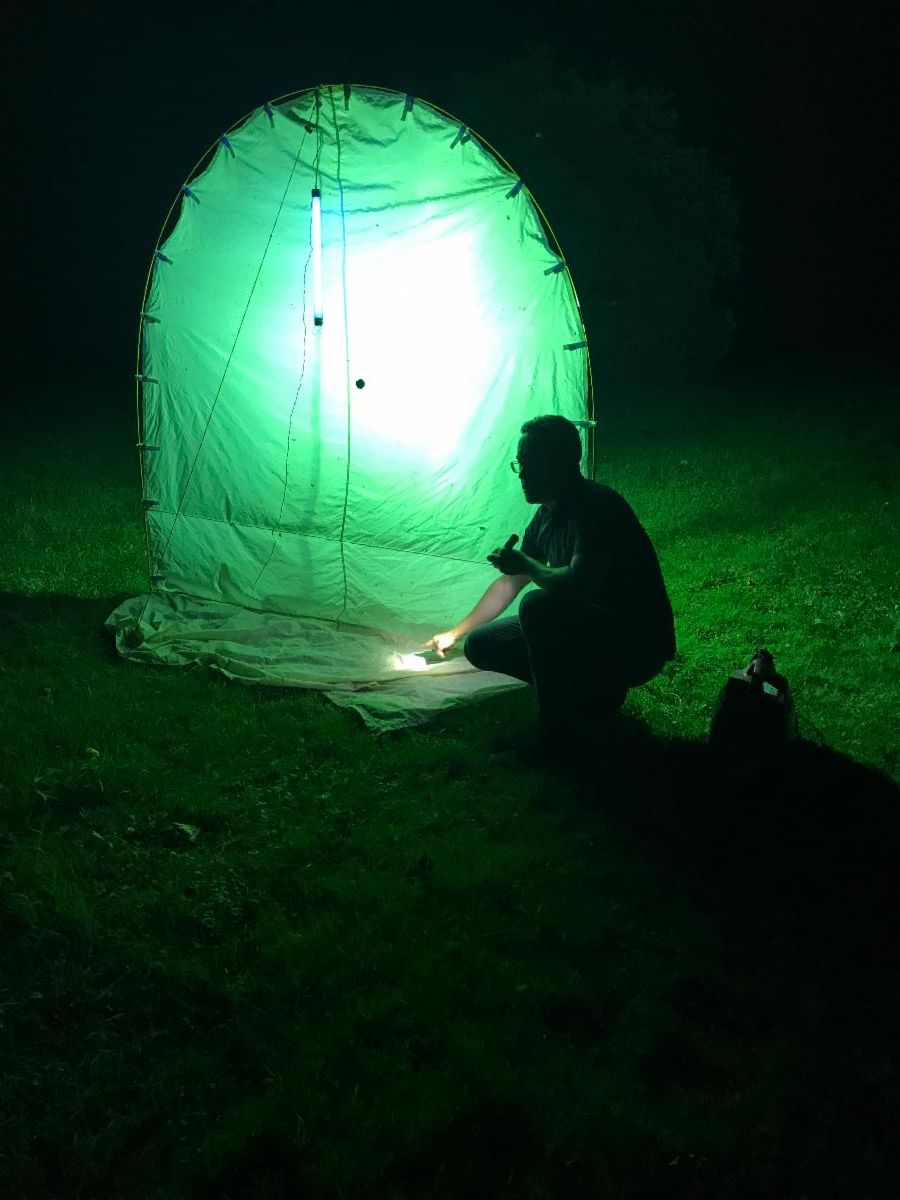
Ray Simpson demonstrates how lights attract moths

Like Moths to a Flame...


Over 25 moth-curious attendees enjoyed Moth Night, which featured moth expert Ray Simpson, former curator at the Yale Peabody Museum and president of the Entomological Society of Connecticut.


Participants learned interesting moth facts, including that some moths only live for a week, others only live near people, and moths fly toward the moon. So, when a light is left on at night, the moth is drawn to it due to its navigational instincts.


Moth Night was a collaborative joint sponsorship by GMF and The Norfolk Conservation Commission. GMF is grateful to the Manor House for offering their beautiful venue. 

Trees in Motion


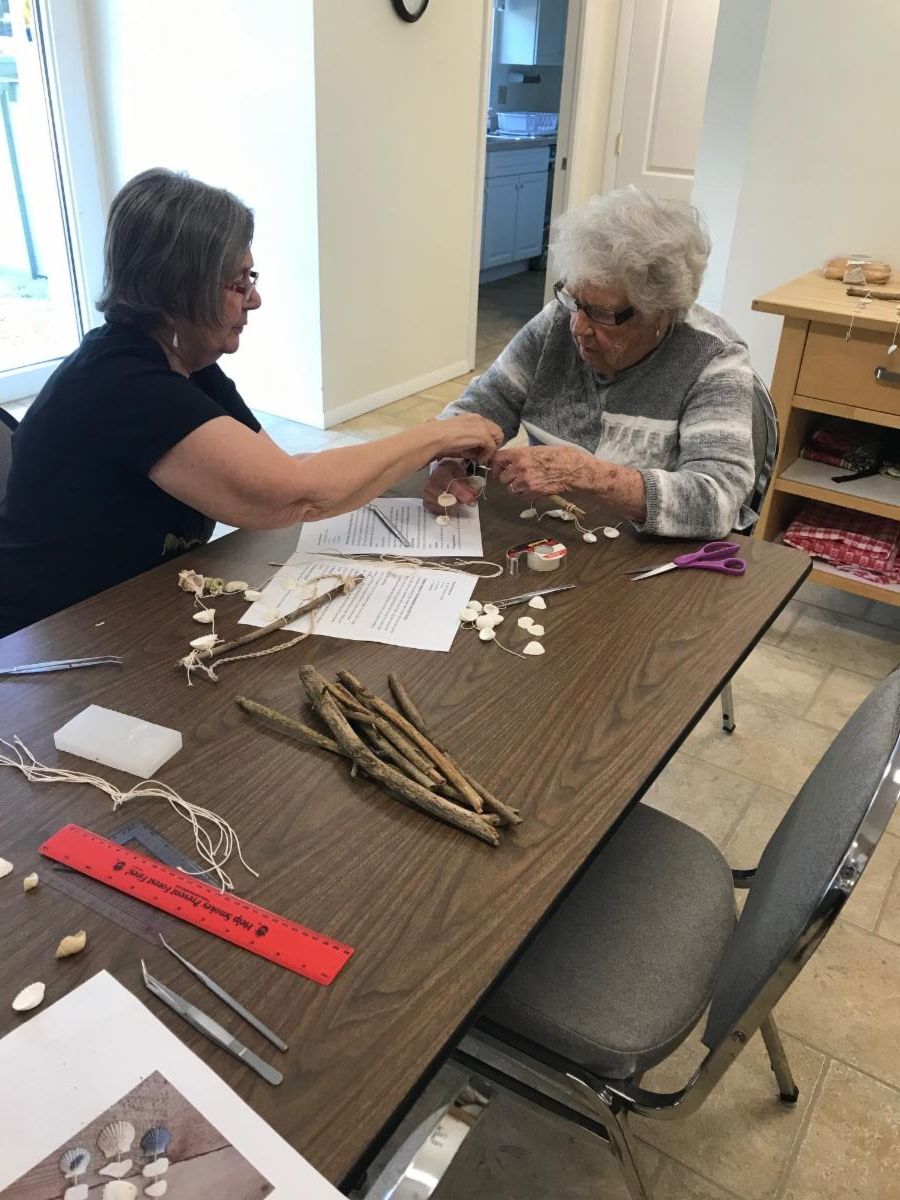
August also brought GMF and The Norfolk Foundation together to sponsor a nature mobile workshop at Meadowbrook Senior Living community.


Attendees created mobiles by hanging seashells from branches found at GMF and enjoyed the challenge of tying tricky knots.


Mobile making using GMF branches, shells, string, and helping hands

Bringing the Forest to Town


In August, GMF was well represented in town centers at two annual events in Salisbury and Norfolk. The Lakeville Journal and the Millerton News hosted a daylong celebration of the work of local non-profits, along with music and food. It educated those who attended about the mission and programming of organizations serving the Northwest Corner.


Earlier in August, the three-day Weekend in Norfolk (WIN) displayed all that the town has to offer with festive celebrations, educational programming, and engaging outdoor events, such as the scavenger hunt on the Norfolk Green organized by GMF and the Norfolk Conservation Commission to provide clues about the location and identity of native trees planted on The Green.

The Forest Classroom


GMF invited Region 1 science teachers to spend a morning in the forest with GMF team members. The educators canvassed the forest at different sites, interpreting observable phenomena and aligning with the Next Generation Science Standards (NGSS).


This continuing partnership will educate teachers about the lessons the forest can teach and provide students with learning opportunities that connect real-world evidence to classroom concepts.

Forest Notices


Welcome to the forest!


GMF is a place of peaceful co-existence for everyone--including the Moose


Moose are magnificent creatures, but they can become territorial and aggressive during their rutting season (typically late September to early November). If you're planning to hike in the Forest during this time, it's crucial to take precautions to ensure your safety and the safety of others.


So if you see moose tracks here are some crucial guidelines to follow:

  • Stay on designated trails. Avoid venturing off the beaten path, as moose may be more likely to encounter humans in areas they consider their territory.
  • Keep a safe distance. If you see a moose, maintain a distance of at least 100 yards. Do not approach or corner them.
  • Make yourself known. Make noise periodically to alert moose of your presence. This will give them a chance to avoid you.
  • Keep dogs on a leash. Dogs can provoke moose, especially during the rutting season. Always keep your pet on a leash and under control.
  • Be aware of your surroundings. Pay attention to your surroundings and be prepared to react quickly if a moose charges.

And as usual....

  • Keep your dog on a leash, and if you pack it in--pack it out.
  • Be bear and tick aware when hiking.
  • Sign in at kiosks at the East and West Gates.
  • Watch for inclement weather notices on social media and the GMF website.
  • Download the GMF recreational trail map and descriptions from our website www.greatmountainforest.org
Visit our Website
The GMF Moose Cam captures nighttime activity

Stand with the Trees--and the Moose!

Donate to Great Mountain Forest.

Your generosity makes our work possible!

GMF is critical to the region's environmental and economic sustainability and an essential contributor to research and education about climate change and environmental health. Help us support the forest as a vital natural resource and a place for those who love the woods.

Donate to GMF--Thank You!

Connect with us

Facebook  Twitter  Instagram  Linkedin