|
The Corresponder
The Newsletter of the Committees of Correspondence for Democracy and Socialism
| | |
THE GLOBAL SOUTH CHALLENGES US HEGEMONY
From unipolarity to multilateralism:
WHAT SHOULD PROGRESSIVES FROM THE
GLOBAL NORTH BE DOING?
Monday,
September 22, 2025
8 pm Eastern
COMMITTEES OF CORRESPONDENCE FOR DEMOCRACY AND SOCIAlISM
4th Monday Webinar
REGISTER
https://us02web.zoom.us/meeting/register/PFhGB4JBRg-Fi5prXINsIg
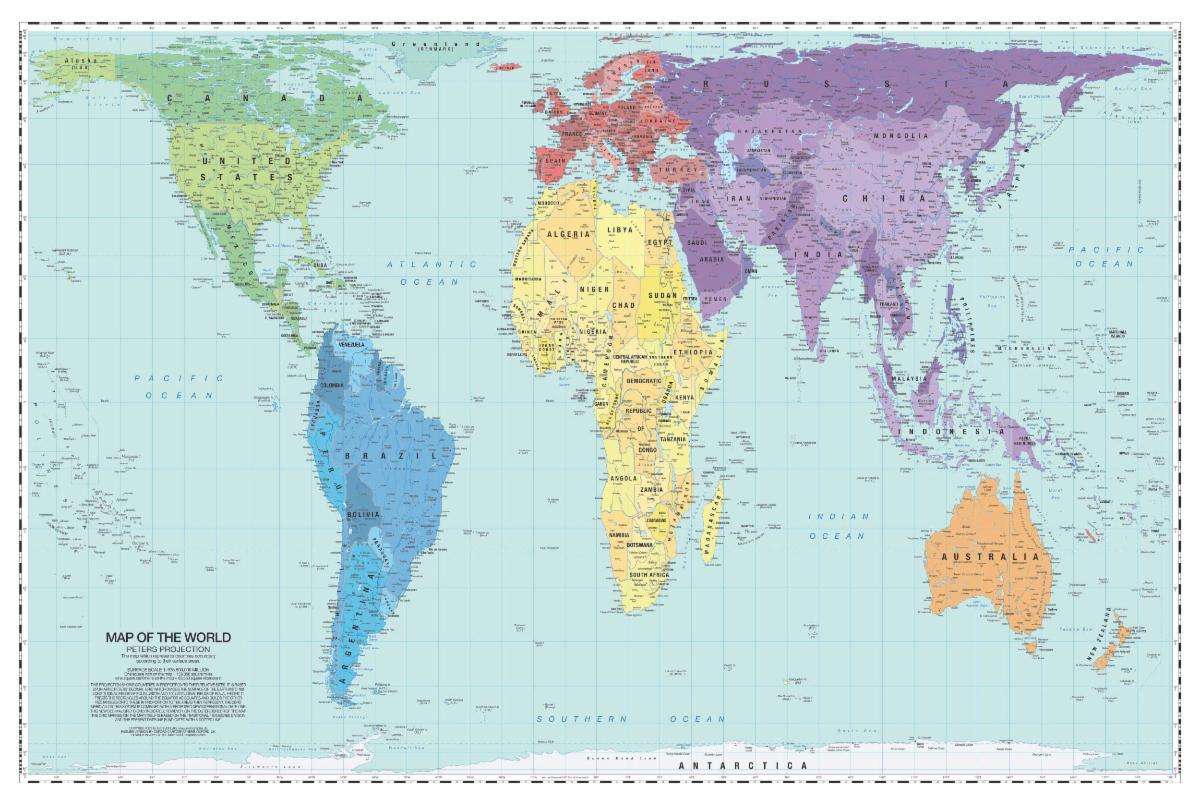
The world reaction to the wars in Ukraine and Gaza have heightened global resistance to traditional European and North American global dominance of the international system. More nations and peoples have risen up to challenge the international order that was constructed by European empires from the 15th century and the US empire since 1898. Manifestations of this resistance include the BRICS, regional international associations, cross-national solidarity, and the continued resistance of countries like Cuba.
This webinar will assess the New International Realities of 2025 and will discuss how peace and justice movements everywhere can support the drive for a New World Order. Panelists include:
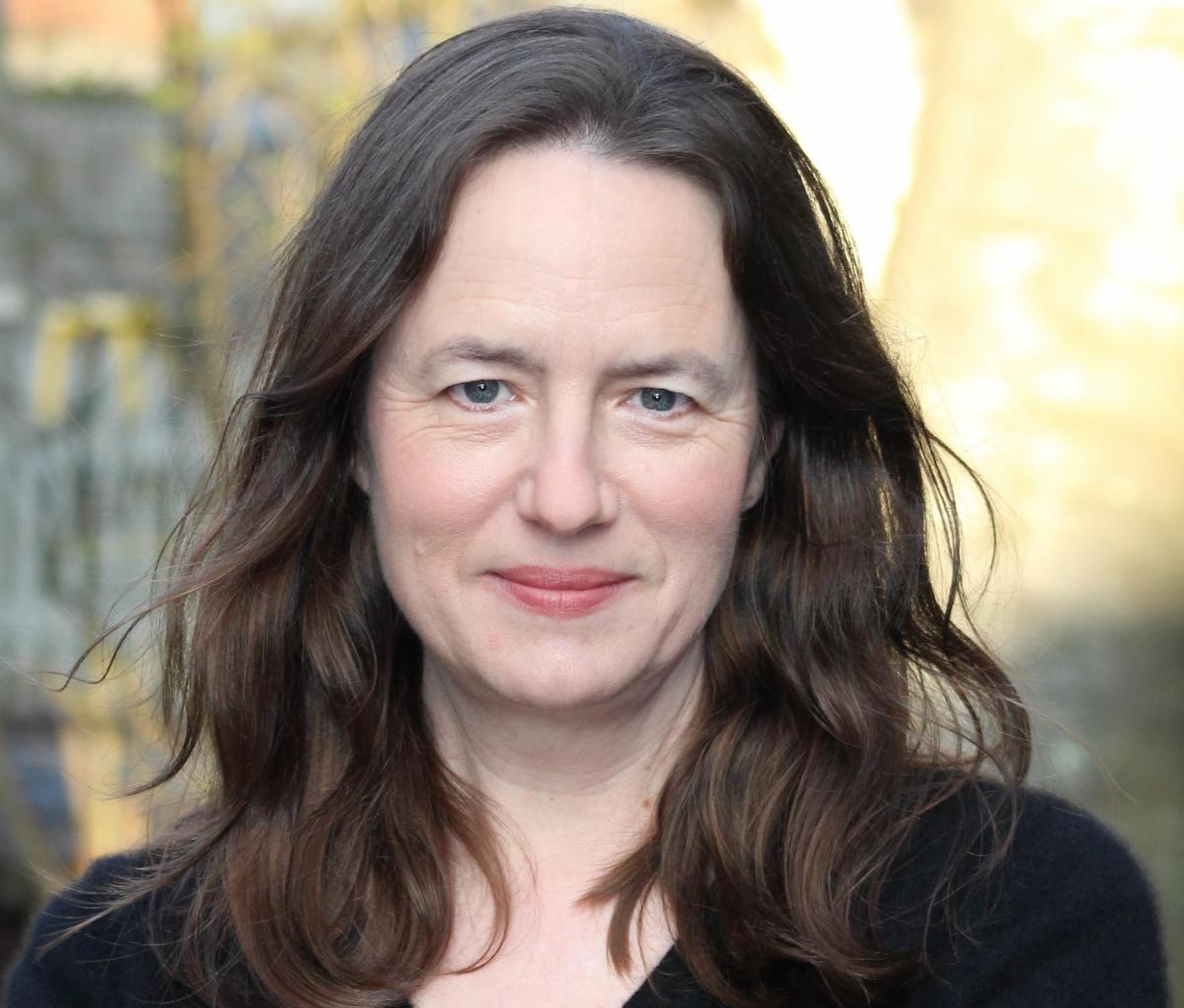
Duncan McFarland, writer, activist, specialist on China and observer of the BRICS.
| | |
Actual World Map
REGISTER
https://us02web.zoom.us/meeting/register/PFhGB4JBRg-Fi5prXINsIg
| |
Saturday, August 30, 2025
LABOR CELEBRATES ITS HISTORY:
MILITANT TRADE UNIONISM
STILL NEEDED
LABOR DAY PARADE, 1882. The first Labor Day Parade, held in Union Square, New York City, by the Knights of Labor on 5 September 1882. Wood engraving from a contemporary newspaper.
https://www.granger.com/results.asp?image=0041831
By Harry Targ
On the morning of September 5, 1882, 30,000 men and women bricklayers, freight handlers, printers, blacksmiths, railroad workers, cigar makers, furriers, seamstresses and other workers lined up to begin the first Labor Day march in New York City. Many of the marchers carried signs with such messages as "Labor Will Be United," "Eight Hours for Work-Eight Hours for Rest-Eight Hours for What We Will" and "Strike With the Ballot."
The New York Central Labor Union spread the word about Labor Day and two years later a national labor organization, the Federation of Organized Trades and Labor Unions, resolved at its convention that the first Monday in September be set aside as labor's national holiday. It was to be celebrated by all workers, Black and white, women and men, young and old, skilled and unskilled, industrial and craft. After years of labor-initiated celebrations, the Haymarket Affair of 1886, and the rise of a worldwide anarchist and socialist workers’ movements, and growing support for a Labor Day in cities and states around the nation, Congress finally adopted Labor Day as a national holiday in 1894.
The original Labor Day was designed to symbolize the demand for the 8-hour day, a healthy work environment, adequate rest, and basic health and other benefits. It was also designed to express the pride that workers felt about their role in the production of all the goods and services in society. Finally, Labor Day was a time to mobilize workers for the ongoing struggle to achieve a fair and living wage, safe and productive worksites, basic economic security, and worker participation in economic and political decision-making.
And the conditions that necessitated the building of a strong labor movement still exist.
First, since the 1970s, there has been increasing class polarization. Gaps in the distribution of wealth and income have widened. Real wages of workers have stagnated since the 1970s. Additionally, workplace benefits have declined, including pension plans. Permanent jobs have been replaced by contingent labor. The percentage of unionized workers has declined by two-thirds. A recent study estimates that only one-fourth of jobs today are “good jobs”, paying at least $16 an hour. And, on the other hand, the share of income and wealth accumulated by the top one percent, ten percent, or twenty percent, the entire privileged class, has risen. The rich have become even richer, while the poor have gotten poorer.
Second, since the 1980s, workers and their families have experienced downward mobility, meaning their social and economic position has declined. This has occurred because stable, well-paying jobs have disappeared due to outsourcing, capital flight, and deindustrialization. By any number of measures, the “American Dream” of helping one’s children to move up the status ladder has been reversed.
Third, the increasing accumulation of wealth and power through tax cuts, deregulation, and financialization, as well as declining government support for public services, has encouraged the privileged to embark on class secession. Increasingly, the privileged class withdraws its support for public institutions as it funds its own private schools, libraries, recreational facilities, and additional social services. The rich build gated communities, electrify their fences, hire private guards to protect themselves, and create private institutions to replace public ones. Robert Reich once referred to the “secession of the successful” which refers to the elites combining “traditional forms of physical and social separation and increasing numbers of privately provided services with the ideology of neoliberalism, an idea system of free market fundamentalism that encourages and legitimates hostility to public institutions.” Sociologists Earl Wysong and Robert Perrucci concluded that “class secession today involves both a separatist social identity and a conscious secessionist mentality.”
In sum, long-term trends in the United States since the 1970s have led to growing wealth and power at one pole and increasing immiseration at the other pole. The idea of a broad middle class is further away from reality than ever.
For the vast majority of Americans, economic security is declining. And, most importantly, the privileged class, which has built its wealth and power on the growing immiseration of the new working class, including service and part-time workers, is physically, financially, and ideologically seceding from the system that historically claimed to provide at least some institutional support for enrichment of the citizenry at large. Data also shows how the brutality of the new class society particularly impacts on people of color, women, immigrants, and other traditionally marginalized people.
The specific issues of the 21st century are different than the 1880s, but the general concerns of workers remain the same
-Workers must stop plant closings and the millions of good jobs that have been lost because of capital flight.
-Workers must stop the shift in the economy from well-paying jobs to part-time and minimum wage jobs. Workers must reverse the 30-year decline in real wages that Americans have experienced.
-Workers must challenge the decline in health and safety in the workplace.
-Workers must struggle to reverse the rise in the number of homeless people and the declining ability of people to pay for health care.
-Workers must join with their brothers and sisters from Mexico, Canada, Asia, and Africa to oppose the pitting of underpaid and overworked men and women in one country against men and women in other countries using the excuse of "free trade."
-And finally, it is clearer now than ever that worker solidarity worldwide is needed to stop militarism, wasteful military spending, and war.
To achieve these goals, workers have to combat the economic and political assault on trade unions which reached massive proportions in the 1980s and 1990s. Without trade unions, there would have been no Labor Day proclaimed in 1882 and there would be no Labor Day in 2025.
https://heartlandradical.blogspot.com/search?q=the+new+class+society
| |
By Steven Jonas
OpEd News, 9/21/24
"Either this nation shall kill racism, or racism shall kill this nation." (S. Jonas, August 2018)
"A Vote for 'ABBH' (Any Body But Harris) is a Vote for Trump and Republo-Fascism" (S. Jonas, March, 2024)
-------------------------------------------------------------------------------------
If the State of Israel continues along its present path, of evermore expulsion-focused policy towards its Palestinian population in Gaza and the West Bank, in a word, "Yes!" And if this current process keeps going, who knows when the current government of Israeli Nationalism (as I call it) might turn its attention towards its own Palestinian citizens. (The "Nuremberg Laws," anyone? See footnote.)
led to the territory occupied by the State of Israel as we now know it was created first by a set of United Nations Resolutions in 1947-48, which led to/were-followed-by-over-time, three wars. Each of those wars was the result of either an Arab invasion of one sort or another, the "War of Independence" in 1948 and the "Yom Kippur War" in 1973, or the threat of one. "The Six-day War" occurred when Israeli intelligence uncovered an Egyptian plan to invade and in a term from the Old (U.S.) West, "cut them off at the pass" (most significantly destroying much of the Egyptian Air Force on the ground). As I have said on more than one occasion, if one looks at maps of the land-area that was allotted to the State of Israel by the final UN partition-resolution in 1948, if the "Six Nation Invasion" had not occurred, it is hard to see how that nation (about half of which was part of the Negev desert --- which was really desert in those days) could have survived for too many years, surrounded by enemies.
As is well known, particularly after the "Sinai Agreement" of 1979, Israel, and its surrounding Arab neighbors as well as representatives of the Palestinians in what came over time to be known as the "Occupied Territories:" the West Bank and the Gaza Strip, slowly limped towards coming to an overall agreement, which would have proved some measure of justice, and peace for the Palestinians. The limping culminated in the "Oslo Agreements." The resistance from the Israeli Right and Far-Right (there was some difference between them in those days) to "Oslo" intensified, culminating, as is well known, in the assassination of the former Israeli Rightist who was instrumental in getting the proposed treaty done, Yitzhar Shamir, by a far-far-rightist Israeli terrorist (who now likely now be considered just an everyday Israeli Rightist). And, symbolized by the violation in 2000 of a Muslim space in Jerusalem known as Temple Mount, by the villain of the "Sabra and Shatila massacres" of 1982, Ariel Sharon, it has been downhill from there, coinciding with the dominance of the Israeli government by Rightists for most of the time since then.
I have been writing on the Israeli Right with regularity since 2012. And since that time, as is well known, for most of it the Prime Minister has been the Israeli-career-politician-with-the-well-practiced-U.S.-accent, "Bibi" Netanyahu. As is also well-known, since then Bibi has been moving further and further to the Right, both in terms of dealing with the Palestinians living in the Occupied Territories of the West Bank and Gaza, or dealing with trying to reduce the powers of the Supreme Court of Israel. What is not as well-known is the Netanyahu is a direct ideological descendant of the original Expulsionist, Ze'ev Jabotinsky, a man who in the 1930s the future first Prime minster of the State of Israel labelled the "Jewish Hitler," for his racist ideas and policies. As a young man Netanyahu's father was a secretary to Jabotinsky, and quite obviously the latter's ideology was passed through the father to the son.
Politically, Netanyahu's hand has been strengthened by the expansion of the Jewish "Settlements" in the West Bank to the increasingly serious detriment to the Palestinian Arabs who have lived since before Partition. The "Settlers," many of whom are U.S., often U.S., Orthodox Jews (many of whom continue to hold their U.S. passports [in order to provide for a quick, emergency exit, if necessary?]) A graphic display of how the U.S. "settlers" treat their Palestinian neighbors is provided in: "US Silence Despite Americans Attacked in Occupied West Bank." If you listen to the "settlers" it is clear, certainly by implication if not declaration, that their ultimate objective is expelling the Palestinians from the West Bank. Certainly, any concept of any kind of "Two-State" is well outside their realm of thinking. I have written more than once the Expulsion of any non-Israeli Palestinians from and territory controlled or partially controlled by the State of Israel --- see, of course, Gaza --- is the ultimate objective of the Israeli Rightist political coalition. Viewing the behavior of Israeli forces in Gaza since the Hamas outrage of 10/7/23 to me just makes no sense.
And it is this view of Israeli policy that leads me to believe that it will eventually lead to the self-destruction of the State of Israel. Why do I take this radical view (on which I will write briefly now and then more later, if events seem be taking that nation in that direction? (And by the way, if somehow a peace [in a variety of meanings] government does take over in Israel, I will be breathing a gigantic sigh of relief and gladly admitting that that prediction was entirely wrong.) But if things continue to go in the same direction that they have been going in for well over a year, these are some of the consequences, for the State of Israel:
If Vice-President Harris wins the Presidential election (and that election survives the possibly violent response on the part of Trump and his allies that would make "Jan.6" look like a stroll down Pennsylvania Avenue --- see my next column on "Secession," next week) there will be a major change in U.S. policy. The Vice-President knows that things simply cannot go on like this, and changes will come. (President Biden knows that too, but as far as what could and could not be done now, see the second footnote below.)
2. Israel's standing in the world is diminishing at a rapid rate. For example a vote has been taken in the UN General Assembly that grants some sort of regular membership to the Palestinians (who don't have a "nation" or a government in the conventional sense, so they cannot be conventional members). The U.S., for the time being, has prevented this from happening. But, like the old Brooklyn Dodgers baseball team, "wait 'til next year." I am certain that under a President Harris, that policy would change. Of course, under a President Trump, even as he wonders why "Jews don't vote for me," it would be even worse. (Just remember that it was Trump who, for example, moved the U.S. embassy to Jerusalem, where it does not belong under international law.)
3. But it is primarily internal factors that lead me to believe that Israel is on the road to self-destruction. Not necessarily on order of importance, they are. 1. No matter how much military aid Israel is currently getting from the U.S., wars are expensive. 2. Israel's population is just under 10 million. Of that number, just under 75% are Jews. As things get worse economically --- and they certainly will --- at first at least some of the non-Jews will look to leave. Next will be those Jews who hold passports from their countries of origin (like many of the "settlers" in the West Bank who are from the U.S.).
4. These developments will harm the economy, but they will also harm the military, which is already being stretched very thin, with an IDF constructed to be an only-when-really-needed military force to one that is constantly in use. Reserves, if they are in Gaza, are not at work (and of course they are neither trained nor psychologically set up to do the work of an occupation force).
5. It is likely that foreign investment is dropping, and not just because of the BDS movement.
And so on and so forth. The point is, that Israel is a small nation facing huge internal and external economic, political, and social problems. I don't see a collapse on the near horizon. But on the far one, in a form and process that is in no way presently predictable, I do see it coming.
-------------------------------------------------------------------------------------
Footnote 1: "Politics, Law & Government: Law, Crime & Punishment:"
Nurnberg Laws, two race-based measures depriving Jews of rights, designed by Adolf Hitler and approved by the Nazi Party at a convention in Nurnberg on September 15, 1935. One, the Reichsburgergesetz (German: 'Law of the Reich Citizen'), deprived Jews of German citizenship, designating them 'subjects of the state.' The other, the Gesetz zum Schutze des Deutschen Blutes und der Deutschen Ehre ('Law for the Protection of German Blood and German Honour'), usually called simply the Blutschutzgesetz ("Blood Protection Law"), forbade marriage or sexual relations between Jews and 'citizens of German or kindred blood.' These measures were among the first of the racist Nazi laws that culminated in the Holocaust.
Footnote 2: It is a given that the Biden/Harris Administration, and V-P Harris' Presidential campaign, both depend in part on American-Jewish contributors who just happen to support the Netanyahu govt. to at least some extent. Given that reality, I look forward to hearing about a GAZA-settlement solution contrary to current Israeli Nationalist policy, that both the Administration and the Campaign could possibly support, before the election. One must also assume that if Trump is re-elected, things would get even worse than they already are for the Palestinians, in GAZA (although that's hard to imagine) and on the West Bank as well (and of course they are already horrible in both loci).
(Article changed on Sep 21, 2024 at 12:41 PM EDT)
| | |
Some Late Summer 2025 Reading:
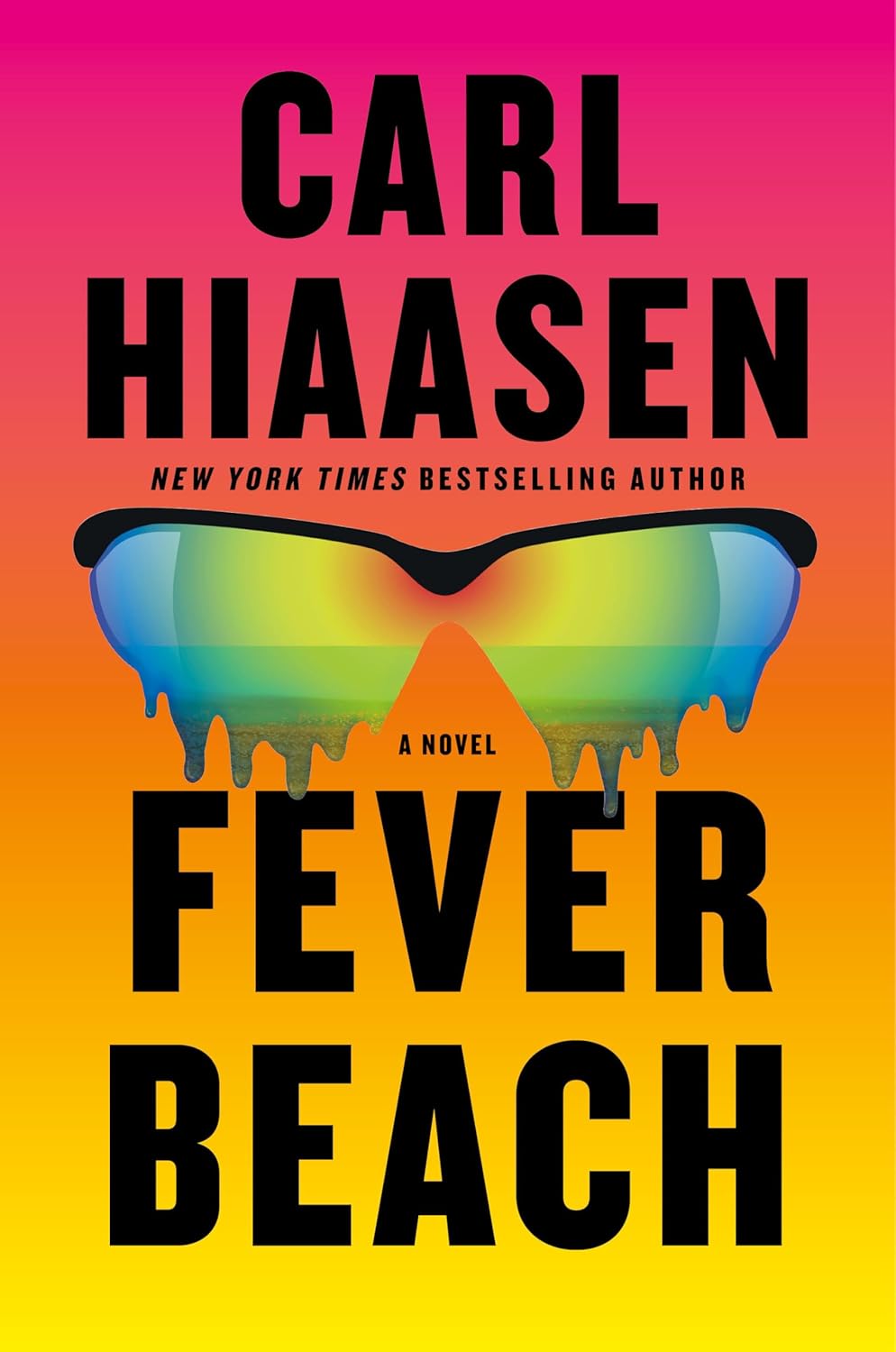
Fever Beach by Carl Hiaasen
Reviewed by Jay Jurie
This summer we have a way of simultaneously distracting and entertaining ourselves, taking our minds off current events while at the same time lampooning and laughing at what is happening.
In his most recent novel, Fever Beach, Carl Hiaasen has yet again done what he does best, ridiculing and delivering a satiric blow against a status quo drowning in greed,mendacity, and ennui. Based in Florida, Hiaasen started his career as an editorial columnist at the Miami Herald, joining his esteemed colleague Dave Barry, along with Scott Maxwell of the Orlando Sentinel, writing about rampant political corruption and
out-of-control greed, especially that of developers whose bidding they eagerly serve.
Hiaasen went on to write fictionalized but plausible depictions of life in Florida under
such conditions, publishing over a dozen novels about the unseemly conduct and
bizarre events that, like its hot and humid climate, are ongoing features of the Sunshine
State. He is the master of a witty style that might these days be characterized as
“weaponizing humor.”
Although typically about Florida, the appeal of Hiaasen’s writing transcends state lines.
Florida, in population size, the nation’s third largest, is familiar to many as a leading
tourist destination. It is also a bellwether for far-right politics and other weirdness that
all too often rears its ugly head around the rest of the country.
Like cancer, much of what occurs in Florida metastasizes elsewhere, including to the
national body politick. Think of the so-called “Moms for Liberty,” founded in Brevard
County or the assaults on “woke,” along with public and higher education. Or
incarceration policies in keeping with the so-called “Alligator Alcatraz.” Think of Secretary
of State Marco Rubio or US Attorney General Pam Bondi. Or a disgraced former
Congressperson, who puts in a thinly-disguised Fever Beach appearance.
Much of the action swirls around a band of white supremacists who hold tiki-torch night-
time meetings at Fever Beach, giving the novel its title. They turn out to be as hapless
and vapid as they are vicious in seeking to function as thugs for the supposedly more
reputable political forces they serve. Arrayed against them are the disgusted tenant of
one of the thugs and a man she fortuitously meets on board an airline flight.
One surprise is that a stand-in for Gov. Ron DeSantis doesn’t slither onto the pages of
the book, given the outsized role he’s played in a number of the culture wars. We can
be sure Hiaasen hasn’t forgotten DeSantis; he may just be featured in other
writing or waiting in the tall grass.
Like all of Hiaasen’s works, Fever Beach is a fun read. Lifting the reader out of dismay
and depression, an alternative is provided to look at the world, to take stock of what’s
taking place, and help craft it into a refreshing and hopeful perspective.
https://carlhiaasen.com/books/fever-beach/
| | |
Notes from a frontline factory
in eastern Ukraine
By Timothy Snyder
Sept 7, 2025
Interpipe Mill, Nikopol,
6 September 2025, TS
Today I visited a factory in southeastern Ukraine. Tonight, with a moment to myself during an air raid, I want to give voice to a worker I met, A.
The factory is an impressive tube-rolling mill in Nikopol, on the Dnipro River. The Russians are on the other side of the river. The factory makes pipes for export and employs about three thousand people. The Russians try to destroy it.
Russian attacks on the factory are part of a campaign of murderous destruction that is visible from the rubble of the big supermarket at the edge of Nikopol to the damaged old town. There is no Ukrainian military presence.
Ukrainian civilians are vulnerable to Russian missiles and drones. Cities close to the front are especially at risk, since the time between a missile launch and contact is measured in seconds. In Kharkiv or Zaporizhzhia, for example, the time is about 40 seconds.
In Nikopol the situation is more drastic still, since it is also within artillery range. The time from launch of an artillery shell to contact is about seven seconds. I kept being reminded not to wear my seatbelt; you lose the seven seconds that way.
The Russians have been trying to destroy the pipe mill in Nikopol for three years. It has been hit by drones and it has been hit by shells. Provisions have been made, however, for its repair and its defense. The damage is visible, but so are the improvements and precautions. The factory runs and people come to work.
These attacks by Russian heavy weapons on unarmed civilians are one element of Ukrainian workers’ experiences.
In June 2023, Russian occupiers blew the Kakhovka dam, which is upstream from Nikopol on the Dnipro. This cut off the plant, and the entire city, from their water supply. Adjustments were made.
Now that the dam is gone, the former reservoir looks like a forest. Visible on the far bank, the occupied side, is a Ukrainian nuclear power plant which the Russians occupy — and regularly threaten to damage.
In the factory there are cold-war era underground shelters, with beds and chairs and bathrooms and a lady waiting to make tea. And there are new cement shelters on the surface for workers.
Ninety-two workers from this factory have been killed in action as soldiers. Fifty more are missing.
Two drivers from another company were killed on the site by Russian attacks, as was one worker.
She was a crane operator, at her station when the Russian shell hit. Heavily wounded by shrapnel, she died three weeks later in the hospital.
There are many ways to think about this war, and one of them is class.
The invasion of Ukraine was the decision of a man with hundreds of billions of dollars, Vladimir Putin, whose oligarchical fantasy is that Ukraine does not exist.
After walking through the factory, I sat in the canteen and talked with workers coming off the shop floor. They spoke about war crimes they had witnessed, and about colleagues on the front who they talked to regularly, “just to be human.”
When asked who was attacking them — is it Putin? Russia? — the answer came right away, from A.:“Fascists.”
| | |
Sept 5, 2025:
Oval Office Fascism Keeps Lashing Out,
Learn How To Defeat It
By Carl Davidson
LeftLinks
ItOur politics this week are bizarre, full of chaos, turmoil, and outright lies. How can we sort it all out?
Lenin is far from being everyone’s favorite astute political scientist. It’s a shame, really, because he was very good at it, whatever other flaws he may or may not have had. And you don’t have to be a communist to appreciate many things about him. He was a very smart guy.
So we’ll try leading off with him today, mainly because the escalating conflicts in our current conjuncture are raising key questions he was very good at answering: Are we in a revolutionary or counter-revolutionary situation? If not yet, are they rising on the horizon anyway?
Lenin gave us some yardsticks to measure aspects of the conjuncture. The first question he posted was whether those on top could “continue to rule in the old ways.” What we see in D.C. is poignant: the ‘old way’ of Madisonian democracy — with its three coequal branches and checks and balances —is being shredded before our eyes. Instead, we see Trump, having taken the Oval Office, asserting a patrimonial mafia gangster state based on fealty to him, not loyalty to the Constitution. He has stacked the Supreme Court with a largely pliant majority, while turning a GOP-dominated Congress reduced to gutless hearings. We watch the destruction of national health and science, and the slashing of FEMA, turning the few good things done in D.C. into rubble. And as Trump assembles illegal armed forces to occupy ‘Blue Cities’ with masked and armed thugs, we see a rising promise of civil violence. The state governments are divided, but the same process is underway among them.
So, how might we answer Lenin on point one? ‘Are the old ways of ruling gone? Not yet, but we’re getting there quickly. 'The pace is picking up’ would be an accurate reply.
Let’s turn to the question in the second yardstick. 'Could those on the bottom continue to live in the old way?’ Compared to much of the world, we’re not in utterly dire straits. But Americans rarely think that way. They usually think, ‘Will my kids be better off than me?’ Today, the answer has flipped from a solid ‘yes’ of a generation ago to a solid ‘no.’ Today’s youth are burdened with school debt, entirely unneeded, like no other young generation in any other advanced or even moderately developed country. Twenty years ago, a young couple with modest resources could get a mortgage for a home while in their late 20s. Today, they wait well into their late 30s. These are connected, in turn, to lower rates of family formation and a dropping birth rate. Our universal health care has always been poor by comparison. Now, it's highly threatened, and national standards for vaccines and dealing with disease face a daily wrecking ball at the hands of HHS Secretary Robert F. Kennedy, Jr., who is despised by the rest of his elite liberal family.
So again, our answer to Lenin’s yardstick is ‘No, we may not yet have long bread lines and massive unemployment, but we are no longer, by far, ‘living in the old way.’
Lenin had a third yardstick. It places the current conjuncture within the broader context of the world. Was war on the horizon? Was a multinational economic collapse in the works? Were the Great Powers making efforts to redivide the world? Lenin affirmed the importance of these factors. He was also wise enough not to claim that they would produce revolutions of themselves, only that the potential transformative change was already present within them.
So how might this apply now? The world order has undergone significant changes today that would have seemed bizarre just 20 years ago. The Global South--especially with the BRICS alliance, with the vast economies of China, India, and Brazil—is breaking up the old Euro-Atlantic-centric and Euro-NATO centric orders that have prevailed since 1945. Trump has basically conceded the entire renewable energy and electric auto sector to China, then taking a monkey-wrench to NATO while siding with Russia against Ukraine.
Regarding ‘America First,’ Trump seems to want to be McKinley 2.0. He is threatening to seize Greenland, to make Canada the 51st state, and to renege on the Panama Canal treaty. There is only one problem. The Northern hemisphere is hardly the same these days. Brazil is a powerhouse in South America, and Mexico is no pushover—and both of them have good relations with China. The remaining wildcard is the ongoing genocide in Gaza, which could explode in several ways at any time. In short, Trump’s whole MAGA project has turned into its opposite: the U.S. is considerably isolated and weakened.
To get all we can out of Lenin’s yardsticks, there’s one additional analysis he makes and thinks essential: the state of the ‘subjective factor.’ It’s often the hardest measure to take accurately because it’s about us, the left. All of the first three factors, as they are inflicted on us, give rise to movements among the masses, movements that flow and ebb of their own accord.
But what Lenin asks here is, what is the situation of the left within these movements? Is it well organized? Is it embedded among the most insurgent fighters? Or cheering from the sidelines? Or maybe only jumping in when someone else organizes a battle?
Lenin also urges us to know the dynamic state of class consciousness among the workers and the oppressed. We can start by dividing the masses into three categories: the advanced, who want to fight in some way; the backward, who are fighting for our adversaries; and the middle, who waver on whether to fight or not, thinking that politics has little or nothing to do with them.
But leaving it here won’t do. Lenin also wants us to learn how to count and recount since everything is always changing. How many are in each grouping? What is the trend? What demands are being made? How is the enemy responding? Lenin insists, time and again, on ‘the concrete analysis of concrete conditions.’ If you don’t do this, don’t bother calling yourself a Marxist.
Why is this last group of measures so important? Because without knowing them accurately, there is no effective strategy and tactics. We may have many weapons, but we have no idea of where to shoot, or how much, or how often. It’s why Lenin called practicing this ‘the ABCs.’ Without learning them, you never learn to read or see where to shoot.
You do not have a good way to answer one of the most critical questions of making change: what do we do next? That requires another editorial for another week, so we’ll leave it at that, with a tip of our hats to our stern but warm teacher of yesterday.
| |
He views communities that don't support him as enemies to be subjugated.
Noah Berlatsky
Sep 9
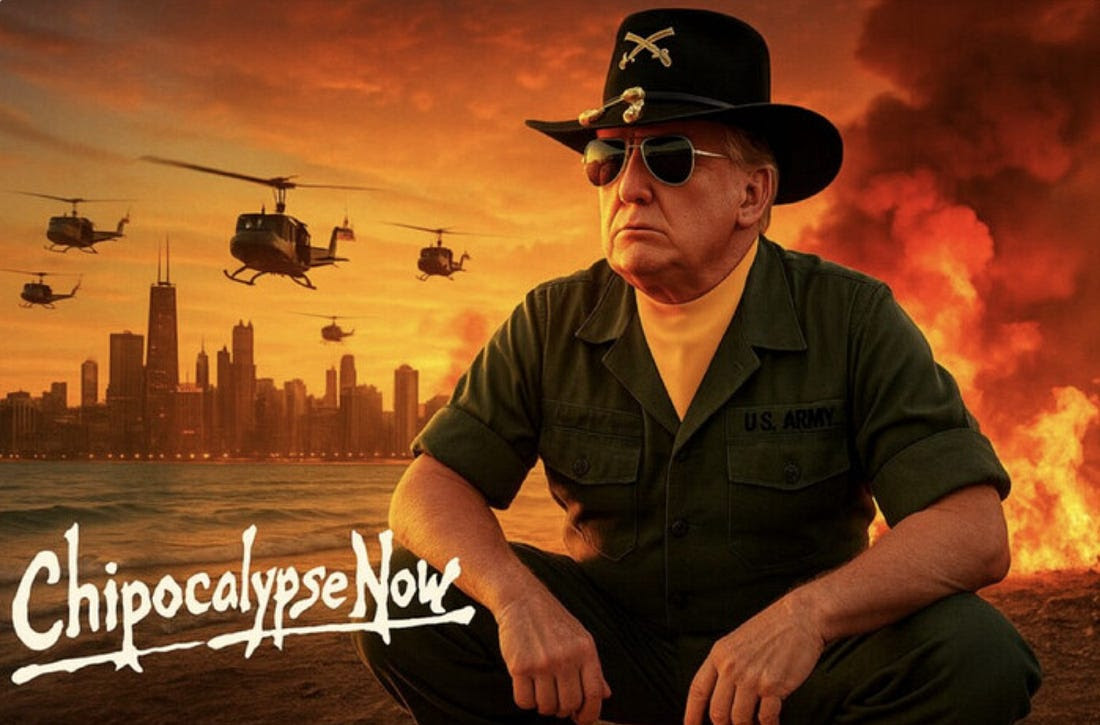
“I love the smell of deportations in the morning,” Trump wrote on his social media site Truth Social last week. “Chicago about to find out why it’s called the Department of WAR.”
The post included an apparently AI generated image labeled “Chipocalypse Now” which showed Trump dressed as Lieutenant Colonel Bill Kilgore (Robert Duvall), the bloodthirsty character from Francis Ford Coppola’s 1979 Vietnam War film “Apocalypse Now.” Kilgore’s most famous line was “I love the smell of napalm in the morning.” Behind Trump to his left flames and smoke boil; to the right military helicopters fly over Chicago’s skyline.
This is frankly one of the worst things Donald Trump has ever posted, which is really saying something
When pressed by reporters on Sunday, Trump insisted, “we’re not going to war” added that instead, “We're going to clean up our cities. We're going to clear them up so they don't kill every five people every weekend. That's not war. That's common sense."
Trump tells a reporter who asks him about going to war with American cities to “be quiet” and “listen”
Illinois governor JB Pritzker, though, understandably treated a threat from the president of the United States to go to war as a serious and violent provocation. So did Chicago Mayor Brandon Johnson, who said that Trump’s “threats are beneath the honor of our nation, but the reality is that he wants to occupy our city and break our Constitution."
Johnson’s use of the term “occupy” is deliberately and thoughtfully chosen. Trump’s Vietnam meme references not just any war, but a colonial Cold War conflict in which the US invaded and occupied a distant nation. The image, then, presents Chicago as a territory to be colonized and conquered with violence, helicopters, and napalm.
This is ugly and frightening, especially for those of us who live in the city. But it’s not exactly surprising.
| | |
A current DoD official and many military legal experts say the U.S. attack on a boat in the Caribbean near Venezuela broke international law.
Nick Turse
September 5, 2025,
A screenshot from the video President Donald Trump posted to Truth Social on September 2, 2025, showing a U.S. military strike on a boat in the Caribbean Sea. Screenshot: @realDonaldTrump/Truth Social
The lethal strike on a boat in the Caribbean on Tuesday was a criminal attack on civilians, according to a high-ranking Pentagon official who spoke to the Intercept on the condition of anonymity.
The Trump administration paved the way for the attack, he said, by firing the top legal authorities of the Army and the Air Force earlier this year.
“The U.S. is now directly targeting civilians. Drug traffickers may be criminals but they aren’t combatants,” the Department of Defense official said. “When Trump fired the military’s top lawyers the rest saw the writing on the wall, and instead of being a critical firebreak they are now a rubber stamp complicit in this crime.”
President Donald Trump claimed that the attack was aimed “against positively identified Tren de Aragua Narcoterrorists,” in a TruthSocial post. He continued: “TDA is a designated Foreign Terrorist Organization, operating under the control of [Venezuelan President] Nicolas Maduro, responsible for mass murder, drug trafficking, sex trafficking, and acts of violence and terror across the United States and Western Hemisphere.”
Trump accompanied the post with a video of a four-engine speedboat cutting through the water with numerous people on board. An explosion then destroys the boat. Trump said the attack killed 11 people. It was unclear whether they were given a chance to surrender before the United States killed them.
After days of silence, the White House issued a statement late Thursday claiming the attack was lawful. White House deputy press secretary Anna Kelly said it was “taken in defense of vital U.S. national interests and in the collective self-defense of other nations who have long suffered due to the narcotics trafficking and violent cartel activities of such organizations.”
Defense Secretary Pete Hegseth offered his own justification for the strike the same day. “Every boatload of any form of drug that poisons the American people is an imminent threat. And at the DoD our job is to defeat imminent threats,” he told a group of journalists. “A foreign terrorist organization poisoning your people with drugs coming from a drug cartel is no different than Al Qaeda, and they will be treated as such as they were in international waters.”
Two U.S. government officials, speaking on the condition of anonymity, said that Hegseth’s justification – which one called “completely unserious” – took shape after the attack.
Experts said Hegseth’s rationale was flimsy, if not farcical. “Tren de Aragua being designated as a foreign terrorist organization is a purely domestic law enforcement designation. It offers no authority for the military to use deadly force,” said Todd Huntley, who was an active-duty judge advocate for more than 23 years, serving as a legal advisor to Special Operations forces engaged in counterterrorism missions around the world. “Under international law, there’s no way this even gets close to being a legitimate use of force.”
Other legal experts have agreed with Huntley, now the director of the National Security Law Program at the Georgetown University Law Center. Members of Congress have echoed the assessment.
“Congress has not declared war on Venezuela, or Tren de Aragua, and the mere designation of a group as a terrorist organization does not give any President carte blanche to ignore Congress’s clear Constitutional authority on matters of war and peace,” said Rep. Ilhan Omar, D-Minn, in a statement. “There is no conceivable legal justification for this use of force. Unless compelling evidence emerges that they were acting in self-defense, that makes the strike a clear violation of international law.”
Hegseth said the attack would be followed by others. “It won’t stop with just this strike,” he told Fox News on Wednesday. “Anyone else trafficking in those waters who we know is a designated narco-terrorist will face the same fate.”
Diosdado Cabello, the Venezuelan Minister of Interior, Justice and Peace called the Tuesday attack “an illegal massacre in international waters” and said the United States had “violated international law.”
Under international law, there’s no way this even gets close to being a legitimate use of force.
Brian Finucane, who worked for a decade in the Office of the Legal Adviser at the Department of State, where he advised the U.S. government on counterterrorism and other military matters, also noted that designating a group as a foreign terrorist organization does not, by itself, provide authority for the use of military force.“Nonetheless, such FTO designations are widely and mistakenly perceived as authorizing such action within the executive branch,” he wrote in a legal analysis published this week. “Thus, designation of Tren de Aragua and a number of other Latin American criminal entities as FTOs in February foreshadowed this week’s attack in the Caribbean, despite providing no actual legal authority for it.”
U.S. attacks around the world – from Libya to Somalia – during the war on terror have been justified under strained interpretations of the 2001 Authorization for the Use of Military Force. But despite the Trump administration labeling cartels “narcoterrorists,” experts say there is no plausible argument that the AUMF can apply to Tren de Aragua.
“We knew exactly who was in that boat,” Hegseth told Fox News on Wednesday. The Pentagon has frequently claimed to have killed terrorists when it has instead killed innocents. A 2023 investigation by The Intercept, for example, determined that an April 2018 drone attack in Somalia killed at least three, and possibly five, civilians, including 22-year-old Luul Dahir Mohamed and her 4-year-old daughter Mariam Shilow Muse. At the time, the military announced it had killed “five terrorists” and that “no civilians were killed in this airstrike.”
Several experts and government officials speculated that the boat the U.S. struck on Tuesday may not even have been smuggling drugs due to what they said was an unusually large number of people on board the vessel.
Hegseth fired the Air Force’s and Army’s top judge advocates general (JAGs) in February to avoid “roadblocks to orders that are given by a commander in chief.” The next month he commissioned his personal lawyer, Timothy Parlatore, as a Navy JAG and empowered him to help overhaul the JAG corps, reportedly pursuing changes that would encourage lawyers to approve more aggressive tactics and take a more lenient approach to those who violate the law of war. Parlatore’s prior claim to fame was successfully defending Eddie Gallagher, a Navy SEAL accused of first-degree murder in the death of a captured ISIS fighter as well as the attempted murder of civilians in Iraq. Distinguished former JAGs and members of Congress have repeatedly spoken out about Hegseth’s efforts to undermine the independence of military legal counsel and subvert military justice.
In February, Trump designated Venezuela’s Tren de Aragua, MS-13 in El Salvador, and six cartels based in Mexico as foreign terrorist organizations. More recently, the Trump administration added the Venezuelan Cartel de los Soles, or Cartel of the Suns, to a list of specially designated global terrorist groups, alleging that it is headed by Maduro and high-ranking officials in his administration. In July, Trump also signed a secret directive ordering the Pentagon to use military force against some Latin American drug cartels he has labeled terrorist organizations.
Venezuelan officials believe Trump may be renewing long-running efforts, which failed during his first term, to topple Maduro’s government. Maduro and several close allies were indicted in a New York federal court in 2020, during the first Trump presidency, on federal charges of narco-terrorism and conspiracy to import cocaine. Last month, the U.S. doubled its reward for information leading to Maduro’s arrest to $50 million.
Speaking on Fox News, Hegseth did not rule out regime change by the U.S. in Venezuela. “That’s a presidential-level decision and we’re prepared with every asset that the American military has,” he said.
Two armed Venezuelan F-16 fighter jets flew over the U.S. Navy guided-missile destroyer Jason Dunham in the southern Caribbean Sea in a show of force on Thursday. The Pentagon called it a “highly provocative move” that was “designed to interfere with our counter-narco-terror operations” and issued a threat.
“The cartel running Venezuela is strongly advised not to pursue any further effort to obstruct, deter or interfere with counternarcotics and counterterrorism operations carried out by the U.S. military,” read the statement released on X Thursday night.
Hegseth declined to say what type of weapons were used in the Tuesday strike but referenced “assets that we have in the region” include a “MEU” or Marine Expeditionary Unit “which holds 2,200 combat infantry Marines and has plenty of its own organic assets.” He added: “So we’ve got assets in the air, assets in the water, assets on ships, because this is a deadly serious mission for us.”
The Intercept previously reported that U.S. Marines and sailors from the 22nd Marine Expeditionary Unit recently deployed to southern Puerto Rico. The 22nd MEU did not reply to repeated requests for comment about whether they were involved in the Tuesday attack.
All told, around 4,500 U.S. personnel, seven U.S. warships and one nuclear-powered attack submarine are either in the Caribbean or are expected to arrive there soon.
Several government officials suggested to The Intercept that Rear Adm. Milton “Jamie” Sands III, head of Naval Special Warfare Command, was fired by Defense Secretary Pete Hegseth late last month due to the admiral’s concerns about impending attacks on civilian vessels in international waters.
Pentagon Press Secretary Kingsley Wilson pushed back on the officials’ claims. “No, that’s not accurate,” she replied by email. Sands did not respond to requests by The Intercept for an interview prior to publication.
Tuesday’s strike, as carried out, fell under the authority of U.S. Southern Command. Sands oversaw the Navy’s SEAL teams, so would not have been in the operational chain of command for the Tuesday strike, and would not have had authority to approve or reject the planned operation.
Last month, more than 30 humanitarian, public interest, immigrant rights, faith-based, veterans’ advocacy, and drug policy reform groups called on Congress to oppose the use of military force against drug cartels in Latin America by the Trump administration.
Melding two failed American wars — the war on drugs and the war on terror — would “put people at risk of violence and destabilize hemispheric relations while hindering, not helping, efforts to protect communities from drug trafficking and other crime,” according to the organizations, which include Alianza Americas, Center for Civilians in Conflict, Drug Policy Alliance, Public Citizen, and Win Without War.
“The U.S. posture towards the eradication of drugs has caused immeasurable damage across our hemisphere. It has led to massive forced displacement, environmental devastation, violence, and human rights violations. What it has not done is any damage whatsoever to narcotrafficking or to the cartels. It has been a dramatic, profound failure at every level,” said Omar. “Trump and Rubio’s apparent solution, to make it even more militarized, is doomed to fail. Worse, it risks spiraling into the exact type of endless, pointless conflict that Trump supposedly opposes
| | |
From Heather Cox Richardson:
A Wall Street Journal–NORC poll released yesterday found that only 25% of Americans believe they have a good chance of improving their standard of living. Nearly 70% said it was no longer possible to work hard and get ahead. A majority of those polled said the generation before them had an easier time starting a business, buying a home, or staying at home to parent a child.
A different piece in the Wall Street Journal explained that there were 927 American billionaires in 2020 and 1,135 in 2024. Together, they are worth about $5.7 trillion. The 100 richest of the set control more than half of the total at about $3.86 trillion. As the number of billionaires grew, “supply side” economic policies in the U.S., designed to concentrate wealth at the top of the economy among investors rather than on the “demand side” made up of consumers, hollowed out the middle class. From 1975 to 2018, at least $50 trillion moved from the bottom 90% to the top 1%.
Yet another piece in the Wall Street Journal, this one by Katherine Hamilton and Alison Sider, noted that consumer confidence is sliding. While wealthier Americans seem to be doing fine, they write, rising distress about the economy is obvious among the middle class: those making about $53,000 to $161,000 a year. Chief economist at Morning Consult John Leer told the reporters: “There was a period of time, briefly, where the middle-income consumer looked like they were being dragged up by all that was going well in the world. Then things fell off a cliff.”
In an interview with the Financial Times published yesterday, billionaire Ray Dalio, the founder of hedge fund Bridgewater Associates, warned that the U.S. today looks a lot like “what happened around the world in the 1930–1940 period.” Dalio identified the policies of President Donald J. Trump as the sort of “strong autocratic leadership that sprang out of the desire to take control of the financial and economic situation” in the 1930s.
| | "It's one thing for a fascist clique to take office in DC and begin to wreak havoc. But we're a big country of 50 states, hundreds of large cities and 3000 counties. They will have to go through all of them to consolidate their fascist hegemony, the long march through the civil society institutions 'in reverse,' so to speak. But we can fight them every step of the way, from our localities, then networking outward and upward. Win on our local ground first. We rarely win at the top what we haven't already secured at the base." Carl Davidson | | The grass is dry in Cleveland. Be sure to click the play button. | | | |  | |
New Studies on the Left, May 2025
Paperback $14.95
...is a journal of socialist theory and practice. It is the successor to ‘Dialogue and Initiative, published as an annual journal of the Committees of Correspondence for Democracy and Socialism in book form from 2012 to 2022. It will continue the CCDS policy of left unity, including articles with a variety of left perspectives, including debates.
This issue contains a dozen articles grouped under the headings of Analysis and Global Reach, Electoral campaigns, and Book Reviews. Some are reprinted from other sources, but many appear here for the first time.
Among the authors are C.J. Atkins, Carl Davidson, Steve Early, Bill Fletcher, Jr., Suzanne Gordon, Jerry Harris, Jay Jurie, Paul Krehbiel, Matthew Scott, Rod Such, Harry Targ, and Janet Tucker and Steve Willett.
Table of Contents
Click HERE to purchase
| | | |
With the winning of the Trump/Vance ticket along with the far right in leadership of all 3 branches of government we need to bury our differences and build the left and the Progressive Majority, a majority that we know exists on most issues of public policy.
We need to build our organizations to defend democracy, in our communities and at the state and national levels including progressive gains won over several decades.
IN GENERAL WE NEED TO REBUILD OUR LEFT: PEACE ACTIVISTS, FEMINISTS, WORKERS, ENVIRONMENTALISTS, AND ALL HUMANISTS WHO UNDERSTAND THAT. (HOWEVER WEAK) US DEMOCRATIC INSTITUTIONS ARE UNDER ATTACK AND THE VERY PEACE AND ENVIRONMENTAL CONDITION OF THE WORLD ARE UNDER ATTACK
Harry Targ
| | "Organization is the central task; revolutionary education is the key link." Carl Davidson | | |
—–Neofascism, Imperialism, War, and Revolution in the Middle East, Gilbert Achcar interviewed by by Rodrigo Utrera | July 24, 2025 Now on our blog page
The Black Nation Thesis Archive, organized by Abdul Alkalimat, Now in our History Dept.
The Long American Counter-Revolution Historian Gerald Horne has developed a grand theory of U.S. history as a series of devastating backlashes to progress—right down to the present day. By David Waldstreicher in the Boston Review.
Marxism and the Black Experience. All references by Marx, Lenin and others on African Americans, compiled by Abdul Alkalimat. Now in our Archives section.
Bill Fletcher Collection. Some of his key works available online. In our Archives.
Richard Wolff, UMass Amherst In addition to the link above and button below, CLICK HERE for more classes by Wolff. For his new book on the three contending theories of Neoclassicalism, Keynesianism, and Marxism, go HERE. Otherwise Access Here For his lectures on Vol. 2 and Vol. 3 of Capital, go HERE.
New Video Course: "This is literally a reverse Robin Hood." U.S. Rep. Jasmine Crockett slams Trump's spending bill. HERE
New Text Course: Nicos Poulantzas: 'State, Power, Socialism' by Stuart Hall. HERE.
| | Organization is the central task; revolutionary education is the key link. | | |
Our Amazing Resource for Radical Education
CURRENT FEATURE: In the 'Study Guides' Section
A 4-PART STUDY OF THE SHAPING OF THE
RUST BELT WORKING CLASS.
From the settlers to the present, and how its consciousness is conflicted. Prepared by Carl Davidson and Rebecca Tarlau,
with some help from the DSA Rust Belt group.
There are hundreds of video courses here, along with study guides, downloadable books and links to hundreds of other resources for study groups or individuals.
Nearly 10,000 people have signed on to the OUL for daily updates, and more than 150,000 have visited us at least once.
Karl Marx's ideas are a common touchstone for many people working for change. His historical materialism, his many contributions to political economy and class analysis, all continue to serve his core values--the self-emancipation of the working class and a vision of a classless society. There are naturally many trends in Marxism that have developed over the years, and new ones are on the rise today. All of them and others who want to see this project succeed are welcome here.
NEW UPDATES...
On our Blog Page:
How to Create a Future of Cheap Energy for All
The WIRED & Octopus Energy Tech Summit in Berlin was bursting with innovative ideas for reaching net zero and on working together at an ever-greater scale.
How to Build an Underground Resistance Force in 16 Steps
Lessons from Blue Virginia, a community-based organization of women
Our Latino/a Studies Dept:
Forced Amnesia: The Hidden History Of America’s Far West
An emotional and historical journey through the American West on the tracks of the pre-1848 border, to meet families that lived there since long before the US takeover.
Our History Dept:
Marcus Rediker on the Quaker Abolitionist and Seaman Benjamin Lay – History from Below after the Transnational Turn.
This seminar subtitled “The Case of a Forgotten 18th-century Revolutionary,” was given by Marcus Rediker as part of the Development Studies Seminar Series on 24 October 2017 at SOAS University of London
To get regular updates, be sure to ‘Like’ us at http://facebook.com/ouleft.org Be sure to also, under ‘Like’, pick ‘Get Notifications.’ You can also ‘subscribe’ to our FB page and send in articles for our blog at the OUL main site, http://ouleft.org
Read more
http://ouleft.org
| | | | | |
Digging Deeper into the Meaning
of Palestine
By Rod Such
Author's note: My initial decision to begin reviewing books on Palestine and the Palestinian liberation struggle was to write for political activists, rather than academics or the general public. This book, which collects dozens of reviews over a decade, might also be regarded then as a kind of wide-ranging primer or introduction to Palestine that will lead hopefully to an ongoing learning experience.
316 pages, $19.00 (discounts available for quantity), order at:
Changemaker Publications
https://www.lulu.com/spotlight/changemaker
| | | POWER TOOLS FOR UNION BUILDING | |
Timothy Sheard | 415 Argyle Rd. 6A | Brooklyn, NY 11218 US
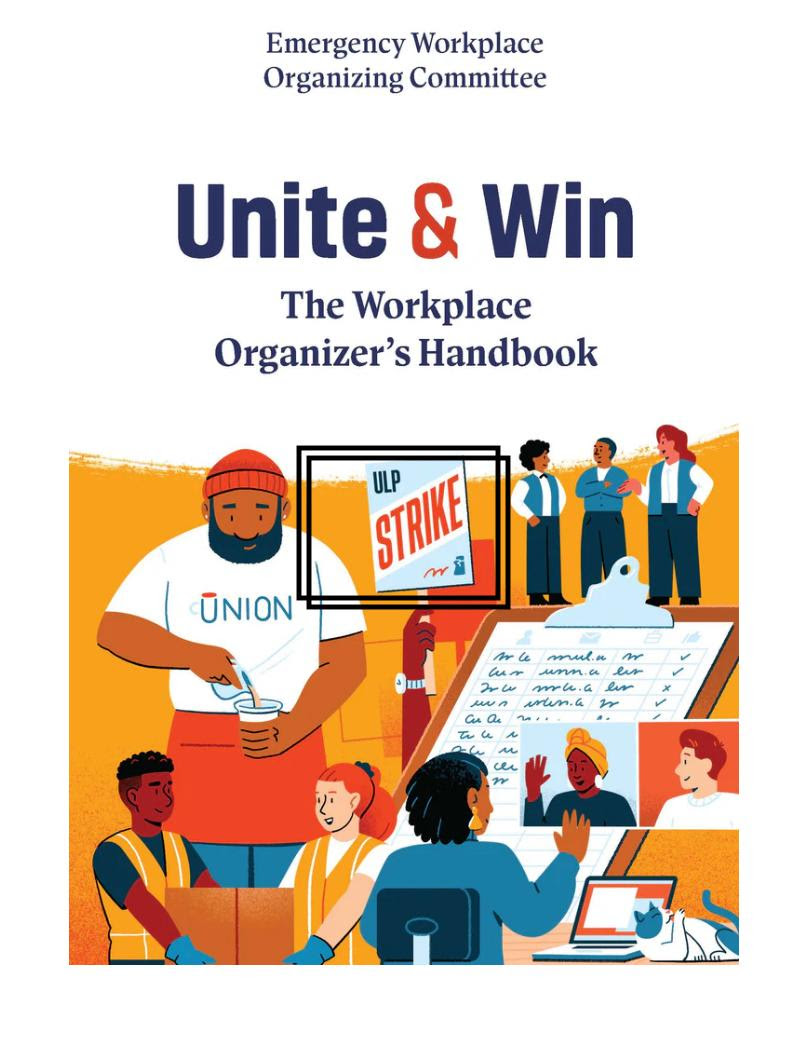
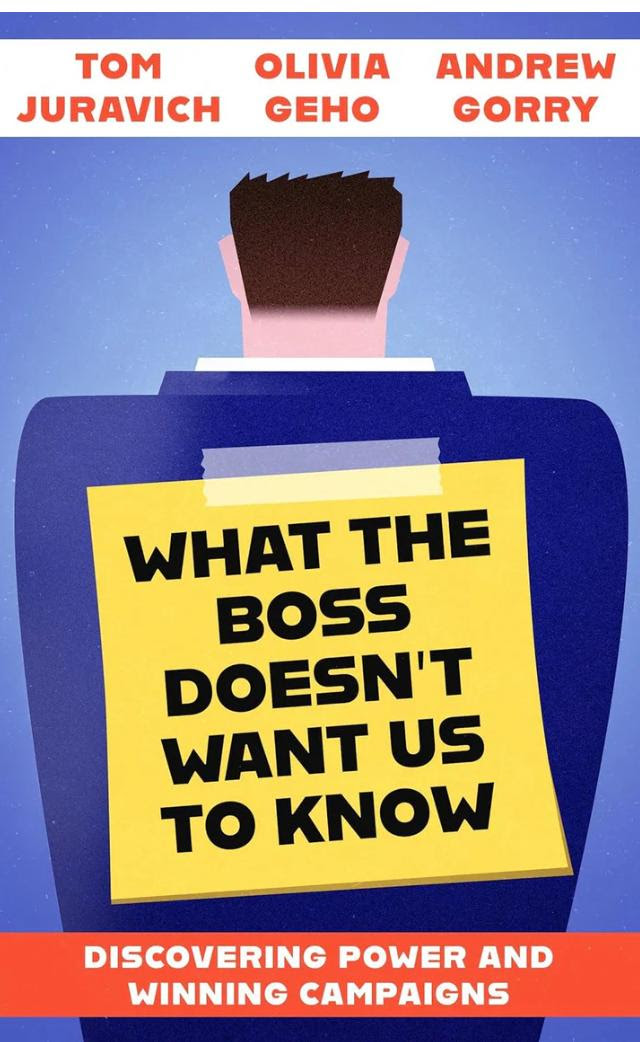
| | With grave new challenges from the current administration, Hard Ball Press is raising our game, with new books & new Staff. | | Click go to Hard Ball Press for fresh information about organizing the workplace and building union power. | | |
Hard Ball Press is thrilled to welcome Cynthia Selene Hernandez to our staff. Cynthia will take charge of new book development, design and marketing, beginning with a children's book about Women In Construction.
Cynthia began her organizing career during the Free Trade Area of the Americas protests in Miami in the early 2000s. As a student organizer in 2006, she took part in the Justice for Janitors campaign at Florida International University, which successfully advocated for improved wages and working conditions for janitorial staff.
With the support of a Pell Grant, Cynthia joined Florida International University's Labor Center (FIU), advancing from research intern to senior research associate and instructor. Her focus on wage theft led to the enactment of seven anti-wage theft county ordinances in Florida. After nearly a decade at FIU, she became the Executive Director of the South Florida AFL-CIO. She led labor and community coalitions to enhance wages and benefits for low-income families in Miami-Dade County.
In 2018, Cynthia joined Resilience Force as Florida Director, advocating for labor protections for resilience workers. As Hurricane Ian made landfall in Florida in 2022, she returned as Resilience Force National Training and Education Director.
| | | | Be sure to check out the latest organizing tools from Labor's Book Store and the latest labor news from Work-BItes. | |
CHANGEMAKER PUBLICATIONS: Recent works on new paths to socialism and the solidarity economy
Remember Us for Gift Giving and Study Groups
We are a small publisher of books with big ideas. We specialize in works that show us how a better world is possible and needed. Click Gramsci below for our list.
| |
522 Valencia St.
San Francisco, CA 94110
415 863-6637
| | | | | |