|
Here at Bayard Cutting Arboretum we often extol the virtues of the massive Quercus (Oak) genus-over 400 species globally, a keystone species for biodiversity, a source of building materials and even food for humans. About 90 of those species are native to North America and 16 to New York alone. It can be overwhelming to dive into the
thrilling practice of oak identification, but there are some gentle ways to begin the
journey. This is a great time of year to start observing oaks and seeing the transition of color going into the Fall season.
The Quercus genus is divided into 2 main groups, the red and the white. Some common oaks in the red oak group are Q. rubra (Red Oak), Q. velutina (Black Oak), and Q. coccinea (Scarlet Oak). Some common oaks in the white oak group are Q. alba (White Oak), Q. bicolor (Swamp White Oak), and Q. macrocarpa (Bur Oak). Our oak collection is comprised of 34 different species of oaks, with several more in propagation.
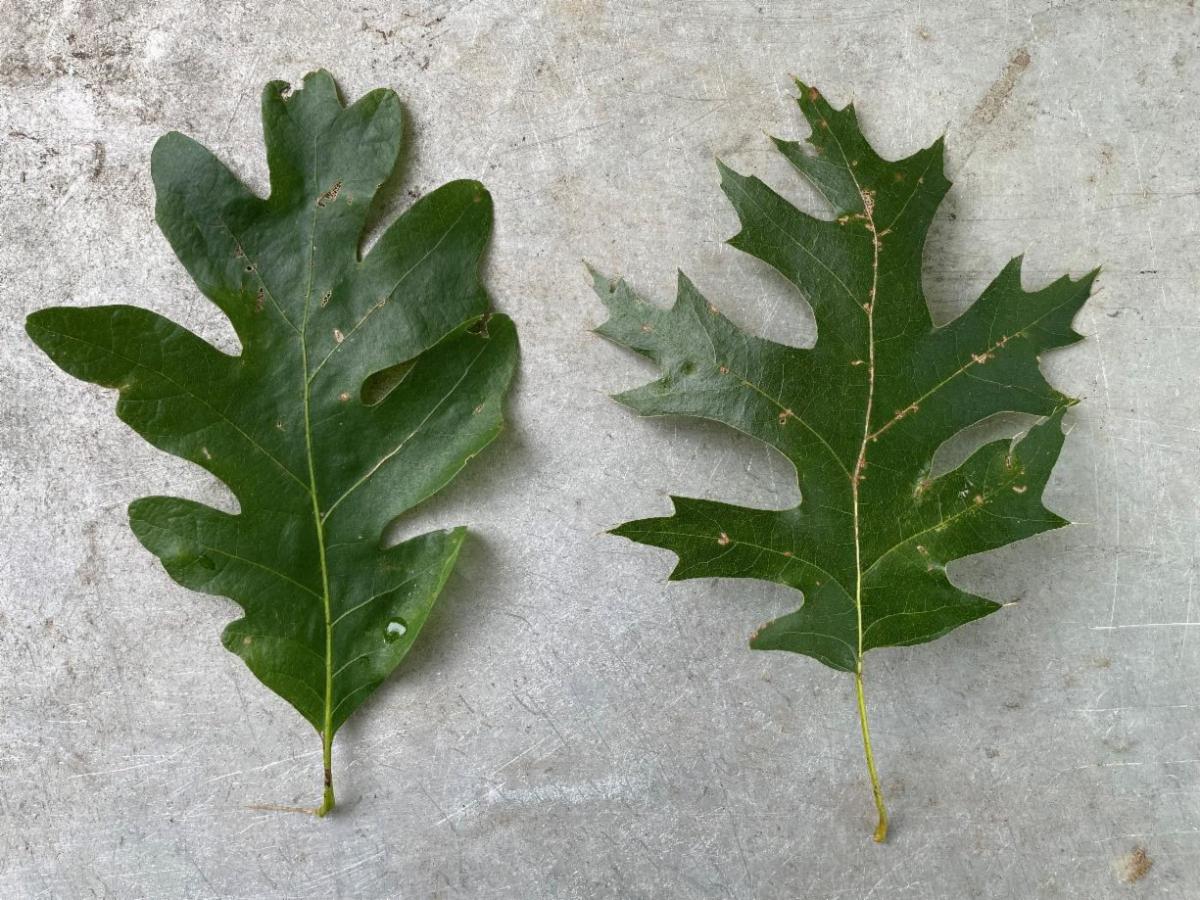
The secret to telling these two groups apart is both on the outer and inner layers of the tree. The easiest way to identify if you have a member of the white or red oak group is by the leaves. Oaks in the red group have V-shaped sinuses and pointed leaf lobes with a bristle on the end. White oak group oaks have U-shaped sinuses, rounded lobes and no bristle on the end.
| | Left: white oak leaf: rounded lobes. Right: red oak leaf, pointed lobes with bristle. | | |
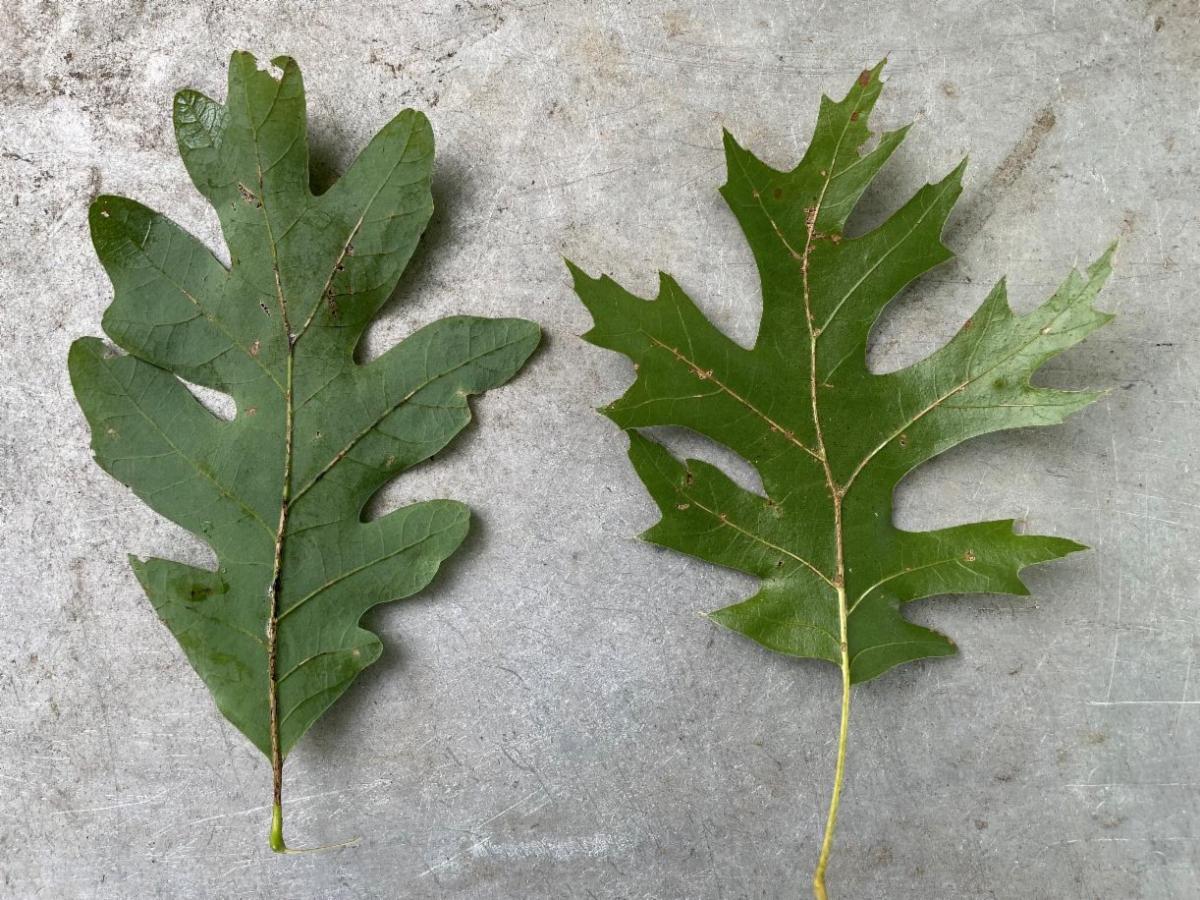
Left: white oak: pubescent under leaf.
Right: red oak: smooth under leaf.
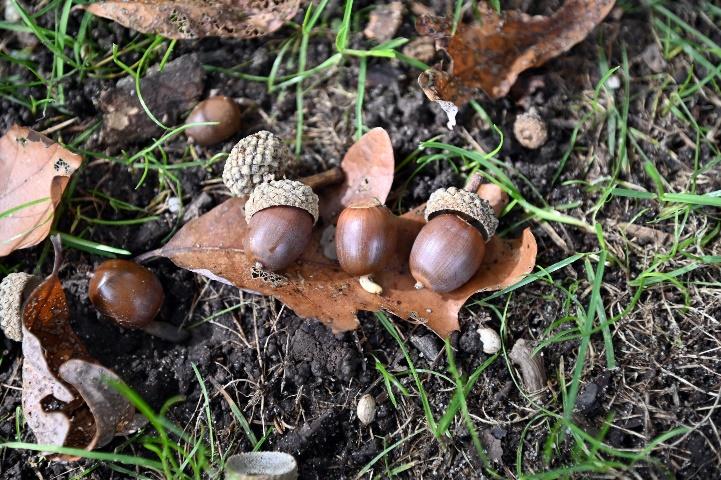
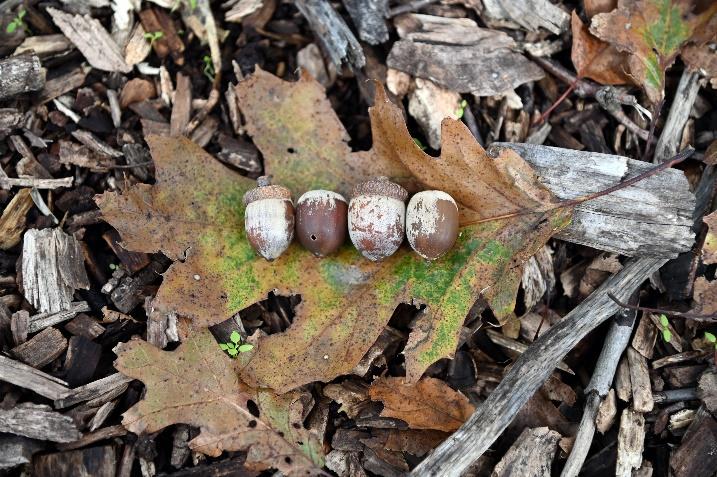
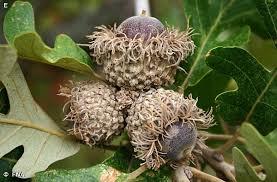
| | Generally, acorns in the white oak group have “wartier” caps, while acorns in the redoak group have caps that resemble a beret. Both acorn groups are edible, but the white oak group is slightly easier to process due to lower tannin content. The largest acorn is produced by Q. macrocarpa, the bur oak, and it is part of the white oak group. As we move into fall, look around for this giant acorn! | | | |
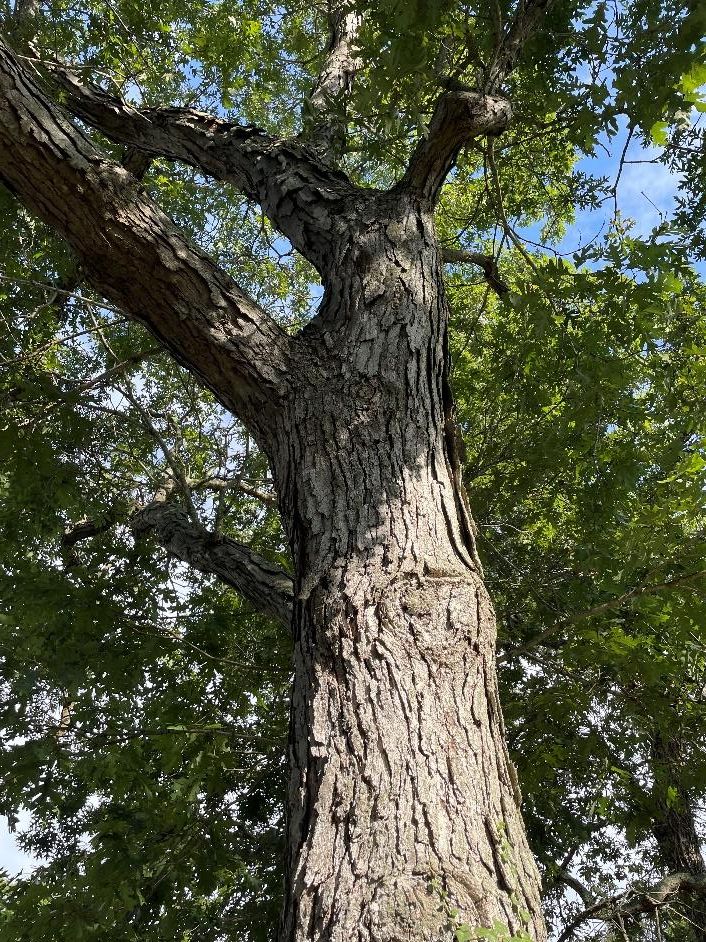
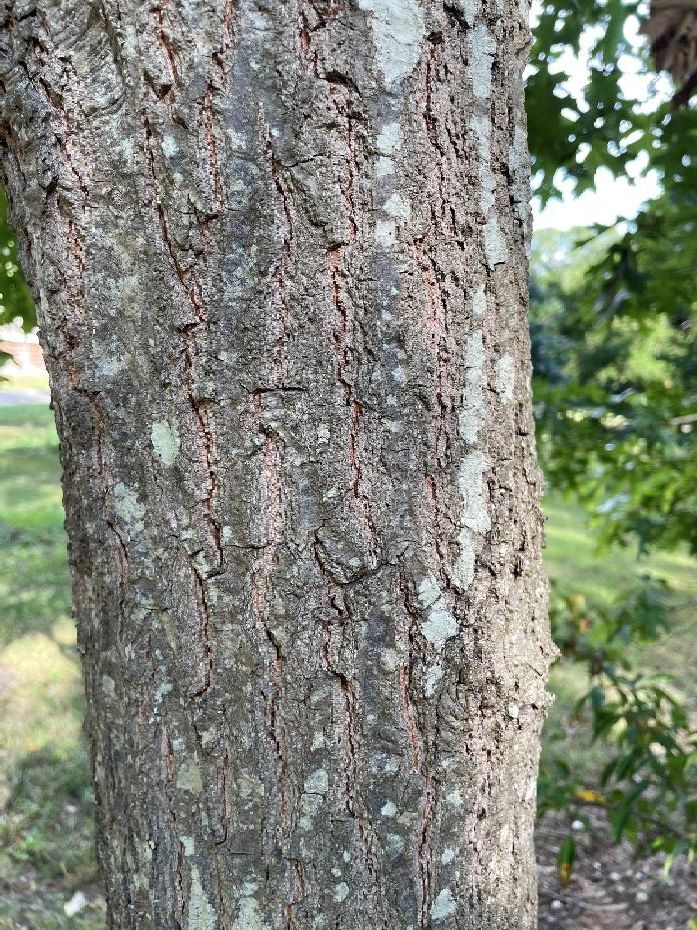
Bark identification is another fun way to identify trees and is especially useful in the
dormant season when there are no leaves to be found. Trees in the white oak group
typically have a lighter grey bark that forms irregularly rectangular blocks, the bark can appear somewhat shaggy or corky depending on species. When young, oaks in the red group will have a smooth brown bark with reddish vertical seams throughout, which transitions to a deeply furrowed and ridged texture at maturity.
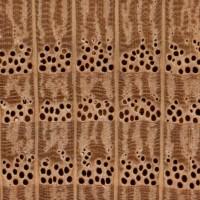
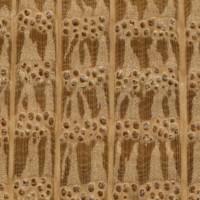
| | Lastly, white oaks and red oaks can be identified by wood. White oaks have been prized as shipbuilding and cask making wood due to their rot resistance and water resistance. The reason the wood is so resilient is due to plugs in the vascular system, called teloses. These plugs prevent water, bacteria, and fungi from moving around heartwood and introducing decay. Red oaks do not have the same number or size of vascular plugs, making them more susceptible to decay. | | Red oak endgrain: notice the open vascular channels. | | White oak endgrain: notice the plugged vascular channels. | | |
This is a very basic guide to distinguishing the two oak groups apart. As you wander the Arboretum, test yourself to see if you can identify the groups by leaf shape, acorns, or bark. Most of our oak species are represented in Oak Park, but there are hidden gems all over the Arboretum. My favorite specimen from the white oak group is a recently planted cultivar of the swamp white oak named Quercus ‘Green Nova’ (2024-0052, located on the River Walk), also trademarked as Sun Breaker. Oaks, especially white oaks, tend to retain their leaves during the winter instead of fully releasing them to the ground, a phenomenon known as marcescence. The Sun Breaker swamp white oak fully sheds the prior season’s leaves, allowing us to view the beauty of the prominently exfoliating bark during the winter.
My favorite red oak group specimen is a Quercus phellos, willow oak (1989-A447, located on the Main Drive). Identifying willow oak as a member of the red oak group is a little misleading as the leaves are one single smooth margin, but the bristle at the tip is the giveaway! Both species have proven to be excellent trees on our coastline due to flooding and salinity tolerance, so expect to see more of these around the Arboretum in years to come.
| | Jessica O'Callahan, Grounds Supervisor | | A Celebration to Remember | | |
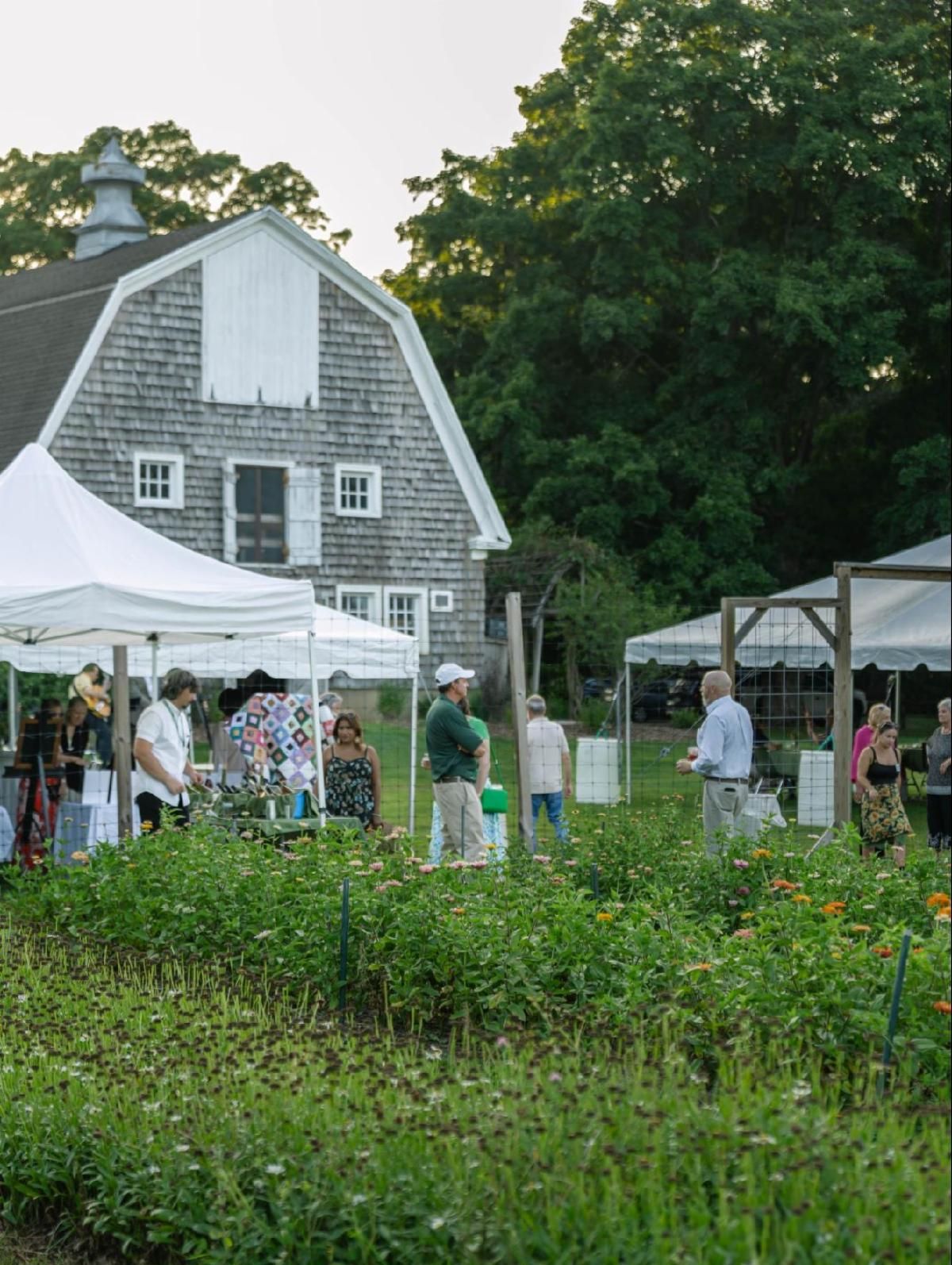
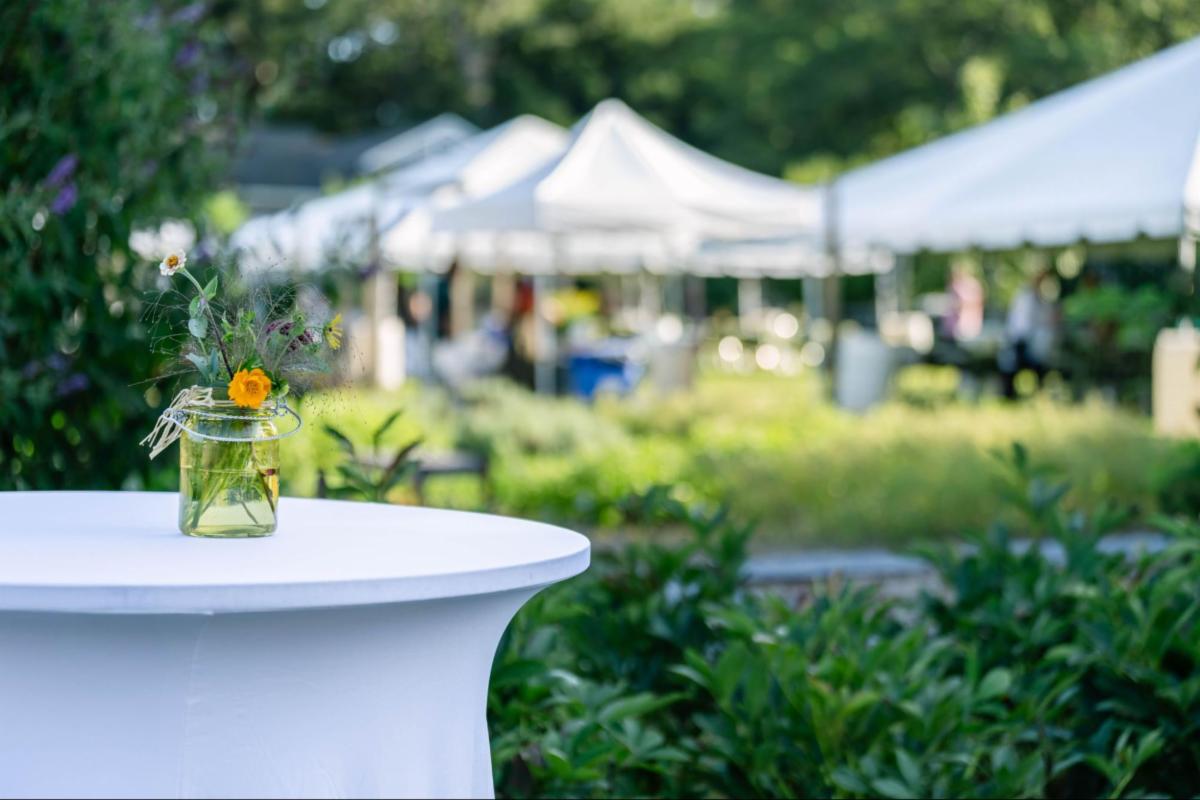
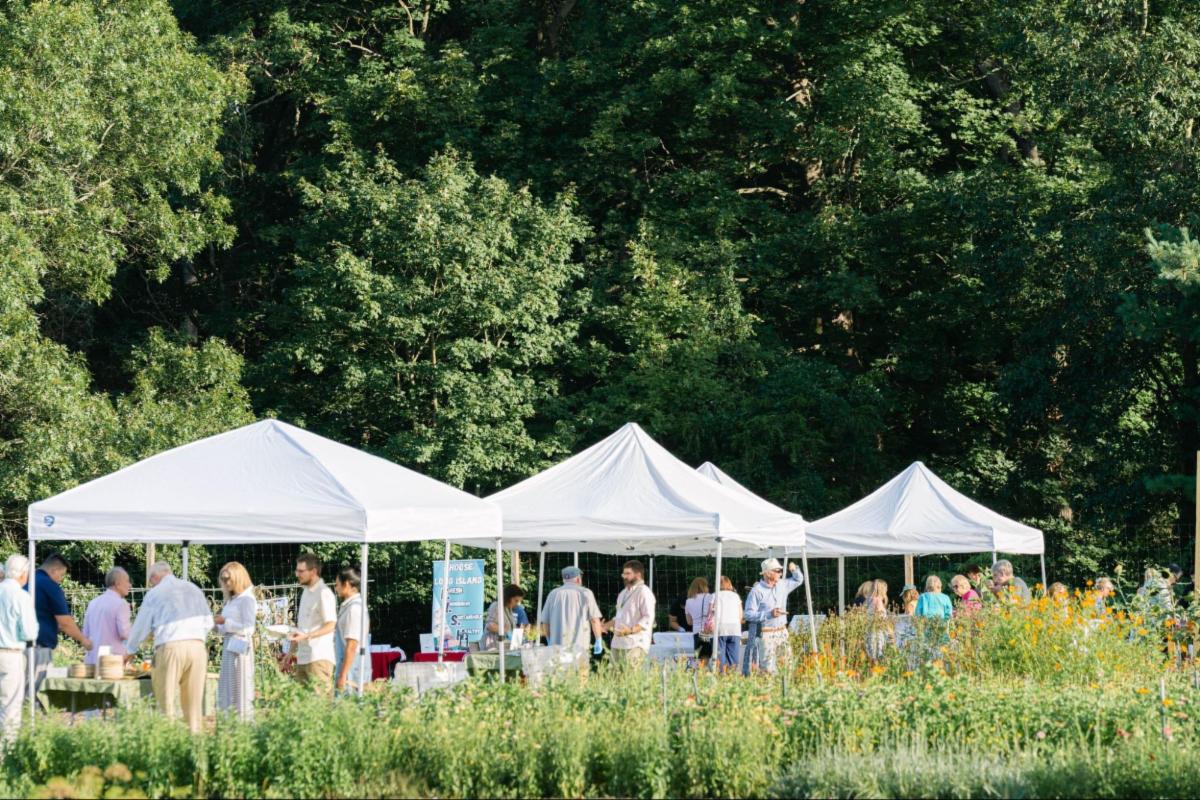
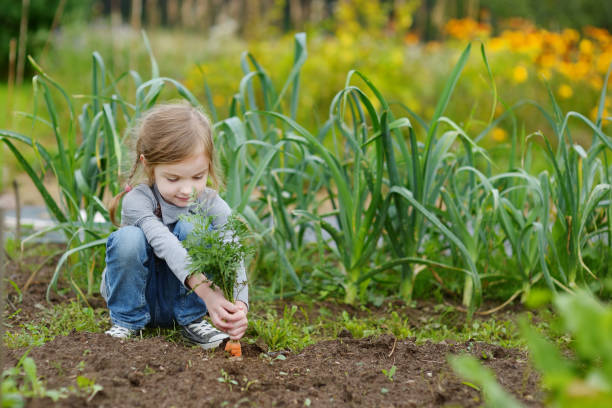
On August 9, we hosted our 11th Annual Fundraising Gala, Fields & Flavors at the Farm. A community-supported event through partnerships with local chefs, vineyards, breweries, and non-profit partners to showcase the work being done at the Arboretum, this year focusing on the CSA Farm. A highlight of the evening: The Snapper Inn & Choose Local F.I.S.H. An Initiative from CCE Suffolk, serving dishes made from vegetables and herbs grown right here at the Arboretum with music performed by a jazz duo provided by The Jazz Loft. Attendees strolled through the CSA farm listening to music while sipping their delicious drinks and tasting incredibly curated dishes. Overall, the food, drinks, music, silent auction, crafts, and great company made for a celebration to remember!
| | Last year’s annual fundraiser marked the grand opening of our Visitor Center, a significant milestone after more than two years of construction and a decade of planning. So much change was brought to the landscape, our staffing, and most importantly, our visitors. Reflecting back to last year’s fundraiser, it has been a year of major successes as well as growing pains. This year’s event was refreshingly different from the previous ten fundraisers, as we hosted it at the CSA Farm instead of the Manor House or Visitor Center. I’ve had the pleasure to work here for over ten years; selfishly I found it exciting to finally share our landscape at such a special event. The CSA Farm and adjacent cowfield were carefully tended to, with diligent planting, weeding, mulching, trimming, mowing, and watering. Special shout out to the CSA farmers, grounds crew, interns and volunteers for creating a stunning scene for the gala. We were surrounded by beauty that could not go unnoticed. It warmed my heart to see everyone take pride and ownership in how we represent the landscape. | The planning committee led by Lisa Dix met every week for months on end to ensure each detail was meticulously addressed. The creative theme of "Fields & Flavors at the Farm" provided a wonderful opportunity to highlight the remarkable produce, herbs, and cut flowers of the CSA Farm. The planning committee did a particularly great job organizing the many moving parts involved with throwing an event in the middle of a working farm in August. Our farm Farm Manager Lisa Chalif and her staff balanced the demanding work of feeding over 100 families with perfectly timing crops for the event itself. The tireless efforts of our planning committee, farm staff and volunteers truly made the evening a celebration! My personal favorite part of the gala was seeing how much everyone cares about Bayard Cutting Arboretum. From the initial conception to the final implementation, it was an absolute pleasure to see everyone involved display such enthusiasm and sincere dedication. | | |
We work year round to fulfill the Cutting family’s mission “to provide an oasis of beauty and quiet for the pleasure, rest, and refreshment of those who delight in outdoor beauty.” Last month, the director, Kevin Wiecks wrote about a tree to celebrate which happened to be a crabapple located at the CSA Farm (Malus sylvestris, U-CF23). It reminded me of a couple things about our historic landscape and mission. First, I’m still not a fan of crabapples! But remembering we get to protect an historic and threatened tree planted by the Cutting’s themselves gives me pride and a greater sense of purpose. Second, it reminded me that there is always something to celebrate at Bayard Cutting Arboretum. It could be a fun educational program like Touch a Truck or a rare tree in bloom. It could also be a coworker’s pregnancy announcement or a show stopping dahlia. Including this year’s Annual Fundraising Gala, August alone has brought many celebrations to Bayard Cutting Arboretum.
Seeing our community enjoy the "outdoor beauty" that the Cutting’s kindly shared with us made me grateful we have the opportunity to share all these moments. Thanks to everyone who planned, attended and supported this year’s Annual Fundraising Gala. It was a truly magical evening and a celebration to remember.
Joy Arden, Landscape Curator
| | |
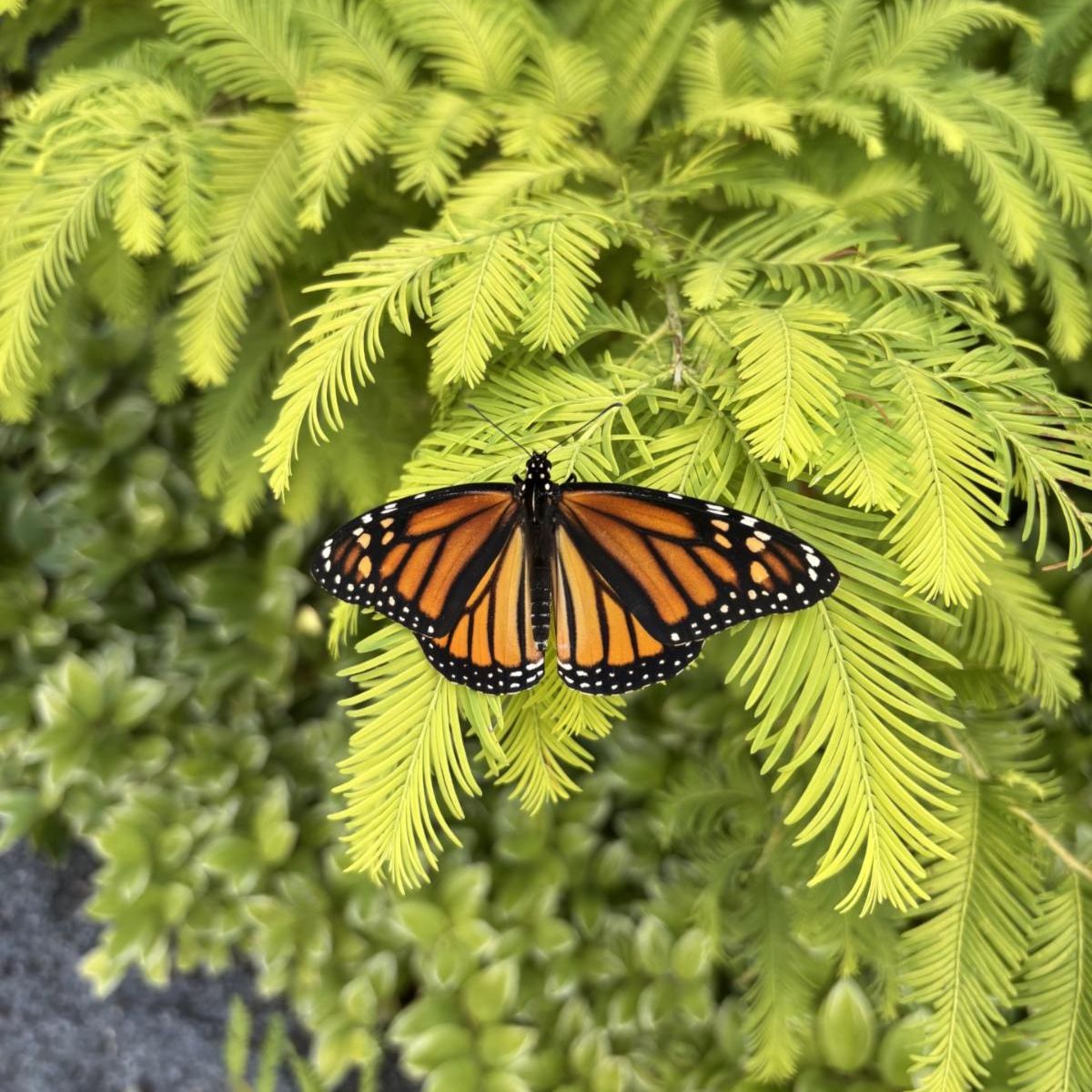
A monarch butterfly resting in the Conifer Garden.
Jenna Zier, Formal Gardener
| | |
CSA Farm-Grown Cut
Flowers Available
| | | |
|
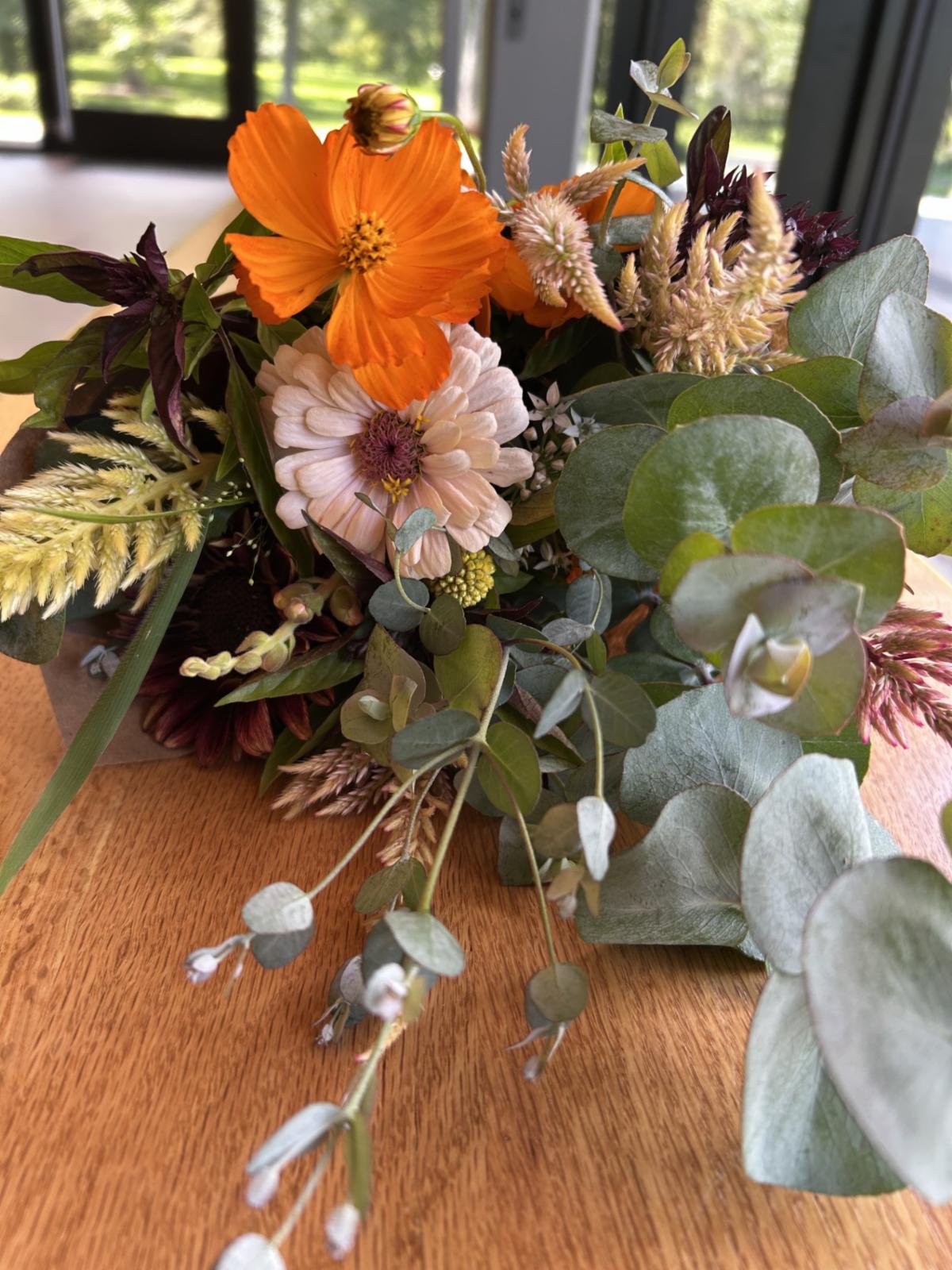
Farmer Mike, alongside staff and volunteers, has worked hard to bring you fresh-cut, spray-free, and dye-free flowers from the Arboretum's CSA Farm.
These specialty blooms are perfect for brightening your home or gifting to a friend or loved one. Stop by the Visitor Center to pick out your bunch and bring a little farm-grown beauty home!
The Visitor Center is open 9AM-4PM Tuesdays thru Thursdays and 9AM-5PM Fridays thru Sunday.
| | |
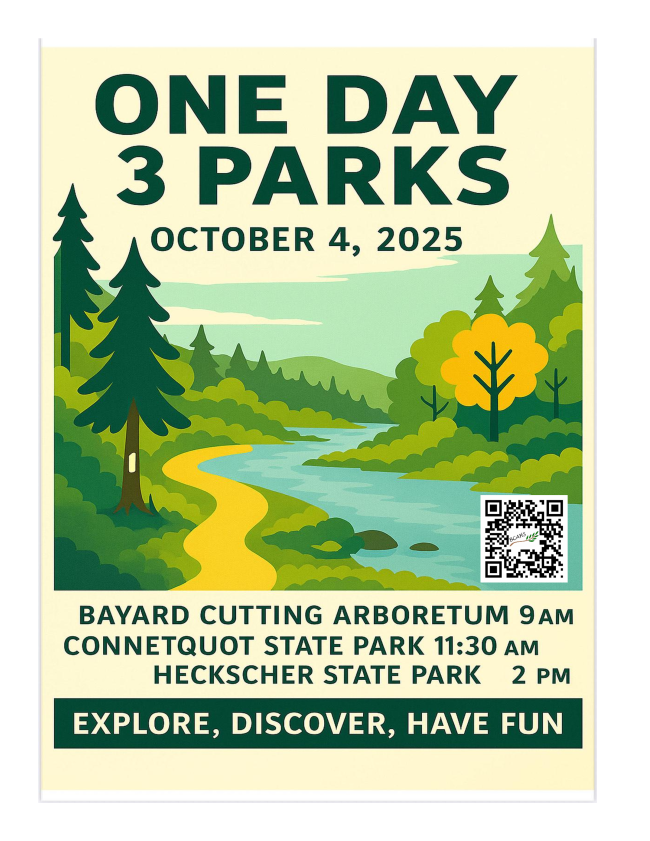
Long Island’s parks are not only celebrated for their landscapes, but also their historical significance. Despite living nearby, many of us have yet to visit the 3 state parks closest to us or know how important the Long Island Greenbelt Trail is to our parks and community. Some of us have explored Bayard Cutting Arboretum, but may not have ventured to Connetquot or Heckscher, and vice versa. Some of us love the Greenbelt Trail and others haven’t experienced it.
To encourage our community to experience all 3 parks, the Friends’ Groups of each park and the Greenbelt Trail have joined together to plan this inaugural event.
For more information about this event - visit https://www.bcahortsociety.org/
| | |
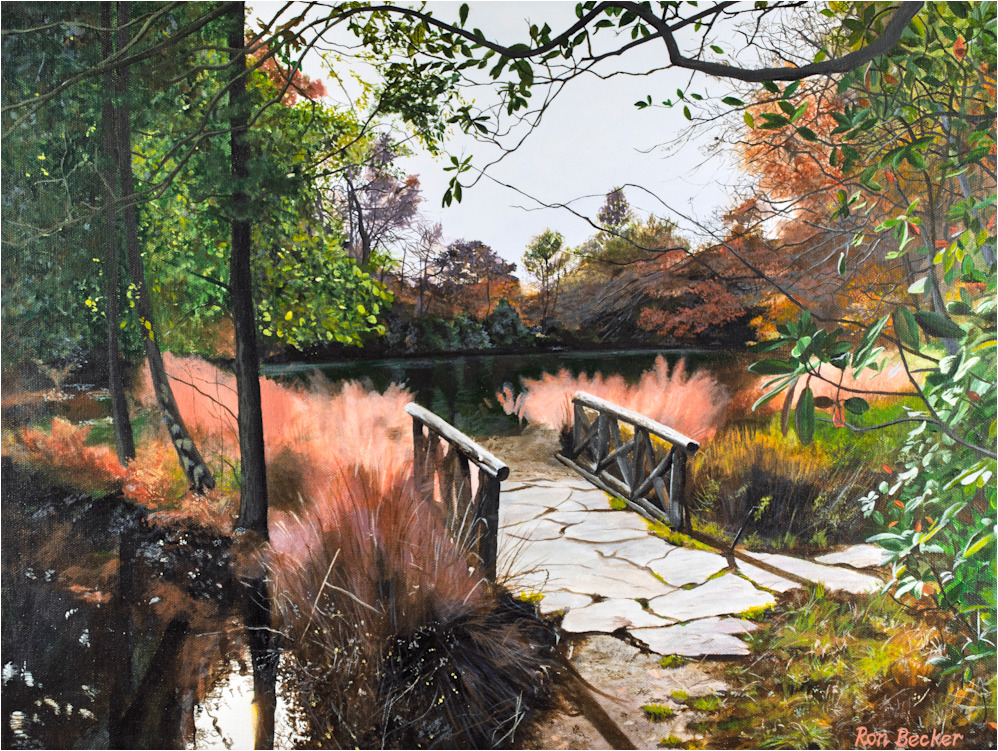
An Artist’s Nature –
A Ron Becker Exhibit
Information on Ron Becker and the exhibit can be found on our website.
Thursday, August 21 – Sunday, September 14
11:00am - 4:00pm, Thursday-Sunday
Upcoming:
Women Sharing Art: September 25 – October 19, 2025
| | September Concert - Jack's Waterfall Live Band | | |
Jack's Waterfall Live Band - Blues, Jazz, Pop, Country & Folk
Sunday, September 14, 2025 - 1pm to 3:30pm
Lower Carriage House, Outdoors
Bring a Chair or Blanket
Rain Date: Sunday, September 21, 2025 - 1pm to 3:30pm
Sponsored By Great River Community Association
| | |
Join certified forest therapy guide, Linda Lombardo of Wild Heart Nature Connection, on a walk to reconnect with the natural world around us. Typically the first Saturday of the month!
Saturday, September 6 - 10:30AM to 12:30PM
Fee: $45 per person.
Please wear comfortable, sturdy shoes and warm clothing for walking outdoors. Register here!
| | Find More Educational Programs on our Website! | | Help Support Bayard Cutting Arboretum | |
Tax deductible donations can also be made by check payable to
Natural Heritage Trust and mailed to
Bayard Cutting Arboretum, PO Box 907, Great River, NY 11739
| | | | |