The Healing Power of Honest History | | |
During a time of deepening divisions, I have been thinking a lot about the work we do and how we can meet the moment. I’ve also been closely following the administration’s attacks on the Smithsonian and the National Park Service over how our history is portrayed. They argue that focusing on the negative parts of our history, like slavery and segregation, only serves to divide us.
I believe it’s important to address this charge head-on, especially for those of us who develop and support programs that don’t shy away from the darker parts of our history. The Mississippi Humanities Council was founded in 1972, not long after federal intervention forced the state to dismantle the legal structures of segregation and disfranchisement. We haven’t shied away from these difficult topics during our 53 years of existence. During my time at the MHC, I have seen how telling an honest story about our past has strengthened communities and our state.
| | |
"During my time at the MHC, I have seen how telling an honest story about our past has strengthened communities and our state."
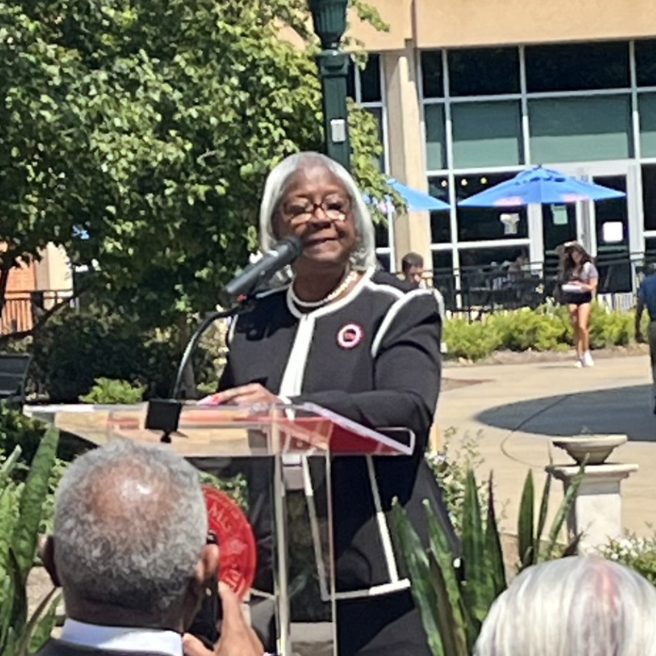
| | Just a few weeks ago, I attended a Mississippi Freedom Trail marker unveiling for the Fulton Chapel Protests at the University of Mississippi. In 1970, members of the Black Student Union interrupted a musical program at the chapel to protest racial conditions on the campus. Although it was a peaceful protest, the state highway patrol arrested 89 students, almost half of the university’s total Black student population. Some were sent to Parchman, where they were held for two days. Eight of the students were expelled for organizing the protest. |
| |  | A few years ago, the university began to uncover this history and undertook an effort to collect oral histories and reengage with these former students. The unveiling of a freedom trail marker was a culmination of these efforts. During the ceremony, Chancellor Glenn Boyce and Provost Noel Wilkin apologized for the mistreatment of these students. One of the students who had been expelled, Linnie Liggins Willis, spoke during the ceremony, recounting how, even though she was a second-semester senior at the time with enough credits to graduate, she never received her diploma. She talked about the resentment she long held for the university, but how the school’s recent efforts to make amends, their welcoming her back to campus, and their dedication of the marker in a prominent place, had changed her attitude. For the first time in her life, Ms. Willis declared, she considered the University of Mississippi to be her alma mater. It was a powerful ceremony that highlighted how facing the difficult parts of our past can unite and strengthen us. It can help us heal.
During the unveiling program, I realized the Mississippi Humanities Council has a connection to the events in 1970. The chancellor of Ole Miss at the time was Dr. Porter Fortune, who two years later would help establish the Mississippi Committee for the Humanities (our original name). Dr. Fortune served as our board chair from 1972 to 1978, helping to develop and support the Council’s commitment to serving the full diversity of our state. Although he passed in 1989, I’d like to think he’d be proud of the organization he helped create and our efforts to highlight the story of the Fulton Chapel Protest, even though his role during the incident may not look good in hindsight. As a historian, Dr. Fortune would understand that our past cannot be whitewashed and that doing so prevents us from building a better future together.
|
Dr. Stuart Rockoff
MHC Executive Director
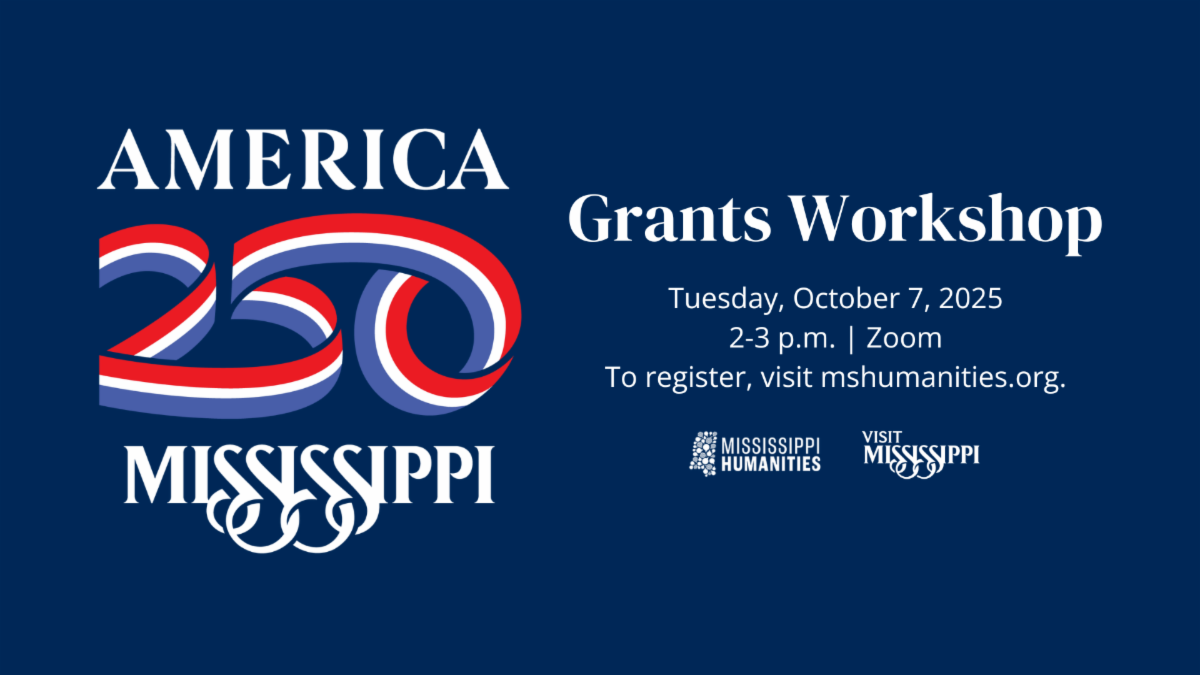
| | America250 Mississippi Grants Workshop | |
The next America250 Mississippi Grants Workshop will take place on October 7, at 2 p.m., via Zoom. The workshop is free, but registration is required to attend.
| |
In the meantime, resources from the last session are now available online. This includes the recording, PowerPoint, updated FAQ, and grant guidelines. While grant applications may only be submitted through the online portal, those interested in reviewing the questions beforehand can find both Word and PDF versions of the application available on the website here.
We look forward to welcoming participants to the next workshop and continuing to support Mississippi communities through these valuable grant opportunities.
Deadline Reminders:
- November 15 - Program Grants
- December 1 - Legacy Grants
- January 15 - Program Grants
- February 1 - Legacy Grants
- March 15 - Program Grants
- Mini grant applications are accepted on a rolling basis
| | Bringing Communities Together Around The Barn | |
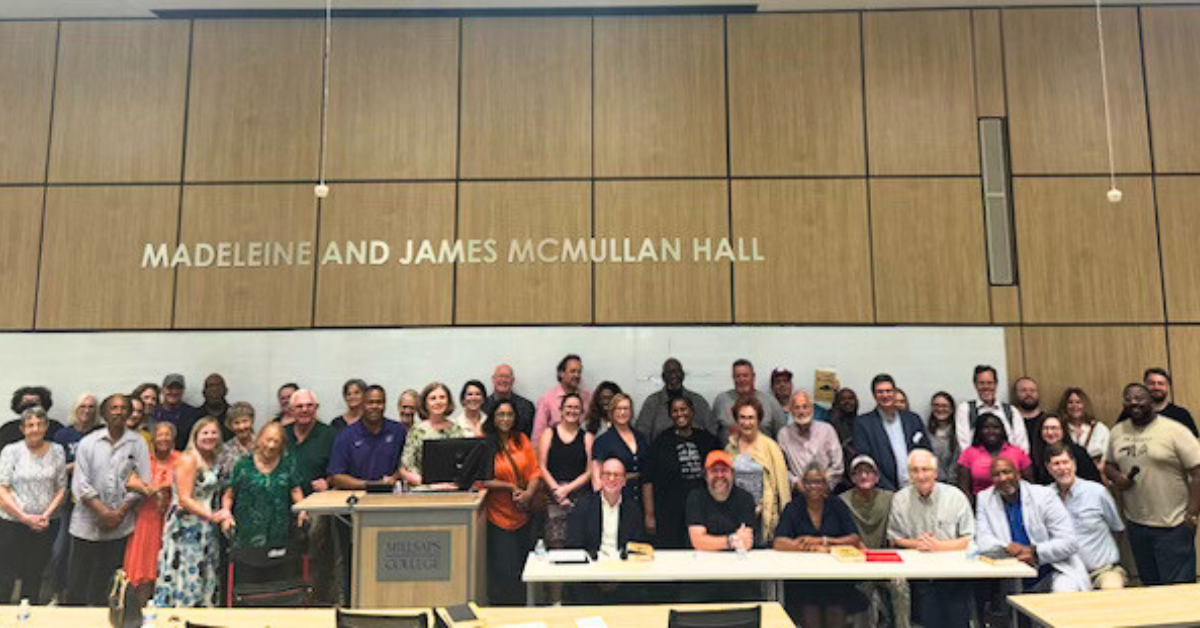
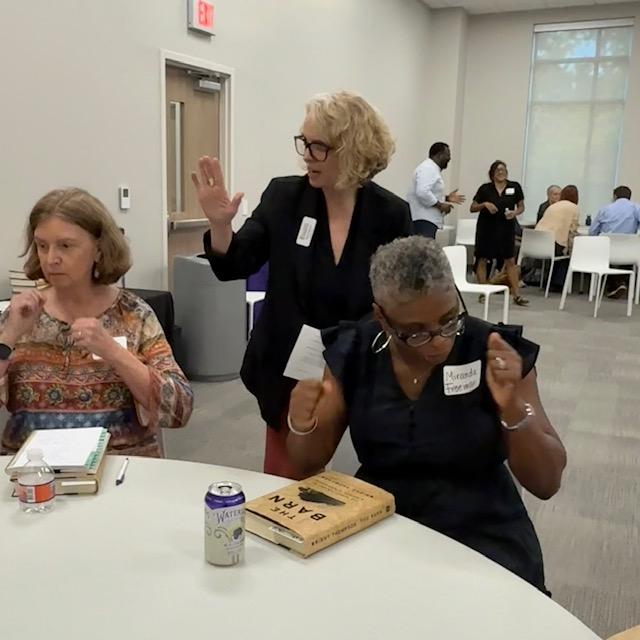
Book club members with Wright Thompson at The Barn Q&A.
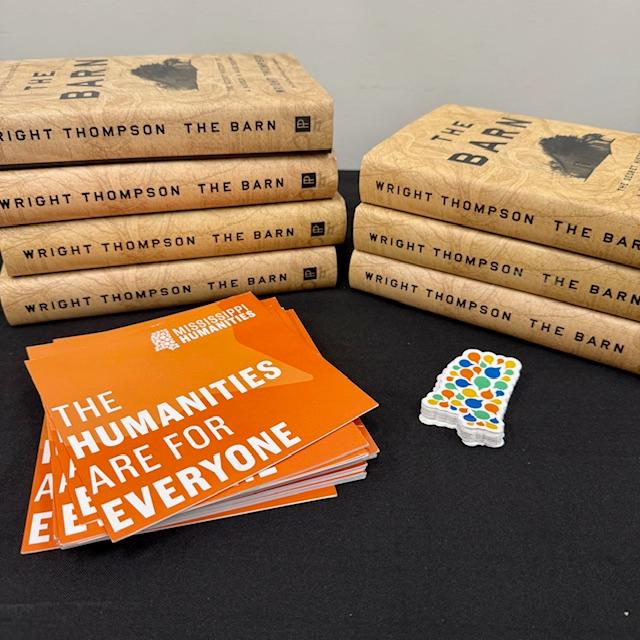
| The Mississippi Humanities Council has launched a new community reading series centered on Wright Thompson’s The Barn, welcoming readers from diverse backgrounds to gather in conversation about themes of memory, place and identity. The Barn is an in-depth and wide-ranging investigation of the murder of Emmett Till, tracing its roots in Mississippi’s landscape and history to reveal how the forces of racism, land and community converged in a single place and moment to shape American reckoning and memory. By gathering communities together in facilitated discussions about The Barn, the series embodies one of the Council’s core values: the creation of spaces for civil dialogue around difficult subjects. | |
Central to the series is a belief that books have the power to connect people, even when memories and viewpoints differ. Each reading group is purposefully brought together from diverse communities so that this historical account of a true and tragic event can be understood through a variety of lenses. By turning to a shared text, participants can reflect together, deepening their understanding not only of the book but also of each other’s experiences.
Working in partnership with host sites, the first series brought the Anderson United Methodist Church community together with the Galloway United Methodist Church community in Jackson. The second series paired the Mt. Helm Baptist Church of Jackson with the Episcopal Diocese of Mississippi. The third series, which just concluded this week, saw students, faculty and alumni of Millsaps College and Tougaloo College exploring Thompson’s deeply researched text together before they were given a unique opportunity to press the author directly at a private event for his personal insights and discoveries in writing The Barn.
| |
Each series includes four discussions addressing the questions and challenges presented in The Barn’s four chapters. Discussions are facilitated by MHC staff members John Spann and Carol Andersen, who use a participant-centered approach, placing emphasis on creating a safe, inclusive space that encourages open sharing, asks open-ended questions and supports equitable participation, allowing the group’s collective insights to emerge naturally.
With the conclusion of the Millsaps-Tougaloo series, the Council is interested in hearing from other communities that may want to bring a reading series featuring The Barn to their citizens. For more information or to discuss co-hosting a future discussion series, please contact John Spann or Carol Andersen.
| | Two New Great Stories Clubs Kick Off in September | | |
This month, two new Great Stories Club programs launched at Living with Purpose in Jackson and the Neshoba Youth Coalition in Philadelphia.
Led by Living with Purpose founder John Knight, the Great Stories Club will serve as the first installment of a larger literacy program called “Read to Rise,” which will empower students through literature. The program will take place at the Hinds County Children’s Coalition’s brand new Youth Diversion and Enrichment Center that features GED classrooms, STEM labs, mental health services, and more.
On September 17th, the Neshoba Youth Coalition held their first Great Stories Club meeting with 30 students participating in the program. During the first meeting, students laid the groundwork for the Great Stories Club by diving into discussions around the importance of stories in building community and connection.
Both programs will focus on the theme “Finding Your Voice,” which encourages young people to speak up for themselves and others despite challenges or social pressure. Through books by Elizabeth Acevedo, Renee Watson, and others, students in Jackson and Neshoba County can come together in discussions around the power of everyone’s voice and how to create change in their communities by speaking up.
The Great Stories Club is a literary outreach program from the American Library Association that gives youth the opportunity to read, reflect, and share ideas on topics that resonate with them. This year, MHC has hosted seven Great Stories Club programs around the state.
The Great Stories Club programs in Mississippi are made possible by the generous support of the Selby and Richard McRae Foundation.
| | |
MHC's Mississippi Book Festival
Panel on Prison Book Clubs
| |
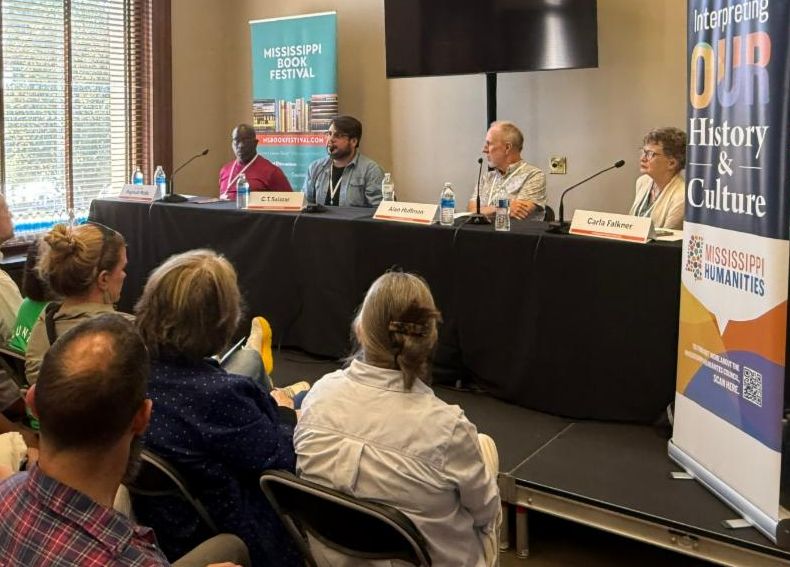
For the third year in a row, Mississippi Book Festival attendees packed a session to learn more about the Mississippi Humanities Council’s prison book clubs. Three panelists focused on how book clubs build community behind bars.
Reginald Watts, who serves as a chaplain at Mississippi State Penitentiary/Parchman (MSP), discussed the impact reading had on his life while incarcerated. Book clubs and other programming, he explained, make prisons safer places by improving morale and providing opportunities for members to positively influence others. Watts serves as the sponsor for book clubs for two of MSP’s most isolated groups: men who need long-term medical care and those facing a capital sentence.
The book club members on Parchman’s Death Row frequently negotiate their differences to maintain a strong sense of community. Panelist C. T. Salazar, archivist and assistant professor at Delta State University, facilitates their book club. This dynamic, Salazar said, is evident in book discussions. They are careful readers, spending multiple sessions discussing books such as James by Percival Everett and Circe by Madeline Miller.
The third panelist, journalist and historian Alan Huffman, facilitates the Inspired Readers Book Club at Wilkinson County Correctional Facility. He conveyed how the members found hope even in accounts filled with inhumanity, such as A Long Way Gone: Memoirs of a Boy Soldier by Ishmael Beah. Their reaction motivated the members to explore Beah’s story with a combat veterans’ book club via live streaming. The Inspired Readers will soon expand its community by launching a podcast, Hidden Mirrors, where they share their reflections on the books they read.
MHC sponsors 16 book clubs in 12 prisons with support from the Mellon Foundation, the James and Madeleine McMullan Family Foundation, and private donors. With guidance from the facilitators, members select their books, which they get to keep. Clubs typically spend four 60 to 90-minute sessions on each book, allowing for in-depth discussions.
| | New Podcasts Worth Your Time | Podcasts offer a powerful way to explore new ideas, hear untold stories, and connect with different perspectives. Their growth in popularity has given listeners an endless array of content to choose from. To help narrow the search, here are two new podcasts with MHC ties that offer something truly worthwhile. Both offer unique perspectives, making them well worth a listen. | |
Voice of Our People: Hurricane Katrina Twenty Years Later
The University of Mississippi's Center for Oral History and Cultural Heritage’s new four-episode podcast series, Voices of Our People: Hurricane Katrina Twenty Years Later, shares powerful firsthand accounts of Mississippians who experienced Hurricane Katrina and its aftermath. All episodes are available now. Check out their website or listen now wherever you get your podcasts.
This project is a collaboration with Mississippi Moments, the Mississippi Humanities Council, and the Center for the Study of the National Guard.
| |
Humanities =
The Federation of State Humanities Councils recently launched a new podcast, Humanities=, spotlighting the transformative power of the humanities in communities across the country. The Mississippi Humanities Council was honored to be featured in the very first episode, "Healing through Prison Programs." The episode highlights the impact of MHC’s prison book club initiative, with insights from Carla Falkner, MHC’s Prison Education Program project coordinator, and Will Underland, a PhD candidate in English literature at the University of Mississippi who facilitates one of the book clubs at Marshall County Correctional Facility.
Together, they share how the program brings intellectual engagement and a sense of community to incarcerated individuals across 16 Mississippi prisons. You can listen to the episode on the Federation's website or wherever you get your podcasts.
| | |
Reading THE ROAD in South Mississippi
By Joseph Peterson for Rooted Magazine
| | "Justice-impacted people are fellow scholars, fellow teachers, with vast life experiences and deep insights. When we read a history of the failed policies of the "war on drugs"; or when we read Jesmyn Ward on what it's like to grow up in a family impacted by racism and incarceration in South Mississippi: I am not the expert in the room on these subjects." | |
“I like how they use food to create home,” says one reader, named Terrance. Heads nod, throughout the room we murmur our agreement. The nameless father and child in Cormac McCarthy’s The Road—the father and son who try to “carry the flame” in an apocalyptic future of barren ash, even as other survivors descend into anarchy and cannibalism—they do have a way of creating home, of recreating human civilization wherever they go. And not just with food, but with games, toys, stories, and rituals. One of the novel’s most poignant scenes involves the man and the boy’s discovery, near starvation, of an underground shelter filled to the brim with boxes and cans of shelf-stable food: the carefully laid plans of some past doomsday prepper now long dead and gone. The man patiently prepares a hot breakfast—scrambled eggs, ham, coffee, and biscuits—and explains to the boy how to eat food he has never seen before: “Here. You put your butter on the biscuits. Like this....” The characters practice generosity even in their scarcity. In an earlier scene, discovering what may be civilization’s very last, dusty can of coke, which previous scavengers had overlooked within the labyrinthine workings of a vending machine, the man insists the child drink all of it, but the child insists on sharing. “You have some, Papa. I want you to drink it. You have some.”
I’ve driven about an hour away from my university, past timber trucks, a peanut processing plant, and the occasional Dollar General, into Southeastern Mississippi’s rural Pine Belt. I’ve left my phone and keys behind, and traversed a series of razor-wired fences, walls, and security gates to be here, in this classroom. Over the last several weeks, we’ve been reading The Road—Cormac McCarthy’s brutal but beautiful elegy for our future burned-out world—and meeting to share our insights and observations. The conversation pings back and forth throughout the room, men agreeing, picking up threads, adding nuance. But life on the zone is nothing like the calm of this classroom, the men have told me. There, they do sometimes see the worst of human nature, the scarcity and possessiveness that characterizes the world of The Road. Sometimes when I mention this book to other “free world people” like me, they tell me how depressing or horrific they found it, how uncertain the ending. Men in this book club—almost exactly the inverse—find its portrait of human nature perfectly realistic, but its ending full of hope.
| | | | |
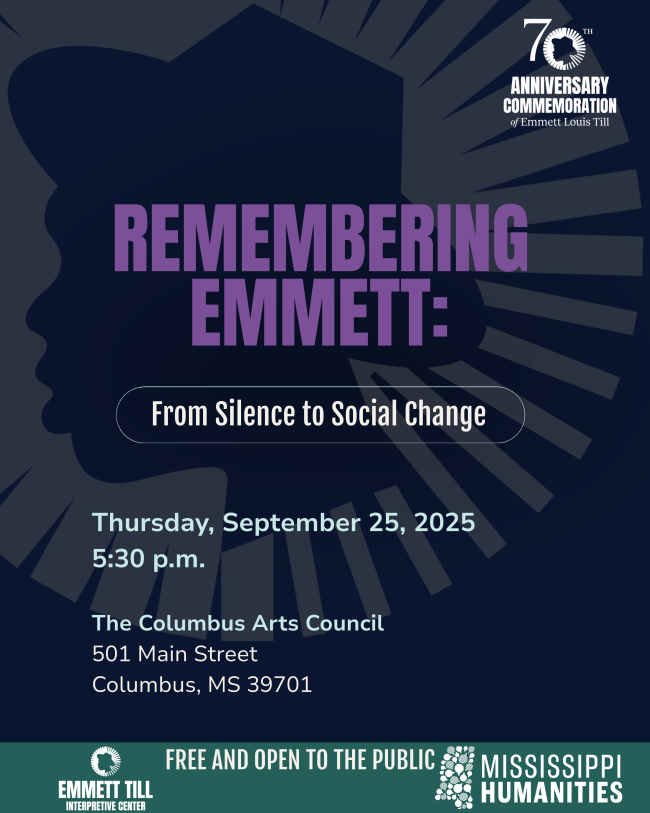
Columbus Arts Council
Columbus, MS
5:30 p.m.
Read More
| | | | |
Twin Forks Rising
Hattiesburg, MS
Read More
| | | |
Water Valley Literary Festival
Bozarts Gallery
Water Valley, MS
9 a.m. - 5 p.m.
Read More
| | | |
The Blossoms Mother-Daughter Reeding Club
Virtual
Read More
| | | | |
Mississippi Freedom Trail Unveiling: The Howze Sisters
182 E. Eucutta St.
Shubuta, MS
11 a.m.
Read More
| | | | | |
America250 Mississippi Grants Workshop
Virtual
Zoom
2 p.m.
Read More
| | | | | |
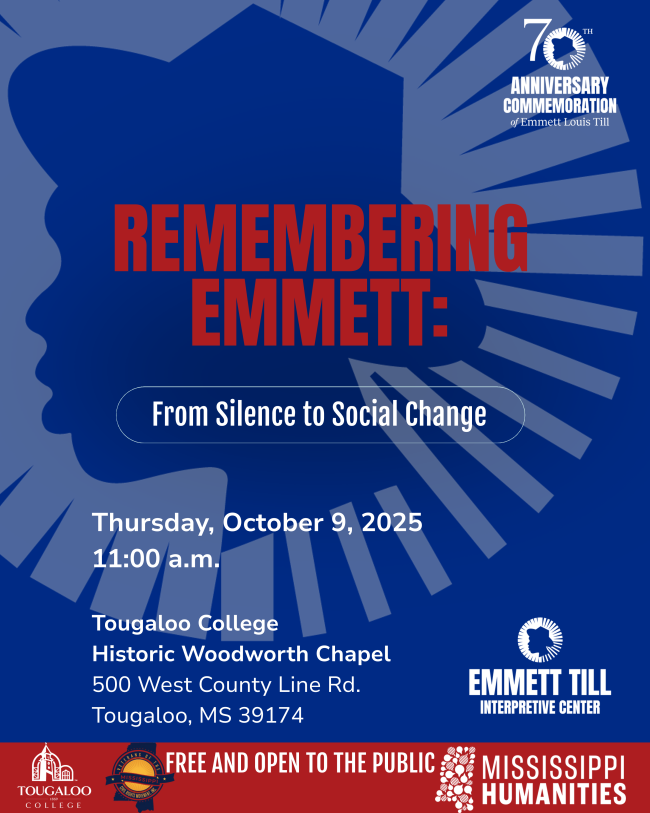
Historic Woodworth Chapel | Tougaloo College
Tougaloo, MS
11 a.m.
Read More
| | | | |
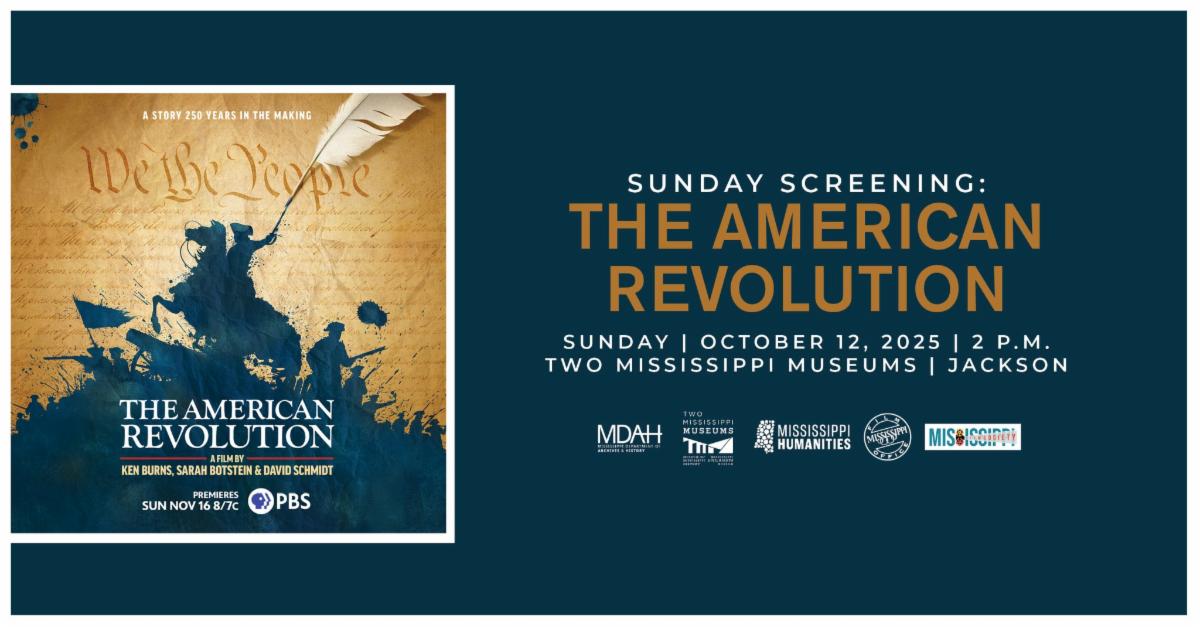
Sunday Screening: The American Revolution
Two Mississippi Museums
Jackson, MS
2 p.m.
Read More
| | | | | |
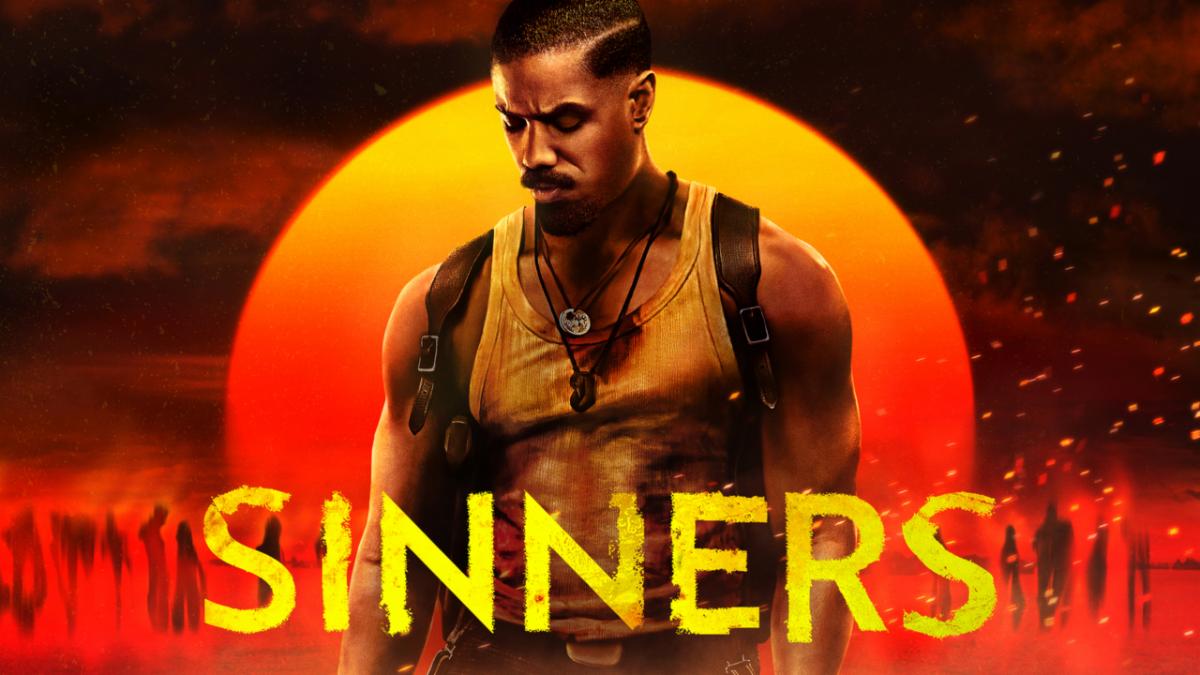
Let's Talk About "Sinners"
The MAX
Meridian, MS
6:30 p.m.
Read More
| | | | | |
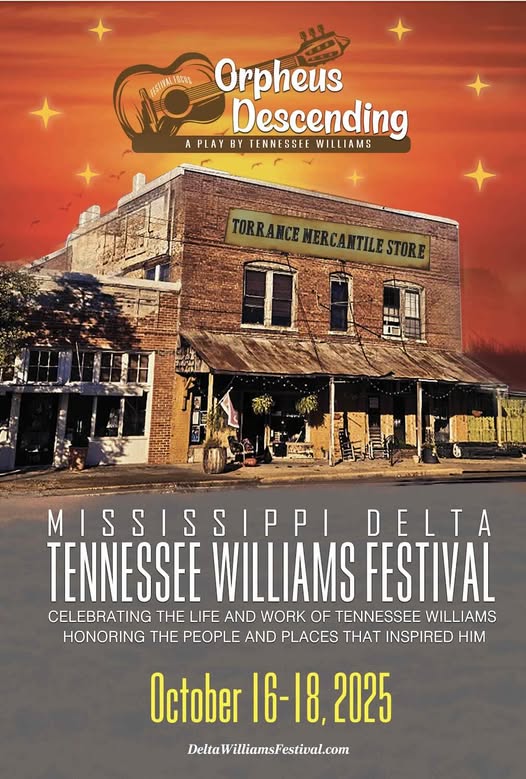
Mississippi Delta Tennessee Williams Festival
Coahoma Community College
Clarksdale, MS
Read More
| | | | |
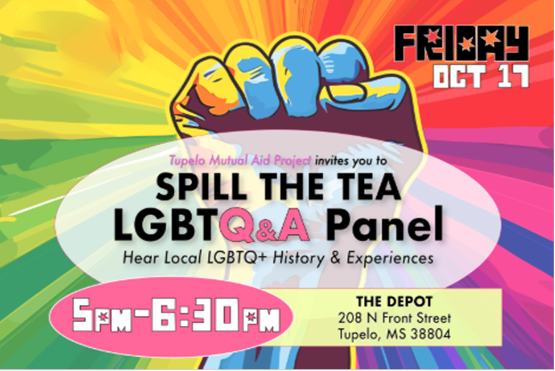
Spill the Tea: LGBTQ&A History and Experiences Panel
The Depot
Tupelo, MS
5-6:30 p.m.
Read More
| | | | |
Speakers Bureau: Dr. Brenda Willis - "Why We Call It Soul Food"
Holmes Community College
Goodman, MS
12 p.m.
Read More
| | | | | |
Speakers Bureau: Kevin Brown - "Developing Community Spaces: Storytelling, Stewardship, and the Soul of Place"
Mississippi Cultural Crossroads
Port Gibson, MS
10 a.m.
Read More
| | | | | | |
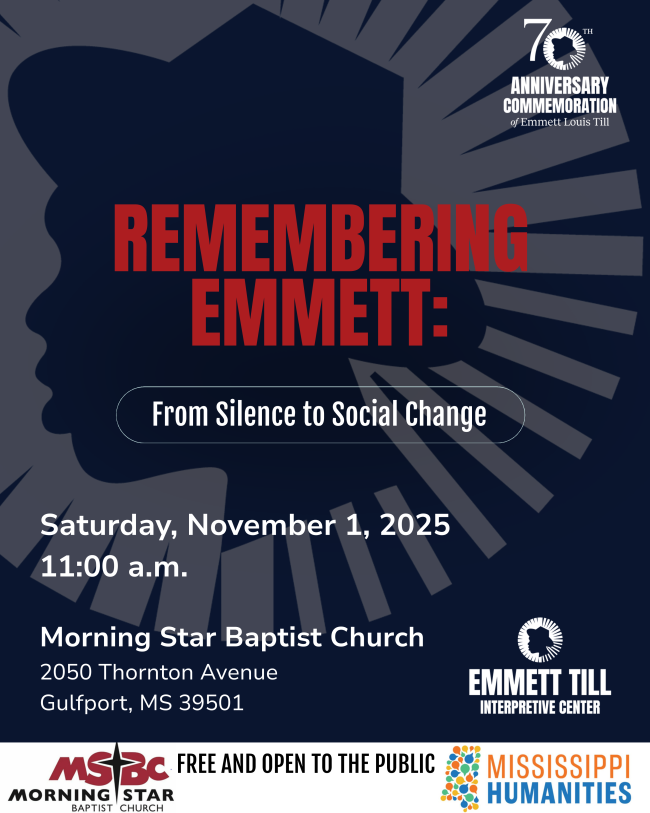
Morning Star Baptist Church
Gulfport, MS
11 a.m.
Read More
| | | | | |
Mississippi Freedom Trail Unveiling: The Meridian Movement
Fielder & Brooks Drug Store
Meridian, MS
11 a.m.
Read More
| | | | | |
Speakers Bureau: Dr. Brenda Willis - "Why We Call It Soul Food"
Mary C. O’Keefe Cultural Center of Arts and Education
Ocean Springs, MS
6 p.m.
Read More
| | | | | | |
Mississippi Freedom Trail Unveiling: Jackson Civil Rights Lawyers (Young, Hall, Brown)
Big Apple Inn
Jackson, MS
11 a.m.
Read More
| | | | | |
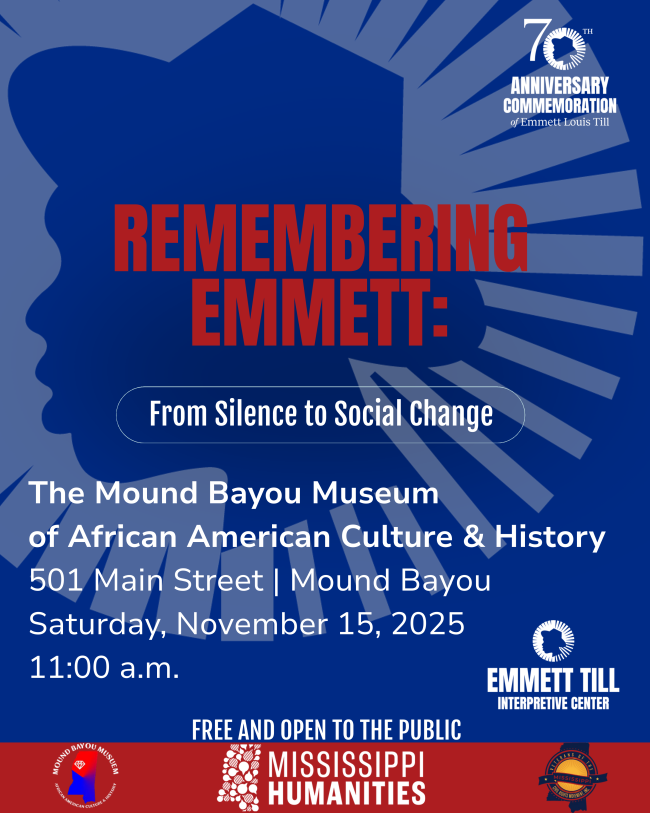
Mound Bayou Museum of African American Culture & History
Mound Bayou, MS
11 a.m.
Read More
| | | |
3825 Ridgewood Road
Room 317
Jackson, MS 39211
| | | | | |