|
USCA Expresses Opposition to Potential RFS Waivers
Reports indicate that the Administration is considering a significant expansion in small refinery exemptions (SREs) that would undermine the strong RFS volumes that have boosted feedstock demand and prices over the past several months. Rumors and reports of the potential waivers moved biofuel and feedstock markets down. The USCA has weighed-in with the White House, EPA and congressional offices to express our strong concerns with reports that EPA is contemplating waiving 1.8 billion RINs of the 2025 Renewable Fuel Standard (RFS) compliance obligation through Small Refinery Exemptions (SREs). That figure is double the 990 million RINs EPA built into the Set 2 rulemaking.
The strong 2026-2027 Renewable Volume Obligations (RVOs), established and finalized by the Administration just a few months ago, have provided a significant and much-needed boost for American canola farmers and the canola industry. The historic increases in RFS volumes have successfully boosted domestic demand and canola prices. The USDA planted acreage estimates show that a record number of canola acres were planted by U.S. farmers this year as a result. As farmers begin harvesting those acres, rolling back the RFS volumes will negatively impact prices and further depress farmers' returns for the 2026 crop year. The negative consequences would be severe and immediate for biofuel producers and farmers.
| | |
USDA Reinstates Prevented Planting Coverage
In response to comments submitted by USCA and other ag groups, as well as strong pushback from Members of Congress led by Sen. Hoeven (R-ND), USDA Risk Management Agency (RMA) has reinstated the option for insured producers to purchase an additional 5% prevented planting coverage beginning with crops associated with the August 31, 2026, filing date for the 2027 and succeeding crop years. This added coverage enhances producers’ ability to manage risk in situations where extreme weather or other conditions prevent normal planting.
Producers should contact their local crop insurance agent or visit the RMA website for guidance on how these updates may affect coverage options.
| | |
Farm Bill Draft Stuck in Senate Ag Committee
The Senate Ag Committee was unable to advance the Farm Bill out of committee on August 6. Chairman Boozman indicated the committee will revisit the bill at a future date. At the beginning of the mark-up an “en bloc” amendment was adopted that included 34 uncontentious amendments that were filed by both Republicans and Democrats. Among those included in the en bloc amendment was Sen. Thune’s amendment to remove the 30-million-acre cap from the base acre expansion enacted in 2025. Aside from that, all of the amendments offered by Democrats during the mark-up were defeated on party-line votes. It is possible that Republicans will be able to move the bill out of committee in September if Sen. McConnell returns from his medical absence. However, eventually getting a final bill through the full Senate (with the 60-vote filibuster threshold) will require bipartisan support.
| |
Attorney General Ken Paxton Investigates "Heart-Healthy" Claims
Texas Attorney General Ken Paxton announced an investigation into major food manufacturers that market their products as “heart-healthy." Since 1995, the AHA's red heart-and-checkmark symbol has served as a trusted shorthand for consumers seeking heart-healthy food choices, appearing on everything from snack foods to cooking oils. Companies under investigation so far include Frito Lay, Flora Food Group, and ACH Foods.
“I won’t allow corporations to slap a ‘heart healthy’ symbol on their food labels as an attempt to market seed oils and other chemical-filled foods as healthy,” said Attorney General Paxton. “I have seen that many products with this ‘heart healthy’ label can actually impair heart function. I am committed to Making America Healthy Again, and this is another piece of that broad effort to protect Texans' health and well-being.”
Read the letter from Attorney General Ken Paxton on X: https://bit.ly/4qOaOlY
| |
EPA Announces Desiccation Innovation Challenge
As part of President Trump's June 2026 executive order on advancing regenerative agriculture, EPA has launched a $30 million national Innovation Challenge to identify alternatives to conventional pesticide-based crop desiccation. EPA has issued a Request for Information (Docket ID: EPA-HQ-OPP-2026-3862) seeking public input on current desiccant use, existing non-chemical alternatives, and the standards any new alternative should meet before it can be considered viable. USCA intends to submit comments on behalf of canola growers to help ensure EPA preserves access to the desiccant tools farmers currently rely on, and comments are due by September 30, 2026.
Read the news release from the EPA: https://bit.ly/4hEMq3p
| |
USDA Holds Webinar on Regenerative Ag for Biofuels
On August 18, USDA held a webinar on its voluntary framework for quantifying, reporting and verifying the carbon intensity (CI) of biofuel feedstocks produced using regenerative agricultural practices. While the rule is closely connected to the federal 45Z clean fuel tax credit, USDA emphasized that the framework is “policy-agnostic” and can be used by other clean transportation and sustainability programs as well. The final rule covers field corn, soybeans, sorghum and spring canola.
For producers, key requirements include documenting tillage and cover-crop practices, developing a nutrient budget, reporting actual yields and nitrogen application, and providing a Biofuel Feedstock Report when reduced-CI crops are sold. The system includes annual third-party audits at aggregation and intermediary points, as well as sampling of farms for on-farm verification. The USDA Feedstock Carbon Intensity Calculator (FD-CIC) is available as an Excel-based calculator.
The full rule was published on June 29, 2026, and can be found here:
https://bit.ly/46txNcy
| |
Rail Merger Opposition
On August 13, the National Grain & Feed Association (NGFA) submitted comments to the Surface Transportation Board (STB) opposing the merger of Union Pacific and Norfolk South. In their comments NGFA indicated that based on their review the recent UP-NS merger filing fails to consider rail-to-rail competition in its attempt to satisfy the agency’s “competition enhancement” criteria for a merger.
Earlier this week, state attorneys general in Montana, Iowa, Kansas, Florida, North Dakota, South Dakota and Tennessee submitted a letter urging the STB to deny the merger application arguing that the proposal cannot enhance competition since it does not give any shipper access to a new railroad. They also charged it would raise rates for many eligible shippers.
Formal opposition was also expressed by a coalition that included the Fertilizer Institute, the Alliance for Chemical Distribution, American Chemistry Council, American Fuel & Petrochemical Manufacturers, and the National Industrial Transportation League. BNSF railway also filed comments last week opposing the merger.
The STB in May accepted Union Pacific and Norfolk Southern’s proposed merger application for consideration but called on the two railroads to submit supplemental information with details regarding impacts to competition, public benefits and market share projections.
| | |
Seed Oil Avoidance Declines in New Consumer Poll
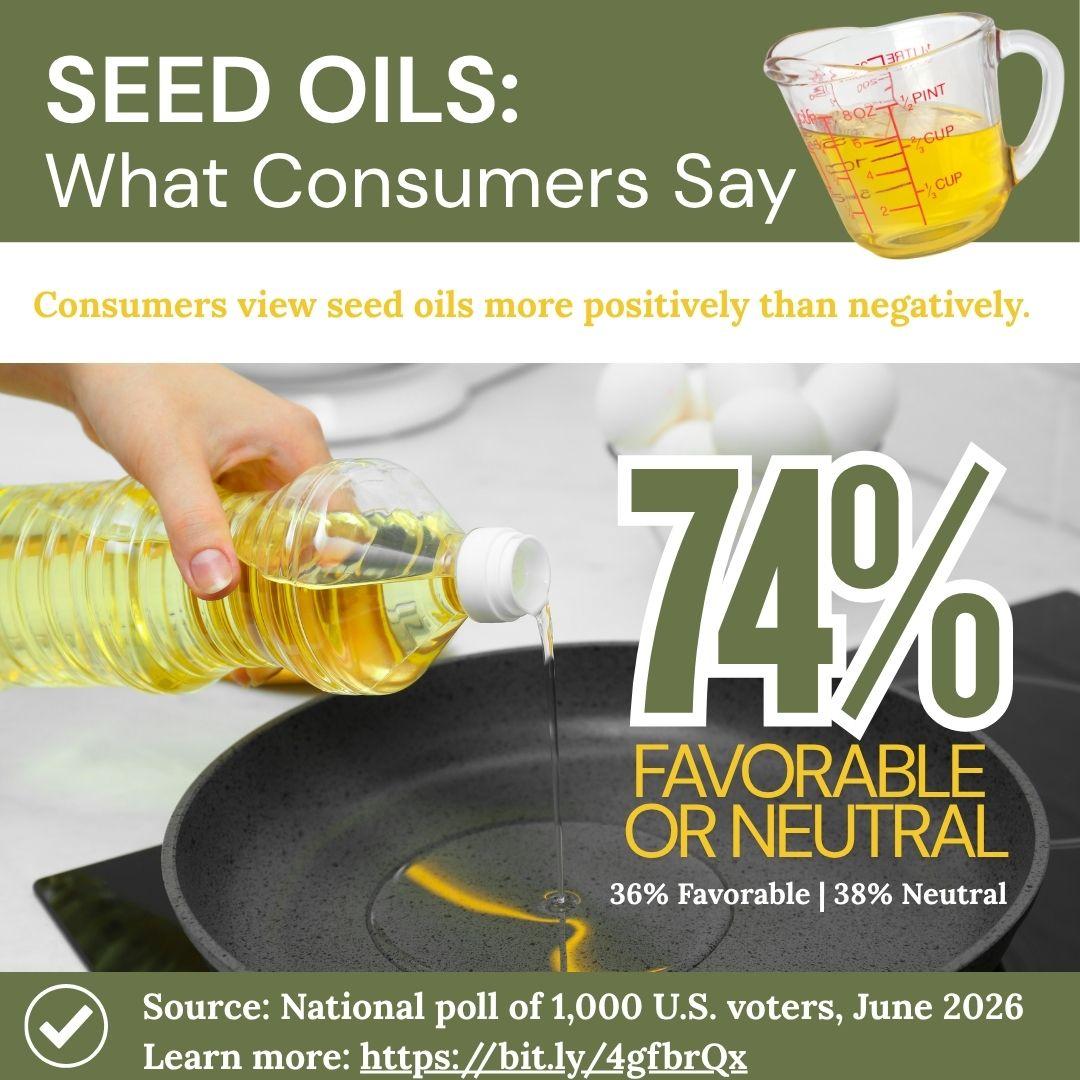
New consumer research suggests attitudes toward seed oils remain largely favorable or neutral, while efforts to avoid them are declining. In a June 2026 poll of 1,000 U.S. voters, 36% viewed seed oils favorably, 38% were neutral, and 20% viewed them unfavorably. Just 12% reported stopping the purchase or consumption of a product because it contained seed oils, down from 18% in 2025. The research also found that affordability is playing a growing role in purchasing decisions, with consumers increasingly prioritizing lower food costs over additional ingredient restrictions.
Learn more: https://bit.ly/4gfbrQx
| | |
Mayo Clinic: Seed Oils Can Be Part of a Healthy Diet
Despite claims on social media that seed oils are “inflammatory” or “toxic,” research tells a different story. In a recent Mayo Clinic article, dietetic intern Margo Meekin explains that seed oils, including canola oil, provide polyunsaturated and monounsaturated fats that support heart and brain health. She also notes that seed oils such as canola have high smoke points, making them versatile options for cooking and baking and a healthy alternative to solid fats like butter, shortening, beef tallow, and lard.
Read the article from the Mayo Clinic: https://bit.ly/4qTtoJz
| |
Doctors Examine the Science Behind
Seed Oil Claims
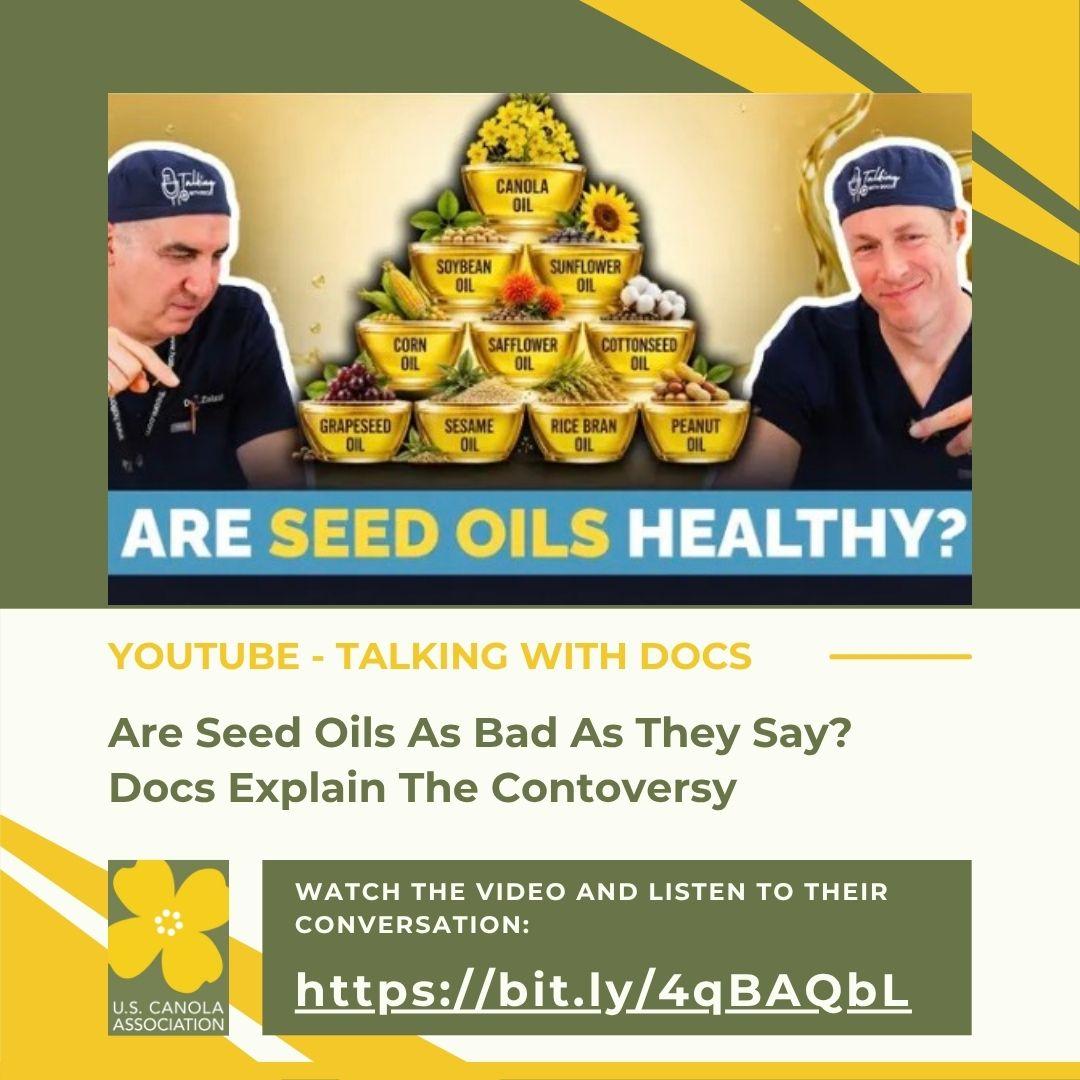
In a recent Talking With Docs episode, Dr. Brad Weening and Dr. Paul Zalzal examine claims that seed oils are inflammatory or harmful and compare them with current scientific evidence. The doctors explain that research does not support blaming seed oils themselves for inflammation and note that replacing saturated fats with unsaturated fats, including those found in canola and other seed oils, can help lower LDL cholesterol and cardiovascular risk. They also discuss canola’s Canadian origins and emphasize that repeatedly heated oils and diets high in ultra-processed foods are different concerns from the use of seed oils themselves.
Watch the Talking With Docs episode: https://bit.ly/4qBAQbL
| | |
2026 Idaho Grain & Oilseed Convention - Sun Valley, ID
November 17 -19, 2026
The 2026 Idaho Grain & Oilseed Convention comes at a defining moment for agriculture. As producers navigate market uncertainty, rising costs, and a changing policy landscape, this year’s theme is Navigating What’s Next: Facing Challenges. Finding Opportunities focuses on the decisions, innovation, and collaboration shaping the future of Idaho agriculture. Join fellow growers, industry leaders, researchers, and partners from across the region for timely discussions on markets, policy, technology, and emerging opportunities impacting agriculture today and in the years ahead.
***PNWCA producer members can receive $50 off registration.***
To learn more and register: https://bit.ly/3Rzrh08
| |
Canola Crop Insurance Expands with Separate Winter and Spring Enterprise Units
The PNW Canola Association has been working on this since early last year with invaluable support from Ben Thiel, Spokane RO Director. With technical input from Colby Kennedy of HUB Insurance in Cottonwood, ID, we submitted another letter to the national USDA-RMA administrator in February requesting this change, as did the USCA. With both types of canola grown in the northwest U.S., this is a significant improvement to the canola insurance policy. Thanks to everyone involved in getting this across the finish line!
Read the RMA press release here: https://bit.ly/4xKcAXD
| |
Research Shows Winter Canola Could Boost Midwest Farm Profits
Three years of research at the University of Illinois suggests winter canola could offer Midwestern farmers both economic and environmental benefits. Crop sciences professor D.K. Lee says adding winter canola to a traditional corn-soybean rotation can provide soil protection while generating an additional source of revenue and creating opportunities for double-crop soybeans. Researchers also see potential for growing demand tied to sustainable aviation fuel markets. Simulations found that rotations including canola from 2019 to 2024 could have generated annual profits 10% to 23% higher than conventional rotations, although researchers say improved varieties are needed for colder northern climates.
Read the article from Brownfield Ag News: https://bit.ly/4wYwhtO
| |
Global Canola Oil Market Projected to Reach $62.15 Billion by 2035
The global canola oil market is projected to grow from $42.6 billion in 2025 to approximately $62.15 billion by 2035, according to Market Research Future. The report points to growing demand across food manufacturing, foodservice, household cooking, and industrial applications, as well as consumer interest in versatile cooking oils and lower-saturated-fat options. High-oleic and organic canola oils are among the specialty segments expected to see growth, while North America remains a key production and processing hub.
Read the article from Market Research Future at the provided link by EIN Presswire: https://bit.ly/4y7eLV3
| | |
USCA works to support and advance U.S. canola production, marketing, processing, and use through government and industry relations. Since its establishment in 1989, the association has helped domestic canola acreage grow from virtually zero to about 2 million. To learn more about USCA, go to: www.UScanola.com
Want to promote your products or services to canola producers and industry members? Visit our advertising pages to find specs, deadlines and rates to advertise in the Canola Quick Bytes monthly e-newsletter.
| | | | |