Volunteer Newsletter - September 2026 | | |
VOLUNTEER SUPPORT GROUP
DATE CHANGE DUE TO LABOR DAY HOLIDAY!
TUESDAY, SEPT. 8 @ 5:00-6:30 pm
Aloha Patient Volunteers. Please MARK YOUR CALENDARS to attend our meeting on Tues. September 8th (pushed a day forward due to the Monday holiday). Come share your experiences and insights, and increase your knowledge and skills for this rewarding community service we provide. Active volunteers are encouraged to attend whether or not you currently have a family/patient assignment. Light refreshments will be provided. RSVPs are appreciated. Location: Kauai Hospice Conference Room.
| | |
A LEGACY OF COMPASSION
CELEBRATING THE 44TH ANNIVERSARY OF THE HOSPICE BENEFIT
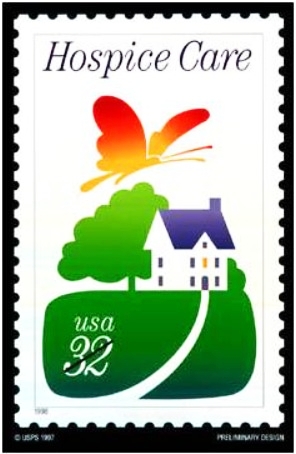
September 3, 2026, marks the 44th anniversary of the signing of the Medicare Hospice Benefit into law. Since its implementation in 1983, the Medicare Hospice Benefit has transformed the delivery of end-of-life care in the United States.
What began with only a few thousand beneficiaries has grown into one of Medicare's most impactful programs. By 1990, approximately 210,000 Medicare beneficiaries received hospice care annually. By the year 2000, utilization increased to roughly 530,000 and in 2010, surpassed 1.15 million beneficiaries. Since 2020, annual hospice utilization has remained consistent at approximately 1.7–1.72 million Medicare beneficiaries.
Over the past four decades, an estimated 36–38 million Americans have benefited from hospice services through the Medicare Hospice Benefit.
| | |
ARTICLE: WANT TO BE HAPPIER? YOU MAY NEED TO THINK MORE ABOUT DEATH
BY: MADELINE HOLCOMBE (CNN HEALTH, May 23, 2026)
For many people death can be a scary topic, but discussing mortality can help ease anxiety around the end of life. Research suggests that death awareness helps individuals live more intentionally, prioritize meaningful relationships, and improve overall life quality. It may feel like the fear of death is built into the human psyche and everyone experiences it, but that isn’t necessarily true, explains Dr. Erin Emery-Tiburcio, a geropsychologist and professor of psychiatry and behavioral sciences at Rush University in Chicago. Continue reading.
| | |
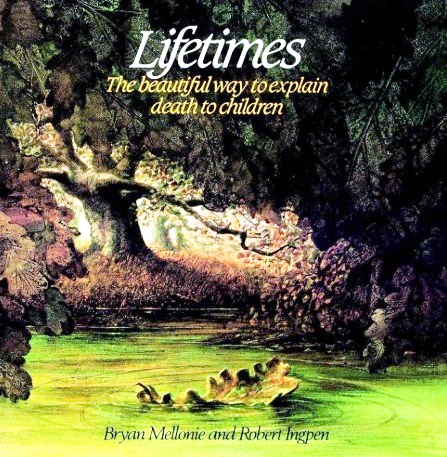
READ-ALOUD BOOK: "LIFETIMES: THE BEAUTIFUL WAY TO EXPLAIN DEATH TO CHILDREN"
BY: BRYAN MELLONIE AND ROBERT INGPEN
(7:39 minutes)
For a gentle, naturalistic approach to explaining the concept of death to children, this lovely book avoids euphemisms and teaches that every living thing — from trees and flowers to birds, insects, and people — has a beginning, an ending, and living in between. The core message is that all living things have a natural lifespan. While some lifespans are long and others are short, the pattern of life, death, and in-between is consistent for everything. With beautiful illustrations and soothing repetition, it tenderly addresses that death is a natural part of life. Click here to watch.
| | |
YOUTUBE: THE HIGHS AND LOWS OF GRIEVING – LEARNING TO TRUST THE NATURAL RHYTHM OF LOSS
BY: SARAH KERR, PhD (Centre for Sacred Deathcare)
(1:13 minutes)
Grieving is hard. And it’s harder if you don’t understand how grief works, or how to meet it in the most healing way possible. Sometimes people navigating grief feel that unless you're constantly carrying the full weight of your loss every moment, you're somehow doing it wrong. In reality, grief has a rhythm. Kerr talks about The Dual Process Model of Grief, where you naturally move between moments of sorrow and moments of lightness – going down into the pain and then coming up for air. Click to watch.
| |
|
ARTICLE: THE DARK ORIGINS OF THE PARIS CATACOMBS
BY: JESSICA PEARCE ROTONDI (May 27, 2025)
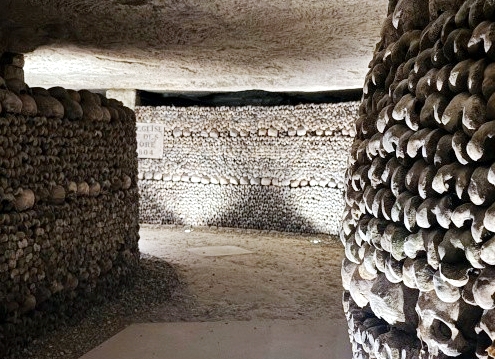
This article explores the fascinating history of the Paris Catacombs, a vast tomb, filled floor to ceiling with the bones of six-million Parisians who died between the 10th-18th centuries. The catacombs were created as an engineering solution to the convergence of two public health and safety disasters that arose after a period of heavy rains in May 1780. One catastrophe was the urban sinkholes occurring above the 200-mile network of abandoned limestone quarry tunnels from which Paris was built (Roman times through the Middle Ages). The other was a sanitation issue from the overflowing Holy Innocents’ Cemetery where mass graves were packed so tightly that the ground level rose more than 8 feet above surrounding streets. Click to read more about its incredible history. The site has been a tourist attraction for over two centuries since Napoleon Bonaparte ordered them opened to the public in 1809. And recently, a 5-month renovation concluded in April 2026 that modernized air-handling units, lighting, fire and security systems, and provides an immersive audio guide for its 2,000 daily visitors.
| | |
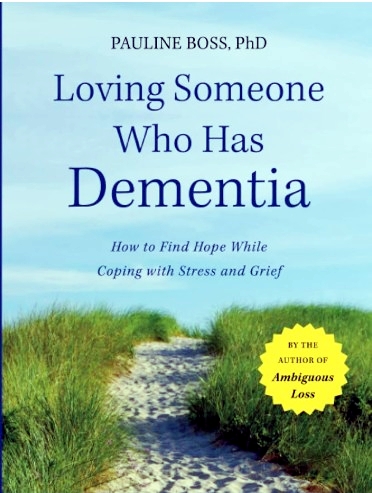
BOOK: LOVING SOMEONE WHO HAS DEMENTIA: HOW TO FIND HOPE WHILE COPING WITH STRESS AND GRIEF
BY: PAULINE BOSS (2011)
Family therapist and author Pauline Boss, PhD created a field of study focused on grief without closure. In the 1970's, she coined the term "ambiguous loss" which describes the unique, unresolved grief experienced when a loved one is physically present but cognitively or emotionally absent due to dementia. Her book offers seven guidelines for those whose loved ones are "gone, but still there" helping these caregivers work toward building emotional strength and a sense of well-being. She explains that the goal is to become comfortable with ambiguity and a less than perfect relationship by seeing absence and presence as co-existing (paradoxical thinking). The book provides a pathway towards accepting uncertainty and building resiliency in order to live with the stress of this unique, yet prevalent type of loss. Mahalo to former volunteer Patricia Fallbeck for recommending this book. (Also available in audiobook and AARP eBook formats.)
| | |
PUBLIC AWARENESS CAMPAIGN: "HOSPICE CAN HELP"
BY: CHAPCA (California Hospice and Palliative Care Association)
The "Hospice Can Help" public awareness campaign was recently launched by CHAPCA, to raise awareness about the benefits of hospice and the importance of end-of-life care. Dr. Ira Byock, a renowned palliative care physician, author, and advocate is featured in a 5-part series of video shorts. My favorite resource is the excellent short video: Hospice Can Help: A Nurse's Perspective (3:19 minutes) offering an honest and compassionate perspective of what hospice care actually provides, to knowing when to ask for it, to what it means to choose comfort over continued treatment. It addresses the most common fears and misconceptions, and explains why families should have the hospice conversation well in advance. Watch the video here. In addition, the campaign offers downloadable content including brochures, patient- and family-focused fliers, and provider education materials to help increase the public’s understanding of what hospice does, how to access it, and the difference it can make in peoples’ lives.
| |
CONTACT: Rayne Regush, Volunteer Coordinator
| |
| | | |