|
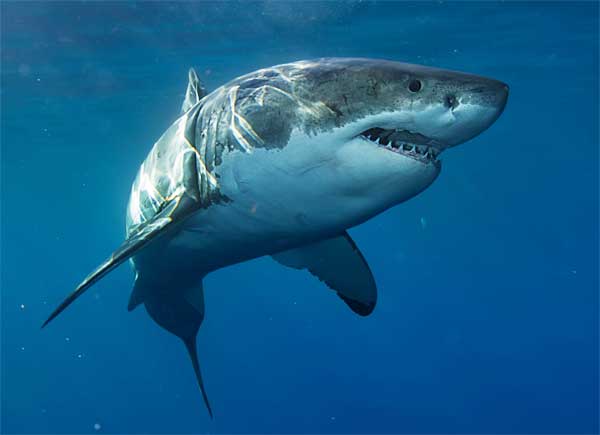
Continuing Mortality Affects Recovery of White Sharks in South Africa
Despite protection of white sharks in South Africa since 1991, sightings of white sharks have declined at several aggregation sites in South Africa. Led by Heather Bowlby, a team of scientists used simulation modeling to assess potential population response of white sharks to different levels of mortality. Substantial increases in abundance following prohibition were unlikely. All simulations indicated the annual mortality in the 10s of sharks would be sufficient to limit population growth. Moreover, known levels of average white shark mortality in the KZNSB bather protection program have typically remained higher than these thresholds. These results suggest that even known levels of white shark mortality occurring, which likely underestimate total removals within their range, may be sufficient to drive abundance decline and new mitigation measures may be required to ensure population recovery.
Read more
| |
|
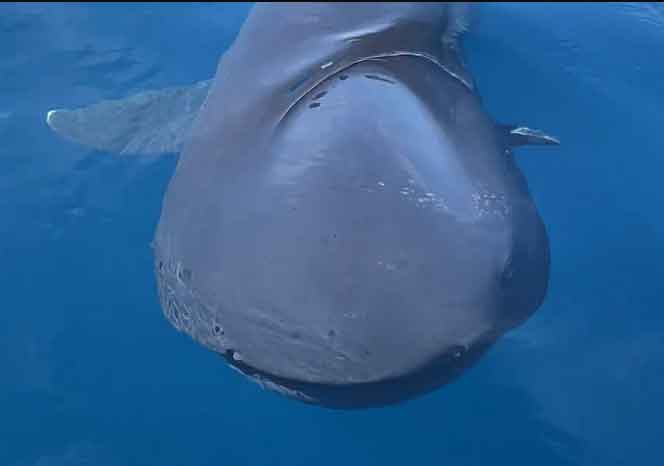
Megamouth Sharks off
San Diego
On September 10, two rare megamouth sharks, Megachasma pelagios, were captured on video 30 miles off San Diego by David Stabile, Andrew Chang and Val Costescu.
First discovered in 1976, less than 60 of these deep water sharks have ever been found. Megamouth is the smallest of three filter-feeding sharks. The shark swims with its mouth open, filtering plankton from the sea. Recognizable by its large head with rubbery lips, it is so unlike other species of shark it is usually considered the sole species in the family Megachasmidae.
Watch the video
| |
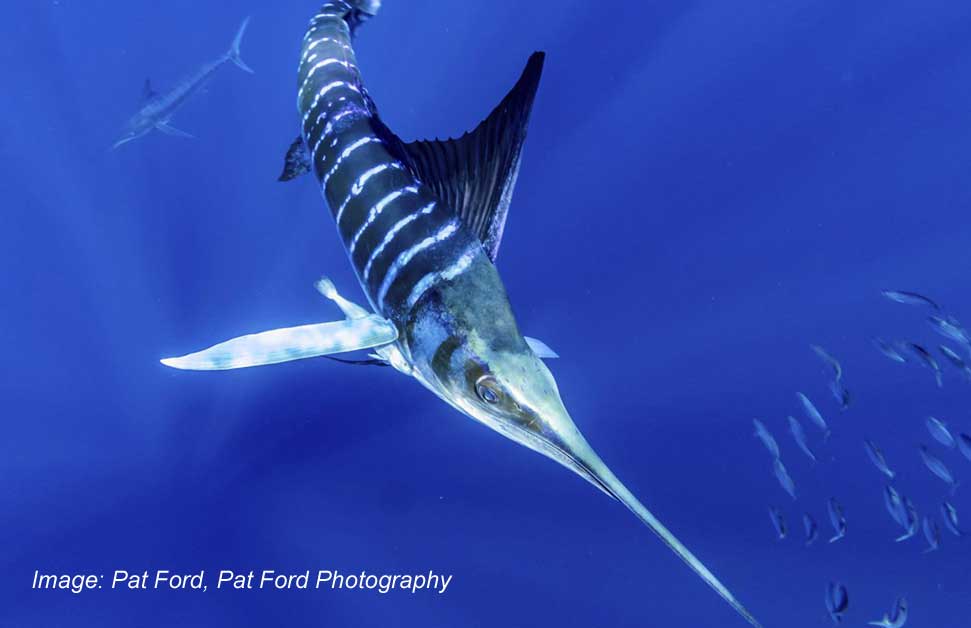
How Marine Predators Locate Hot Spots in the Open Ocean
A new study finds that marine predators, such as tunas, billfishes and sharks, aggregate in anticyclonic, clockwise-rotating ocean eddies. As these anticyclonic eddies move throughout the open ocean, the study suggests that the predators are also moving with them, foraging on the high deep-ocean biomass contained within.
Read more
| |
|
Sperm Whale Clans
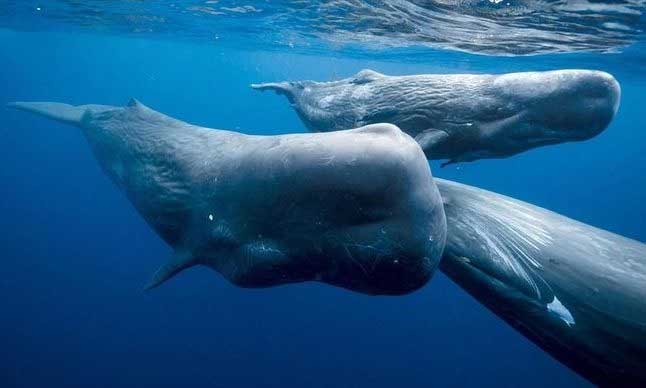
The Global Coda Dialect Project, a consortium of scientists conducting sperm whale acoustics research worldwide,
classified 23,429 codas (stereotyped click patterns) from 23 locations and identified seven Pacific sperm whale vocal clans. The study suggests that variations in the whales’ clicking dialects are evidence of “non-human culture” and provide a way for whale groups to mark cultural identity when clans overlap, in a similar way to human ethnic groups. “Whales from different clans never interact with each other, even when they share the same waters,” said Dr. Taylor Hersh, lead author of the study. “This suggests that the whales have some way of distinguishing ‘us’ versus ‘them,’ and we wanted to know if they do so using identity codas.
Read more
| |
|
Why Do Humpback Whales Sing?
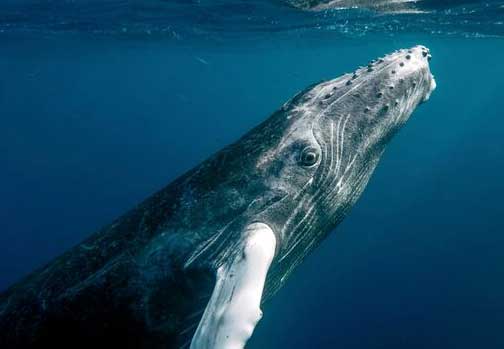
A new study published in Psychology Today suggests the flexibility and sophistication of humpback whale songs may be a way to explore their environments, similar to echolocation used by bats.
Read more
| |
|
Whale Strandings in Tasmania
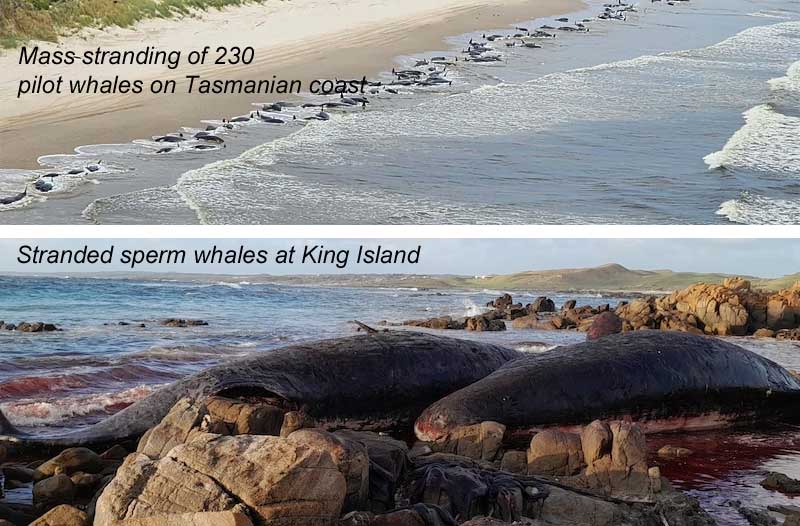
A pod of around 230 pilot whales stranded on a remote beach on the western coast of Tasmania, Australia. Most of them have died.The cause of the stranding remains unknown but scientists believe pilot whales, which use echolocation to orient themselves, may have become confused while feeding in shallow waters.
Only 24 hours earlier, 14 dead sperm whales washed ashore on King Island in the Bass Strait north of Tasmania. It's believed the 14 whales were males and could be from the same "bachelor pod," according to the Australian Broadcasting Corporation. Like pilot whales, sperm whales use echolocation to navigate underwater.
In September 2020, Tasmania experienced the worst mass stranding event on record when 470 pilot whales were found beached in the region. Of those beached, only 111 animals were saved by experts and the public.
| |
|
Ocean Forests : Among the Most Productive Ecosystems on Earth
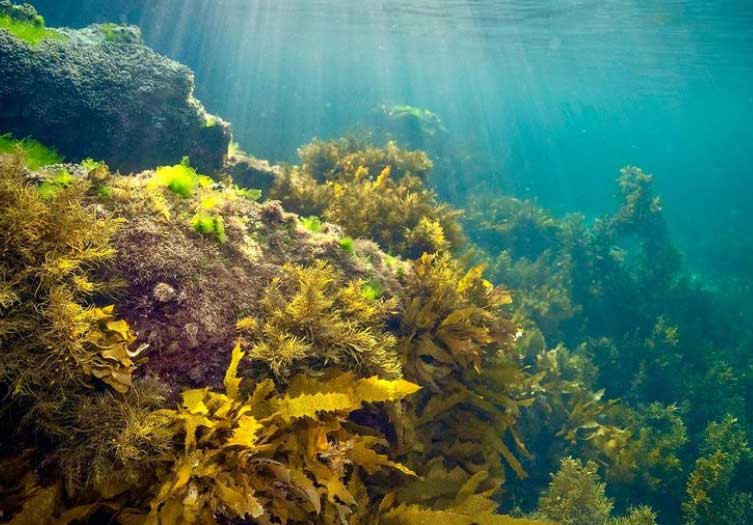
A global study led by a team from The University of Western Australia has found ocean kelp forests are among the most productive ecosystems on Earth; they are 4 to 11 times more productive than crops such as wheat, corn and rice. The most productive forests are those growing in South Australia and South Africa.
The Great Southern Reef in Australia is fringed by a golden kelp forest
stretching 5,000 miles across the continent’s coast. Next to the golden kelp, bull kelp can grow at a rate of 14 centimeters per day. The Great African Sea Forest stretches over 400 miles from Cape Town’s waters to Namibia and is nourished by the Benguela upwelling, an Antarctic current, and it is expanding in size.
| |
|
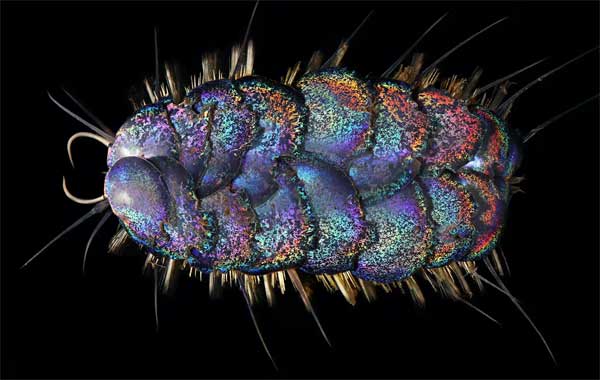
Elvis Worm
Named in honor of the King of Rock’n’Roll, Peinaleopolynoe elvisi, is an iridescent, thumb-size deep-sea worm. It is one of six species of hungry scale-worms living at a depth of almost 4,000m (13,000') below the surface in the Pescadero basin in the Gulf of California. Unlike their namesake, these little worms throw punches at each other, inverting their snouts and biting chunks out of each other with their powerful jaws.
| |
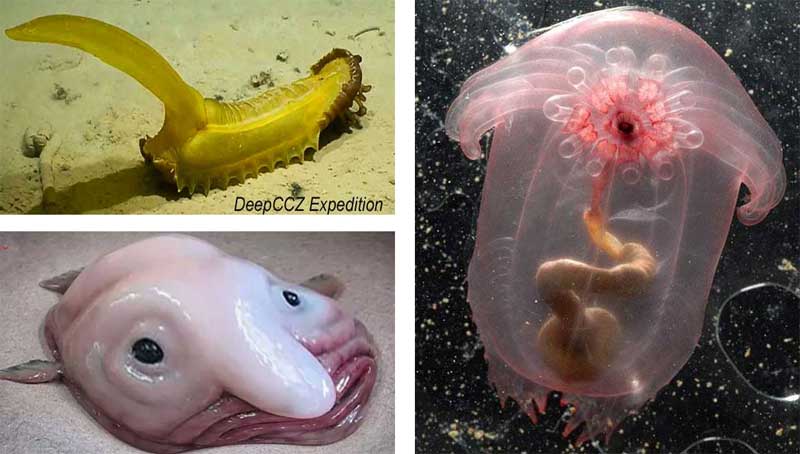
The deep, dark sea is the home of many strange creatures. The
yellow Gummy Squirrel, Psychopotes longicauda, a 60cm long sea cucumber with red lips feeds on sediment on the ocean floor at a depth of 5,100 metres, and another sea cucumber, the Pink Sea-Through Fantasia, Enypniastes eximia, (also known as the "headless chicken monster") is found at a depth of a mile and a half in the Western Pacific Ocean. The Blobfish, Psychrolutes marcidus, has been called the world's ugliest
animal. It lives between 2,000 and 4,000 feet beneath the waves off the coast of Australia where it spends most of its time just waiting for food to drift it's way.
| |
|
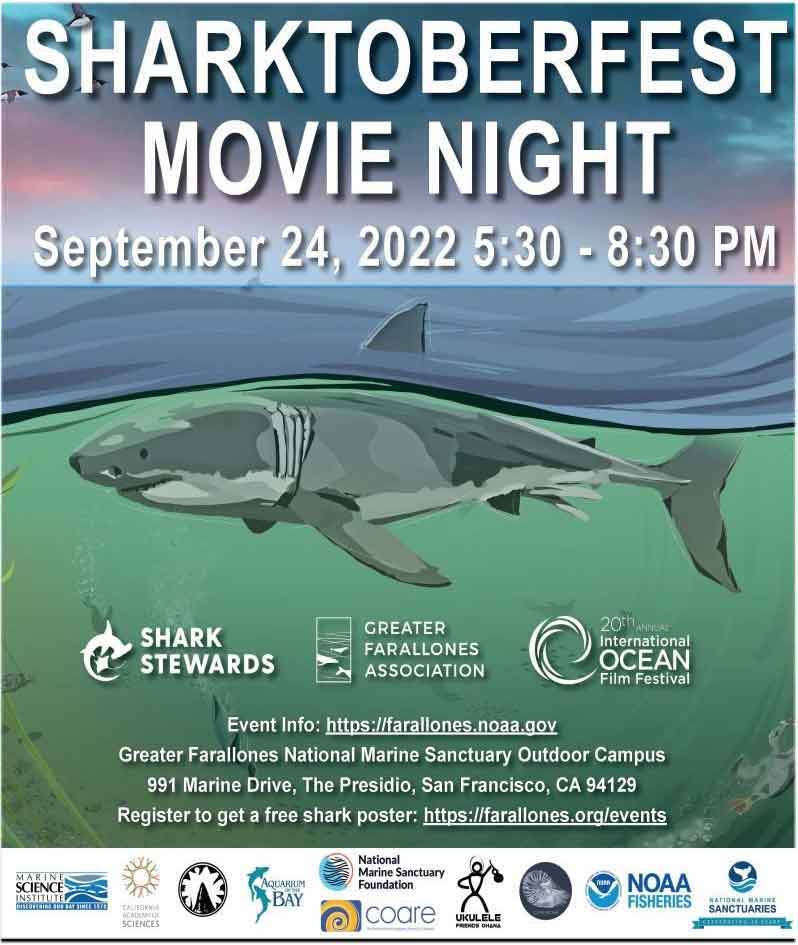
Sharktoberfest Movie Night
Celebrate the Return of the White Shark
DATE: September 24, 2022
TIME: 5:30 - 8:30 PM PT
LOCATION: Greater Farallones National Marine Sanctuary Outdoor Campus, 91 Marine Drive, SF Presidio, San Francisco, CA 94129
This is a free event! Learn about the latest shark research and visit outdoor booths of shark experts, artists and conservationists. Enjoy beverages, popcorn, a food truck and live music. Bring a low-back chair for the outdoor screening of shark films that will start promptly at 7:30 pm.
Event Schedule
| |
|
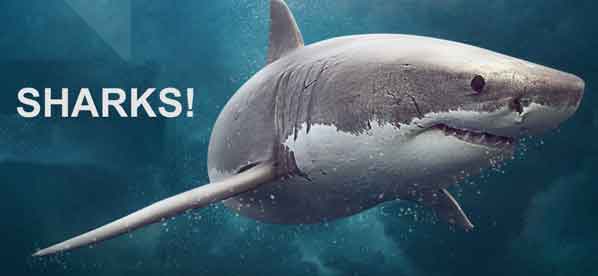
Sharks!
DATE: The exhibit opens September 24, 2022
LOCATION: The Australian Museum, The corner of College Street and William Street, Central Sydney, Australia.
Submerge yourself in the world of Sharks! In this immersive blockbuster exhibition created by Australian Museum experts. Visitors will go back in time to meet sharks’ ancient ancestors, come face-to-face with a huge whale shark, and uncover their extraordinary adaptations with interactive displays, touchable specimens and objects from the museum's collections. With cultural connections reaching back countless generations, visitors will discover how First Nations’ and Pasifika Peoples’ knowledge of sharks can help us protect them. With rising temperatures, industrial fishing and oceans choked by pollution, sharks are in great danger. Our attitudes and our actions will decide the fate of these ancient survivors. The exhibit features: Life-size shark models of 50cm epaulette shark and the 8m whale shark. The exhibit also features:
- Augmented reality interactives where you can play with a whale shark or explore the contents of a shark’s stomach,
- Real, touchable shark specimens from the Australian Museum collection,
- Plenty of jaw-some stuff for kids and families!
Experience this brand-new exhibition first in Sydney before it tours the world!
Learn more
| |
|
San Diego UnderSea Film Festival
DATE: October 1, 2022
LOCATION: Irwin M. Jacobs Qualcomm Hall
5775 Morehouse Dr, San Diego, CA 92121
The festival will also be a hybrid event with additional films available online - Tickets for the virtual event will be available October 8th.
Purchase tickets here be
| |
Last Fossil Shark Tooth Hunt of 2022
DATE: Sunday October 2, 2022
TIME: 1 to 3 pm
COST: $15 per person or $30 per family
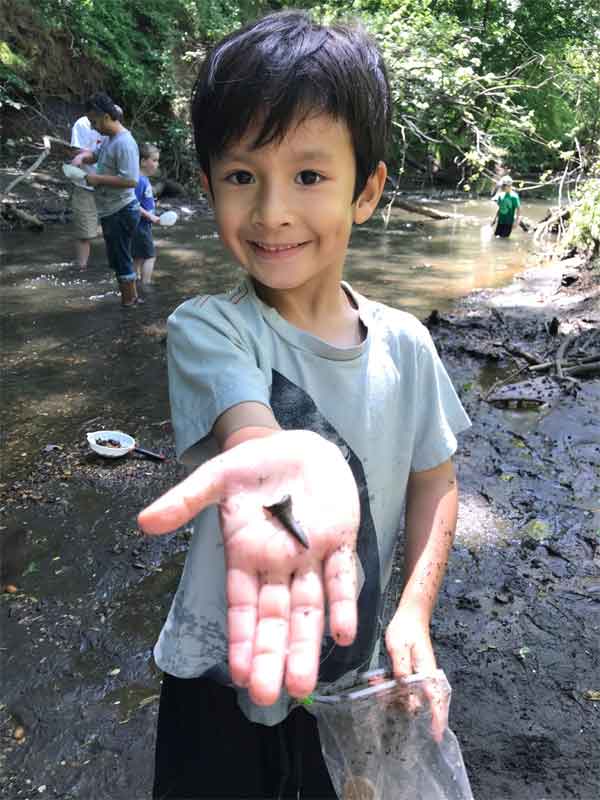
Join the Shark Research Institute's last fossil shark teeth hunt of 2022. You will get wet and muddy but everyone will find shellfish fossils. some shark teeth, and a lucky few may even find a mosasaur tooth. Registration is required; the site limits the number of participants and we supply equipment for all attendees. To register and receive location of the site, email heather@sharks.org or info@sharks.org
and put "Fossil Shark Tooth Hunt" as the subject.
| |
|
NJ State Museum Lecture Series:
World of Sharks
DATE: October 8, 2022
TIME: 2 pm EST
LOCATION: NJ State Museum, 205 W State St, Trenton, NJ 08608
Dean Fessler, Education Director, will be presenting "Demystifying the Maneater & JAWS ─ White shark research off South Africa and Guadalupe Island".
In person and streaming on the Museum's Facebook page.
| |
|
Notes
Fossil Shark Tooth Hunt at Calvert Cliffs, Maryland. Dave Grant will be leading a fossil shark tooth hunt to Calvert Cliffs in Autumn. If you'd like to come along, just send an email to info@sharks.org, put "Calvert Cliffs Trip" in the subject line, and Dave will send you more information.
The Equipment Test Pool is now closed for the season. It will reopen in May 2023.
SRI Headquarters will be closed November 14-25/26. SRI staff and scientists will be attending the Convention on International Trade in Endangered Species in Panama, supporting the listing of more shark and ray proposals.
Amazon.com is offering an opportunity to generate donations to the Shark Research Institute at no extra cost to you. Simply start your shopping at smile.amazon.com/ch/22-3110087, confirm "Shark Research Institute, Inc." as your charity of choice, and Amazon will make a donation to our organization.
You may join or renew your membership in the Shark Research Institute, or make a donation of any size at https://www.sharks.org/donate
Note: All donations are tax-deductible from U.S. federal income taxes as
charitable donations and help fund our field research, advocacy and education programs.
| |
Please share this free weekly newsletter with your friends and family to help grow our audience. All they need to do to receive the newsletter is simply sign up on our website’s home page (https:www.sharks.org)
We all have a lot of work ahead to protect sharks and the ocean,
and combat climate change while there is still time.
| | | | | |