|
The Tech Behind MBARI's Deep Sea Videos
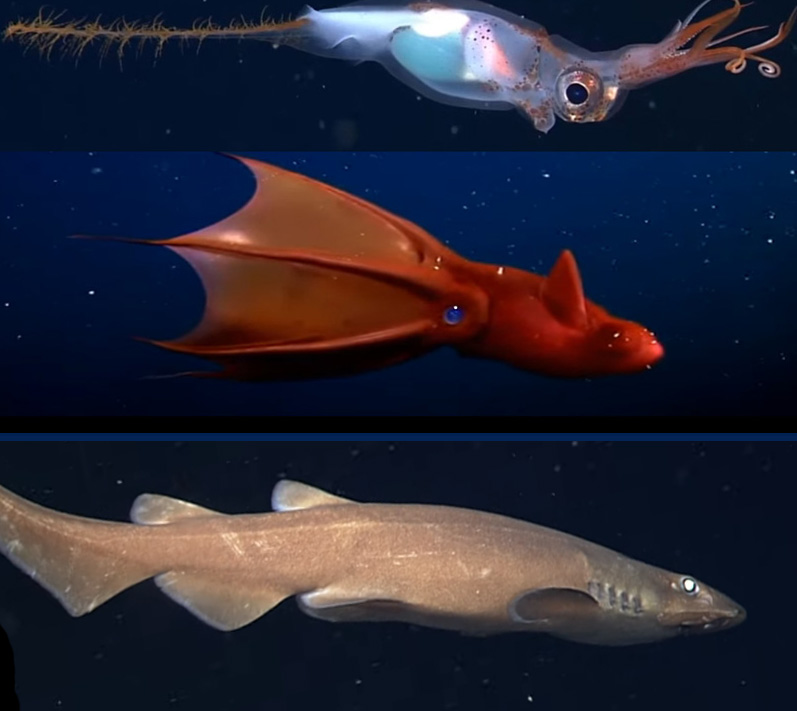
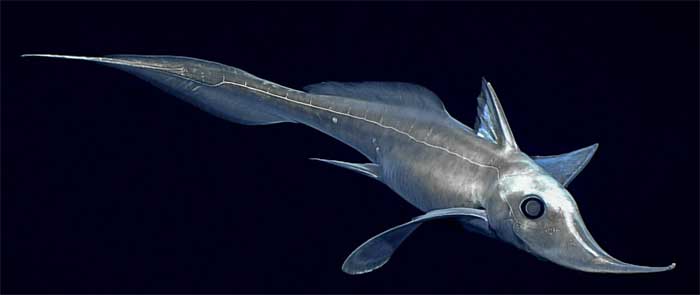
The deep sea videos on the YouTube channel of Monterey Bay Aquarium Research Institute (MBARI) have described more than 240 new species based on footage and collections. The research vessel (R/V)
Rachel Carson goes out almost every day into the Monterey Canyon, deploying the remotely operated vehicle (ROV) Ventana to depths of just over a mile. The R/V Western Flyer, home to ROV Doc Ricketts with a 4K camera, goes on expeditions of seven to 10 days. The Western Flyer will soon retire from service, but a new one, the R/V David Packard, is coming in 2023. The ROV pilots operate like surgeons, keeping everything smooth while the ship is moving on the open sea as it collects video and specimens. The pilots corral animals and also pick up sediment and other samples using the ROV’s various arms and tools.
Autonomous Underwater Vehicles (AUVs) are equipped with a video camera and lights that don't require a human pilot. The team aboard Rachel Carson deploys one called i2MAP that is equipped with a video camera and lights as well as water chemistry sensors. MBARI also has a rover that crawls across the seabed collecting samples and there is a team of scientists and technicians that process the videos coming in from ROV and AUV dives ─ 27,000 hours of footage ─ and MBARI is training an algorithm to identify the animals.
And be sure to watch MBARI's footage of deep-sea catsharks, the largest family of living sharks with more than 90 species of sharks.
| |
|
Bottom Fishing Ends on EU Protected Deep-sea Ecosystems
Some 17% of the area between 400-800 meters depth of EU waters of the North-East Atlantic have been closed to bottom fishing gear. The total area of the closures represents 16 419 km2 reserved for the protection of vulnerable marine ecosystems below 400 metres. The closures concern vessels equipped with bottom gear such as bottom trawls, dredges, bottom-set gill nets, bottom-set longlines, pots and traps. These closures offer further protection to help restore vulnerable marine ecosystems including as cold waters coral reefs, sea mounts and sea pens in deep waters. The act protects 57 vulnerable deep-sea ecosystem and will enter into force 20 days after publication in the Official Journal of the European Union. The regulation will be immediately applicable to all vessels of EU Member States and of third countries operating in EU waters.
Read more
| |
|
Shell, Exxon & BP : Seized Emails Reveal Deception
Internal emails from Shell, Exxon and BP employees are revealing.
Shell : "Please do not give the impression that Shell is willing to reduce carbon dioxide emissions to levels that do not make business sense", reads a 2019 Shell PR Guidance slide. An internal 2020 PR guidance calls on employees to frame a net zero goal as “a collective ambition for the world” rather than a “Shell goal or target”. “Shell has no immediate plans to move to a net-zero emissions portfolio over our investment horizon of 10-20 years.”
Exxon : Exxon has promoted algae-based biofuels, but a leaked 2018 presentation conceded the technology is “[s]till decades away from the scale we need.” While Exxon is publicly committed to the Paris Agreement, in August 2019 Exxon’s chief Executive Darren Woods sent out a memo urging an industry lobby group to remove a reference to the climate treaty from a draft sustainability announcement. Such a reference “could create a potential commitment to advocate on the Paris agreement goals”, the executive warned.
BP : BP's, main goal is to “enable the full use of fossil fuels across the energy transition and beyond,” the captured emails reveal.
Learn more
| |
|
Growing Acidification of the Arctic Ocean
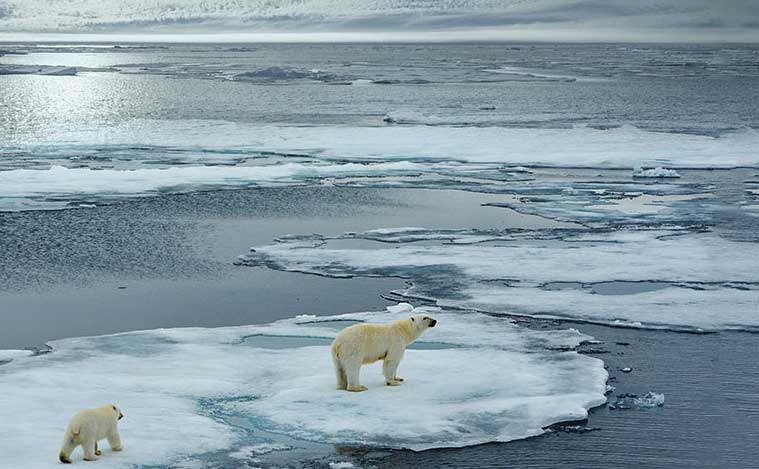
The ocean absorbs a third of all of the carbon dioxide in the atmosphere. Rapid loss of sea ice in the Arctic region over the past three decades has accelerated its rate of long-term acidification, four times the rate of other seas. The consequences of continued acidification are profound including the disappearance of glaciers and throwing currents that drive weather patterns out of balance. The survey's findings also have "huge implications" for marine life. "In lower latitudes, you have coral reefs and if you add carbon dioxide to the water, the carbon saturation rate will increase and the coral won’t grow,” explains one of the authors of the study. "We are far from knowing what the cost is for biological systems. We don’t know what organisms could be affected."
Read more
| |
|
TCM : A Threat to Biodiversity
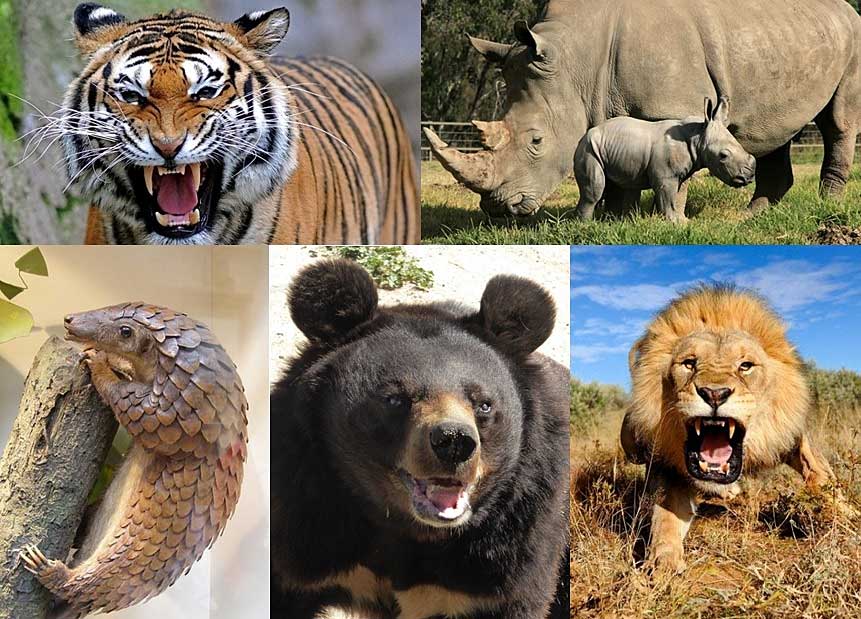
Traditional Chinese medicine (TCM) remains a threat to species diversity. The paper below provides an overview of the current status of TCM-related regulations in China, identifies weaknesses in regulation frameworks, highlights issues as to the magnitude, dynamics, and impact of the trade. It discusses the restrictions of language, cultural, and knowledge barriers that remain limited and proposes changes in trade regulations, actions to enhance law enforcement by combating illegal trade, and future research directions. As the TCM industry expands its coverage and size there is a critical need to mitigate its negative impact on biodiversity.
Learn more
| |
|
Diatom Archive
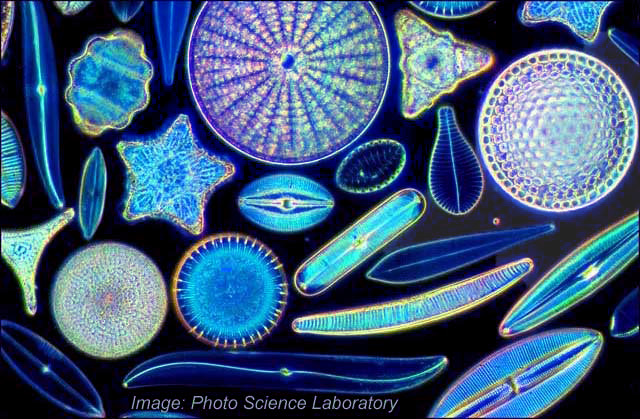
Diatoms reveal what pristine habitats were like long ago and illustrate what has gone awry over the centuries. A cache of phytoplankton at the Academy of Natural Sciences of Drexel University in Pennsylvania is helping researchers reconstruct historical coastlines. Among the 19 million or so specimens the ecological significance is staggering. Diatoms anchor marine food webs by feeding everything from minuscule zooplankton to mammoth filter feeders. (For example: Scientists have deduced that the rise of whales some 30 million years ago mirrors a spike in diatom diversity.)
As some of the planet’s most prolific organisms, diatoms have a very significant atmospheric impact: they siphon harmful gases like carbon dioxide out of the air and produce massive stores of oxygen as they photosynthesize. It is estimated that roughly one-quarter of the air we breathe is created by diatoms. Diatoms are also a crucial barometer for a variety of environmental conditions, helping scientists pinpoint everything from industrial pollution to oxygen depletion. The end of the last ice age sparked a steady climb in sea levels. Retreating ice sheets caused parts of New Jersey to sink. This subsidence, combined with glacial melt, proved a potent mix for rapid sea level rise, according to a study published by Jennifer Walker, a sea level researcher at Rutgers University. Walker turned to the past to put New Jersey’s current sea level rise in context. “If we can understand how temperatures, atmosphere, and sea level changes are all interconnected in the past, that’s what we can use to project changes in the future.” The monumental effort resulted in the tome Diatom Flora of the New Jersey Coastal Wetlands. To enact successful wetland restoration measures, it would be wise to consult microscopic algae.
| |
Antikythera
Shipwreck
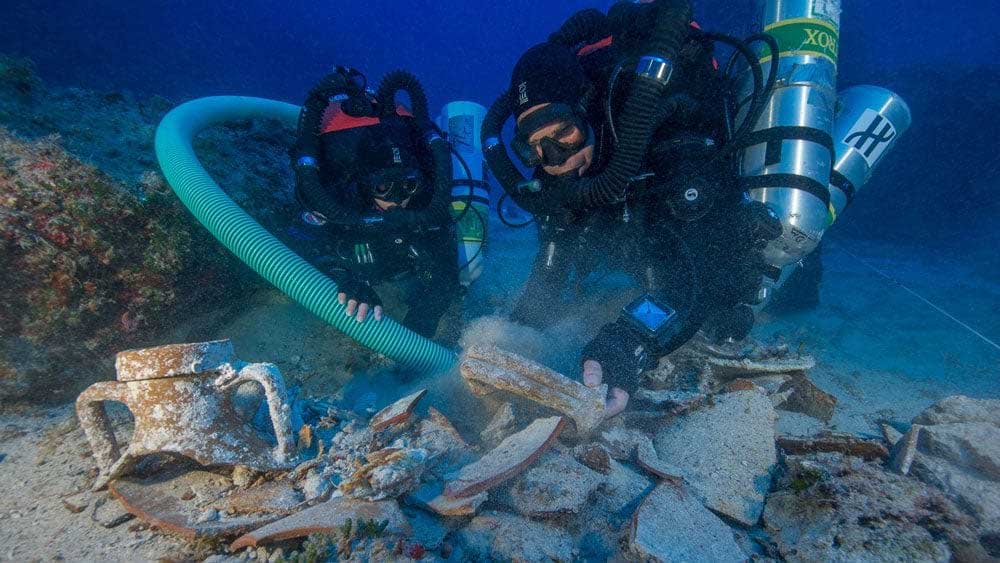
The remains of the huge ship lying at a depth of 40 to 50 metres (130 to 165 feet) was discovered by sponge divers in 1900 on their way to Tunisia. They took shelter from a storm near the island and decided to look for sponges while they waited for calmer conditions.
The shipwreck made headlines around the world; it was packed with valuable works of art, technology, and other luxury goods likely intended for trade. Recovered were scores of marble and bronze statues that scholars believed might be the work of Lysippos or Praxiteles, two of the most important Classical Greek sculptors of the fourth century B.C., and a unique object: the Antikythera Mechanism.
During a 2014 expedition on the Antikythera shipwreck by marine archaeologists from Woods Hole, a high-resolution, 3D map of the site was made using stereo cameras mounted on an autonomous underwater vehicle (AUV), robot crawlers, closed circuit rebreathers, and an astronaut-like exosuit. Divers recovered more than 50 items including a bronze armrest (possibly part of a throne), remains of a bone flute, fine glassware, luxury ceramics, a pawn from an ancient board game, and several elements of the ship itself. They established that much of the ship’s cargo is still preserved beneath the sediment. “This shipwreck is far from exhausted,” reports project co-Director Dr. Brendan Foley, a marine archaeologist with the Woods Hole Oceanographic Institution (WHOI).
Learn more
| |
The Antikythera Mechanism
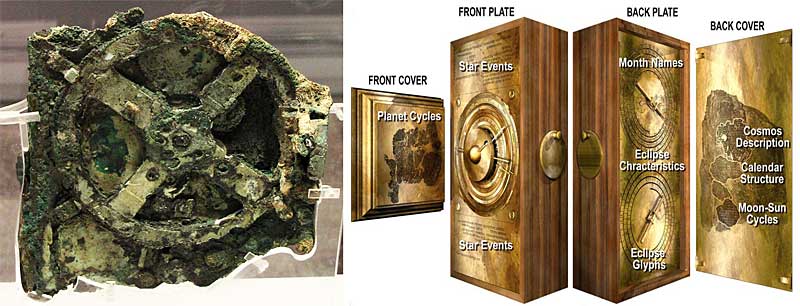
It is thought that the world's first analog computer, the Antikythera Mechanism, was probably built by a mechanical engineer of the school of Posidonius in Rhodes. Cicero, who visited the island in 79/78 B.C., reported that such devices were designed by the Stoic philosopher Posidonius of Apamea. It was high technology in the late 1st century B.C. Even before it was lost, this astronomical calculator, must have been a treasure.
The device survived a shipwreck and was submerged in salt water nearly 200 feet below the surface of the ocean for more than two thousand years. After being hauled ashore, the device─a lump of corroded bronze─was left to rot in a crate in the open courtyard of the National Archaeological Museum in Athens for nearly a year. It should have disintegrated and it nearly did.
The device still bore faded inscriptions and a mechanism that didn’t make any sense. When the ship went down, no one on the planet was supposed to have had complex scientific instruments—what was this thing?
The mechanism consisted of some 82 fragments of which only roughly a third of the original device are believed to survive. However, understanding what the object was and exactly how it was constructed are two different things. The device once contained a complex system of gears that showed the progression of planets known in antiquity and the variations in speed and direction of the apparent motion of the Moon, Sun, and planets. The device also contained fragments of an “instruction manual” on the front and back inside covers of the mechanism.
Dr. Tony Freeth of University College London and his team assembled their model of the Antikythera Mechanism showing how it must have functioned. They don’t claim that they’ve reconstructed the exact Antikythera Mechanism, but they believe theirs is the first reconstruction that fully describes what the machine was capable of, while simultaneously offering a cohesive, practical model for how it was built. If the model Freeth and his colleagues have advanced is accurate, it means scientists have finally teased apart the specific functions the mechanism provided. One of the coolest things about the mechanism is that the gearing that tracked the progression of the Moon and modeled that it travels at different speeds at the different points in its orbit. The ancient Greeks didn’t understand complex orbital dynamics, but they found a way to accurately model behavior they couldn’t (correctly) explain.
Learn more
| |
|
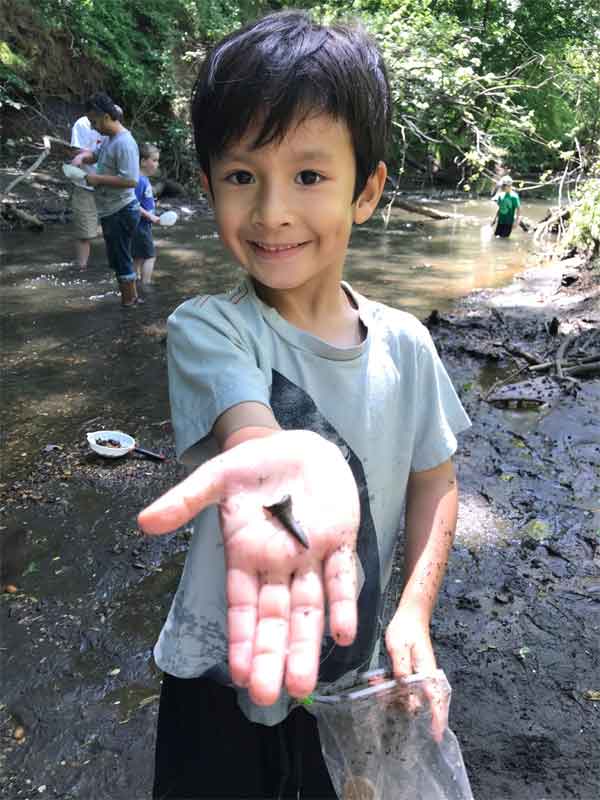
Last Fossil Shark Tooth Hunt of 2022
DATE: Sunday October 2, 2022
TIME: 1 to 3 pm
COST: $15 per person or $30 per family
Join the Shark Research Institute's last fossil shark teeth hunt of 2022. You will get wet and muddy but everyone will find shellfish fossils. some shark teeth, and a lucky few may even find a mosasaur tooth. Registration is required; the site limits the number of participants and we supply equipment for all attendees. To register and receive location of the site, email heather@sharks.org or info@sharks.org
and put "Fossil Shark Tooth Hunt" as the subject.
| |
|
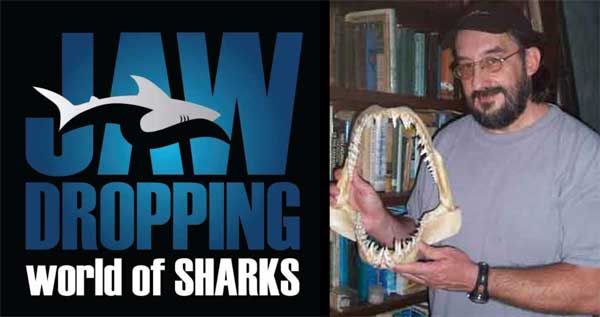
NJ State Museum Lecture Series: World of Sharks
DATE: October 8, 2022
TIME: 2 pm EST
LOCATION: NJ State Museum, 205 W State St, Trenton, NJ 08608
Dean Fessler, Education Director, will be presenting "Demystifying the Maneater & JAWS ─ White shark research off South Africa and Guadalupe Island".
In person and streaming on the Museum's Facebook page
| |
|
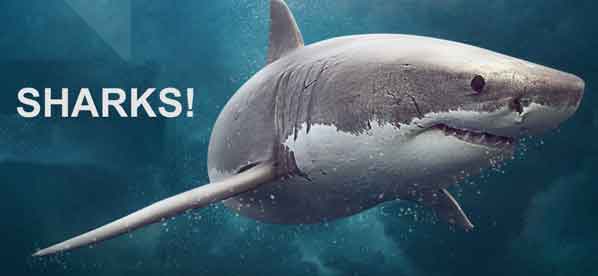
Sharks!
DATES: Now through April 23, 2023
LOCATION: The Australian Museum, The corner of College Street and William Street, Central Sydney, Australia.
Submerge yourself in the world of Sharks! In this immersive blockbuster exhibition created by Australian Museum experts. Visitors will go back in time to meet sharks’ ancient ancestors, come face-to-face with a huge whale shark, and uncover their extraordinary adaptations with interactive displays, touchable specimens and objects from the museum's collections. With cultural connections reaching back countless generations, visitors will discover how First Nations’ and Pasifika Peoples’ knowledge of sharks can help us protect them. With rising temperatures, industrial fishing and oceans choked by pollution, sharks are in great danger. Our attitudes and our actions will decide the fate of these ancient survivors. The exhibit features: Life-size shark models of 50cm epaulette shark and the 8m whale shark. The exhibit also features:
- Augmented reality interactives where you can play with a whale shark or explore the contents of a shark’s stomach,
- Real, touchable shark specimens from the Australian Museum collection,
- Plenty of jaw-some stuff for kids and families!
Experience this brand-new exhibition first in Sydney before it tours the world!
Learn more
| |
|
Notes
Fossil Shark Tooth Hunt at Calvert Cliffs, Maryland. Dave Grant will be leading a fossil shark tooth hunt to Calvert Cliffs in Autumn. If you'd like to come along, just send an email to info@sharks.org, put "Calvert Cliffs Trip" in the subject line, and Dave will send you more information.
The Equipment Test Pool is now closed for the season. It will reopen in May 2023.
SRI Headquarters will be closed November 14-25/26. SRI staff and scientists will be attending the Convention on International Trade in Endangered Species in Panama to support the listing of more shark and ray proposals.
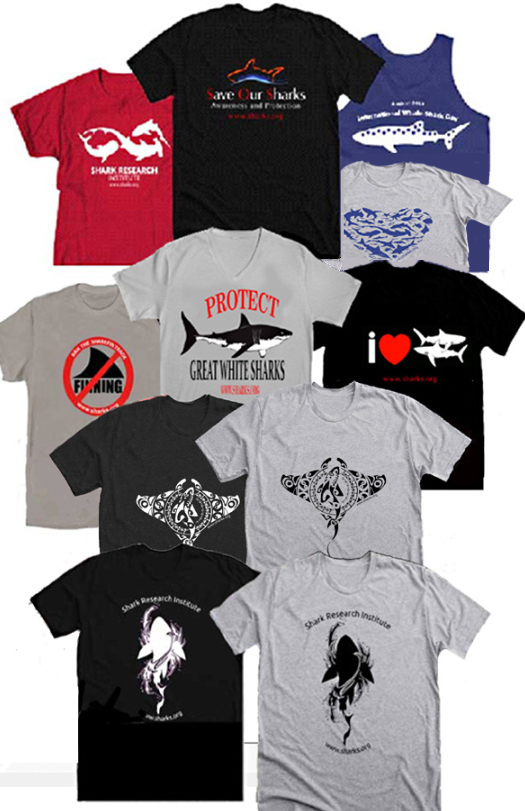
Amazon.com is offering an opportunity to generate donations to the Shark Research Institute at no extra cost to you. Simply start your shopping at smile.amazon.com/ch/22-3110087, confirm "Shark Research Institute, Inc." as your charity of choice, and Amazon will make a donation to our organization.
You may join or renew your membership in the Shark Research Institute, or make a donation of any size at https://www.sharks.org/donate
Note: All donations are tax-deductible from U.S. federal income taxes as
charitable donations and help fund our field research, advocacy and education programs.
| |
Please share this free weekly newsletter with your friends and family to help grow our audience. All they need to do to receive the newsletter is simply sign up on our website’s home page (https:www.sharks.org)
We all have a lot of work ahead to protect sharks and the ocean,
and combat climate change while there is still time.
| | | | | |