A Roundup of Recent Ulster County Business-Related News, Views, and More
September 30th, 2026
| |
A Message from Ulster Strong: Seat at the Table, Focused on Results
Dear Ulster Strong Members & Community Partners,
For months, we’ve pushed for local government to consult directly with the business owners driving our local economy. We're seeing real progress. Following our partnership with the County Legislature on a series of listening sessions for businesses, including tonight's session in Ellenville, the County Executive has committed to a series of "mini-summits" to allow deeper, focused engagement among partners in business, education, government, and community-based organizations.
Join Us and Make Your Voice Heard:
Pulling up a chair to these meetings is an important step forward, but dialogue isn't the final destination. Success for us means results, not just talk: more attention to the challenges our businesses face and more focused action to support their success.
It's encouraging, too, that the County's interim director of economic develompent has been tapped to fill the position on a permanent basis. We congratulate Leslie Wellington on her appointment and look forward to working with her and her team to keep the focus squarely on practical, pro-growth outcomes for Ulster County.
Thank you for staying active, keeping us sharp, and showing up to push for real progress.
Warmly,
The Ulster Strong Team
Smart Growth. Sustainable Future.
Ready to help us build a stronger Ulster? Click here to learn more about membership opportunities and add your voice to the conversation today.
REMEMBER: you can always find this and other recent Ulster Strong Business Bulletins on our website at ulsterstrong.com
| | |
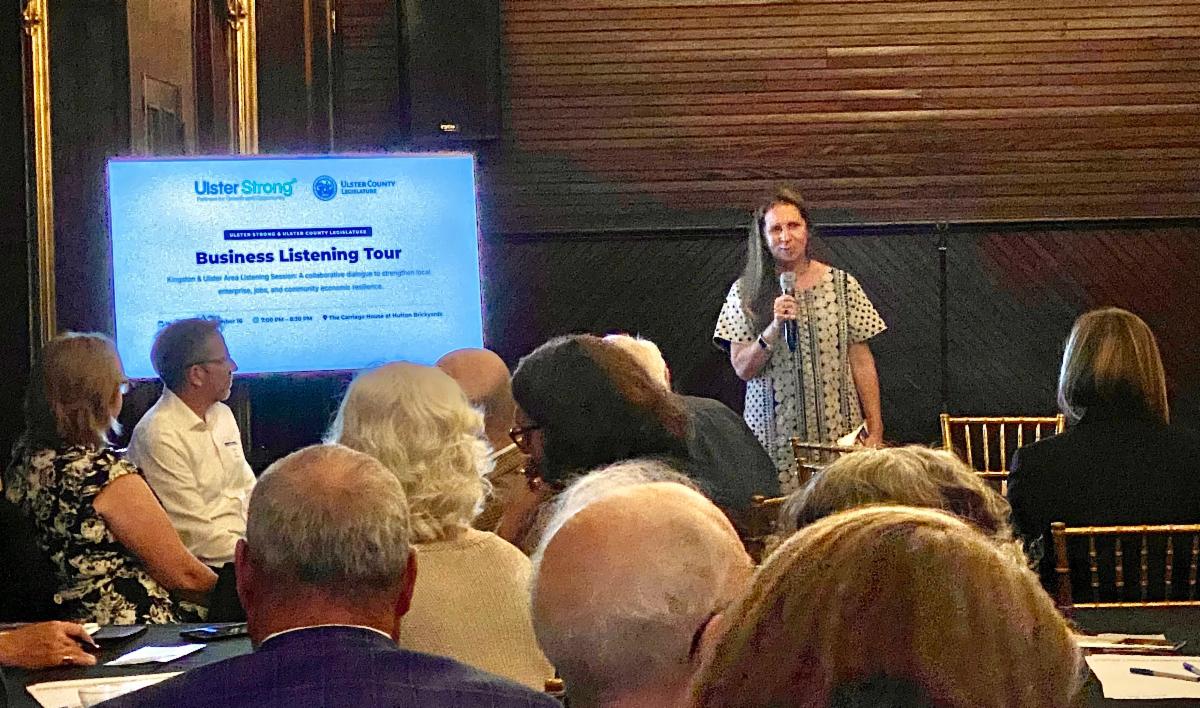
(Pictured: Newly appointed Ulster County Director of Economic Development Leslie Wellington addresses attendees of the first Business Listening Session hosted by Ulster Strong and Ulster County Legislature at the Hutton Brickyards Riverfront Hotel)
| | |
This newsletter includes the following:
Esopus Welcomes Development, Confronts Infrastructure Challenges
A Future for Blue Chip Farms: Preserving a Legacy While Planning for Tomorrow
Central Hudson Programs Help Fuel Smart Growth, Local Investment, and Manufacturing Jobs
Introducing Greater Hudson Valley - A New Business Platform
Saugerties Area Business Listening Session
Upcoming Ulster Business Events
| | |
Esopus Welcomes Development, Confronts Infrastructure Challenges
by Jesse Smith for Ulster Strong
| | |
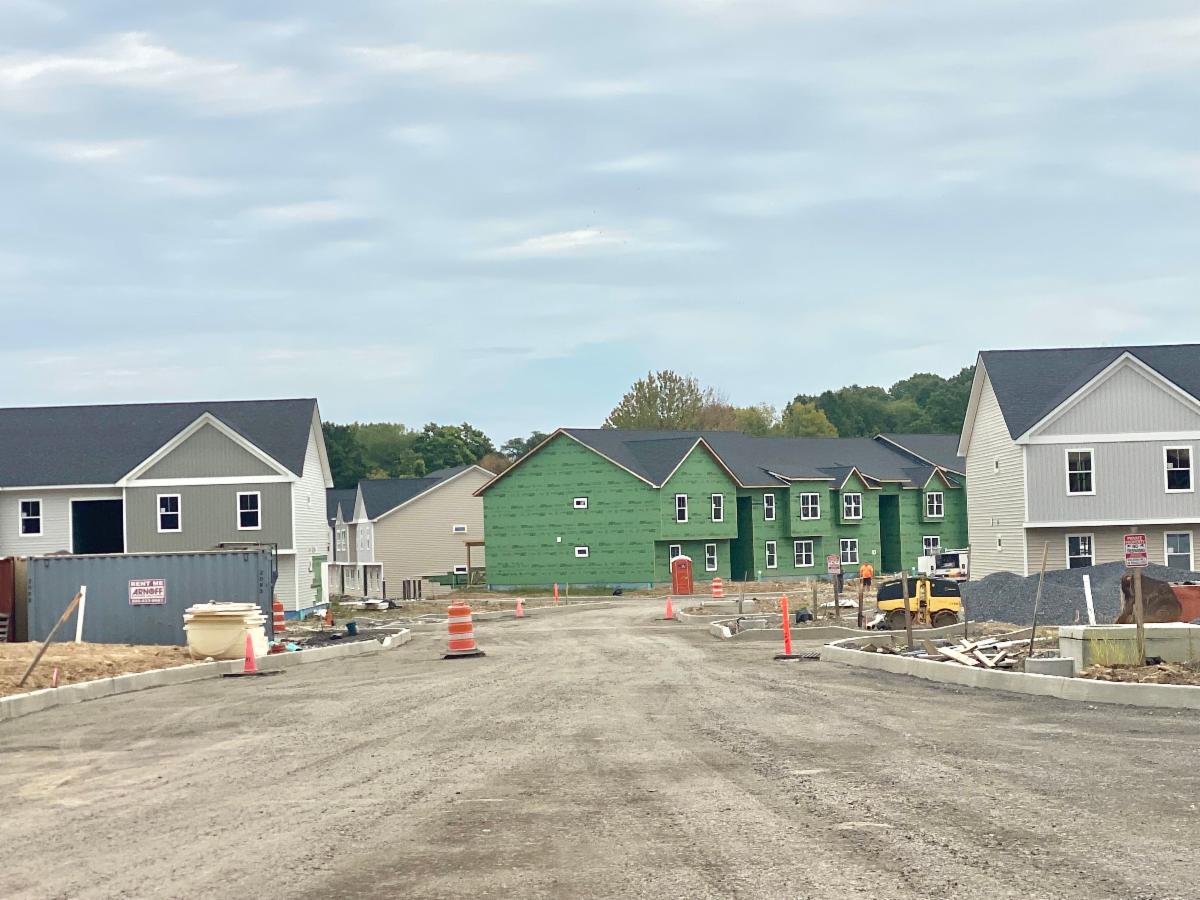
(Photo: 100-unit high-density apartment complex under construction on Mountainview Ave in Town of Esopus)
Nearly a decade after Esopus adopted a comprehensive plan, town officials say the vision is becoming reality with a wave of development that includes major hospitality venues and new residential construction in the exact areas where they were anticipated. But challenges remain, including a lull in infrastructure and grant funding that has left the town playing catch up to accommodate recent growth.
Known for its natural beauty since at least the 19th century when famed naturalist John Borroughs made his home there, Esopus had been well positioned to capitalize on the Hudson Valley’s post-pandemic tourism boom. Borrough’s legacy lives in the town’s five nature preserves, including one named for him. During the 19th and early 20th centuries the town also became a magnet for religious orders drawn there by its beauty and solitude. Orders like the Jesuits and church leaders like Mother Cabrini bought sprawling Gilded Age riverfront estates where they founded seminaries, convents orphanages and retreat centers.
The religious institutions’ presence had the unintended consequence of sparing the town’s Hudson River waterfront for industrialization and subsequent deindustrialization. While communities like neighboring Kingston spent years and millions of tax dollars cleaning up the detritus of industry to pivot towards a tourism-centered waterfront, Esopus’ frontage on the Hudson remained pristine. Now as the religious orders dwindle to a handful of aging members, they have begun either selling off parcels for private development or exploring new uses.
“If they see an opportunity that sort of fits in with their values and what they’re trying to do, they’re interested,” said Pecora “The issue is, some of them have to get approval straight from the top in Rome, which can take time.”
And, while the nature preserves and religious sites do not contribute to the town’s tax base, they create an environment that helps support businesses that do. Over the past decade a cluster of hospitality-centered businesses has emerged in the hamlet of West Park on the southern edge of Esopus. They include the Great Life Brewing Company, the Hudson House distillery and the Red Maple Winery. Most recently, the team behind the Emerson resort in Shandaken has invested $38 million to create the Esopus Barns, another luxury resort scheduled to open in 2027. The hamlet is also home to the Headless Horseman haunted hayride which has grown from a regional event to one of the nation’s top Halloween attractions drawing an average of 60,000 visitors and creating hundreds of jobs during its annual six-week season.
The town’s residential sector has also been growing with construction underway on a 100-unit high-density apartment complex, and a mixed use project that includes 16 units of townhouse style housing development in Port Ewen. The two projects, Pecora said had paid over $350,000 into the town’s recreation fund allowing for some much-needed upgrades in Esopus’ park system. Meanwhile the Bruderhof religious community, based in Esopus where it has a factory that produces playground equipment and adaptive gear for disabled adults and children, is poised to expand their footprint in town. By acquiring the former site of a microfilm company in Port Ewen, they plan to house a new manufacturing operation.
Deputy Town Supervisor Shannon Harris said that she has started to see positive signs of growth in town, including an uptick in enrollment in the New Paltz School District which serves West Park, and an increase in applications for building permits. Harris said the town’s location along the 9W corridor, with easy access to other thriving Ulster County communities, was helping to drive that growth.
“We have good connectivity with hubs like New Paltz and Highland where we’re seeing a lot of residential and some business development, and Kingston,” said Harris. “We’re this natural corridor in between those hubs with access to the Rondout Creek and everything that’s happening in Kingston, and on the southern end where there’s access to New Paltz - our hamlets are thriving.”
Despite the positive indicators, Pecora said that the town was struggling to overhaul and expand infrastructure to support the recent growth. The town recently created a new sewer district to serve the Lakeshore Villa’s apartment complex and is in the process of a $1.2 million sewer line replacement project in Port Ewen. Pecora has also put his department heads to work developing a five-year capital plan for priority projects. Harris, who was Town Supervisor in 2018, said that the town had managed to get $5.1 million in grants and other funding in conjunction with the adoption of the master plan. But since then, she said grants and member item funding from state and federal officials had largely dried up. Pecora said that since taking office he had made it a priority to cultivate relationships with elected officials like U.S. Rep. Pat Ryan, Senator Chuck Schumer and State Sen. Michelle Hinchey in an effort to secure funding for infrastructure.
“We’re under a lot of stress, costs are through the roof and there’s a lot of work to be done,” said Pecora. “I need millions and I am doing a great deal to advocate for that kind of funding.”
| |
A Future for Blue Chip Farms: Preserving a Legacy While Planning for Tomorrow
| | |
WALLKILL, N.Y. — For nearly six decades, Blue Chip Farms has been a large part of the landscape and community of Wallkill. Now, the farm’s future is at the center of an ambitious proposal that seeks to balance development with long-term preservation of the property and its agricultural legacy.
The proposal calls for a thoughtfully planned mix of uses, including approximately 500 acres of the farm’s roughly 700 acres to be developed as a resort, high-end homes and a golf course, while approximately 200 acres would be permanently protected and remain largely as is. The intent is to create a financially viable future for the property while ensuring that a substantial portion of the land is preserved and connected to its agricultural roots and remains a lasting part of the community.
Tom Grossman has been connected to Blue Chip Farms since 1980 and acquired the farm from the Kimelman family in 2000. The Kimelmans had owned the property since 1966. This means that in practical terms the farm has been under the stewardship of one family for about 60 years. Some employees are now part of the third generation of their families to work at the farm. Others have become deeply involved in the community, including a teacher in the local schools.
An Unsustainable Model
Behind the development proposal is a more fundamental question: How can the farm survive?
According to Grossman, operating the property as it exists has been uneconomical for years. Simply maintaining the property and the 55 miles of fence in a manner the community has come to expect is increasingly expensive at a time when material and labor costs have risen dramatically.
The challenge became even more immediate after Grossman suffered a stroke in 2023. His children do not intend to take over operation of the farm, prompting a realistic and difficult reassessment of what the future of the property could be.
For Grossman, the choices became increasingly limited.
Potential buyers willing to write an outright check and undertake the lengthy approval process were only from the type of people proposing the type of projects that would definitely not be appropriate or compatible with the community.
That left what he viewed as two basic choices: sell the property in its entirety, or take on the role of developer himself and pursue a carefully planned project that would allow a significant portion of the property to remain protected.
He chose the latter.
Development as a Means of Preservation
The concept behind the proposal is therefore somewhat counterintuitive: develop part of the farm in order to preserve another part of it.
Under the plan, over 200 acres would be permanently conserved. That protected land would be adjacent to a federal bird preserve, creating a larger area of contiguous protected habitat.
The project is also being evaluated through an extensive environmental review process. Following the town's scoping approval, preliminary studies examining water resources, noise, sewer capacity, birds and wildlife, and economic impacts have reportedly produced very encouraging results.
One area under consideration is the possibility of connecting to the town sewer system, and using currently unused capacity at the municipal treatment plant.
These studies are still part of an arduous process that will ultimately require review by the town and its planning authorities. The project remains subject to the scrutiny and approvals that accompany a development of this scale.
Grossman acknowledges that the approval process has been far more extensive, time-consuming and expensive than he anticipated when the project was conceived. The proposal requires the involvement of the planning board as well as numerous consultants and technical studies. What began as an effort to find a sustainable future for the property has become a multiyear undertaking.
In retrospect, Grossman says, he might have made different decisions had he understood five years ago just how exacting the process would become. Yet he also recognizes the reason for that scrutiny.
Large developments can have lasting effects on a community's water, roads, wildlife, infrastructure, economy and quality of life. Thorough review is intended to ensure those consequences are understood before decisions are made.
As frustrating and expensive as the process can be in the short term, Grossman believes that level of review ultimately serves and protects the interests of everyone involved.
Preserving a Legacy
The future of Blue Chip Farms raises a broader question facing many longstanding farms and large rural properties across the Hudson Valley: What happens when the economics of traditional agriculture no longer support the land, but the owners still want to preserve its character and legacy?
For Blue Chip Farms, the answer being proposed is neither simply to maintain the status quo nor to sell the entire property for development.
Instead, the proposal seeks to use carefully planned development to provide the financial foundation for permanent conservation, while maintaining a connection to the farm's history and contributing meaningfully to the town’s long-term economic vitality and tax base.
Whether that vision ultimately becomes reality will be determined through the continuing environmental and planning review process.
For a farm that has been part of the Wallkill community since the 1960s, however, the goal is clear: secure a future that honors its past while ensuring the land and the community built around can continue for generations to come.
| | |
Central Hudson Programs Help Fuel Smart Growth, Local Investment, and Manufacturing Jobs
(provided by Central Hudson)
| | |
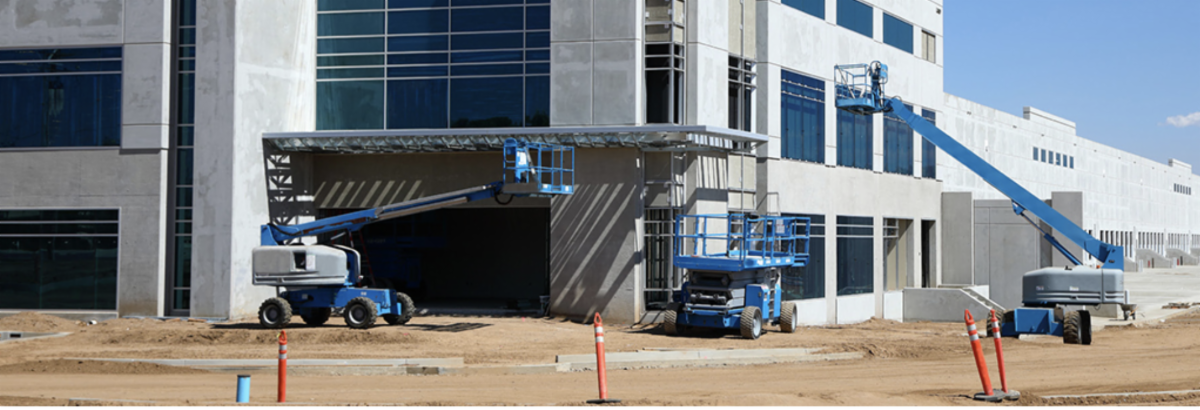
Manufacturing remains a cornerstone of the Hudson Valley economy, providing high-quality jobs, driving innovation, and strengthening local tax bases. To help manufacturers expand, modernize, and remain competitive, Central Hudson Gas & Electric Corporation offers a suite of economic development grant programs specifically designed to support industrial investment across its service territory. Together, these programs provide targeted assistance for site development, operational improvements, and business expansion, helping communities attract and retain manufacturing employers. [cenhud.com]
One of the most impactful offerings is the Infrastructure for Manufacturers Program, which is designed to accelerate the development of former manufacturing properties and undeveloped sites. Many communities have industrial parcels with strong redevelopment potential but face infrastructure challenges that can delay investment. Through this program, manufacturers and developers may receive grants of up to $200,000 for utility infrastructure improvements, including trenching and utility extensions. In addition, grants of up to $100,000 are available for redevelopment activities such as demolition, rehabilitation, reconstruction, and water or sewer improvements at vacant or significantly underutilized industrial properties. By helping offset site preparation costs, the program can make industrial locations more attractive for new investment and job creation.
For existing manufacturers looking to improve efficiency and competitiveness, the Manufacturing Productivity Program provides support for process improvement initiatives. In today’s global marketplace, manufacturers must continually seek ways to reduce costs, improve quality, and optimize production. The program offers matching grants of up to $15,000, or 40 percent of eligible project costs, to support initiatives such as Lean Manufacturing, workflow improvements, productivity enhancements, and market expansion efforts. Eligible projects may focus on increasing machine effectiveness, improving process flow, reducing lead times, enhancing product quality, or developing new customers and products. By encouraging continuous improvement, the program helps local companies strengthen operations while positioning themselves for long-term growth.
The third program, Expansion and Retention for Manufacturers, is designed to encourage significant capital investment within the region. Manufacturers making major investments in real estate, infrastructure, equipment, or energy-efficiency upgrades may qualify for grants ranging from $100,000 to $200,000, depending on the size of the investment. Projects involving investments greater than $500,000 can qualify for funding, with the highest grant level available for investments exceeding $2 million. The program aims to support companies that are expanding operations, retaining jobs, and reinforcing their long-term commitment to the Hudson Valley. By reducing the cost of major capital projects, the initiative helps manufacturers move forward with investments that might otherwise be delayed or scaled back.
Collectively, these programs represent a strategic investment in the manufacturing sector and the communities it serves. Whether a company is redeveloping an industrial site, implementing productivity improvements, or undertaking a major expansion project, Central Hudson’s economic development grants can provide meaningful financial support. By encouraging private-sector investment and helping manufacturers create and retain well-paying jobs, these initiatives contribute to a stronger, more resilient regional economy
| | |
Introducing Greater Hudson Valley - A New Business Platform
| | |
Dear Ulster Strong,
GoodBread focuses on expanding access to microloans for small businesses and building technology that improves lending and repayment. We are doing this in several parts of the country with mission-driven funders, business support organizations, and lending institutions, and it matters to me to do this work where I live too.
To bring that work here, I am helping evolve the nearly 40-year-old Hudson Valley Technology Development Center, a 501(c)(3), into a broader effort for small businesses called Greater Hudson Valley. The mission rests on two beliefs: that business can be a force for human flourishing and that small-business ownership should be within reach for more people. HVEDC, Hudson Valley Venture Hub, and Dutchess Community College are on the board, and we are adding coalition partners.
Greater Hudson Valley weaves together the organizations and resources already serving the region, and connects people through a person-to-person platform, a bit like a dating app for small business owners and the advisors and mentors who can help them. Alongside, we are forming capital: a microloan fund and, in time, equity- and royalty-based vehicles that can fill gaps in the available options. These will help capitalize small businesses, generate returns for investors, and sustain the organization.
We launch on Thursday, October 15, at the Senate Garage in Kingston. The full program is at greaterhv.com/launch. I would love for you to be there.
Sincerely,
Noa
________________________
Noa Simons
CEO & Co-founder, GoodBread
Greater Hudson Valley Board Chair
| |
Upcoming
Business Listening Sessions
| | |
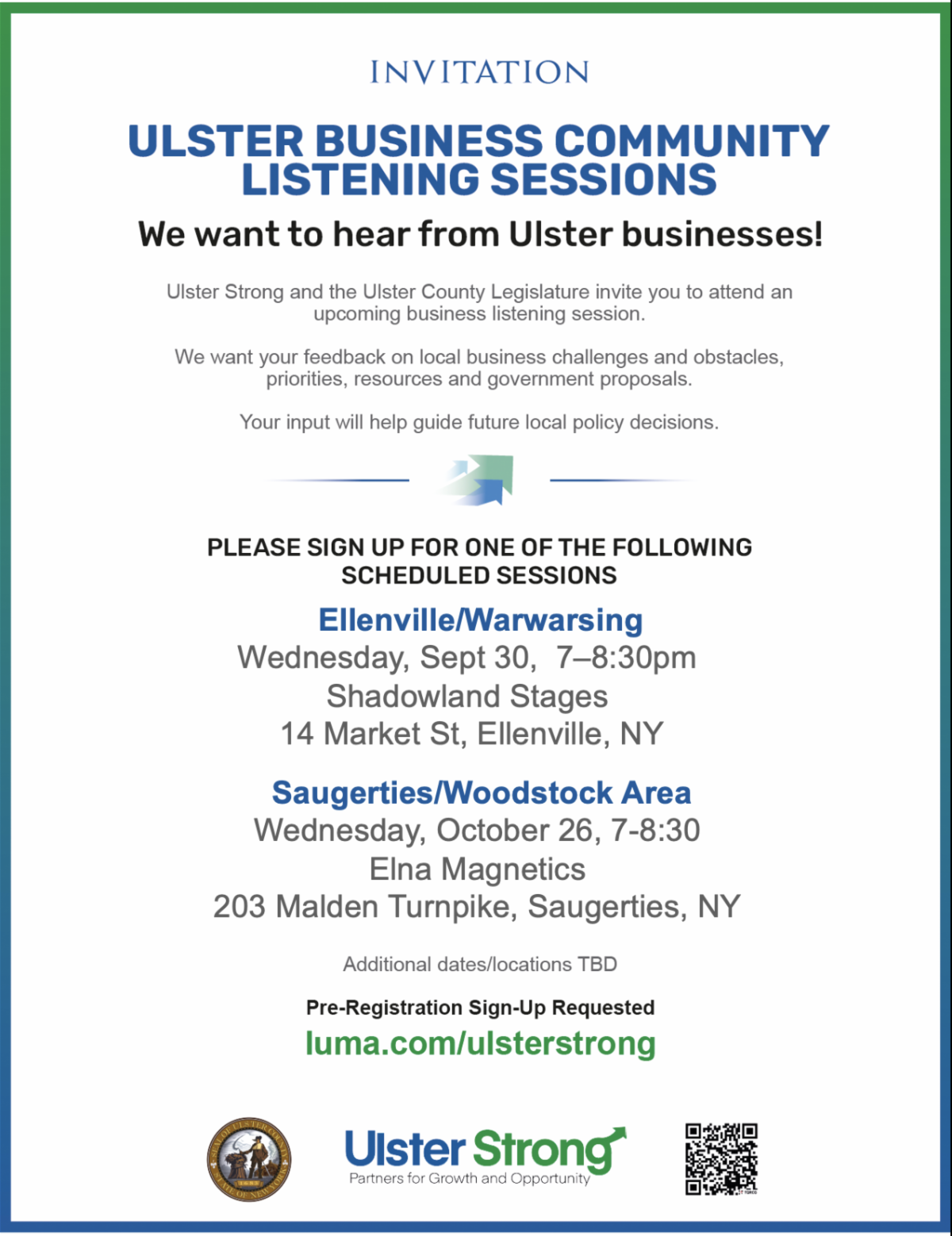
The Ulster County Legislature and Ulster Strong have partnered to launch a series of regional business listening sessions across Ulster County. The interactive forums are designed to strengthen connections between county government and local employers, gather direct feedback on key operational challenges and legislative proposals, and raise awareness of vital county programs and community resources.
Business owners and representatives from sectors of all sizes are invited to attend. Each session will follow identical programming, offering participants space to share experiences and learn from regional peers.
Business Listening Sessions
Ellenville/Warwarsing
WEDNESDAY, September 30, 7–8:30pm
Shadowland Stages
157 Canal St, Ellenville, NY
Saugerties/Woodstock
WEDNESDAY October 26th at 7-8:30pm
At: Elna Magnetics, 203 Malden turnpike, Saugerties, NY
Sessions to Focus on Business Feedback About County Policies and Ways the County Can Support Economic Growth
We want to hear from you!
To register:
https://luma.com/ulsterstrong
| | | |
Support local independent journalism - subscribe to a local news outlet today
Supporting local journalism is essential for maintaining transparent local government, fostering community identity, and strengthening democracy. Local outlets hold officials accountable, provide crucial information on schools and businesses, and encourage civic engagement, acting as a vital, verifiable counterweight to polarized national media.
| | | |
Ulster Strong is a non-profit advocating a pro-growth agenda that balances good jobs and investment opportunities with the environment and sustainability.
ULSTER STRONG SUPPORTS
Adding good-paying jobs;
Diversifying the local economy so it’s more resilient;
Encouraging new investment;
Balancing the environment with local economic needs;
Growing local tax base to support community services including schools, infrastructure and emergency services;
Updating planning and development procedures to be more
transparent and timely.
MEMBERSHIP INQUIRIES
| | Our Company | Contact Us | FAQs | Privacy Policy |
| | | |