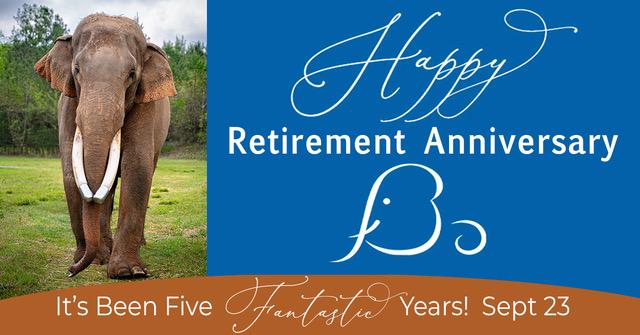
Bo’s Fifth Anniversary

Bo, our magnificent founding resident, is celebrating five years of freedom. Curious and easygoing, his response to discovering autonomy, being joined by two adoring ladies, and learning to embrace a life of free choice has been truly rewarding to witness.


Delightful is not often a word used to describe such a huge animal, but Bo embodies it. Neither submissive nor domineering, he exudes a calm, trusting confidence.


When a caregiver arrives with his supplements, Bo chirps his appreciation, making our hearts swell. If we are five minutes late, he bellows to announce his location, knowing he can be difficult to find.


The only time Bo displays any annoyance is when the ever-present egrets crowd him. He shoos them away with his trunk, fully aware that shortly after scattering, they will return once again.


Before coming to Elephant Refuge North America (ERNA), Bo was deprived of the opportunity to experience a natural life. He learned quickly, but he had to learn some of the most basic things from scratch. Even seeking the shade of a tree when he became overheated was unfamiliar.


It soon became clear that Bo’s world had been seriously limited, excluding many of the important things wild elephants learn as they grow. The world he entered at ERNA was strikingly different from the sterile life he had known. But Bo was smart, and it didn’t take long for him to catch on.


Rehabilitation meant guiding Bo into the shade when he became overheated, walking with him through pastures and woods, and introducing him to the extraordinary variety of living vegetation available. Mundi taught him how to mud bathe and expertly mix fresh water with loose mineral salt to maintain essential mineral levels. Tarra provided motherly attention much like the captive “ele-aunties” Bo had grown up with.


Following Tarra and Mundi’s example, Bo quickly became proficient at browsing, grazing, mud bathing, and knowing when to seek shelter from the sun. What once had to be taught is now simply part of who he is.


Today, Bo is a self-sufficient, fully competent member of his family, deeply loved by all. He has discovered the freedom to make choices, form relationships, explore his environment, and simply be Bo.


We are grateful to each of you for being on this important journey with him. Your support has enabled Bo to experience true autonomy and, perhaps most importantly, to be appreciated for the magnificent individual he is.


From the Habitat

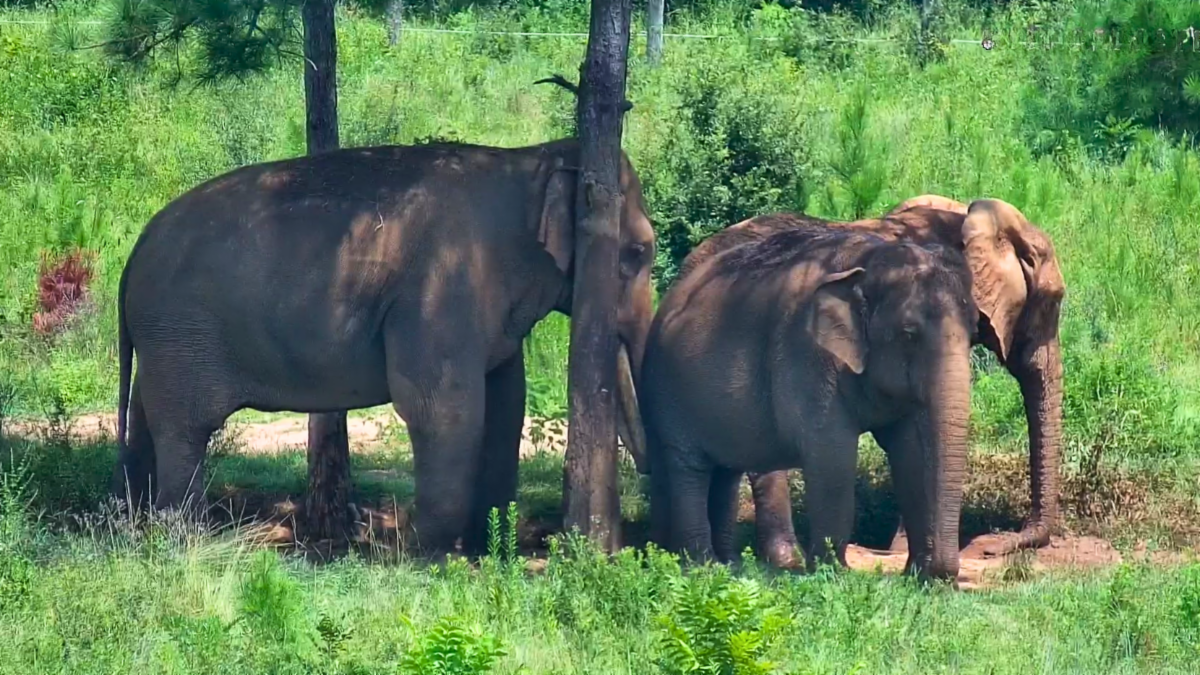
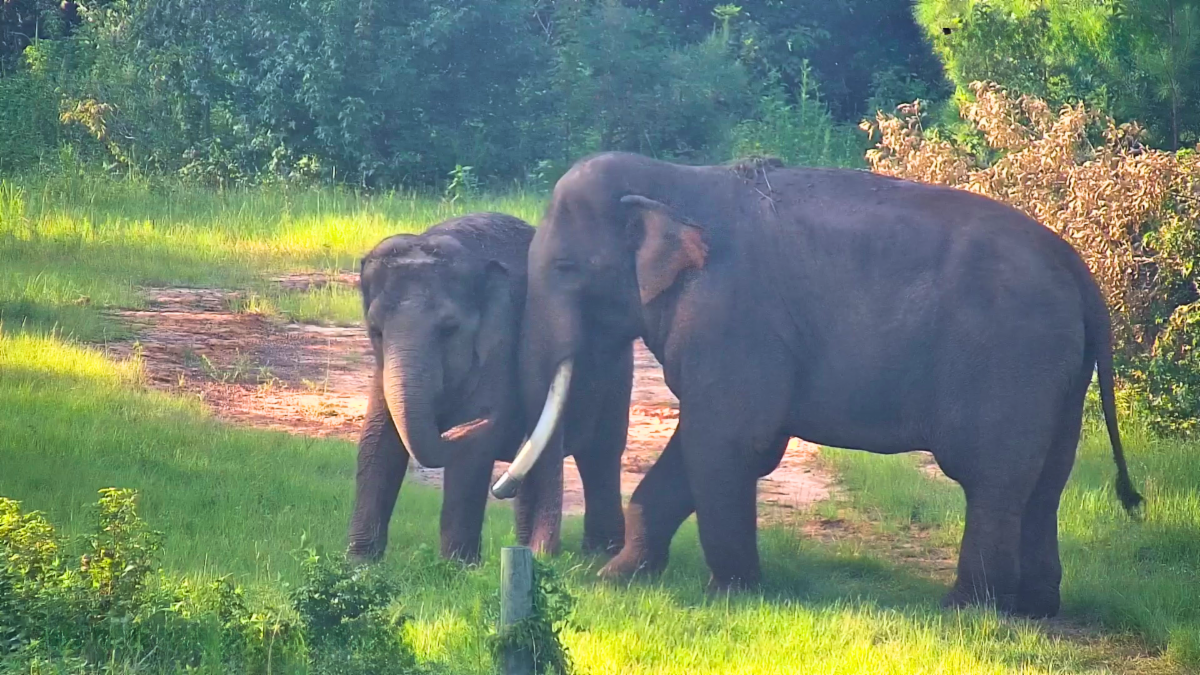
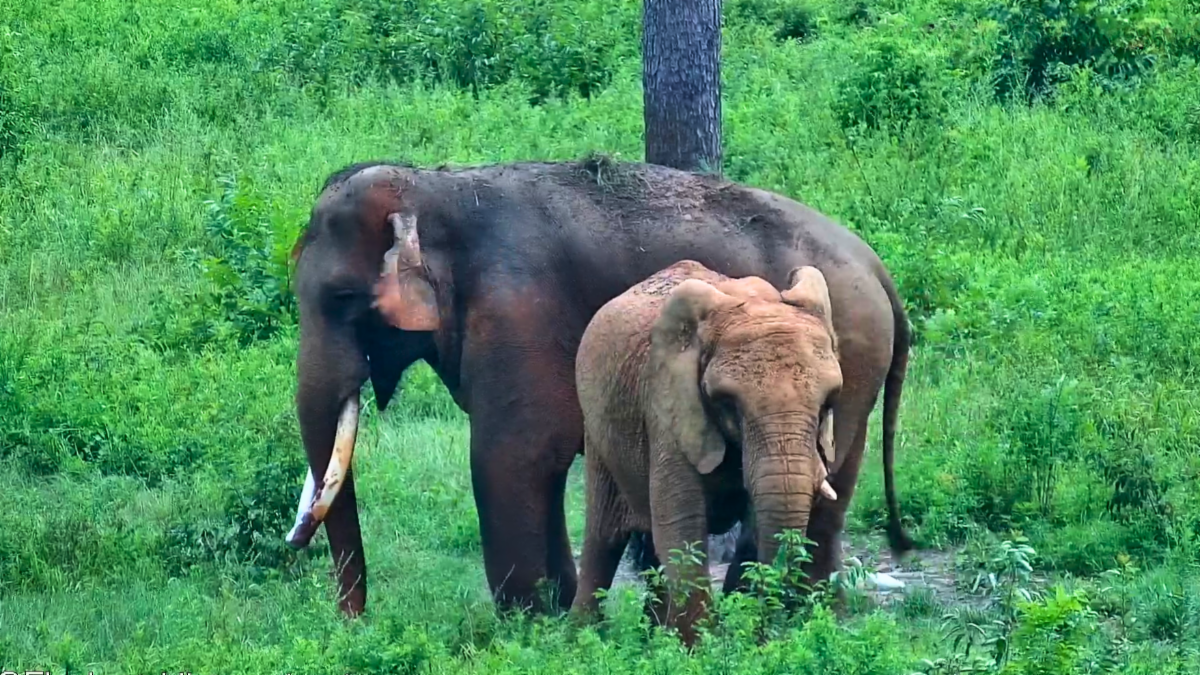
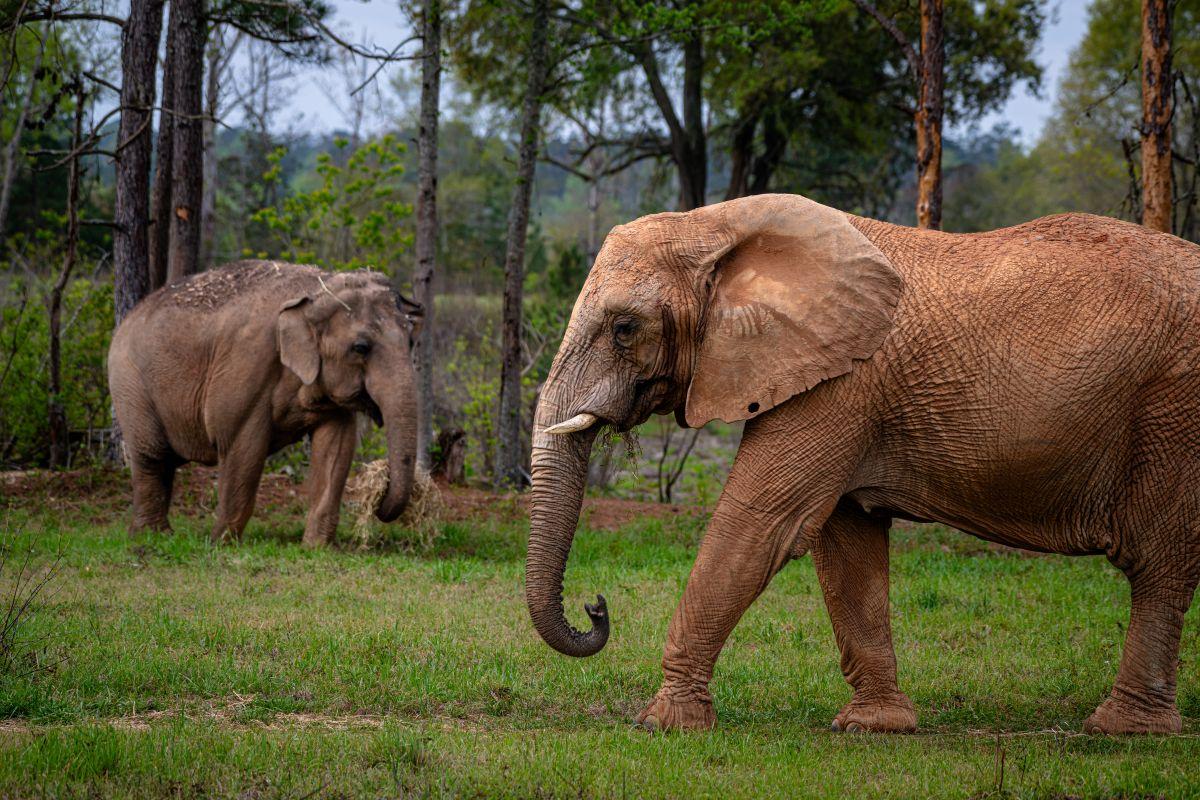
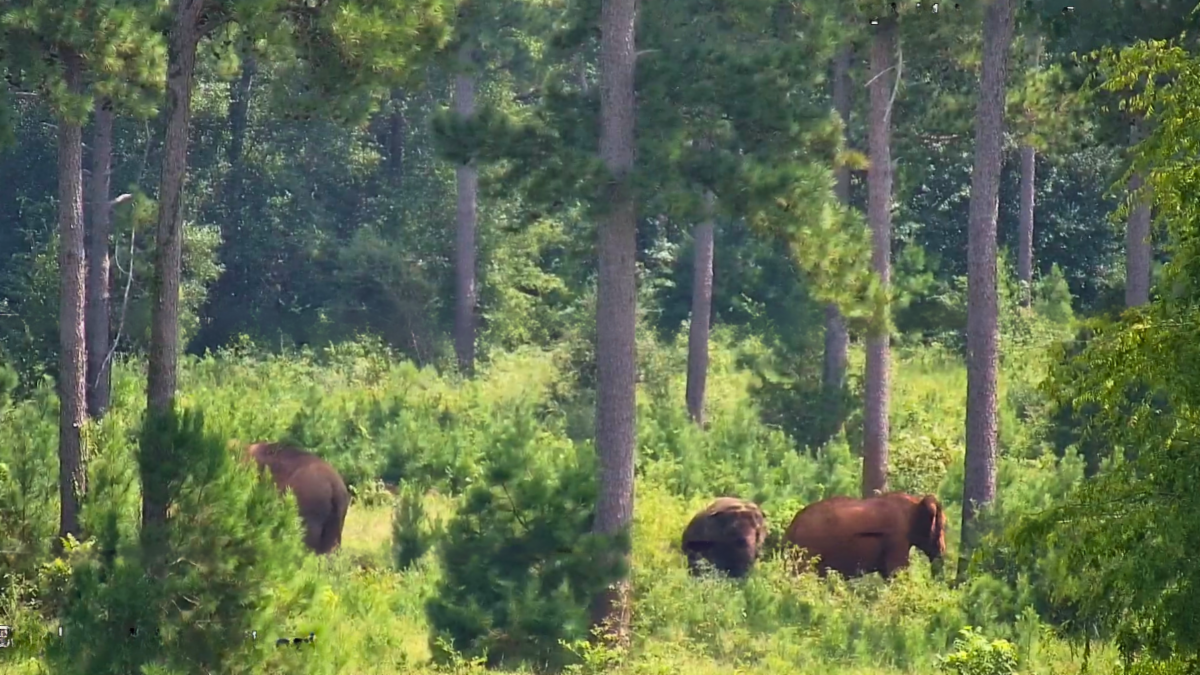
Life at ERNA unfolds at the elephants’ own pace. These recent scenes capture a few of the everyday choices and activities that fill their days.

Midday naps during the hot season are common

Tarra and Bo share a precious moment

Bo and Mundi are constant companions

Mundi lets Tarra claim a flake of hay

 All three grazing together is glorious


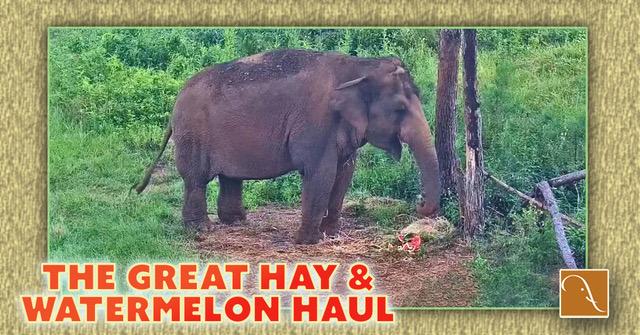
Our elephants have two BIG needs right now: High-quality hay and watermelons!


We’re raising funds for a semi-truckload of Timothy hay ($12,325) and a truckload of watermelons ($200 per bulk bin of 50) to keep our elephants healthy, hydrated, and well-fed.


Fill the Hay Truck


Timothy hay is an important part of our elephants’ winter diet, providing the stemmy, high-fiber forage they need. Because it doesn’t grow in our climate, we bring it in to best meet their nutritional needs.


  • $25 — A little hay in the truck
  • $100 — A bigger bale of help
  • $500 — A serious stack of Timothy
  • $1,000 — A big piece of the hay haul


Fill the Watermelon Supply


Watermelons are more than a treat—they provide hydration, vitamins, minerals, and antioxidants.


  • $10 — 2–3 watermelons
  • $25 — About 6 watermelons
  • $50 — About 12 watermelons
  • $200 — About 50 watermelons


Whether you buy a few watermelons or fill a truck, every gift makes a difference.


Thank you for helping us give our elephants the food and care they need to thrive.


International Elephant News

Elephant Deaths in Amboseli

By Keith Lindsay, PhD

EAI Advisory Council Member

Collaborating Researcher, Amboseli Trust for Elephants

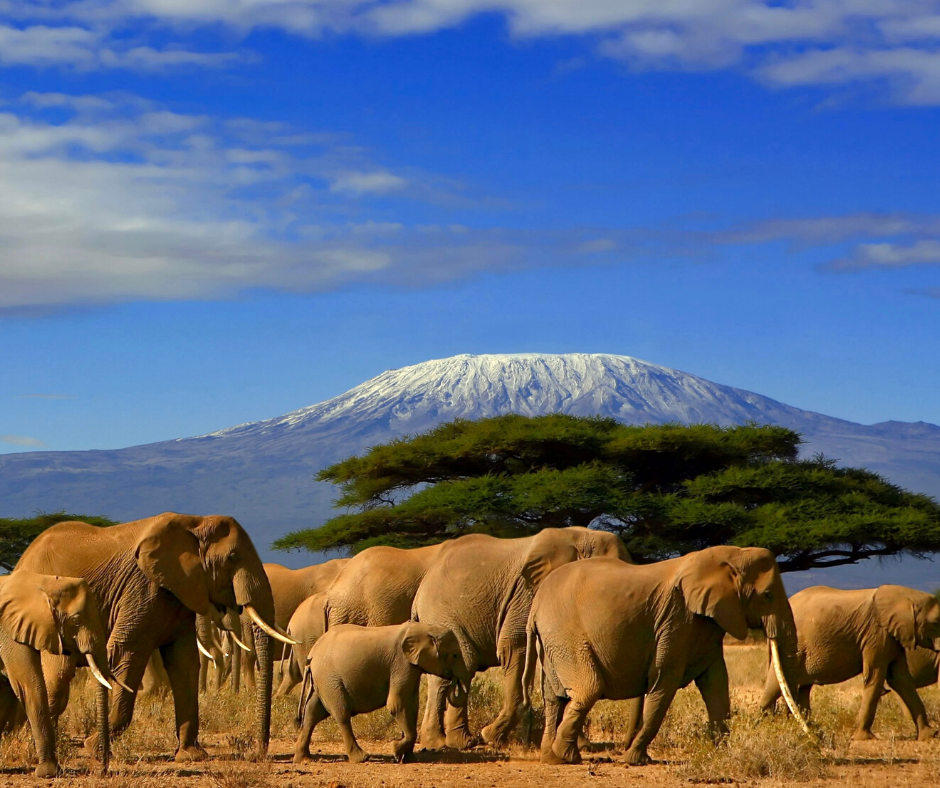
Over the past few months, there has been a string of worrying, unexplained elephant deaths in the Amboseli Ecosystem. The first death was recorded on June 25, 2026, and since then the Kenya Wildlife Service (KWS) has reported at least 20 deaths in Amboseli National Park and surrounding areas. The rate of mortality, mostly involving young adult females or calves, has declined substantially since June/July, but a few new cases have continued to appear.


KWS has undertaken toxicology testing on multiple carcasses, detecting cyanide in the samples, and tentatively concluding that this could be a cause of death. Further testing will determine if the concentrations were high enough to be lethal. While no farmers in Kenya use cyanide as a pesticide, a number of local plant species naturally produce the toxin, so it may be present in herbivores and older elephants at non-lethal levels. Other possibilities, including bacterial or viral pathogens, are being considered.


KWS recently announced that four people were detained following the recovery of potentially toxic substances. These individuals were questioned and released without charge and, pending further testing, authorities have emphasized that it is premature to claim criminal responsibility for the elephants’ deaths.


While there is currently much speculation, particularly online, there is no clear evidence of the reason behind the mortality, whether human or otherwise. NGOs based in Amboseli are working hard with KWS and community partners in the region to solve the mystery and to ensure that Amboseli remains home to one of Africa’s best-protected elephant populations. 


Remembering Ronaldo

By Carol Buckley


Waking to the news that Ronaldo had been killed brought a flood of memories of my time in Nepal.


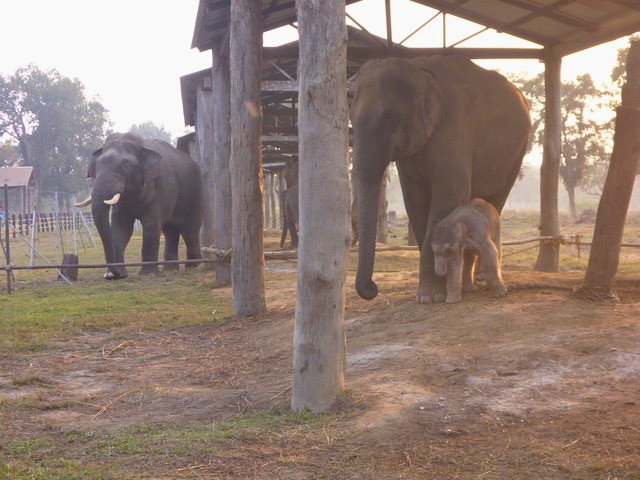
This magnificent wild male elephant was a frequent visitor to the government “breeding center,” where females were chained under sheds for tourists to view and visiting wild bulls to breed with.


While filming UNCHAINED at the center, an enormous figure came into view. The crowd began to chatter in raised voices. I assumed they recognized that this elephant emerging from the National Park was wild. If they did, it did nothing to change their behavior. At one point, I cautioned a woman who was approaching Ronaldo for a selfie, saying, “Excuse me, ma’am, he is wild.” Her confused look meant either that she didn’t speak English or that she didn’t understand the significance of my warning.


During my time working in Nepal, Ronaldo reigned. He displayed great patience with the crowds of boisterous tourists who visited the breeding center, gawking at the chained mothers and calves. The tourists appeared oblivious to the danger posed by a wild bull elephant. Ronaldo showed more sense than anyone, ignoring the dangerous antics of the unsupervised crowds as he went from shed to shed, scenting each female to determine if she was cycling.


When someone approached the flimsy safety rail, Ronaldo would turn his head, fixing the intruder with a piercing stare so powerful that they stopped in their tracks. He never showed overt aggression toward humans or toward the chained females he had known his entire life.


He was the father of all the calves at the center, and they knew him well. Resembling a family reunion, the unchained calves would run to him, circle his legs, crawl under his belly, touch his tusks, and reach up to his mouth, expressing their affection. Ronaldo was gentle with each one.


As the crowd polluted the air with ear-piercing chatter, Ronaldo would return to the forest, unhurried, seemingly undeterred by the harassment.


I wondered why the mahouts, whose responsibility it was to care for these elephants, did not correct the tourists. I soon learned that cultural norms prevented them from intervening. All they were allowed to do was stand by and allow the tourists to do whatever they wanted, including circumventing the safety rail to pet a chained elephant. It was infuriating to observe the elephants being disrespected rather than seeing the tourists educated about their behavior.


Ronaldo was wise. He held the knowledge gained from decades of living in proximity to humans. He was killed on September 19th, in his home, Chitwan National Park. It is a powerful gift to have known him. His absence will be felt deeply.


Bo's Arrival at ERNA

Five years ago, Bo took his first steps into a new life at Elephant Refuge North America. Revisit his unforgettable first day at the Refuge.


Click the image above to watch!

As always, we greatly appreciate your interest, commitment and help. You make our work for elephants possible. Thank you!

Follow EAI!
Facebook  X  Instagram  YouTube  Pinterest
Support EAI Every Time You Shop
 
One World... One Elephant at a Time 
Elephant Aid International | elephantaidinternational.org