You are receiving this because you signed up for Traffic Stats at banff.ca/Newsletter

You may need to "click to download pictures" to see graphs.

September Long Weekend Traffic Volume


The Town of Banff Traffic Management Team would like to present the following vehicle volume comparison charts and graphs for September long weekend.


The below compares the September 4 to 7, 2026 long weekend with the comparable long weekend in 2019 and 2025.


All volume counts represent two-way traffic. For detailed definitions on each section of this report please see the end of this email.


Main Entrances

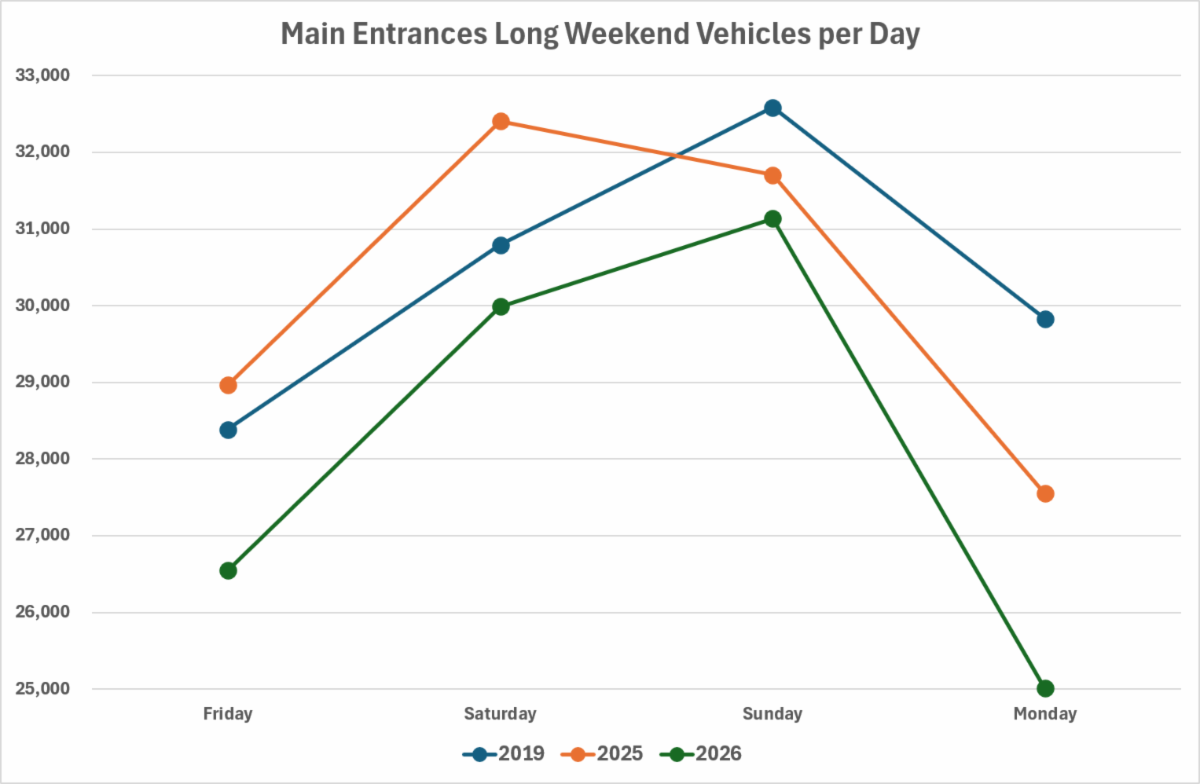
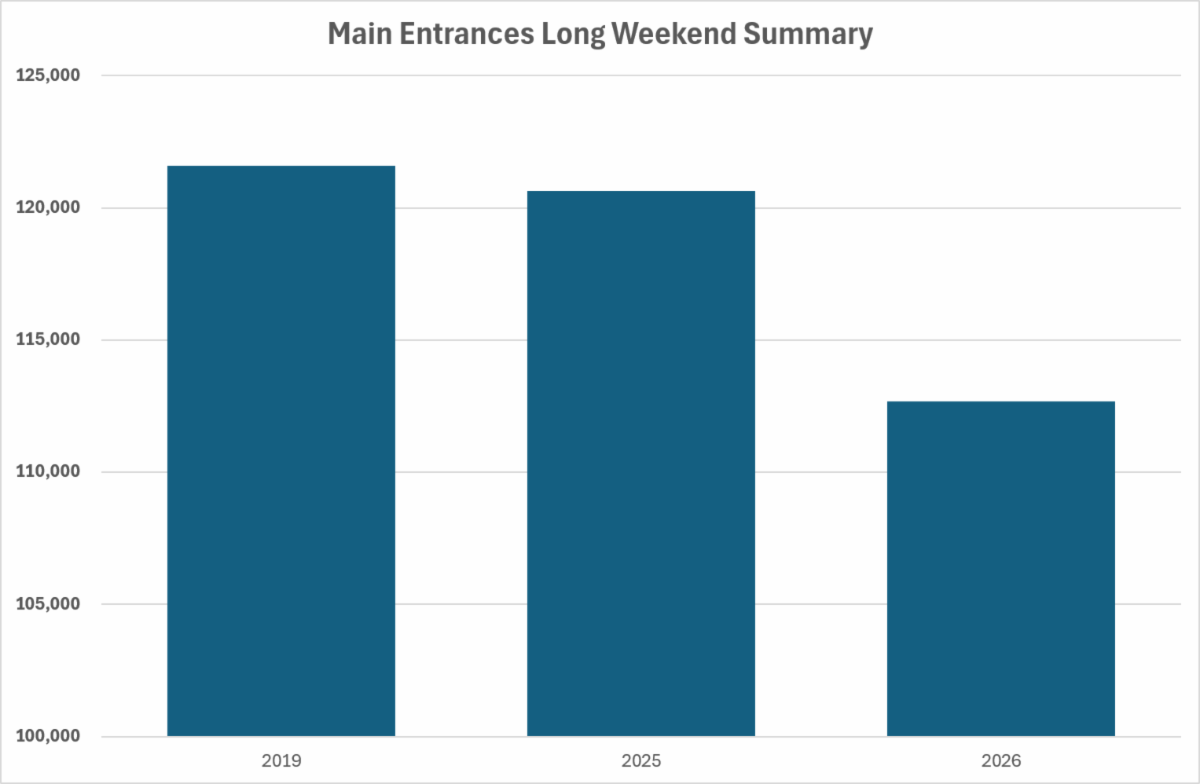
Vehicle counters at the two main entrances to the Town of Banff recorded a total of 112,686 vehicles over the 2026 September long weekend (Friday to Monday), which is a 7% decrease when compared to 2025, and a decrease of 7% from pre-pandemic 2019.


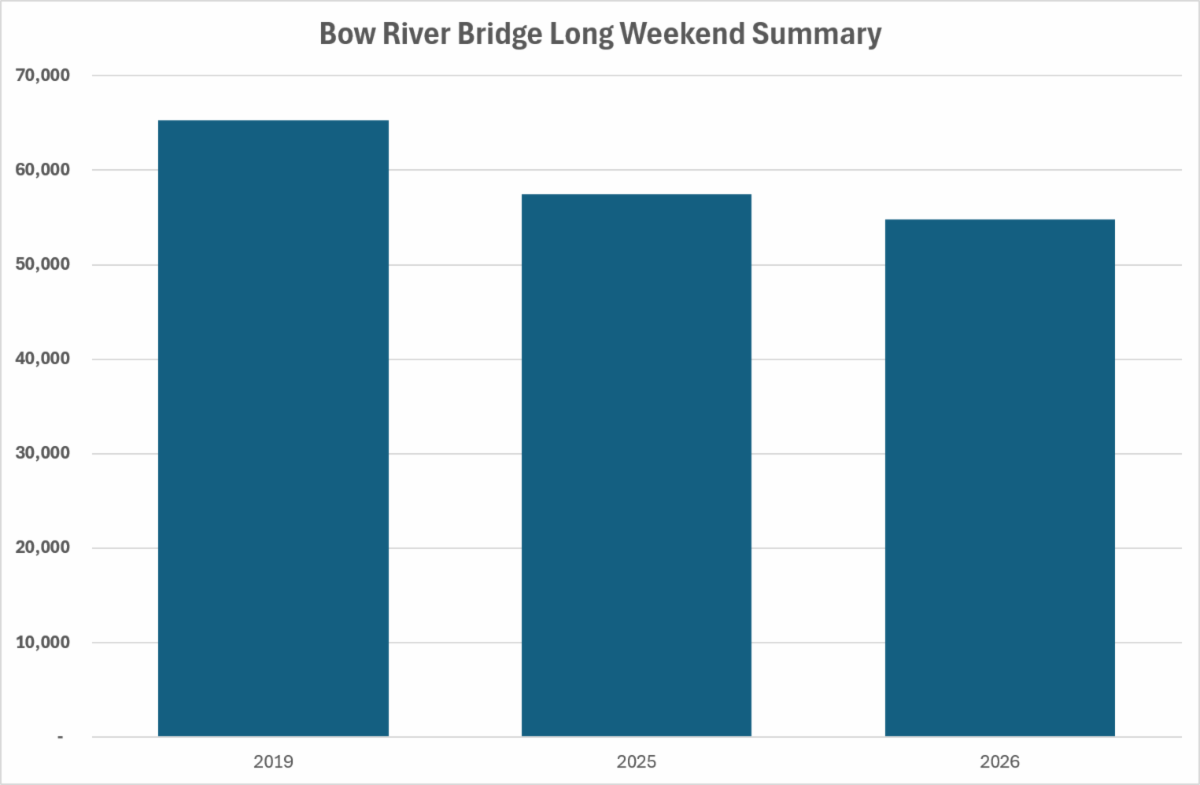
The line chart below shows daily vehicle counts at Banff’s main entrances from September 4 to 7 for 2019, 2025 and 2026. The bar chart compares the total number of vehicles counted over the same four-day period across the three years.

Bow River Bridge

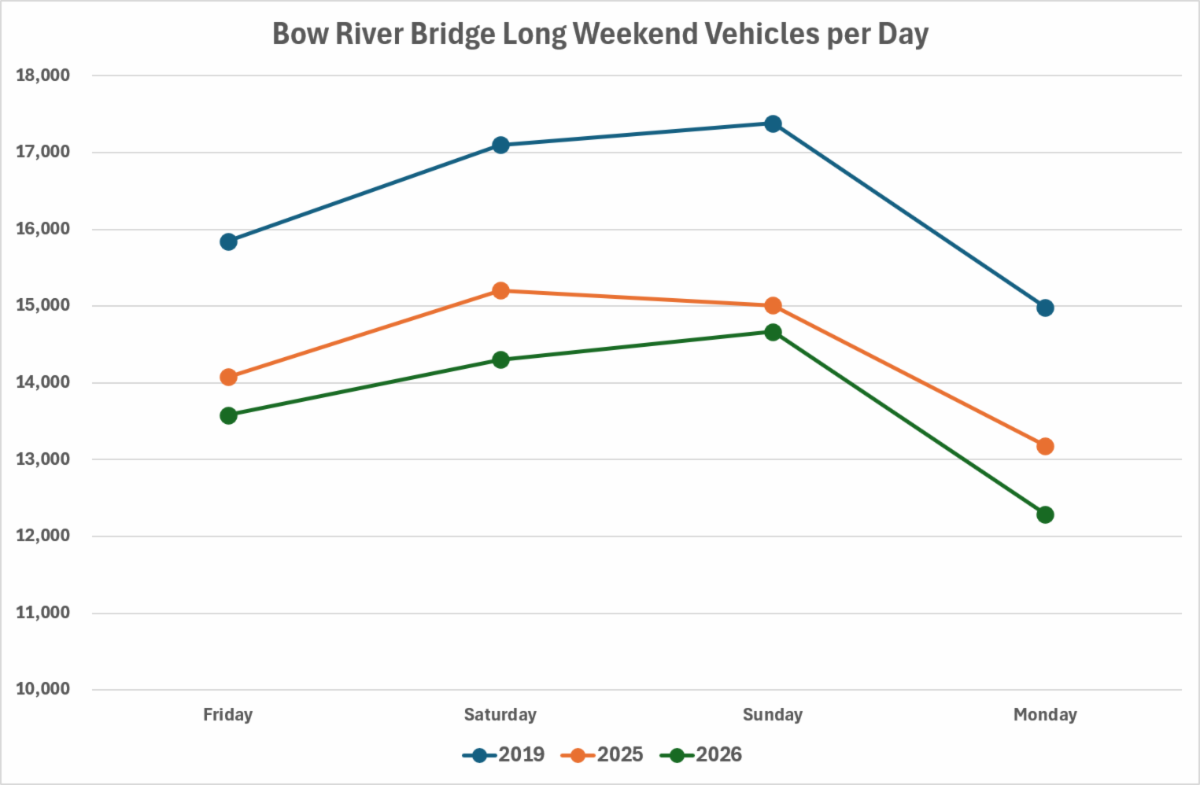
Traffic counts for the Bow River Bridge at Banff Avenue recorded 54,835 over the 2026 September long weekend, a decrease of 5% from 2025 and decrease of 16% from 2019.

Mountain Avenue

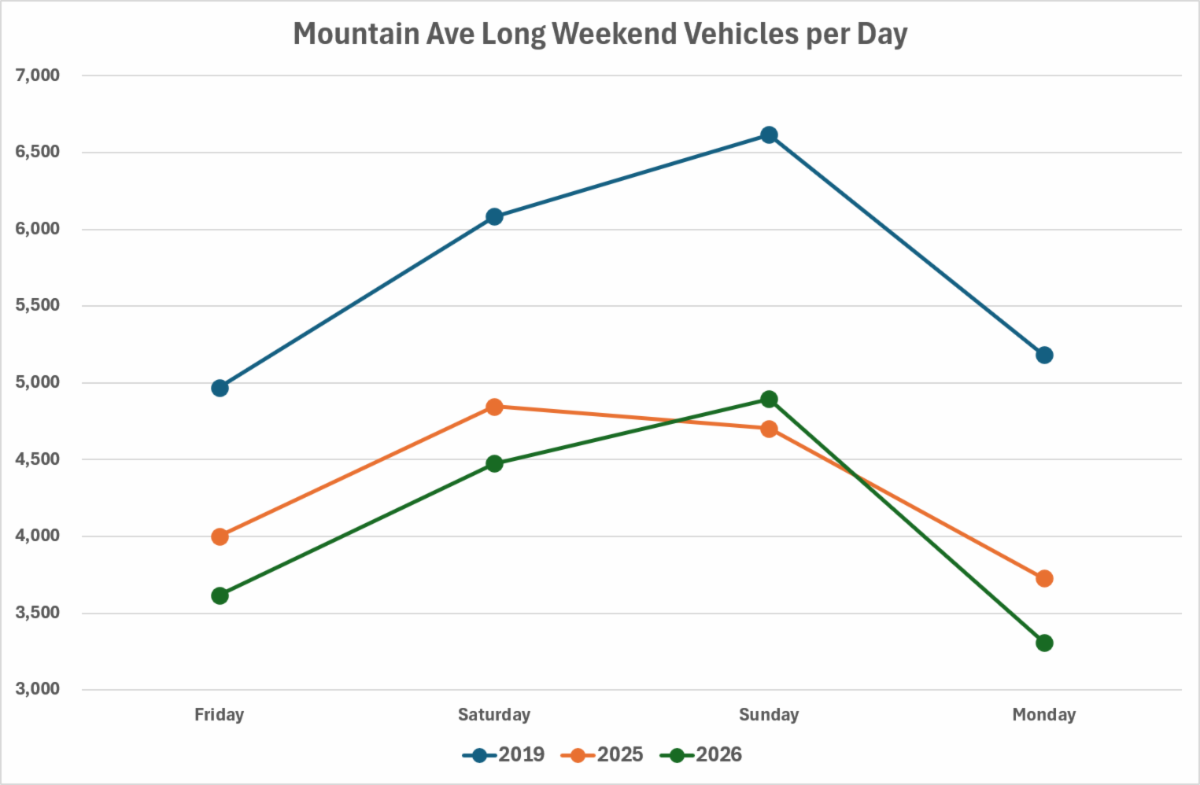
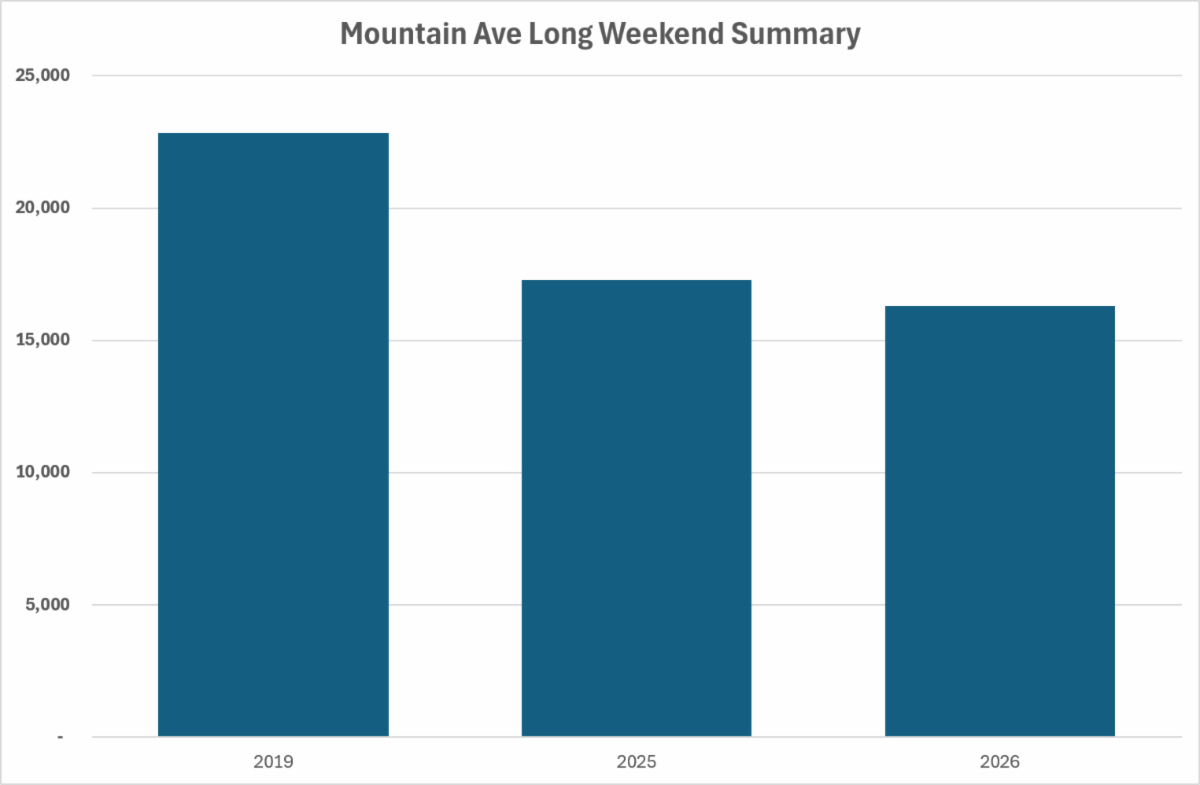
Traffic recorded on Mountain Avenue between the town and the Sulphur parking lot showed 16,297 vehicles over the long weekend, a decrease of 6% from 2025 and decrease of 27% from 2019.

Roam Ridership

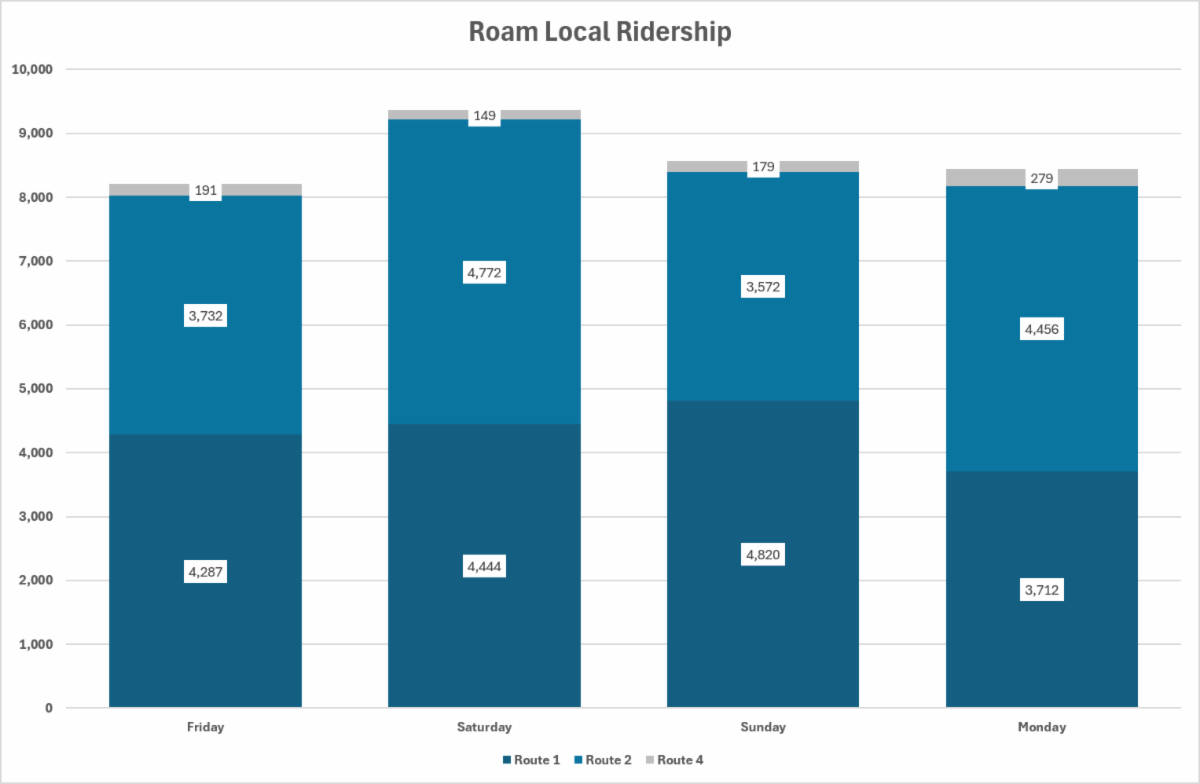
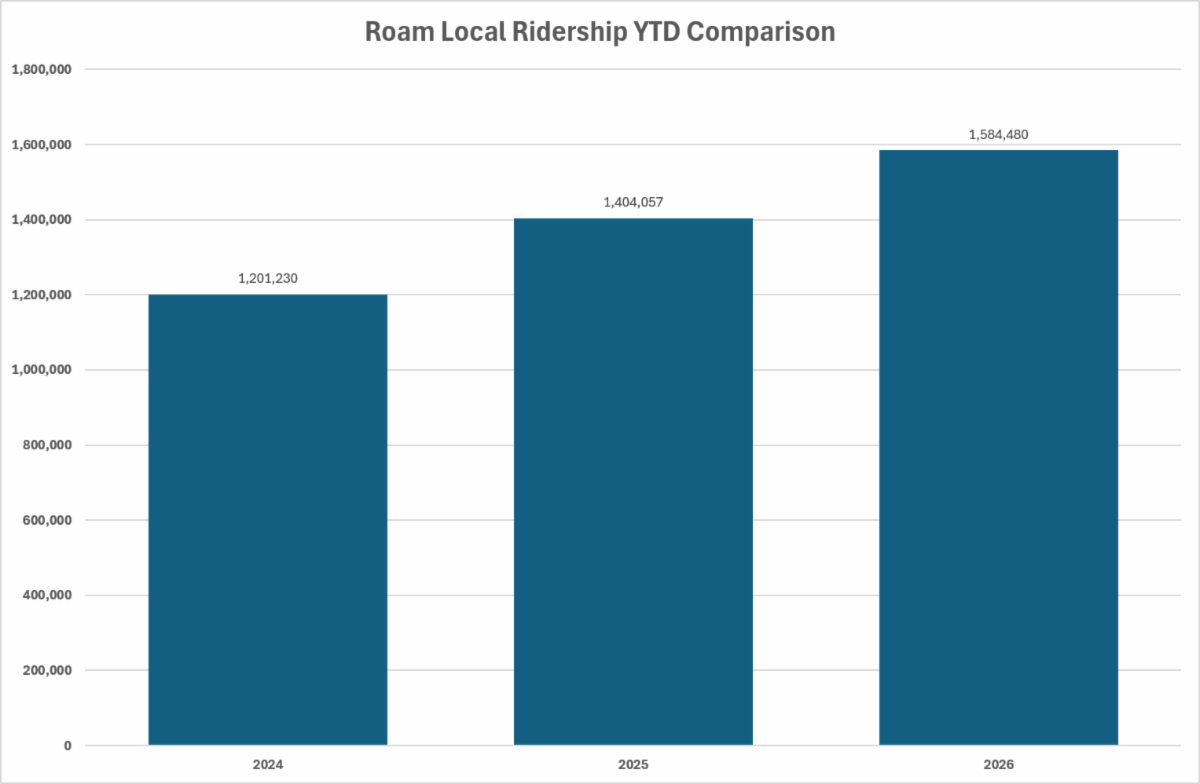
Roam Public Transit recorded a total of 34,593 riders on the local routes in the town of Banff (Routes 1, 2 & 4) for the 2026 September long weekend, which is an increase of 5% over 2025.

Maximum Travel Time

The Town’s goal is for peak travel times on major routes to be less than 15 minutes. 

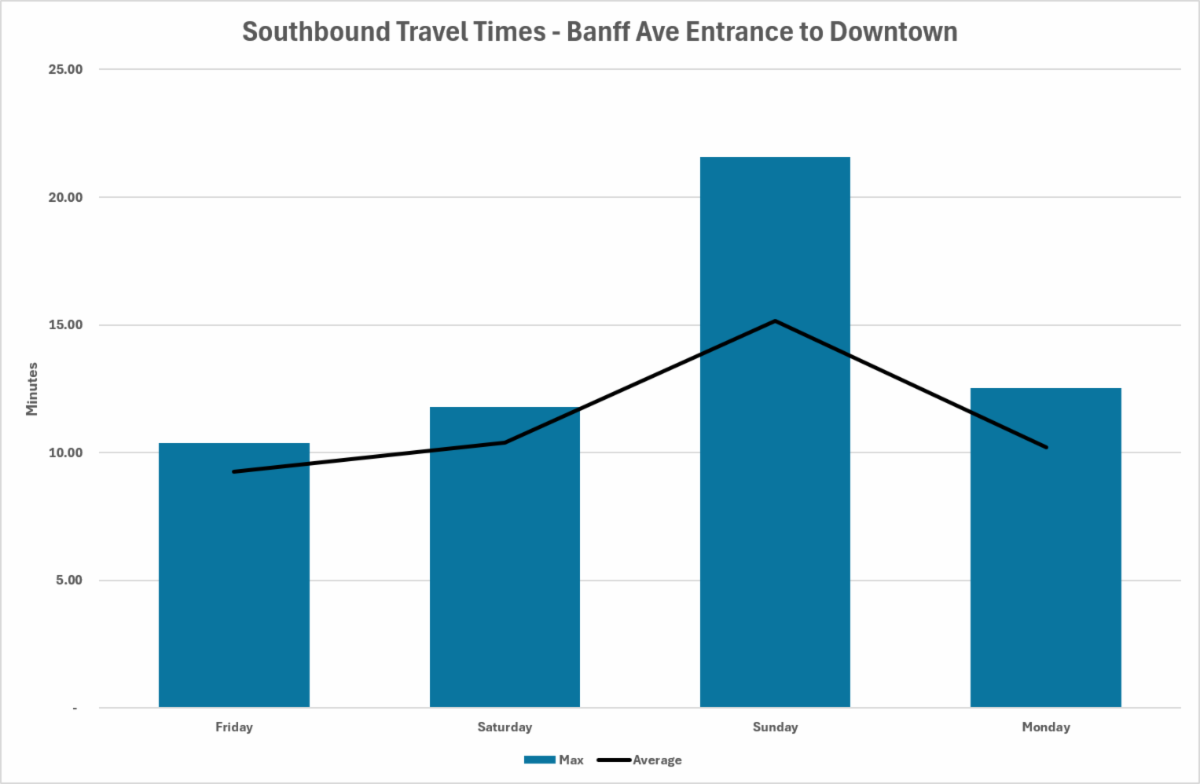
  • The maximum southbound travel time recorded over the course of the long weekend from Banff Avenue entrance to downtown (measured at Buffalo Street and Banff Avenue) was 20 minutes and 25 seconds. The average travel time during the daily peak period, from 1 to 7 p.m., was 11 minutes and 44 seconds.
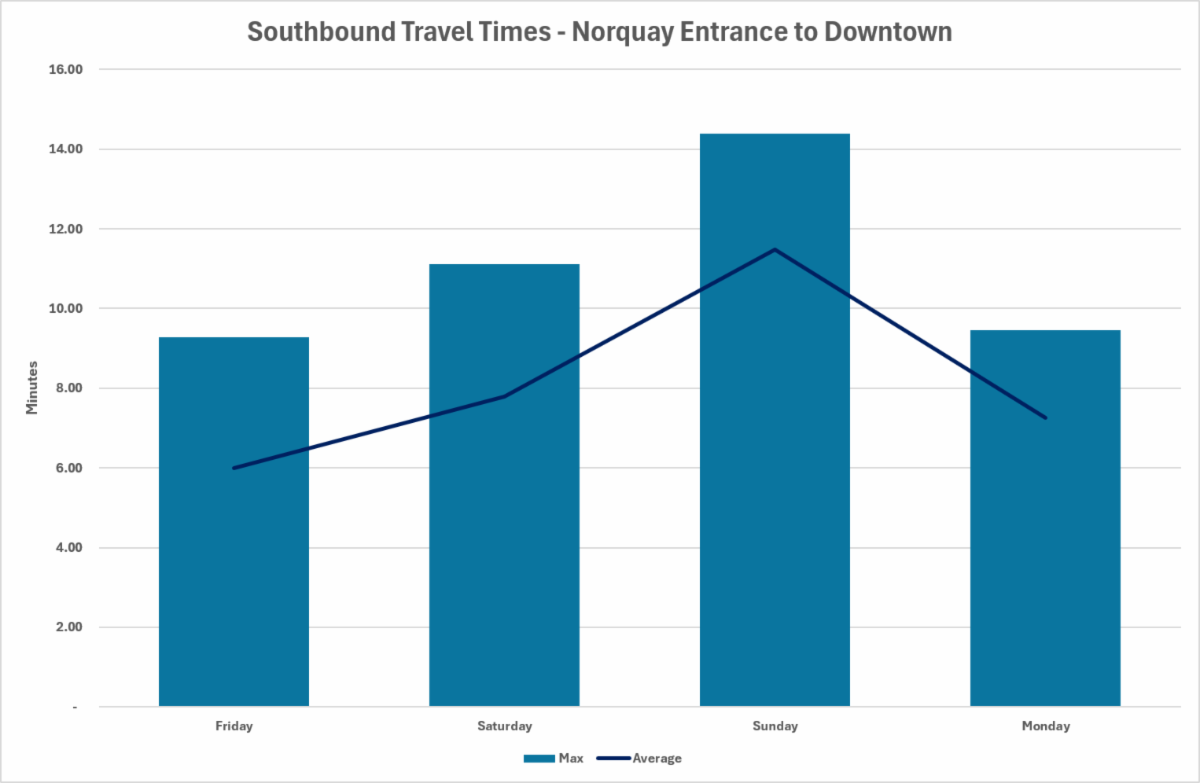
  • The maximum southbound travel time recorded over the course of the long weekend from Norquay entrance to downtown was 15 minutes and 18 seconds. The average travel time during the daily peak period, from 1 to 7 p.m., was 7 minutes and 2 seconds.
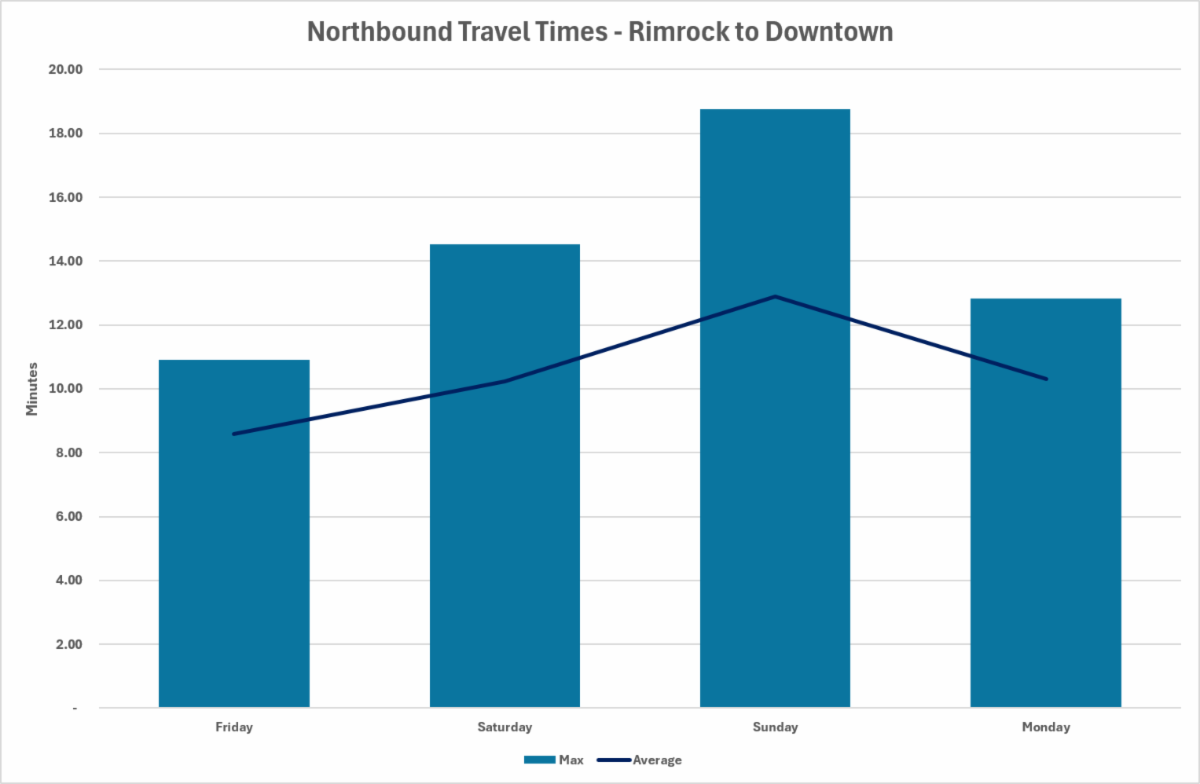
  • The maximum northbound travel time recorded over the course of the week from the Rimrock to Downtown was 17 minutes and 44 seconds. The average travel time during the daily peak period, from 1 to 7 p.m., was 8 minutes and 46 seconds.


The following charts show the maximum travel time for each day over the 2026 September long weekend and the average for the peak period.

Definitions


VPD at Town Entrances: Vehicles per day. This figure represents the total number of vehicles recorded at traffic count stations located at the town’s two main entrances—Mount Norquay Road and Banff Avenue—with incoming and outgoing traffic combined. It is calculated as follows: 

VPD at Town Entrances = (Mount Norquay incoming volume + Mount Norquay outgoing volume) + (Banff Avenue incoming volume + Banff Avenue outgoing volume)


The reported VPD does not represent the total number of vehicles in town on a given day; rather, it reflects the number of vehicles moving in and out of town over a 24-hour period.


VPD on Banff Avenue Bridge: Vehicles per day. This figure represents the total number of vehicles recorded (both southbound and northbound combined) over a 24-hour period at a traffic count station located on the north side of the Banff Avenue Bridge.


VPD on Mountain Ave: Vehicles per day. This figure references the total number of vehicles recorded (both southbound and northbound combined) over a 24-hour period at a traffic count station located on Mountain Avenue, up the hill from Middle Springs Drive.


Maximum Travel Time: Maximum Travel Time: This measure shows the longest travel time recorded between key locations and the Banff Avenue/Buffalo Street intersection. The data comes from the iNode Travel Time system, which detects signals from navigation systems, Bluetooth, and Wi‑Fi in devices and vehicles moving through the area.

Facebook  Twitter  Instagram