|
|
September 2023 Newsletter | |
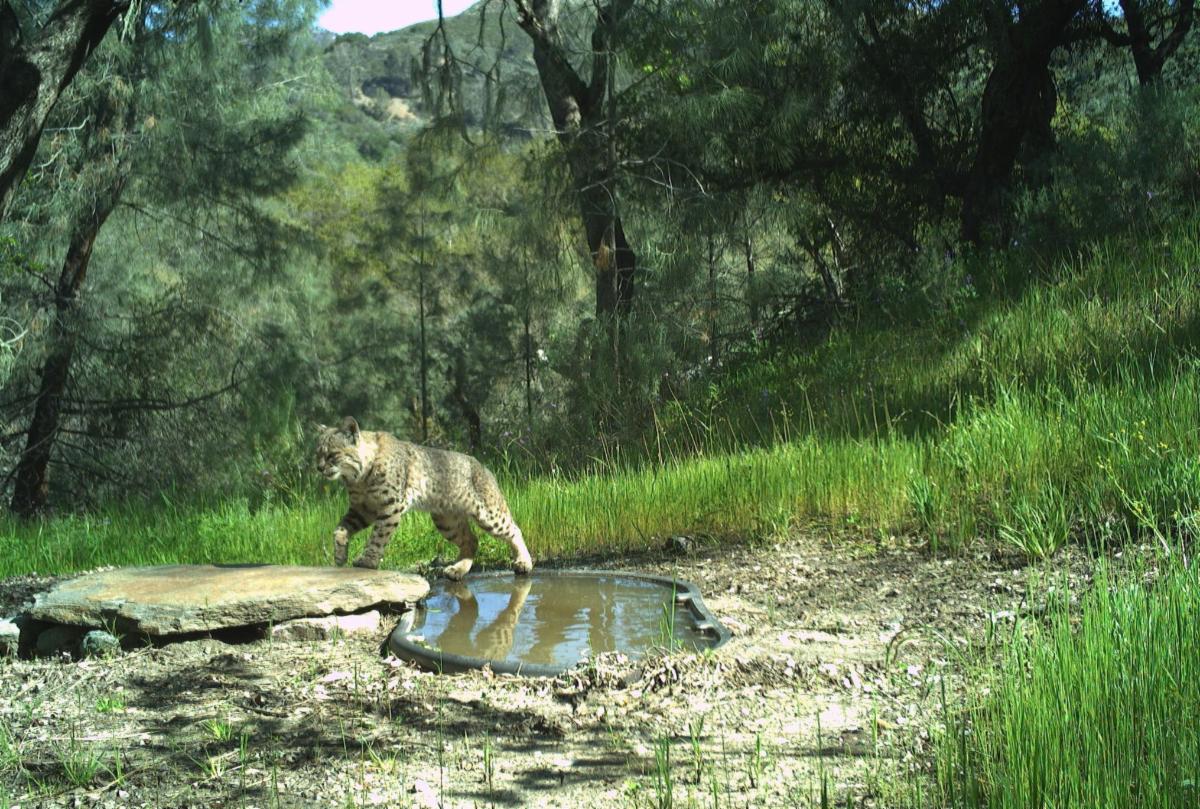
A beautiful bobcat on a trail camera at Sedgwick Reserve | |
|
In this newsletter
Letter from the Director
Upcoming Public Events
Build a Bat Box, September 30
Barn Dance, November 4
Notes from the La Kretz Research Center at Sedgwick Reserve
Fire Research Continues at Sedgwick Reserve: Researchers collect pre-burn data for the upcoming TREX prescribed burn this fall
Researcher Highlight
From the Ground and Sky: Jean Allen combines remote sensing data and ground measurements to study water stress among Sedgwick's iconic oaks
Docent Highlight
Sedgwick Reserve Welcomes Twenty-nine New Docents
Natural History Highlight
Living with Red-tailed Hawks
| |
|
Hello Friends,
Was your summer restful or adventurous? Did you hunker down in a cool burrow or migrate to milder climes? Perhaps you've shifted to a crepuscular existence; enjoying the misty cool mornings, mild evenings, and an afternoon siesta like this mountain lion.
As the weather cools off, Sedgwick will become a hive of activity. We will resume fall public hikes and events, such as the Full Moon Hike and Build a Bat Box. We hope you will join us for the annual Barn Dance celebration on Saturday, November 4th! Santa Barbara's finest steakhouse Jill's Place will serve a gorgeous fall feast with tri-tip and fresh vegetarian options. Western-inspired attire is encouraged. Barn Dance ticket sales will open soon!
Research is ramping up around the 2023 Prescribed Burn Training Exchange TREX, being conducted in collaboration with The Nature Conservancy and several other organizations in mid-November. If the conditions are right to burn the designated 50 acres, it will be an excellent opportunity to examine the relationship between fuels and fire behavior from many perspectives. Researchers funded by the Moore Foundation will study oak and coastal sage scrub fire ecology, plant species responses, wildlife activity, meteorology, and ecohydrology. These collaborations are facilitated by the La Kretz Research Center at Sedgwick Reserve, the research support arm of the reserve.
I am continually impressed by the power of people working together to implement major projects. Whether dreamt up in a laboratory, around a campfire, or in the shower, the resourceful Sedgwick staff, volunteers, and community turn the boldest ideas into reality. Often we don’t have a physical monument to commemorate the achievements. People disperse with their data, photos, and experiences; leaving only digital footprints. Just the way we like it!
With Gratitude,
Dr. Heather Constable
Reserve Director
| |
|
Public Event Announcement
Bats, Boxes, and Beyond:
Build a Bat Box
with Dennis Beebe and Kristen Zumdahl
Saturday, September 30
9AM-12PM
| |
We'd love to hang with you! | |
Join us for a unique workshop where you'll have the opportunity to construct your very own bat house! Our skilled craftsperson, Dennis Beebe, will guide you through the building process, while wildlife biologist and La Kretz Center for Research at Sedgwick Reserve manager, Kristen Zumdahl, shares captivating bat facts. Let's get batty together!
This is a family-friendly event. Ages 7+ recommended. Kids must be accompanied by an adult. All supplies and instructions are provided. No previous skills are required.
This program has limited space so make your reservation today.
Registration fee: $10 per group. Limit one bat box per group. Max group size of three.
| |
|
Dennis Beebe
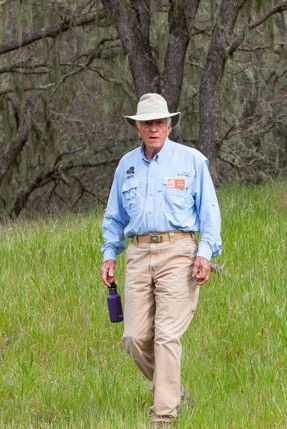
Sedgwick docent, staff, and expert craftsperson
| |
|
Kristen Zumdahl
Wildlife biologist and manager of the La Kretz Center for Research at Sedgwick Reserve
| |
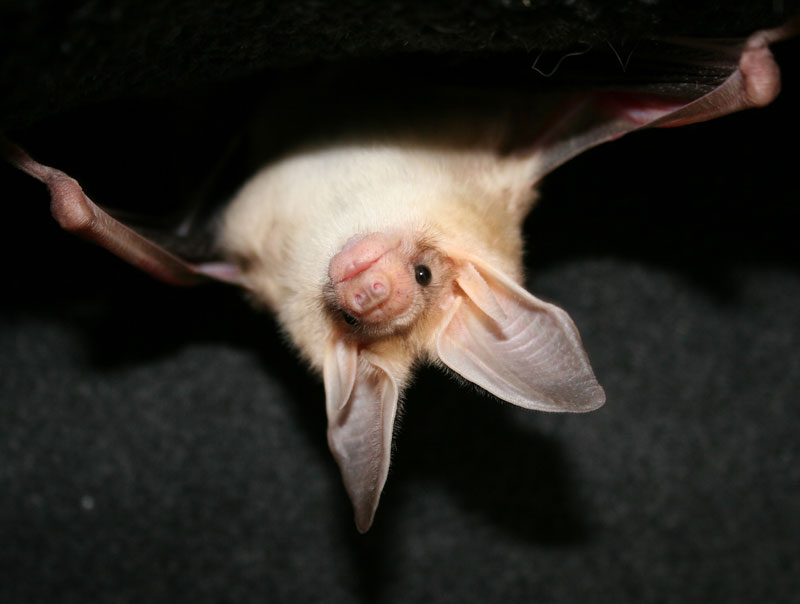
This special program is being offered as part of Sedgwick Reserve's own efforts to protect the bats that inhabit our Reserve. We have recently installed BatCam to monitor our resident Pallid Bats. Check it out! | |
|
Save the Date
Sedgwick's Annual Barn Dance
Saturday, November 4, 2023
3:30PM-6:30PM
| 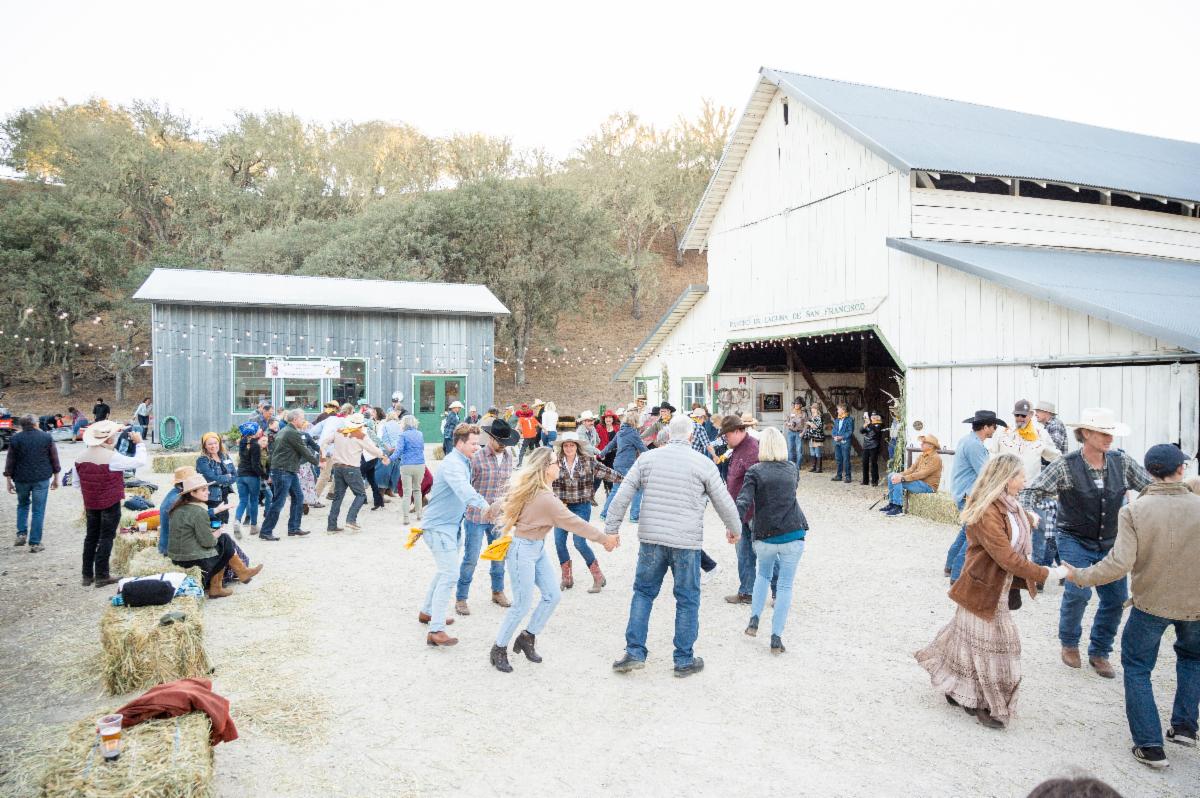 | |
Put on your finest boots and get ready to do-si-do, because it's time for Sedgwick Reserve's annual Barn Dance. Enjoy dinner, drinks, and dancing under the open sky in the heart of our sprawling 6,000-acre natural reserve!
Highlights of the Evening:
Food and Drink: Enjoy scrumptious tri-tip or a vegetarian plate catered by Jill's Place. Cool off with beer and wine, and recharge with fresh chocolate chip cookies, lemonade, and coffee. All food and drink are included in the ticket price.
Live Square Dance Calls: Whether you're an experienced square dancer or a first-timer, our square dance caller, Frannie Marr, will have you promenading and allemande-lefting with glee. Don't worry about bringing a partner – we'll mix and mingle, so you can dance with old friends and make new ones.
Fun for everyone: There's plenty to enjoy for the whole family. Experience the rustic charm of our 1908 barn immersed in the stunning natural beauty of Sedgwick Reserve, visit the new Interpretive Center in the barn's tack room, and take a stroll to the pond.
This event is rain-or-shine. Ticket purchase is not a tax-deductible contribution. All sales are final. For questions contact us at nrs-sedgwick@ucsb.edu
| |
|
Notes from the La Kretz Research Center
Fire Research Continues at
Sedgwick Reserve
Researchers collect pre-burn data for the upcoming TREX prescribed burn this fall
| |
Photo 1: PhD candidate Kaili Brande and her team (Kristen Zumdahl and Marian Walker) continue bark heating experiments on blue oaks (Quercus douglasii) along Lisque road. Photo Credit: Frank Davis. | |
|
Sedgwick Reserve will be hosting its second Prescribed Burn Training Exchange (TREX) in November 2023. The TREX provides training opportunities in alignment with fire management and community goals. In addition to field training, TREX participants engage in lectures, discussions, field trips, and networking opportunities on topics related to fire ecology, tribal burning, and prescribed fire planning. The TREX offers opportunities to bring together fire management professionals, local tribes, and researchers all for the common goal of understanding the role fire plays in our ecosystem and community safety.
As part of the planned prescribed burn, PhD candidate Kaili Brande from the University of California, Santa Barbara is working on understanding how oak trees are affected by fire. Her work includes collecting data before, during, and after the burn as well as collecting data in control plots outside the burn for comparison.
In photo 1 (above), Kaili and her team are conducting bark heating experiments across three species of oaks: blue oak (Quercus douglasii), coast live oak (Quercus agrifolia), and valley oak (Quercus lobata). The purpose of this experiment is to test the bark’s heat resistance across many size classes of trees. Findings from this project will help determine the minimum bark thickness and tree size required for a tree to be resilient to fire-induced death from surface and/or ground fires.
| |
Photo 2 and 3: Close-up view of the bark heating experiment. Thermocouple A is inserted under the outer bark against and the cambium layer. Thermocouple B is placed outside the outer bark layer over the Thermocouple A location. Then heating begins on this area for up to 15 minutes. | |
|
In photos 2 and 3, a small 1.5 inch hole is drilled into the tree and the outer bark is removed, exposing the cambium layer. This small hole created by the drill is not fatal to the tree and the tree is able to recover afterwards. The cambium is the living tissue layer underneath the bark that contains important water and nutrient transportation pathways for tree growth. Excessive death of the cambium, which can occur under intense fire conditions, is fatal to the tree.
The experiment also uses a heat gun, which applies heat directly to the bark for up to 15 minutes. Temperature sensors are placed under the bark (against the cambium-layer) and on top of the bark to measure time-to-cambium-kill, the amount of time it takes for constant heat exposure to simulate the kill of the cambium layer.
In part, Kaili's research seeks to understand how much time it takes heat to kill the cambium and how the time-to-cambium-kill interacts with other factors (wind, ambient temperature, relative humidity, etc.) Kaili’s research allows us to study how fire affects oaks in a safe and controlled setting. This knowledge can be used to inform land management to better prepare for wildfires (and better plan prescribed fires) in oak forests.
The 50-acre TREX burn will occur in the southwest corner of the Reserve in November 2023 and includes a mosaic coastal sage scrub (dominants include purple sage (Salvia leucophylla), California sagebrush (Artemisia californica), deerweed (Acmispon glaber), foothill needlegrass (Stipa lepida), mixed oak woodland (blue oak (Q. douglasii), coast live oak (Q. agrifolia), and a few valley oaks (Q. lobata)), and annual grassland dominated by wild oat (Avena fatua).
| |
|
Researcher Highlight
From the Ground and Sky: Jean Allen combines remote sensing data and ground measurements to study water stress among Sedgwick's iconic oaks
| |
Photo 1: Jean at Sedgwick Reserve | |
|
We spent some time with Jean Allen, PhD student in Geography at the University of California, Santa Barbara, to learn about oak trees during drought, the power of combining field measures with remote sensing data, choosing a career in the environmental sciences, and a bird that sings ABBA. Read on to learn more!
1. Tell us a little about your research at Sedgwick. What are you hoping to learn in this project specifically and what broader implications does it have?
The oak tree population in the Santa Ynez Valley is currently highly stressed due to increasingly severe and frequent droughts. As a result, recent years have seen elevated tree mortality rates and reduced succession of new adult trees. My research focuses on using a combination of field observations and remote sensing to better understand water stress and mortality risk in these oak savannas. I’m especially interested in the blue oak because Sedgwick Reserve is located in one of the hottest and driest regions it can naturally survive in, so even slight increases in temperature or reductions in precipitation can pose a serious threat to the tree population. Monitoring how these particular trees respond to water stress can help us understand tree mortality risk, identify high-risk groups of trees, and gain a clearer picture of the complicated relationship between climate and ecosystem health.
2. Your research involves measuring leaf area index (LAI). What is LAI and what can we learn from it?
Leaf area index, or LAI, is basically a way to measure the leafy biomass loading on a tree. It's a unitless measurement, and kind of a weird one: imagine standing underneath a tree with a laser pointer and pointing it directly up at the sky, and counting the number of leaves that the laser passed through before exiting the tree canopy. That measurement, averaged across the entire tree canopy, would be the LAI. There are a lot of different ways to measure LAI, but my lab group uses light interception, where we measure the radiant intensity of photosynthetically active wavelengths of light above and below the tree canopy to determine how much light was intercepted by the leaves. A tree with high LAI will have a flush, leafy canopy that absorbs a lot of light, resulting in less light passing through the canopy, whereas a scraggly tree with sparse leaves will absorb less light and have a brighter understory. Our instruments can measure this light attenuation to calculate LAI.
LAI is useful in my research in two main ways. One is as a direct measurement of water stress: since water-stressed trees grow fewer and smaller leaves, they often have lower LAIs, whereas healthy trees often have higher LAIs. So on its own, LAI can provide insight into which trees are stressed and at greater risk of mortality. The second way is as a tool for interpreting remotely sensed data. LAI has an outsized impact on many common remote sensing indices and derived metrics. In order to tease out subtle variations in tree health from remotely sensed imagery, we have to account for that strong (and potentially confounding) LAI signal.
3. How does your work connect with NASA’s Surface Biology and Geology High-Frequency Time Series (SHIFT) campaign and remote sensing in general?
I loved being part of the SHIFT campaign! My main research goal is to leverage remote sensing time series, like the series of hyperspectral imaging flights conducted as part of SHIFT, to scale up field measurements of water status and tree mortality risk from a small batch of in situ measurements to a landscape scale. Fieldwork is incredibly valuable, but unless you have a whole army of people to do it with, you're never going to be able to measure and monitor the water status of every tree on a given landscape. However, we can use those field measurements to calibrate and train models that can turn airborne and satellite imagery into ecosystem-level insight. Within my research, I aim to use my own field measurements of LAI in combination with additional data collected by my colleagues at UCSB in the Landscape Ecophysiology and Function (LEAF) Lab to use the SHIFT imagery dataset to map tree water stress and mortality risk.
4. What do you enjoy about doing fieldwork? What is something cool you've experienced out in the field?
My favorite part about doing fieldwork at Sedgwick in particular is how many different projects are going on at the reserve. Sometimes, while walking between the trees I collect data at, I'll take a slightly different route than usual and stumble across something new; some instrument I've never seen before stuck to a tree, or a stake or monitoring station stuck in the ground. Often I don't find out what it was that I had found until later, while talking to a colleague or meeting someone new out in the field. One time I was singing ABBA while walking between study sites, just for fun, only to realize that I was right next to a microphone that was monitoring bird calls. I hope that their system didn't interpret "Dancing Queen" as some new, unrecognized bird.
5. How did you get interested in geography?
Like a lot of people, my journey to geography was pretty winding and tumultuous. I really wasn't a born geographer, or a born ecologist for that matter. I was really a math kid up until I started college. I went to math camp and even participated on my high school’s math team. But, like a lot of people, I was also really intimidated and horrified by the threat that climate change poses to our natural world and to people everywhere. I got into geography as a way to take my love of numbers and algorithms and apply that to solve important problems, and I've found a real home for myself in the world of environmental remote sensing. I'm very lucky to have some incredible friends and colleagues to work with and we're able to bring our different experiences and knowledge to the table to do some really interesting science.
6. Do you have any advice for people hoping to launch a career in geography or related sciences?
I think that the biggest piece of advice that I have is probably something that everyone has heard a thousand times before; follow your passion! I think the idea of pivoting or launching a career can be really intimidating, and sometimes it can feel like you have to have everything perfectly planned out. But I like to say that everything you do begets more of itself. If you focus on pursuing what you love and doing work that you feel proud of, you'll end up on a good path.
| |
Photo 2: Graduate student research often provides important opportunities for undergraduates to assist in fieldwork. Here, undergraduate student, Tierney Cantwell is looking at the measurement record of the ceptometer, a device used to measure leaf area index. | |
|
Docent Updates
Sedgwick Reserve Welcomes
Twenty-nine New Docents
| |
|
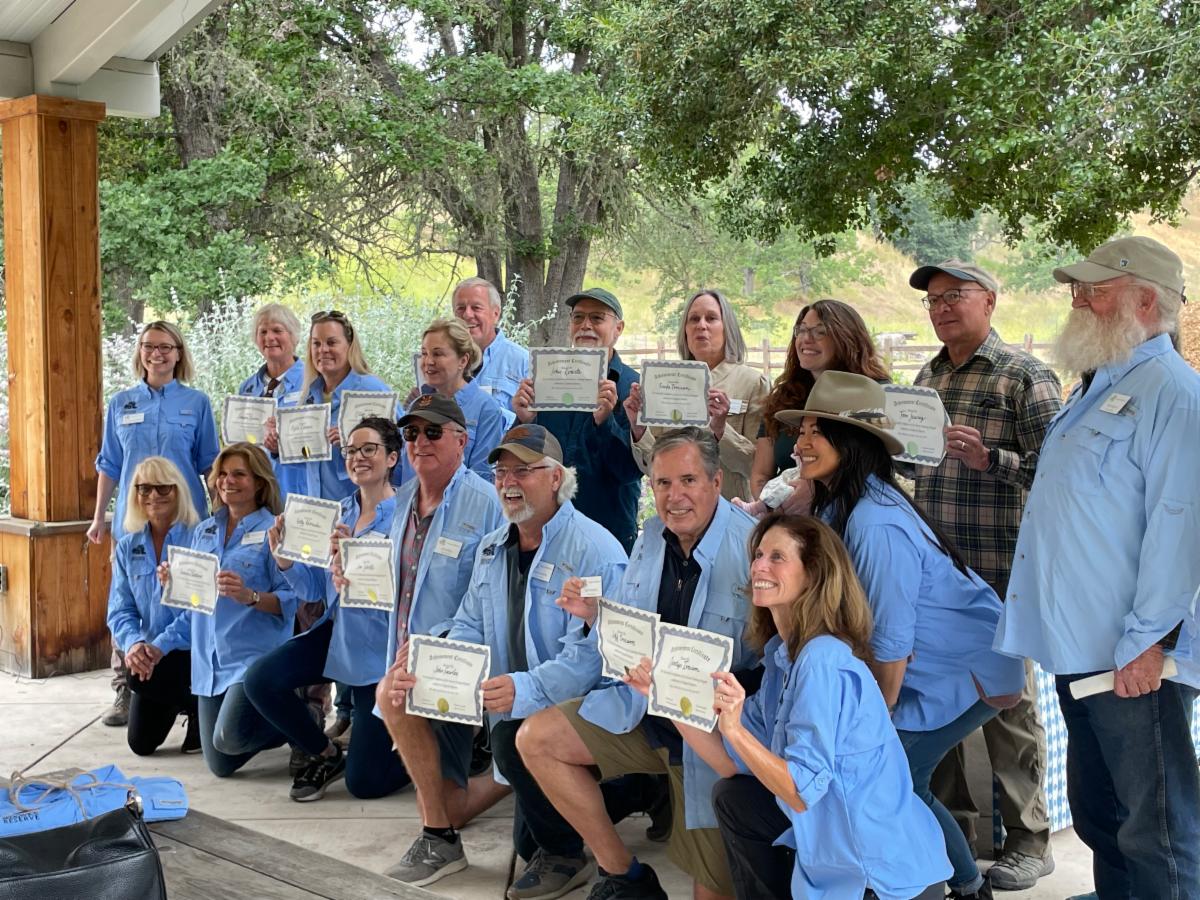
Upon completion of a ten-class docent training program, twenty-nine new docents graduated in June 2023. Docents support Sedgwick's public programs by giving Sedgwick the capacity to invite the public to the Reserve!
Docent training does not happen every year, and the next docent training will be held in early 2025.
Congratulations to everyone!
| |
|
Natural History Highlight
Living with Red-tailed Hawks
| |
Neighbors and Docents Dolly and Charles Mullin spent a season watching a local Red-tailed Hawk family through their telescope. Check out their beautiful montage documenting the chicks' lives from hatching to flying the coop. We love sharing these beautiful hills with our feathered friends. | |
Sedgwick Reserve depends on the support of our donors to fund our docent program, support researchers, and offer community-focused public events. Your gift ensures our ability to continue supporting world-class research and education with global impact. | | | | |