|
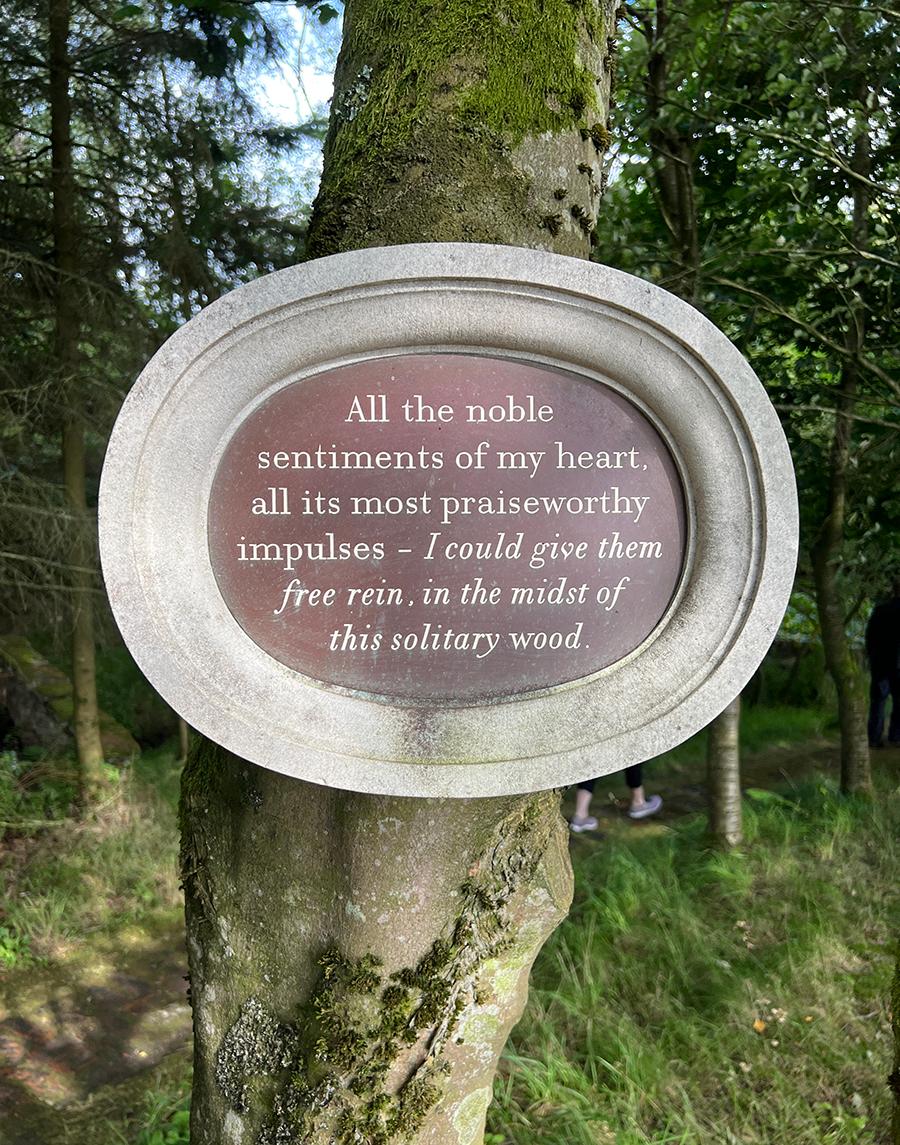
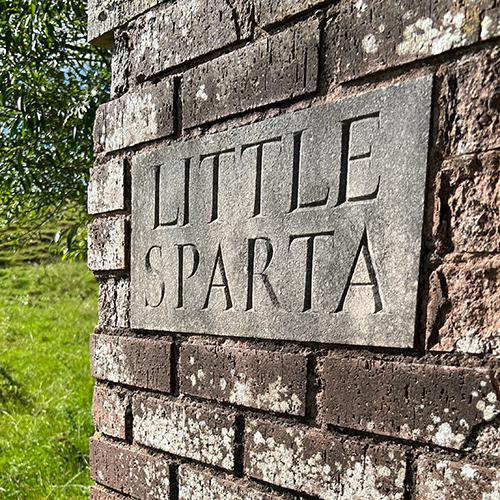
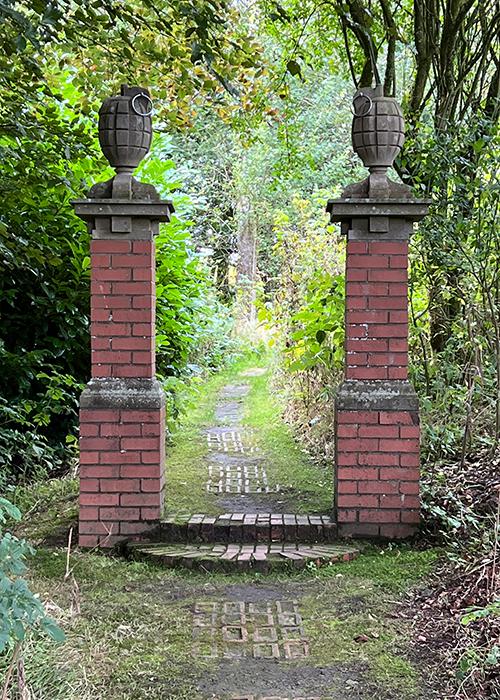
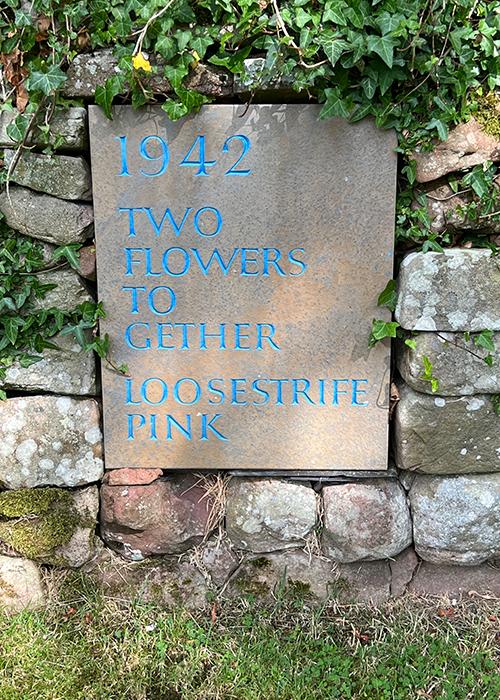
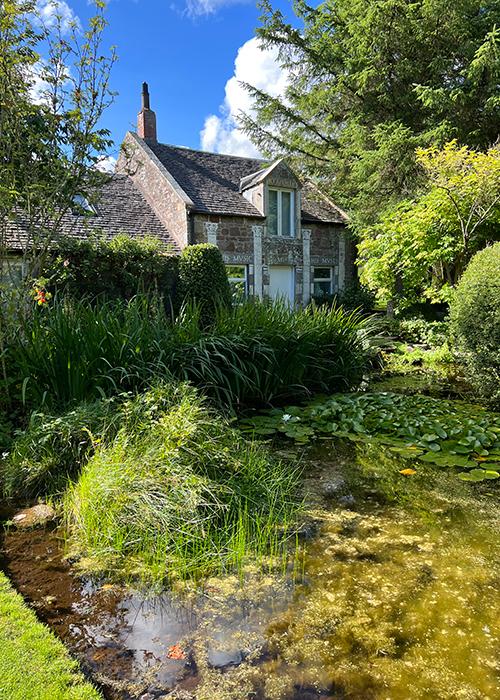
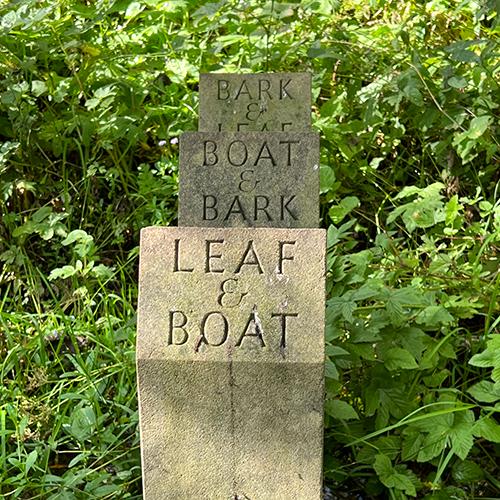
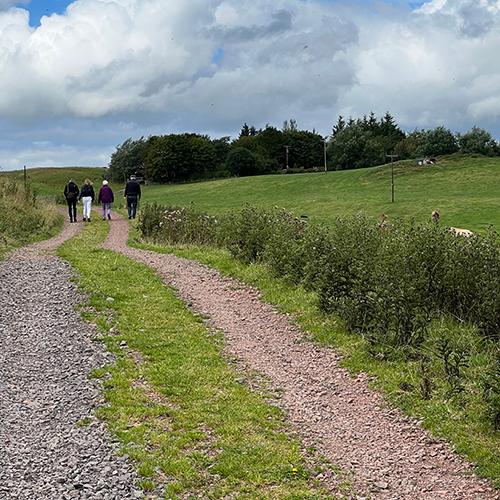
This month's header image was taken in the Pentland Hills of Scotland at Little Sparta, the garden created by Scottish artist, publisher, and poet Ian Hamilton Finlay in partnership with his wife Sue, and a host of artisan collaborators.
We were fortunate enough to visit in August and get a lovely tour from Head Gardener George Gilliland. George has overseen the maintenance and development of the garden, and the conservation of its numerous individual artworks for ten years, and his knowledge of the garden and insight into the deeply layered references in Finlay's work made for an unforgettable experience.
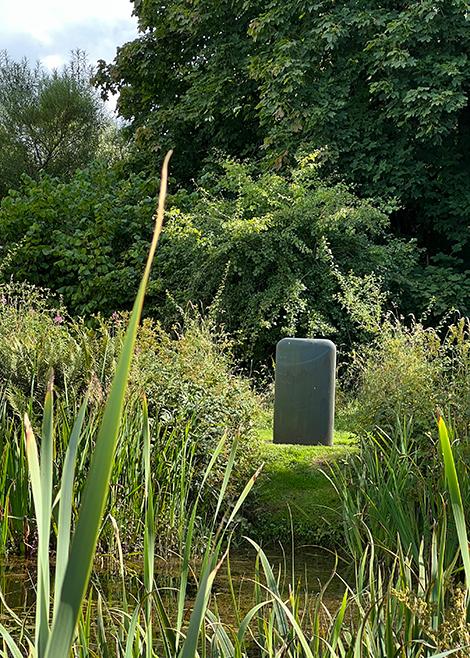
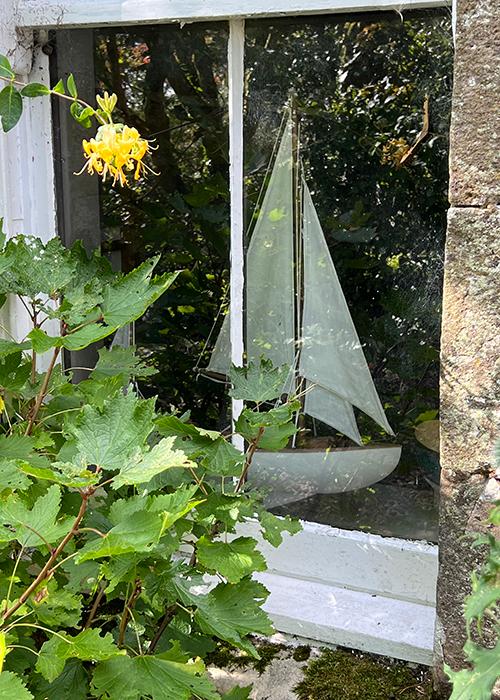
Finlay wittily said a garden was not only a "retreat" but also an "attack," and framed Little Sparta so with contradictory themes; classical antiquity and human relationship to the landscape on the one hand, the Second World War and the French Revolution on the other. The sea was also a rich source of interest for Finlay, and the fact that this landlocked idyll is teeming with maritime references is another contradiction. At one edge of the garden a stone plaque attached high on the trunk of a tree reads ‘Mare Nostrum,’ (Our Sea) the name given by the Romans to the Mediterranean. On a pedestal below, surrounded by hedges pruned to recall waves, rests an aircraft carrier carved out of stone. Boats were a rich source of inspiration for Finlay’s poetry; destroyers, corvettes, and fishing boats are all memorialized in form and inscription throughout the garden. An elegant black slate monolith sited in the Lochen Eck Garden is titled ‘Nuclear Sail,’ a reference to the conning tower of a nuclear submarine. This allusion cleverly "animates" the static form, making it appear to be rising from the earth.
While Little Sparta is an entirely different garden and experience than The John Fairey Garden, there are interesting parallels as well as divergences in approach. In Jessie Sheeler’s book ‘Little Sparta - A Guide to the Garden of Ian Hamilton Finlay,' she writes of Finlay’s gradual adoption of the concept of the garden as art. In particular she references Finlay’s enthusiasm for a book written by Edward Hyam’s titled The English Garden (1964) with Finlay writing, ‘This book understands perfectly that a garden ought to be a work of ART…; and it also understands... that “There is only one art…”, and that the idea that X or Y, who engaged in various modes of art, were minor because they dissipated their talents is NONSENSE. Rather they were minor because they were minor, and that is all.’
Finlay’s sentiment echoes the exasperation expressed in some of John Fairey’s letters that his garden wasn’t sufficiently appreciated as a mode of artistic expression. Finlay and Fairey both knew that the garden was capable of existing as art at the highest level. For John, this meant creating with plants as though they were paint on a palette or sculptural material intentionally employed to shape space. For Finlay, it was creating a landscape where he could integrate his poetic output in various material expressions to transform the garden into a singular poetic artwork.
Our afternoon at Little Sparta left me with an expanded appreciation for the depth of expression a garden can afford its creator, and profound gratitude for my opportunity to experience what that can mean in the hands of a creative genius like Finlay. I hope you get a chance to visit someday.
Closer to home, I hope your experience of The John Fairey Garden, no matter how many times you visit, is always full of wonder and meaning.
Warm regards,
|