Message from the Executive Director | | |
If you have not yet responded to our Members Survey, now is the time!
Your input is important as we prepare to update the Trust’s Strategic Plan for the next five years. Please let us know what you think about the organisation today, what we could do better, and where you think we should focus in the years ahead. It will only take 5-8 minutes and will help us shape the future of BNT.
Your answers will remain anonymous, but if you provide your email address, you will be entered into a prize draw, with the top prize being a $300 Lindo’s voucher.
If you are not yet a member, we would still like to hear from you via our Community Survey, which also has a prize draw.
| | |
Karen Border
Executive Director
| | We are still looking for people who are passionate about Bermuda gardens to join our revived Gardens Committee which will primarily advise on planting schemes for BNT gardens. If you know your Bermuda plants, please consider offering your services – email karen.border@bnt.bm if you would like to join. | | |
Natural Heritage Updates
Myles Darrell, Head of Natural Heritage
| | Unearthing the Stories of Spittal Pond | | |
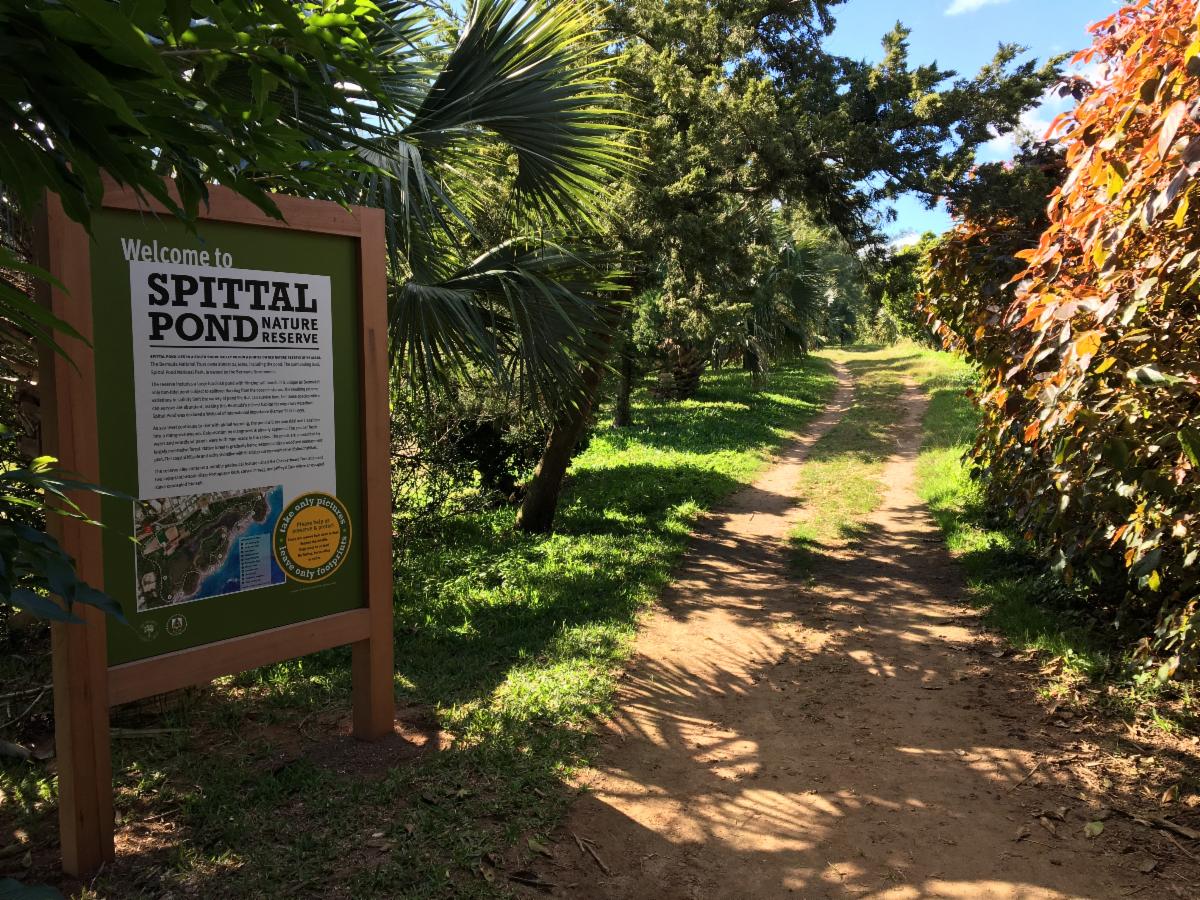
In August, BNT collaborated with the Bermuda National Library as part of its Unearth a Story Summer Reading Challenge, with a guided walk through Spittal Pond Nature Reserve led by BNT Head of Natural Heritage Myles Darrell.
The idea was wonderfully simple: take storytelling beyond the pages of a book and into a landscape where Bermuda's natural and cultural heritage can be seen, heard and experienced. There could hardly be a better place to do it; a walk through Spittal Pond can take you through millions of years of natural history and hundreds of years of human history.
Jeffrey’s Cave provides an opportunity to tell the remarkable story of an enslaved man who sought refuge within this landscape after escaping bondage. His story allows us to consider Spittal Pond as a place experienced very differently by the people who came before us, including those whose voices have too often been absent from the stories traditionally told about Bermuda's heritage. Even the name Spittal adds another layer. Derived from the same root as "hospital", the word historically referred to a place of refuge or shelter.
Portuguese Rock adds another chapter, connecting the site to Bermuda's earliest recorded history and to the wider Atlantic world, including the difficult history of slavery and the vessels that travelled these waters.
| |
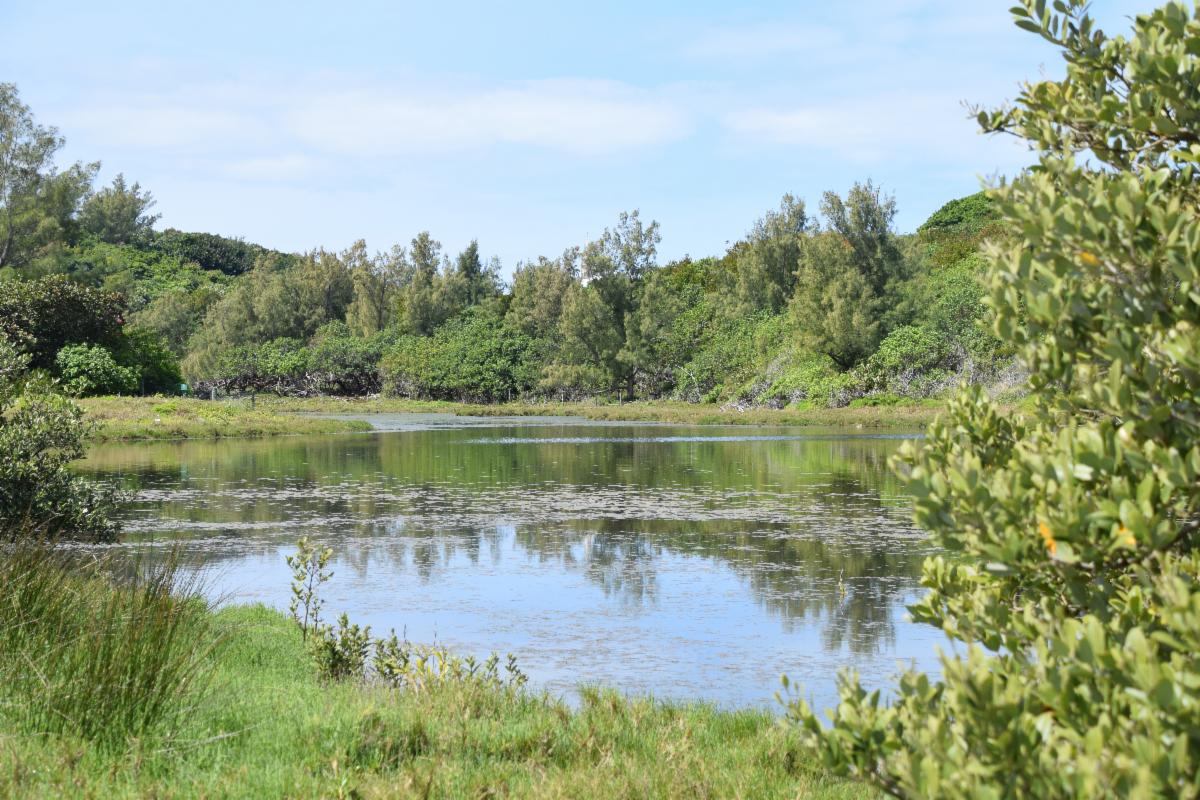
The natural landscape tells its own stories. Native and endemic plants provide glimpses of the Bermuda that existed before widespread human settlement, while invasive species reveal how dramatically our ecology has changed. Spittal Pond's internationally important wetland also provides refuge for migratory birds, some of which travel thousands of miles before reaching our shores.
And then there is the story of conservation itself. Spittal Pond did not remain undeveloped by accident. Its protection reflects decisions made by people who recognised that some places are simply too important to lose. Those decisions allow new generations to encounter wildlife, explore Bermuda's history and develop their own connections with the island.
We often talk about nature reserves in terms of protecting habitats and species, but these places protect something else as well: they protect opportunities to learn, remember and understand. Natural and cultural heritage are not separate stories. Our history has been shaped by the land and sea around us, just as generations of human activity have shaped the Bermuda we see today. Protecting these landscapes gives us opportunities to revisit the stories we tell about them. That is what made this collaboration with the Bermuda National Library particularly meaningful.
Following the walk, the Library created a short video highlighting books from its collection connected to many of the subjects explored along the trail. A bird might lead to a book about migration, Jeffrey’s Cave might inspire someone to learn more about enslavement, resistance and freedom in Bermuda, or a conversation about conservation might encourage someone to discover how our protected areas came to exist. In this way, the trail and the bookshelf become extensions of one another.
| |
Cultural Heritage Updates
Dr Charlotte Andrews, Head of Cultural Heritage
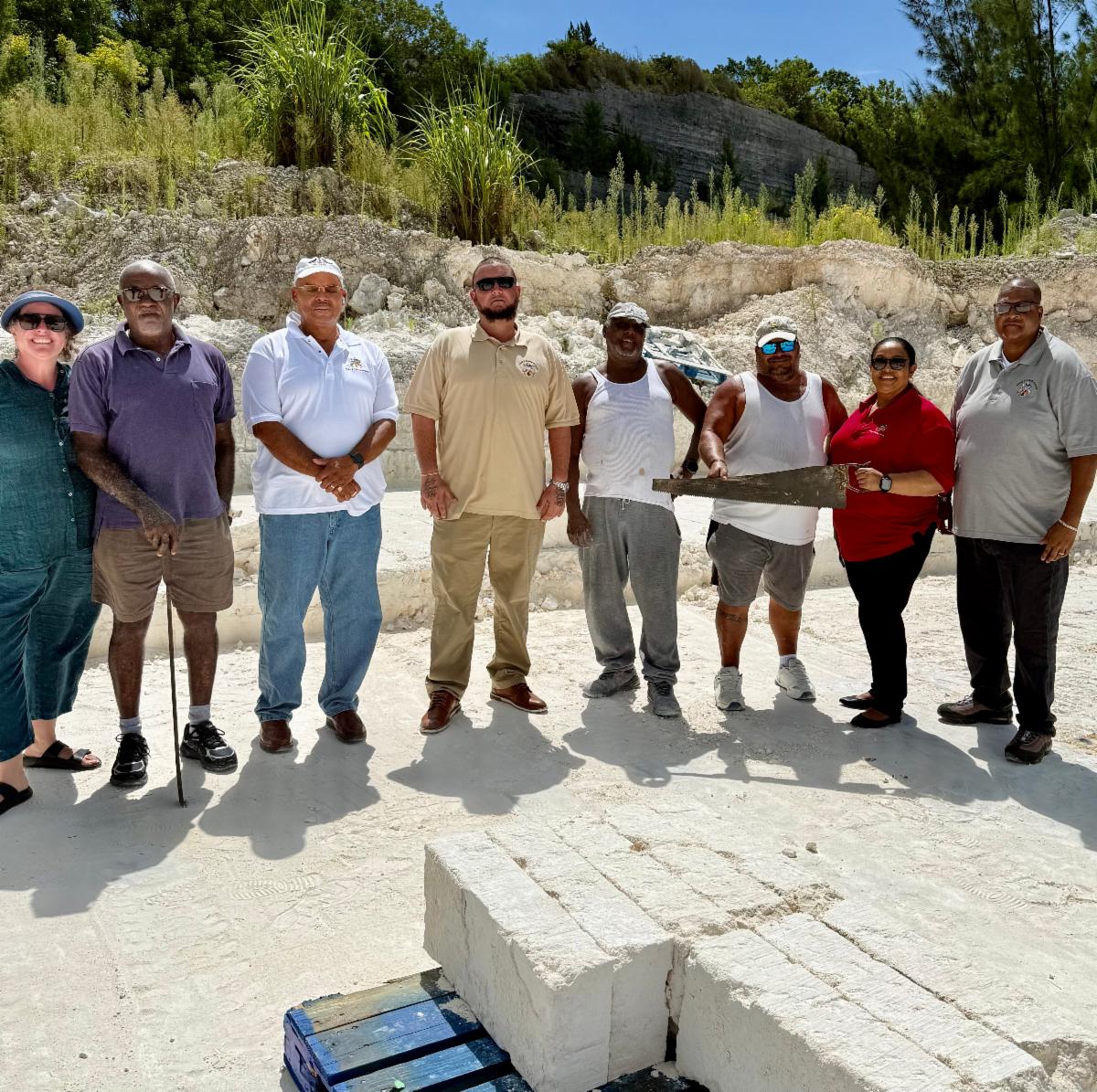
| | Sharing Heritage Practice with Grand Turk | | This summer, BNT was pleased to help coordinate a visit to Bermuda by a team from the Grand Turk Enhancement & Sustainability Agency (GTESA), a Turks and Caicos Islands Government agency mandated to manage Grand Turk’s heritage sites. | | The team came to strengthen its capacity to conserve, restore and interpret Grand Turk’s traditional limestone structures and other cultural heritage sites. Bermuda and Grand Turk have strong historical connections, including a shared history of enslavement and the forced movement of enslaved Bermudians—among them Bermuda National Hero Mary Prince—to labour in Grand Turk’s salt industry. Together with similarities in our traditional built heritage, these connections provided a rich basis for exchanging knowledge and experience. Working with partners across Bermuda’s heritage sector, BNT helped develop an itinerary exploring conservation and heritage management in practice. | | GTESA Chairman Pedro Ariza, Director Kathy Walkin, Programme Manager Kirkley Williams and Project Site Manager Jack Day with Charlotte Andrews, Larry Mills and quarriers Earl Wescom and Patrick Ingham at Wilkinson Quarry | |
| |
The delegation visited historic lime kilns and Wilkinson Quarry with Larry Mills to explore the materials, skills and traditional processes behind Bermuda’s distinctive architecture. At Verdmont Museum, BNT’s Andrew Butt showed them conservation work underway at the c.1700 historic house. In St George’s, Deputy Mayor Tianny Butterfield and Planning Heritage Officer Jessica Dill joined us to explore Globe Museum and St Peter’s Church. Bermudian mason Dean Saunders accompanied visits to St George’s Military Cemetery and Fort Albert, sharing his traditional approach to Bermuda stone, while Alison Outerbridge of the St George’s Foundation discussed the conservation and restoration of Fort Albert. The delegation then visited Carter House with the St David’s Island Historical Society before concluding with the National Museum of Bermuda in Dockyard and Rashida Godwin’s talk on Mary Prince at Somerset Cricket Club.
The learning went both ways. GTESA’s plans and experiences prompted valuable conversations about Bermuda’s practices and the challenges small islands share in sustaining traditional skills, caring for historic buildings and ensuring heritage places remain valuable to their communities. BNT was happy to help bring GTESA and partners across Bermuda’s heritage community together for this practical exchange.
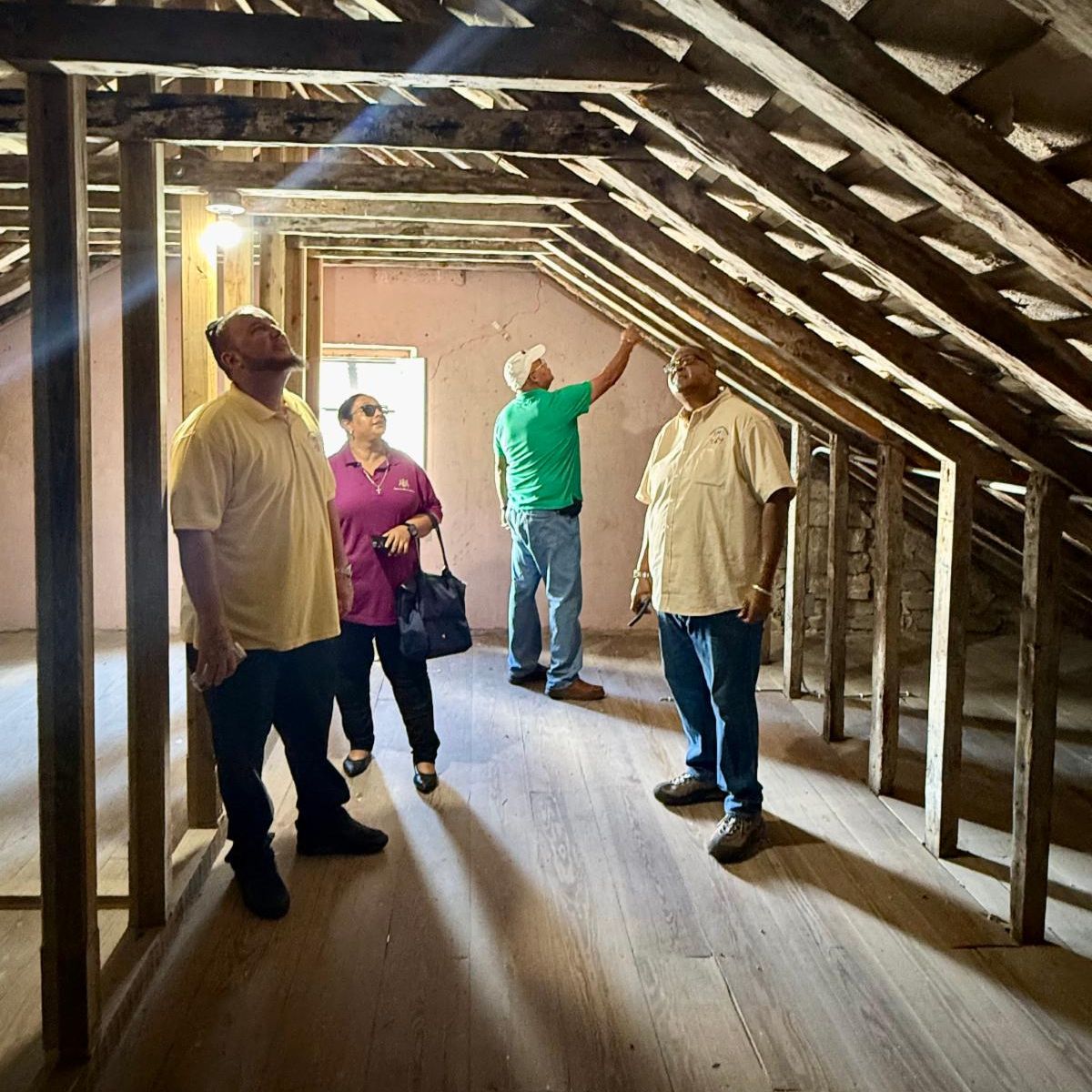
| | inside the attic at Globe Museum | |
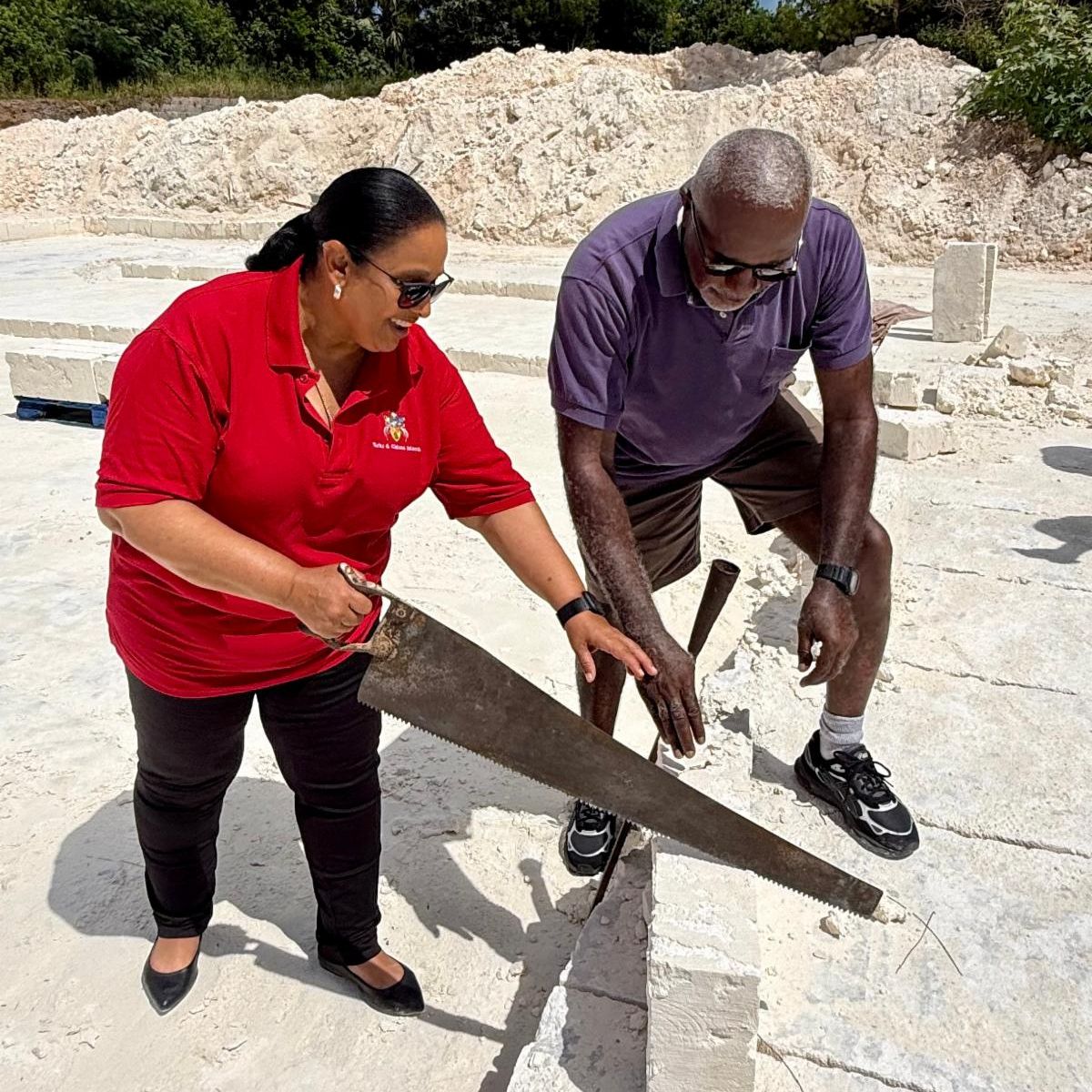
| Kathy receiving a hands-on lesson in stone sawing from Larry | |
| Developers Doing It Right | | |
Heritage matters! And throughout Bermuda so much of our own may still be buried. It is vital, therefore, that before development begins at archaeologically sensitive sites, appropriate assessments are undertaken to identify and preserve links to our past.
We were therefore pleased with the approach taken for The Loren’s proposed major development at Elbow Beach, where there was potential for historic fortifications and other archaeological features or deposits to survive. The developer commissioned professional archaeological expertise, including a report on Elbow Bay Fort by Dr Edward Harris and an Archaeological Management Plan to assess what was present and mitigate potential impacts.
BNT’s Archaeology Research Committee reviewed this work and was satisfied that sufficient measures had been taken to address archaeological concerns. We therefore did not submit an objection to the project on archaeological grounds. The proactive work by The Loren provides a positive example of responsible archaeological management: investigate potential heritage impacts early, bring in appropriate expertise and allow evidence to inform what happens next.
We would like to see this approach followed elsewhere. BNT has repeatedly called for an archaeological assessment as part of the planned major redevelopment of the Fairmont Southampton, where there is also potential for significant archaeology. These requests have not yet resulted in the investigation we believe is warranted.
Archaeology is a finite and non-renewable resource. Once a site is destroyed without investigation, the evidence it contains—and the opportunity to learn from it—is lost. Early assessment, by contrast, benefits everyone: potential concerns can be investigated, decisions can be based on evidence rather than speculation, and development can proceed with greater confidence.
We hope The Loren’s example helps set a higher standard for major development in Bermuda and that proactive archaeological assessment increasingly becomes normal practice wherever significant archaeology potential has been identified.
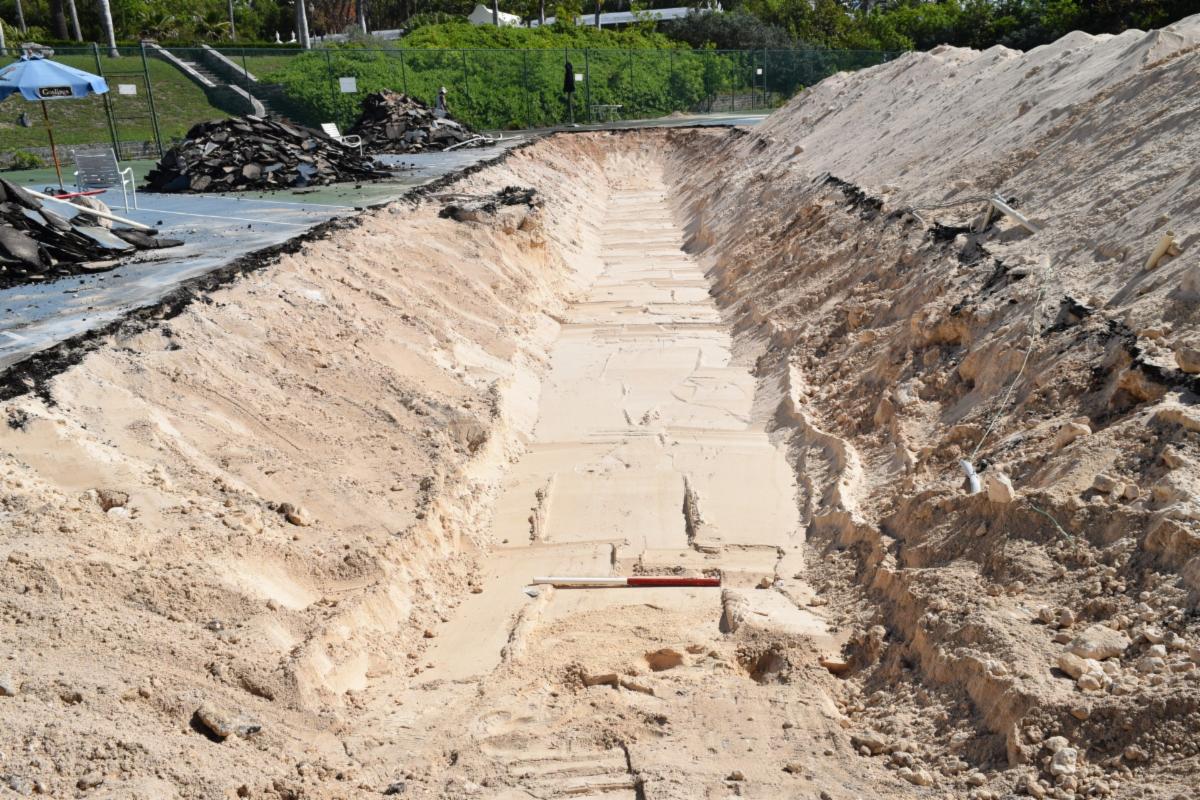
| Three trenches were excavated within the proposed hotel foundation area to investigate the potential survival of historic Elbow Bay Fort. No archaeological remains were found. Further archaeological monitoring is planned when construction begins in 2027. | |
Heritage Education Updates
Anna Stevenson, Heritage Education Manager
| | |
I’m sure many parents are currently thinking, “Where has the summer gone?” August flew by as we wound up our Summer Camp season. New for the month was ‘Hunt for the Lost Treasure’ which saw campers solving clues, riddles, puzzles and scavenger hunts solving the mystery of the lost treasure of Nathaniel Butler. We went bug-hunting at Spittal Pond as part of our Nature Detectives camp; we explored Dockyard, Fort St Catherine and Fort Hamilton as children learned about the development of fortifications in Bermuda; and we went snap-happy taking photos of urban scenes, natural landscapes and up-close subjects with macro photography.
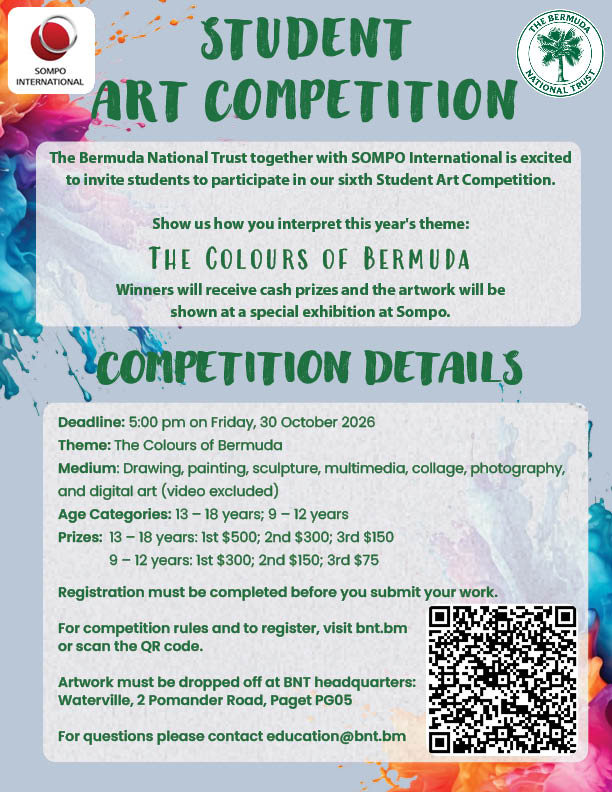
The autumn means it’s time for our annual Student Art Competition, open to students aged 9 to 18. This year’s theme is ‘Colours of Bermuda’. The deadline for submissions is 30 October. Click here for more information and to register.
| | |
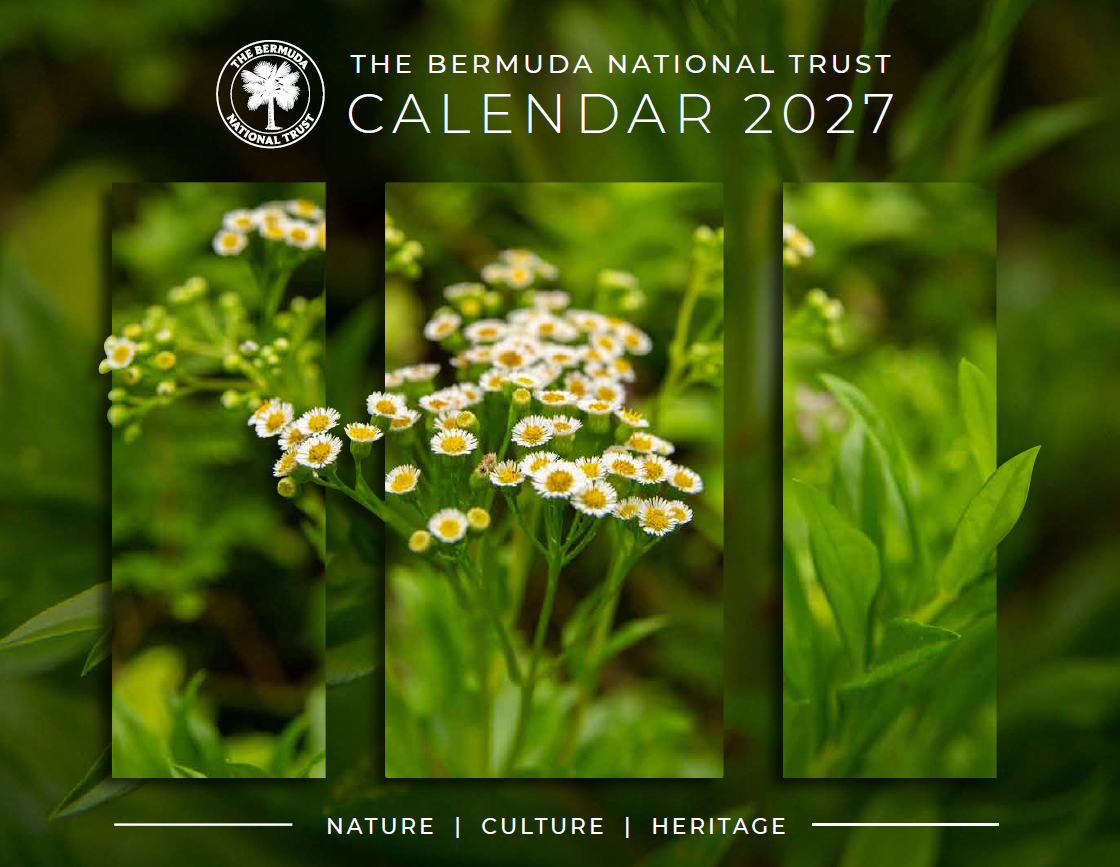
We’re excited to announce the release of our 2027 Bermuda National Trust Calendar, featuring the beautiful photography of Bermudian photographer Zeudi Hinds.
Through her lens, Zeudi captures Bermuda’s natural and cultural treasures, from stunning landscapes to fascinating close-ups of the island’s flora and fauna.
It’s never too early to get ready for the year ahead! Get your copy today and enjoy a little piece of Bermuda all year long while supporting the preservation of our island’s heritage.
- Price: $16.00
- Size: 13 ¾” wide x 10 ¾” high
Available for purchase online or at the following locations:
- BNT Headquarters, Waterville
- The Trustworthy Shop at the Globe Museum
- Aberfeldy Nurseries
- Bermuda Bookstore
- The Bookmart
- Flying Colours
- Hamilton Princess
- AF Smith
- BUEI
- KEMH Gift Shop
- Collectors Hill Apothecary
- Robertson’s Drug Store
- Bermuda Craft Market
- Bermuda Arts Centre Dockyard
- Bargain Hunters
- Dockyard Pharmacy
Interested in selling our calendar? Please contact lsimons@bnt.bm for more information.
| | The Bermuda National Trust | bnt.bm | | | | | |