|
|
Duke Human Rights Advocates,
As we honor the 75th anniversary of the Universal Declaration of Human Rights, the Duke Human Rights Center at the Franklin Humanities Institute (DHRC@FHI) are reflecting on the document's impact. The UDHR informs the foundation of our Human Rights Certificate program, and its ideals unite our faculty, students, staff, and alumni.
Our Duke network of people committed to human rights continues to grow. We welcome Dr. Aya Fujimara-Fanselow to our Faculty Advisory Board. Our Student Advisory Board has a brand new leadership team, and our Student Staff team added three new members.
We are also offering a new program, the Duke Refugee Advocacy Program, which allows Duke students the opportunity to put the ideals of the UDHR into practice in the Durham community. The program provides Duke students to the opportunity to tutor local refugee students, deepen their understanding of refugee issues and immigration policy, and advocate for change.
In addition to new programs, we continue to organize the annual Rights! Camera! Action! film series and the Juan E. Méndez Book Award. We also support events that bring speakers from around the world to Duke to share their knowledge and expertise about a variety of human rights issues. To learn more about our fall events, continue reading below. We hope to engage with you at one of these events soon.
|  | |
Class of 2023 Graduation Celebration
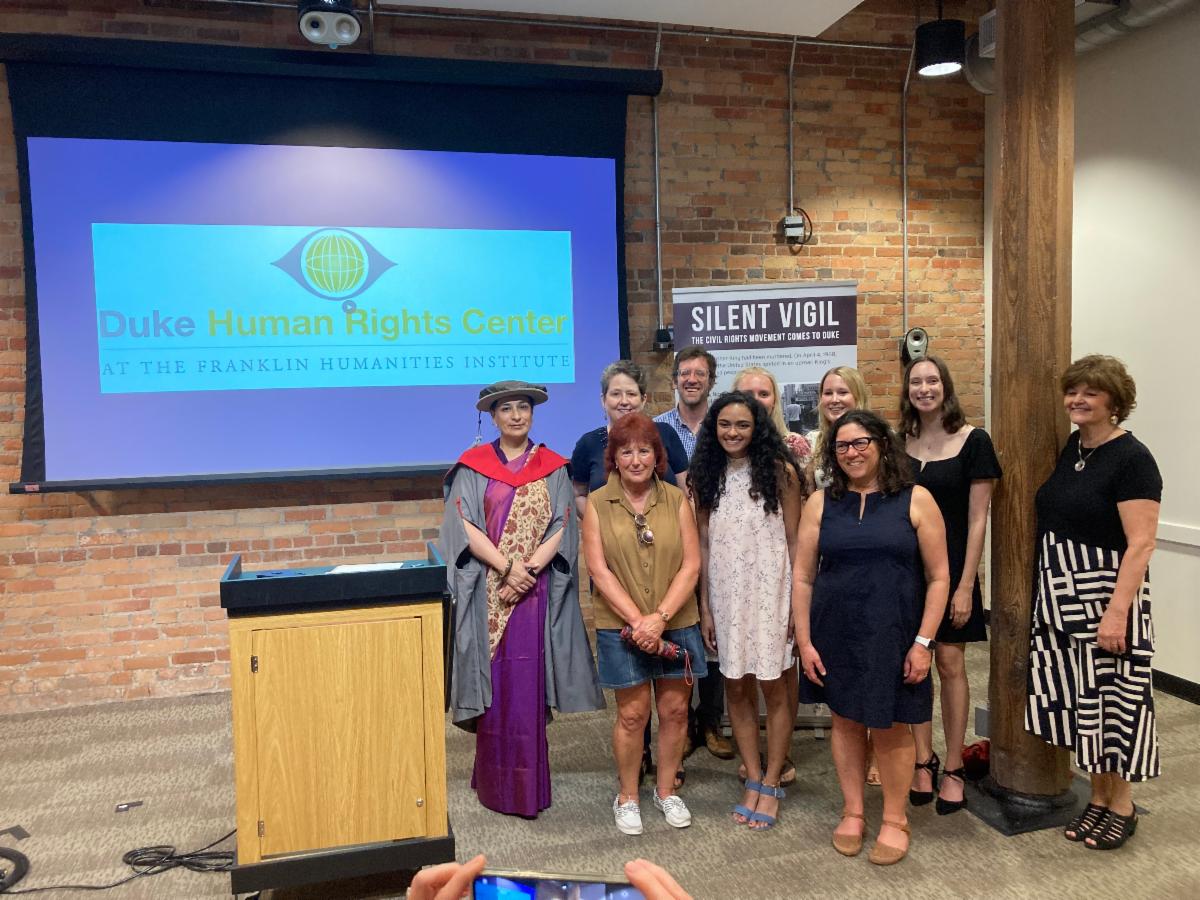
On May 13, DHRC@FHI faculty and staff celebrated the four 2023 graduates and their families: Zavera Basrai, Serena Biondi, Sarah Kelso, and Maya Lytje. We can't wait to see how you change the world.
| |
|
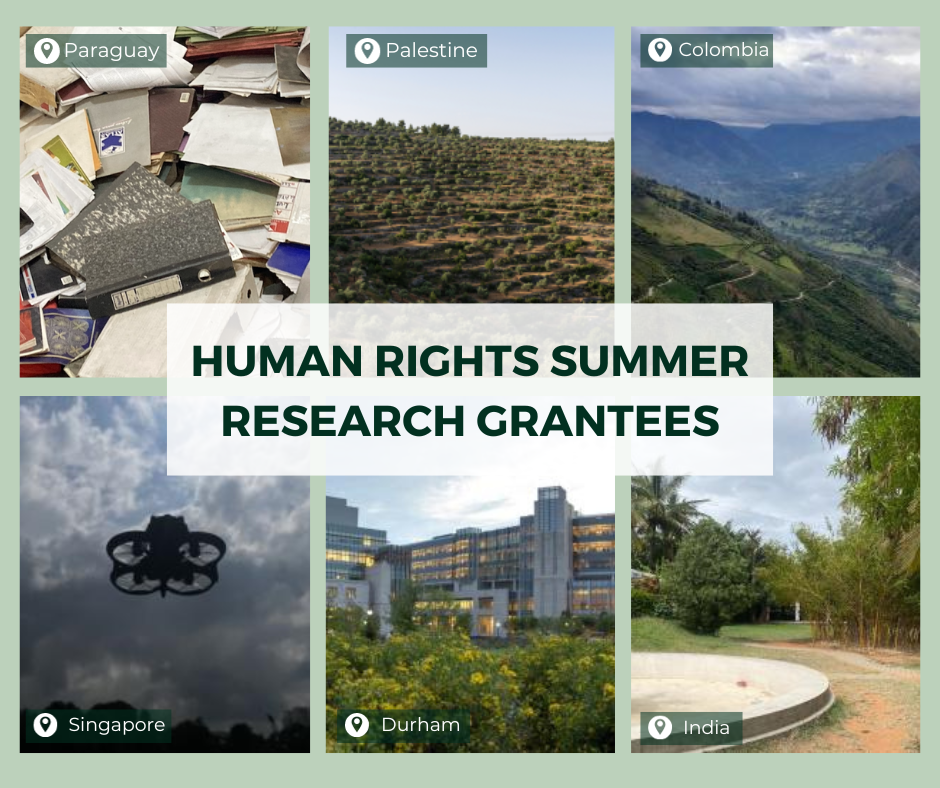 | |
This summer took Duke graduate and undergraduate students around the world in an effort to research human rights issues. Andrew McCallum travelled to Paraguay to engage with the country’s complex history during Alfredo Stroessner’s dictatorship. Durga Sreenivasan tackled a multifaceted project in India, focusing on climate reparations, private financing for sustainable development goals, and equitable sustainable development for marginalized communities in India. Alex Penne investigated the ethics of drone technology in Singapore, a country with high integration of innovative technologies as well as tight regulations that protect human rights. Taylor Glatt researched the barriers refugees face in accessing health care in Durham. Hareth Yousef connected with his hometown of Kobar, Palestine as he created a documentary of the evolving landscape of Palestine. And John Sabogal Venegas explored the long legacy of war in Colombia and the potential possibilities of peace.
Learn more about the Human Rights Summer Research Grant -->
| | | |
Rights! Camera! Action! Film Screenings | |
|
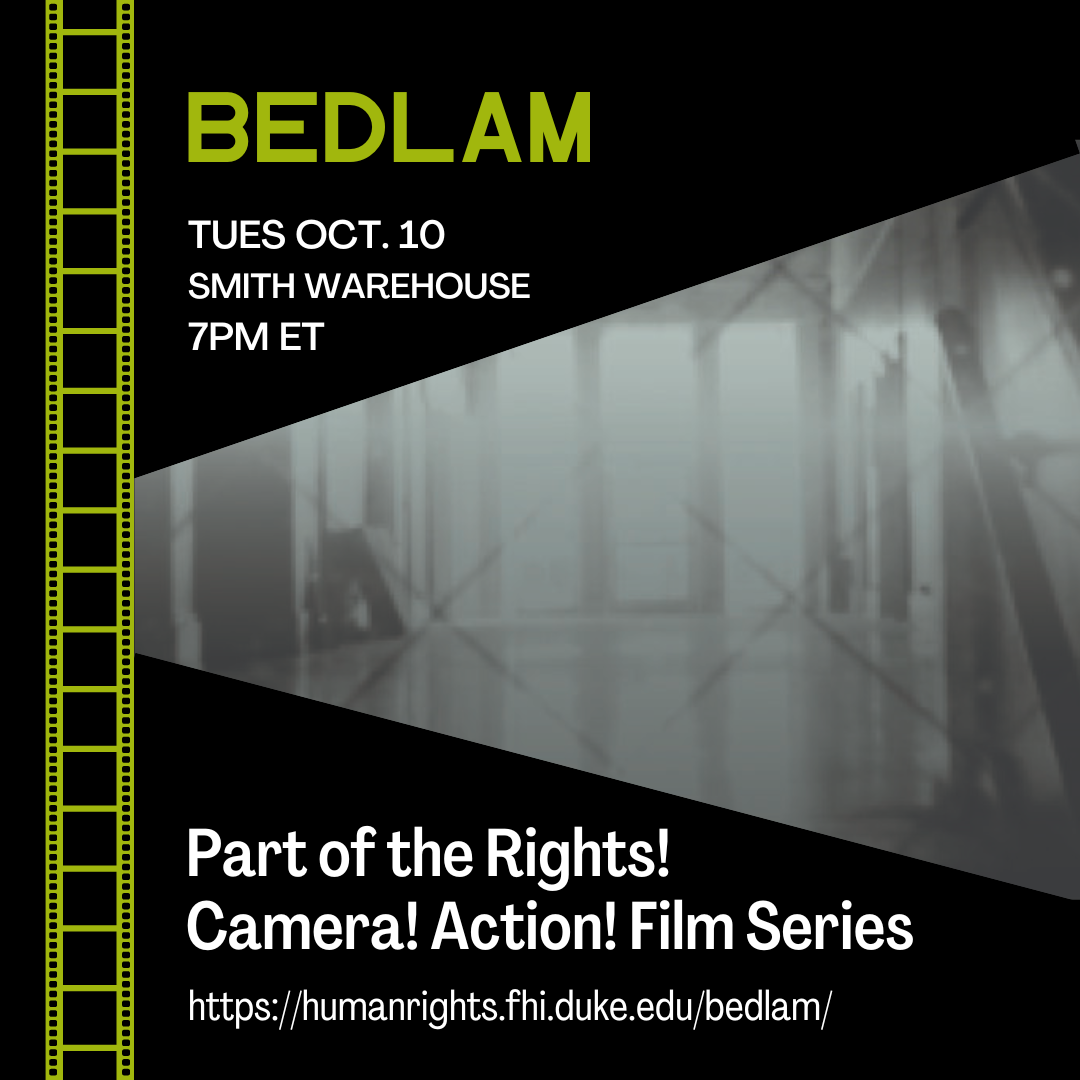
Created in 2009, the Rights! Camera! Action! film series features documentaries that focus on human rights related themes across the globe. Each year, there are four film screenings, followed by panel discussions with Duke faculty or students, community activists, and occasionally the filmmakers themselves.
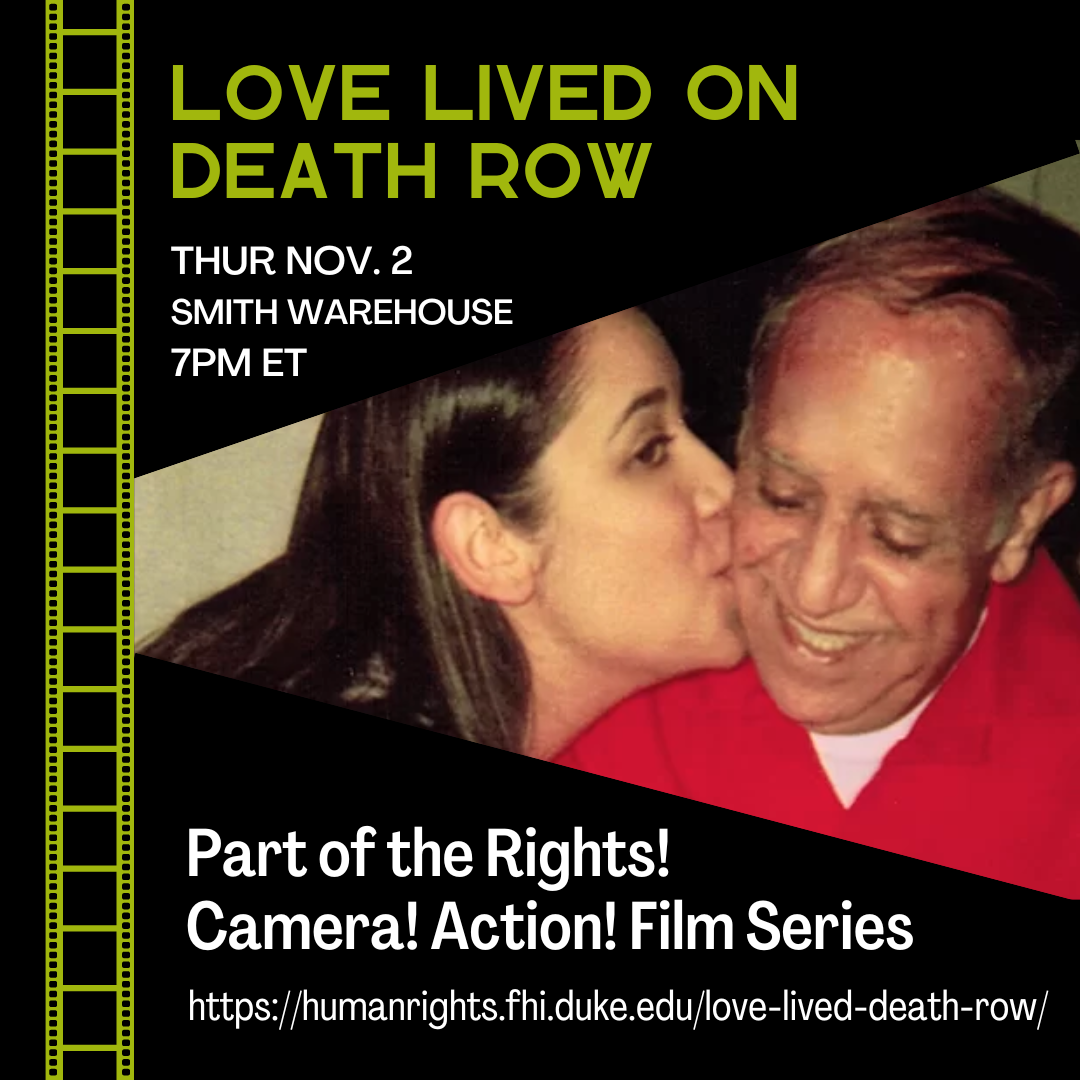
This fall, we'll feature films that examine the relationship between mental health and human rights ("Bedlam"), reveal the dangers of exposing human rights violations ("The Art of Political Murder"), and grapple with the complex issue of the death penalty ("Love Lived on Death Row.")
| |
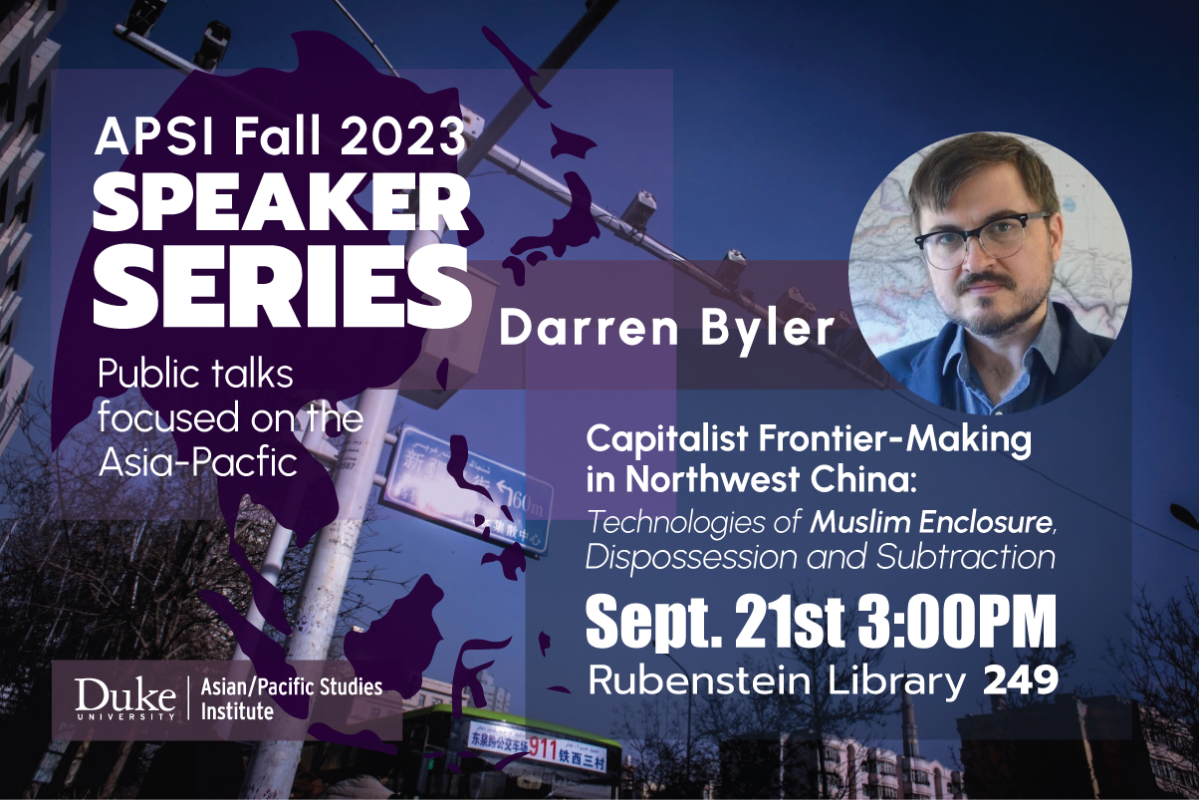
Anthropologist Darren Byler shows that the mass detention of over one million Muslims in “reeducation camps” is part of resource extraction in Uyghur and Kazakh lands that have led to what he calls terror capitalism. This talk will show how digital infrastructures (built in Seattle, Beijing and Xinjiang) combine with state-corporate counterterrorism to produce new forms of Muslim enclosure, dispossession and, ultimately, a subtraction of their life itself. He particularly attends to the experiences of youth who were made the primary target of state violence and how they cope with novel forms of unfreedom. By tracing the political and economic stakes of this emergent internal colonial project, Darren Byler demonstrates that state-directed capitalist dispossession is co-constructed with technologies of domination that are truly global. | |
|
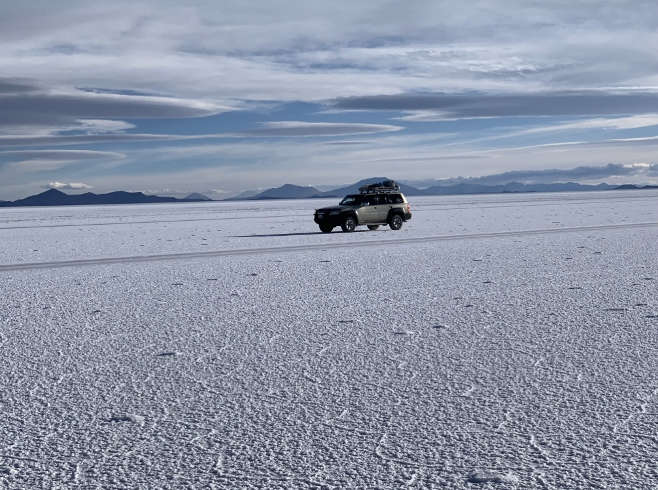
Please join the Duke University Rethinking Diplomacy Program (RDP) on September 26th, 2023, at 5pm in Rubenstein Library’s Carpenter Conference Room (rm 249) for a panel discussion on The Challenges of Bolivian Lithium Development. Our guests are Kathryn Ledebur, director of the Andean Information Network (AIN) in Cochabamba, Bolivia (1999-present), Dr. Scott MacDonald, chief economist at Smith’s Research & Gradings and a Caribbean Policy Consortium Fellow, and Dr. Avner Vengosh, Distinguished Professor and Nicholas Chair of Environmental Quality, Nicholas School of the Environment (NSE), Duke University.
The discussion will be moderated by Dr. Erika Weinthal, Professor of Environmental Policy and Public Policy (NSE), Duke University, and Ambassador (ret) Patrick Duddy, RDP Senior Fellow and former director of the Center for Latin American and Caribbean Studies (CLACS), Duke University. This is the first in a series of discussions on climate and energy diplomacy focused on the challenges and opportunities of mining and development in South America’s Lithium Triangle.
| |
|
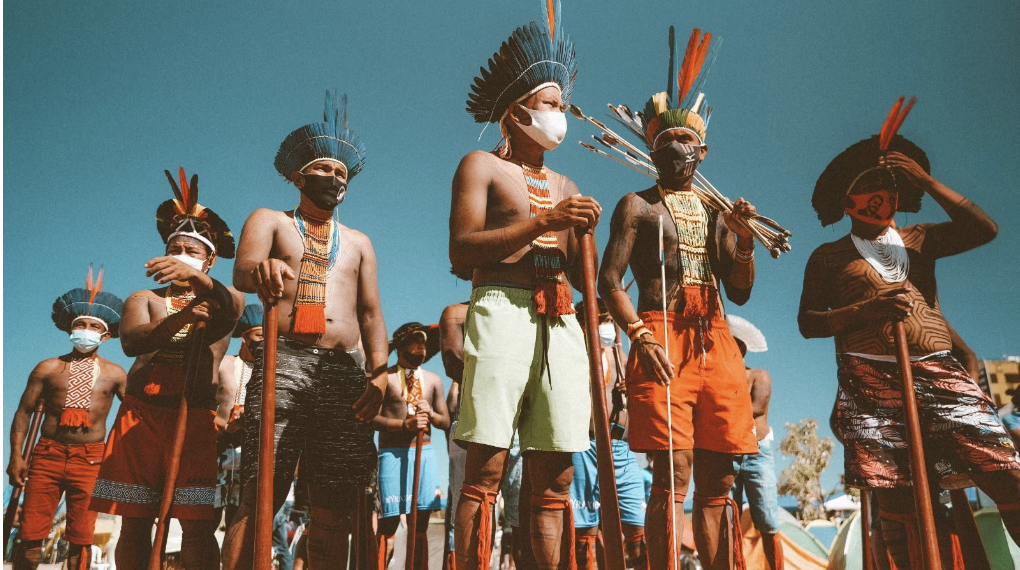
"We Are Guardians" Film Screening
Friday, Sept. 29 @ 7 p.m. Rubenstein Arts Center Film Theater.
Q&A Following the screening. With the participation of Edivan Guajajara, Chelsea Greene, Rob Grobman, and activist Puyr Tembé.
Thousands of people are illegally setting up camp on protected land in the Brazilian Amazon, killing centuries-old trees for export and mining rare resources. Directed by Indigenous activist Edivan Guajajara and environmental filmmakers Chelsea Greene and Rob Grobman, We Are Guardians artfully shares the stories of the people impacted by this issue. We meet Indigenous Brazilian forest guardian Marçal Guajajara and activist Puyr Tembé who are fighting to protect their home from deforestation; an illegal logger struggling to make ends meet who feels he has no other financial choice to survive; and a landowner who is dedicated to preserving the rich ecosystem within his land by relentlessly seeking action from local authorities, with no answers.
Dir. by Chelsea Greene, Rob Grobman, and Edivan Guajajara. 2023. 85 minutes. In Portuguese, Tupi, and English, with English subtitles.
| |
DHRC
Student Advisory Board
| |
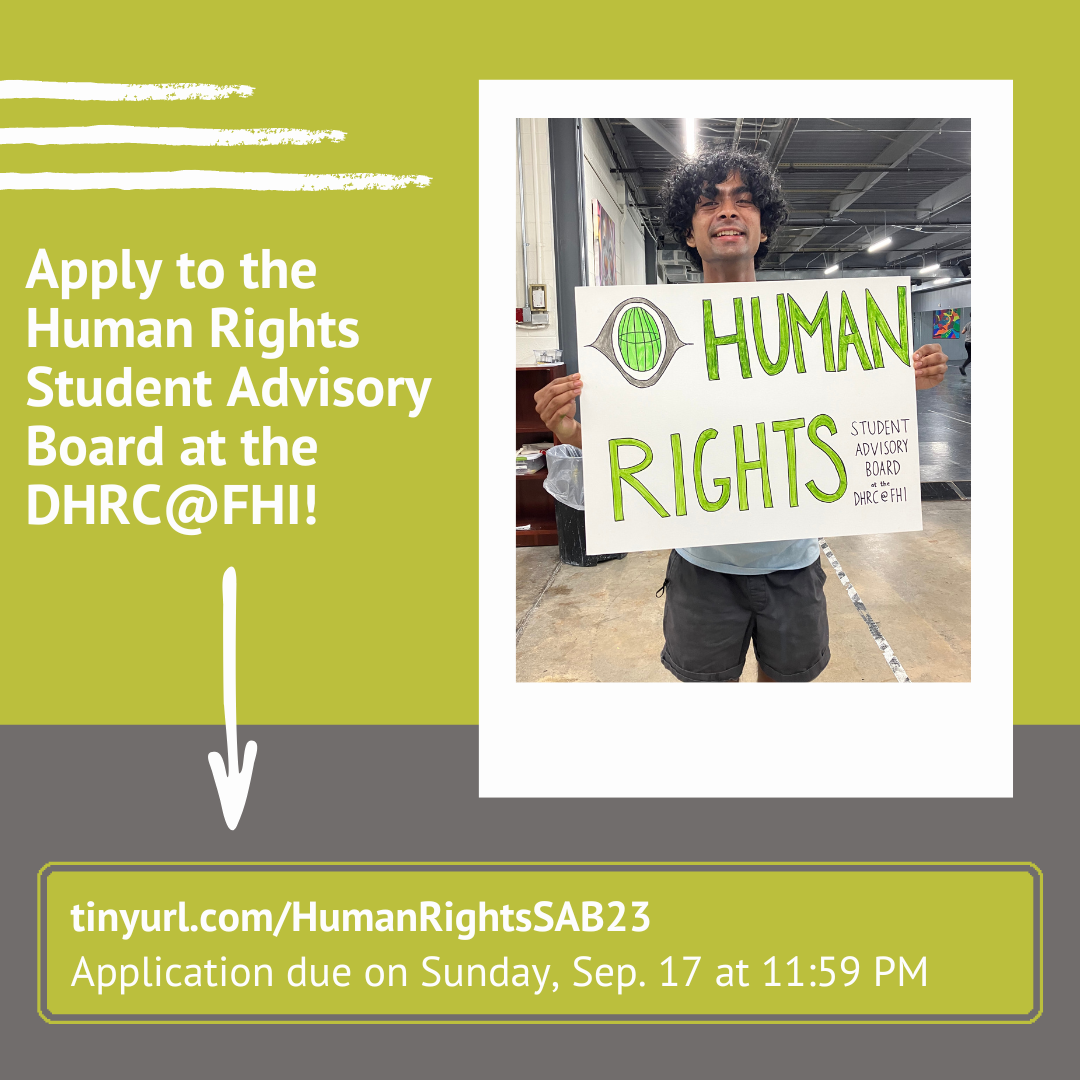
Students, interested in learning about human rights? Advocating for causes you care about? Advising the direction of human rights programming at Duke? Apply to Duke's Human Rights Student Advisory Board by September 17, 2023! | |
Koonz Human
Rights Prize
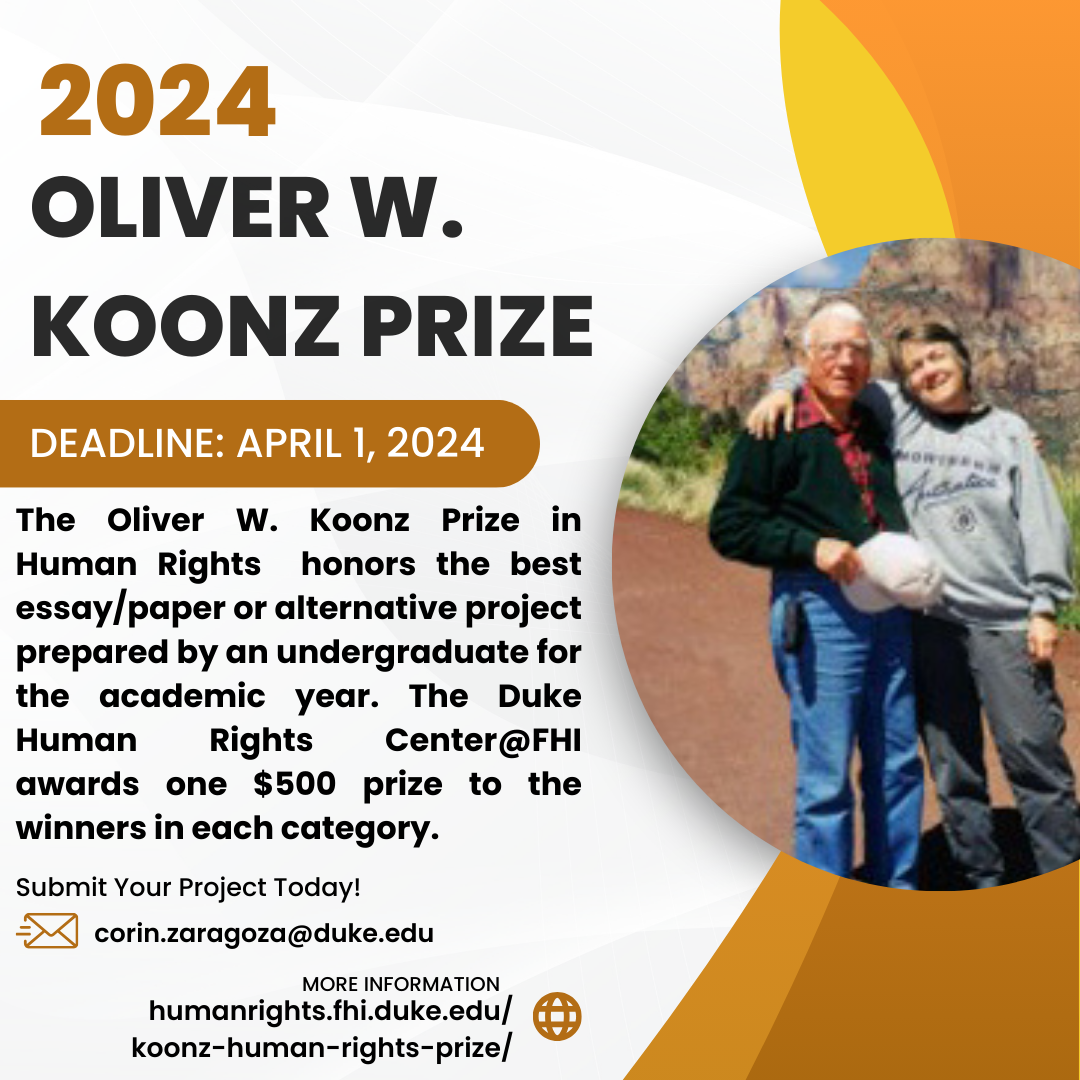
| |
Have you written an interesting, thought-provoking, or otherwise exemplary essay/paper for one of your courses? Or perhaps created a documentary video, phone app, short story, or some other alternative project about a human rights theme? If so, consider submitting your work for the Koonz Human Rights Prize. | | | | |